

Don Ward
This transcript was generated by AI and may contain errors. It is provided to assist those who may not be able to listen to the message.
The title today is Sound the Trumpet in Zion. Sound the trumpet in Zion.
This holy day is called the Feast of Trumpets. It is the fourth of the seven-day holy days. There are seven annual holy days, but actually there are more feasts than that. Of course, feasts of Passover, we don't have holy day services, per se, as a holy convocation, but we do have services and take the Passover. There are three annual holy days on either side of this holy day. We have Passover, Unleavened Bread, and Pentecost, and Trumpets, the day that we're observing today. Then we have Atonement, Feast of Tabernacles, and the eighth day.
Passover, Unleavened Bread, and Feast of Pentecost, have already been observed during this sacred year, the sacred calendar cycle of the annual holy days. Here we are in this pivotal holy day. So after today, there are three more annual festivals to be observed in this holy day cycle.
The Feast of Atonement, the Feast of Tabernacles, the Feast of the Eighth Day, which is often called or referred to as the last great day, but it is a separate feast.
The Feast of Trumpets marks a turning point in the history of the world. On one side of this day is gloom and doom. On one side of this day is the Great Tribulation.
Five of the seals of Revelation 6 have already been fulfilled during the wrath of Satan.
Satan will be cast down. Satan goes about to destroy, especially, the Church of God. And also the physical seed of Israel.
One of the things that we need to understand about the holy days is that there are parallels with each feast that we will talk about in just a few minutes, and your handout after services will reflect that. Let's turn to Revelation 6 and verse 12. Revelation 6 and verse 12.
These glasses of my wife, I can see.
The script are pretty well just looking straight down on it, but if I try to look out, you're about twice as big as you ought to be, which I really don't need glasses for distance. Just reading of slight stigmatism, as most people over 40 do, which I'm almost there in Revelation.
In Revelation chapter 6 and verse 12. And I beheld when he had opened the sixth seal. So five seals have already been opened. The white horse, false Christ, and those going out in the name of peace. One of the watchwords that you hear of today is peace, peace, and really there is no peace. On the one hand, the world is a flame, especially the Middle East, and yet at the same time world leaders are talking about world peace.
And the head of the UN will be conducting a big meeting at the end of September when world leaders have assembled for the general assembly of the UN in the latter part of September. And they will be talking about peace, and especially peace in the Middle East. So the white horse goes out. The first seal is open with him. The second seal, the red horse, war. And then the third seal, the black horse, famine. And then the fourth seal, pestilence. The fifth seal, the martyrs crying out figuratively under the altar, how long, O Lord, how long.
And now the sixth seal is open. The sixth seal introduces the day of the Lord, and the day of the Lord introduces the trumpets, the seven trumpets. And of course, then the final trumpet of the seven trumpets is divided into the seven bowls of wrath. So here we are, verse 12, first part once again, Revelation 6, 12. And I beheld when he had opened the sixth seal, lo, there was a great earthquake. Didn't say anything about an eclipse. It says an earthquake, a great earthquake. And the sun became black as sackcloth of hair, and the moon became as blood.
We talked about this on the Sabbath, the so-called blood moons, and they are blood moons that have occurred in 2014 and 2015. One more to go on September the 27th, I believe it is. These are naturally occurring phenomena, and eight tetrads are scheduled to occur in the 21st century.
But this is the direct intervention of God Almighty. It is not a naturally occurring phenomenon. The stars of heaven fell. God is going to shake the heavenly powers. Paul talks about it in Ephesians 6, 12, that we wrestle not against flesh and blood. It starts in probably verse 11. We wrestle not against flesh and blood, but against wicked spirits in high places. And Satan and his demons are going to be cast down, and they're going to go about furiously trying to destroy you.
And some of this will happen even before this. The stars of heaven fell under the earth even as the fig casts her untimely figs when she is shaken of a mighty wind. And the heaven departed as a scroll when it is rolled together. And that hasn't happened.
But literally, that hasn't happened. But in the figurative sense, the rolling together of this scroll has to do with clearing away the wicked spirits in heavenly places as well. So the heavens open as a scroll. And the heaven departed as a scroll when it is rolled together. And every mountain and island were moved out of their places. The nations are going to be mightily shaken. And the kings of the earth and the great men and the rich men and the chief captains and mighty men, every bond man, every free man hid themselves in the dens and in the rocks of the mountains and said to the mountains and rocks, fall on us and hide us from the face of him that sits on the throne.
That is, God Almighty, see, the day of the Lord and the day of God Almighty are one and the same, that sits on the throne and from the wrath of the Lamb. Both are mentioned. Where this, for the great day of his wrath has come, and who shall be able to stand? So, once again, we need to understand about the Holy Days is that there are three parallels with each of feasts.
Here we see the introduction to the Feast of Trumpets and the Seven Trumpets that are described in Revelation 8. Revelation 7 is an inset chapter with regard to the sealing of the 144,000.
So, the first of all, with regard to the Holy Days, there is a literal event that typifies the spiritual parallel, and then there is the doctrinal parallel and the application in our lives. You say, well, maybe that sounded like mumbo-jumbo, but listen. There was a literal event of Passover recorded in Exodus 12. Israel was in bondage, and God instructed them, look at Exodus 12. God instructed them. He revealed to them which day they should do this on.
So, we look in Exodus 12, the first literal Passover, the first Passover recorded in the Bible, in Exodus 12. Verse 3, Speak unto you to the congregation of Israel, saying, In the tenth month of the month they shall take to them every man a lamb, according to the house of their fathers, a lamb, for an house, and there to set it aside. And if the household be too little for the lamb, let him and his neighbor next unto his house, take it according to the number of the souls, every man according to his eating shall make your count of the lamb.
Goes on to describe the lamb, verse 6, and he shall keep it up until the fourteenth day of the same month, and the whole assembly of the congregation of Israel shall kill it in the evening. They were told then to also sprinkle the blood on the doorpost because God was going to pass through the land, and everywhere the blood was not sprinkled, the firstborn in that household would die.
And so it came to pass, and as it did, Pharaoh called for Moses and Aaron to come to him, and based on this he said, okay, your people can go get out of here. Of course, he then changed his mind and pursued them. So here's a literal event, the first Passover taking place. Now you look at 1 Corinthians chapter 5. Now we'll look at there is a spiritual fulfillment of this. That Passover freed Israel from spiritual Egypt, and in that sense, in that day, it freed them from literal Egypt, from the literal physical bondage that they were under.
Now we'll see here in 1 Corinthians 5 beginning in verse 7 that Jesus Christ is our Passover. He is the spiritual fulfillment of that. 1 Corinthians 5, 7, Purge out therefore the old leaven that you may be a new lump as you are unleavened, for even Christ our Passover is sacrificed for us. So in order for us to keep the Passover, God calls us He convicts us. We repent of our sins. We exercise faith in the sacrifice of Christ, who is our Passover. We are baptized, and when we receive the laying on of hands, and then we are to live the resurrected life as symbolized by trumpets. Then we are to cast out Satan out of our lives here and now. Atonement. We are to live under God's government now, Feast of Tabernacles. And we are to go on to perfection, last great day, our eighth day, in which all of humanity will have that opportunity to go on to perfection. So you see that the Holy Days unveiled the plan of God. Now we're going to fill in a little more detail of this. Now, in addition to that—and we're going to come back to this to these parallels in just a second—in addition to that, there is somewhat of the prophetic sequence that is going on. See, this literal event happened, Israel coming out of Egypt in circa 1420 BC, and then it was some 1500 years later, close to 1500 years, that the actual spiritual fulfillment of it came to pass when Jesus Christ was crucified, and He became our Passover. Upon doing what is necessary to take the Passover of repentance, faith, baptism, receiving the laying on of hands, this enables you also to keep unleavened bread, because you have now been freed from sin and death, and you are to keep sin out of your life for the rest of your lives. So another element of the Holy Days is that there to be lived now—24, 7, 365, and a fourth, as they say—every day. So Christ was crucified, came our Passover, 31 A.D., and then unleavened bread. You can now keep unleavened bread in the spiritual sense. You can come out of sin.
Then after unleavened bread, 50 days after the offering of the wave sheaf, the day after the first weekly Sabbath within unleavened bread, the day of Pentecost, count 50, the Holy Spirit was sent. It was a literal event. See, the sacrifice of Christ was a literal event. Keeping unleavened bread is a literal event. Israel crossed the Red Sea and left Egypt during the days of unleavened bread. They crossed the Red Sea on the last day of unleavened bread. So then the literal event of Christ's Passover enables us to keep it spiritually. And then 50 days after Christ became our Passover, the Holy Spirit was sent to the New Covenant Church, and the Church began. So you see that in the prophetic sequence, as it were, Passover, unleavened bread, and Pentecost have been literally fulfilled.
Enabling us, of course, we are to live all of these Holy Days now. But the next great prophetic event within this is the Great Tribulation, and coming on the heels of the Great Tribulation, at the end of it, is the Feast of Trumpets.
And then there are three more Holy Days to go. So, in the sense of application, we are exhorted, yea, even commanded, to be living the spiritual meaning of each Holy Day in our lives. So let's examine in more detail what I've just said. The Feast of Passover, the head of the household, kill the lamb, sprinkle the blood.
The spiritual reality is fulfilled in Christ. He is our Passover. The doctrinal parallel is repentance and faith. One must repent, exercise faith in the sacrifice of Christ, in order to keep the new covenant Passover. Then the first day of unleavened bread, Israel left Egypt on the first day of unleavened bread. You can read about that in Numbers 33. So we must repent, exercise faith in Christ, in order to leave spiritual Egypt, which is symbolic of sin and death. Through the Passover of Christ, we can be freed from sin and death and spiritual Egypt. On the second day of unleavened bread, Israel crossed the Red Sea, which was their baptism. It says that clearly in 1 Corinthians 10 verses 1 through 4. So Israel crossed the Red Sea, which was their baptism, ancient Israel. It marked the final deliverance from Egypt. We, too, when we are baptized, that is a demarcation. We bury the old man, saying we are going to put the old man to death and keep the old man under the water for the rest of our lives and live in newness of life under Christ through the Spirit and Word of God. Now, on the day of Pentecost, Israel, according to Jewish legend, in Israel received the Ten Commandments. Of course, the Ten Commandments are listed in Exodus 20. That Israel received the Ten Commandments, thundered to them from the mouth of God on the day of Pentecost. Of course, there was not such a heart in them. They did not have God's Spirit abiding within them, the Holy Spirit of Begethel. Then, of course, as we've already noted, that in 31 A.D., the Holy Spirit was sent to the church on the day of Pentecost, which enables the law of God not to just be written on tables of stone, but to be written in our hearts on the fleshly tables of our heart. And so, the Holy Spirit allows us to enter into a new relationship, the new covenant relationship with God and Christ and each member of the body of Christ. It says in 1 Corinthians 12, verses 25-26, that we are members of the same body. When one member suffers, we all suffer to have the same love, care, and concern for one another. And as we have mentioned in the prophetic sense, we're in that period of time between the literal fulfillment of Pentecost and the literal fulfillment of Trumpets. By that, I mean when God directly intervenes in the affairs of men during the day of the Lord, as I read from Revelation 6, verses 12-17.
So, the spiritual fulfillment of the Feast of Trumpets in our lives is a reality for those who have exercised faith in the sacrifice of Christ. They have kept the Passover spiritually. They are keeping the Feast of Unleavened Bread daily, the spiritual sense. The Holy Spirit is at work in their lives. They are living the new life. They've been raised to newness of life. And so, during the days of our lives, we gained the victory. We are living in the resurrected sense. We have left sin and death behind. We have new life from above, abiding within us through God's Spirit. After Trumpets comes the day of Atonement, picturing the binding of Satan. And we're to cast out Satan out of our lives now through the Word and Spirit of God.
Then the Feast of Tabernacles, it pictures the Great Fall harvest, the great end gathering of the peoples from all over the world. And, of course, God's government will reign supreme during the millennium. And the knowledge of God will fill the world as sand fills the seashore, whosoever will let him come and take the tree of life. It will be made available to everyone. Today, God is calling out a special people today. He's called you out, hopefully, and I hope you realize the significance of your calling. Only a few million people have been called and have had the veil lifted so that they can understand the precious promises and plan of God today. Does that make you better than anybody else? No. But God has invested a great deal in each one of us. And it is no accident that you are here today if you're here for the right reason of His own will, beget He us with the word of truth, that we should be a kind of firstfruits.
And we're going to be a part of the firstfruits. It says in 1 Corinthians 15, Jesus Christ, the first fruit, and those that are His afterward at the coming of Jesus Christ. We've been called to go on to perfection. If you would, turn to Hebrews chapter 6, the basic doctrines of the Church of God. Well, what are the doctrines of the Church? Well, here are the basic doctrines, and perhaps the one most overlooked would be going on to perfection. See, on the eighth day, after the Feast of In-Gathering, the Feast of Tabernacles, the Feast of Booths, Sokoff, whatever you want to call it, the Feast of Tabernacles would suffice. We have lived, or the world has lived now, a thousand years, and during that thousand years, people have been called into or have the opportunity to freely take the Tree of Life. And the whole world, after the Second Resurrection, will have an opportunity to be at one with God and to go on to perfection. We're to go on to perfection now, as Paul brings out here in Hebrews 6 and verse 1. Therefore, leaving the principles of the doctrine of Christ, and he's going to list the principles of the doctrine of Christ, the foundational elementary steps, let us go on to perfection. So if you have gone through Passover, Unleavened Bread, Pentecost, Trumpets, you're living, you're casting out Satan now, you're living under God's government now. Going on to perfection is one of the great challenges. Let us go on to perfection. Then he lists the basic foundational principles, not laying again the foundation of repentance from dead works and faith toward God. So you have to do that to keep the Passover and Unleavened Bread. Of the doctrine of baptisms and laying on of hands, so you can see how this progression has to do with the literal fulfillment of the Holy Days, the Passover through repentance and faith and keeping Unleavened Bread through repentance and faith. The laying on of hands, Israel crosses the Red Sea on the last day of the Feast of Unleavened Bread. We're to live, putting the old man to death now. The laying on of hands, the laying on of hands, receiving the Holy Spirit. And of resurrection, we come up out of the baptismal waters to live the resurrected life. And of resurrection of the dead and of eternal judgment. Judgment is now on the house of God. We're being judged now. The world will be judged later. And this will we do. This what? We will go on to perfection. And this will we do. You back in verse 1. Therefore, leaving the principle of the doctrine of Christ, let us go on to perfection. We don't have to focus on these things. Now, we've already done that. We're living that and have lived that. And perfection is a continual continuum that cuts across all of this. You begin to go on to perfection and have the opportunity when God calls you and convicts you of the truth. And you repent and exercise faith. Baptize, receive the laying on of hands. All of this is a continuum that cuts through this. And the Holy Days parallel this. So let us go on to perfection. And then, verse 3, and this will we do if God permit.
So you can see how the Holy Days play such a vital role in revealing the purpose and plan of God and the fact that we're supposed to live these things now. Spiritually, we are to live the Holy Days now. Everything the Holy Days represent are applicable to us now.
We are supposed to be living the resurrected life now.
And judgment is now on the house of God. Now, spiritually speaking, we are to sound the trumpet and alarm for the coming day of the Lord. As we heard the two young men blow the shofar just before the song service, as you heard in the sermonette, trumpets have played a special role in the history of Israel. But there is the spiritual part of this, of the blowing of trumpets that's applicable to us now. And you look at Joel 2, and here it is.
Remember the title, title, Blow the Trumpet in Zion, or Sound the Trumpet in Zion. Let's see, Hosea Joel, Joel, Daniel, Hosea, and then Joel, chapter 2. Joel chapter 2, Blow you the trumpet in Zion. Now, this is not a literal trumpet, per se. Blow you the trumpet in Zion. What is Zion? Zion, spiritually, is the church. Physically, there is a place called Zion in the environs of Jerusalem on the southwest, slightly south, south, more south and west, southwest of the Temple Mount. I'll hold your place there. Look at Hebrews chapter 12. Hebrews chapter 12. Remember, Hebrews compares and contrasts elements of the Old Covenant with the New Covenant.
Before the law was given, there were trumpets that played a big part in preparing the people to assembly there at Sinai for the receiving of the law.
Then Paul picks up the contrasts, Hebrews 12-19, and the sound of trumpet and the voice of words, which voice they that heard, and treated that the word should not be spoken to them anymore. So when God began to speak to them and thunder the commandments, they quivered and quaked and said, Moses, you speak to us, but not let God speak to us.
Today it's like we don't want to hear any man, we want to hear God. Well, God speaks through men today, and that's one of the reasons he raised up the church. In verse 20, For they could not endure, that is, ancient Israel, that which was commanded. And if, as so much as a beast touched the mountain, it shall be stoned or thrust through with a dart.
Why couldn't they touch the mountain when God was thundering from the Ten Commandments, thundering the Ten Commandments from Sinai? It's the same reason that Uzzah wasn't supposed to to touch the ark, because God's presence was upon the mountain, the holy mountain, and no unclean thing was to touch it. And so terrible was the sight that Moses said, I exceedingly fear and quake. But in contrast to that, you were come unto Mount Zion, and unto the city of the living God, the heavenly Jerusalem, and to an innumerable company of angels, to the general assembly and church of the firstborn, which are written in heaven, and in God the judge of all, and to the spirits of just men made perfect.
Verse 22, first part again, you were come unto Mount Zion. Then a description of Mount Zion, what it is. It is the city of the living God, the heavenly Jerusalem, innumerable company of angels, general assembly, church of the firstborn. So back in Joel, let's go back there, back in Joel 2, blow you the trumpet in Zion, and sound an alarm in my holy mountain. See, God abides in the church of God.
Now, at that time when Israel received the law on the day of Pentecost way back then, at that time his presence was upon the mountain, but not in them. Today, God's presence is in you. They blew literal trumpets at that time. Today we are to sound the trumpet in the holy mountain through preaching, teaching, living the Word of God.
I think we'll see this more clearly as we go along. Let all the inhabitants of the land tremble, for the day of the Lord comes, for it is nigh at hand. And once again, I refer to Revelation 6 verses 12 through 17, the opening of the sixth seal, the heavenly signs, sun becomes dark, the moon is blood, great earthquake, and people hiding themselves from the face of him that sits on the throne end the wrath of the Lamb. Verse 2, a day of darkness and of gloominess, a day of clouds and of thick darkness.
As the morning spread upon the mountains of great people and as strong, there has never been ever the light, neither shall be any more afterward, even to the years of many generations.
The church collectively and individually will play a great role in the fulfillment of this day. Now, we pick it up further here in verse 15, Joel 2, 15.
Blow the trumpet and Zion. Sanctify a fast. Call a solemn assembly.
Gather the people. Sanctify the congregation. Assemble the elders.
Gather the children and those that suck the breasts. Let the bridegroom go forth of his chamber. See, the bridegroom goes forth out of his chamber. After the resurrection, of course, the marriage supper of the Lamb is going to take place in the ancient Jewish ceremony. And I guess maybe there's some of the messianics and others may still practice this today, that the bride would come, I mean the bridegroom would come and in a sense steal away in the middle of the night the bride and take it to the father's house.
And they would have seven days, and then they would set up their regular household.
So let the bridegroom go forth of his chamber and the bride out of her closet.
Hold your place here. Let's look at Matthew 25. In Matthew 24 and 25, we have the Olivet prophecy.
The Olivet prophecy is based on the question that the apostles opposed to Jesus, what is the sign of your coming and the end of the age. And Jesus's response is Matthew 24 and 25, ending with verse 1 or 2 and 26. In Matthew 25, then shall the kingdom of heaven be likened unto ten virgins, which took their lamps and went forth and meet the bridegroom. And so the question ever is, are you ready to meet the bridegroom? As we see here with the ten virgins, five were wise and five were foolish. Five of them were wise, five were foolish. They that were foolish took their lamps and took no oil with them.
Now we can ask ourselves, are we just going through the motions? Are we going to church? Are we observing the annual holy days? Are we proclaiming that we're Christians? But we take our vessel that is our body, but do we really take our minds and hearts and are we filled with God's Spirit? So they took their lamps but took no oil with them, but the wise took oil in their vessels with their lamps. While the bridegroom tarried, they all slumbered and slept.
And it's almost like we're in that slumbering and sleeping cycle now in the church to some degree.
While all these things happening, we should be filled with zeal as never before. This auditorium should be filled every Sabbath and every other time we had any chance to sound the trumpet and to be partakers thereof. The wise took no oil in their vessels with their lamps while the bridegroom tarried. They all slumbered and slept. And at midnight there was a cry made Behold, the bridegroom comes, go you out to meet him. And of course, the wise were prepared and the foolish were not. And when the bridegroom came, those that had no oil in their lamps, they just waited too long. They tried to get some from the wise virgins. The wise version said, no, you got to go out into the arena of life. You got to have to do this for yourself.
And so the time came in verse 10, and while they went out to buy, the bridegroom came, and they that were ready went in with him to the marriage, and the door was shut. Yes, there is a marriage supper of the Lamb that's talked about in Revelation 19.
Ashford came also the other virgin, saying, Lord, Lord, open to us. But he answered and said, Verily, verily, I say unto you, I know you not. Watch therefore, for you know neither the day nor the hour wherein the Son of Man comes. Of course, we do have the knowledge, and we'll read later from 1 Thessalonians chapter 5. Now, some of the commentaries talk about this, no man knows the date or the hour, and they talk about, well, in that time in ancient Israel, they to a large degree, they observed when the new moon was visible in Jerusalem, and sometimes it didn't appear exactly when they thought it would, and so they may delay it for a few hours. But when they did spot it, they would sound the trumpets, and that was the new moon, and then the day would begin. So some say, well, they don't know the day and the hour is referring back to that. I take it more in the sense of, we don't know the exact day and the hour. It says in 1 Thessalonians that this day should not take us unawares. We have the warning in Luke, I think it's what, 2436, watch you therefore and pray always that you may be accounted worthy to escape these things which come upon the sons of men to try them. Of course, we have many other things that we can go by, but if you're out there shopping around on the internet trying to learn some new thing and not really testing it in view of the Word of God, you may make yourself easy pray for deception, as we talked about on the Sabbath. Continuing here in Joel, so once again, let the bridegroom go forth of his chamber and the bride out of her closet.
So we've read about that in Matthew 25. We've referenced Matthew of Revelation 19, the marriage supper of the Lamb has come, the bride has made herself ready, she's arrayed in fine linen, symbolic of the righteousness of the saints. Note, let the priests, the ministers, the Lord weep between the porch and the altar, and let them say, Spare your people, O eternal, and give not your heritage to reproach, that the nations should rule over them.
Wherefore should they say among the people, Where is their God? So when the people begin to humble themselves to fast and pray, notice back up where in verse 16 it says, Gather the people, sanctify the congregation, assemble the elders. Verse 15, Blow the trumpet in Zion, sanctify a fast, call a solemn assembly. Verse 18, Then will the Lord be jealous for his land and pity his people after verses 15 through 17. So the church ever has a role to play. Well, in Isaiah 61, you see the church is in mourning, and we have, let's see, Mrs. Phelps written a song of basically saying that God is going to give us, in the place of ashes in mourning, he's going to give us glory and greater light and understanding. So the word of God, how marvelous is it with regard to what is revealed through the holy days all the way through, all the way from the law, first five books of the Bible, to revelation.
The Bible clearly shows, Mr. Bauman mentioned three occasions when trumpets were blown in the in ancient Israel, but there was another occasion also in which trumpets were blown. Of course, you can't cover every last time, but look at 1 Kings 1.34.
I have about three scriptures here listed on this, but I'm only going to read one in view of time. In 1 Kings chapter 1, 1 Kings chapter 1 and verse 34. And what this is going to tell us is the Bible clearly shows that the blowing of trumpets was done and it signified that kings could begin to rule. So it was a signal that they had been officially installed as king and could begin their reign. Let's say that it signified that they had been installed as king and they could begin their reign. In 1 Kings 1.34, and Zadok the priest and Nathan the prophet anointed him their king over Israel and blow you with the trumpet and say, God save King Solomon. And there are other examples of this. When a king was, in essence, crowned that the trumpets were blown and it was known to the people that he had begun his reign. The Jewish religious authorities have long acknowledged the royal import of the day of trumpets. Do you hear what I said? The royal import of the day of trumpets. What does Revelation 5.10 say? That he has made us kings and priests and we shall reign on the earth. Now here is Alfred Edersheim, who was steeped in Judaism for a long time, and then he came out of Judaism and wrote a lot about Judaism scores of years ago. You could put Edersheim into your search engine, E-D-E-R-S-H-E-I-M, and you'll find a write-up on each one of the holy days and some of the things that went on in the temple services.
Here's what he writes.
The Jewish religious authorities have long acknowledged this royal import to the day of trumpets. Alfred Edersheim, in his writings about temple services, notes that the sound of the trumpet summoned the congregation before the Lord at the door of the tabernacle, so his elect shall be summoned by the sound of the trumpet in the day of Christ coming, and not only the living but those who had slept the dead in Christ. Similarly, the heavenly hosts are marshaled to the war of successive judgments, starting with the sounding of the seven trumps. Christ is proclaimed king universal.
And then here's a quote. The kingdoms of this world have become the kingdoms of our Lord and of his Christ, and he shall reign forever and ever. Of course, that's Revelation 11.15, in essence. So the central theme of the Feast of Trumpets is clearly that of the return and enthronement of the Messiah preceded by the resurrection. They're tied together as a package. Christ coming, resurrection takes place. Now we go to Revelation chapter 1. We're talking about blowing the trumpet in Zion in Revelation 1 and verse 10. Revelation 1 and verse 10 we'll see once again this blowing of the trumpet in Zion, and it speaks specifically to the the time frame, the day of the Lord. This phrase here, the day of the Lord, He-kur-i-ak-e-h-m-e-r-a. The translators translate it correctly as the day of the Lord in 1 Thessalonians 5.2, but the King James translators and translators thereafter in the name of orthodoxy has translated it day, the Lord's day instead of day of the Lord.
In Revelation 1 and verse 10, I was in the Spirit on the Lord's day. No, I was in the Spirit during the day of the Lord because these events described in Revelation basically describe the events that are to occur once God begins to directly intervene in the course of human affairs. World affairs, geopolitical events are shaken, the heavens are shaken. And I heard behind me a great voice as of a trumpet. So here we see a voice that is equated with a trumpet saying, I am Alpha and Omega, the first and the last, and what you see right in a book, send it to the seven churches which are in Asia under Ephesus, Smyrna, Pergamos, Thyatira, Sardis, Philadelphia, and Laodicea. And then a description of the one walking among the one walking among the seven golden candlesticks, candlesticks representing the church and the stars representing the messengers to the seven churches.
So we see the voice of the trumpet. Verse 10 sounds during the day of the Lord. Now we go to Revelation 19. No, I'm sorry, not Revelation 19. In Revelation 3 and verse 20.
Revelation 3 and verse 20, I really want to read into this from verse 14. So what John saw and heard was sent to the seven churches. The seven churches were on a mail route in Asia Minor, and the letters were to be read in the churches.
But these letters are applicable to us today through all ages. And the great warning here is this one in Revelation 3 and verse 14. Unto the angel. This word in the Greek is angelos. It's spelled as if it in Greek.
The English spelling of the Greek word is A-G-G-E-L-O-S, and it has an eng sound. In English we spell it A-N-G-E-L, angel. But angelos.
Unto the angel. Okay, what's special about this word? This word can refer to a human messenger or a divine messenger. What was written here was to be read in the churches. John wasn't really writing messages to angels.
In fact, he was receiving the message from an angel.
And unto the angel, the messenger of the church of the Laodiceans, write, these things says, Amen, the faithful and true witness, the beginning of the creation of God.
The beginning of the creation of God in the spiritual sense of, and I don't have time or this side with regard to this right here, the Jehovah's Witnesses and some others try to use this verse right here to try to show that Jesus Christ is a created being. See, what Jesus Christ is the firstborn among many brethren. He is the first in a new order of beings. He is the first one to have lived in the flesh and upon death to be resurrected as a glorious, radiant Son of God. He is the beginning of this new creation of spirit beings.
But Jesus Christ is not a created being. He in Jesus Christ as the Word in the Old Testament existed with the Father and has existed with the Father in eternity.
Verse 15, I know your works that you are neither cold or hot. I would you were cold or hot.
So then because you are lukewarm and neither cold or hot, I will spew you out of my mouth because you say I am rich and creased with goods.
And you can make each one of these in the spiritual sense.
If people behave as if there's no new thing to learn, if they behave as if I've already heard it all before, you know, I'm just going to show up. I have an empty vessel, but I'm going to be there. And hopefully somehow I'm going to slide in, sneak in, whatever. This is not going to happen.
And have need of nothing and know not that you are wretched, miserable, poor, and blind, and naked. I counsel you to buy me gold tried in the fire. It's the same kind of symbolism in one way as that of the ten virgins, that you may be rich in white raiment, that you may be clothed, that's righteousness, and that the shame of your nakedness symbolizes sinfulness. Do not appear and anoint your eyes with eyes, that you may see. Your word is alight unto my path and lamp unto my feet. That's what David wrote in Psalm 119. As many as I love, I rebuke and chase and be zealous, therefore, and repent. Behold, I stand at the door and knock. You could equate this knocking with the sounding of the trumpet in Zion. I stand at the door and knock, or we could say the trumpet is being sounded. If any man hear my voice and open the door, I will come into him, and will set with him, and he with me. To him that overcomes will I grant to sit with me in my throne, as I also overcame and am sat down with my father in his throne. At the present time, Jesus cried, sitting on the right hand of the father on his throne. He that hath an ear let him hear what the Spirit says to the churches. Look at Zephaniah chapter 1. Zephaniah chapter 1. Sound the alarm in my holy mountain. John, what you see, you write. And John was to write in all three dimensions of time, past, present, future. Write it down. Send it to the seven churches. At that time, seven literal churches. But the Word of God is living Word, is applicable for all ages and all times. Zephaniah sometimes hard to find.
In Zephaniah chapter 1, the theme of Zephaniah, if you haven't yet found this after Habakkuk, Zephaniah, Haggai, and Zechariah, and then Malachi. In Zephaniah chapter 1 verse 13. Remember Zephaniah, what's the theme of Zephaniah? The day of the Lord. Zephaniah 1.13. Therefore their goods shall become a booty, their houses a desolation, they shall also build houses but not inhabit them. They shall plant vineyards but not drink the wine thereof. The great day of the Lord is near. It is near and hastens greatly even the voice of the day of the Lord. John writes in Revelation 1.10, I heard a great voice behind me saying, he was told to write these things down and send to the churches.
The voice of the day of the Lord. The mighty man shall cry bitterly. That day is a day of wrath, a day of trouble and distresses, a day of wantlessness and desolation, a day of darkness and gloominess, a day of clouds and thick darkness. Very similar to Revelation 6 verses 13.14.
A day of the trumpet and alarm against the fence cities, against the high towers.
And I will bring distress upon men that they shall walk like blind men because they have sinned against the eternal. And their blood should be poured out as dust and their flesh as the dung.
Neither their silver nor their gold shall be able to save them in that day of the Lord's wrath.
Remember the last verse of Revelation 6, the wrath of the one that sits on the throne and the lamb.
But the whole land shall be devoured by the fire of his jealousy, for he shall make a speedy riddance of all them that dwell in the land. Now in chapter 2, the first two or three verses there, is really the only absolute direct place in the Bible that I know of, which just directly says what you must do in order to be prepared for this day. Of course, there are many things that you need to do so that this does not come upon you as a thief in the night. Look at Zephaniah 2 verse 1. Gather yourselves together, yes, gather together, O nation, not desired. Before the decree bring forth, before the day passeth the chaff, before the fierce anger of the Lord come upon you, before the day of the Lord's anger come upon you, what do you need to do?
Obviously, you need to fill the lamps full of oil. But here is this verse that says, before these things come to pass, here's what you need to do. Die directly out of the Word of God. Verse 3. Seek you the Lord all you meek of the earth. We can ask ourselves, am I meek? Am I teachable? Do I have a perfectly teachable heart? Am I like the Bereans? Search the Scripture daily whether these things be true. Do I count others better than myself? And it just goes on and on with the various attributes of meekness and humility, which have wrought His judgment. Seek righteousness. Seek meekness. It may be that you shall be hid in the day of the Lord's anger.
That's one of the most direct verses in the whole Bible with regard to that.
To the world, this day is coming as a thief in the night. They did not, they will not hear, the trumpet of the watchman of Israel, both in the physical and the spiritual sense. So the world will not recognize the sound that will come upon them unawares. Now look at 1 Thessalonians. I've referred to this a couple of times already. 1 Thessalonians chapter 5. 1 Thessalonians chapter 5, once again directly to us and the church with regard to this period of time that we are here observing. 1 Thessalonians 5. 1 But at the times and seasons, brethren, I have no need to write unto you. Paul had taught the Thessalonians about this, though he probably was only in Thessalonica for about three weeks. 2 He went into the synagogue every Sabbath, and the Jews also would go to the synagogue on Tuesdays and Thursdays to offer alms and to praise. So if you say three times a week for three weeks, he must have taught them a lot. 3 For yourselves know perfectly that the day of the Lord so comes as a thief in the night. 4 For when they shall say peace and safety, then sudden destruction comes upon them as surveil upon a woman with child, and they shall not escape. But brethren, you are not in darkness, that that day should overtake you as a thief.
And so the warnings in Matthew 25, Zephaniah, and many other places, Matthew 24, Be you ready, be you so doing.
You are all the children of light and the children of the day. Therefore, let us not sleep, as do others, but let us watch and be sober.
For they that sleep shall sleep in the night, and they that be drunken or drunken in the day, but let us who are of the day be sober, meaning watchful, wakeful, putting on the breastplate of faith and of love, and for an helmet, the hope of salvation. What does permeate your head?
It is the hope of the resurrection. Paul talks about this when he appears before the Roman magistrates on his way to Rome as he went and bounced from one court to the other. I stand before you today because I preached the resurrection of the dead. If God can create us, he can surely resurrect us. For God hath not appointed us to wrath but to obtain deliverant salvation by our Lord Jesus Christ, who died for us that whether we wake or sleep, whether we are dead or alive, when that time comes, we should live together with him. Wherefore, comfort yourselves together and edify, build up one another during this time. As we have already noted, half of the spiritual virgins were not prepared for the bridegroom in Matthew 25. Today, the voice of the trumpet of God is sounding through the word of God. It is being sounded. We had better hear. We had better heed. Israel, at Sinai, as we've already noted, did not hear. They said, oh, don't let God speak to us.
You speak to us, Moses. So, we have a more sure word of prophecy, and the ministry has been commanded to preach the word of God. Preach the word of God. Preach the word of God. Preach the word. Be instant, end-season, out-of-season, rebuke, exhort, with all long-suffering and doctrine. Tell it like it is. Lay it out. Make it clear.
Hopefully, we are making it clear today.
There's so much more to know, to grasp, to understand. You know, Paul, even Paul said he was taught by Christ for three and a half years, apparently. We see through a glass darkly. Are we becoming dull? Do we need to go back to the first principles and repeat the foundational principles of repentance, faith, baptism, laying on of hands, judgment, and resurrection? I'll reverse those two as resurrection, then judgment. No, we don't need, I hope we don't need to, that we are going on to perfection. I'm saying that the trumpet of God is sounding now loud and clear. To him that hath an ear, let him hear what the Spirit, what the word of God says to the nations. The trumpet is sounding the word of God. The church is to preach the word of God to all nations. And God is speaking to us, the church of God, first and foremost. The Bible is the written and living word of God. And if we know the truth and the sure word of prophecy, we can do nothing but sound the alarm in the name of God. If we know that, why don't we cry aloud? That is what Isaiah is talking about in Isaiah 58.1.
Let's read that verse, not just sort of gloss over it, quote it, turn to it, read it, know what it says. You say, well, I'm not a preacher. Well, you are the light of the world.
You are an individual. There's no telling how much one light can do, what one person can do.
In Isaiah 58 verse 1, cry aloud, lift up your voice like a trumpet, and show my people their transgression and the house of Jacob their sins. This is the church of God. This is not first Baptist, third Baptist, Presbyterian, Methodist, Episcopalian, Catholic, or any other denomination that you want to read or hear about. This is the church of God.
We have a commission to perform. We are to serve as watchmen to the house of God. Blow you the trumpet in Zion. Of course, there are secular voices even crying out about the things, the impending doom that is upon us. But yet, at the same time, we are to have joy in the Holy Spirit and having assurance and knowing that we will be more than victors at this great day. Now, Revelation 10 verse 7. Revelation 10 verse 7.
In Revelation 10, but in the days of the voice of the seventh angel, when he shall begin to sound, when he shall begin to sound, in the days of the voice of the seventh angel, when he shall begin to sound, the mystery of God should be finished. What is that mystery? How that one can live in the flesh, receive the Spirit of God, and upon death and then upon the coming of Jesus Christ, be resurrected to a glorious radiant spirit being, as was Jesus Christ. The mystery of God should be finished, as he hath declared to his servants the prophets. Now look at Psalm 46. We're winding down here now. Psalm 46. This Psalm 46 will describe for you what the world will be like when this day is fulfilled and the remaining holy days. And as we've said several times, we're to live all of these holy days now. Of course, this here has been, we've seen this hymn, God is our refuge, but do we get the whole import of this? Psalm 46. God is our refuge and strength, a very present help and trouble. Therefore will not we fear, though the earth be removed.
And we read from Revelation 6 some of the shaking that's going to take place.
And though the mountains be carried in the midst of the sea, though the waters thereof roar and be troubled, though the mountains shake with the swelling thereof, there is a river. The streams whereof shall make glad the city of God. Zion, you have come to Zion, the city of the living God.
The holy place of the tabernacles of the Most High. Where does God dwell today? He dwells in each one of us. God is in the midst of her. She shall not be moved. God shall help her in that right early. The heathen rage, or the nation's rage, the kingdoms were moved. He uttered his voice. The earth melted. The Lord of hosts is with us. The God of Jacob is our refuge. Come, behold the works of the Lord, what desolations he has made in the earth. He makes wars to cease unto the end of the earth. He breaks the bow, that's military power and strength. Cuts the spear and sun-der. He burns the chariot in the fire. Be still and know that I am God. I will be exalted among the nations. I will be exalted in the earth. The Lord of hosts is with us. The Lord of God. The Lord of hosts is with us. The God of Jacob is our refuge. Now look at Isaiah 52. You get a glimpse of what you will look like in resurrection.
In Isaiah 52 verse 1, Awake, awake, put on your strength, Ozion. Put on your beautiful garments. How beautiful will your garments be in resurrection. O Jerusalem, the holy city, for henceforth there shall no more come unto you the uncircumcised and the unclean. Verse 7, how beautiful upon the mountains are the feet of him that brings good tidings, that publishes peace, that brings good tidings of good, that publishes salvation, that says unto Zion, Your God reigns. And may God hasten that day.
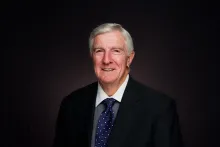
Before his retirement in 2021, Dr. Donald Ward pastored churches in Texas and Louisiana, and taught at Ambassador Bible College in Cincinnati, Ohio. He has also served as chairman of the Council of Elders of the United Church of God. He holds a BS degree; a BA in theology; a MS degree; a doctor’s degree in education from East Texas State University; and has completed 18 hours of graduate theology from SMU.
