
Robin S Webber
This transcript was generated by AI and may contain errors. It is provided to assist those who may not be able to listen to the message.
As we begin this festival, it is important to ask a very, very basic question, and that simply is what spiritual lessons can be derived by New Covenant Christians, for that we are, from festivals that are initiated from the Old Testament. In other words, why are we here observing the Feast of Tabernacles and the Eighth Day Festival? Even more pertinent, let's bring it down a layer and go a little bit lower as we layer down about this specific Holy Day messages. What spiritual lessons can we derive from a festival that's linked with tents, booths, and coverings?
What can we learn? Why are we underneath this tabernacle? Why do we meet in temporary dwellings? Why are you staying in temporary abodes, whether out here on the plains of Mamre, that's a Biblical term, and or you're up there in Walnut Creek or wherever you might be? What is this all about? As one collects all the words in Hebrew and Greek, because the words are scattered throughout all of Scripture, we can take Hebrew, we can take the Greek, we can take Sukkot for Hebrew, we can take Skenu, that's not Scooby-Doo, that's Skenu out of the Greek, that means dwelling. What can we bring holistically, and I said before you in this, simply this, that we are keeping a feast of temporary dwelling places?
When you mix up all the Hebrew, you mix up all the Greek, you put it together in one little piece of cloth, we are keeping the feast of temporary dwelling places. By the very name, we're reminded about our temporary dwelling during this week has a powerful purpose. I'm really looking forward to bringing you this message because I hope even for some of you that have been around for five or six decades that maybe for just a few minutes we can touch your heartstrings and learn that there's even a more powerful purpose, expanded purpose, than perhaps you've ever understood before. And to recognize that God, that Master Teacher, the great Teacher, uses a physical object lesson just like a tent, a booth, a temporary dwelling to bring about an incredible spiritual reality and His spiritual expectations for each and every one of you from the front row, hello, to the very back row.
So you stay with me for just a few minutes and we're going to be able to go through this. Let's join me if you would, please. Let's open up the Bible as John entreated us to because that's why we're here. And let's go to Leviticus 23, and let's take a looker as we say for a moment and to understand what's going on here.
Leviticus 23, verse 39. Also on the fifteenth day of the seventh month when you have gathered in the fruit of the land, you shall keep a feast to the Lord and, or we could say, to the eternal. For seven days, seven days, on the first day there shall be a Sabbath rest, and that's what we're doing right now on this high day, and on the eighth day a Sabbath rest.
And you shall take for yourselves on the first day of the fruit of the beautiful trees, branches of palm trees, the boughs of leafy trees, and willows of the brook. And you shall rejoice before the Lord your God for, important, seven days. And you shall keep it as a feast to the Lord for seven days in the year, and it shall be a statute forever in your generations.
And you shall celebrate it in the seventh month. Now notice verse 42, please. And you shall dwell in booths for seven days. It keeps on coming back out of seven days. All who are native Israelites shall dwell in your booths. Now, but what is the big why? What is all of this leading up, not only for the Israel of old, but for the Israel of God today?
If you've never heard that term before, you might want to jot down Galatians 6, 16. The Apostle Paul never forsook his roots. He recognized that there was an incredible story from Genesis to Revelation, and it is one story. It always goes back to the Passover, the original Passover.
It always goes back to the original deliverance. It always goes back to a people who had no hope that God gave hope, that rescued from the muddy banks of the Nile, cleaned them up, brought them out of Egypt, brought them to the Promised Land. Oh yes, he used a human vessel, he used a human being, he did use Moses, an incredible, incredible human deliverer in that sense.
But it was always, always about God who reached down, not choosing the Hittites, not choosing the Babylonians, not choosing the Sumerians, not even choosing the Egyptians, but took a people who were not a people, a loose band, a confederation of family members called Israel, and lifted them up. And that is the Exodus, and that is the God of the Exodus.
And that story of the Exodus moves forward down to the centuries, down to millennium. It never stops. It's like a tsunami of God's grace that finally touches us and sweeps us up, brings us up, and to recognize that there is the uncreated, there is the deliverer beyond our own personal ability to deliver ourself. And he gives us a deliverer, that's 2nd Moses, Jesus the Christ.
Notice what it says here in verse 42, you shall dwell in booths for seven days, etc. Verse 43, that your generation may know that I made the children of Israel dwell in booths when I brought them out of the land of Egypt. I am the Lord your God. That's why we observe these festivals, seven of them, throughout the course of the year, because God Himself, who made us, always knows that human beings tend to forget to remember, and we remember to forget. And so He lodges these pillars of His grace.
See, the Feast of Tabernacles is not about a law of old riches, a burden. You don't look burdened today. You have smiles on your face. You recognize who you are appearing before. And this God of grace knows how we tick, and what we need to come back into constant remembrance of who our deliverer is. Now, questions emerge from everything I've shared with you already, and that is simply this.
Why so often? And or not only why so often annually, but why is it just simply this length? Why kept always for covenant peoples of God? So this afternoon, I want to share this with you. You know what we're going to do tomorrow? We're going to roll up our slaves. I didn't say roll up our togas. You know, we're 21st century Americans. But we're going to be building this sukkot out here.
That is going to be... I'm going to use a Hebrew word, okay? Are you with me? It's going to be so cool. You didn't know cool was Hebrew. But we're going to roll up our sleeves. We're going to put on our white socks. We're going to do this and that. And we're going to have a lot of fun. So this message is going to kind of tie into this. I'm going to give you my specific purpose statement. Remember that from Spokesman's Club, guys?
Specific purpose statement. So I don't lose you along the way. If I do, I'll come back and pick you up, okay? Here we go. The title of this message is simply this, Five Permanent Lessons. Five permanent lessons about the feast of temporary dwellings.
Five permanent lessons about the feast of temporary dwellings. Do you get the oxymoron going around here? Okay. What can be permanent about this? What does God... And I speak to each and every one of you individually today, and I see your faces, and I tend to like to look at eyes more than notes. Stay with me. I'm going to give you something that I think you can tuck into the pocket of your heart and take home with you, and you will never be the same starting today. Number one, our temporary dwellings remind us that our own physical lives are temporary. Our own physical dwellings remind us that our own physical life is temporary. Yes, God designed this festival to interrupt our lives, to remind us of the limitations of our mortality, and help us keep in perspective who is the uncreated, who is the uncreated, the creator of life, and who are the created. That there be no blurring of roles.
Very important. The very point of Leviticus 23 that we just went over about, the feast of the Eternal. It's not about man. One thing I've, and I think I can speak for my dear wife, Susan, as well, one thing that we have come to more and more over the years, and this is Susan sixtieth year, this is my fifteenth year of keeping the festival, is simply this. And I share it with you. May I? And that is simply this. It's not about us. It's about God. Our us can sometimes become bigger than God. And it's not about us. It's all about God, and what He's doing for you and for me. And to recognize that, the rescuer. In Psalm 91, let's go over to Psalm 91 just for a second, please. Join me if you would. In Psalm 91, let us take a peek here, and notice what is mentioned here. In Psalm 91, verse 1, He who dwells in the secret place of the Most High shall abide under the shadow of the Almighty. I will say of the Lord, He is my refuge and my fortress. My God in Him will I trust. Surely He has delivered you from the snare of the fowler and from the perilous pestilence. And He shall cover you with His feathers, and under His wings you shall take refuge. And so we take a look at that. Today we are here to remember first and foremost that our Father above, and His Son Jesus Christ, they are our deliverers. Moses of old said in Deuteronomy, there shall be a prophet that comes likened unto Me. And it's a Messianic prophecy about Jesus of Nazareth, that He would come as the ultimate deliverer on behalf of His Father's business. That He would come as the ultimate law giver. That not only enshrined law on stone, but went directly, are you with me? For each and every one of our hearts. And said to the prophecies and through the speaking of the covenant, that one day I will write My law in their hearts and in their minds. That's why we're here today. Because God's law is written in our hearts and our minds, and that beacon goes out. Just as John was mentioning, come let us go up, up, and up to the mountain of the Lord. And He will teach us His ways. And then God does what only He can do. He opens our minds, He opens our hearts. And He says He will teach us His ways. But God does only what He can do. But then what He does, He asks us to do what we can do. And we come back with that echo of covenant. And say, and we shall walk in His ways. Are you ready for a new life today? Are you ready to get rid of the SOS signals that perhaps we've been sitting up this year? Or perhaps we sit in from sermon to sermon, sermon to sermon, here a sermon, there a sermon, everywhere a sermon, sermon. And you know, pretty soon, I've done my time, let's go get the coffee. Are you here just to do same old, same old, same old stuff, SOS? Or are you ready to be here during this feast of temporary dwellings? And to recognize that we not only come to appear before God, but to be with God, to be with the Word, to be with the living Word. And to change. As much as God interrupted ancient Egypt, are you, as a piece of clay in His loving hands, are you willing to have your life interrupted during this, the Feast of Tabernacles 22?
I want to share a thought with you right here, and let's go to Psalms 8.
Actually, Psalm 8, verse 3. When I consider your heavens, the work of your fingers, the moon and the stars which you have ordained, what is man that you are mindful of him, and the Son of man that you might visit him? When I look up, and I consider the works of your hands, it's very interesting. We're going to build a sukkot tomorrow. I'm going to cut this short for time. The sukkot that we build, when the Jews built a sukkot, and God gave the instructions of what to build them with, both the sides and also the ceiling. But there's a difference between the sides and the ceiling. The sides were built with certain material, and they were sturdiger, because that is what would surround the people of God, as they abided by the feast of what they called the Feast of Sukkot. But the ceilings were different. The ceilings you could not make permanent, as it were. You could not tie the bundles. You had to separate the bows and the different items that they put on top. Because, are you with me? This is really neat. Because you had to be able to look up to heaven. You had to look at something that's greater than you. And you and I, this past year, we have been surrounded by this world. And we have been surrounded by the material world. But what God desired was, at nighttime, when they were on that pilgrimage, that they might be able to look up out that sukkoth, and be able to see the stars of heaven. To be able to see the constellations. Did you see that? Was that my wife, the only ones that were looking at the heavens last night, and seeing that big, big, big moon? God's smiling down on each and every one of us, and all of his people around the world. God wants to be remembered during this Feast of Tabernacles. I'm going to mention, you already heard the homework I gave when most of you weren't here. I'm an old-school teacher for 16 years. There's going to be more homework at the end of this message. That's just a hint of what's coming. What do we do? I want to share a quote out of Ralph Waldo Emerson, a New England philosopher many, many years ago. 150 years ago, he said this, hear me out for just a moment. It's short. If the stars should appear one night in a thousand years, how men would believe, how they would adore, and how they were preserved for many generations, the remembrance of the City of God that had been shown them. But every night come out these envoys of beauty, and they light up the universe with their admonishing smile.
And yet men don't look up, and men don't believe. And sometimes we can just be looking ourselves as the children of God at that which surrounds us, rather than looking up, as Mr. Miller brought out in his message, to look up and to know how special we are in God's hands. But we have to have eyes to see, and we have to have ears to hear, and that is what God has given us. Each of us is created for a short time, and a physical body that will die. Think of the Queen, wonderful human ruler, as it were. Susan and I were one year old when she became Queen.
She said, it was a shock to all of our system to agree that we're Americans. To recognize that this woman that had surpassed all of those Prime Ministers of hers, and all of the US Presidents, and died. It's kind of a jolt to the system.
Methuselah, 962, 969 years of age, died. Why is it that so often we think that death and taxes happen to every one of us? Brethren, remember what it says in Psalm 90, verse 12, 3, score, and 10. And if by reason of heart you have four score years, therefore teach us to number our days. Psalm 90, 10, through 12. Point number two. Temporary dwellings remind us that we have limited time to serve His, with a capital H, His purpose to serve God, in other words. Again, let's remember that in Leviticus, Leviticus 23, 42, it says, seven days. This time period was limited for a reason. There was a time of limits. There was a purpose to jolt us, as it were. Peter must have taken his cue from Jesus, who Himself, who recognized time was the essence. Join me, if you would, in John 9. In John 9, in picking up the thought in verse 4, we're just going to focus on this one verse. In John 9, verse 4, Jesus Himself speaking, I must work the works of Him who sent Me, while it is day. The night is coming when no one can work. Even our heavenly rabbi, even the one that God sent for us to learn from, knew that He only had so much time to be about the messianic mission that He was on down here below. Jesus understood the three and a half years. He knew the number of the years and the time of His ministry. I have a question for you. May I? Do you know, will you be here tomorrow? Do we know if any of us will be here a year from now? We've just gone through COVID, and there are people that were near and dear to us that were at the feast last year, or the feast at least a year before, or the feast before that. They're no longer here.
It says in Scripture that God knows the number of hairs on our head, and it's getting easier for Him with me.
And He knows our timing. But that's God. I find that as I get older, timing is very important. But what I want to focus on here is simply this. You have a calling. Whether it started this month, this decade, a half a century ago, we only have so much time to be about our Father's business. And what is that business? Jesus Himself said to the Samaritan woman, I say to you that there will come a time when my followers will neither worship on this mountain or that mountain, but they will worship God in spirit and in truth. Not just truth. Not just because we're here and we understand the truth of the festivals and the Scripture, and that they are enjoined to the New Covenant community today. But the truth of the love and the truth. Not just the doctrine.
Doctrine is like a fried egg that hasn't been scrambled, hasn't been worked with, with the agent of love to mix it up, to be an appetizing to those that are around us.
Oftentimes in the Church of God, we speak about when did you, you'll know this phrase, when did you come into the truth? I've heard that for about 60 years.
Wouldn't it be interesting that we expand upon that? When did you come into the truth and begin to understand God's love? And combine both of those together for the winning combination that Jesus spoke about in John 4 and verse 20 and 24. We only have so long. Join me if you would in 2 Peter. In 2 Peter 1. This is a senior citizen of God. Peter's probably 60, 65 at this point. He knows his human life is ending. And in 2 Peter 1, in picking up the thought in verse 10, Therefore, brethren, be even more diligent to make your call, make your election sure, even in the aspect that our lives are temporary, number one. And number two, we only have a temporary time to carry out the will of God in us. For if you do these things, you will never stumble, for so an entrance will be supplied to you abundantly into the everlasting kingdom of our Lord and Savior Jesus Christ. For this reason, I will not be negligent to remind you always of these things, though you know and are established in the present truth. Yes, I think it is right. As long as... notice, notice, notice please, as long as I am in this tent, this temporary dwelling, to stir you up by reminding you, knowing that certainly I must put off my tent.
That's why I feel privileged to be able to speak to you today. I'm not a young man anymore. I do not know how much longer I have to live.
And I am all the more diligent to pass it on to the children of God that are coming along now.
So important. Grab ahold of this festival. Recognize we only have so long, by God's grace, breath by breath, to be able to share His love, to share His mercy, to share the understanding, and appreciate John and Susan, what they've done in this community, to broaden out.
Not just simply to quote-unquote bring people into an organization, but to encourage and to mold and to instruct, and to spread the Word of God to those that He's calling into the body of Christ, which is a spiritual organism known but unto Him.
Now, when I say that, please understand I was chairman of this organization at one time. But God's calling us to something even bigger. He's calling us as that Israel of God. He's calling us as members of the body of Christ. He's calling us to reach out and to come into agreement with those that come into agreement with the Scripture and call them brother and to call them sister and give the rest to God. Allow me then to give you point number three. We're skipping along here. Point number three. In our temporary dwellings remind us God dwells only so long in our human tend. Number two was we only have so long to be about God's purposes and the will that He sets for us because to love is the keeping of the commandments. But also, God only has so long to dwell in our human tends. All who have God's Holy Spirit have God literally dwelling inside of them. With man's being mortal in that sense, God has elected. Think about this. God has sending His Spirit to us. God Himself, who is uncreated and immortal, all present, all knowing, all loving, all living, has elected. He has pitched us to You and to you and to me. He's pitched tent in us. That's quite an incredible thought. I'll give you a little homework. Just go through Romans 8, 10 through 16. Speaking how the Spirit of the Father, speaking how the Spirit of the Son has taken residence up in us. And to recognize that's why Paul could say in 1 Corinthians 3, 16, thereabouts, know you not that you are the temple of the Holy Spirit. God resides in us. The word temple there is interesting. It's in the Greek, in AOS. That means the same word that was used for the Holy of Holies. His presence comes down and dwells in our hearts. He's going to work on us, but we have to, during this time, learn to cooperate with Him. It's a beautiful thought, and it's a wonderful understanding that God has given us. He patiently resides in us. In this wilderness world, as much as the I AM resided with ancient Israel. The first thing that went up in the encampment in Israel, in the wilderness, was the tabernacle was right in the middle of the camp. God never put it on the side. He didn't put it outside the camp. That's where the sick people went. But it was centered right in the middle. It was personification that, from the time of the Garden of Eden, God always wanted to dwell in the midst of His special creation that was made in His image. He wanted His children around Him. He wanted to dwell right in Eden. Everything would circulate around Him. That continues. We'll be talking about that on the eighth day, as we work with that ultimate Eden that is yet to come. He wants to dwell in us as long as possible. Then we go to sleep, and then we wait for that great day. Point number four. We're skipping along. Number four. Our temporary dwelling reminds us that even the millennium will be temporary. Did you ever think about that? Even the millennium that we are celebrating during the Feast of Tabernacles will be temporary, as glorious as it is, with Christ ruling on this world. As I turn to Revelation 11.15. We take this second coming really seriously. It's what we live for. It says this. Then the seventh angel sounded, and there were loud voices in heaven, saying, What was explained in the first part of the service today? To recognize where this world is. I came up with the thought while I was listening to that message, and that's why we pray that all of us out on the tables can gain understanding. How often, and that's what this Feast is about, of what we're doing with this tent right now. How often we've said after that, and you're with me, Thy kingdom come.
But I'm going to add something that maybe you've never heard before. Are you with me? Here it goes. And that's simply this. Once we understand the need for God's holy, righteous kingdom to come to this earth, for Jesus Christ will land on the Mount of Olives with His two holy feet. And that it begins, as John mentioned, in Jerusalem, and it begins to spread to the world. And we long for that day when there is no more war. There are no more tears. And we hear that, and we say, Thy kingdom come. I'm going to add something. During this Feast, as citizens of that kingdom, of that heavenly Jerusalem, when we say, Thy kingdom come, let us also then add, Thy kingdom become, you and me. For Thy kingdom come makes it impersonal. But to recognize that that's why we're here today training and becoming a kingdom of priests, to help those people as they come up to that Jerusalem. We, under Jesus Christ, the great high priest, are going to be able to instruct those people in the way. And they'll have a chance to do what you're doing this week, and that is to walk in those paths. Point number five. Point number five. Our temporary dwellings remind us, even this earth is temporary. Even this earth is temporary. Revelation 21, 1-3, I'll just allude to it, tells us that there's going to be a new heaven. There's going to be a new earth. It's interesting that the Jews of old, they would build their Succoths for seven days. They would take them down after seven days. Because the eighth day is a separate festival. It's a separate festival.
The eighth day is totally unique because now we move from this world, from this temporary age, and we move into a world of total holiness and righteousness under our Father above and His Christ. Where we find implanted in Revelation 22, the throne of God and the throne of Lamb. So even the millennium, as incredible as it's going to be, and we're going to be hearing a lot about that, even that is temporary. There's a new heaven. There's a new earth. Join me if you would in 2 Peter. And let's pick up the thought, if we could please, in verse 7, 2 Peter 3. And this will be a preamble to the rest of the feast. And the rest of your life, what you will make of these few words today that Mr. Miller and I have spoken to you. In 2 Peter 3, and pick up the thought in verse 7. But the heavens and the earth, which are now preserved by the same word, are reserved for fire until the day of judgment and perdition of ungodly men. But beloved, do not forget this one thing, that with the Lord one day is a thousand years, and a thousand years is one day. And the Lord is not slack concerning His promise, as some count slackness, but is long suffering towards us, but willing that none should perish, but that all should come to repentance. And if you've never heard an eighth day message about what that means, and that God is the God of return, the God that has not forgotten one, anyone that is made in His image, you've got to come hear that one. That's going to be a wonderful day to express to you. But the day of the Lord will come as the thief in the night in which the heavens will pass away with a great noise, and the elements will melt with fervent heat. Both the earth and the works that are in it will be burned up. Therefore, here's the great question, why prophecy? So often people get stuck on prophecy that they are striving to put together a jigsaw puzzle, and then give it to God and say, this is how it has to work. I've called out, I've done all the characters, I've done all the cutting. Now, here, you do this, rather than waiting on God. Rather than waiting that God will give us in the prophetic messages enough to consider and to have that hope, but to recognize in what does happen, because like that man that John spoke about, we come in faith without all the details, without all the words, without all of our own suppositions. But we come in faith. Father, if you've said it's good, it's going to be great! If it's going to be wonderful, it's going to be better than our human best or what we could even imagine. And that's why our Savior, Jesus Christ, who was the ultimate pilgrim, who came down, as it says in John 1, verse 14, and he came and he scannued, he dwelt, he tabernacled, he tinted in this wilderness of humanity, that one day the door of Eden might be opened to each and every one of us again. And so therefore, it says here in verse 14, down here it says, Therefore, what manner of man ought we to be?
Five points. Five considerations. Allow me to finish. It'll be just about two minutes. You can't walk towards me. You can't walk out on me. Just going to go two more minutes, okay? Thank you for your indulgence. Patience is one of the fruits of God's Spirit. You're practicing it right now.
We can have some fun along the way, but I am live serious. I am dead serious. We're dealing with eternity here, and we're dealing with the gift of God before us. Abraham, the father of the faithful, with the ultimate pilgrim. Allow me to share this is very simple if you have some notes going. Abraham was known for two things. Simple. He was known as a man that had a tent, and he is a man that had an altar. And he tinted. And he never knew how long he was going to stay in one place. It was always temporary. So often Sarah would be coming from maybe the stream, the oasis, and all of a sudden she'd look at her husband, and she'd go, Oh no, he's got that look again. God's been talking to him.
Okay, I'll go pull up the stakes. Because the echo that comes down to you and me as fellow pilgrims with Father Abraham is simply this. And we have to be willing and learn more than ever during this Feast of Tabernacles 2022 that God will times call upon us when we are settled, when we think we're permanent, and he's going to tell us three things. And this is simple. I will not give it in Hebrew or Greek. I'm just going to give it in English. Get up. Get out. Get going.
Oh, and there's one more thing that he adds. And as you do, I'll be with you. Let's think that through for a moment.
Abraham knew all about temporary dwellings, and one thing that he did, once God called him out of Ur of the Sumerians, is simply this. He never worshiped another God. His altar that he constructed from site to site to site through the land of Mesopotamia, over into Syria, and down into what would become the Promised Land. That altar was for one God alone. The one true God. Can you make that dedication today? Can you say and take your calling that seriously, that you are a sojourner, like Father Abraham? That you're not tied down by the goods, by the materials, by the emotions of this world? And are you dedicated? I think you are, because most of you are baptized. That's what we said, that when we were baptized, that we will worship you on the altar, that is in our heart, that you put there. And we have accepted the sacrifice, not of Isaac, but of the Christ, the second Isaac, and that we will worship you with all of our heart, and all of our mind, and all of our soul.
Allow me to share one last story. I think you'll find it interesting, about being a pilgrim in this wilderness that surrounds us. That is so tempting, isn't it? Sometimes we just want to say, and our young people, we want to settle down, see all these young people, hello, young people on the front desk, you're here, okay. We want to settle down, because this is our time, this is our world, as much as it was for my wife and I in the 1960s. That was quite a world. But anyway, we look at that. But now I want me to share this story, and allow this to be the story that we take with us. And it's simply this. There was an American tourist, who was visiting the 19th century Polish rabbi, Joffit Chaim. He was astonished to see the rabbi's home was only a simple room, filled with books, plus a table, plus a bench, plus a mat on the floor. The tourist was bewildered, and he asked, Rabbi, where is your furniture? And the rabbi, in the Jewish sense, because the answer is always in the question, he said, where is yours? Replied the rabbi. Mine asked the puzzled American, but I'm a visitor here, and I'm only passing through. And the rabbi looked at him with a glint in his eye, and a smile on his face, and he said, I am too. You see, dear brethren, brothers and sisters in Christ, children of the Father on high, you and I, we've been called to come to understand that we're just passing through. Will you join Mr. Miller and Mrs. Miller? Will you join all of us here? Just call me Robin while I'm here. That's what my mother named me. And let's just all recognize that we're family. Let's recognize that we all have our struggles, we all have our strains, we all have our problems, we all have our heartaches. But we come to God just as much as that gentleman over in Miramar came to the Millers and said, I've come in faith. And with that faith tonight comes your homework assignment. Everybody, now that you have a little confidence in me and a little faith, let's raise our hands and say we're going to do Robin's homework assignment as soon as possible. Oh, you of little faith!
Remember what David said? When I consider your works, we need to look up. We need to look beyond that which simply surrounds us. We need to look up. My homework assignment to you is very easy. And that is simply tonight if it's clear. Tonight if it's clear. Leave your temporary dwelling place, whether it's a camper here, or you're up with us in Walnut Creek. Or if you are at home, because even if you're in your own home, you are a pilgrim. And I'm just going to ask you, give your God a moment of your time. You go outside, and you look up, and you behold, and consider the works of God.
I assure you, on the confidence of Scripture, that if you do so, and you truly want to be a pilgrim, and you really want to return to God, maybe this is the first time you've been back to the feast for years and years, but you're here, and God bless you. Or maybe we've come back year by year, and, okay, let's get this sermon over with, and let's go to Disneyland. We've got to recognize Disneyland is the other kingdom.
And that's a Mickey Mouse experience.
See, I've lived in Orange County. I'm an Angelino. We all know about Mick.
But as you do, in all seriousness, recognize what you're doing. You're fulfilling the quest of the psalmist. We're in Psalm 46, verse 10. He simply said this, Be still, and know that I am God. And you look at those celestial envoys out there that are not an end in themselves, but a magnification of the glory of God and his interest in you. Be still, and know that I am God. Start tonight, and may God bless you, may God keep you all the way that are pilgrims on God's earth, as we are just simply what?
Passing through.
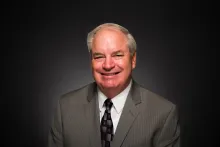
Robin Webber was born in Chicago, Illinois, in 1951, but has lived most of his life in California. He has been a part of the Church of God community since 1963. He attended Ambassador College in Pasadena from 1969-1973. He majored in theology and history.
Mr. Webber's interest remains in the study of history, socio-economics and literature. Over the years, he has offered his services to museums as a docent to share his enthusiasm and passions regarding these areas of expertise.
When time permits, he loves to go mountain biking on nearby ranch land and meet his wife as she hikes toward him.

