
Robin S Webber
This sermon was given at the Bend, Oregon 2009 Feast site.
This transcript was generated by AI and may contain errors. It is provided to assist those who may not be able to listen to the message.
Good morning! Certainly nice to be here with all of you. On behalf of my wife, Susan, and myself, we certainly appreciate the gracious welcome that so many of you have given we that are Californians up here in the Northwest. We have just really rejoiced here being in the promised land. Susan and I flew into Portland several days ago and had the tremendous opportunity to go down the gorge and to be able to have just one of the most beautiful days of our married life. We had kind of planned it as an anniversary day, and boy did God bring out the wedding cake. It's called the Columbia River. And we just really, really enjoyed it, then trekked our way down from the Dalles a couple of days ago and now here with all of you because that's why we're here to see all of you, to be together as we heard in the opening message. I want to say it's always so wonderful to be able to hear Sue and her daughters sing together that what a blessing to have two generations in the church being able to be up on stage and to have those blended family voices to be able to praise God. I do want to mention before I start the second message today, do I really get to come off this thing? I feel like a liar, and I think there's some kid out there with five stones.
What would you like? You want me to help you?
He wants a tip!
Wow. You know, I was not going to say anything. I've never been to Bend. When in Bend do like the Bend people do. I just saw that was a part. I'm really trying to be good during this phase.
I do want to say hello to all of our friends that are in the other room. There's all sorts of hundreds of people over there that we haven't seen yet. All the kids that were praying for snow. They're all over there.
But we certainly do appreciate the wonderful job that the walkers and all of you have been doing here because it's not just one person or a pastoral couple. It's all of us that make the feast and certainly want to say thank you very, very, very much. During this festival, we come together because you and I believe that a holy God has called a holy people towards a holy purpose. And this festival, like all the other festivals that we observe during the year, do three things.
We come together as a family. We break bread together and we tell the story. It's really that simple. And yet, it is indeed that profound that we gather the family. We break the bread and we tell the story. But friends, it is not just any story. It is the story. A story that we'll go through day by day, message by message, and chapter by chapter. And what a privilege to be able to add another chapter of that story to you this morning.
A couple of nights ago, we heard that God has a design, and He has a design to make this world go away. We heard yesterday that God also has more design in store for you and for me, and that is to bring a wonderful world tomorrow that is going to be brought out before all people and how inclusive our great God is. Those are the chapters that we've heard so far. Allow me to bring another chapter to you this morning, and that is simply that God has a design for you today. We're not going to talk about tomorrow.
We'll move towards tomorrow, but we're going to talk about you today because God does have a world that He is designing in you today. Not the world around, but the world that's between your ears, and the world that resides in your heart, that you and I have the incredible privilege as the royal people that we just heard about, that you and I have the privilege and the honor to live the wonderful world tomorrow today. And it is to that that I would speak to you this morning.
Now, some of you have heard by the hearing of the ear such terms as tabernacle and sochoth all of your life. Many of you were born in the church. Many of you were raised as young adolescents in the church. Many of you came in as young married couples in the church, and you have been hearing about this for years and years and years.
So we've heard it by the hearing of the ears. That is well, and that is fine. That's where we start. Some of you are hearing this message for the very first time this year because your your hands went up the other evening, and we are so glad that you're able to be here. Some of us have received over the years all the appropriate information. We've heard all of the terms. We've heard of tabernacle. We've heard of sochoth. We've heard of pint, and we have so much information over so many years that we could write an almanac with all the different points about those items.
But it is not to you that I speak this morning. For some of us have heard it by the hearing of the ear. Some of us have all the information about sochoth and tabernacle. But we have not yet at this point experienced the indwelling, the fullness of the Spirit of God, the presence of God in us that these days bring about.
To fully understand that tabernacle is not just simply an event. Are you with me? It is not just simply an event. It is an existence that we live out every day of our life. Now, this festival brings us into remembrance of that. We huddle. We hear. We absorb. But to simply think that we go up to tabernacle without understanding that God wants to tabernacle in us each and every day.
If we do not understand that, we will go away empty. We will know how to spell sochoth. We will know how to pronounce tabernacle. But we will not have experienced what God wants us to experience. So whatever spiritual direction you're coming from to begin with—and I hope I've got everybody— on board right now. Let me ask a question. What is all of this tabernacle stuff about anyway? And what spiritual lessons can Christians, under the New Covenant, derive from some of these seemingly archaic terms like sochoths, pence, tabernacles that seemingly are buried in the Hebrew Scriptures and, if not, certainly are buried in the sands of Sinai.
Are they relevant to us? What can we learn about them? May I say, you need to know. You can know. And you can experience the life-changing lessons that are to be derived from the term tabernacle. And again, it is to this that I would speak to you this morning. Let's begin, if we can. Are we all set? Let's begin by appreciating the focal point of what these seven days are called. It's called tabernacle.
That's the name that God planted on these days. Now, what's interesting is we look at all the different days that we observe over the years that many of them have different titles and different words associated. Some are associated with lambs. Others are with numbers and sequences. Others are with food. Others are with instruments. But it is of note, friends, that it is on this festival that it is associated with one word. Dwellings. Dwellings. Now, any simple quick review of the term tabernacle and any commentary that you might choose to pull off the shelf will give you a litany of Hebrew and Greek words that will basically come down to just very short words.
Allow me to share them with you. Tint.
Booth. Covering. And most often in both languages, be it Hebrew or Greek, a dwelling place.
So, if we put this all together, as we say, lump it all together, this in the truest sense can be called the Feast of Dwelling Places. The Feast of Dwelling Places. And you say, well, I already know that. Is the sermon over because I'm in the comfort inn. I'm in the Super 8 with my little cooler and microwave. I'm up here at the Eagle Crest Resort. If we limit this festival simply to a temporal domicile, we're missing it, friends. As we say down in Southern California, big time. We're missing the lesson. And we're not going to have the transforming tabernacle experience in our minds and in our hearts that God has summoned you to bend Oregon, to experience, to understand, and to invest your life's devotion in. But one additional question before we go any further. Who's invited to such a festival? Join me again, and I'd like to build upon the foundation late in the first message, 1 Peter 2. And come with me if you would. Let's open up our Bibles and look at what Peter tells us, reminds us about in 1 Peter 2 and verse 9. Because I want to build on a different part of the scripture that was just mentioned. In 1 Peter 2 and verse 9. But you are a chosen generation, a royal priesthood, a holy nation. You are special that you may proclaim the praises of him who called you out of darkness into his marvelous light. Who once were not a people, but now are the people of God, who have obtained mercy, but now have obtained mercy. Now, let's focus, if we can, on verse 11. Beloved, notice the endearing term, I beg you, I implore you, I beseech you, as sojourners and pilgrims abstain from fleshly lusts, which war against the soul. It is here in this verse that God tells us who is invited to tabernacle with him. They are called pilgrims, they are called sojourners. Now, many of us that grow up in America know about the pilgrims, but I'm not just speaking about the little folk with the funny hats, the nice dresses, and the buckles on their shoes, with a very, very, very, very big musket. I'm talking about the sojourners, I'm talking about the pilgrim that God wants us to be. Let's understand something. That a pilgrim, that's you, that's me, a pilgrim is one who's on a journey. He's on a journey towards a shrine and or towards a specific destination. Once he settles, once she settles, once that pilgrim puts down roots, the pilgrimage is over.
So, the determining factor is not simply about the destination. And I think so often that's where our minds can be about focusing on the destination. And the destination is incredible, and we've heard about that the last couple of services. But a pilgrim is not only about the destination, more so it's about how we are traveling along the way that makes us the pilgrim. The lessons of tabernacling are not simply about the destination, but the way that our hearts and our minds and our lives travel along the way. Thus, the big question becomes not only what does God want us to learn about dwelling places, the bigger question is how does He want us to live? God is not only concerned that for seven days that we tent. And that is an important part of what we're doing, as we've heard in the messages. But may I share a secret with you? He's not so much concerned about the tent as much as what's going on inside the tent. That means what's going on inside of you and me. And that's why these festivals, each of them, and now this one, is more than just simply about information, about what we know. For what we know and the almanac that is in our mind and the facts and the figures that we hear from a speaker or we read from the Bible alone, are only going to go so far. They will go to the grave. It is more than just simply inspiration of an event called the Feast of Tabernacles, where we come together for a religious group huddle and we high-five to the kingdom. We feel good about ourselves for the moment. We have tabernacled and then we go out and we live in the world and our life has not really changed. It has not surrendered to the Father. It is not imbibing in the life-giving spirit of Christ in us. And thus we wonder and we worry and we wait till next year's event to get a high. Friends, may I share something with you? Christianity is about information. It is about inspiration that we will receive during this, the Feast of Tabernacles. It is also, though, about transformation. Information, inspiration, will not usher you into God's gracious kingdom.
Only God's work and design for you and in you and that transformative heart that you surrender to Him as you slog through the world that we've heard described to us will allow God to open the door and say, Welcome to my world. That is why this morning I want to give you three keys for understanding a Christian's tabernacle existence. Three keys to understanding a Christian's tabernacle existence. For every spiritual pilgrim, and I sense and I feel that I'm surrounded by them, embraces these three points. They are always the same. They are in Genesis. They are now. They will be in the future for those that take up the pilgrimage. Allow me to share them with you. They're very simple. They're not hard. You'll get to know them. Simply, number one, pull up steak. Number two, pitch the tent. Number three, make sure that it's planted in hope.
Pull up steak. Pitch the tent. Plant it in hope. Let's begin with point number one, if we may. Are you ready? Number one, a Christian must at all times be willing to pull up steak. Remember what I said about the definition of a pilgrim? When a pilgrim sinks down deep and puts down roots, you're no longer a pilgrim. You're no longer what God said we are to be in the book of Peter. Thus, number one, a Christian must always be willing to pull down steak. We discover that God's relationship with the original spiritual pilgrim known as a brahm, who's called the Father the Faithful in the scriptures, was established with this very first point. I don't know if you ever noticed that as you go to the book of Genesis. Join me if you would. Let's go to Genesis and let's notice how the relationship began. Friends, as has been said for 50 to 60 years in the Church of God community, God is calling us to relationships. And that's what God did with Father Abram in Genesis 12 verse 1. But even as we're invited into that relationship, he would ask something of us. Now the Lord had said to Abram, Get out of your country and from your family and from your Father's house and to a land that I will show you and I will make you a great nation and I will bless you and I will make your name great and you shall be a blessing. I will bless those who bless you and I will curse him who curses you and in you all the families of the earth shall be blessed ultimately by the blessing of grace that Jesus Christ would come through the loins of Father Abram and Sarah down through their descendants. The relationship was a happening, but notice two of the great words here, Get out of your country.
Otherwise known as point number one, Abram and this relationship had to pull stake. He was to get up, he was to get out and simply go. Oh my! That took tremendous courage, especially as all the peoples of the world were beginning to flood into the river valleys of Mesopotamia. There was one man going out the other way down the highway all by himself because he responded to what God had said. Thomas Cahill, in his book, Gift of the Jews, perhaps puts it best when he says this, allow me to briefly read to you.
So, Abram went to the boldest words in all literature and they signal a complete departure from everything that had gone on before in the evolution of culture and sensibility. Out of Samur, civilized repository for the predictable, comes a man who does not know where he is going but goes forth into the unknown wilderness under the prompting of his God.
Out of Mesopotamia, home of canny, self-serving merchants who use their gods to ensure prosperity and favor, comes a wealthy caravan with no material goal. Out of ancient humanity, which from the dim beginnings of its consciousness has read its external verities and the stars, comes a party traveling by no known compass. Out of the human race, which knows in its bones that all its strivings must end in death, comes a leader who says he has been given an impossible promise. Out of mortal imagination comes a dream of something new, something better, something yet to happen, something yet to occur in the future. Sound familiar? Pilgrims? Fellow tabernaclers?
Isn't that what we've been hearing about the last day and a half?
As we conjoin ourselves with those that have gone before us, like Father Abram, that he was willing to pull stake. As all the world was coming this way, there was the lone vehicle on the freeway leaving Ur.
Now, sometimes you like to have that happening, especially if you live in Portland.
But you get to return home at night. This was a one-way destination into the unknown, on faith, that God's promises are better than our human premises.
It wasn't just a one-time experience with Abram, later known as Abraham.
Pulling stake would become a way of life. Ladies, think about this for a moment. I'm going to talk to you for a second. Can you imagine? You figure your husband out? Maybe you already have, or maybe that's why you're still married to him? You're still waiting to figure him out? I'm not sure. But just think of Abraham kind of slyly coming around the tent, looking for his wife in the front. And Sarah looks up, and you know you can fool everybody, but you can't fool your wife.
And she sees something happening in his eyes and his body language. And she already knows what's coming before it comes.
And Abram says, Sarai?
And Sarah says, I know. You've been talking to God again.
We're moving.
We're pulling stake. Because tabernacling, being a pilgrim, is not an event. It's an existence. It's a way of life. Join me, if you would, in Revelation 18 and verse 4. In Revelation 18 and verse 4, we find that we have a similar game plan, or God plan, as did Abram and Sarai. Now, when we go into Revelation 18 to be careful with Scripture, we do realize to a degree that this is time-specific in the future. We always want to be careful with Scripture. But whether it be the saints in the future and or we that are the saints and pilgrims of God now, the message remains the same. Verse 4, and I heard another voice from heaven saying, God's message to those that will allow him to tabernacle in them is always this.
It never changes. Come out of her, my people. I want a relationship with you. But you're going to have to throw away your own compass and give your life and surrender your existence over to me, even when you don't know what's just around the bend. It's all right.
You might think you have a better way of going, but my best is always, always more than your human best. And will you follow me wherever I ask you to go? It remains the same.
Later, God would test Abraham's ancestors and the children of Israel. On the very same principle, it's always their friends to pull stake. To whether they would pull that stake and get up and get out and go. Now, it's interesting that here's the people that you would think had been ready or would be ready because they had been in slavery for over 200 years. But what is it about us sometimes, friends, when that moment comes when we know what we need to do? We hear the prompting of God's Holy Spirit, but we're down here, but we're not ready or willing to pull the stake.
Israel had, as we say today, issues. They didn't want to pull the stake even in slavery. They weren't sure about this guy. Who are you, anyway? Who sent you here? Why should we follow you? What is interesting is that sometimes we become secure in our insecurity.
Like a comfortable wallet on the back of your rear guys, or those comfortable shoes, or that lady, that purse that you know where everything is in. And you know you need to clean up the mess, but you know where everything is in the mess, so why even go there? So we become secure in our insecurity. Just take that out to the big issues of life, our heart, our mind, our marriage, how we approach one another, how we approach the world, how we're dealing with our adult children, how you as adult children are dealing with your parents, and how you're dealing with that issue inside of you that you have not yet given to your God. Israel is in slavery. They were in bondage. Sin is slavery. Bondage is often an addiction which is hard to break. That's why you're here at the Feast of Tabernacles to learn how to come out of this world to the beautiful world that Mr. Gisi described for us yesterday.
God brought them out of Egypt. Join me if you would, Leviticus 23. In Leviticus 23, he ultimately brought them out of Egypt, and he wanted them to remember that experience of that pilgrimage from the bank of the muddy Nile to the Promised Land. He wanted them to remember how fragile they had been and, frankly, how fragile they continued to be. But beyond that, he wanted them to understand how permanent his role as a deliverer is to a covenant person. That's where the Feast of Tabernacles begins with. It begins with that time and moves into that better world that we look forward to. Leviticus 23, verse 39.
Also, on the fifteenth day of the seventh month, when you have gathered in the fruit of the land, you shall keep the feast of the eternal seven days. And on the first day there shall be a Sabbath rest, and on the eighth day a Sabbath rest. And you shall take for yourself all the fruits and all the leaves of all these wonderful things. And you shall rejoice before the Lord your God for seven days. And we've heard that wonderful message. Verse 41. And you shall keep it as a feast to the eternal for seven days in the year. And it shall be a statute forever in your generations. And you shall celebrate it in the seventh month. You shall dwell. You shall tabernacle. You shall dwell on booze for seven days. All who are native Israelites shall dwell on booze. Why? We know the what. And so often, friends, being human beings, we just simply get satisfied on the what rather than the why. And rather, the who is telling us to do what. To do what? And sometimes we don't get to that why. That your generations may know that I made the children of Israel dwell in booths when I brought them out of the land of Egypt.
I brought them out. I delivered them. I had a plan for them when none of the rest of the world had anything, any plan, any hope, any existence for those slaves.
It wasn't Moses. It wasn't good luck. The Feast of Tabernacles, friends, was designed for a covenant people to always remember that it is God and God alone that delivers us. It is not by our works. It is not by our hands. It is not by all of our good reasoning.
Certainly isn't by some minister up here on a stage. Oh, we can inform, we can inspire, but the transformation comes between you and God as you are willing to pull stake. But the story doesn't stop there. From the bosom of this nation came the ultimate pilgrim that I would like to acquaint you with, the one that experienced the ultimate tabernacle experience. Join me if you would in John 1. Many of you have read the Bible for years and years, but maybe you've never associated tabernacling with this magnificent introduction that John gives around 90 AD to the Gentile community. And he begins, as Paul did, speaking to Gentiles, speaking to the Greek world with a message that they would understand. He speaks of the God of creation. He speaks in terms of the Word. In the beginning was the Word, and the Word was with God, and the Word was God. And he was in the beginning with God, and all things were made through him, and without him nothing was made that was made.
Now, it's fascinating that what we have here is, as with so many religions, and we alone don't have this claim, there are many, many religions that look at what we call first cause. That someone had to wind up this universe. That when you look at the magnificent design around us, and the laws of nature that are in motion that are not broken, we come to understand that there was a first cause. That, in that sense, there is a deity. Are you with me? There's a deity. But Christianity is not just simply about first cause. It's about something far greater and far grander. Christianity develops between John 1 and 1 and John 1, verse 14. Let's drop down if we may. The one that did all of this, the one that was the Word, the one that was there at the beginning with God, that was God, is God is God. And he alone is God as God is God. He is a part of that deity that eternal God has that knows no beginning and knows no end. It says here in verse 14, And the Word became flesh and dwelt among us.
And we beheld as glory in the glory of the only begotten of the Father, full of grace and truth.
Allow me to put it in its original language. May I?
And the Word became flesh and tabernacled among us. Better rendered, the one that is chose to tent among humanity, and show us how the pilgrimage was to be conducted with two legs, two arms, and a heart surrendered to God. But before he could tabernacle here, he had to be willing to pull up stake elsewhere.
Get it? Before he could tabernacle amongst us, oh, and thank God that he did, he had to pull stake up somewhere else. And as Paul so eloquently says in the epistle to the Philippians that he who is, he that is the Son, thought that it was not robbery to be equal with God that made him less. He didn't hold on, he didn't grapple, he didn't say, you know, God, do you really want me to pull Father? Do you really want me to pull? Do I have to? No, he pulled stake up there, that he might come and tent down here.
And while dwelling in this human tent, he never sank permanent roots. Join me if you would in the Gospel of Luke, Luke 9, verse 58.
Luke 9 and verse 58. You know one thing about Jesus Christ and why we love him, even though sometimes we might get mad at him, because he is so brutally honest, he tells us just how it is and just what it would be like, tavern-ackling and tenting. It was for him, it is for us. And Jesus said to him, Foxes have holes and birds of the air have nests, but the Son of Man has nowhere to lay his head.
And then he said to another, follow me. But he said, Lord, let me first go and bury my father. Allow me to take care of the business that is at hand that is vexing me presently. This man could not go on the pilgrimage because he was not willing to pull up stake in the present. Then he said to another, follow me, but he said, Lord, oh, I mentioned that. And then he said, Jesus, okay, verse 61. And another also said, Lord, I will follow you, but let me go first and bid them farewell who are at my house.
He wanted to go back to the world that had been, the world that he was comfortable with.
But just Jesus said to him, no man, having set his hand to the pile and looking back, is fit for the kingdom of God. Brethren, I have a question for you.
And it's simply this, as we enter the second day of the feast of pilgrimage, of tinting, of following Abraham and following the Christ, noticing his instructions right here about pilgrimage.
A question that you alone can answer. I just saw it out there.
Have you surrendered your past to God the Father and Jesus Christ?
Are you willing to give up that which is pulling at you that is making those roots go deeper and deeper in the present? Will you and are you willing to allow God to transform you during this feast and surrender your present? I know we all have plans for the future. I do. Susan and I are parents. We have grandchildren. We have parents. We have all that you have.
But if I'm going to be a pilgrim, if I'm going to learn to tint properly and to give that which is in the tint properly to God, a question, are you willing to surrender your future to God?
Recognizing that His best is always much more than your human better.
You think about it and think about it deeply. This festival of Dwelling Places 2009 is designed to strengthen and encourage you to the fact that while you may not have in yourself the strength to pull the stake, there is a deliverer. He is waiting. He is willing and He is desirous to help you pull that stake. Point number two. A Christian pilgrim must pitch tint on the right foundation. A Christian pilgrim must pitch the tint on the right foundation.
You see, a Christian pilgrim's tabernacle experience is not simply about what he or she has done, but what we are doing. Did and doing are two different creatures. Or haven't you noticed?
There are a lot of people today that did the Pilgridge Festival, but they're no longer doing it. And I say to myself, as I talk to myself, why? Why? Perhaps they never caught the New Covenant vision of tabernacle. They got caught up in what they see or what they can touch or what they can feel. They got caught up in the literalism rather than recognizing that tabernacling is not just an event. It's an existence. It is not just seven days, and it is seven days, and it is more than that. It is a life that is surrendered. It is on the go towards something new, something better, something yet to happen, something yet in the future. But that world tomorrow is something that God is trying to design in us in this tent today to be the example that was mentioned in the first message that when people see us in Bend or Redmond or Portland or Red Bluff or Kukamunga at Southern California, they notice an incredible difference. They see the kingdom of God in a human tent, not by what we say, but by what we do.
Let's remember that true repentance is not simply about turning around and no longer doing something wrong, but turning on and replacing it with something right, because God simply cannot work in a vacuum. It's not enough just simply to pull the stake. We have to know where to pitch the tent.
True transformation—care me, please—does not simply come from disbelieving what the world has coming at you. We've got that one down. We heard about the bunnies and the trees the other night. Been there, done that. Got it! Everybody got it? We got it. That's information. The transformation moves beyond disbelieving what is wrong, but believing and investing in the compass of God that He holds in His hand, and He says, follow me. I would like to share with you a thought that, poor you and me, because I'm still learning about this pilgrimage thing as well, just like you, I'm right there with you, that the progress of a pilgrim once he has pulled a stake is in direct relationship to where he places his tent. There is a corollary. There is a direct relationship between pulling stake here and where God asks us to pitch the tent next. While the settings may change—and rest assured, they will—the values must be permanent. Allow me to share, if I may, for a moment, some of those values. I'd like to quote somebody, a religious gentleman named A. W. Tozer. Please hear it. Apply it. Understand it.
What are the values that the New Covenant Christian pilgrim applies as e-tabernacles?
Tozer says this, interestingly, and I'm going to editorialize here for a moment, if I may, and if you'll allow me. A real Christian, a real Christian, a real Christian, friends—this is my editorial on his words—is not simply an organizational Christian, because you happen to belong to an organization, including those that are in this room. I believe a real Christian is one that doesn't just show up at the door, but has opened up their door to the Father and to the Son and allowed their transforming, tabernacle experience and existence in them to make a difference. We're talking about a real Christian being a member of the body of Christ. A real Christian is an odd number anyway. He feels supreme love for one whom he has never seen, talks familiarly every day to someone he cannot see, expects to receive eternity on the virtue of another, empties himself in order to be full, admits he is wrong, so that he can be declared right, goes down in order to get up as strongest when he is weakest, richest when he is poorest, and happiest when he feels worst. He dies so that he can live, forsakes in order to have, gives away so that he can keep, sees the invisible, hears the inaudible, and knows that which passeth all knowledge. That's wonderful, but let's see how that's described in the Bible. Join me if you would in Psalm 15. In Psalm 15, again, I just really appreciated how Mr. Geezy went to the Psalms the other day to just magnify what God's ageless plan is that sometimes people just try to tap into testaments. God hasn't changed his mind as to how he wants us to be.
Lord, verse 1, who may abide in what? Your tabernacle, and who may dwell in your holy hill, he who walks uprightly, works a righteousness, speaks the truth in his heart. He who does not backbite with his tongue, nor does evil to his neighbor, nor does he take up a reproach against his friend, in whose eyes a vile person is despised. But he honors those who fear the Lord, who swears to his own hurt and does not change. And he who does not put out his money at usury, nor does he take a bribe against the innocent. He who does these things notice shall never be moved. Values that work for you yesterday, today, and tomorrow.
It is those that may abide in the holy tabernacle. Now, all of this, and any of this, is not easy for you and me to do, and I've probably already, confessions good for the soul, slipped on a few of these.
In the course of being here in the Promised Land, called Oregon. Because I'm human, and I'm still in the tent. Just like you. You're just like me. And yet, God sets that goal for us and tells us that these are values that work. He speaks of one who is free from deceit, and thus free from self. He speaks of one that is pure and motive, holy and state. One that is divorced from self, freely giving ourselves, recognizing that God in turn will supply our needs. Because we have these values. Shall never be moved.
Does this sound like you, friends? If not your... Remember that old country song?
Pitching my tent in all the wrong places?
Then you're pitching your tent in all the wrong places.
Because all of this, yes and indeed, can be challenging. And frankly, in this human tent, personally overwhelming. But it's spiritually doable, and that's why God puts His finger, that divine finger, on the map of a pilgrim. And He points to the X, and the X says, Jesus Christ. He says, it is here in Him. I want you to build the tent. It is on that foundation.
It is on that rock. It is on the one that already set the example of pulling the stake elsewhere and pitching down here. You follow His example. You build on that rock.
You build on the one that was God in the flesh. And yet, indeed, at the same time, the Son of Man.
And it'll be hard. It'll be tough. It'll be arduous.
Just like going upstream like a salmon in the great rivers of the Northwest.
But when you get there, when you get over those rocks with the help that I want to give you, says God, it will be worth every bump and lump that you had along the way.
And you will, indeed, never be alone. You build on that rock. Don't build on the sand. Don't go there. Don't be like that.
It is so easy, as you and I will leave this fee site later on, to mistake the rock for sand. Everybody, anybody, all body. That's a new word. It's a new language.
We'll come to you and say it's not worth it. No, no, no! Can't go there. Can't do that. They'll say, we've got a better foundation. Something new, something improved.
Don't go for that. Don't believe that. Understand that you've been called to something beautiful. 1 Corinthians 3 and verse 11.
Man, if there was ever a church that was building on a sandy beach, it's the Corinthians.
And the Apostle Paul had to zero them in on the acts on the map of tabernacling, of being a pilgrim.
And he said in verse 11, this great anthem that springs out of the scriptures, for no other foundation can notice anyone lay than that which is laid.
And it is in the Christ. This is the will of the Father. He delights. When we do that, when we build on the foundation of that precious life, that incredible death, and that wonderful pilgrimage, as the ascended Christ back up to the right hand of his Father, to go back where he first pulled stake, so that one day we could have a stake in the kingdom. Why is this important for us to understand?
Because we must, as New Covenant Christians as we go through this event, and experience tabernacling every day, friends, recognize a very fundamental principle of tabernacling, that God took up dwelling here so that you and I might dwell with him one day forever.
And that through Christ, through his example in the Gospels, we come to understand something. He gives us instruction of how to live in this tent, how to live in it. That's what makes Christianity different. Remember how we went through the Gospel of John in the beginning, chapter 1? And we talked about the difference between supreme deity, first cause, and the personal Christ that we can embrace, that the Father wants us to follow, and to recognize something very, very important. That is what makes Christianity different. People today, kids, listen to me. Whether you're a young older, you live in a world of moral relativism. I'm okay, you're okay, all religions move to one place. I don't believe that.
And we've rented the mic, so I can say that. And even if we weren't renting the mic, I will tell anybody that, anytime, anywhere, in any place. Don't allow this postmodern world to diffuse that which is divine, which is wonderful, which is extra worldly, which is beyond time and space, and yet comes to you and me in relationship. Relationship. That he who is, has chosen to tabernacle with us. And not only walk this earth, but reside even in some of those dark spots of our heart and set up shop. That as we pull stake, as we pitch tent, that as he did that for us, we can be there one day with he and his father. Let's come to understand something very basic, Christianity 101.
That Christianity is not just simply a new twist or a new doctrine that we agree with. It is not just simply a better way of looking at things, bright and sunshiny and Pollyannish.
Christianity, at its gut core, is the death of self so that God might live in us. That's it.
I'll go. No, I have more to tell you. At its gut core, it is the death of self so that God might set up shop in our human tent. Let's remember this and let's appreciate the full understanding.
Because I think that sometimes as some of our part of not moving into the next step of transformation. Because sometimes as we deal with the information and we implement it in our life, and we do the this's and the that's that the Bible shares with us. And you are to be congratulated on that, as any minister would tell you. You are a wonderful and a beautiful people that have pulled stake. But you've got to understand that's only the first step. Now you've got to pitch the tent.
You want to come on board. You want to pitch the tent. And sometimes what happens when we've grown up in the church or we've lived this way of life for so long, we can begin to think that, you know what? I'm not so bad after all. Mirror mirror on the wall. Who's the coolest Church of God member of all? And you know, we can begin to think that, you know, the world needs this. And we are pretty good stuff. You're pitching on sand, friends. I'm here today to tell you something very basic.
That the Father above sent His Son below, not simply to make good men better, but to make those that were dead alive. Until you get that. Until you travel with that and recognize that it is not by our doings or by our works, but the graciousness of the divine that continues to work with us to support this tent, you will be muddled in information.
The inspiration will ultimately stagnate.
And God will say, I would really like to transform them, but they're not really ready for the next step. Let's appreciate, friends, what our wonderful and gracious God is calling us to. This coming year, don't settle for shortcuts. Go for it. Why is it so important to be transformed?
We have had in the course of this brief feast already these wonderful thoughts and wonderful words that Jesus Christ is coming back to this earth. Oh, that's going to be wonderful. That's going to be fantastic. And we are all looking forward to that. But allow me to share a thought with you. When Jesus Christ comes back and those clouds of glory are opened up and the trumpet sounds and all that happens that we read about and experienced during the Feast of Trumpets, I've got one bit of news for you. Jesus Christ is not coming back to find a house.
When those clouds open up, He's coming back to find a home in you. All of us know the difference between a house and a home. Who would like to volunteer for me a second? What is the difference between a house and a home? This is the interactive portion of search. This is it. This is it. Five seconds. Please stand up. People make a home. Okay. Anybody else? Pardon? Love.
Relationships. A house of and by itself is cold. It's serviceable. It will protect you from the rain, but it won't necessarily protect you from yourself.
A house is made of inanimate objects. A home is made of people. My wife and I had the opportunity to move into a new house five years ago. A lovely house. But as all you ladies know, and you're the connectors and the human species, women can move into a house.
But nothing's happened. What? In the house? It's not a home. There's not the connectiveness. There's not the relationships. There's not the events that have brought people together. When God comes back and Christ comes down, He's not looking just simply for a tent. He's looking for what's going on inside of the tent. He's looking for the surrendered existence.
He's looking for His home in you because you are living the wonderful world tomorrow today.
Because you believe it. Point number three, quickly. You took up too much time with your answer over there. Okay, here we go.
A Christian's a Christian pilgrim must always be planted in hope. Hope, hope, and hope. The most beautiful four-letter word in the Bible. Hope. Why do I leave this for last? Let's ask ourselves how important is hope? Unbelievable as it seems, it is possible for a person to go without food for 70 days. They can even go without water for 10 days.
We can actually go without oxygen for up to six minutes. And I'm sure there's some boy out there that wants to prove it. But you and I cannot live without hope at all. Where does hope come from? Romans 15. Join me if you would. Maybe you've never seen it that way, and that's why we keep on coming back to the feast to learn a little along the way. Romans 15.
Now may the God of hope fill you with all joy and peace, in believing that you may abound in hope by the power of the Holy Spirit. Oh, no, we're not not here alone. Christ promised us that comforter, and we can imbibe with that Spirit. Now I myself am confident concerning you, my brethren, that you also may be full of goodness and filled with all knowledge, able also to admonish one another. In other words, to give hope to others. But here's the point I'd like to share with you, if I may. Now may the God of hope. Maybe you've never thought about this before. God is the author of hope. God does not go out to meet hope. He is hope. It comes from Him. It's not something that He moves towards. And hope in us, my friends, comes by remembering all that God has done for us. What are those beautiful words that Paul recites before he moves into the love chapter in 1st Corinthians 13? He says, remember this with everything that's going on in your life, you mixed up Corinthians. Get it! Know the stakes that you want to pitch the tent with. Faith. Hope. Love. Faith is believing in a loving and wonderful Heavenly Father and the Christ that He has sent. And knowing that they are there, knowing that they are there even when you cannot see them in the immediate because you know what they have done for you in the past. Hope is that personalized gift that God gives us. Not only to understand, as Mr. Walker and Mr. Geese were talking about, that God has a whole plan for this world and that God is coming back and the kingdom is coming and that so much of what is in this dust is going to step into eternity one day. But He sees you and He sees me. He sees our individual tile in the mosaic of His plan. He says, I love you and I want you to be a part of my family. Don't you know and don't you understand my son pulled up stake here to go down there so that one day you might be down there and experience me forever in the tent of eternity. Brethren, let's hold on to that.
Let's embrace these things. What have we talked about in these few brief moments for you this morning? I hope they've been brief. We've talked about three key elements of being a Christian as a pilgrim in a tabernacling experience. What are they? Number one, we need to be willing to pull up stake.
Number two, we've got to put it on the right foundation. Number three, we have to be willing to pitch it and hope. Allow me to complete this message and oh it has been such an honor to share just a few minutes with you. In a sense, I hope that in a way that I have been able to show you this is the way of how the pilgrim is to follow. You know, it's interesting that the first word that Jesus ever mentions to a disciple is follow me. Isn't that when he told Peter on the shores of the Galilee, he said, hey you, follow me. And remember at the end of the life of Jesus, before he ascended, Peter said, I'm hearing what you're saying about John. What about John? I know what you said about me. Why does he get off? A little lighter than I do, apparently. And what did Jesus tell him? Follow me. Long ago, the father of the faithful was said and told, get up, get out, get going, pull steak, pitch tent, live in hope, follow me. Abram did that to the end. Jesus to the very end when he said, my father in heaven, I commit my spirit into your hands, not my will, but your will be done. And what a supreme privilege that we get to follow those people now. Allow me to share a story with you. It's short. There was a man that wanted to go over to Europe and visit a renowned rabbi at the turn of last century. He finally crossed the Atlantic and went up to the good rabbi's room. Rabbi Heimhoeferts. And he entered the door, and the man looked around at the rabbi's room and just frankly a little astonished because he knew that the rabbi had been living there for quite a while. And he said, good rabbi, because the man had just seen that there was a bookshelf, there was a table, a chair, and a cot on the floor. And the man said, good rabbi, I have a question. Where is all of your furniture?
Rabbi looked around, looked at the tourist. He said, where is yours?
And the rabbi, excuse me, the man just said, but you don't understand, good rabbi, I'm just passing through.
Rabbi looked around, looked at his room, looked at the man, and said, so am I.
What are we filling the tabernacle of God in us with, brethren? What are we stuffing it with that pulls us down into the sand of this world and makes us want to put our roots so deep?
Until that day, friends, that is the question that you alone can answer. But recognize that our God above and his Christ at the right hand has called you and me to something new, something better, something yet to occur, something in the future, the wonderful kingdom of God.
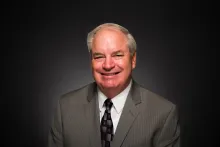
Robin Webber was born in Chicago, Illinois, in 1951, but has lived most of his life in California. He has been a part of the Church of God community since 1963. He attended Ambassador College in Pasadena from 1969-1973. He majored in theology and history.
Mr. Webber's interest remains in the study of history, socio-economics and literature. Over the years, he has offered his services to museums as a docent to share his enthusiasm and passions regarding these areas of expertise.
When time permits, he loves to go mountain biking on nearby ranch land and meet his wife as she hikes toward him.
