
Ken Loucks
We are called not just to know about Christ, but to hear His voice and follow Him, walk as He walked. Examine yourself: is there anything that is standing between you and following Him more fully? Our calling is our greatest blessing.
This transcript was generated by AI and may contain errors. It is provided to assist those who may not be able to listen to the message.
Brethren, it is a joy, again, to be back here with you. Darlan and I arrived home on Monday through our travels through West Africa. We started out in Nigeria with youth camp for a week, getting back to that beautiful spot out on the shore. And if you've got to sleep on the ground for a week, there's not much better of a place to sleep than on the beach, you know, with the zipper of the tent open and the beautiful breeze blowing in.
But we spent a week in West Africa, Nigeria specifically, for the youth camp, and then we moved over to the Republic of Benin, which is just a little bit to the west. It's a French country, but we're having that English and French combined leadership conference there. Leaders and wives and men and women from all over West Africa who came in for that. We had the opportunity to spend four days with approximately 45 men and women, and it was very positive to have interaction, to have instruction. Mr. Ben Light and Steve Myers and Tim Pebleworth traveled over for that as well.
Of course, Mr. Pebleworth is the senior pastor for the French areas. So again, very nice just to get the leadership together for that region, to build the bonds of unity and relationship with them, and to help to equip them for serving God's people. About 13 years ago, I traveled over to Cotono Benin, but Benin isn't one of my regular places. It's a French area. Again, it's one of Mr.
Pebleworth's regions. And about that same time as well, I had the opportunity to take a trip from Accra over to Lomé Togo. But this was actually a first for Darla and I, in which we boarded a transport with our Nigerian leadership and went from Lagos to Grand Popo Benin for the conference. And then following the conference, we went from there over through Togo over to Accra. So, road trip is unique. I said Darla is resting up at home today. Excuse me, not at home, but in Spokane. She didn't make the road trip with me.
Or maybe still recovering a little bit. There was a 14-hour road trip by bus from Grand Popo over to our spot in Accra. But I would just say I love road trips. You look out the window, you see what's happening, you see the communities, you see the kids in the village that are doing what kids used to do, by and large, in this country, out playing soccer.
There's a soccer field in almost every village. They're out there just playing, climbing trees. It's humorous to me, but I'll often see you make toys of what you make toys with. And Darla said when I was growing up, we did similar things. So you'll see every once in a while a kid with a motorcycle tire, and they've got a stick, and they're running, and they're keeping that tire going, and got a game with that as well. But for me, I never tire of looking at life as it takes place over in West Africa.
There was a theme of the United Youth Camps here in the United States that transferred over internationally as well. And it was actually part of our conference. And it was interesting to me, as I considered what we taught in the Christian Living at Camp, and actually what the combined conference presentations were, the underlying theme was essentially the same. It was being a disciple of Jesus Christ. What does that mean? What does it look like? How does that play out in a person's life?
And I was struck by the fact that here on one hand, we're instructing young, unbaptized youth at camp in what it means to be a disciple of Christ. And then we're at this conference, and we're instructing seasoned leadership in the church and other ministers in the church about leading as Christ leads. And again, coming very back to the principle of being a disciple and being a follower of His. And so all throughout that lecture series, the same two words kept echoing around in my mind.
It started with them at camp, and they continued here. In their words of Jesus Christ, follow me. Right? Follow me. Our young people at camp have heard the lecture series, and maybe multiple times, on follow me. But it's essential. Critical principles to our calling. Nearly 2,000 years ago, Jesus spoke those words to fishermen, right? To tax collectors, to ordinary men and women who were called with a special purpose to essentially leave behind some element of what their life had been and to follow Him.
You know, today, He still speaks in effect those same words. You know, the calling from God to us. No one can come to Him, to Christ, unless the Father sent Me, draws Him. And the call that goes forth in the invitation from Christ is follow Me.
Follow Me. So that is the title for today's sermon, Follow Me. Again, the theme of United Youth Camps here in the U.S. and abroad. And I think it's an essential element for all of us to take time and to focus on as well. Because we're all at various stages of following, right? We instructed our youth, this is a call to follow. Our youth, by virtue of growing up in the church, have that calling, have that invitation.
And they're hearing, they're examining, they're considering. And yet, you come down the line that someone has been in the church 10, 20, 30, 40, you know, decades, 50, 60 years, however long. We're still following. We're still seeking to improve. We're still considering what it is that I personally need to perhaps set aside what could hinder me from following fully.
This is his invitation. You see, many people claim to be followers of Jesus Christ, but are they truly? Are they truly? For us who need to ask the questions, what does it mean to follow Him? What does it look like in our daily lives?
And the most important question, I suppose, for each of us, am I truly following Him according to the call?
I think before we can understand what it means to follow Christ, we first need to understand who it is we're following.
It's not just the name. Many people claim the name. Do they really know the person?
So we need to know who it is first, who we are following. And that recognition begins by learning to hear His voice.
Let's begin today in John chapter 10. John chapter 10. This here is the context of Jesus' discussion of the Good Shepherd, pointing out the fact that He is the Good Shepherd.
And in that, we come to understand the importance of the voice. John chapter 10 and verse 27. Jesus said, My sheep hear my voice, and I know them, and they follow Me.
My sheep hear my voice, and I know them. He says, And they follow Me. We're talking about a relationship, right? It's a relationship of hearing, a relationship of trust that is built, and a relationship of responding.
Understand, Jesus isn't describing His sheep as those who have heard information about Him only.
He's talking about a flock, and He is the Shepherd. And He's talking about a relationship of those who not have only heard about Him, but those who hear Him, who hear the voice and who respond.
People in Jesus' day heard His voice audibly, didn't they? Right? And they responded.
When He went town to town, when He preached, when the multitudes followed Him, when it was that He healed someone and then expressed the lesson, they heard the voice.
They heard the teaching. They responded. Because there was a recognition here. This is a shepherd, at least among some, the one whom the Father had sent.
But you and I today, we don't audibly hear that voice, do we? And yet, we have to hear it. We have to respond. How do we hear the Shepherd's voice?
I could ask for volunteers from our youth who are at camp, because they know, but hopefully we all know we hear His voice through the testimony of God's Word.
The Apostle Paul said in Romans 10, verse 17, he says, You could finish that, right? The Word of God.
Hearing by the Word of God. What are we listening to? Our hearing comes through immersing ourselves in God's Word, studying, seeing what He said, what His Son said, and pull that and live it.
So to recognize the voice, to respond to the voice, we need to read.
You know, what Jesus said, what He taught. How did He live? What were His actions each and every day?
It's recorded, and it's all throughout the Bible, but I say we have a very compressed section of the Bible.
We call them the Gospels that are almost exclusively dedicated to His words and His actions.
And as we study all of that and all these things, we examine how He responded to people, what it was that He taught, what He said to do, and frankly, how He lived His life each and every day.
And then as we absorb all of that, the calling is to respond.
Because if you can hear, He says, follow Me. Follow Me.
Why our Bible study is so important, why we have to be consistent about it.
If you're going to know God the Father, and if you're going to know His Son Jesus Christ, you have to study their words and immerse yourselves in them day by day, be guided by that Spirit of God, and allow their character to grow in you.
And as such, then you will respond accordingly.
By studying Jesus' words and actions, we see His compassion.
We see His humility. We see His courage on display.
Of course, it's not just His. He says, if you've seen Me, you've seen the Father.
And I came to reveal Him, which means Christ's inaction was the nature and the character of God's inaction.
And that is the example we follow.
If you study Him, you see His obedience.
You see how we treated those who were hurting Him.
You see how we responded to people who opposed Him, and how we reacted. Even when He was tired, even when He was rejected, even when He was crucified.
Indeed, all is to follow those elements we see.
All these things, brethren, give us insight as we spend time with Him through God's Word.
And the more familiar we become with Him, the more we'll come to know Him and build that shepherd-sheep relationship.
We'll hear the voice and we'll respond.
And again, it begins with the hearing.
In a world seeking to distract us with many different audible voices, so many distractions, right?
Just open your phone. How many voices can you flip through in 20 minutes, right, on your phone?
Saying this, saying that. They're all saying something, but in the mix of all the audible voices, can we stop?
And hear the voice of the shepherd and focus our attention on Him. Indeed, it's God's Word that makes it clear where our attention must be.
Matthew 17, verse 4.
Matthew 17, verse 4. Again, let's consider where our focus must be. Whose voice are we listening to?
Matthew 17, verse 4. The context here is the transfiguration. Christ had gone up on the mountain with disciples and He was transfigured before them. And they had a vision of forward-looking towards what the kingdom of God would be like. At least a glimpse of it. And in Matthew 17, verse 4, it says, Then Peter answered and said to Jesus, Lord, it is good for us to be here. He says, If you wish, let us make here three tabernacles, one for you, one for Moses, and one for Elijah. And while He was still speaking, behold, a bright cloud overshadowed them. And suddenly a voice came out of the cloud. Okay, a voice. So here comes an announcement to listen to.
A voice came out of the cloud saying, This is my beloved Son, in whom I am well pleased. Hear Him. Hear Him.
Okay, so the instruction isn't just to listen to every voice and try to determine which one is reasonable. You know, the instruction is, hear Him. Here's the one who came in the name of the Father, the one who came to show forth God in action. Right? He was Emmanuel, God with us, Christ in the flesh, showing forth what it was, or who God was, and what we must become. But again, the instruction was, hear Him. And so for you and I, we must not only be in a state of readiness to hear Christ's words, but we need to seek after them. We need to yearn for them and grab hold of them, and once we've heard them clearly, we need to respond. Okay, that's the call. That's the instruction. He didn't just say, know about me. He said, follow me. It's a relationship between a master and a disciple.
So let's notice what that response then looks like in action.
Matthew 11, verse 28.
Matthew 11, verse 28. We're not going to bounce around too widely in the Bible today, because, as I said, these examples of His voice are recorded here in the Gospel account.
Matthew 11, verse 28. Jesus says, come to me, all you who labor and are heavy laden, and I will give you rest.
He says, take my yoke upon you and learn from me.
Learn from me, He says, for I am gentle and lowly in heart, and you will find rest for your souls. For my yoke is easy and my burden is light.
So, again, Christ doesn't just say, learn about me, because we could study to learn about Him, and, you know, you could line out all the statistical information about Jesus Christ that you wanted to, and know a lot about Him.
But He says, come to me, learn from me, respond.
And, again, that's a very personal invitation to be a disciple.
I think sometimes this illustration can be a bit lost on us, because we're not an agricultural society by and large. Some are, but, I don't know, Dale, do you go out and yoke the oxen together every morning to plow the field?
Okay, so we're a different day and age, even in the agricultural sense.
But in that day, if you had a young ox, you know, a maybe untrained, bold, but untrained kind of a mind of their own, and you wanted to train that young ox to pull a cart or pull a plow, you took them and you yoked them alongside a mature ox.
Right? One that was seasoned, one that was steady.
And as they moved together, that mature ox actually took the brunt of the load and carried it, but simply walking side by side, the movement and even the transfer of that movement through the yoke.
And by being yoked together in a lockstep with the other, the inexperienced would learn from the experienced.
And you know what? That's what Jesus says to us when he says, Take my yoke upon you and learn from me.
He's inviting us to walk side by side with him, learning, right?
Following his example, hearing his words, allowing the actions that he took to become the heart of our actions as well.
Lockstep with him, letting his strength carry the true weight of our burdens.
And through that relationship, then we become followers of him.
I'll reread verse 29 and 30 again.
He said, Take my yoke upon you and learn from me, for I am gentle and lowly in heart, and you will find rest for your souls.
For my yoke is easy and my burden is light.
Disciples are individuals called to be learners and students. So a disciple is more than, again, a collector of information.
We should collect information. We should know these things, but it goes deeper than that.
Because a disciple is called to be one who immulates and imitates the Master.
Think of someone that maybe you highly respect in a certain way.
And I'm talking about out in the world. Think of maybe you have a sports individual that you follow, someone that you're a fan of.
Maybe it's a football player, and you can know their stats.
You can know their yards rushed, or you can know their points scored, their touchdowns.
You can know what number in the draft pick they were on what year, what size jersey they were. You can know all about them, but does that make you like them?
Could you on the fly one-handed pull down that touchdown in the end zone?
We would be hard-pressed to be like those that we know so much about, but this is a call in an invitation not to just know about the Son of God, but to be like Him.
To take on that nature and that character.
It's not something we do of our own strength. It's by God's Spirit. But we have to yield ourselves to the process. The way we yield is when Jesus says, follow Me, we respond.
Again, two disciples are not just learners of factual information. They are imitators doing as the Master does.
Matthew 10, verse 24.
Matthew 10, verse 24. Jesus says, A disciple is not above his teacher, nor a servant above his master. He says, it is enough for a disciple that he be like his teacher, and a servant like his master. If they have called the master of the house bells above, how much more would they call those of his household? You'll be labeled as he is.
And Christ said, don't think it's strange. If the world hates you, it hated Me first. So if you're going to be a disciple, there's the pros and the cons of that. That's not a con. It is commendable in the sight of God. But we understand we live in a world that does not necessarily uphold true disciples of Jesus Christ.
But this is the purpose of discipleship, to become like the teacher and to follow Him. And so, I think, how awesome would it be just to walk a day in the feet of the twelve? We read it, right? And we immerse ourselves in it as best we can. But imagine what it was like for them to walk with Jesus Christ and audibly hear the voice and to hear the teaching. How much did they learn from Him? You know, as they walked, they listened to Him preach, and they watched Him in action. They got to ask Him questions. We question God at times, don't we? I don't think I'm the only one. I've got questions. But, you know, those questions come in the form of on my knees in prayer and then immersed in God's Word. It's the same process. But understand, they were side by side. And they were maybe on the road between towns in Judea. It's night, and they make camp by the roadside, and they're sitting around the fire. And they're looking into the flickering flame and just recounting the day. And maybe Peter, you know, he seemed to be a bold one among them. Maybe Peter said, You know, Lord, today you said this. Or you intervened and you healed that person. People were really surprised when you healed that person. Did you see the look on their faces? You know, why them? And it was a time to interact, to ask, to learn, and to grow. So just imagine what that would have been like. The disciples saw how Jesus treated people. They saw Him pray, and they said, Lord, teach us to pray. They saw the compassion He had on people. Even at His own expense, His cousin John the Baptist had died. He tries to get some time alone to draw close to the Father, and there's the multitudes. And He just said, He was moved with compassion. And they saw that compassion, and as they followed Him, indeed, that should have been a part of their own as well. They saw Jesus forgive. They saw how He acted under duress, and on, and on, and on it goes. So all those experiences were teaching them what their Master was like. And as they lived, their lives yoked to Him. They were learning what those attributes meant for their lives as well. And so that brings us back to the two words that began this sermon. Follow Me, Jesus said. Follow Me.
I'm going to notice the beginning of Christ's ministry and His calling to Peter and Andrew. Let's go to Matthew 4, verse 18. Matthew 4, verse 18. Lest we think the call is something casual that doesn't really interrupt our lives. Doesn't really change what it is we had going on anyway. Indeed, it does change so much. Matthew 4, verse 18. It says, And Jesus walked by the sea of Galilee, saw two brothers, Simon called Peter, and Andrew his brother, casting nets into the sea, for they were fishermen. That was their occupation. Verse 19. And He said to them, Follow Me, and I will make you fishers of men. Verse 20 says, Then immediately they left their nets, and followed Him.
And so you have Peter and Andrew here. They're going about their business literally. They were fishermen, and Jesus comes along and says, Follow Me. They hear the voice, and they respond. It's an important example because sometimes following Jesus Christ means letting go of something big, so that we can grab hold of what He is offering. Again, I think it's Joe, Neff that at times has talked about when God interrupts our life. We have going on what we have going on, and God interrupts that and says, Here I am.
And Christ said, Follow Me. And He says, Immediately they left their nets, and followed Him. Sometimes you have to let go of something big in order to grab hold of the calling of God. This was big. What were these nets to the disciples? Well, that was their livelihood, wasn't it? It's how they fed themselves, put clothes on their body, roof over their head. It's how they provided for families. We know Simon Peter, at least, was married. Right? This was everything, their nets. And yet they dropped them and followed. This is what was familiar. This was their stability, their security.
It's what they were used to in life. And yet they were willing to step out on faith and to follow anyway. And the question for us, then, is, are we? Are we? Because, again, we're all at various stages of following Jesus Christ, following the call of God who brought us to His Son. This is a relationship that is ongoing. It doesn't just start and then carry forward on its own momentum.
Are we so dedicated? Understand the fishing nets weren't wrong in the disciples' lives. It wasn't like Christ called them out of something that they were doing that He shouldn't have been doing. A fisherman, that was an honorable profession. Okay, but understand these would be the twelve who would go with Him, who would hear Him, who would learn from Him, yoked to Him for three and a half years. And it wasn't like Peter could say, you know, Lord, the next three months the fishing run is, you know, this is when we really pull in the hall.
I really can't meet You on that mountain for that sermon You're planning. Sorry. Again, this was a total immediately, it says. They left their nets and followed Him. So it's not that nets were wrong, but there's times in our lives, brethren, when even good things can become obstacles to following Jesus Christ if we're unwilling to place them in God's hands.
Doesn't mean we abandon everything that's good, but it means God is the priority. And as we rank these things in priority, we have to ask in our own lives, is there anything that has become an obstacle to me following Him? We call it counting the cost, as someone's coming up to baptism. But I think it's important for us all throughout our Christian lives to stop and recount the cost. What am I willing to commit, or even refrain from, in order to take those energies and commit to following Him? Notice what's required. Luke 9. You know, when I say required, that can almost sound, I don't know, maybe a negative connotation.
You know, it's like, well, what's required? Understand, this is a blessing. God wants to give us a blessing as His children, but we need to respond according to the call He is extending. What does that look like? Luke 9 and verse 57. Now what happened is they journeyed on the road that someone said to Jesus, Lord, I will follow You wherever You go. That's good. That's a positive heart. That's enthusiastic. That person says, you know what, Lord, I am all in.
And Jesus responds. He says, okay. That's very good. Verse 58, Foxes have holes, birds in the air have nests. He says, but the Son of Man has nowhere to lay His head. In other words, if you want to follow Me, you need to understand something. This is a pilgrimage life. Christ says, I'm just passing through. I'm not putting down permanent roots here. And if you want to follow Me, this is going to be your life as well. This guy said, you know, I'm all in. And Jesus said, you know, foxes have holes, dens where they burrow, and that's their home.
Birds of the air have nests where they raise their young, but the Son of Man has nowhere to lay His head. So if this guy is going to follow Him, talk about leaving your nets. But you know, in many ways, we've left those nets already. Because we portray this every year at the Feast of Tabernacles. Right? As we go, as we stay in temporary dwellings, what are we pointing to? What are we portraying? It's the fact that we are strangers and pilgrims on the earth.
That this Feast of Booths, that these Tabernacles, this isn't our permanent dwelling place. We're not putting down roots here like Christ, like Abraham, Isaac, and Jacob before Him who dwelled in tents place to place to place. We're just passing through. We're heading to the promise. We're looking for the city which has foundations whose builder and maker is God. So Christ says, if you want to follow me, this is going to be your focus as well. Verse 59, then Jesus said to another, follow me. Right? A call, an invitation to follow Him. But He said, Lord, let me first go and bury my Father.
And Jesus said to Him, let the dead bury their own dead, but you go and preach the kingdom of God. You know, that might seem a bit harsh up front. Was this man's Father dead? And Jesus just said, no, there's not even time for you to go back and bury Him. You know, not if you're going to follow me. Is that really what He's saying? I believe this man's expressing the fact that, you know what, my Father's old.
There's a certain season in His life. And, you know, I'm there with Him. Right now, that's got my focus. When the time is coming, He will die. When He dies, I'll bury Him. And then, when that season is past, I can follow you. I can follow you. Someday. And Jesus says, you know what, that's not good enough.
Because once the calling to follow Him comes, it's now the most important thing in your life. And there's nothing that should cause us to say someday. Andrew, Peter, says they left their nets immediately. You know, give us three more weeks before the run is finished. Right? And we'll follow. What Christ says someday isn't today when the call comes, the time is now. Verse 61, and another also said, Lord, I will follow you, but let me first go and bid them farewell who are at my house.
You know, I have some things to button up first, then I'll be along. Jesus said to him, no one having put his hand to the plow in looking back, is fit for the kingdom of God. Again, we cannot say someday. Someday when things are more convenient. Someday when I'm done with my education. You know, I've got a lot going on right now.
My studies are consuming everything. I can't take on another project, but let me wrap this up. And someday. Someday when I'm established in my career. You know, right now I've got to work Friday nights once a month. And in the winter time, it bumps in and crosses over into the Sabbath. But, you know, someday when I'm the supervisor and I can set the schedule, I'll follow you. Someday when I've found the person to marry, I'll settle down.
And I'll be there. And yet again, the answer is someday, it's in opposition to today. No one having put his hand to the plow and looking back is fit for the kingdom of God. Because you see, looking back is equated to drawing back. It's a divided focus. It's something that's in competition with the call. And so, we know the stories of what it means to look back.
We know the example of Lot's wife, right? She looked back. Again, we know the story. God called them out. He was going to destroy Sodom and Gomorrah. He said, get out of that place. And even as they were maybe looking in that direction, they lingered. And the angels had to grab hold of them and literally pull them out of there.
And at a point, then, his wife looked back. More than just the passing glance, it would appear it was a turning. And it was a longing for that which they were leaving behind and what was being destroyed. And the outcome was she turned to a pillar of salt. And Jesus says, no one looking back. And yearning for those things are fit for the kingdom of God because turning back is equated with drawing back.
Again, sometimes the things God asks us to surrender aren't inherently wrong. Fishing wasn't wrong. Building a career is not wrong. Making plans and caring for your family is not wrong. Those are good things. But understand, if we're not careful, even those things can become obstacles to following Him fully because it is about priorities. Luke chapter 14, verse 25. Again, it's about priorities. Luke 14, verse 25.
Again, that seems like a pretty harsh statement. Is Christ really asking us to hate our relations? Our wife? Hate our children? Hate our parents? Is that what is asked of us? Understand, the word hate here is a comparative word. And it means to love less by comparison. And so what it means is that we love God so much, we love where Jesus Christ is leading so much that nothing compares in priority to that.
By comparison, everything else is on a different scale. You know what? I love Popsicles. On a hot summer day, there's nothing much better than a Popsicle. You've been out mowing the lawn or stacking hay. Right, Xander? Stacking hay on a hot day. Whatever it is you're doing in your world, and you're hot, you're thirsty, and you come in and you open up the freezer, and that icy fog just rolls out of the freezer, and you reach in, and you pull out a Popsicle, especially one with the fruit all blended in and everything. That's great. I love a Popsicle. But I also love ice cream. And you put the two side by side, and I will choose ice cream.
I love ice cream, and by comparison, I hate the Popsicle. But understand, I love Popsicles, too. So one day, somebody got creative and decided to put ice cream on a stick. Right? Now they can dip it in chocolate and put all kinds of stuff on there. And so nothing better than a harmonious relationship. You know, we love God so much. We love this way of life so much.
We love Jesus Christ so much by comparison. The other relationships, which we dearly love, though, fall into their order of priority. And yet, you know what? If there are relationships that are in harmony with the way of God, what a blessing. What a blessing. But again, as Christ said, it's about priorities. Verse 27, Jesus says, "...and whoever does not bear his cross and come after me cannot be my disciple." He knew exactly what he was saying. The imagery of the stake, crucifixion, suffering, sacrifice, death. Jesus deliberately used that imagery because he wanted his disciples to understand following him requires a full and a total commitment.
There will be times when obedience costs us something. Times when doing the right thing makes us maybe unpopular, makes us criticized, makes us even rejected. But you know what? That's okay. You're in good company if you're following Jesus Christ. And understand those attitudes then will only be in the eyes of men, never in the eyes of God. He says, follow me. This is the package that ultimately it leads to glory. So even in the midst of all of this, then Jesus says, come after me. Again, verse 27, "...and whoever does not bear his cross and come after me cannot be my disciple." And so to come after Him assures us, you know what?
The stake isn't the goal. The stake isn't the conclusion. What is the conclusion? What is the goal? It's the stature of the fullness of Christ. He didn't say, just come after me so you can die. He said, come after me and live a life of sacrifice so you can live and you can be like me, a son of our Father, a daughter of our Father in heaven.
The stature of the fullness of Christ is the goal. And because we love Him, we're willing to follow Him, even when the road is difficult. You know, that brings us back kind of full circle, then, to Simon Peter. Simon Peter, one of those fishermen at the beginning of Jesus' ministry, where he said, follow me and he left his net and he followed him. In John chapter 21, Jesus speaks directly to Peter following his resurrection and he gives Peter a responsibility. You recall what that responsibility was. He said, feed my sheep. But there's other things that went on in John 21 as well.
You recall, again, Christ that died, He was resurrected, but some, you know, it's uncertain what's going to happen next. So Peter thought, I know something that is certain. I go fishing. Right? And some of the disciples said, well, we're going with you. And they fished all night. Professional fishermen who knew what they were doing, professional equipment on the sea that they knew, they fished all night. They caught nothing.
Why? Well, because they weren't called to go back to their nets. That wasn't following him. That wasn't the place to which they were to return. And Jesus Christ said, Peter, I have something more for you. If you love me, feed my sheep. That's your calling. I'm a shepherd. You be as well. You follow me. If you love me, Peter, feed my sheep. So John 21, as we drop down to verse 18 then, Jesus tells Peter about something difficult.
It's going to be a part of his future. John chapter 21 and verse 18, most assuredly I say to you, this is Christ to Peter, when you were younger you girded yourself, walked where you wished. But when you are old you'll stretch out your hands and another will gird you and carry you where you do not wish. This he spoke signifying by what death he would glorify God. What death Peter would glorify God. And when he had spoken this to him, he said, follow me. Follow me. Jesus told Peter, your future is going to include hardship. It's going to include suffering. It's going to include actually death.
And according to tradition, Peter was crucified upside down. Very horrific, a very horrifying and difficult way to die. And yet, in spite of saying what manner he would die, Jesus said, Peter, follow me. Follow me. Verse 20, and Peter turning around saw the disciple whom Jesus loved following. That's how John often referred to himself in his own writing, the apostle who Jesus loved.
Saw John following, who also had leaned on his abreast at the supper and said, Lord, who is the one who betrays you? And Peter seeing him, seeing John, said to Jesus, but Lord, what about this man?
What about him? What's his future? What's his outcome? What is the cost he will have to pay for following you? And Jesus said, don't worry about him. Verse 22, if I will, that he remains till I come. What is that to you? You follow me. You follow me, Peter. Don't worry about John. Worry about what I have called you to. My Thursday email, I included a Bible thought that was titled, No Two Shirts Are A Like.
If you read that, I talked about how Darla brought this project to the youth camp to make tie-dye shirts. They all started with the same shirt, outside of shirt size. They all had the same white shirt, same style, same type of shirt. And they took those as the project, and what was amazing about it was no two shirts turned out alike.
They began to twist the shirts and to tie them in knots and to use rubber bands. They'll hold them in different ways. We had a chart that hung on the wall, and there's multiple ways you can do this to produce different kinds of designs. And they chose their design, they chose their color, they began dyeing their shirts, and after two days, because they got to sit and marinate, I guess, for lack of a better word, you unfold all of these and you wash them out, and they were hung out on the line to dry. And it was amazing. You could look 40-plus shirts hanging out on the line, and none of them were the same.
Each one had a different design, different pattern, a different blend of the colors, different colors. None of them, and no two, were exactly alike. I included a picture in the email. So I want you to think about that in terms of a spiritual lesson, because God has called each of us to follow Jesus Christ. Right? We all have that same calling. To follow Christ, to come to God, to be a son or a daughter of God in His kingdom is the ultimate goal. We have that same calling, but understand our exact journey is often different.
We have different personalities, different abilities, different experiences, and oftentimes very different circumstances. You know, there's so much different about our circumstances here versus the Brethren in West Africa. And yet we are called in the same way, to the same destination. But as such, God doesn't make the pattern of our walk look exactly the same as someone else's. We're on this journey heading to the same place, but what we go through is different.
What you experience is different than what I experience. And so the pattern of your life in the end result, even though it was to be the glory of God, perhaps reflects a little different journey. Not everyone's calling will involve being a pastor traveling to West Africa. You know, I've had several pastors say to me, Well, I'm glad you're going there. That's a wonderful thing. Better you than me. And I say, Well, you know, I enjoy it.
And it's been one of the great blessings of my life. I am grateful I'm not a festival coordinator in the United States of a feast site. Better you than me. I'm glad I'm not a camp director, a camp coordinator in the United States. Right? That's not my gift. Better you than me. So God knows where He's placing us within the body and what He's doing with us.
And the pattern of our design in this calling, no two of us will be alike. But what is common to us is our calling, follow me. Follow me. And so Peter here is experiencing this and is kind of having that aha moment. And when Jesus says, follow me, He doesn't say, follow John. He says, don't worry about John. You, look at me. Yoke side by side. Don't compare yourself to anyone else. You follow me. Brethren, our calling to follow Jesus Christ is the greatest blessing we can experience in this life. And it leads to the fulfillment of the greatest purpose of life. It's the reason we were created to be children of our Father in heaven.
And you know what? That points us to the upcoming Holy Days. Peace of Trumpets is next Saturday, and that's not the last one, and we're rolling in progression. So we've been called through symbolism of the Passover, the Days of the Eleven Bread Pentecost, to follow Him. And yet this plays out to a conclusion that for your life and my life is yet ahead. And that's being portrayed by these Holy Days which are yet ahead. And so prophecy shows that those who are faithful to Him, there will never come a time where we stop following Him.
Let's conclude in that future outcome. Revelation chapter 14. Revelation 14. Understand the call to follow Him only begins in this physical life. Revelation chapter 14 and verse 1, it's prophetic. John in vision.
He's seeing indeed the Day of the Lord and the establishment of the Kingdom of God. What is yet to come? Revelation chapter 14 and verse 1 says, Then I looked and behold a Lamb standing on Mount Zion. Okay, we know who this is. Jesus Christ, the Lamb of God, takes away the sins of the world. The Lamb standing on Mount Zion.
And with Him 144,000, having His Father's name written on their foreheads. And I heard a voice from heaven like the voice of many waters, and like the voice of loud thunder. And I heard the sound of harpists playing their harps, and they sang as it were a new song before the throne, before the four living creatures and the elders. And no one could learn that song except 144,000 who were redeemed from the earth. Verse 4. These are the ones who are not defiled with women, for they are virgins. These are the ones who, notice, follow the Lamb wherever He goes.
These were redeemed from among men, being firstfruits to God and to the Lamb. Brethren, that is us. That is us. Those redeemed, those firstfruits who follow the Lamb wherever He goes.
Our future, if we remain faithful to this calling, is to follow Jesus Christ's path all the way to this point and beyond. Through resurrection, follow Him through the change from physical to glorified existence, ultimately to be as He is, following Him wherever He goes. It's a very fitting conclusion to whatever we might face in this life as His disciples to reign alongside Him as the Bride of Christ.
Because what Bride does not follow her husband faithfully, especially when her husband is Jesus Christ? That's our goal. That's our vision. That's our future as children in the family of God. And so, brethren, let's hear Him today. Let's come to Him. Let's respond. Let's learn from Him. Let's love Him. And let's follow Him wherever He goes, both now and forevermore. It's wonderful to be back with you. I look forward to our fellowship afterwards. Have a wonderful remainder to the Sabbath day.
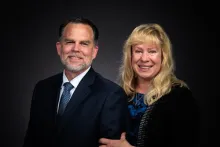
Paul serves as Pastor for the United Church of God congregations in Spokane, Kennewick and Kettle Falls, Washington, and Lewiston, Idaho.
Paul grew up in the Church of God from a young age. He attended Ambassador College in Big Sandy, Texas from 1991-93. He and his wife, Darla, were married in 1994 and have two children, all residing in Spokane.
After college, Paul started a landscape maintenance business, which he and Darla ran for 22 years. He served as the Assistant Pastor of his current congregations for six years before becoming the Pastor in January of 2018.
Paul’s hobbies include backpacking, camping and social events with his family and friends. He assists Darla in her business of raising and training Icelandic horses at their ranch. Mowing the field on his tractor is a favorite pastime.
Paul also serves as Senior Pastor for the English-speaking congregations in West Africa, making 3-4 trips a year to visit brethren in Nigeria and Ghana.
