

Mike Phelps
As NW Camp and Preteen Camp approach, this message introduces the camp theme, “Follow Me,” as a journey every disciple must consider. Christ calls us to hear His voice, come to Him, learn from Him, love Him, and finally understand that His call is personal: “You follow Me.” This sermon asks campers, parents, counselors, and the whole congregation to think carefully about the direction of their own steps before God.
The theme for camp this year is follow me. I want to begin today's message with a video. Cue the video. One more time. tickle tickle tickle tickle tickle tickle tickle tickle tickle tickle tickle tickle
Look at them. Look at them. >> That's amazing. >> Isn't that amazing? >> They're coming. Amazing. >> This is amazing. >> Was that cool or what? >> You will never have the same again. The theme for camp is follow me. And I don't know if there's a better way to introduce the idea than that video right there. There's just a lot of there's a lot that we see expressed in that video that it would take honestly maybe a sermon to explain.
So we'll try to explain it in this sermon. You know, our campers are going to come to an environment. They're going to come out of the world. They come from a variety of backgrounds. Not all of them are on the same page with one another or even may maybe with the church. They're going to come to a place where they're going to be taught a theme.
That theme is going to be laid out for them across five days of Christian living. Hopefully by the end of the fifth day through each of those classes by their activities, what they experience during the day, maybe even the campfire talk in the evening, the excellence in living class that they'll take, maybe by the end of camp, they'll have a pretty good idea about what it means to follow Christ.
So, I want to walk you through today briefly as I can those five lessons that we are going to be teaching at camp this year. They're not just relevant to the teens that go to camp. They express what the journey of conversion looks like for all of us. They're at the front end. We're hoping that they'll engage with that journey.
There's a process to the journey. I'd like to walk you through how we're going to present that process today. We begin over in John chapter 10. John chap 10 verse 27 Christ is speaking here in John 10 verse 27 he says my sheep hear my voice and I know them and they follow me. So Christ connects hearing with following a process. It begins with hearing.
So he doesn't describe the conversion process as us already fully knowing him, us fully loving him, us learning from him all the day. That's not the beginning of conversion. That's not the beginning of the process. The beginning of the process is when he calls. and whether we hear or not. The first lesson that we will be teaching this year on the very first day is titled hear my voice.
All of these are going to be told from Christ's view. Follow me. Hear my voice. Why do you think we would start with that particular lesson? I think if each of us reach back into our own process, how how that journey unfolded for us, I think you would re recognize that there have been times, especially early on, where it may have been difficult to filter out of all the noise and distraction, that voice of God calling us.
Is there some distraction out there? Do you think it's worse today than it was for us? I think so. I may have commented to you on this. I watched a a Netflix special, might have been two two and a half years ago, something like that, couple years back. It was it was interviewing engineers, software engineers in particular, who were behind the development of social media, in particular sites like Facebook and Instagram and things like that.
Anyway, I was watching this for a reason. The the special was talking about about the specific ambitions of the design for the social media platforms themselves. And the whole point was to try to make sure that they were locking us into our screens. There's a phrase you might be familiar with familiar with that's called doom scrolling.
Do you know what that means? Some of you older people have no idea what that means. But you've you might have seen it if you watched any shows at all. There's that person that kid that adult somebody and they're just like that's called doomcroll over and over and over and they just get that's called doom scroll. You're like locked in here.
You can't go anywhere. Nothing else matters. You don't hear anything. The phone could be ringing. Your wife could be calling. Your kids are in trouble. You're like right here. Well, honestly, that's on purpose. And our kids are the most vulnerable. They want to get them locked in as soon as possible. And so, they designed it in, you know, like interviewing psychologists and sociologists and psychiatrists.
Anybody who had a how do we do this fed into this. One of the guys actually was asked, he says, "So, do you let your kids on uh social media?" And he says, "Nope, and I don't use it either." Like, none. He goes, "Well, I started and I I realized it was working." Got off. Do you think it's harder for our kids today? I think it is.
I think And I think it's harder for our parents today because they have to be on top of all of this. They have to know like you you if you send your kids to school, you got to know what's going on. And so I think it is a it's a much more difficult time today to filter out all the voices that would drown the voice of our savior out so that we could not hear him.
We're still here in John chapter 10. So now we're going to go to the first portion of this. John chapter 10 verse one says verse one most assuredly I say to you he who does not enter the sheepfold by the door but climbs up some other way the same is a thief and a robber and I I I'm smiling to myself because if you're the shepherd you have the keys to the door you're not slipping in through the side window unless you've locked yourself out the story is not about that it's about direct access and who has permission to enter the sheepool
and it isn't the robber or the thief. It says in verse two, "But he who enters by the door is the shepherd of the sheep." To him the doorkeeper opens and the sheep hear his voice and he calls his own sheep by name and leads them out. Now, we're going to come back to that at the towards the end in our final point.
He calls them by name is a very important principle that we want these kids to know by the end of camp how personal this calling truly is. We'll come back to that portion. It says here that the shepherd leads them out which means that when the voice is calling it has purpose. Christ doesn't he doesn't go to the field to wave at the sheep, smile at the sheep, say hello to the sheep.
When he calls them, he has a reason. Action is going to be required. We we watched the sheep understand that of their shepherd. You saw what I saw the strange voices here. He's talking about the one who sneaks in the door, the stranger. We're watching that as though sheep ignored all voices. The these this is a this was I asked for permission to be able to share this from the uh what let's see this is the Cornerstone Church in Johannesburg, South Africa.
And they gave us permission to show the video today. And and this is that one part of their one of their camp programs, I believe. And you could tell this could be kids at our camp program. And they're laughing and they're they're embarrassed. They're just like any normal teenager. and almost you could get distracted.
I was hoping you would at least look at the sheep a little bit because you're it's easy to just look and see what the kids are doing. The sheep are absolutely ignoring them. Could not care less. It's like they can't even hear their voices. Can't hear anything at all. And they're supposedly giving the same calls as the shepherd.
The shepherd says, "Say this and they'll come to you." No, they don't. They are not listening to the stranger's voice. The sheep have already done what we're supposed to learn to do. They filter out all the voices that aren't the shepherds. They don't hear them. They don't respond to them. What a great ambition, right? If we could just do that.
Unfortunately, we live in a world where we happen to be human beings. We're not sheep in the real and literal sense. It's harder for us to do that specific thing. Filter every single thing out except the voice of Christ. Yet, when he calls, when he actually does call us, he's not calling to say hello, ask how you're doing.
He's calling because he has purpose for us. He wants us to do something. Those sheep understood that they came running to the shepherd. He goes out into the field, they surround him. What What did he bring with him? He brought food. Why? Cuz they come to be fed. They came to be fed. They knew that's why he was calling them.
Verses four and five here of chapter 10 says, "And when he brings out his own sheep, he goes before them, and the sheep follow him, for they know his voice. Yet they will by no means follow a stranger, but will flee from him, for they do not know the voice of strangers." So the sheep follow because the shepherd's leading.
He has a place he wants them to go. He calls them by name. They come. It's interesting. Let's go over to Psalm 119. So I have a bit of material I want to just kind of move through here methodically. Let's go over to Psalm uh 119. uh verses 9- 11. Verse 9 of Psalm 119 says, "How can a young man cleanse his way? By taking heed according to your word.
With my whole heart I have sought you. Oh, let me not wander from your commandments. Your word I have hidden in my heart that I might not sin against you. So the question that's asked here is a very plain one. It's the question that we'll be asking the campers at camp. How can a young person keep his way clean? Not everybody who comes to camp has been keeping their way clean.
And yet we're given the answer here. You need to turn towards God. You need to hear that voice. You need to filter out everything else first and hear the voice of Christ first. Step one. Nothing happens unless that happens first. We need them to see that. We need them to understand that we also need to see and understand for ourselves that we're constantly in the same process.
making sure that we filter out everything that isn't the voice of God. The author of Hebrews helps make this even more poignant for us over in Hebrews chapter 3. Yep. Hebrews chapter 3 7 and 8 verse 7 says, "Therefore, as the Holy Spirit says today, if you will hear his voice, do not harden your hearts as in the rebellion in the day of trial in the wilderness where your fathers tested me, tried me, and saw my works 40 years.
" Therefore, I was angry with that generation and said they always go astray where in their heart. They don't want to hear. So, is the hearing that we're talking about is this one time you heard the voice sometime way in the distant past and that was good enough? It says today. Today is every single day you wake up.
That's today. today if you will hear his voice. Christ is talking to us every single day. If we're listening, how? Well, you know how. And you're not hearing if you're not reading the pages of your Bible. If we're not opening up the good book, then we're not hearing that voice. He is calling to us. He wants us to hear.
And he wants us to hear today, every single day. The second lesson that we're going to cover at camp then is come to me. Come to me. You've heard my voice. You filtered it out. You've heard it. I didn't just say hello to you off in the distance. I have an expectation now that you've heard my voice. What is the expectation? Come to me.
I'm a shepherd. I'm calling you, my sheep, to come to me. Just as we saw in the video, the sheep understand that. real sheep understand that that's the point. We need to also understand that. Let's turn over here to Matthew chapter 11. Let's notice something here. Matthew chap 11. Verse 28. Matthew 11:28, Christ is speaking again and he says, "Come to me all you who labor and are heavy laden and I will give you rest.
" What are the What is the labor that he's referring to here? It's choice. In this case, the heavy burden is the weight of wrong choices. Just saying that, I know in your minds, your your your minds are probably going a light on thinking about, yeah, that's that's exactly right. Do you feel a heavy burden when you've done right? When you know you should do a a certain thing a certain way and you've done it that way properly, do you feel a heavy burden? By contrast, if I ask you the same question, if you've done something wrong
and you know you've done something wrong, do you feel a heavy burden? What is the burden? Guilt, shame, remorse, regret. Are those heavy or not? Every single one of us has experienced that. And I believe we all would have to admit, yes, those things feel heavy. This is what Christ is talking about. What does he say next? Come to me all you who have been laboring, making wrong choices and you are carrying heavy labors or heavy burdens because of that.
He says come to me and I'm going to give you rest. And then he describes how he says, "Take my yoke upon you and learn from me. For I am gentle and lowly in heart, and you will find rest for your souls." Why? He says, "For my yoke is easy and my burden is light." We we've talked about this before, but it's really worth pausing here to think about this issue.
What is he talking about when he talks about coming under a yoke? If the burden are my sins, is Christ coming alongside to come underneath this yoke to help me carry the burden of my sins? No, he is not. The clue is Paul's journey to Damascus. When Christ calls him, blinds him, what does he say to him? Paul, why are you kicking against the goat? What is the goat? It's the prod that the person who holds the yoke uses to direct the animal.
The animal is under the yoke. It is what he uses to carry his burden to carry. Let's say he's pulling a wagon or something like that. We can see the visual of what this looks like. Christ transforms that into a spiritual image. He doesn't say, "Here, I'm holding this heavy yoke. Come underneath this yoke with me." Nope.
Whose yoke are you under? You're under your own yoke. You're under the yoke of this world. You're under Satan's yoke when you're making those choices. Christ says, "Put that yoke down and take my yoke." He transfers the burden. He says, "Put that burden down and pick up my burden because it is light. So, he's not saying, "I'm going to come with you and I'm going to come under that yoke with you and I'm going to carry your burden, which is your sins, with you.
" That's not what he's talking about. He wants us to get that yoke off of ourselves, turn towards him. This is the point. This is what we need these young people to understand as well. Not everybody who comes to camp comes to camp with a pure conscience, having lived right in every aspect of their life.
By the way, that's probably not just the teens. We have two examples today that I want to use in this for this lesson. Over in Matthew 14, we're close. We've been in Matthew 11. Now, let's turn over to Matthew 14. towards the end of the chapter verse 22. I'm going to begin here in verse 22. We'll pick up a few pieces of Matthew 14.
And he says in verse 22, "Immediately Jesus made his disciples get into the boat and go before him to the other side while he sent the multitudes away. And when he had sent the multitudes away, he went up on the mountain by himself to pray. And then when evening came, he was alone there. But now the boat was now in the middle of the sea.
So who's in the boat? The disciples. What choice have these disciples made? To get in the boat. The boat is a metaphor for following Christ. They've made their choice to follow Christ. He says, "Come to me." They come to him. He says, "Get in the boat." They get in the boat. Okay. What happens in this story? This this group represents all the kids at camp who come who who are already in the boat.
It's not everybody. Those of us who have served at camp can tell you from personal experience, not everybody's in the boat that goes to camp. Some of those kids are on the shore and they're looking at the boat and they're thinking about whether they want to get in the boat. Some of those kids have been walking deliberately away from the boat for quite a while and yet they're at camp.
They're all there. This is an example of somebody who's in the boat, Peter, following Christ. Christ says to him, he Christ comes out of nowhere. It's the fourth watch of the night. We see in verse 25, it's the fourth watch of the night. It's 3:00 a.m. They've been in the boat for quite a while. The seas are rough.
The boat in verse 24 says, "Now the boat was in the middle of the sea, tossed by waves, for the wind was contrary. Now in the fourth watch of the night, Jesus went to them walking on the sea." You have to kind of picture a lot of wind and waves moving around very violently. And of course, they don't they don't know who it is.
They they don't really understand what's going on here. Christ says to them, "But immediately Jesus spoke in verse 27." He says to them, "Be of good cheer. It is I." Here's the shepherd now speaking, "It is I. Do not be afraid." Now, I want you to pause and realize we watched the sheep in this video. Did they instantaneously turn to the shepherd when they heard his voice? They're filtering.
Did I hear what I think I heard? I'm not sure. So then they start to look up. And then they see, they're still not quite sure. He calls and calls and calls and then they start to realize, oh, that's the shepherd. This is a lot like what we read right here. Peter, verse 28, it says, "And Peter answered him and said, Lord, if it is you, command me to come to you on the water." And so Christ says, "Come.
" That word come means exactly what you think it means. It means it is an instruction to come to me. Peter's over there. He's in the boat. Christ is here. Come to me. Very plain. It's very simple. It's exactly the point of the lesson. And when Peter had come down out of the boat, he walked on the water to go to Jesus.
You have to pause because that reads so quickly we can miss the point. He's on the water. hard to imagine walking on water every every I don't know unless you're remarkably different than me in this regard. I know I can't walk on water by years of experience in water. I know it's impossible for me to walk on water. You think Peter knows that? Pretty sure he's been a fisherman pulling fish out of that same water for years.
Pretty sure he knows you can't walk on water. Christ says, "Come to me." And he walks on the water. It's remarkable. It's just absolutely remarkable to think about that. That's absolute trust, isn't it? Does he believe in Christ? How do we know? He's in the boat. Does he trust Christ? Sure. How do we know? He got out of the boat.
It's not hard math, is it? He's walking on the water towards Christ. But what happens? This is us too, by the way. We're the ones in the boat. It says, "But when he saw that the wind was boisterous, he was afraid and beginning to sink, he cried out, saying, Lord, save me." Now immediately Jesus stretched out his hand and caught him and said to him, "Oh, you of little faith, why did you doubt?" We've talked about what faith is before and this is one of those times where we need a careful understanding of what faith is. Faith isn't a word that
defines the whole thing. Faith has faith has three components. Belief, obedience, and trust. When you know that faith is those three things, did Peter violate all three of those things? Doesn't describe him as not believing anymore. He believes. He wouldn't have been in the boat if he didn't believe. What was the problem? He obeyed the voice. He was walking.
But when the wind and the waves, Here's what I'm thinking about. I'm thinking about it for both those at camp who we have to teach. And I'm thinking about it for each of us every single day. Just because we've been called out of the world, does that mean there's no wind in waves for us? I know some of you have many big wind and waves in your face right now.
Yet, you're still walking towards Christ. You're still taking one step at a time and moving forward. You haven't quit. You haven't sunk into the middle of the sea. You might be sinking a little. Sometimes we start to sink. And what is it we're supposed to do? Well, here's what Peter did. He cried out. What are we supposed to do when we're sinking because of the wind and waves that would drag us down? Cry out to God.
That's our job. Cry out to God and exercise trust. Exercise trust. The alternative to this is found in Luke 15. Not every person who comes to camp is in the boat. As I said, some of some of those kids, and it could be staff as well as campers, but some of those kids I'm I'm going to be turning here to 17, chapter 17 and 18.
Actually, I'm going to start here in verse 11. Sorry, I'm not sorry really. Be honest about that. Luke 15 verse 11. Some of those kids are described here in the parable of the prodigal son. Maybe they looked at the boat and they realized or thought to themselves, "I don't want to be in the boat." Here's what here it goes from that person to the kid who's literally gone into the world spiritually.
Verse 11, a certain man had two sons. And the other younger of them said to his father, "Father, give me the portion of goods that falls to me." Do you know what that's you know what he's asking for? What are the portion of goods that falls to a son from his father? His inheritance. When do you receive your inheritances? Think about this carefully.
When do you receive your inheritance from someone? Is it while they're alive? What is the young son saying? You are dead to me. I want my inheritance. Now this is a parable. But Christ is giving the parable. That person who turns from the church, we all know a kid, a family member, a friend who has turned his back on the church.
This is how Christ sees it. You are dead to me. He says to God, I'm going that way. You know what the in the story? You know who the father is? It is the father, the heavenly father. And what does he do applying this spiritually? What does he do? He gives the inheritance. Fine. Here you go. That's what God says. Go ahead.
He doesn't hold him back. He doesn't lock him in his room. He lets him go. Some of us have watched our kids do that. He lets him go. But what happens? Well, and not many days after the younger son gathered all together, journeyed to a far country. He ran a long ways and there wasted his possessions with prodigal living.
Made a lot of bad choices. He's got he's been doing a lot of labor in the wrong direction and he has heavy burdens. Notice what happens to him? Verse 14 is the key. Has the father stopped calling? The answer is in verse 14. When he Yeah. When he had Excuse me. But when he had spent all, there arose a severe famine in the land, and he began to be in want.
And when he went and joined himself to a citizen of that country, and he sent to him into the fields to feed swine, and he would gladly have filled his stomach with the pods that the swine ate. Now, I want you to notice something. This is what we know as I'll just use the parent example. As parents, this is what we know.
No one gave him anything. We know that when our kid goes into the world, the God of this age does not care about him or her at all. Christ is saying that right there. They don't see, you know what they see? They see the promise of fulfilled lusts of the flesh and all of the desires and I don't have to sacrifice for the Sabbath and I can eat pork and shellfish and I can whatever whatever I want I can just go do.
And Satan says yes you can. You're going to love that way of life. It's all about you. But when you need something from that world, it says and no one gave him anything. And that's what Christ is saying spiritually. That's an that's a dead end. There's nothing there. The world is not going to take care of you.
Verse 17 is the key verse. The father has been calling the whole time when he came to himself. That moment you realize I have literally been wasting my life. There's nothing here. He says, "How many of my father's hired servants have bread enough and despair and I perish with hunger in a world that doesn't care at all about me?" That's what he just said.
So he makes a plan. I will arise and go to my father and will say to him, "Father, I have sinned against heaven and before you and I am no longer worthy to be called your son. Make me like one of your hired servants." This is the attitude of repentance that we hope for those that have gone that direction will come to.
They'll see it. They recognize it. feel the weight of the burdens they've been carrying and stop. Because the first thing that has to happen for somebody who's been traveling down that road if they truly want to be healed, if they truly want to be reconciled, is to stop and turn to God. One of the big challenges, and I I have these conversations a lot more often than I realized I would have them, is a part of all of that guilt of the burden that they carry for lots of wrong choices is the distance that they perceive between where they started and
where they are now. How far have I traveled? It's very easy to conclude it's too far. We're human. We see the distance between where I was to where I am now and all these bad decisions I've made. I can see that distance. And if I turned around and actually looked at the distance, maybe I would just panic. It's impossible to cover that ground.
And yet the story given to us by Christ says something different happens when we stop and turn around. Verse 20. And he arose and came to his father. But when he was still a great way off, his father saw him, had compassion, and ran and fell on his neck and kissed him. Who closes the gap? The moment that person stops and turns, they begin to take that step.
That step, well, this is written to us as a parable in human terms. We can picture a father running across a field to his son. What's the difference between that physical father and our heavenly father? The moment you turn spiritually, our heavenly father closes the gap instantly. He hasn't been alongside of us participating, cheering us on in our sins. He's been watching.
He's been calling. He's been waiting. And the moment we stop and turn, he closes the gap because he sees, as it just says, he sees what we've done. We've come to ourselves. We've turned to him. He closed the gap. He's right there ready for reconciliation right now. Not whatever the duration of that trip is, right now.
These are the two types of campers that predominantly show up. There's also the camper who's standing on the shore who doesn't realize. But in every single case, the answer to the question that Christ asks to come to me is to say yes, to go in that direction, to move. Why is Christ calling us to come to him to learn to learn? Luke chapter 6.
We saw in the video that when the shepherd called to his sheep, they came running. Now, he got food out because they expected to be fed. And for us, that's the spiritual lesson. We come to be fed to learn from Christ. Luke 6:39 he says and he spoke a parable to them quote Christ saying the following can the blind lead the blind will they not both fall into the ditch a disciple is not above his teacher but everyone who is perfectly trained will be like his teacher this is the point of of first of all being called told where to go which is
to come to Christ for a reason to learn. We don't learn at the first. We recognize at the first. We repent at the first. We turn towards Christ to be taught by him, well then how do I live? How do I put this burden down and take your burden? The yoke we read about. Christ says, come here. I love you. Take my yoke. It is light.
learn from me my way of life. And so if we're doing that, then we're going to become like our teacher, like our shepherd. This is why a few weeks back we went through the message on do we really know him? If we're going to become like him, we need to know him. We need to study him. We need to learn about him, study his teachings, listen to him, and copy what he does.
do what he does as he told us to do it and showed us. Matthew 7, Matthew chapter 7:es 24- 27. Verse 24, it says, "Therefore," and we read this recently, "Therefore, whoever hears these sayings of mine and does them," so it's not just hearing, right? We're learning to do. He says, "And if you do them, then I will liken him to a wise man who built his house on the rock.
And the rain descended and the floods came and the winds blew and beat on that house, and it did not fall. For it was founded on the rock." But everyone who hears these sayings of mine and does not do them will be like a foolish man who built his house on the sand. And the rain descended, the floods came, and the winds blew and beat on that house, and it fell, and great was its fall.
You know, that's a really stern warning for us that we are in a world that has rain and wind blowing and howling and trying to beat our walls down, our spiritual house. If we let that wind, great will be the fall. Christ says spiritual fall. We have to be on guard for that. So the point of this third point is we're being called to come to Christ to learn from him.
Second Timothy, Paul's giving instructions here to Timothy that are relevant for us on this point. Second Timothy chapter 3 verse 14. Paul tells Timothy, "But you must continue in the things which you have learned and been assured of, knowing from whom you have learned them." Our kids are coming to camp to learn.
Aren't you think they're coming to learn from us the best inventions that we can come up with as men and women serving at camp? Is it our ideas that we're trying to teach them? No, it is not. Verse 15. That from childhood you have known the holy scriptures which are able to make you wise for salvation through faith which is in Jesus Christ.
This is what we're looking for. All scripture is given by inspiration of God, and it is profitable for doctrine, for reprove, for correction, for instruction in righteousness, that the man of God may be complete, thoroughly equipped for every good work. We're teaching the scriptures. We're teaching the words of Christ.
We're teaching them how to be like Christ. That's the point of the camp program this year specifically to teach the kids how to be like Christ, how to follow Christ. So when Christ says learn from me, he's asking for more than just, hey, look over here. I'm just like one of these other kids you can ignore.
No, you I have a reason for calling you to me. I want you to learn how to live. I want you to exchange your burden for mine. You know what the result of that should be? That we learn to love him. We learn to love the shepherd. It's one of the great things to watch in a simple video like that that the sheep come running not in fear but in anticipation for the shepherd that they've come to love.
Animal lovers of any kind understand what animal love looks like. Well, in a simple sense, that's what God's looking for here from us. Genuine love in response to what they've done for us. That is the that is what God calls the rational response that you should love me. And we have this explained to us repeatedly.
1 John chapter 4, 1 John chapter 4. Make sure I'm in the right place. 1 John 4:es 9 and 10. It says, "In this, the love of God was manifested towards us." Okay. So, God manifested or made visible to us, tangible to us, manifested towards us that God has sent his only begotten son into the world that we might live through him.
In this is love. Not that we loved God. We didn't even know who he was before we were being called. We we had no relationship in which you could honestly say before I was really brought into this relationship that I loved God. If we weren't following his commandments, God says, "No, you didn't. In this is love.
Not that we loved God, but that he loved us and sent his son to be the propitiation for our sins. He paid the price for our sins while we were yet in those sins. So he manifests his own love first to us as it says in Romans chapter 5 and verse 8. Romans chapter 5 and verse 8. But God demonstrates, illustrates, proves his own love toward us in that while we were still sinners, Christ died for us.
He didn't wait for us to become perfect and then say, "Right, you're good enough now." He sent his son to die for us while we lived in that wrong place. While we were still carrying the heavy burdens of all of the wrong choices, God sent his son. And what is our response? This is the point of this lesson for for the campers and for us as adults. Back to first John chapter 4.
Back to first John chapter 4 and verse 19. Now it says our response is this. We love him because he first loved us. This is our reciprocation of what God has done for us already is to respond by loving him by loving Christ. That's the fulfilling of that whole relationship that they desire to have with us.
It's the end result that they want that we would reciprocate the love sacrificially. Why is that important? It is the love that demonstrated to us. So what is our love in return sacrificially look like when we deny ourselves? when we obey even when it's hard. I would like to do A, but God says that's not right. So, I'm not going to do A.
I'm going to do B because God says that's what's pleasing to him. I want to please God. And so, I will sacrifice the me things for the God things to be right with God. I want him to be happy with me. And I'm willing to sacrifice my wants and desires for that because I love God. I truly love God. And what's that look like? I'll give it to you as a reference.
John 14 and verse1 15. What does it say? John 14:15 says, "If you love me, keep my commandments." So if we say we love God and he's certainly looking to see if we do and it is where he wants us to move in our relationship with him, he's looking for the signs of it. And what is the signs that he can look to in our life that says, "Yep, they love me.
They're keeping my commandments." All of them. We don't single out one or two that were like, "He'll understand." Not those two. Nope. all of them. The final lesson, our fifth day lesson for camp this year is you follow me. It's personal. This is the, you know, we have to think about who we're who our audience is at camp.
And then we have to as as spiritually I'm going to use quotes, fake air quotes around mature. We're all in some version of what that whatever that means. We're all somewhere along the the, you know, somewhere along that line. These kids aren't coming to camp because they're perfect kids. And they can look at what's happening around them and they can say, "Well, I can see that person.
Yeah, I can see it looks like they're being called. Yeah. Yeah. I I think they're being called." And not fully realize, "No, it's you." And once you've been called, it's on you. Let me show you what what I mean. Turn over here with me to to see. Let's go over to John chapter 21 for the sake of time.
This will this will make the point well enough. You get what we're what we want to leave the campers with. John chapter 21. Uh let me see where I want to pick this up at first. Okay, verse 20. Now understand that this is John writing. And when John writes about himself, what does he say? He always says the one whom Christ loved or the one who loved Christ.
He's always speaking himself in the third person. And can I just share with you that we don't do that in our modern English. We just don't speak in the third person about ourselves. It's awkward. But John does it. And it's okay. It works for John. But notice now when you when we remember that now we we can see the context very well.
He says here in verse 20, John 21, then Peter turning around and saw John the disciple whom Jesus loved following who also had leaned on his breast at the supper and said, "Lord, who is the one who betrays you?" Peter's remembering all of this in real time. So Peter seeing John following them says to Jesus, "But Lord, what about this guy?" What's Christ's response, Peter? If I will that he remains until I come, if I will for him to live for 2,000 years, what's it to you? What does any part of his journey have anything to do with you? You follow me.
Not any of us is getting into the kingdom on anybody else's coattails. He didn't say you follow John. He said you follow me. It's personal. This journey that we've been called to is personal. It's on us, each and every one of us, to take it seriously because whether we finish this race, whether we make it into that kingdom or not depends upon us.
To the extent that God already has called us, he will do his part. He will finish the work if we let him finish the work in us. Which is why all these things are so important for us to reflect on. What are the wind and waves? for those of us and I, as I mentioned earlier, we're all in the boat with Peter, but what are the wind and waves that can get us out of the boat and sinking? And that's why we need to be thinking about those very things that can get get us out of the boat right now and cause us to sink.
That's what we have to be on guard for. Their journey is just the front end of our journey. God has been calling. He talks to us through the pages of our Bibles. He's talking to them now. Some of them are in the boat and on board. Some of them are on the shore and they're looking to decide whether I want to get in the boat.
Some of them have been running away. God's talking to all of them. He's talking to us. If we're in this room hearing and understanding, he's still talking to us. Thank God that he is still talking to us. If we're hearing, then he wants us to stop. If we've been running away, stop. If we're thinking about running away, stop. Turn around.
Let him close the distance instantly. He's right there ready to reconcile. If somebody's listening to this today who needs to hear that, I hope you hear it. The minute you turn towards God, he's right there ready to reconcile. You don't have this distance in your mind to cover before God will reconcile with you. There's no distance too far.
What's interesting is what God does when we repent is he takes that same distance and he takes it and he removes it from the distance that was between us and him and he places it between us and our sins. Only God can do that. If we're in that process, if we've turned towards God and we begin to learn from him, we begin to make changes in our life because we're learning.
We didn't know what we needed to fix before, but now we're learning. And as we learn, we begin to really fully understand exactly what God did for us, how much love they have shown towards us. And we begin to feel that love towards them. We begin to develop sacrificial love towards them. the same love because they give us the same spirit.
And when we fully realize all of that, we understand then that it is on us to complete this race, to finish what we've started. God is going to do his part. We have to do our part. Each of us has been called personally and all we have to do is follow Christ.
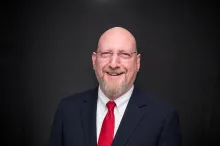
Ken Loucks was ordained an elder in September 2021 and now serves as the Pastor of the Tacoma and Olympia Washington congregations. Ken and his wife Becca were baptized together in 1987 and married in 1988. They have three children and four grandchildren.
