
Scott Ashley
This transcript was generated by AI and may contain errors. It is provided to assist those who may not be able to listen to the message.
Well, it's a pleasure being able to talk with all of you this afternoon on God's Holy Sabbath day. And I want to begin with going back in time, going back to an area that we know in the Holy Land, and it deals with the Lake of Galilee. Nearly 2,000 years ago, a couple of fishermen were going about their business, as they always had, as their fathers and their forefathers had before them of casting nets into the Sea of Galilee, in hope of their next big catch.
They were just simply doing what their ancestors had always done, as the rhythms of life demanded as much as the lapping waters that came to shore. There was a rhythm, there was a way of being, and there was a way of going about business. Their lives were not necessarily complex. That does not mean that being a fisherman was not dynamic and hard work, which it is, absolutely.
It was demanding. And having been brought up, fishing with their dads and their grandfathers, they knew the best time to come to the shore and to launch their boats. The men cast their nets with an expertise that they had been taught by their father and by their ancestors and by their neighbors. They picked up the rhythm, they picked up the culture of what it meant to be a Galilean, living on the Lake of Sea of Galilee.
What would they have to do when they came into land? It never stopped. They would have to...the nets the catch for the next day had to be separated. Their sturdy hands would have to finally, as they began to go to shore, they'd have to hold that to get back on shore. And then normally they would have to clean their nets. The nets were everything to them. The nets were everything to them because that's how they caught fish. That meant all in all. And those nets were very important as they cleaned them up and dried them out and they put them up against a framework or they put them up against a bunch of boats. But then something happened that is really interesting and I'd like you to turn, if you could, to Matthew 4 verse 18.
The rhythm of life, the culture of their forefathers, now their culture, went on and on and on. Very common, very regular. Now notice Matthew 4 verse 18. As he was walking by the Sea of Galilee, he saw two brothers. Simon called Peter and Andrew, his brother, casting a net into the sea, for they were fishermen.
And then he said to them, follow me and I will turn you into fishers of people. Then notice what it says here in verse 20. Then they left their nets immediately, immediately, and followed him. And going on from there, he saw two other brothers, James, the son of Zebedee, and his brother John, in a boat with their father, Zebedee, mending their nets. That's what fishermen did, mending their nets. And then he called them. And they immediately, now notice two things. This is very important if you're following along with me, because this is going to be the sermon. We're going to join them in that boat and get out of that boat before this is all said and done.
Then they immediately, emphasis immediately, left the boat and their father and followed them. Over in Mark 1 verse 20, which is parallel, I'll just read the area I want to, again to emphasize this, which is in three of the Gospels, immediately he called them, and they left their father Zebedee in the boat with the hired men and followed him. Then over in Luke 5 verses 1 through 11, so when they had brought their boats to shore, they left everything and followed him. Interesting. Indeed, these two initial words would not only alter these two lives, but also the lives of John and James, as Jesus would then call them to be fishermen of men and also to follow him.
We recognize that something is very, very powerful that's happening. The voice of God in the flesh has spoken to them, called them, beckoned them to stop the life that they knew, to come in a sense out of the culture that they were used to, that everybody else was doing, which is really interesting. And so we see this is what was going on.
They gave up everything and they left immediately. As we go through this story, it's going to parallel our account as God the Father called us and called us, and then we know the calling of Jesus Christ to follow me. And for you that are here to recognize that we have parallels with these gentlemen, and recognize that we were called out of a culture. When you think of today, what's going on in the world around us, and to recognize the aspect of that, what you did, or what your parents started out with. I think of Susan's parents, my parents, that were first generation in that sense, came out this way of life. The scriptural truth of God's revelation was revealed to us. I want you to think back about a moment when you first heard the call of God, or you heard something in the Bible that was the key, that was the wake-up call, the alarm clock scripture, that began to move you out of the boat, and moved you to walk in a way, step by step, towards something that you had never known before. You had been raised in the culture of your parents, of your grandparents, of society. What was your response back then? How immediate were you? I know sometimes I think of people that we've had in our own midst. I think of Mr. Amato. I think Susan asked me how Clayton Porter is doing. I think of Clayton Porter. And I think of those gentlemen, of how I remember Ray Amato, that when he was at work, he'd go out into the parking lot every noon hour and listen to a broadcast, something that he had never heard before. And there was an immediacy, and he stepped out, and he stepped forward, and no looking back.
So what's the title of this message? Allow me to give it to you. It is simply this. Spiritual reflexes. Spiritual reflexes. Leaving our nets or dropping anchor.
Three phrases I want to share with all of you and those that are listening now or in the future. Simply this. These are going to be the major phrases we're going to keep on coming back to, because repetition is the best form of education. And please understand, I'm speaking to myself as well, and it's just coming right back at me, everything I'm going to be sharing with you today. Number one concept. Leaving our nets and not going back. Number two. Getting out of the boat. Not getting back in. And number three. The concept of, if we've left our nets, if we've gotten out of the boat, and we're following Jesus Christ, do somehow we as pilgrims, spiritual pilgrims, drop anchor? Say no further. This is where we stay. Is that what a pilgrim does? That's what we're going to talk about today. Peter, Andrew, James, and John were Galileans. Galileans were very rigorous people. They were basically a working-class people. They were very passionate, and they were very devout. Absolutely. They were sincere. But when Jesus Christ said to follow me, He was calling them to go a whole lot deeper than whatever they had known under the old covenant. More than what they had experienced up to that point with insights of the kind of sacrifice that God wanted to make and have made to Him. Not just simply one on an altar, but on a daily sacrifice, in a way of life that was coherent both with, yes, what they had learned in the Old Testament, but now made anew by the teachings of Jesus Christ.
So, they got out. They moved forward. I want to share something with you again, just interesting with the different disciples, different people that we see. Would you go to Matthew 5, verse 27? In Matthew 5 and verse 27, let's take a look. God is not a respecter of persons. The calling never changes to follow Me. Notice in Matthew 5 and in verse 27, the aspect of, when you think of the story of Matthew, otherwise known as Levi, the tax collector. Same thing. He was asked to follow, and He immediately followed Him. I want to share another thought with you, a concept, if you would. Let's go to Matthew 8 and verse 8. I think I'm safe there in Matthew 8 and verse 8. In Matthew 8 and verse 8, this is the story of the centurion. And notice what the centurion said here, where he has the servant that needs to be healed. The centurion answered and said, Lord, I am not worthy that you should come under my roof, but only speak a word, and my servant will be healed. There was a belief. There was an immediacy in his conversation with Jesus Christ. And the key I'm trying to share with all of you today that I'm thinking about and pondering is our immediacy that when God the Father and Jesus Christ have laid down their word, where we read those words, where we come up against those words, where those words linger around us, how immediate are we? How immediate are we in our response to what God is saying? You know, join me if you would in Acts 10. And join me if you would in verse 1. And this is about Cornelius the centurion. And when he had called his twelve disciples to him, this is the story of Cornelius the centurion out of Caesarea. And the centurion of what was called the Italian regiment, a devout man and one who feared God with all his household, who gave alms generously to the people, and prayed to God always about the ninth hour of the day, he saw clearly in a vision an angel of God coming in and saying to him, Cornelius. And when he had observed him, he was afraid and he said, What is it, Lord? So he said to them, Your prayers and your alms have come up for a memorial before God. Now, send men to Jaffa and send for Simon, whose surname is Peter. He's lodging with Simon, a tanner whose house is by the sea. And he will tell you what you must do. And when the angel, now notice verse 7, and when the angel who spoke to him had departed, Cornelius called two of his household servants and a devout soldier from among those who waited on him continually. So when he had explained all these things to them, notice verse 8, he sent them to Jaffa. What do we notice about this? We notice an immediacy. We notice a call to action. Not a lot of pondering. Not a lot of waiting. What we really see is an attitude and a human being that God is going to be able to use that's going to open up the entire church.
Bojou and Gentile, Cornelius, the Italian. And what you notice is his immediate response. I want to share another thought with you on the subject of immediacy. Genesis 12.
In Genesis 12, these are stories that are familiar to us. I'm not here to bore you. I'm here to show you something about how God uses people and what he's looking for in people. Now the Lord had said to Abram, get out of your country from your family and from your father's house to a land that I will show you. Now I will make you a great nation and I will bless you and make your name great. And you shall be a blessing and I will bless those who bless you and I will curse you who curse you. And in you, all the families of the Lord shall be blessed. God is basically saying, follow me. Come out of the land of the Chaldees. Come out of the repository of all human civilization. Go north, young man. Go north. Not that he was necessarily that young. But now, the most important thing, some of the most important words. Verse 4, notice, so Abram departed as the Lord had spoken to him and Lot went with him. And he was 75 years old. Notice when he departed. Other translations will say, and Abram went. Notice the cause and the effect. Notice the action of either God or Jesus Christ and notice the response of the audience that they're going to use and begin to shape in a mold. There's an immediacy. I've often said over many, many years of being a minister and speaking, have you ever noticed that in Scripture that basically good attitudes come basically between one and four verses? And there's whole chapters given over to bad attitudes. People that just simply aren't going to respond. Just think about it. Think of Numbers 14 with Korah and Apothar and Dethan. You look at other verses that happen. Stretches and stretches of Scripture, rather than having that immediate response to God's calling. When, when Abram and Sarai left Ur, their life would change. And they would be pilgrims the rest of their life. They would be in that sense sojourners. Basically, Abram went from a city that at that time was, shall we say, had skyscrapers, at least for antiquity, the city of Ur, if you've even seen pictures, ever seen pictures of Ur, and God wanted them to be on the move.
Being on the move, God was training them to be in His culture and depend upon Him.
The rest of Abram's life, later Abraham, would be simply this, basically brought down to two words, tents and altars. He would basically live in a tent, and wherever he went, he would put up an altar. Not the altars of the people around him, but this altar to a God that you could not see.
And one God. And yet, that's the calling that God gave him. Join me if you would in Philippians 2.
The greatest example of immediacy is the example of Jesus Christ Himself.
I want you to think about a moment. Let's go back to the Sea of Galilee. The Sea of Galilee, James, John, Peter, Andrew. Number one, they get out of the boat. Number two, they drop their nets. Interesting.
Who is the greatest pilgrim of all? And who is the one that got out of the boat first? And who is the one that left his nets behind and came down to be a part of our culture? I want you to think of it in that effect. It says here that let's start in verse five. Let this mind be in you, which was also in Christ Jesus, who, being in the form of God, an uncreated culture, an eternal culture, who, being in the form of God, did not consider it robbery to be equal with God. The New Living Translation would say that He did not cling to being God, but made of Himself no reputation in taking the form of a bond servant and coming in the likeness of men and being found in appearance as a man. He humbled Himself and became obedient to the point of death, even the death of the cross. You talk about the ultimate pilgrim. You talk about somebody that exited a culture that he had been in for eternity. You see no fight. You see no conditioning.
He and the Father had discussed this, and Jesus was willing, and He left the boat of eternity. And He hung up His Godhead to a great degree, not all aspects, but most of it, as He was the Son of God and the Son of Man down here below. But He hung that up and walked away from that, because there was something down here that was going to happen, that He was going to set the example. So what I'm going to be discussing the rest of this message off and on is, don't think, why me? And what's this about? Where to be Christ-like, where to be like Him, and to follow His example. He gave it all up for you and for me, that we might be a part of a bigger picture. Just think about it that way. So we see some wonderful examples. We see Peter, we see James, we see John, we see Andrew. Matthew or Levi is in there. I just can't find the verse right now. We also talked about Cornelius. We talked about also the gentleman, the centurion, that immediately responded and knew that Jesus could heal his servant without even being there. No doubt. Walking forward. Walking forward. But the call goes out to many. I'd like you to go to Luke 9, please, with me, please. Luke 9.
Notice what it says here.
Because there were many, many people that could have, should have, would have been disciples, been followers. The invitation was out there or the request was there. Let's just go through this for a moment. Now, as it happened as they journeyed on the road that someone said to them, Lord, I will follow you wherever you go.
Good request. Good intent.
But intent is not enough. And Jesus said to him, foxes have holes and birds of the air have nest. But the Son of Man has nowhere to lay his head. Jesus was saying, if you follow me, understand what's coming your way, because it's coming my way. This is how I will be existing while I'm on this earth. What Jesus was doing simply was to be a disciple. This is your future. So he dealt with the future of what it might be, the cost that it might take to actually follow him.
So he put the future out there. Then he said to another, follow me. But he said, Lord, let me first go and bury my father. Remember, the invitation was out there, just as much as to the men on the Sea of Galilee. And Jesus said, let the dead bury their own dead, but you go and preach the kingdom of God. Now, what's happening here? Is Jesus being hard-hearted and wants to be mean to dead people? No, this is a statement. And remember, Jesus, being God in the flesh, also knew what this gentleman was about. There's a couple of things that could have been going on here. He was talking about this man had a present dilemma, and we're not sure what it was. He felt like he had to stay home for a while and take care of business. It might have been that his father was dying. It might have been that if his father died, it would take a while to read the will, gain the inheritance.
Also, back then, that a Jewish burial could sometimes take up to a year, because after a year, they would gather the bones and they put them in an area where everybody else's bones were and shake and rattle and roll. That's what it meant. I know it sounds very poetic and prosaic, and they were gathered under their fathers. But really what they were doing, they were putting them in one vessel, and all the bones were in there, and that's how you were gathered. But that would sometimes take a year. And so Jesus was addressing this man's issue with the present. He already talked to the one individual about the future, what it would be like. To this man, he said, you've got to deal with your present and understand, first and foremost, that you're being called to something that ultimately is going to solve death itself, an illness itself. Do you understand? It's seemingly the gentleman didn't. Then there's one more that happens.
And another also said, Lord, I will follow you, but let me first go and bid them for a well who are at my house. But Jesus said to them, no one having put his hand to the plow and looking back is fit for the kingdom of God. This individual wanted to go back, hang with his family, hang with his friends, experience one more time the culture that he was being called out of. Interesting. All of these individuals to degree, and here's what I want you to think about, were unwilling to get out of the boat. They were unwilling to hang up their nets. What they wanted to do is they wanted to anchor themselves, stay steady, stay firm, either in their past or in their presence, and or what Jesus was saying about the future, about the Son of Man doesn't have a place to lay his head. That's not a harbor, that's not a bay that I want to go into, so I'm just going to put my anchor right down here and go no further.
Interesting. Like I said earlier, remember when God first began calling you.
And it was a calling. It wasn't called to a church organization, it was not called to a church building. You were being called to a way of life. You were being called to a way of life.
You're being called to look at the scriptures in a way that you'd never been able to see because you didn't have the lenses. I didn't have the lenses. You ever done that? You ever tried to talk about our way of life with the people that don't have God's spiritual lenses? Most of the time, how's that working? It's not working.
It's not. And sometimes we can go so long that we forget what it was like, the miracle of God, of calling us. But more than that, what I want to share with you is this. I've mentioned heroes that are—and there could be heroines—out of the scripture that immediately responded to God. I would say that when I think about the people of God down through the years, down through the decades, so often of the immediacy of their response, they recognized very much that there was something going on here. Join me if you would in Matthew 1344. In Matthew 1344, you'll be familiar with these scriptures.
Again, verse 44, the kingdom of heaven—the other gospels use the phraseology, the kingdom of God—is like treasure hidden in a field, and which a man found and hid, and for joy over it he goes and sells all that he has and buys that field. Let me read that again. Again, the kingdom of heaven is like treasure hidden in a field which a man found and hid, and for joy over it he goes and sells all that he has and buys that field. Remember when when you began hearing the broadcast or television program or reading a magazine, or you were talking to somebody at work that kind of like a can opener opened up, your mind opened up, your heart opened up, your fascination? What's going on here? Let's think about it a second.
God wants us to think about that. When we launched off the boat like Andrew and Peter and James and John, and the calling of Matthew out of the tax collector office, this is what happened.
It was like hidden here. There's this treasure and it was in this field of Scripture. There was a treasure that was hid there. Then all of a sudden it came to light. It came to light. One of the greatest things that came to light was what? That this is not two books. It's one revelation expanding from Genesis 1 to the end of Revelation 22. A story that there wasn't one God that was this cruel old mean God of the Old Testament. Thunderbolts, earthquakes, boils. Who wants to follow Him? But then, of course, His Son was the nice guy. And He came and said, blessed and blessed and blessed. Therefore, we don't want to have anything to do with that God of the Old Testament. You and I came to find out that what? The one that was actively the God dealing with ancient Israel and the one that later on was used to raise up spiritual Israel. Same being. Same being. To recognize that their pre-incarnate Christ was Jehovah. And to recognize that. Join me again if you go to verse 45. Again, the kingdom of heaven is like a merchant seeking beautiful pearls. Who, when he had found one pearl of great price, went and sold all that he had and bought it.
Can some of us reflect and go back in our own lives, or we're thinking of our parents, that when they came to the understanding of the truth and of the gospel and the totality of what that gospel meant, about God the Father using Jesus Christ and that there was going to be a kingdom of God? Not just being on clouds, not just playing harps, but the activity and the dynamism of the throne room of God was going to be spread down to this earth and later to others down through the ages. Do you remember the first time you heard about the aspect that, well, we're not just going to be angels on a cloud with a harp, but that God is training us, now as children of the Father, as disciples of Christ, as members of the body of Christ, that we're being trained, what are we being trained for? We're being trained as a kingdom of priests, and that, yes, God the Father and Jesus Christ could do it all by themselves, but they want to utilize a realm of priests, a kingdom of priests, to assist them. It's not about us, but to assist them in future ages to come to spread the truth and the knowledge of what God the Father and Jesus Christ are about and what God the Father had Jesus Christ do for them. Do you remember how exciting it was when we heard the aspect that this is not the only day of salvation?
You know, we can get so used to that. We hear that. You know, I'm, this is at a time, I mean, we realize that the world today is celebrating something very special to them, but when you think of the totality of what we have come to understand by God's grace, not your good looks or your intellect, sorry to break it to you, by God's grace, of what we know, it's astounding. It makes you just so appreciative and so appreciative that, in turn, we want to be immediate in our actions. That's how we praise God. It's incredible.
That was our calling. But sometimes, dear friends, our past and our present and our future can make us prisoners again in this life. Think about perhaps things that are affecting you right now in your life that you can't let go of or that you want to grab ahold of that you ought not be grabbing ahold of or things that you need to be fleeing that you're not fleeing or things that you ought to be doing that you're not doing could have would have should have. I just want you to think about this. Basically, what Jesus was telling those three men is that all of them were prisoners. One was, and basically, they were all locked up to agree with fear, fear of the future, fear of missing out on the present, and never being able to let go of their past. I find sometimes, you know this, I know this, that we have people that sometimes are locked in the prison of their own making, and they stay there, and they've thrown away the key. They're locked in the past. They can't forgive. They can't forget. They don't want to deal with it, and it freezes their witness for God the Father and for Jesus Christ. The reason why I mentioned this, if you'll join me in the book of Revelation 2. Revelation. This is, again, the message to the seven churches, of which, I believe, are messages of all of these churches to we today that are in the body of Christ. And it's interesting what is spoken here in Revelation 2 about the first church that's mentioned Ephesus. These things say, He who holds the seven stars in His right hand, who walk in the midst of the seven golden lampstands. I know your works, your labor, your patience, and that you cannot bear those who are evil. And you have tested those who say they are apostles and aren't, and have found them to be liars. And you have persevered and have patience and have labored for my namesake and have not become weary. Nevertheless, I have this against you, that you have left your first love. Remember, therefore, from where you have fallen, repent and do the first works, or else I would come to you quickly and remove your lampstand from its place, unless you repent. Interesting as we look at this. Go back to the first works.
Sometimes we've had discussions, we've heard other sermons on the letter to the Ephesians. What are the first works? I would simply say this. One of the first works that I remember growing up, and I've grown up in this way of life with God's saints since I was 12, Susan was 11, 12, and I remember the immediacy of when people heard God's Word.
And sometimes what they heard about God's Word was going to pull them out of the culture of that day, was going to pull them off the sea, was going to have to get them out the boat. It meant that they had to hang up their nets and leave them. And the Word of God was so powerful on them and leading them that they left all. They left their nets. They dropped them. There was no excusing. There was no apology. There was no hemming and hawing.
They recognized that there was a pearl of great price. They couldn't believe it. I think of my own parents growing up, just my dad, my mom especially, just talking about it. It consumed her to think that she'd been granted this gift of understanding that God was so loving and so kind that in this time, this age. And you were like that. Your parents were like that. And I'm just calling that out. Join me if you would for a moment in Revelation...
I'm looking here. Join me if you would for a second in Revelation 3. Let's pick up the thought here.
This is to the church of Laodicea. These things say... Write this to the church of the Laodiceans. These things says the Amen, the faithful and the witness, the beginning of the creation of God. I know your works that you are neither cold nor hot. I could wish that you were cold or hot. So then because you are lukewarm and neither cold or hot, I will vomit you out of my mouth. Because you say I am rich, have become wealthy, have need of nothing. Don't bother me. Don't ruffle me. I'm okay. Take me as I am. And do not know that you're wretched and miserable, poor, blind and naked. I counsel you to buy from me gold refined in the fire, that you may be rich and white garments that you may be clothed, that the shame of your nakedness may not be revealed and anoint your eyes with ISAB that you might see. This is the message to the church of Laodicea. It's an admonition. It was a church that was remaining on the seashore, not moving. The people thereof, they were satisfied. Oh, I've heard that before. Oh, one day. Oh, I've been around so long that all the excitement has gone out of me. So I'm just kind of hanging. I'm just here. I'll just show up.
I'll do the time of church. I'll make it here.
That's not what God is looking for in a disciple. He's looking again for people that walk out of the boat, lift the anchor of their life, are ready to move, hang up their nets, and just drop them. Drop them. Now, I'm going to say something really personal here. I'm talking to myself. I'll talk to you. I'll talk to all of us. When is the last time that God's Word hit you? Because, see, Jesus is still speaking. Hebrews 1 says that in past times, Jesus spoke through the prophets, but today, that He's speaking to us, and He speaks to us through His written Word. So I'm just asking, and I'm putting myself on notice, because this is for all of us. When is the last time God's Word hit you, and you just dropped your nets? Dropped everything that you thought about, everything that you were going to do, everything that you were, and looked in the example of God's Word and followed it? Or are we getting so old and been around so long and so familiar that we forget that we're children of God, and that we're still learning, and there's still more to get to be known?
I speak to this very personally myself, as I've been thinking about this for a couple of weeks, and giving a message like this, because I know it's something I very, very much need myself.
Absolutely. If we haven't, I want to share a story with you. Join me if you would in the book of John, John 21.
John 21.
Have you ever heard that old phraseology, what comes around goes around? And if not, perhaps we've heard that life is a circle.
We find that in John 21. It's the story of, they're on the Sea of Galilee. This is after the resurrection. This is the third time that Jesus will have seen them after his resurrection. Kind of interesting.
And guess where they are? Because he told them to go to Galilee, and so they're in Galilee, and they're at the Sea of Tiberias.
They're on the shore.
The boats are out there, or they've been pulled on shore.
Fishmen going back and forth.
Jesus has been serving breakfast to his disciples. And there they are.
And this is the very, very famous story of Jesus and Peter, and asking you, do you love me?
Verse 15.
So when they had eaten breakfast, Jesus said to Simon Peter, Simon, son of Jonah, do you love me more than these? We often focus on, okay, this is the first, do you love me? Are we all together on that? Okay, here we go. One, and two, and three.
But what I want us to focus on is where it says, do you love me now, stay with me please, friends, more than these. What was Jesus talking about? It's interesting. William Barkley brings out a couple different thoughts on this verse, and every verse sometimes in Scripture can have more than one handle. It can have two or three handles. We know that there is a propensity to think of it as simply all the other disciples, because remember Jesus, excuse me, Peter had said, if everybody else fails you, not me, I'll be there. I'm your boy. Okay, I'm the man. I'll be there with you. But it's interesting what William Barkley says.
I'm going to step back here for a second to give you the PowerPoint. Jesus is on the shore, and it's like this. Peter, this is where it all began. This is where you and I connect it. This is it. This is the world that I called you out of towards the world that is yet to be.
Look over there. There are the boats. There are the nets. There's the anchor.
You could go back now, but I'm going to ask you, do you love me? And you can just see them, perhaps, with Jesus with his hand depicting the boat. Just over here. These. Over here. These. Do you want to go back to where I picked you up along the way, or do you want to continue to follow me? Do you love me more than these? And that's the question that I suggest our Father and Jesus Christ would ask me to ask you today. What is it that God called you out of? And or what is it that you're dealing with today in your life? And or what is it that you are afraid of in venturing forward that you love more than what God the Father has done in calling us and giving his Son, who himself left everything, that we might have everything by his example. See, again, our example, when when life is getting challenging or we're wondering, is to recognize, yeah, we can talk about Peter, we can talk about John, we can talk about a brawn, we can talk about Cornelius, we can talk about all of these men. But to remember to be Christ-like is to give up all as he did. He gave up at that time being uncreated and living as a man, dwelling, as Paul said, dwelling in this tabernacle. Can you imagine that? Have any of you recently seen a picture, a Hubble telescope picture of the universe? It's mind-blowing. And the number of galaxies and the number of suns and recognizing our Sun is like a dot compared to other suns. You can go on and on and on, and then you hear that thing. Well, it's there, but it would take, you know, a thousand years for us to get there if you're going, you know, and you know, just kind of, you know, crumbles your mind. And yet to recognize the one that God the Father asked to create all of that, by whom all things are created, came down, think about this what Paul said earlier, and tabernacled, dwelt in the framework of a human being. Jesus left the nets of eternity behind. He got out of the boat, of the court, and the throne room of God. To set us an example, the moment came, as Paul says, when all things came together in the book of Galatians, when the time was ready, when it was ripe, he came to this earth as a man.
So again, I'm just going to conclude with one thought. The thought is simply this.
What do you still have hanging up that you're attracted to and have not let go?
What have you hunkered down to and said, I've dropped my anchor and I go no further? These are only questions that you can ask and only questions that God and you can answer together. Because when it's all said and done, Jesus always begins and always ends with the phraseology of follow me. He never gives up on us. After this discussion with Peter in John 21, he says, because what's happening here is it's going to lead up to where, well, we're going to where, well, what about this man? You know, this is after Peter's been told what his future is going to be like. They says, well, what about this man? He says, don't worry about this man. You just worry about yourself. And you see God the Father is the master potter. And Jesus Christ as that good shepherd deals with all of the sheep, deals with all of the disciples, dealing with you and me in a unique fashion to bring us towards eternity in him. And we have to accept that. We have to follow that. That's the calling. So where's your spiritual reflex going to be? Dropping the nets, pulling the anchor up, and moving forward. That's God's desire.
And his answer and your answer will come together.
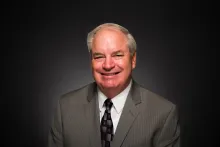
Robin Webber was born in Chicago, Illinois, in 1951, but has lived most of his life in California. He has been a part of the Church of God community since 1963. He attended Ambassador College in Pasadena from 1969-1973. He majored in theology and history.
Mr. Webber's interest remains in the study of history, socio-economics and literature. Over the years, he has offered his services to museums as a docent to share his enthusiasm and passions regarding these areas of expertise.
When time permits, he loves to go mountain biking on nearby ranch land and meet his wife as she hikes toward him.

