
Steve Nutzman
Baby ducks follow their mother. Baby bears follow theirs. And Jesus said just two words: "Follow Me." But whom do we actually follow—and how do we know the way?
This message unpacks the camp theme "Follow Me" as it was presented to preteen campers at Camp Gilmont, using vivid, visual illustrations that speak to children and adults alike. From ducklings imprinting on their mother, to a real-life storm-drain rescue, to a flock of Barbados Blackbelly sheep that come running at their shepherd's voice, we see a simple truth: following is how the young and the faithful stay safe, fed, and headed the right direction.
But following requires a roadmap. Just as GPS needs road signs to work, our lives need Scripture. We walk through:
Why Scripture is our roadmap for life (2 Timothy 3: 16)
Writing God's commandments on our hearts and teaching them to our children (Deuteronomy 6: 6-7)
A walk through all Ten Commandments (Exodus 20: 1-17) and why each one protects us
The warning of what happens when we turn from following God (1 Kings 9: 6-7)
The sheep who know the shepherd's voice (John 10: 27)
Baptism as turning to follow Jesus, and the promise that the Father will honor those who follow (John 12: 26)
Many people admire Jesus, but admiring is not following. Whether you're a preteen, a parent, or a grandparent, the question is the same: whom do we follow?
Give praise and glory to God!
A couple of weeks ago—several weeks ago—we heard Mr. Phelps give us the camp sermon that was for teenagers and adults, entitled "Do We Admire Jesus, or Do We Follow Him?" That's a good question for adults, because many people say they admire Jesus, but they don't really follow Him. He went through and described the difference between people who use His name and pretend to follow Jesus, and how different it is when you actually follow Jesus rather than merely admire Him. But his message was designed for a teen and adult audience.
The camp theme this year for all the camps was "Follow Me." I'm bringing this to you as timely as I can, because the camp season has just finished. Northwest Camp just completed—I had a couple of granddaughters there, cousins who had a grand old time. Just before that was Camp Ochoco in Oregon, where I had grandkids go. At the same time there was Camp Ironwood in Minnesota, where I had grandkids as both helpers and campers. So we're heavily involved with camp and family.
The "Follow Me" theme is presented differently to preteens than it is to teens and adults. So today I want to show you what I gave to the preteen campers at Camp Gilmont. The difference is that teens and adults can think abstractly, but preteens tend to think in visuals—it's black and white. So I want to go through what the presentation was like for the preteens at Camp Gilmont this year.
Now, some of the preteens might notice that I've misspelled "me." But what do preteens need? Attention. And "how many e's are there?" tends to get their attention.
I started out with this: Have you ever seen a row of baby ducks? Many of us have. Mama Duck comes out of the pond, and there's a row of babies. She sat on a nest, she hatched those babies. And it's interesting—when a duck hatches, the first thing the baby sees is what it latches onto as its mother. The mother is right there while they're hatching out. They will then follow and identify with that mother, and those babies will follow Mama Duck wherever she goes.
Then I wanted to show them what happens if they get off pace, because sometimes baby ducks stray a little bit. There happened to be this video. [video playing] The Mama Duck had eight babies. She was walking along—she didn't drop through a storm drain, but the babies did. So what do people have to do? They want to rescue them. This happens when you have technology. So they rescued them one at a time. Mama Duck didn't go through; the babies weren't mature enough to know they could drop through, and in fact did. The video is only a minute or so, showing how the rescue was arranged and the baby ducks pulled up. And what did they do again? They followed the mother.
Now, ducks aren't the only ones that follow Mama. Baby bears do too. I don't know if you've ever seen this live, but they will follow Mama. Why? She is their life, hope, and support. She finds them food, water, and shelter, and teaches them life skills. Here they are crossing the road. We do have bears in this area—not a lot of them—so if you see a Mama Bear with babies, it's unusual, but they are around.
Now, it's not just ducks and bears. Here's a picture of our grandchildren, two or three years ago in Minnesota at a lake. You'll notice I'm on the end. They bought a t-shirt for me that says "Grandpa Knows Everything" in big print. But you've got to get really close—in the little print it says, "If he doesn't know, he just makes stuff up really fast." They thought this was a good present, this flock of grandchildren. But what did they do? They followed the parents for this particular event, because they learned from their parents.
Now, in life, where do we get directions from? We either get out a map, or nowadays most people use GPS—Global Positioning System. They pull out their phone, plug in the destination, and plan where to go. But on the way there, there will be road signs: the interstate sign, what kind of highway you're on, whether you're going one way or the other, construction zones, warnings, stop signs. As I told the kids, STOP means "skid tires on pavement"—better stop, don't go past that one. There's quite a variety of labels to help people find their way, because GPS alone doesn't work. We need the road signs that go with the GPS.
Well, this is all nice in a physical life, but where is the GPS roadmap for our lives? We all need a roadmap, and we see it in 2 Timothy 3: 16. That roadmap is right here: all Scripture is given by inspiration of God, and is profitable for doctrine, for reproof, for correction, and for instruction in righteousness. It's all there. And what were the Scriptures at that time that Paul was writing to Timothy about? What we call the Old Testament. It was available to people to learn doctrine, to be corrected, and for instruction in righteousness.
Now, should this only be written in a book? We read in Deuteronomy 6: 6-7 that the commandments God gives are to be on our hearts. It isn't just something you see on the wall or write down—it's inside of us, so that we do it automatically. How does it get there? If we read on in Deuteronomy 6: 7, "Impress them on your children. Talk about them when you sit at home, when you walk along the road, when you lie down, and when you get up." In other words, if there are limits in life, you want to explain those to the children so they recognize where those limits are. What if they didn't understand what the stop sign meant and went zinging right through it? They'd be at risk. So we explain the limits to them for their benefit—for a happy and long life.
Now, teaching limits starts with what we call the Ten Commandments, in Exodus 20: 1-17. The short version:
First, no other gods before God. Where's our priority? If that's a priority, we should learn and teach it.
Second, no graven images of God. The world is full of fake gods and fake appearances of God. We have to teach that it's wrong—first you have only God, and then you don't make make-believe gods.
Third, you do not use God's name in vain. This is critical, not just for children but for adults. Because what do we hear? People don't just profane God's name—the most common way people take God's name in vain is that they pretend to be Christians. They pretend to be admirers of Jesus, but they don't follow Jesus. As a result, they're using God's name in vain. They're not really following what Jesus taught; they're just using the label.
Fourth, remember the Sabbath to keep it holy. This is the only commandment that says "remember," because it was already given earlier—it's recalling to mind to remember the Sabbath to keep it holy. And how often does it occur? Every seven days. Because how long do people's memories last? Apparently not very long—some people three minutes, some three seconds. God knows we need that reminder every seven days.
Fifth, honor your parents. That's really a shadow of honoring God. God the Father and Creator gives us that understanding that we must honor those who came before us. Honoring your parents means don't disrespect them. And interestingly, that's the commandment with a promise—that your days may be long in the land which the Lord gives you. There's a benefit to it.
Then, do not murder. Can you imagine if that were never taught—as it isn't in some parts of the world—and the murder rate went astronomically through the roof? Who would feel safe anywhere? But murder doesn't just mean human bodies. It can also mean reputations and relationships. Do not murder—you don't plan out to destroy.
Seventh, do not commit adultery. Be faithful to your mate. This also means faithful to your future mate. A lot of young people think, "Well, I don't have to be faithful until I actually get married." No—you need to be faithful before you get married, so that by the time you do, it's your standard, your habit, your pattern, and faithfulness becomes a way of life. So be faithful to your future mate.
Eighth, do not steal. Well, just a little bit, right? What's a little pilfering? Nobody will ever miss something. That's the way it is in much of the world—you see a lot of graft and corruption. "Who will ever miss it if I just snitch one little piece of candy from the store? Who will ever know?" Well, you know. God knows. And it teaches the wrong thing to yourself if you think you can get away with something, because you don't really get away with it. Stealing produces instability in society and in families.
Ninth, do not bear false witness. Just think—if this were the only commandment everybody on earth kept, how different the world would be. Don't mislead other people by bearing false witness. You can't say something that really isn't so. It's a shockingly remarkable commandment, because it requires us to be responsible not just to ourselves but to others.
And then the tenth commandment, do not covet. How many times have you seen something you really, really want that somebody else owns? It's okay to want something—but what if you say, "I don't care what happens, I'm going to find my way to get it"? That's coveting: wanting something that belongs to someone else so badly that you're willing to set aside all the other commandments to get it. God says your life is going to be a lot happier if you don't do that.
Now let's take a look at 1 Kings 9: 6-7. In verse 6: "But if you or your sons at all turn from following Me, and do not keep My commandments and My statutes which I have set before you, but go and serve other gods and worship them..." In other words, if you dismiss those Ten Commandments, "then I will cut off Israel from the land which I have given them; and this house which I have consecrated for My name I will cast out of My sight. Israel will be a proverb and a byword among all peoples." In other words, it'll just be a faint memory—if you do not follow the commandments God has given us. Over the years, many people and nations have disregarded the commandments, and guess what happens? Bad things happen to them.
Now in John 10: 27 we read, "My sheep hear My voice, and I know them, and they follow Me." This is a picture of our sheep at home—some mama sheep with babies milling around, thinking they're going to get food because the guy with the camera is standing there. It says they hear My voice. When they hear my voice, they start assembling. In our case, these are Barbados Blackbelly sheep, originally from North Africa, so they don't have wool—they have dark, kinky hair, black legs, and a black belly. But they know the sound of my voice. When I call them, they know my voice and they will come.
They've gotten so good at it that when I drive up the driveway and step out of the car, they start making noise, because they know it's time to alert me that they should be fed. This is why I never feed the sheep in the morning—they'd start bleating as soon as the sun rises. So I only feed them in the afternoon or evening. But when I call the sheep, they come running. Interestingly, until the last ten days, when Linda got out of the car they didn't care, because they were used to me feeding them. But since I was recently incapacitated and she had to feed them, now they're getting used to her. And you know what—if the sheep come when they're called, they get a reward. In their case, they're eating corn, and they lap it up; it's delicious.
It's no different for us. When we respond to God's commandments, when we respond to His call and do what He asks, there's a reward in it for us. We don't always see that reward right away. It's like planting seeds—it takes time for them to grow. But the rewards come when we pay attention and come when the Father calls us.
Now, we talked about baby ducklings following Mama Duck right when they're born. Actually, it's sort of a parallel to people being baptized. When they're baptized, they turn away from their old way and go to a new life. And what do they turn to? They turn to the Scriptures. They are now saying, "I'm going to follow this. This is what I want to do. This is how my life will be different." And so they will follow Jesus, because Jesus said, "Follow Me." Just as the mama bear's cubs follow her to get across the road safely, in our lives we follow road signs and GPS to get where we want to go. The key question is: whom do we follow?
In John 12: 26, Jesus is talking: "If anyone serves Me, let him follow Me; and where I am, there My servant will be also. If anyone serves Me, him My Father will honor." So it's all wrapped up right here. If we are going to serve Jesus Christ, that means following Jesus Christ. We have to know what to follow, and God gives us the commandments to follow. And then God will honor the following of that. So in camp, we call that "Follow Me."
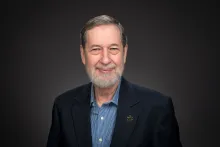
Tim Martens is the pastor of the Northwest Arkansas and Springfield Missouri congregations. Prior to becoming a pastor, he has had successful careers in business and education as well as being a newspaper columnist.
