
Don Ward
This transcript was generated by AI and may contain errors. It is provided to assist those who may not be able to listen to the message.
In about 21 days from now, we will be kneeling down to wash one another's feet, and then take the Lord's Passover. So we ask ourselves here this afternoon, am I ready to do it from the heart? Am I ready to kneel and wash my brother's or sister's feet? Or will it be too late to prepare your heart? So now is the time to prepare. Foot washing sets the tenor in tone for taking the Passover, and God wants us to come to Passover in a foot washing attitude.
So what are the essentials for preparing to wash your brother's or sister's feet? So let's notice in John 13 where Jesus Christ instituted the foot washing ceremony. Jesus Christ set us an example that we should follow in his steps. In John 13, verse 1, Now before the Feast of the Passover, when Jesus knew that his hour was come, that he should depart out of this world unto the Father, having loved his own, which were in the world, he loved them unto the end. And supper being ended, and of course that was the traditional meal that they ate under the terms of the Old Covenant before Jesus instituted the symbols of the New Covenant Passover.
Supper being ended, the devil having now put into the heart of Judas's chariot. So you see here even the fulfillment of the prophecy in Genesis 3.15 where after Adam and Eve had sinned and were cast out of the garden, that God said that the seed of Jesus Christ, that Jesus Christ would bruise Satan's head and that Satan would bruise his heel, that Satan, from that point on, tried to destroy the plan of God. Of course, he had already started way before then. But especially now directed toward humankind to destroy the plan of God and to kill the Son of God, Jesus Christ, after he was born.
The decree by Herod when Jesus Christ was about two years old, or he was probably a lot younger than that, but Herod, trying to be safe, said, Kill everybody in Bethlehem, two years of age and under. So, of course, Satan is behind this. He put into the heart of Judas's chariot to betray Jesus.
Jesus, knowing that the Father had given all things into his hands and that he was come from God and going to God, as it should be translated. He rose from supper, laid aside his garments, took a towel, and girded himself. After that, he poured water into a basin and began to wash the disciples' feet and to wipe them with a towel wherewith he was girded. To wash another person's feet was an act of great contrition in the ancient world, especially in the Middle East. So, you just think about what the verses we read before, knowing that all authority had been given into his hands, that he would stoop and wash the disciples' feet.
The very agent of creation, the Savior of the world, stooping to wash the disciples' feet. This, of course, was the duty of the servant of the household, and it was very uncharacteristic of someone in the position of Jesus Christ. So, we see here in the first few verses of this chapter that Jesus realized he was going to ascend to the Father after his death, his burial, and his resurrection, and that he had been given all authority. Yet he sets this example for us to follow, that is, the act of serving one another. Now, let's read the next few verses here. In verse 6, then came he to Simon Peter, and Peter said unto him, Lord, do you wash my feet?
Jesus answered and said unto him, What I do you know not now. You don't really understand the full import of what this is all about, but you will later, but you shall know hereafter. Peter said unto him, You shall never wash my feet. Jesus answered him, If I wash you not, you have no part with me. And Simon Peter said unto him, Lord, not my feet only, but also my hands and my head. And Jesus said unto him, He that is washed needs not to save to wash his feet, but is clean every whit all over.
And you are clean, but not all. Of course, we are going to read later about that which really cleanses a person from the inside out. Of course, water, physical water, can cleanse the outside, but it is the Word of God which cleanses the inside. For he knew who would betray him, therefore he said, You are not all clean. So we see here Peter's great protestation. Peter misperceives and thinks you have to be washed by water only.
In verse 10, Jesus explains to Peter that foot washing is not to make them clean physically. They are already clean except for Judas through the words that he has spoken. So Jesus is teaching them that the foot washing ceremony symbolizes him laying down his life, laying down his life in sacrificial love, and it is through faith in that sacrifice that our sins can be remitted and we can be made spiritually clean and pure.
Continuing now, verse 12, so after he had washed their feet and had taken his garments and was sat down again, he sat unto them, Know you what I have done to you. Do you understand what this is all about? Why I have done this?
You call me master and Lord, and you say, Well, for so I am. If I then, your Lord and Master, have washed your feet, you also ought to wash one another's feet. It is the example. It is what it symbolizes far more than the physical act itself. The physical act symbolizes the heart and the state of mind that a person is to be in with regard to his fellow man and especially the brethren.
For I have given you an example that you should do as I have done to you.
Verily, verily, I say unto you, the servant is not greater than his Lord, neither he that is sent greater than he that sent him. And Jesus Christ always reminded them that he was in submission to the Father. If you know these things, happy are you if you do them. Now, let's go to Luke 22, where Jesus Christ institutes the symbols of the New Covenant Passover. We'll see from Luke's account that during this ceremony, both of the foot washing and later when Jesus Christ is instituting the symbols of the New Covenant Passover, the disciples just still didn't get it. What it really was symbolizing, what it was all about. Even though they had been with Jesus Christ for about three and a half years, had been personally taught with him, had seen all kind of miracles and all kind of experiences, they still didn't really get the full import of it. So in Luke 22 and verse 14, we have an article coming out in this issue of the ministerial journal about this and Luke 22 and also about talking about the phrase that Paul uses, which we'll get to later in 1 Corinthians 11, the term Lord's Supper. But now in Luke 22 and verse 14, that article will be in the ministerial journal, which I think everybody can probably access on the members website. It should be out in a few days.
And when the hour was come, this is Luke 22.14, Luke 22 verse 14, and when the hour was come, he sat down and the twelve apostles with him, and he said unto them with desire, I have desired to eat this Passover with you before I suffer. This was an astounding Passover. Note the phrase, this Passover. Jesus yearned to eat this Passover, in which he instituted the symbols of the New Covenant Passover. This Passover was a turning point in the history of the observance of the Passover. In the past, they had killed lambs, and lambs had been sprinkled anciently the first Passover on the door closed. Then later, when the temple was built, the lambs were slaughtered at the temple.
But now, this is a great change. It is not through the blood of bulls and goats that our sins can be remitted. The blood of bulls and goats could not make the comers thereunto perfect. They could not change the contents, the knowing within. The blood of bulls and goats could not cause sin to be covered and remitted. It only covered it in the ceremonial sense so that they would remain in fellowship with the congregation under the terms of the Old Covenant. So this was a monumental event when the symbols of the New Covenant were instituted. Jesus cries for the joy set before him. If you read in Hebrews, hold your place right there just for a moment. This is quite an astounding scripture to me, these two or three verses here in Hebrews. When it shows, I'm teaching the pistols of Paul to an online ministerial group about 23 men. One of the things that has come up, could Jesus Christ sin? Well, Jesus Christ could sin, but would he sin? No.
Could he sin? Yes. Would he sin? No. If it was already said that he could not, well, what's the big deal? I mean, it's already said he could not. But notice even this verse or two here would show that he had to strive against it, and he was tested and tried in all points as we are, yet without sin. In Hebrews 12.1, wherefore, seeing you were also accomplished about with so great cloud of witnesses that are catalogued in chapter 11, let us lay aside every weight in the sin which does so easily beset us and let us run with patience the race that is set before us, looking unto Jesus the author and finisher of our salvation, looking to Jesus the author and finisher of our faith, who for the joy that was set before him endured the cross, despising the shame and is set down at the right hand of the throne of God, for consider him that endured such contradiction of sinners against himself, lest he should be wearied and faint in your mind. You have not resisted unto blood striving against sin. Jesus Christ did when he went to the garden of Gethsemane, and he poured out his heart and soul to the Father and said, If it be possible, let this cup pass from me, but nevertheless your will be done.
So Jesus Christ learned obedience through the things which he suffered, that he could have, but he would not, because he had the Holy Spirit without measure, and his will was set to do the will of the Father. Now let's go back to Luke 22. This Passover, continuing in Luke 22, verse 16, For I say unto you, I will not any more eat thereof, until it be fulfilled in the kingdom of God. And he took the cup, and gave thanks, and said, Take this, and divide it among yourselves. So this cup, first of all, you'll see that it was passed around twice. For I say unto you, I will not drink of the fruit of the vine, until the kingdom of God shall come. And he took bread, and gave thanks, and broke it, and gave it unto them, saying, This is my body, which is given for you, this due in remembrance of me. So we take the after the foot washing, we do the bread first. Then you notice in the next verse, Likewise also the cup after supper, saying, This cup is the New Testament, and the word shear should be New Covenant, nyethakeh. This cup is the New Covenant in my blood, which is shed for you. So then the wine is second, the body representing Jesus Christ.
The blood also representing His life essence. The official position of the United Church of God is, the sacrifice of Christ is not divided. It is one whole sacrifice, body and blood.
John, several times in John chapter 6, recording the words of Jesus Christ, he talks about, Unless you eat of my body and drink of my blood, you have no life in you.
We might turn there later, but continuing here. But behold, the hand of Him that betrays me is with me on the table. And truly the Son of Man goes as it was determined, but woe unto them by whom He has betrayed, they began to inquire among themselves which of them it was that should do this thing. And there was also strife among them, which of them should be accounted the greatest.
And He said unto them, The kings of the nations, the Gentiles, the ethnos, exercised leadership with their lordship over them. And they that exercise authority upon them are called benefactors, but it shall not be so among you. So even at that Passover where Jesus Christ instituted the symbols of the New Covenant Passover, there was dissension among the apostles. This envy and jealousy has been an historic problem among the people of God from time immemorial. Going back to the Garden of Eden where in Genesis chapter 3 verse 1, I'm sorry Genesis 4 verse 1, it says that Eve says, I've got me a man of the Lord, where Eve might have thought that Cain was the promised Messiah from Genesis 3 15. And Cain acted like he was perfect because instead of bringing a sin offering, he brought a thank offering whereas Abel brought a sin offering. And Cain was so upset because his offering was rejected and Abel's was accepted that Cain killed Abel. And Cain has been killing Abel from that day to this day. And of course, it should not be so in the Church of God. Now you look at James chapter 3. James chapter 3 with regard to this. And of course, you cannot take the Lord's Passover and be in a foot washing attitude if that kind of Indian strife exists among you. And of course, you can refer to the sermonette that you just heard in one of the great conditions that we will talk about some later is the fact that you have to be reconciled to your brethren to take the Passover as Christ commanded. And James chapter 3 verse 13, Who is a wise man and endued with knowledge among you, let him show out of a good conduct his works with meekness of wisdom. But if you have bitter envy and strife in your hearts, glory not and lie not against the truth. I mean, God knows our hearts. I mean, it's there. He knows it.
And there's no way to hide it. This wisdom descends not from above, but is earthly sensual devilish. For where envying and strife is, there is confusion and every evil work. Nothing is excluded.
But the wisdom that is from above is first pure, then peaceable, gentle, easy to be entreated, full of mercy and good fruits without partiality and without hypocrisy.
We are to judge righteous judgment. And yes, there is a time to judge righteous judgment, but without partiality, without favoritism. Oh, he supports me. So I'll support him. That's not the way of God. God's way is His way, and His way is always righteous.
In verse 18, And the fruit of righteousness is sown in peace of them that make peace.
So do we get the lesson of the foot-washing ceremony.
Once again, the lesson of the foot-washing ceremony is one of sacrificial service, laying down our lives for the brethren, just as Christ laid down his life for us.
So in view of the sobering meaning of the foot-washing ceremony, how do we prepare to wash one another's feet and to eat and drink of the Lord's Passover?
So let's note Paul's instructions in 1 Corinthians 11. I've covered this section in pre- Passover sermons now for many years, even before United began, way before United began, in 1 Corinthians 11.
Remember Paul was taught by Jesus Christ for three years or so in the Arabian wilderness, and he was taught by Jesus Christ. There's a scripture that says, of course, one of the things that Corinthians was doing was questioning whether or not Paul was an apostle. One of the early requirements that you had to meet to be an apostle was having seen the Lord, and Paul states, have I not seen the Lord?
So here we are in 1 Corinthians 11, verse 17.
Now in this I declare unto you, I praise you not that you come together not for the better, but for the worse. And of course, the topic here is the Passover.
For first of all, when you come together in the church, I hear that there be divisions among you, and I partly believe it, for there must be also heresies, schisms, divisions, among you that they which are approved may be made manifest among you. So one of the things that schisms and divisions do, it reveals the contents of the heart, and it sets apart those who are willing to follow God, regardless of the circumstance, as opposed to those who are out for their own advantage.
And it will always be revealed in the end, and justice in the ultimate sense will always be administered. It may not be administered by men, but eventually it will be.
When you come together, therefore, under one place, this is not to eat the Lord's Supper.
Now, there was a practice among the pagans to come together and have a meal, and called Love Feast, and some of this had come into the church, and nothing necessarily wrong with it, depending on when you did it. I mean, we have potlucks here after services quite often. Nothing wrong with it. You could call it a Love Feast, because a lot of love surely goes into preparing it, but it's not done before Passover. That would be rather strange, wouldn't it, to do it before Passover. Hold your place, look now at 2 Peter 2.
2 Peter 2. Peter refers to this in 2 Peter 2, and later we'll read Jude. Jude is almost...
well, it reflects a lot of the things that are in 2 Peter 2. In 2 Peter in chapter 2, verse 13, and shall receive the reward of unrighteousness.
This is referring to those who speak evil of dignities in verse 10.
Well, let's just read verse 11, whereas angels which are greater in power might bring not railing accusation against them before the Eternal. But these are natural brute briefs made to be taken and destroyed, speak evil of things they do not understand, and shall utterly perish in their own corruption, and shall receive the reward of unrighteousness as they that count pleasure to riot in the daytime, spots they are in blemishes, sporting themselves with their own deceivings while they feast among you. So here's a reference to probably that kind of meal that some would call love feast. Then you look at Jude. Jude 12, and this is one of the reasons that they call love feast, because it clearly says it here, These are spots in your feast of charity. And the Greek word for charity, agape, which most places is translated as love. These are spots in your feast of love. When they feast with you, feeding themselves without fear, clouds they are without water, cared about of winds, trees, whose fruit withers without fruit, twice dead, plucked up by the roots. So let's go back now to 1 Corinthians 11. This phrase here about the Lord's Supper. Paul says, when you come together, this is not to eat the Lord's Supper. This is not to eat the Lord's Supper.
Growing up in the Baptist Church, when we would have, quote, they had two names for communion or the Lord's Supper. Of course, in this article that's coming out, it also talks about communion and the name of it and how that word came to be used. It's a very important word, and we'll read a scripture later that has communion in it, but it is not the name of Passover. Verse 21, for in eating everyone takes before other his own supper, and one is hungry and another is drunken. So they were not having a potluck where they would put all the food out that everybody brought.
They would each individually partake of their own. And some were wealthy, well off. They would bring a lot, and they would bring wine, and some were even getting drunk before Passover.
Verse 21, for in eating everyone takes before his own supper, and one is hungry, and another is drunk. What have you not houses to eat, drink in, or despise you the church of God? Who is the church?
While the brethren are the church, it's hard to have a church without people. This is not to eat the Lord's supper, or despise you the church of God, and shame them that have not. What shall I say to you? Shall I praise you in this? I praise you not, for I have received of the Lord that which also I delivered unto you that the Lord Jesus the same night in which he was betrayed took bread. So Paul was given this instruction directly from Jesus Christ.
And when he had given thanks, he broke it and said, Take, eat this is my body, which is broken for you, this due in remembrance of me. After the same manner also, he took the cup, when he had said, This cup is the new covenant in my blood. This due you as often as you drink in remembrance of me. Due in remembrance of me. Look at that phrase, due in remembrance of me.
We must remember that Jesus Christ paid the price for our sins through his sacrifice.
Now look at the term there that says, for you do show.
Catagagelio, something like that, is the Greek word for show. K-A-T-A-G-G-E-L-L-O.
It means you announce, you declare, you make known the Lord's death. You make known the Lord's death until he comes. It is in recognition that Jesus Christ died for the sins of the world.
Paul in Romans chapter 1 takes the Gentiles to task. In chapter 2 he takes the Jews to task.
In chapter 3 he begins to summarize. And he comes to verse 23 and he says, All have sinned and come short of the glory of God. Jesus Christ came to pay for the sins of the world.
Romans 6, 23 says, The wages of sin is death, but the gift of God is eternal life through Jesus Christ our Lord.
So every person who's ever lived saved Jesus Christ. Every person who has lived in the flesh has sinned. The only way that that sin can be remitted is through the sacrifice of Christ, the death of Christ. So at Passover you are showing that you recognize that there was one who died in your stead for your sins. You do show, you announce, you declare, you make known that Jesus Christ died for your sins. Hence it is a very sober occasion. It would not be one where you'd have a party up front, as the Corinthians were doing, and then turn around and say, well, we're showing the Lord's death till he come. So you have to recognize that Jesus Christ died for your sins. It is a somber and solemn occasion. Now continuing verse 27. Well, let's read 26 again. For as often as you eat this bread and drink this cup, you do show the Lord's death till he come.
Wherefore whosoever shall eat this bread and drink this cup of the Lord. And I was happy to see that our sermonette preacher today will call him, Brent Baker, used the word irreverently because that is the word.
The Greek word that is translated unworthily is an axios, a-n-a-x-i-o-u-s, and it means irreverently. The Corinthians were taking a Passover irreverently because they created a vision among themselves before they took the Passover.
So they were not reconciled one to another. They were not properly discerning the body of Christ, to which we will talk about in more detail in just a moment.
So this word, unworthily, none of us, and no person who's ever lived, is, quote, worthy to take the Passover because all of our righteousness is as filthy rags before God. So any righteousness that we have is reckoned to us through our following God in Christ.
So I remember in it decades ago that people would say, oh, I don't know if I'm worthy or not to take the Passover. I'm just a little old me, and so are we all. We're just a little old me.
And none of us are worthy in them ourselves, and it's not the meaning of this word in the sense that we use the word, worthily. This word means irreverently, and you can look at any lexicon or concordance, you'll see it.
And drink this cup of the Lord irreverently shall be guilty of the body and blood of the Lord.
But in contrast to that, let every man examine himself, and so eat of that bread and drink of that cup. So, in view of the divisive practices that had developed in Corinth, Paul said, when you eat and drink of the Passover, do it in remembrance of the death of our Savior.
To eat and drink of it without showing regard to the price that was paid could result in you being guilty of the body and blood of the Lord. You take it irreverently, it's like, have a party and go do this.
So a person must examine himself. Verse 27 and 28.
This word here, examined, dokimazo, means to test, to prove, to scrutinize, to see whether or not a thing is genuine. As in the case of the jewelry, he puts on his glass, and he looks into this diamond, and he says, well, it's got this flaw here, or what, or any other gemstone that he might choose to examine. So let each person examine themselves to test, to prove, whether or not they are genuine. Are they really in the faith? Now verse 29. Now the text omit unworthily in verse 29. The text also omit the lords in verse 29. By that I mean like the Masoretic texts, Byzantine Masoretic Old Testament, but the Byzantine texts, New Testament, or whatever the text might be, the majority text omit unworthily and the lords in verse 29. But even if it's in there, it really doesn't change the meaning, per se. For he that eats and drinks, eats and drinks judgment to himself, not discerning the body. As I said, the text omit the lord's body. But we've already said you have to discern the lord's body in the sense that you have to recognize how your sins are remitted. Now that word discern is worth noting. The word discern here is a compound word, two words that are joined together, dia and crino, and it means thorough judgment. You know, if you talk about diameter, DIA means all the way through diameter of a circle. DIA through and then meter measurement. So diameter is all the way through measurement, and diacrina has to do with all the way through judgment, that you are thoroughly discerning the body of Christ. In scripture, the body of Christ is referred to in three different ways. First of all, the literal body of Jesus Christ. Jesus Christ gave his body to be bruised, beaten, and broken. He gave it his body, and he gave his blood, that we might have eternal life. So hold your place there. Let's go to the bread of life chapter 6. John chapter 6. John chapter 6. After reading through John chapter 6, and if you really understand it, you would have difficulty in trying to quote divide the sacrifice of Christ.
In John chapter 6, Paul writes in 1 Corinthians chapter 1 that the Jews look for a sign, and the Greeks seek after wisdom. Well, show me a sign, and I can believe you. Of course, ancient Israel had the miracles in Egypt, the plagues that came on Egypt. They had manna to rain down from heaven in the wilderness. They saw the Red Sea part. They saw water come out of the rock. How many signs did they see? And yet, they didn't believe. They came to Jesus at one point and said, you know, let's raise this person from the dead so we can come back and give testimony to the brethren. And Jesus Christ said, you know, if they will not hear Moses and the prophets, they will not hear one that has risen from the dead. You know, miracles and that kind of thing last a short time. But when you really have a relationship with God and you know in your innermost being that God exists and that you're accountable and responsible to Him, there's nothing going to separate you from that. So the Jews seek after sign. We'll see this here.
Verse 30. They said unto Him, What sign do you show that we may see and believe you?
What do your work? Well, you just fed the multitudes in the first part of this chapter. Fairly good sign. Take a few fishes and loaves and feed the multitude. Well, what else can you do?
Our fathers did eat manna in the wilderness as it is written, he gave them bread from heaven to eat. And Jesus said unto him, Verily, verily I say unto you, Moses gave you not that bread from heaven, but my Father gives you the true bread from heaven, for the bread of God is he which comes down from heaven and gives life unto the world.
Then said they unto him, Lord, evermore give us this bread. And Jesus said unto them, I am the bread of life. Jesus Christ is the living Word of God. Hence Matthew 4.4, man shall not live by bread alone. Or as we'll read in a moment in John 6.63, the words I speak, they are spirit and they are life. I am the bread of life. He that comes to me shall never hunger, and he that believes on me shall never thirst. But I said unto you, that you also have seen me and believe not. Continuing, we'll hit some of the highlight verses here, referring to the bread of life. Verse 40, and this is the will of him that sent me, that everyone which sees the Son and believes on him may have everlasting life. And I will raise him up at the last day. The Jews then murmured at him because he said, I am the bread which came down from heaven. And they said, is not this Jesus, the Son of Joseph, whose father and mother we know, is then that he says, I came down from heaven? Well, how can that be? And Jesus therefore answered and said unto them, Murmur not among yourselves. No man can come to me except the Father which has sent me, draw me, draw him, and I will raise him up the last day. Verse 47, barely, barely I say unto you, he that believes on me has everlasting life. I am that bread of life.
And that bread of life that he's speaking of represents the Word of God.
Your fathers did eat manna in the wilderness and are dead.
And that bread of life also represents his body that was bruised, beaten, and broken for us.
This is the bread which comes down from heaven and a man may eat thereof and not die.
I am the living bread which came down from heaven. If any man eat of this bread, he shall live forever. And the bread that I will give is my flesh.
Which I will give for the life of the world.
What did he give his body for? The life of the world.
The Jews therefore strobe among themselves, saying, How can this man give us his flesh to eat? Then Jesus said unto them, Barely I say unto you, Except you eat the flesh of the Son of Man, and drink his blood, you have no life in you.
Whoso eats my flesh and drinks my blood has eternal life, and I will raise him up at the last day.
For my flesh is meat indeed, and my blood is drink indeed.
And if this is a figure of speed and metonymy, something like that it's pronounced, in which one thing represents another.
He that eats my flesh and drinks my blood dwells in me, and I in him. As the living Father has sent me, and I shall live by the Father, and I live by the Father, so though that eats me, he shall live by me.
This is the bread, which came down from heaven, not as your fathers that eat manna and are dead. He that eats of this bread shall live forever.
These things he spoke at the synagogue in Capernaum.
Now when the disciples gathered around heard this, many began to murmur, and many began to leave, because they were offended at this word, that is, eat my flesh and drink my blood. Of course, even in the Old Testament it says, man shall not live by bread alone, but by every word that proceeds out of the mouth of God. That was already in the Old Testament. Jesus Christ quotes that when he's tempted by Satan the devil.
So they knew that there were figures of speech where one thing represents another. Verse 61, when Jesus knew in himself that his disciples murmured at it, he said unto them, Does this offend you? What and if you shall see the Son of Man ascend up where he was before?
It is the Spirit that quickens, that makes a lie. The flesh profits nothing. The words that I speak unto you are spirit and they are life. So Jesus Christ is the living Word of God. Jesus Christ gave his literal physical body to be bruised and broken. How do you eat of his flesh in the spiritual sense?
It is by consuming his Word, not living by bread alone. But you go back. The first thing first, he gave his body to be bruised and beaten and broken for our sins. Now the body of Christ is also represented by the Church. Look at 1 Corinthians 12.
1 Corinthians 12 and verse 12. So you have to discern that body of Christ that was given.
Bruised, beaten, broken. This is my body, take, eat, which was given for the life of the world.
You can't even enter into the new covenant unless your sins have been remitted.
In 1 Corinthians 12, for as the body is one and has many members, this is speaking about the Church of God. And all the members of that one body being many are one body, so also is Christ. See, the great rhetorical question of 1 Corinthians is verse 13 in chapter 1, which says, ask the question, the rhetorical question, is Christ divided?
For by one Spirit are you all baptized into one body, whether we be Jew or Gentile, whether we be bond or free, and have been all made to drink into one Spirit.
So the Father is the one who begets us with His Spirit. He baptizes us into His body.
Then you notice down in verse 25 that there should be no schism in the body. Now Paul uses the analogy of the physical body to come to this concluding remarks down here, talking about, well, do you need the eye? Do you need the nose? Do you need the hand? Do you whatever?
They all have a part to play, whether they be the commonly parts or the uncommonly parts.
Everybody has and everything has a part to play, that there should be no schism, no division in the body, but that the members should have the same care of one for another.
See, literally within the body of Christ, we are joined together.
We are members one of another because the same essence that is in God is in Christ is in each one of us. Hold your place. Let's quickly look at Romans 12. Romans 12 back a few pages. Paul will make this statement that I just made almost in identical words in Romans 12.
Verse 4, For as we have many members in one body, and also members have not the same office, so we being many are one body in Christ, and every one members one of another.
So when you attack any member of the body of Christ, you are in essence attacking Christ and His Church. Now, back to 1 Corinthians 12.
That there should be no schism in the body, that the members should have the same care of one for another. Verse 26, where the one member suffer, all the members suffer with it, or one member be honored, all the members rejoice with it. Now you are the body of Christ and members in particular.
And Jesus Christ is the head of the Church. So you have the literal body of Christ, you have the Word of God, which you can ingest, and you have the Church of God is also His body. He dwells in His Church. So we go back now to 1 Corinthians 11, back of page, same page.
And we'll read 29 again, Where he that eats and drinks irreverently eats and drinks judgment to himself.
Where's that judgment going to come from? You're either going to judge yourself or God is going to judge you. And one of the things that I think we all need to be sobered by, one of the sayings I have is God had rather see us dead than to miss out on His kingdom.
If you have ever been in the truth, now we were talking somewhat around the table before services today about people who have gone astray and left the church, quote unquote, no longer attended, trampling on the Sabbath day and wondering will they ever come back.
And various examples can be talked about. But see, a lot of the examples in the Bible are not people who have been baptized, who have really and have they received God's Spirit. If you have received God's Spirit and you begin to willfully disobey, and of course, Paul talks about the unpartable sin in Hebrews chapter 6, if you begin to go out there and knock heads in the world, is God going to just let you go easily? I'm telling you, I believe you're going to have a hard road hope. God chastens every son that he loves.
I would hate to face life, after having known the truth and know the things that I know, to just say, okay, tomorrow, today, I'm going my own way. Oh, I believe in God. Really? Do you believe in God? Well, the devils believe in God and tremble. I read that somewhere, like in James 2. If you believe in God, then what? Are we just free to make God over in our own image? God would rather see you dead than to miss out on his kingdom.
So we continue, for he that eats and drinks, irreverently eats and drinks, judgment to himself, not discerning the Lord's body, the literal physical body that Jesus Christ gave for us without his sacrifice, we're going to die.
When we eat and drink of his word and store it in our hearts, we're ingesting, as it were, his body.
Man shall not live by bread alone. Every word that proceeds out of the mouth of God. And then he lives in his body, the church. So we have to discern that body. Are we reconciled one to another? Notice this, for this cause, what cause? Not discerning the Lord's body.
Many are weak and sickly among you, and some are dead. For if you would judge yourselves, you should not be judged. But when you are judged, just different words, what I've already said, but when you are judged, you are chasing of the Lord that we should not be judged with the world. So God is going to step with the end. He's not going to let you go easily. If you insist, you harden your heart.
Your conscience is seared. You come to a point, it doesn't matter, and go your own way.
Wherefore, my brethren, when you come together to eat, wait for one another, and if any men hunger, let him eat at home, that you come not together unto judgment. And the rest will I set in order when I come. So we have to examine ourselves and to make sure that we are, first of all, reconciled to God and Christ, and then reconciled to each member of the body of Christ. We judge ourselves by the Word of God. That's how we judge ourselves. Look at James chapter 1.
In fact, James even uses the term mirror. In James chapter 1, we'll begin at verse 19, read into this verse. James 1.19, Wherefore, my beloved brethren, let every man be swift to hear, slow to speak, slow to wrath, for the wrath of man works not the righteousness of God. Wherefore, lay apart all filthiness and superfluity of naughtiness, and receive with parautes.
The great word, P-R-A-U-T-E-S, it means perfectly teachable heart.
That you don't put up any defenses. You don't say, yeah, but, and all the other old cliches that you hear, that here's the Word of God. I'm here to learn it.
My heart is soft. It is malleable. I'm here to receive it.
And if it's the Word of God, it's the Word of God. It may be spoken by someone you don't care that much about, or think blah, blah, blah about them, whatever.
Receive the Word with a perfectly teachable heart, the engrafted Word, which is able to save your sukei, your life essence. But be you doers of the Word, and not hearers only, deceiving your own selves. But if a man be a hearer of the Word, and not a doer, he is like a man, beholding his natural face in a glass, in a mirror. For he beholds himself, and goes his way, and straightway forgets what manner of man he was. But whoso looks into the perfect law of liberty. See, the Spirit of God and the Word of God, they do bring about a conviction, a weight upon your mind. This is right. This is wrong. And unless the conscience has been seared, there is an urge within a person to try to do something about this conviction that's been laid on their heart. But if you resist that conviction long enough, something happens. Conscience is seared, and it doesn't matter anymore.
That is a very sad state. But whoso looks into the perfect law of liberty, and continues therein, being not a forgetful hearer, but a doer of the work, this man shall be blessed in his deed. There you go to Hebrews chapter 4.
Hebrews chapter 4, this Word of God, this examination. So every year about this time, I suggest a book or two, obviously, to read in preparation for the Passover.
The Gospel of John is always one of the best, because most of the book of John is taken up with the last days of Christ's life. Psalm 119 is a great place to read. For example, Psalm 119 and verse 11. Your Word have I hidden in my heart that I might not sin against you.
The Word see that ties in with John 6 63, the words I speak. They are spirit, and they are life.
Hebrews 4 12, the Word of God is quick, powerful, sharper than a two-edged sword, piercing even to the dividing asunder of soul and spirit of the joints and marrow.
Is it a sinner of the thoughts and intents of the heart?
Neither is there any creature that is not manifest in his sight. God sees all, knows all, not even as the sparrow falls to the ground. Hairs on your head are numbered.
But all things are naked and open unto the eyes of with him whom we have to do.
16. Seeing then that we have a great high priest that is passing into the heavens, Jesus the Son of God, let us hold fast our profession. For we have not an high priest which cannot be touched with the feeling of our infirmities, but was in all points tempted, tested, tried like we are, yet without sin, showing that he had to resist that sin and do the will of the Father. And that point tends to escape some people.
Let us therefore come boldly under the throne of grace. See, we can live in the Holy of Holies because we have access continually to the mercy seat. The mercy seat was in the Holy of Holies in the times of the Old Covenant. But in that time, only the high priest could go in once a year on the Day of Atonement. But today we can live there before the mercy seat of God.
And he is faithful and just to forgive us of all unrighteousness if we confess and repent. Therefore, let us come boldly under the throne of grace that we may obtain mercy and find grace. Divine favor carous to help in time of need. So God is there always, and he's making intercession for us according to his will. The very Spirit of God, the life-essence of God, is in us.
The words that we're to eat is the unleavened bread of sincerity and truth. Look at 1 Corinthians chapter 5.
See, the Corinthians had among them an incestuous fornicator, and they were doing nothing about it. They were not really discerning the body of Christ, the members of the body of Christ, nor Christ himself. Jesus Christ died for the sins of the world. And to take that sacrifice lightly and say, oh well, it doesn't matter. Paul writes 1 Corinthians 5 chapter 7, Purge out therefore the O'Levin, that you may be a new lump as you are unleavened.
It sounds almost like a contradiction. What I get from that is this.
Purge out therefore the O'Levin, that you may be a new lump as you are unleavened.
You can easily be unleavened physically. Oh, we make a big deal. We got to get all the crumbs out and everything else. Got to get it out. If we make as big a deal about the spiritual leavening as we do that leavening, we'll be all right, I guess. For even Christ our Passover is sacrificed for us, therefore let us keep the feast. Not with the O'Levin, neither with the leaven of malice and wickedness, but with the unleavened bread of sincerity and truth. John 17, 17, sanctify them through your word. Your word is truth. Christ has committed to us the ministry of reconciliation.
We have to be reconciled to God and reconciled to each member of the body of Christ. We need to be in a foot-washing attitude. We need to be willing to lay down our lives one for another.
Now you look at 1 Corinthians 10 verse 15. Very sobering because when we take the Passover, this is what we are affirming. 1 Corinthians 10, 15.
I speak as to wise men, judge you what I say.
Okay, I'm speaking to wise people, judge you what I say.
This is of the Holy Spirit, inspired from God himself. The cup of blessing which we bless is it not the communion of the blood of Christ. The bread which we break is it not the communion of the body of Christ. For we being many are one bread and one body. For we are all partakers of that one bread. So when that is done, we're saying that Christ is not divided. So as we sit here this afternoon, we have about three weeks, each one of us should ask, am I ready to wash my sister's feet, my brother's feet? Am I willing to lay down my life with the brethren? Am I reconciled to God and Christ in each member of the body of Christ?
So we have about three weeks to get ready. So let's examine ourselves and judge ourselves so we will be ready.
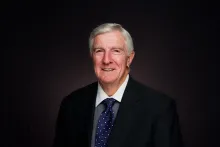
Before his retirement in 2021, Dr. Donald Ward pastored churches in Texas and Louisiana, and taught at Ambassador Bible College in Cincinnati, Ohio. He has also served as chairman of the Council of Elders of the United Church of God. He holds a BS degree; a BA in theology; a MS degree; a doctor’s degree in education from East Texas State University; and has completed 18 hours of graduate theology from SMU.
