

Mark Welch
This transcript was generated by AI and may contain errors. It is provided to assist those who may not be able to listen to the message.
Brethren, one of the major themes, as I see it, of Christ's Sermon on the Mount is about the righteousness of God's Kingdom. In other words, God's righteousness. Let me just give you a simple overview of the Sermon on the Mount as we continue with our Bible study of the Sermon on the Mount. The Sermon on the Mount starts with an introduction and, obviously, by the conclusion. So, from Matthew 5, 1-16, is basically introductory remarks about God's righteousness, which obviously includes the Beatitudes.
And right at the end of the Beatitudes talks about, you'll be persecuted for righteousness sake, in verse 10 of chapter 5. The Beatitudes talks, first and foremost, which I feel is very crucial, is an attitude of humility. Because when you have an attitude of humility, it's the antithesis, basically, of Satan's attitude. And really, that's the problem of Satan, that he wants to be the boss, he wants to be in charge, and basically is in our humble.
That's the way it all starts. We really gotta be humble. So, Christ is talking about God's righteousness, and so it's got some introductory comments until the roundabout, verse 16 of chapter 5. Then, it has three major sections, or we could divide it into three major sections, from the rest of chapter 5 to the end of chapter 5, that's from 17 through 48. It's about morality.
God's righteousness as it relates to morality, as it applies between man and man. In other words, talking about God's law, God's law is not done away, and God's law is love, but it's basically a purpose of morality.
And then he talks about that your righteousness must exceed that of the Pharisees. So, it's... and then he concludes that, saying towards verse 41, that says, Be you perfect as your Father is perfect. In other words, having that perfect relationship between man and man, and obviously, between man and God, but it first is talking about morality, moral conduct, which is godly, which is righteous.
Then, the middle section of the sermon on the Mount, which is basically in Matthew chapter 6, verse 1 through 18, it's God's righteousness as it applies to true religion. In other words, righteousness as he related to God. So, the first one was man to man, and this one is righteousness as he related to God. It was religious activities. Could it be Thanksgiving?
Could it be prayer? Could it be fasting? Those are religious activities. And basically, it's contrasting the worldly way of religious activities, which is a show of public worship versus a true godly way, which is private, between you and God, private worship. In other words, it basically exposes an hypocritical conduct in religious approach, a hypocritical conduct, versus the right conduct, the godly conduct of religion, of devotion to God. Then the third section is from verse 19 of chapter 6 through to verse 12 of chapter 7, and that is God's righteousness as it applies to true spirituality. In other words, for us, as God's children, as the children of God, what should be our relationship?
Our example, our conduct in front of the world. And then, after verse 13 to verse 27, those are basically concluding remarks about God's way of righteousness for that sermon on the Mount. Now, in a previous sermon that we discussed, we stopped at the beginning of, or somewhere in the middle, let's call it that, of the area of devotion, of true religion. And we stopped in verse 13 of chapter 6, which is, we stopped after the model pre. And so today, we want to continue from verse 14 of chapter 6 and conclude chapter 6.
So we're going to do that section, so a section of, conclude a section of true religion, and then start into the section of true spirituality. And so, in Matthew 6, verse 14 and 15, it says, For if you forgive men, and that is related to the model of prayer because we have to forgive others, says, in verse 14, For if you forgive men, they trespass us.
Your heavenly Father will also forgive you. But if you do not forgive men, they trespass us. Neither will your Father forgive your trespassers.
What basically is talking about you is right and just retribution. Think about it. Just like you do to others, that's how it will be done to you. And particularly in that field of forgiveness. It ties in with other scriptures. You know, I'm for an I, which is just just retribution. I'm for an I, tooth for the tooth. It does not give you life because you've looked at something incorrectly or destroy your life because you did something incorrect. It's a just and fair compensation.
Paul emphasized the same principle, and throughout the Bible the same principle is emphasized. We'll just look at one example, yeah? And it's Ephesians chapter 4 verse 32. And be kind to one another, tender-hearted, forgiving one another, even as God in Christ forgave you. So we receive forgiveness as we repent towards God, but just like we receive it, we're now going to do it to others. You think about that other parable of that man that was forgiven a big fortune by his master because he said, please forgive him of giving, and then he didn't want to forgive his other people that had borrowed small amounts of money from him.
Basically what he's talking about is we reap what we sow. We reap what we sow. Sorry. So if we don't forgive, God will not forgive us. So it is important to remember, though, that forgiveness is not an act of saying, well, it never happened, and you can sniff it under the carpet. That's good, then forgiveness. It's very easy for us to say, well, forgive and afford just reap it under the carpet.
When we are forgiven, it does not mean that there are no consulates. For instance, let's look at an example when David did that big sin. And let's look at it in 2 Samuel 12. You know what it is, but let's look at what Samuel had done. He had committed adultery. Then he got Uriah killed. He put it in the front line and said, make sure he's dead if he got him killed. And that kind of justified him to take some additional steps. And then Nathan the prophet came to him in 2 Samuel 12, and he begins to look terrible about this rich man. He had a lot of flocks and herbs. But then there was this little poor man that just had one little beloved sheep. And he had some visitors, and he said, well, I don't want to take out of my large flock, but I'll take that little sheep from that poor little man that's on the bottom line. And when David heard that, he was furious. He said, David's ankle was greatly aroused against that man. He said, that man gets that! He gets killed! And then Nathan told him, you are that man.
Now, it took Guts from Nathan to go to the king and tell him that. I mean, imagine you going to president of the nation and tell that. It'll take some Guts, all right? So, but he did it. Think about it. Nathan did not know what would be the reaction. I mean, he could have a reaction that he was punching back ten times stronger, you know? But it worked, you know? So, but David was humble. And he didn't just say, I'll sin against Uriah, or whatever. He said, I'll sin against God.
And let's read in verse 13 and 14. He says, so David said to Nathan, I have sinned against the Lord, and Nathan said to David, the Lord has also put away your sin. You shall not die. Now, obviously, David did die. Now, look, all human beings, but he's talking about the second death. Think about it. You will not die the second death, all right?
Moreover, because of the seed, you have given great occasion to the enemies of the eternal to blessed seed. In other words, you have not taken the God's name in a right way.
And the child also who is born to you shall surely die.
So, so David understood there will be consequences. For one, the child will die. But there were more consequences. Look at verse 10 and 11, a little earlier, verse 10 and 11. Now therefore, I'm still in second standing, chapter 12, now therefore the sword shall never depart from your house, because you despised me and have taken the wife of Uriah the type to be your wife. Thus is eternal. Behold, I will raise up adversity against you from your own house, and I will take your wives before your eyes and give them to your neighbor, and he shall lie with your wives in sight, in sight of this son. These are serious consequences that happened. He was forgiven. He would not die of a second death. But the physical, temporary consequences occurred. Now, if you just look at, I think it's further, just a few chapters later, and you'll see that there was a time that his own son, Absalom, rebelled against him, and that his own son took his own wives, his concubilants, and put them on top of the roof, in plain sight of everybody, and cohabitated with them. Exactly.
So consequences cannot be swayed under the carpet. And that is very strong, brother. So, going back to Matthew, where we were, in chapter 6, we need to forgive others. But when we do things wrong, or somebody else does things wrong, they are consequences. That does not mean we don't forgive, but they are consequences. And it's an important principle to remember them. Let's move on. Then, you continue talking about these devotional or religious activities, and it's talking about fasting, from verse 16 through 18. Moreover, when you fast, do not be like the hypocrites, with a sad countenance, for they despeak at their faces, that they may appear to men to be fasting. Surely, I say to you, they have to reward. But when you fast, that you, when you fast, anoint your head and wash your face, so that you do not appear to men to be fasting, but your father, who is in secret place, and your father who sees in secret, will reward you openly. Now, note that it says, when? It doesn't say if.
So, we need to fast. The Bible commands us to fast, or fast, at least once a year, during the day of the time. But that's not the only time we fast. Why do we fast? To humble ourselves. To ask God to show us we'll be wrong. For God to guide us. So, it really is a act of humility, a act of humbling ourselves before God, privately, and ask God, show me in kindness, in loving kindness, one thing at a time, please, not to men, not to men, just one thing at a time. But please, show me where I need to become better. Look at Psalm 27. Look at Psalm 27. Look at David's statements. Psalm 27. We're going to read from verse 7 through 10. Psalm 27. Dear, O Lord, when I cry with my voice, have mercy also upon me and answer me. When you say, Speak my face, my heart say to you, Your face, Lord, I will speak. This is what we're trying to say when we're fast. God, I'm speaking. Please, show me. Please help me. Do not hide your face from me. Do not turn your servant away in anger. You have been my help. Do not lead me nor forsake me, O God, on my salvation. When my father and my mother forsook me, or forsake me, then the Lord will take care of me. Teach me away.
That's what we need to do when we're fast. We ask God to show us. And that is not like the hypocrites as we read in verse 16. So let's go back to Matthew, verse 16. It says, Do not be like the hypocrites. You know, it's not a show off. It's not an act. It's a private devotion, religious activity to God. So in this section, we've been talking about onsgiving, prayer, and fasting. And in all of them contrasts a public type of worship with a private worship. And therefore exposes that hypocritical approach that the world tends to do. And when you do that, they are there, they are rewarded. Look at verse 2. Look at verse 2 of chapter 6. At the end of verse 2, when it's talking about onsgiving, or just showing kind deeds to others, this is at the end of verse 2 in chapter 6. Assuredly I say to you, they have the reward. Look at verse 5. When you are praying, in the words having that devotion upwards, rather than just towards men, through showing kind deeds, look at verse 5. Also at the end of verse 5, surely I say to you, they have the reward. And as we read in verse 16, and that's between us and God, as we try to be humble, the universe is inclusive, surely I say to you, they have the reward. Brethren, we don't want that reward. Our reward is heavenly. It's not that reward.
And so, Christ was teaching them about certain principles of devotion, of religious behaviour and conduct in a Godly way, in a Godly, righteous way. So let's move on to the next section of the sermon on the Mount, which is God's righteousness as a principle of being truly spiritual. And that starts in verse 19, and it ends in verse 12 of the following chapter. Although today we'll only go to the end of this chapter. So, from 19 through verse 34, again Christ is contrasting righteousness of God versus self-righteousness. And that contrasts comparing, for instance, two different things. One faces his relationships contrasting how should our relationships be towards possessions, the right and wrong, or two places where to store our wealth, whether it's on earth or in heaven, or two outlooks in life, towards light or towards darkness, or having two masters, God or mammon, or having two states of worries, our physical, body, short-term concerns, or long-term for the kingdom of God. So he's contrasting those. And so, he touches in this section here from verse 19 through verse 34, three areas. One is precious, the other one is I, and the other one is the master's. And then he gives some therefore statements related to those three. So let's look at the first one, which is treasure, which is from 19 to 21. It says, Do not lay up for yourselves treasures on earth where moth and rust destroy, and where thieves break in and steal. But lay up for yourselves treasures in heaven. We need a moth, nor rust destroys, and where thieves do not break in and steal. For where your treasure is, there you're hocked. We'll be also.
Where is our treasure? Now, some people have the idea when they look at those, that we must not state, that we must not plan for the future.
Well, that's not what he's talking about. He's talking about, where is your heart?
We do have to say, we do have to plan for the future. Look at, for instance, Proverbs 6, verses 6-8. Proverbs 6, verses 6-8.
Proverbs 6, verses 6-8.
And now, I'm talking about the ant.
Go to the ant, you sluggard, and it was you lazy person. Consider a ways and be wise.
Which have you no captain? A little scooter or ruler? Provide their supplies in the summer, and gather the food in harvest. How long will you slumber or slumber? When will you rise up from your sleeve? A little sleeve, a little slumber, a little folding of the hands for a sleeve. So, show your poverty come on like a problem, and your need like an armed man.
So, show your poverty come on like a problem, or as one that travels. Always think, man, you spend money when you travel. You're going to be so careful. So, your poverty will come quickly like that. Anyways, always keep that in mind. Whoops! Be careful when you travel. Watch your pen. Watch your pen. It's in the bounds of the thousand who look after themselves. But we have to stay, brethren. So, it's not talking about not saving or planning for the future. Look a little bit ahead in chapter 13, verse 22. Chapter 13, verse 22.
A good man leaves an inerrantess to his children's children, but the wealth of the sinner is stored up for the righteous. Now, it's very difficult for us today to leave the good inerrantess for our children's children, the way inflation is and the way the wall is. It's just very difficult. But you know what is the biggest inerrantess? You can leave your children's children. This education, the knowledge, the value system that you have. That is a wonderful inheritance. Never does that inerrantess. That is so important. But look a bit further in 21, Proverbs 21, verse 20.
21, verse 20.
There is the desirable treasure and oil in the dwelling of the wise, that a foolish man squandies it. So the easy treasure, the Eastern savings.
So, yes, we do need to stay in this physical society. But if we are putting our hope and our heart on money, and all those savings, we have the wrong goal. That's what Christ is saying there. Because it rusts. You know, rust could be inflation, could be whatever. It rusts. Like Job said, naked I come, naked I go. You know, you can't take it with you. So, the videos are ever a very important treasure that we need to have in heaven. Turn with me to Luke chapter 10. Luke chapter 10. Luke chapter 10. Verse 17. Starting in verse 17.
10 verse 17.
Then the seventy returned with joy, saying, Lord, even the demons are set, subject wise, in your name. And he said to them, I saw Satan fall like lightning from heaven, so don't be surprised, therefore. Therefore, I give you the authority to trample on serpents and scorpions and, overall, the power of the enemy, and nothing shall be, shall by any means serve you. Nevertheless, do not rejoice in this, that the spirits are subject to you, but rather rejoice, because your names are written in heaven. That's where the treasure is. Our names are being written in the Book of Life, and have a reward according to our works.
And look at this blessing, yeah, that Christ has given to us, continuing to read in verse 21 through 24. It says, In that hour Jesus rejoiced in the spirit and said, I thank you, Father, the Lord of heaven and earth, that you have hidden these things from the wise and prudent, and revealed them to babes.
As we heard in the sermon, it's God's Spirit. It's God's blessing that He teaches us, and opens our mind, and God the Father is revealed to us in His Spirit.
You can say, Father, so it's in good in your sight. Verse 22, All things have been delivered to me by my Father, and no one knows the Son except the Father, and the Father is, and who the Father is except the Son, and the one to whom the Son wills to reveal. That is a blessing from God that God has given to us through the Son. Verse 23. Then He turned to His disciples and said, Privately blessed are the eyes which see the things we see here. It was blessed are you that you can understand the things that I'm telling you. It was that treasure in heaven. That is treasure in heaven that you have that blessing. For I tell you that many prophets and kings have desired to see what you see and have not seen it, and to hear what you hear and not hear. You know, some, a lot of the prophets in all times did not know the knowledge that we have today about the Christ and Christ's review of Christ. It really is a blessing. And that is a treasure in heaven. And that's better than money. That is better than money. And that's what our hearts need to be.
Look at Hebrews chapter 12. Hebrews chapter 12. Hebrews chapter 12, verse 22 through 29. When you come to Mount Zion and to the city of the living God, the heavenly Jerusalem, to an inaugural company of angels, to the General Assembly and the Church of the Firstborn, it was Christ's Church, God's Church, in Jesus, in God's name, kept in God's name, who are registered in heaven to God, the judge of all, to the spirits of just man, made perfect, to Jesus the mediator of the new covenant, to the blood and to the blood of the sprinkling that speaks better things than that of Satan.
See that you do not refuse him who speaks. For if they do not escape or refuse him who spoke on earth, much more shall we not escape if we turn away from him who speaks from heaven, whose voice then shook the earth, but now he has promised, saying, yet once more are shaken, not only the earth, but also ever. Now this, yet once more, indicates the removal of those things that are shaken and of things that are married, and the things which cannot be shaken or be made.
In other words, wherever you act physical, will be wiped out, will be destroyed, gone. It will be destroyed. But the spiritual things is what remains. Everything physical will disappear. Look at Romans 8, verse 16-21. Romans 8, Romans 8, 16-21. The Spirit in stealth bears witness with our Spirit that we are the children of God. And if children then heads, heads of God, and joint heirs with Christ. If indeed we suffer with him, then we may be glorified together. For I consider that the stuffings of this present time are not worthy to be compared with the glory which shall be revealed in us.
That's where our treasure needs to be. For the earnest expectation of the creation eagerly awaits for the revealing of the sons of God. The creation. Creation is all the physical things. Easily await the revealing of the sons of God. For the creation. And this is a verse that really has got such an amazing powerful meaning. For the creation was subjected to futility, to vanity, to corruption.
Not willingly, but because of him who is subjected in hope. Because the creation itself also will be delivered from the bondage of corruption, of futility, into the glorious liberty of the children of God. Revenant physical things will be wiped out. There will be a new heaven and new earth well beyond. There are things here that we just cannot understand. Like I jokingly call it, life is like a box of chocolates.
You don't know what you're going to get. God is given as a hint, just a little taste, and says, I'm not telling it anymore. And we just don't know. So for me to speculate what's beyond would be wrong. But man, you can read this and your mind can start thinking, and say, wow! But obviously I'll be speculating. So I don't want to go there. But think about it. Wow! It's something. But this life, physical things today, are subject to corruption, to futility. What we need to have is precious in heaven. Our energies, our interests, our heart, our all intent and motivation, needs to be in what is in heaven.
So let's go back to Matthew chapter 6. Because in this verse, yeah, in verse 21, it says, For where your treasure is, there your heart will be also. And think about it. That's what in public speaking they call it a link step. You know, it kind of leads it from the previous thought to the next thought. It's like a little bit of glue that leads one to the other.
Because the next step of thought, which is about the lamp of the body, it's very interesting. So look at it. Let's read verse 21 through, verse 22 through 23. But the lamp of the body is the eye. If your eye is good, your whole body will be full of light. But if your eye is bad, your whole body will be full of darkness. If all the light that is in you is darkness, how great is that darkness? It's through the eye, the eye that leads the body to go in a certain direction.
I remember when I was young, and my parents taught me how to drive. That was many months ago. I remember they told me, don't look at that car, or don't look at the tree. Look at the road. Right? I mean, why?
Because if you're looking at that car coming at you, you'll actually end up unconsciously going towards the car, or towards the tree. But if you look at the road, even though there's a car, yes, you see it in a peripheral vision, but you're focusing on the road. And that makes sure that you're driving on the road. Simple principle, but it's the same thing. Where your eye is, there's your whole body. That's where you're going to go.
That's your vision. That's your goal. That's your desire. That's where your heart wants to go. And that's why I'm saying that verse 21, it's leading the heart to this. Because where your heart is going, that's where you're going to go. Your central motivation is your heart. Now, the eye, in a sense, like a window into your heart and into your mind, but it's the mind and the heart. It's going to be right with God.
And you have heart and mind. That's why it says God's laws are written in the New Covenant, in your mind and in your heart. It's the heart. And in analogy to the physical body in a sense, like the eye, it's where the eye is pointing. Because after all, if your heart is focused on the right thing, your eyes will be focused on the same thing. Really in the end. So, you guys have a really important point. We've got to watch where our eyes are going, but really, underneath this physical layer, spiritually speaking, we've got to watch where our hearts and motives and intents are going.
It's our intent, our motive right. And it says, if the eye is dark, that means, well, you think you can see it.
Can you see another little analogy here? You think you are converted, but you're not truly converted. A false conversion. So, if you have this false conversion, you think you're okay, but you're not, you're actually going in the wrong direction. And you can't see it, how great that darkness is, because you think you're converted. You think you're a real Christian, but you're going the wrong way. How great that darkness is. Once you made a take on God's words, and you kind of peeled different layers of depth and spiritual understanding, it is so beautiful. It is so beautiful. And so, we need to have a vision, we need to have a goal. And the goal must be the knowledge of God's Kingdom, and that hope, that's our treasure, that lights up our life. That encourages us, that uplifts us, that leaves us in a positive feeling, even though everything around us is kind of sometimes pretty bad. But you have that inner focus in the heart of a treasure in Heaven. And so, you are holding a Godly relationship for eternity. And then, it leads that onto the next thinking, or draw, or concept, which is on verse 24. It says, no one can serve two boxes. For either you'll serve the one and love the other, or else you'll be loyal to the one and despise the other. You cannot serve God and the madman. It was that money, physical things.
How does that tie in with the previous thought? It ties in to the point that says, you have a choice. You and I have a choice. Like every leave had a choice of two trees. Life or death. You either believe God was right and wrong, or you think for yourself and you make your own decisions of what's right and wrong. You have a choice. You have a choice of two treasures. One on earth, or one in Heaven.
You have a vision. A wrong vision, or a right vision. You have a right motive, or a wrong motive. And that's why I say this. You can't serve two masters. Now, it's not talking about that you can't have two jobs. It's not talking about that you, for instance, are struggling financially for you, maybe you need to take a second job. That's not what it's talking about. It's talking about the masters. And that alone, the constant of slavery. You can't be a slave to two masters. You can't.
You can't have two masters in that sense. You look at Romans. It talks about sin. It makes you a slave. Look at Romans chapter 6. And what it's saying is you can't have two masters. You can't go the wrong way with the wrong motives and doing the wrong thing and still think you can come out clean on the other side. You can't. Romans chapter 6 verse 16. Romans chapter 6 verse 16.
Do you not know that to whom you present yourselves slaves to obey, you are one's slaves whom you obey? Whether of sin leading to death or of obedience leading to righteousness?
Simple. As we heard in the sermon, it is not the concept of saying, oh well, I've been saved by grace before I don't have to obey. It's kind of contradictory, it's fisting around in circles and trying to justify yourself. Simple. You either obey or don't. But God be thanked, verse 16, that though you were slaves of sin, yet you obeyed from the heart that form of doctrine to which you had delivered.
And having been set free from sin, you have now become slaves of righteousness. You are obeying now. You know, sin puts us in slavery. It really does. Because sometimes those bad habits are hard to get out of. They're hard. And it is a secret of slaves. And how many times do we have a bad habit and we try to get out of it and bang, we fall on it again.
And then we've got to come to Christ, come to God through Christ, and in Christ's blood, it says, please forgive me. But the point is the heart is right. The intent of motive is right. We're walking in the light. But even though you're walking in the light, you might trip on something. So, but you're walking in the light. The heart and the motive, the eye is looking in the light. That is the important part. And we have to make a choice. And we have to have self-control with God's Holy Spirit.
That's one of the elements or one of the characteristics of the fruit of God's Holy Spirit. Self-control. We're going to have that self-control to overcome. And if we don't, we need to ask God, please give me your Spirit. And you know part of the model of prayer is, lead me not into temptation. In other words, lead me not into the way of the Carl Myer temptation. Please, today, help me, God, through the power of your Spirit, to steer my thoughts in the right way.
Look at Manichae, chapter 3. Manichae, chapter 3. That's the last book in the Old Testament, as we have it in our chapter of the Bible, as we have. I know some other versions put it differently. But, Manichae, chapter 3, verse 16 through 18. Then those who feared the Lord spoke to one another, and the Lord listened and heard them. If our heart is right, our motivation is right, that's going to be in our minds. And when we talk to one another, that's what we're going to be talking, and we're going to be encouraged.
You know, that's what we try and do off the church. We have a little bit of extra time for fellowship. And that is lovely, brethren. That, to me, is the creme de la creme of services. The fellowship that we have and that we share, to me, is so lovely. I love it. I love it. And it isn't. And those who feared the Lord spoke to one another, and the Lord must learn. You know, when we're sharing things, yeah, off the services and we're talking, the Lord listened.
Wow, gives me goosebumps. I'm giving you goosebumps. And I've been a little listener. So, a book of remembrance was written before him. That's the book of life. For those who fear the Lord and who may dictate on His name. Remember, we have to make a choice. We can't have two Mosques. We have to fear God and love that fellowship. Do not forsake the same way yourselves together, to stir one another to love, and make it tight on God's principles and laws. So, let's move on with Matthew 6. Matthew 6, and then we'll move on to verse 25-34. And it says, Therefore, now He's saying, Therefore, Othrath, talk to you about these things, about the treasure, about the heart, about that you can't have two masters.
Therefore, I say to you, do not worry about your life, and what you will eat, or what you will drink, nor about your body. What will you put on? It's not life more than food, and the body more than clothing. Look at the birds of the air, for they neither sow nor reap, nor gather into bonds. You do ever make fun of each day?
Are you not of more value than diet? Which of you, by worrying, can add one cupid to it? Can you add one inch, just for that, you know? Choose section. Are you worried? Can you make yourself a little taller? No? God! So why are you worried about clothing? Consider the lilies of the field, how they grow, they neither fall nor spend. And yet, I say to you that even Solomon, in all his glory, was not a raid like one of these.
Now, if God so clothes the grass of the field, which today he is, and tomorrow he's drowning in the oven, will he not much more clothe you or you of little faith? Therefore, do not worry. Say, what shall we eat? Or what shall we drink? Or what shall we wear? For after these things, after all these things, the Gentiles seek. For your heavenly Father knows that you need all these things. Verse 33, that seek first the kingdom of God and His righteousness.
And all these things will be added to you. Therefore, do not worry about tomorrow. For tomorrow, worry about itself, about its own things. Sufficient for the day is its own trouble. He says, do not worry. Three times, in verse 25. Then again on verse 28. Then again in verse 31. Do not worry. Jesus Christ instructs us to forsake worry. And is that easy? No. Because we all do worry.
We all do worry. But God knows what we need. We have a heavenly Father that looks up to His children. Does that mean we must not work? No. Look at 2nd Thessalonians chapter 3 verse 10. 2nd Thessalonians chapter 3 verse 10. 2nd Thessalonians chapter 3 verse 10. So if anyone aware with you, come on to do this. If anyone will not work, neither shall he eat. Does that mean we don't work? No.
This is God feeds the birds. Do the birds kind of sit on the lounge and sit and God is putting them things in their mouths? No. They've got to work for it and go there and look for it and dig it out. They feed themselves, don't they? God feeds them. In other words, God feeds them that there is something for them to eat. Look at Matthew 6 verse 31. It says, Therefore do not worry, saying, What shall we eat? And what shall we drink? What shall we wear? Don't worry. So if you see somebody with a knee, does that mean that you don't help them out? You say, Well, don't worry, be calm and be happy. Go. No. You know, in James, he stares. If you see somebody in need or naked, you mean helping. Go out of your way to help him. Because faith will find what is there. You see, faith is inside the head, of course. It's something inside us. But work is what we do because of what's in us. So what does it mean? When he says, Don't worry. Does it mean you're not going to have any troubles? Oh, don't worry. You're poor. You'll never have any problems. Well, well, well. Leave for a surprise. You know, the birds are dead. But you know what? Occasionally, the bird falls on the ground. God knows what we need. Yes, he does. But there's no guarantee that you will not have difficulties. For instance, didn't Jesus know he was going to be crucified? He did. So he knew there was going to be a very difficult time ahead. But he says, No worries. He still went on. And then in verse 33 he says, Seek ye first the kingdom of God, and back to the heart. Where is the heart? What is the mountain? What is the purpose in life? Why are we born to be immortal children of God for eternity?
And his righteousness, that's how God's righteousness, not our self-righteousness, his righteousness. You see, one of the major themes in someone's mouth is God's righteousness.
When we practice God's righteousness, we have to have concern for others. Therefore, when we seek the kingdom of God, he is not a selfish act for me, myself and I. We are thinking about this as well. Brethren, Christ said very clearly when he was talking about God's righteousness, that our righteousness must exceed that of the Pharisees. He said, we must be fully mature, we must be perfect. And that means we've got to go through a process of transformation to achieve God's righteousness. Wouldn't we achieve it perfectly? Maybe not in this life, but our heart must be right with that desire in that direction. We must have Christ living in us through God's only Spirit. We have to have God, the Father and Christ living in us. They're both living us through God's only Spirit. When we do that, we are reflecting like a mirror. We are reflecting Christ's righteousness, which is God's righteousness. We are reflecting the Lord's glory, by the way we live. See how Paul described that in 2 Corinthians chapter 3. 2 Corinthians chapter 3 verse 17 and 18. 2 Corinthians chapter 3. Now the Lord is the Spirit, and where the Spirit of the Lord is, it is liberty. Christ is Spirit, and God's only Spirit comes through Him. And whatever God's only Spirit, the Lord's Spirit, who's the same Spirit, is liberty. But we all, verse 18, with unviable Christ, beholding as in a mirror, the glory of the Lord, are being transformed into the same image from glory to glory. You know what it says, beholding as in a mirror? Some translations have that reflecting as in a mirror. We, brethren, when we have God's only Spirit in us, and as we are being transformed and changed, we then are reflecting as in a mirror the glory of Christ. We are being transformed into the same image from glory to glory, just as by the Spirit of the Lord. And then look at chapter 4, verse 1, continuing. Therefore, since we have this ministry, we have this responsibility of preaching this spell, exciting hope of changing. As we have received mercy, we do not lose heart. We do not become discouraged, because we have a purpose to speak God's kingdom, to be children of God forever and His righteousness, not only for us, therefore, but for everybody. And Christ will achieve His purpose through us to bring many sons to glory. Thank God you will not fight. It's up to you and I to not give up. But He will never forsake us, will never leave us. God deal with you.
Thank you.
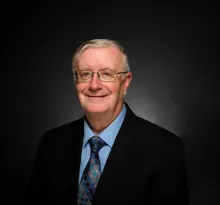
Jorge and his wife Kathy serve the Dallas (TX) and Lawton (OK) congregations. Jorge was born in Portuguese East Africa, now Mozambique, and also lived and served the Church in South Africa. He is also responsible for God’s Work in the Portuguese language, and has been visiting Portugal, Brazil and Angola at least once a year. Kathy was born in Pennsylvania and also served for a number of years in South Africa. They are the proud parents of five children, with 12 grandchildren and live in Allen, north of Dallas (TX).
