
Jorge de Campos
This transcript was generated by AI and may contain errors. It is provided to assist those who may not be able to listen to the message.
Well, brethren, we've been covering the book of Matthew in the last few months. It's been a while since we've covered another previous section. I've been trying to do, once a month, a little bit of Bible study, sermon covering the teachings of Jesus Christ. In His first discourse, or let's call it teaching sermon, which is the Sermon on the Mount, He started that sermon by covering the Beatitudes. And some of the effects, or the results of the Beatitudes, or those lovely attitudes that should be displayed on us, and the results of the outcome would be the salt of the earth and the light of the world. Then, Christ's teachings focus immediately on God's righteousness, which is far greater than the self-righteousness as displayed by the scribes and Pharisees, as we heard in our sermon.
Christ then explained how He viewed the law, how He came to magnify the law, and not to loosen it, or to relax it, as it was being practiced by the Jewish leadership. Those items we've discussed in previous terms. Then, Christ, on the Sermon on the Mount, He then proceeded to discuss about public religious activities, and mainly three, almsgiving, prayer, and fasting. This section of almsgiving, or charitable deeds, and the model prayer, as Christ gave it to us, is what I'd like to cover today from Matthew 6.
Now, it's interesting that all religions have some degree or other of these three, let's call, religious activities. Almsgiving, prayer, and fasting. Some maybe call it devotional righteousness. And in a sense, what Christ is saying is that these activities must be done from the point of God's righteousness, not our human self-righteousness. Or put it in other words, if we don't follow Christ's teachings of these three devotional activities, then these activities become completely useless and ingrained. And so, to start, let's turn to Matthew 6.
We're going to start in verse 1. And it says, Matthew 6, verse 1, Take heed that you do not do your charitable deeds before men to be seen by them. Otherwise, you have no reward from your Father in heaven. So, he's actually talking about charitable deeds. And amongst charitable deeds, he goes into a little bit more detail about some charitable deeds. But we could also include conceptually that prayer and fasting are part of these outgoing serving deeds, charitable deeds as well. Charitable deeds are basically acts of kindness, generally speaking, physical in nature. And these acts of kindness that we do are not to be seen by men. In other words, we should not do them to impress other people.
Indeed, whatever you do, it does the acts. To impress other people, if you do it to impress people, people may get impressed or be impressed. But God will not. That's the point. God will not. Now, that is not a contradiction with being a light. Because in a sense, that's in front of other people who are being a light.
That's not a contradiction to that. Because in that case, people are seeing your good deeds, but that's the light of your spiritual deeds. Of the way you behave and conduct, it's not doing things like polishing up your image in front of others, quote-unquote. You know, it was like showing off that you are a very good person. It's a different thing. So, these examples that Christ now emphasizes of charitable deeds, whether it would be, for instance, of giving of alms, or doing good deeds, it's not just money, as we'll see.
We must not do them to show off, because then it becomes hypocritical. That's what Christ says. So, let's read this first section here from verse 2 to verse 4. It says, Therefore, when you do a charitable deed, do not sound the trumpet before you as the hypocrites who in the synagogues and in the streets that they may have glory from men. Surely, I say to you, they have their reward. But when you do a charitable deed, do not let your left hand know what your right hand is doing.
That your charitable deed might be in secret, and your father, who sees in secret, who himself rewards you, opens it.
Now, this is not just money, giving money. Yes, it could be money. It could, in fact, be lending money. Lending money. Not living, but lending. Look at an example here. In Deuteronomy 15. In Deuteronomy 15, we're going to read verse 7 through 11. It says, if there is among you a poor man of your brethren, within any of the gates in your land, which the Lord your God is giving you, you shall not harden your heart, nor shut your hand from your poor brother. But you shall open your hand wide to him and willingly, lending sufficient for his need. So it might not be money. It might be that he needs some tool to do something at home, and he does not have money to buy it. So, lending that item, lending sufficient for his need, whatever he needs. Beware, let's be a wicked thought in your heart, saying, the seventh year your release is at hand, and your evil eye be against your poor brother, and he's giving nothing. You know, because you say, well, you know, it is only one year to go to the release, so if I give him this, and then he doesn't return it, I'm going to let it go, and therefore I'm not going to give it to him. So, because if you do that, and he cry out to the Lord against you, it becomes certain against you. You shall surely give to him, and your heart should not be grieved when you give to him. Because for this thing, the Lord your God will bless you in all your works, and in all to which you put your hand. So God sees the heart, and so you're doing this in secret. For the poor will never cease from the land, before I command you, saying, you shall open your hand wide to your brother, to your poor, and your needy, in your land. So we ought to always be willing to give. And this is also the same principle in the New Testament. So if you look with me to 1 John 3. 1 John 3. Same principle is Yah in a slightly different way of putting it. But look at 1 John 3, verses 16-19.
But this we know, by this we know love, because he laid down his life for us. And we also ought to lay down our lives for the brethren. So we also ought to make sacrifices, giving sacrifices, doing good deeds for our brethren. But whoever has this world's goods, and sees his brother in need, and shuts his heart, in other words, does not have compassion, shuts his heart from him. How does the love of God abide in him? My little children, let us not love in word or in time, but in actions, indeed, and in truth. And by this we know that we are of the truth, and we shall assure our hearts before him. So what he's saying is, we see somebody in a need, we need to help. If we can, if we have the capability to do so. Now, yes, another little scripture which is very interesting, because sometimes people may perceive, oh well, therefore, I don't have to do anything, because the brethren will help me, so I just don't have to work, because people will help me. And again, this is something very careful that we have to be careful, because people are human, you know? Carnality sometimes is around, even in the church. So we've got to be very careful. But look at Ephesians 4, verse 28. Ephesians 4, verse 28. Now, this is very interesting when you read this. Ephesians 4, verse 28. It says, let him who stole steal no longer.
Now, there is one of the Ten Commandments that says, thou shalt not steal. Right? That's Exodus 20-15. That's the Eight Commandments. But what it says here is transforming the burglar into a giver. Because what it says, let him who stole steal no more, but rather let him work, let him labor, working with his hands, what is good, then he may have something to heed him who has need. So instead of stealing, because you don't work, you should find it, you know, you look at these schemes on the Internet and things like that, people don't work, but they're so clever to come out of these schemes to take your body. You know, it's just unbelievable. It's not that they're not intelligent. They're just using it the wrong way. But what it's saying is here, he who stole steal no more, he used those abilities, those skills, the brain, the hand, whatever he is, used it. So that now the commandment is reversed. Instead of stealing, you're giving. It's a very, very interesting perspective here of transforming the eighth commandment into an act of giving in a positive way. And we know, we have to show that desire to help people, you know, about the story about Lazarus and the rich man, how the rich man never took any attention of Lazarus. He never took any notice. But he should have, and you can read the parable yourself, you know that story. The other thing is, look at here in Luke 22. There's another interesting point, Luke 22. Luke 22.25 And he says, and he said to them, this is Christ, the kings of the Gentiles, ex aspires in the warship of them, and those who ex aspires in authority over them are called benefactors. Interesting, isn't it? In other words, these people, for instance, political leaders, come across as very nice and kind and giving to people to show off, so they appear benefactors, so they get more votes, and then they ex aspires authority. Even you hear about, you know, gang leaders, gang leaders in their gangs, they come across as very kind and very loving to those members of that gang. But there's an ulterior motive. See, the motive is wrong. So, this is exactly what Christ is talking about. We are not to do deeds to show off for an ulterior motive. But these deeds have to be done in secret because you want to do it because it's from your heart and it's not to show off. There is an interesting quote from a certain gentleman called Nicola Machiavelli. He wrote a book called The Prince, and on part thinks he says, and now listen to this quote, very interesting, there is nothing more important than appearing to be religious. Wow, that is an interesting statement of worldly wisdom, let's call it that. Because when you appear to be religious, that counts as your favor. In other words, when you do these acts that you appear very good, you appear religious, you appear to be giving alms to other people, it's all an appearance, a show, for ulterior motives for your own personal gain. And that's exactly what Christ is talking about. Don't give alms with that ulterior motive for your personal gain. That's exactly what Christ is talking about.
Turn with me, please, to John 5, verse 44.
John 5, verse 44.
How can you believe who received honor from one another and do not seek the honor that comes from the only God? You see, Yahweh, I think, I should have read verse 43, I meant to read first verse 43. I've come in my Father's name, and you do not receive me. If another comes in his own name, he will receive. How can you believe who received honor from one another and do not seek the honor that comes from the only God? I am referring now to a point is that, are we seeking honor from men or from God? We need to seek honor from God. What these people, and going back to Matthew, chapter 6, they want their own honor. They want honor from men, and because of that, they advertise. They show it off. And Christ puts it in a way that says, they blow a trumpet. They sound a trumpet. Now, I don't know if they actually went around when they did something and they went and blew a trumpet, literally, but the principle anyway is they were doing it to draw attention to themselves. And we see this in the world today. The point here is, continuing in England, they're hypocrites. So that they may have glory from men. We should aim to have glory from God. Like we heard in the last song we had, we sing glory to God. And the glory is from God. That's what we sing glory to, and that's who we want the glory from. But look a little further in verse 3 of Matthew 6. When you do a charitable deed, do not let your left hand know what your right hand is doing. That's an interesting comment, because, I mean, the left hand is going to know for sure what the right hand is doing. But there is an interesting principle here. And the principle that I get from this is that in our hearts we should not boast to ourselves about what we've done. So, it's not only showing off, but Christ gets a little deeper. Don't allow even the thought in your mind, in my mind, I must not allow even the thought of saying, Well, George, this is pretty good. You've done that. No, it's... that must be put off. Don't allow the left hand to know the right hand. You're doing it because you want to serve, you want to give, and not to kind of pat yourself on the back. That's an important principle, yeah. Look at it in verse 4.
In other words, don't self-congratulate yourself. You know, don't pat yourself on the back. Because, in a sense, what Christ is saying now, if you do that, you've had your reward. So, it's very deep. It goes beyond just... just... doing it for a show. But even inside our hearts, our motivation must be right. And there is a reward. Prefer the easy reward. There's no question about the easy reward. You read in Revelation that Christ will come with this reward, to reward the saints. You'll come with this reward. Well, let's move on to the next one, which is...
starting in verse 5, it says, And when you pray... So, prayer, in a sense, is the next one of these charitable deeds. Because prayer, in a way, is an act of service to others. Because you pray for others, you ask God to intervene for others, it's also a charitable deed. And so, it's within those spines, these three, doing physical charitable deeds, but also praying and fasting, that we ought to do it in a way that we don't show off.
So, it brings the spines sort of lesson to these three. Now, interesting is, the section of prayer, you see, actually in the middle of these three, charitable deeds, prayer and fasting, so prayer is in the middle. And prayer is basically, if you look at it, it's in the middle of the sermon on the mount. You know, if you look at the sermon on the mount, it's kind of more or less in the middle.
I do not double-check and count the verses, but it's somewhere pretty much in the middle. And it brings a lesson to us, because prayer should be in the middle or in the center of our lives. And that means we should always be in contact with God, in prayer, in contact with God, always in contact with God. Now, in this modern age, where everything is kind of on the Internet, and you're on the cell phone, and you're looking at your cell phone all the time, you go to a meal, and you're looking at your phone, and you're friends, you're looking at your phone, which I have to overcome and stop doing, because I'm doing a little bit too much of that.
But for us to be able to do that, that phone or that computer must be connected to the Internet. It's very important. For that computer, that phone, to be always connected, otherwise you can't get that stuff. How much more important it is for us to be connected with our Father by praying without sin. That connection is extremely important. So, reading Yahweh, when you pray, you shall not be like the Hebrew Christian, for they love to pray standing in the center of the God, and in the corners of the streets, that they may be seen by men.
Surely, I say to you, they'd add a reward. So it's the same sort of principle, just like you're giving alms, you ought to do it in private. And then it goes on. But you, when you pray, now who's you? He's talking to the disciples. So he's talking to us, specifically. When you pray, not if, when, go into your room, and when you have shut your door, pray to your Father, which is in secret place, and your Father who's in secret will reward you openly. So, in first place, we need to have regular communication with the Father.
You know, it was a one-on-one, but that contact needs to be private, needs to be on one-on-one with God. And we must give it full attention, not be distracted. I will admit, I'm a human being, I sometimes get distracted, and I get sidetracked. I say, well, well, get back to it, you know. I do it. But it's part of the things I've got overcome, with all that overcome. We're all human beings, and it's part of the same book. We need to be completely focused. So, it's not, again, a question of being seen, so the motivation must be correct.
The motivation must be correct. Not for showing off, not to be seen. Now, understanding there is a time to pray in public, like an open or closing prayer before a service. Like, for instance, Solomon did at the dedication of the temple. It wasn't public. Even Christ, before his death in John 17, he prayed in front of the disciples, John 17.
So that was a public prayer. But we see that many times he went privately and prayed privately. So, most of his prayer time in prayer life was private. Occasionally he did pray in public. So, there is a time to do it in public as well. Continue then in verse 7. And when you pray, do not use vain repetitions as the deen can do, for they think that they will be heard for their many words.
Therefore, do not be like them, for your father knows the things you have need of before you ask him. Now, the first point here is about vain repetitions.
God is not against repetitions. He is against the vain repetitions, which is different. We know that Christ, in Matthew 20, 6, 44, He says, He went three times to the Father just before He said. In other words, He repeated it and just go, Well, He went three times, if it is possible, but let us go. So, it is not against repetitions, it is against vain repetitions. Even Christ, Christ the widow, remember that widow? That was in front of the judge, and the judge was not giving her any attention. And she kind of kept repeating herself. It was not a repetition, it was vain. It was a genuine repetition.
So, it was not against repetition, but it was against vain repetition. And that widow got the justice because she repeated. She kept requesting. But what we see now is repeat the same words and repeat, repeat, and repeat, using many words in long prayers, long dorations, kind of just vain. Interesting enough, in the Portuguese language, there are two words for praying. A lot of people, when they translate the word prayer, translate into Portuguese into the word razaar, because that's the word that people usually use when they say pray.
But razaar has a connotation of a repetition by prayer, like you do when you go around the rosary. You know, razaar, you know, you say, our father and our Mary and whatever it is, and he keeps saying, and he says, you've got to stay at 20 times, so you still will be forgiven.
Whatever it is, if you're being Catholic, you know what I'm referring to. That word razaar is related to that, but there is another word for prayer in Portuguese called orar, which is prayer, but it comes from the heart, which is more of a one-on-one basis, which is not a repetitious prayer. So that's what Christ is saying. Don't use those plain repetitions, because they have many words, and they keep repeating themselves, and quite often you don't even know what he's saying, you're just repeating it, because your brain's not even following it. Then we head on to verse 8, it says, Now, this is an interesting point.
God knows what we need before we ask. But often, we think we know what we need, but maybe God thinks we need something else. Well, maybe I need this, but maybe God thinks that I need patience. Oh, I need this, but maybe God thinks that you and I need perseverance. Oh, I need this, but maybe God thinks that you and I need to be content with what we have. Maybe we think we need this, but maybe God thinks he needs to build our faith, and therefore we need to wait a little longer, and that takes part to build faith.
See, so sometimes the way God answers might be very different than what we expect, but it's still answering our prayer, because it's according to his will, not our word. So sometimes we don't get what we ask, because we think that's our need, and think about the word, yet. But God is very loving and compassionate, and he perceives and understands your needs better than what you and I understand. And he will provide for your needs, your genuine needs. That might not be what we think are our needs.
And then he goes on, giving us a model prayer from verse 9 through 13. So let's read that, verse 9 through 13. In this manner, therefore, pray. Our Father in heaven, hallowed be your name. Your kingdom come, your will be done. On earth as it is in heaven. Give us today our daily bread, and forgive us our debts as we give our debtors. And do not lead us into temptation, but deliver us from the evil one. For yours is kingdom, and the power, and the glory forever.
Amen. So now, he gives a model prayer. First, he encourages us to direct our prayer to our Father. First, not my Father. It's our Father. So it's not just about me, it's about us. And you can see, if you have the prayer, it is about us, give us, forgive us, and lead us. It's about more just me, myself, and I.
But it's directing our prayers to our Father. So people sometimes say, well, what about praying to Christ? Well, Christ taught us to pray to our Father. I'm sure that Christ is listening as well.
So that's what he taught us. I'm not saying it's wrong to pray to Christ. But what I'm saying is, this is what Christ taught us to do. And so we want to follow his instructions as much as possible. Something else that we need to understand is that God calls us. He calls us to Christ. That's the Father calls us to Christ. And then Christ teaches us about the Father. Look a little bit ahead into Matthew 11, verse 25-27. Matthew 11, verse 25-27. He says, at that time, Jesus answered and said, I thank you, Father, Lord of heaven and earth, that you have hidden these things from the wise and prudent and have revealed them to us.
He says, even thou, Father, for so it seemed good in your sight. All things have been delivered to me by my Father, and no one knows the Son except the Father, and nor does anyone know the Father except the Son, and the one to whom the Son wills to reveal him. So the Father calls us. John 6, 44.
No man can come to me unless the Father calls in. The Father calls us. We then respond when we call, when we call, because we called to know Christ. Christ then reveals to us a deeper understanding about the Father. And what we see is that this is essential for salvation. Knowing the Father is essential for the new covenant of Christian. We cannot have access to the Father without Christ. By no other being, by no other name, can we have access, but through Christ. So what does Christ tell us?
Christ tells us? And you look at things like Matthew 23, 23. Pay attention to the weightier matters of the Lord. And he was criticizing Yah. We saw in Matthew 6 Yah, it's saying like the Pharisees knew to show off. And then in Matthew 23, as we heard in the sermon, it Christ continuously, let's put it this way, did not speak in very kind words to the Pharisees, because he called them Pharisees. However, I called them hypocrites. And he said, Matthew 23, 23, you, yes, you should have done these things, but you should have neglected, not neglected, the weightier matters of the Lord.
So Christ is showing us the way to the Father, and through that way is showing us the weightier matters of the Lord are important, of which is judgment, mercy and faith. As I mentioned to you, we received a letter from Dr. Word, and he covers these three points in the letter about judgment, mercy and faith. Speaking about judgment in the letter of Dr.
Word of May 19th, 2017, I should say, he says, the good news is that we can judge ourselves and repent. When he's talking about judgment, he says, Paul writes in 1 Corinthians 11, 31, for if we will judge ourselves, we should not be judged. So we really need to judge ourselves. So that's the first point about judgment. We need to evaluate ourselves, judge ourselves. And then Dr. Waddia goes on to say, if we fail to judge ourselves, God loves us... if we fail to judge ourselves, God loves us so much that if we refuse to judge ourselves, he will step in and judge so that we will not be judged with the will.
Sooner or later, God will always bring us into account for our actions, both in word and deed. So what we see here is that Christ wants us, when he's talking about judgment, mercy and faith, he wants us, first and foremost, to judge ourselves. To look at ourselves, to disturb ourselves, and as we look at ourselves, we get crit. We get convicted by the power of God's Holy Spirit, because He's God's Holy Spirit and God's Word that convicts us.
So we need to do Bible study and study and move God's Spirit. We get convicted and we get convicted and we then judge ourselves. Then, it gets to the second point, mercy. So let me read what He says, Yah. It says, the Apostle John writes in 1 John 1, verse 9, If we confess our sins, He's faithful and just to forgive us our sins and to cleanse us from all unrighteousness. So Yah is the point unto mercy.
We've got to confess to God that we've got to admit to God that we've done things wrong. A case in point, He's that of the publican, who not so much as lifting up his eyes, judged himself, he said, God be merciful to me as sin. And the publican made a judgment, said, I am a sinner. God could see that he was of a repentant heart. Jesus then cites that this man went to his house justified. God extended mercy to the publican after he judged himself and repented of his sin.
That's Luke 18. So Yah, we have judgment and mercy. We judge ourselves, we look at ourselves, we repent, we acknowledge, confess to God, come to repentance, that we want to change, and God immediately extends his mercy to us. And then the next step, the third step, which is faith, is to walk humbly in faith after our sins have been forgiven and mercy has been extended. The prophet Micah describes this whole process of exercising judgment, mercy, and faith. Quote, Micah 6 verse 8.
Please note that Micah's words carefully. What does the Lord require of you? According to the inspired words of Micah, the exercise of judgment, mercy, and faith is a requirement. Jesus says that we should do the righteous matters of the Lord. So then a little light, he says, based on God's immutable spiritual law, we come to a judgment and then ask each other for forgiveness and mercy, where he's now talking about reconciliation. And this process of reconciliation allows us then to walk comfortably in faith and peace. So once you receive this letter, I recommend you to read it carefully because there are a lot of important points about judgment, mercy, and faith. And this is what we are called by God. And through Christ, we receive God's Holy Spirit upon baptism, and we then have access to the Father, and we can repent. And that is the way to eternal life. We've got to walk by faith.
Then let's look a little bit more at Matthew 6 and continue reading the Bible. A first is looking at some of the specifics now in Matthew 6, verse 9 through 13. Our Father in heaven, hallowed be your name. The first focus is on God. Look at it, the first things. Hallowed be your name. Our kingdom came. Our will be done. The first focus is on God. Afterwards, starting with verse 11, then the focus is on us, on our needs. Give us the steady bread. Forgive us our debts. Lead us not into temptation. Deliver us from the evil one. So the first focus is on God, and then the second focus is on our needs. In a sense, it's very similar to the approach of the Ten Commandments. The first few of the Ten Commandments is focused on God, and the last six is focused on us. Then it says, hallowed be your name. Now, God's name is already holy.
So God's name is already holy. But what we're asking is, is that God's name may be respected by everybody in the world, so that everybody will honor and glory God, honor and give glory to God and to His name in the future. Which obviously points to nothing else but where the kingdom of God reigns on earth. When everybody will give honor to God, think about what wonderful Pami will be when everybody gives honor to God's name. Then, in verse 10 says, your kingdom come. Obviously, that's the kingdom of God to come, which means the kingdom of God's not here. So those people that say, oh well, the church is the kingdom of God, well, the church is the RA, then why are we praying? Thy kingdom come. Also, those people that say, well, the kingdom is in your heart, well, then the kingdom is the RA. Well, it's not. So, it's looking at the period, and I don't want to go into that because that gets looked at into, for instance, the Feast of the Tachamachos. When we look at the kingdom of God and the Millennium, and that time when the kingdom of God will rule on earth, and there will be peace that was spread to the whole earth, and all nations will flow to it. And so there's a whole lot of scriptures in Isaiah chapter 2, Isaiah chapter 9, Isaiah chapter 11, and many others, just to mention a few, that shows the kingdom of God ruling on earth. Then it says, your will will be done. True conversion, true conversion, is when you and I stop doing our will, and we want to do God's will. That's a change of mind. When we want to stop doing our will and we do God's will, that is true conversion. That's a change, a radical change in us. Look at Matthew chapter 12. Matthew chapter 12 was fully seated through 15. He said, while he was still talking to the multitudes of the old, his mother and brothers stood outside seeking to speak to him. And then he said, then once they came, look, your mother and your brothers are standing outside seeking to speak to you. So this is an interesting point, because he did that because he brought his insistence to see that.
But he also then said to the one who told him, and he said, who is my mother and who are my brothers? And he stretched out his hand towards his disciples and said, yeah, all my mother and my brothers. For whoever does the will of my father in heaven is my brother and sister and mother. And what he's saying here, brethren, is that we've got to focus on doing God's will. That's what is the focus. We've got to focus on doing God's will.
And this is the same thing Paul emphasized. Look again in Romans 12. Scripture you'll probably know very well. Verse 1 and 2, Romans 12. We've talked about transforming your mind. Romans 12. It says, yeah, I beseech you therefore, brethren, by the mercies of God, that you present your bodies a living sacrifice, holy, acceptable to God, which is your reasonable service. Do not be conformed to this world, but be transformed by the renewing of your mind that you may prove what is that good and acceptable and perfect will. We need to transform our minds with the help of God's only Spirit to actually be focused in doing and prove the perfect and the line perfect will of God.
So, continue in Matthew 6. You will be done on earth as long as you can ever. And then from verse 11 to 13 it changes to our own ears. The first one is giving us this day our daily bread.
Now, this rule will be a very interesting study to you because when it's talking about bread and it's talking about physical bread, but look, I'm not going to go now, but do a study in Luke 11 when it's giving the same model of prayer and when it's talking about daily bread. And then study from verse 5 to verse 13 and it talks about, you know, you ask your parents for something and you are you going to give your children a snack or something like that.
And then it says, and so, you know, because you ask for bread, and so likewise does your heavenly Father give you His Spirit. So is equating your daily bread to His Spirit, to God's Holy Spirit? So when we ask, give us this day our daily bread, yes, at a physical point, but it's also the spiritual point.
You and I should be asking daily for God's Holy Spirit. We really should be asking daily for God's Holy Spirit. That God's Holy Spirit comes into us and that we may be guided with God's Holy Spirit daily in our lives and everything we think, everything we do, so that we actually walk in the way every moment of our lives, praying without seizing and asking God for His Spirit, so that through the power of His Spirit, when somebody asks us a question or we in a discussion with somebody and we kind of, quote unquote, cornered and we don't know what to say, we can ask God at that moment, please God, help me with the right words.
And you know what? He does help you. I mean, I can say for myself that many times, many times, there's that much to me. And then I said, and people said, George, how did you say that? I said, man, I don't know. Obviously, no, it's God's Spirit. But, you know, for me, I had not thought of saying that, but God at that moment, that split moment, just inspired the right words. We need to be close to God every moment. So we need to ask daily for His Spirit, daily for that daily bread, the bread from heaven, the manner from heaven, which is Jesus Christ, who gave us a bread of life.
So that's what we need to ask, Breton. And let's go on this into the next one. Forgive us our debts as we forgive our debtors. Sin is a debt. Sin is a debt. The wages of sin is debt. Romans 6, 23. Jesus paid for our lives. He bought our lives back. He redeemed us. He paid our debts. But we're going to have a forgiving attitude as well. We're going to forgive others. We're going to have a forgiving attitude towards others. Just think about this. Once we see our sins, we become far more merciful. In fact, as we become older, when we see more of our sins, we become more merciful.
On the other side, if we constantly see other people's sins, we probably not seeing our problems. If we constantly see where other people are going wrong, constantly dang, dang, dang, dang, then maybe we're not looking at ourselves. Think about that. You know that parable about the servant that had a large debt. That's in Matthew 18, 23-35. The servant had a large debt, and his master forgave him. And then he went to other people that owed him a couple of cents or whatever it was, and he was hard towards them and he didn't forgive them.
And then the other servant came and said, look at him. And he went to his master and said, look, you forgave this man that he owed you millions or whatever the amount was, and he's not forgiving these other people that are only a couple of cents.
And then, bang, he came back to him. He lost that forgiveness. So, we've got to forgive. We've got to forgive. Then, the next one is, lead us not into temptation. Now, I've had this question.
Somebody said, how can God lead us into temptation so that we're asking him to lead us not into temptation? See, it depends how we read it. Because if we see and do not lead us into the way that we naturally want to go. And lead us not, in other words, away from our carnal way. Our carnal way, our carnal mind, is leading us the wrong way. And what are we asking is God, lead us not that way.
And it was lead us in the opposite direction. So, we need to be asking God, please, in our prayers daily, we get into situations that we may be tempted to say the wrong thing or think the wrong thing or whatever it is. Please help me. When that counts, please lead me away from that wrong thought or that wrong word. Because again, yes, I said the wrong thing. Please, God, help me not to do it again.
Lead me away from that wrong way of saying things or doing things or whatever it is. But deliver us from the evil one. It was deliver us from Satan. Because Satan is trying to get at us every day. Every day. And you might not know, but you may end up a day and everything goes well, and the other day everything goes well. And next thing, maybe because everything's going well, you're kind of not praying as much as you should.
And then man, it comes to you like a fight shot out of the blue out of nowhere. So we need to be asking, you know, deliver us from the evil one. I don't want to get into specifics, but I can look at my life back as a young man, and I can only give God thanks that he delivered me from attacks from Satan. That it was from him.
At that time, I did not recognize it, but it was from him. God delivered me. And I thank God for it. Now, I try to continue to thank God for protecting me from attacks from Satan. I have seen situations where I went to Brazil, and there were things that I've seen, or seen as a wrong word, but there were actions from some people that were demon-possessed actions.
And I had to pray, and I had to be close to God to ask for the right words and to intervene for those people, people with demon-possessed and things like that, and God intervening. But it's from prayer and testing. It's from prayer and testing.
I had a very serious situation with, and I don't want to go into specifics, but this was in Brazil also, and a very specific situation with some person, a young person, and I had to intervene for this person and ask God to intervene, ask Christ to intervene. And he did. He did. But later on, when I visited them again, this person told me, when this person was now, quote unquote, healed of this issue, that this person had heard or seen that this evil being was actually trying to go with me through that anniversary.
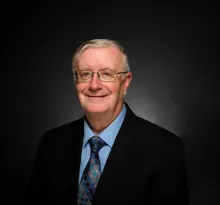
Jorge and his wife Kathy serve the Dallas (TX) and Lawton (OK) congregations. Jorge was born in Portuguese East Africa, now Mozambique, and also lived and served the Church in South Africa. He is also responsible for God’s Work in the Portuguese language, and has been visiting Portugal, Brazil and Angola at least once a year. Kathy was born in Pennsylvania and also served for a number of years in South Africa. They are the proud parents of five children, with 12 grandchildren and live in Allen, north of Dallas (TX).
