
Robin S Webber
This transcript was generated by AI and may contain errors. It is provided to assist those who may not be able to listen to the message.
In short, I can tell you a story about a gentleman. His name was Old Joe. I say, I don't know Old Joe, but you will know Old Joe by the time I get done with this story because, to one degree or another, you have met him. You might not just recognize the name. Old Joe was dying. He really felt that his days were numbered, and so he called for Bill. Bill had been one of his best friends ever, but as happens sometimes between friends, words and actions had come up that had separated them over the years. They hadn't seen one another for years, but Old Joe was dying, and he knew that he needed to talk to Bill. So he called for Bill. He said, Bill, come. I've got to tell you something. So Bill walked into his sick room, and there was Old Joe lying in bed and said, Bill, come on over. And Old Joe looked at Bill, and Old Joe just said, Bill, I've been a sorry character. I've let things come between us that I should not have let come between us. So I'm going to ask you, please, before I die, please forgive me of everything that I've said to you and everything that I've done. And by the way, at the same time, I forgive you. Well, Bill thought this was just the most wonderful thing that he'd ever heard. There was, in a sense, a reunion and a bonding after all of these years. And he looked at Joe and said thank you, then turned around and started walking through the door. But just before he got out the door, Old Joe had enough voice saying, Bill, by the way, if I get better, this doesn't count.
Now, have you ever run into Old Joe somewhere in your life at one time or another? We might be asking ourselves, well, if this is forgiveness, I don't really need that. If this is dead, I don't want any particular part of this kind of, well, I'll forgive, but I don't forget. But the bigger and the more important question, friends, is simply this, is what kind of forgiveness do you offer?
Because that's what we'll be talking about in this message this afternoon. What kind of forgiveness do you offer? For there is, indeed, no more important question that I can ask you, especially here, the Sabbath between the Passover and the Days of Unleavened Bread.
As we move from Passover and move towards the Days of Unleavened Bread, thinking that last night we experienced a festival, not only of faith, but really we might say a festival of forgiveness, our forgiveness, and of what God has done for us. It's a festival of faith.
It's a festival of forgiveness. It's a festival about redemption. It's a festival about reconciliation. It's a festival about restoration. It is the beginning of where God's mind is, and it is the end of where God's mind is, and that surrounds the subject of forgiveness. Why is it so important that we discuss this today? You and I, starting this evening, are going to begin focusing on the new lump, the new piece of unleavened human being, and to be that new lump for God the Father in Jesus Christ. There is probably no more greater homework before us than the homework of forgiveness. It's not only something in the past, it's not only something in the present, but it's something that we're going to have to deal with in the future. Perhaps some of us say, well, I went last night and I had no animosity towards anybody. I had no bitterness towards anybody. I've forgiven individuals. Well, I've never had this kind of experience before me, but I dare say that before our lifetime is through, we will have to go through the homework of forgiveness. For in it, it makes us complete in Christ, and it is really the difference between just simply following Christ and having Christ in us, and that is the ability to forgive somebody. So we want to talk about it today. It's very important. Why is it important again? Because if we are not able to forgive, it paralyzes and stymies our witness for Jesus Christ and our ability to grow spiritually. Not only that, but it affects us emotionally, can also affect us physically. God has not called us to be paralyzed. He's not called us to be stymied. He's called us to be like His Son Jesus Christ, who was able to forgive. That's why today I want to speak on the topic of forgiveness. The title of this message is Forgiveness Now and Always, and we'll be discussing both factors about now and always as we go through the message.
It's important to learn and desire to forgive, not simply because of spiritual and emotional and physical well-being, but more so because we are under the new covenant as Christians.
And because we've made a compact with God, we need to recognize the importance of forgiveness is also not just simply about how we feel down here below, but it has long-term ramifications as to our spiritual life in the kingdom of God as to whether or not we will be there and or not.
So as I say this, forgiveness is not just simply a side issue. It is not just simply the cabons of beans on the salad. It is the main item on the plate. It's one of the big ones. Forgiveness is not just simply another word that you and I can look up in the back of our Bibles and find it on page so-and-so. Forgiveness is not just a word in the Bible. It is the language of the Bible.
And if we do not speak the language of forgiveness, then we are not speaking to God. And that's why I want to talk to you about it today. Let's understand how important forgiveness is as we turn to Psalm 86 and verse 5, our first Scripture in the second message today.
In Psalm 86 and verse 5, as we come to understand forgiveness, we come to understand God.
Psalm 86 and verse 5 describes what our God is like. It talks about His attributes. For you, Lord, are good. Now, you and I might already agree that God is good, but why is God good? And ready to forgive. God is ready to forgive. And abundant in mercy to all those who call upon you. If you go to the root word or the Hebrew of the word ready, it means that God is prepared to forgive. Allow me to put it this way, that if I come up here, in a sense another way of describing it would be as if He has a foot forward or if He is poised. He's leaning in that direction. That is His natural spiritual state that He desires to forgive those. That's very important in understanding God, the one that we worship. This is what God is about. It's a state of being.
Now, in understanding that, we can read the book of Psalms and we can read this and it's poetic and it's prosaic. But let's see it in reality in Luke 23. In Luke 23 and in verse 34, we find God in the flesh. It is no longer prose. It's no longer just simply poetry by the psalmist. But we find that God not only spoke about it towards us but showed us how to do it in this lifetime. It's often been said that Jesus uttered seven different phrases from the cross on that day in which His life was given for us. This is one of the famous phrases that Jesus Christ gave and we find it in Luke 23 and verse 34. Before we read that, let's understand what Jesus had gone through, which was probably brought out last night. We recognize that He had endured an illegal trial. He'd been given an illegal sentence. He'd been rushed from hall to hall, to palace to palace, from accuser to accuser.
We know that He'd had a crown of thorns stamped on His head. We know that He had been flagellated, to use Latin term, with the whip of nine tails that just tore His skin off. We know that this had happened and that had happened and this had happened. All of us have been studying towards this point. So we need to have a reference point to this verse that's going to come up.
With all of that stated, notice what Jesus says in Luke 23 verse 34. Then Jesus said, Father, forgive them, for they do not know what they do. It's one of the last things that Jesus said in His earthly ministry as He lay on the cross of dying. He said, Father, forgive them. Now, how does this correspond to Psalm 86? Remember, it says that God is poised. He's looking for opportunity to forgive. And we find this in the example and the immediacy of Jesus' words and deed on the cross. Now, with that stated, having looked at Psalm 86.5, having looked at Luke 23.34, and I'm about to add one more verse to create the foundation that we're going to move from, let's come to fully understand and embrace what I call two biblical imperatives. If you're taking notes, this would be a good time to take notes. Here we go. Number one, God does not ask us to do something that He has not already done Himself. God does not ask you and Me to do something that He Himself will not do Himself. Number two, God also asks us to remember what He has done for us on His behalf. We are to remember the blessings that He has given us. Join me if you would. Let's turn to Psalm 103. We actually have this in Psalm N, our hymnal. But if you would, let's turn to the middle of the Bible, Psalm 103. For a moment, let's remember, and this certainly fits in with the Passover last night, let's remember what our God has done for us, how He was there for you and for Me, how He was poised and ready to forgive in Psalm 103 and beginning in verse 1. Bless the Lord, O my soul, and all that is in Me. Bless His holy name.
Bless the Lord, O my soul, and forget all of His benefits. Who forgives all our iniquities, who heals our diseases. And notice, who redeems, which means to make good our life from destruction, and who crowns us with loving kindness and tender mercies. There's a thought towards the story of the prodigal son and the father, how the father restores in that sense the prodigal son, crowning him with a robe and with a ring and with shoes, not only redeeming him but reconciling him and restoring him to the full state of which he was before he had left.
Who satisfies your mouth with good things, so that your youth is renewed like the eagles. Forgiveness empowers. It renews. It invigorates. It builds up. It fills us with spiritual and emotional air.
The Lord executes righteousness and justice for all who are oppressed.
He made known His ways to Moses. His acts to the children of Israel. The Lord is merciful and gracious, slow to anger and notice abounding in mercy. Drop down to verse 12.
As far as the east is from the west, so far He has removed from us our transgressions.
We rejoiced in that fact last night as we partook of the wine and partook of the bread. It probably reminded us of our baptism. I know just a couple of weeks ago we were here and rejoiced in the baptism of the three individuals, Henry, Eric, and Walter. And Walter was down in San Diego last night for Passover. When we consider this thought of forgiveness towards others, so that we're not like old Joe, I think it's well that Christians should keep in a constant state, a spiritual state of mind of what I call being buried, wet, risen, and forgiven in the act of baptism.
Maybe that would change our outlook on other people at times when we would reconsider ourselves in a pool, in a baptismal pool. What it was like to be forgiven, what it was like to be clean, what it was like to be offered identity and dignity, redemption, reconciliation, restoration, and to recognize that in this birth canal of baptism, we are not the last but the first.
And that maybe the person that we have an issue with will yet be there as a child of God.
As we go through the Passover, or did last night, I think there are three essential realities that God wants each and every one of us to have. I'd like to share them with you, please, for a moment.
We are reminded as Christians, and we need to embrace the reality, that we have our own imperfection as we strive to emulate a perfect God.
Even after baptism, even after the Passover last night, we will sin.
We will be at fault. We will make mistakes, either wittingly or unwittingly, either out of commission or omission towards others. We will continue to have our own imperfection as we try to emulate a perfect God, and yet God is there, poised, ready to forgive us. Number two, even so, we truly are forgiven.
Number three, and because we have been forgiven, and this is the area I want to center on now, in this part of the message. And because we have been forgiven, and we renewed that covenant of forgiveness last night, because we have been forgiven, we must be forgiving.
Now, you notice I said in point three, we must. Now, that's hard. I'm going to talk about it in just a few minutes, but we must be forgiving. Why do I say that? I'll share it why.
Number three, accepting and extolling God's sovereignty in our life.
Because we do not just simply worship a God at first cause, but extolling and worshiping and acknowledging God's sovereignty in our life is not just simply accepting His Son and receiving His forgiveness for ourselves. Accepting God's sovereignty in our ability to witness that Jesus Christ lives in us is also being able to forgive others.
At times, what does seem to be unforgivable? How do I know that, and what authority do I say that? Join me, if you would, in a very familiar set of Scripture, but one that I'd like to go through with you for a moment and to take a deeper look at in Matthew 6. In Matthew 6, it gives us the key to why I say that God's sovereignty in our life is demonstrated not only by receiving His forgiveness, but also sharing that forgiveness with others. Let's take a good look at Matthew 6, which oftentimes is rendered as the Sermon on the Mount, and in verse 9 begins the model prayer that Jesus Christ offered. In Matthew 6 and verse 9, let's take a look at this and define a few of the very familiar famous phrases. In this manner, therefore, pray, our Father in heaven, hallowed be your name.
Let's begin to notice the connected buildup of the Lord's Prayer. He says, our Father in heaven, and when we say our Father in heaven, hallowed be your name, we begin by yielding up ourselves to something that is bigger than ourselves. We connect with something that is bigger than ourselves. Let me share why that's important. At times, forgiveness, just simply placed on our shoulders is too big for ourselves. We don't have that ability or capability to forgive of and by ourselves. It's not human to forgive and or to forget. Thus, we must acknowledge God, our Father, which art in heaven, hallowed be thy name. Thy kingdom come, thy will be done on earth as it is in heaven. We've already discussed what heaven is like. We've already talked about an attribute of God the Father. One of the greatest attributes of God the Father is that He is poised to forgive, prepared to reconcile, has the table laid out, waiting for the opportune moment to restore somebody. When we say that you're will be done on earth as it is in heaven, we need to recognize one of the greatest aspects of demonstrating God's will on earth as in heaven is as one who is a child of God is to be able to forgive another human being. That's the homework of the new lump.
That's the task at hand. So I don't want that task. I didn't ask for that task.
That's the task at hand. You say, I can't do that. You don't know what happened to me.
I didn't make the assignment. God did. He said, my will be done on earth as it is in heaven. Notice what it says as we conclude here then, as we build up to this, and forgive us our debts as we forgive our detours. When we look at this, we recognize a fascinating reality in the Lord's Prayer. Simply this, that forgiveness, God's forgiveness to us as children of God, is proportional and conditional based upon our willingness to forgive others. Now, why is that important? Let's bring it down to common denominator. Simply this, forgiveness from God to us, our forgiveness to others, simply put, is like the pledge of allegiance.
It is one and indivisible. It's one and indivisible. You can't have the one if you don't do the other. It comes as an entire package. See, I don't know if I want to go there, Mr. Weber. Maybe we need to revisit Jesus on the cross. And if that is our example, to recognize that when he was nailed to a piece of wood, and maybe some of us feel like in our lives, a parent, a mate, an employer, a sibling, something that happened in our life, we can feel like we're nailed to a piece of wood. And that's why we've got to go back initially to what Jesus did on the cross. That is the example. That is the model. That is the goal. That is being a part of the new lump. You either want it or you don't. That's the assignment. Now, why won't God forgive us if we don't forgive others? Let's talk about that from what may we? God will not forgive us if we don't forgive others because then we have a language barrier because God's language is forgiveness. And if we're willing to receive God's forgiveness but we're not willing to forgive others, then God can't deal with us because He doesn't recognize that we're, you know, all of us are swimming in the same pool of sin. Some just kind of tread in it better than others. And to recognize that we've got to understand that we've got to be able to reach out to others. And if we're not willing to forgive, if we're not willing to forget that I'll talk about in a few minutes because there's two items here to deal with, then what we are doing, we are not being the witness that Jesus Christ called us to be. If we are not willing to forgive, then we stand in the way between the individual that God is going to be calling one day and dealing and with the great reconciler, the great forgiver. We stand in the way. God wants us to show the way by how we act and how we respond. That's why He calls us salt. That's why He calls us light. These are active, dynamic agents. There's nothing passive about forgiveness. Now, as we've entered to about a third of this message, you say, well, you know, I know that I need to do this. I know this is what about being a Christian is all about. I understand the example of Jesus Christ. I want to do that. But why is it that forgiving somebody is so difficult? There are reasons why forgiveness on the human plane is difficult. Let me read from Tim LaHaye's book, Anger is a Choice.
I hope that it'll make some sense to us. I'll just do some brief readings. Tim LaHaye states out of his book, Anger is a Choice. He states, have you ever wondered why forgiveness is so difficult? It's basically because the person who is hurt, that is the offended party, does the forgiving and not the person being forgiven, that is the offender. He goes on to say, speaking of another author, David Augsburgher, that he addresses a thought in his excellent book, The Freedom of Forgiveness. And David writes this, the man who forgives pays a tremendous price.
He pays the price of the evil he forgives. He pays the price of the evil he forgives.
Yeah, forgiveness is costly. And it costs you, not the person being forgiven, as LaHaye goes on.
Listen to this for a second. Forgiveness means that justice will not always be fulfilled.
Forgiveness does not rebuild the house burnt down by someone carelessly playing with matches.
Forgiveness does not always put a broken marriage back together. Forgiveness does not restore virginity to a rape victim. Forgiveness is letting go. Forgiveness is letting go. It is the relaxation of your death grip on the pain that you feel. Having been a minister for now over 30 years, I've dealt with many people that have a... Are you with me? You want to look up here a second? This is the interactive portion of the message. Ready? Has a death grip on a person. Sometimes that individual is even dead. It's a grandparent or an uncle or a mother or a father or a step-parent or a child. They have a death grip. They can't let go. They don't really recognize that that person has a life grip from the grave on them. Because they have not been able to let go. They have not been able to forgive. They have not recognized that they have not recognized that even... That's not to excuse the behavior that was reeked or wrecked upon them. But they have not recognized that the whole world has been dysfunctional since the Garden of Eden. That we've had 6,000 years of humanity drowning in its own human nature.
Now, what I'm talking about is very difficult. There are people that have not let go.
But that is the key to forgiveness is letting go and letting God be the rectifier of events in your life.
Reminds me of the story back during the Civil War right afterwards.
General Robert E. Lee was returning back up to Virginia.
He came up to an old plantation. A woman came out from what was at one time a wonderful, beautiful southern mansion. And she came and said, General Lee, look what the Yankees did.
And she pointed over to what had one time been a beautiful, gracious, long-extending oak tree at the front of her plantation.
Look at it! It's a charred ruin! She was expecting General Robert E. Lee to agree with her and to fuel her auction of hate and anger and unforgiveness. Robert E. Lee looked at the tree, looked at the woman, looked at the tree, and looked at the woman. And then said, Madam, cut it down and forget it.
Perhaps some of us in this room today, it may not be a tree, but whatever it is, keeping us from being a witness for God the Father and Jesus Christ, we need to cut it down.
And we need to forget it. And we need to give it over to God. Perhaps that's what we need to do.
It's not easy to forgive, but let's consider the alternatives for a moment.
What are the alternatives when we don't forgive? When we don't forgive, we become a slave to the past. We become a hostage in the present. And we deny ourselves a future, the void of bitterness.
Basically, an unforgiving spirit is an energy crisis in the making. But it is, and the good news that I have for you this afternoon, friends, here on this Sabbath between Passover and the Days of 11, Brad, is you can deal with it. And you can have God as a partner to help you overcome your inability to not be able to forgive. Perhaps the biggest question is, how much do I have to forgive? Join me if you would in Matthew 18 and 21. Matthew 18 and 21. No, one of the beautiful things about the Gospels and the Word of God and how Jesus Christ shared His truth with His disciples is He was so honest. He was just so honest.
He said it would be hard. He never said it would be easy. But He did say that it would be worth it.
Jesus Christ, in all of His discussions with the disciples or the religious folk of His day, always lifted the bar so high that it could not be lifted higher.
Sometimes you and I, after we've prayed and we've gotten off of our knees, we say, God, just a little bit lower, just a little bit lower. I was never a good high jumper. Just a little bit lower. Come on. And it's up here. Why is the bar up here? Because it was down here. It'd be you and me jumping over it. And it's not about us. It's about what God is doing in us. And He lifts the bar so high that He wants for us to call upon Him to utilize the example of Jesus Christ, to utilize the Holy Spirit, and be a witness of His Spirit in our life. Notice what it says in Matthew 18, verse 21. Then Peter. Peter is there for all of us because he is the one. Like in the classroom. Remember in the classroom growing up in high school or college? You know, he always had a question, but you'd be afraid to ask a question. But you always knew the guy next to you was the one that would always have his hand up in the air. He'd be the one that asked a question, so you didn't look dumb. Or am I the only one that was like that? I'm sorry. I'm watching faces. I always thought by that kind of person. Then Peter came to him and said, Lord, one of those questions Peter would ask, how often shall my brother sin against me and I forgive him?
Peter says, up to seven times. Now, the reason why Peter said that, Peter kind of thought, I'll show Christ how righteous I am because the going rate in the rabbinical circle was just three times. Three strikes, you're out. So Peter comes back and says, Lord, up to seven times.
And notice what Jesus said, I do not say to you up to seven times, but up to seventy times seven.
He's using that as an example. It never ends. Therefore, then he goes into a parable.
The kingdom of heaven is like a certain king who wanted to settle accounts with his servants. And when he had begun to settle accounts, one was brought to him who owed him ten thousand talents. That'd be like ten million dollars. In other words, this sort of servant owed him everything, everything. The master had been, oh, so generous and given him a whole new life and a whole new lease. But as he was not able to pay his master commanded that he be sold with his wife and children and all that he had, and that payment be made, the servant therefore fell down before him saying, Master, have patience with me. I'll pay you all. And then the master of that servant was moved with compassion, released him and forgave him the debt. But that servant, after he'd been forgiven everything, just like last night as we renewed the Passover covenant under the terms of the new covenant and we partook of the wine, it symbolizes the blood that covers our sins.
After we received all of that, it'd be like us then going out and being stingy with others.
Notice what it says in Matthew 18. The servant went out and found that one of his fellow servants who laid hands on him had took him by the throat, saying, Pay me what you owe me.
So the servant fell down at his feet and begged him, saying, Have patience with me and I will pay you all. I might not have caught a bet. Oh, he owed him a hundred denarii. A hundred denarii is like twenty bucks. Here, the servant that had been forgiven was forgiven a debt of ten million dollars, wiped off the slates, just as our sins and our past life was wiped off the slate once again last night, forgiven, redeemed, reconciled, restored. Then it would be like us after all that we have done and all that we desire to go out and then hold somebody hostage for twenty dollars.
So his fellow servant fell down and begged him, saying, Have patience with me and I'll buy you, pay you all. And he would not, but went and threw him into prison till he should pay the debt. So when his fellow servant saw what had been done, they were very grieved and came and told their masters all that had been done. Oh, advocates. Advocates are really special in the Bible.
Then his master, after he had called him, said to him, You wicked servant, I forgave you all the debt because you begged me. Should you not also have compassion on your fellow servant, just as I had pity on you. And his master was angry and delivered him to the torturers until he should pay all that was due to him. Now, that might sound cruel.
Delivered him to the torturers. But I'll tell you something. May I, please?
An individual that is not willing to forgive is tortured. They're already tortured on the inside.
And so the parable that Jesus is giving is that, in that sense, there is an outward manifestation of what is already going on the inside. You're going to be tortured. Okay. We'll make it manifest. But now, please, if you have not followed this at all, join me in Matthew 18, verse 35.
Because this is not a story now, even though it's still in red ink, which means it's Jesus' words.
This is a statement following the story, answering Peter's question.
So, my Heavenly Father also will do to each of you from his heart.
Does not forgive his brother, his trespasses. Notice the level of examination.
Notice the level of excavation of our thoughts and our feelings and our will.
To be like God. It's not going to be our lip service. It's not about a cold war between people. It is what you are doing from his heart does not forgive his brother, his trespasses. Going back to what we read in Matthew 6, Father, forgive us as we forgive our debtors. At Passover time, you and I have been asked to examine ourselves.
We examine ourselves in the light of Jesus Christ. Join me if you would in Ephesians 4.
Because this needs to be our focus when it comes to forgiveness. Jesus is the new lump. He is the new man. He is indeed the example. In Ephesians 4.
And let's pick up the story in verse 29.
Because this is how to do it. I don't want to just tell you what you need to do. This is now a verse of how to do it. Let no co-epth word proceed out of your mouth, but what is good for necessary building up. That it may impart grace to the hearers. And notice now, do not grieve the Holy Spirit of God by whom you were sealed for the day of notice redemption.
Redemption is about forgiveness. It is about making good.
Let all bitterness, wrath, anger, clamor, and evil speaking be put away from you with all malice. Isn't that the lesson of the days of the 11 bread that we are to put off, that we are to put away, and we are to put on the new man? Verse 32.
And be kind to one another, tenderhearted, forgiving one another, even, you might want to circle that if you're brave with your pen and your Bible, even as God in Christ forgave you. We come to recognize a matter of faith. That's why Passover is a festival of faith. It is a festival that demands and requires our belief that there was a man of the line of David born in Bethlehem, born of the Virgin Mary, lived a spotless life, died a horrible death. The perfect Lamb of God, the worst thing that he ever did in his life was, are you ready? Be perfect. Thus, our entire spiritual attention is drawn to verse 32 and the word even. That is the great equalizer of receiving God's forgiveness and being willing and able and desirous of offering forgiveness to others that have trespassed against us. We don't do it because it's natural. We don't do it because it's easy. We do it even because, our example, the Son of God, who now lives in us by the Spirit of God, did it and said, Father, forgive them. For if they really knew what they were doing, they wouldn't do it. I have a question for you, friends.
How important will the word even be for you during the days of Unleavened Bread?
Because even is the great equalizer.
Such a verse like this reminds us that Christians don't keep score.
We give it to God. Notice Luke 17 and verse 5.
Having this kind of action in our lives requires dynamic faith. Oftentimes, we've used Luke 17.5 kind of as a quick verse, an important verse, but a quick verse usually at the end when you've heard a sermon on faith. We say that and encourage you as ministers that you can ask God for more faith. But have you ever noticed the context of where this is about? Let's actually pick it up in Luke 17 and verse 1. Then his disciples said to him, it is impossible, then he said to the disciples, excuse me, it is impossible that no offenses should come, but woe to him through whom they do come. Jesus was making his disciples aware that they were not going to live a polyanic existence either inside or outside of the body of Christ. Wherever you have human beings, you're going to have problems. There are going to be offenses. Jesus recognized that even amongst his followers, there would be those that would offend one another. Not Romans and soldiers offending Christians, but Christians offending Christians. It's like I've always said when I'm counseling somebody for baptism. I say the biggest challenge that you are going to have ahead of you in exercising God's Holy Spirit is not understanding the truth. It's going to be dealing with people.
Most people leave the flock not over the words of God, not over the revelation of God, not over the truth of God. They leave the flock because of him or her or me or somebody that looks like me.
They leave the flock because of people. Notice what Jesus says. It is impossible that no offense that should come but woe to him through whom they do come. So there is a word here to those that might offend that, you know, don't set somebody up because you think that they need to learn about a lesson of forgiveness. Both sides have responsibilities. It would be better for him if a milestone were hung around his neck and he were thrown to the sea than that he should offend one of these little ones. Take heed to yourself if your brother sins against you, rebuke him, and if he repents, forgive him. And if he sins against you seven times in a day and seven times in a day returns to you saying, I repent, you shall forgive him. Now with all of that stated, now we come to verse 5, which is where the minister usually brings you to without the story before her. Notice what it says. Having heard thus, the apostle said to the Lord, increase our faith.
The issue of increasing faith was not about moving mountains.
It was not dealing with the beast and or the false prophet or perhaps the health crisis.
When the apostles or the disciples had heard about what would be required of them, they recognized they didn't have it in themselves. Thus, they said to the rabbi, increase our faith.
And I would suggest as we come from Passover to the Days of Unleavened Bread, I encourage you, if you have an issue before you where you have not forgiven somebody, ask God to increase your faith. Faith, even as Jesus, as it says in Ephesians, that is the example as he was able to forgive, ask for that faith, not only faith in Christ, but the faith of Christ to be in you. Now, I want to finish up with one thing. It's just going to take five minutes. We'll be out of here and look forward to the night to be much observed. But now I want to take you one step further because we've all been here and it's not a good place to be. That's why I want to get you out of there. You'll say, okay, I'll bargain with God. I'll tell you what, I will forgive.
I'll be better than old Joe. I'll forgive, but I will not forget.
That's like asking God to heal the wound, but allowing you to keep the scar just so you can look at it. No, no, no, no, no. That won't do. And that doesn't mean that it's easy because when you forgive somebody and you forget in that sense, we're not talking about spiritual amnesia. We're talking about something else.
Forgiveness is simply this. It's cutting off the price tag of what it's costing you, and it will cost you to forgive somebody. Can I say, Mr. Weber, why do you keep on going on with this sermon? Because I'll share something with you. As a pastor, as a minister for 30 years, I deal with people. And you see the life prints all over them. You see their inability to either forgive God, forgive their parents, forgive their grandparents, forgive somebody that tripped them up in the past, maybe even forgive themselves for what they have done. And it's written all over them. You can see it in their face. You can tell by the way that they talk. You can see by the manner of what they talk about. You really recognize that they have not forgiven, and if they have forgiven, they have not cut off that price tag of what it costs them.
When you forgive and forget, it doesn't mean that you will perhaps ever forget the offense, the pain or the slight. What it means to forgive and forget is that, stay with me, please, you have purposefully and by choice removed the penalty and the judgment from the act once and for all. When God says that He removes our sins, as it says in Psalm 103 and verse 12, as far as east is from the west, I can't go any further than this, east from the west, what does God mean by that? Because God is omniscient. He is all-knowing. He's past, present, and future. He's out there. It's not like He has spiritual amnesia. What it means is that God, when we come to God and we say, Father, I know that I've blown it, I know that I've been wrong, but I also know that Jesus in His blood covers my sins. And I'm imploring you and asking in good faith that you forgive me, that when we do that, then we know that we are indeed forgiven.
And what God does at that point is that He not only covers us with the blood of Jesus Christ, but He also removes the judgment, removes the sting, separates the judgment from what we have done. Let me show you just a verse on that for a moment in Isaiah 38 and 17, how it scripturally works. Isaiah 38 verse 17.
The prophet saying, Indeed, it was for my own peace that I had great bitterness, but you have lovingly delivered my soul from the pit of corruption. For you have cast all my sins behind your back. Cast all my sins behind your back. It'd be like I have, I don't have anything to cast, I like doing that, but it'd be like, in other words, when there's something behind your back, you don't see it. It's not that it isn't there, but you're not focused on it. You're not remembering it. It's not the biggest issue in your life. It's forgotten. And that's what God does with us.
And as God does that with us, puts our sins behind His back, we also need to be willing and spiritually able to not only forgive people, but forget the judgment and put it behind our back.
How does that work in real life? Join me, if you would, in Genesis 41. You say, Mr. Weber, that's a lot of homework that you're giving to the new lumps as we're moving into the days of 11, Brad. Genesis 41 has a beautiful example of this in word and in deed. Genesis 41, it's the story of one of the patriarchs of old, the story of Joseph. Joseph, what a life he had. Seized, taken hostage, thrown into a pet, a slave, thrown into jail, lied against. Oh, so many things that beset Joseph. But did you ever notice what Joseph did in Genesis 41 and verse 51?
When his children were born. And there can be different meanings and understandings of the name Manasseh. But this is what the Bible offers. And I believe this is the primary reference of why Joseph named his son Manasseh. Notice what he did. Joseph called the name of the firstborn Manasseh, for God has made me forget all my toil and all my father's house.
The name Manasseh means forgetfulness. Joseph made a choice, and that little one was always running in front of him that he had made a choice, a spiritual choice, to forget and to move on, to chop down the tree and forget it. Join me a little bit further in Genesis 50.
Another part of the story of Joseph as we begin to conclude. Genesis 15 verse 15. Well, after Jacob died, the brothers, as we say today, the bros, thought that Joseph was going to get him. As long as the old man was around, it was all right. But Jacob died. Now there's just Joseph and them.
Time to shoot it out. Notice what happens in verse 15. When Joseph's brothers saw that their father was dead, they said, perhaps now Joseph will hate us and may actually repay us for the all the evil which we did to him. So they sent messengers to Joseph, saying, Before your father died, he commanded, saying, Then you shall say to Joseph, I beg you, please forgive the trespasses of your brothers and their sin, for they did evil to you.
Now please forgive the trespass of the servants of the God of your father. And Joseph wept when they spoke to him. And then his brother also went and fell down before his face and he said, Behold, we are your servants. And Joseph said to them, Do not be afraid, for am I in the place of God? Think that through for a moment. Joseph said, Do not be afraid, for am I in the place of God? With everything that had happened to Joseph, laid out, thrown in a pit, put into slavery, thrown into jail, lied against, on and on and on and on. He said, Am I in the place of God? Am I your judge?
But as for you, you meant evil against me, but God meant it for good in order to bring it about as it is this day to save many people alive. May I ask you a question as we begin to conclude? What has happened in your life that has not been good, humanly? That's hurt you, really deep. I want you to think about it, because we've got some homework up ahead of us. It's called the Days of Unleavened Bread.
It's not just a ritual, it's a reality of putting away and putting on the example of Jesus Christ. And to recognize that just like Joseph, these things that have come upon our lives have hurt us. And maybe others that did these things to us, wittingly or unwittingly, perhaps they did it for bad. But we ask them then, as Christians, perhaps it is for God's good. Now, sometimes things happen in our life that we didn't start, but God asked us to finish them the right way, the good way, for good, to do it like Jesus Christ would.
That's our homework. I'm not going to be with you tomorrow on the first day of Unleavened Bread, but I think I've given you a message for the days of Unleavened Bread. To put on the example of Jesus Christ from the cross who said, Father, forgive them. Remember how I said, the title of this message was, Forgiveness, Always, and Now.
Allow me to conclude with a story that was given by a man nearly a hundred years ago. His name was Phillips Brooks. He's a very famous preacher in New York at the turn of the century. Elephant Orator, a man that looked at his congregation and understood what was going on. So many of them had come to them about this and about this and about this and about this and about this. They were talking, they were acting, they were reacting, but they weren't moving in the vein that they needed to. And there was not a reconciliation amongst them or their family members.
They were going nowhere. So, Philip Brooks got up on that day and from the very beginning the entire congregation's attention was upon him when he said, Oh, my dear friends. And as he said that, it was as if he spoke to each of them separately and individually. He said, my dear friends, you who are living miserable misunderstandings run on from year to year, meaning to clear them up someday. You who are keeping wretched quarrels alive because you cannot quite make up your mind that now is the day to sacrifice your pride and kill them.
You who are passing men suddenly upon the street, not speaking to them out of some silly spite. And yet, knowing that it would fill you with shame and remorse if you heard that one of those men were dead tomorrow morning. You who are letting your neighbor starve till you hear that he is dying of starvation or letting your friend's heart ache for a word of appreciation or sympathy, which you mean to give someday, if you only could know and see and feel all of a sudden that the time is short, how it would break the spell, how you would go instantly and do the thing which you might never have another chance today to do.
Today is today. Our role and our goal is forgiveness always. When does always begin? Always begins in the now. Always begins today. Brethren, thank God for being able to give you this message today. Hopefully it will turn all of our lives around. We can move forward as we leave the land of Egypt once again symbolically and look forward to this evening, the night to be much observed, a night of deliverance, a night without any regress. Let's go out. Let's do the homework. Let's forgive now and always.
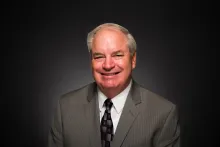
Robin Webber was born in Chicago, Illinois, in 1951, but has lived most of his life in California. He has been a part of the Church of God community since 1963. He attended Ambassador College in Pasadena from 1969-1973. He majored in theology and history.
Mr. Webber's interest remains in the study of history, socio-economics and literature. Over the years, he has offered his services to museums as a docent to share his enthusiasm and passions regarding these areas of expertise.
When time permits, he loves to go mountain biking on nearby ranch land and meet his wife as she hikes toward him.
