
Robin S Webber
This transcript was generated by AI and may contain errors. It is provided to assist those who may not be able to listen to the message.
I want to give a message that I hope and pray that you will take personally, as I take personally, especially as we come up to the New Testament Passover. This is a unique experience, and as you always know, I do call it the New Testament Passover. It is not just simply the Passover of old and with the Old Covenant, but to recognize that that great sacrifice came, and with that sacrifice he observed it on the eve before, sacrificed like the Lamb of old at three o'clock in the afternoon. And we're going to be talking about that extension later on as we go through this week. I've asked all of our ministers that are going to be speaking next Sabbath about the aspect of the wave sheaf, because the wave sheaf is also a part of the Days of Unleavened Bread, that we do not just worship a dead Savior, but we do worship the risen Lamb. And the book of Revelation, other than a book of, at times, prophecy, is a book of encouragement, because two and a half, three generations down that original audience in Jerusalem, God came through a vision to John to remind the church at large, both Jew and Gentile, that Jesus had been risen, has risen from the dead and is at the right hand of God. He is exalted. He is ascended. And that's why we want to speak about that next Sabbath on that wave sheaf Sabbath, pointing that we just don't worship one more dead martyr. This individual is unique. This individual was wonderful. This individual was the Son of God. This individual is the Son of man. This was Messiah. This is our Savior. This is our exalted high priest that never stops working for us. And so it's very important that we understand about this New Testament Passover. And tomorrow night, remember again that as we partake of the bread and the wine, that we are partaking with those symbols. We are making a renewed relationship with God under what He has offered us, and that is the New Covenant. As the New Testament Passover service, we always conclude by covering passages from John 13 through 17 that we often call Christ's last instructions to His disciples. And yet there is another powerful series of messages that Christ chose to share with all of His disciples through all of the ages to guide, to instruct, and to encourage them. I'm going to share that again to guide, to instruct, and to encourage them through all moments in this in this rescued existence that God the Father provides us through Jesus Christ and this new life, this kingdom life, the kingdom life that we're able to experience now in part. It's very interesting that Mr. Butler, who spoke before me, key scripture was that we are to live by every word of God. What we're going to be talking about is a part of living by every word of God. And we're going to be reviewing and maybe really understanding for the very first time the seven last recorded sayings of Christ. The Son of Man, the Son of God encapsulated in human flesh as He laid nailed to a piece of wood on the altar of Golgotha because indeed that is what that Mount was. It was an altar with the Lamb of God upon it being nailed. I want you to think about that being nailed to a piece of wood. He brings to you to me, you and me today, living words of life. I want you to think about this for a moment. He brings to you and to me living words of life from a dying man who practiced what he preached. He lived, Jim, he lived by every word of God. He lived for his father. He practiced what he preached and he asked us today as we come up and we examine ourselves as we come up to the New Testament Passover as to what kingdom life are we truly living.
Is it the kingdom of God or is it the kingdom of self? It's always kind of easy. God doesn't always put threes into the equation. It's usually this or that. And I think Jim kind of used that in his cadence going back and forth. Years ago during Operation Desert Storm, now long ago, almost 24-25 years ago, some of you were too young to remember that, but there was a the general that was in charge of the United Forces that was trying to spring Iraq out of Kuwait. He used a saying that I have always remembered, General Schwarzkopf, and he said this, the reality of death, that's what we're facing tomorrow night, the reality of death places the mind in a wondrous focus.
And then the training takes over. I'm going to repeat it one more time. The reality of death places the mind in a wondrous focus, and then the training takes over. Christ was giving his life. Jesus of Nazareth, as they would say in that day, Yeshua, born in Bethlehem, was giving his life. And, oh, my brethren, was his mind wondrous, and was it focused? And he was, as he was dying, he was teaching you and moi, me, what it's all about, that we might take each of these sayings that he gave these seven sayings.
If ever the training took over, it was right there. And so, these telling statements are the essence of the Christian experience that you and I are to live every day. They will plainly, by adhering to them, they will reveal who we are, who we are, and who we rely on. They are not geared—hear me, please. Jim spoke to this—they are not geared to simply the brain, to the head, to knowledge.
Each of these sayings are tied together by a heart that is different than when you and I were born. It's the new heart. It's the new spirit. It's the new mind that has been given to us. And they are geared to one specific thing. They are geared to the aspect of a relationship. You can evolve the knowledge in the world here and back, but God is calling us to a relationship.
Are you with me? To a relationship with none other than the sire, the great sire, the great father, the father, Christ's father, our father, to know this. So today, in the light of the Apostle Paul's word to examine ourselves, let's focus on these seven recorded messages, and they are recorded on the cross. I think that each of them could bear a sermon to themselves. Maybe I'll do that another year as God gives me a life. Maybe go one by one by one by one. So I'm going to stay kind of busy here with you for a few minutes, sharing some of Jesus' last thoughts that he wanted to share with you and me here on April 20, 2024.
So we're going to get going here. I think you'll find that they are an accurate measurement of where we – that means you and me. Because I'm just preaching to myself up here. Stand in the faith. Where do we stand in the faith towards God? In the faith of the sacrifice, in the faith of the words that the Messiah gave us, and also the faith of whom is so very, very important.
And that by faith. Because tomorrow night is a festival of faith. I remember years ago, and we'll do it again tomorrow night, whether here or there, we will open with prayer. That's a habit that I developed in Pasadena with Mr. Armstrong. One time I remember Mr. Armstrong, they were really saying, well, don't have a prayer. Well, you know, Mr. Armstrong wanted to pray before 1,100 people. Guess what?
He'll pray. And so, and he prayed, and it is one of those memorable snapshots I have, and Susan Ape was there too, that he prayed that the people of God might have true and living faith. That God not only spiritually heals, but can physically heal. And as only Mr. Armstrong could be Mr. Armstrong the way that he spoke, you know, just the whole thing, you know, for those who remember, it was moving.
And that always reminded me that the New Testament Passover, even as the Passover of the Old Testament, is a festival of faith. It's not just about a festival of works. God will do what he can do, but then he asks us to do what we can do. But we have to have faith as you go to John 17, which we will tomorrow night, that three times, Jesus, in that closing prayer, his prayer, says, Father, thank you that these believe that you sent me.
That these, you, me, those that were in that room that night, in the upper loft, that they get it. Their eyes have been opened. Now, as Jim was talking about in his message, people are fickle, and they did some crazy things that night and throughout the next few days. But they died in that faith. They did ultimately believe as God grew them and molded them, and the fruits of God's Holy Spirit that came would begin to work on them.
So here we go. We're going to look at this. These seven messages from the cross, from Christ, are his measurement. Nobody else's. And these last words, I'm going to share something with you, and here's the goal of my message as we move. The last words of Jesus on the cross, I hope then, are the first responses that you and I will take in this life. His last words should be our first responses. Number one, here we go. You ready? We're going to go kind of rapidly, otherwise we'll be here till the Passover tomorrow night. Are you ready?
Seatbelts on. Hearts ready. Here we go. Number one, Luke 2334. And what I don't cover, I will send you out in my notes tonight. In Luke 2334. This is the first one. Then Jesus said, Father, forgive them, for they do not know what they do, and they divide his garments and cast lots. And the people stood looking on, but even the rulers with him sneered, saying, He saved others, let him save himself, if he is the Christ, the chosen of God.
When we look at this entire context, we're going to go back to verse 32. Let's just go through context. There were also two other criminals led with him to be put to death. And when they had come to the place called Calvary, they crucified him. And the criminals were on the right hand and the other on the left. And then that's when he said that. So this is the environment. And remember, remember humanity's choice in the courtyard before Pilate was simply this. I gave this message last week.
They had two individuals that they could have chose from. Number one, on one hand, was a gentleman named Barabbas, meaning son of the father, a zealot, trying to bring down Rome, son of the father. On the other hand was who? Jesus, the son of God.
The people versus Jesus of Galilee. And who did the people choose? The wrong guy. Kind of tells you why, on the day of atonement, years ago in Leviticus 16, that lots had to be chosen by God to bless between the two goats. Because man by himself, man by... it's clear back in Leviticus, man by himself will not get it. You and I won't get it. And if we get it, we might lose it because we don't have that sustaining spirit of God.
It is essential to grasp that the opening chapter of Christ, last moments, the opening words, this is important, this is the foundation of our life, the opening words was forgiveness, forgiveness. How's that working today in our lives? How is that working in my life? These words remind and refreshes that forgiveness and mercy are the very first steps towards eternal joy and happiness and true well-being.
To forgive. In Christianity, forgiveness comes first. It is the gateway for all else to enter in, for us to find expression because we have been, what? Forgiven. We in turn are to forgive.
These words and forgiveness are not marginal to the Christian experience, but central.
I'm going to want to emphasize this as your brother in Christ, central to being a disciple of Jesus Christ. My first role in life is not to be a pastor. My first role in life is not to be an elder.
My calling at the core is to be a disciple, a learner, a student, an absorber of not only what Jesus Christ said, but what he is and what he has done. And because of what he did for us on Golgotha, we are forgiven and we are reconciled to God. Forgiveness is the door. That's so very important.
Let's understand that Jesus in all of this, with that crowd around him, he did more than turn the cheek. No, we're supposed to turn our cheek. No, I want to share something with you. At Golgotha, are you with me? At Golgotha, what he did, he changed the whole equation. He changed the whole equation of what we ought to be. Forgiveness has got to be at the foundation of what a Christian is for us to understand that we are forgiven, to understand what Jesus did do for us, as we'll kind of find out later in one of the points of what the Father did for us as He allowed His son to die.
Psalms 86 and verse five.
How did He do that?
Humally, I don't think I might be up to that if I had nails in my hands right now. It's nice to talk about, but that's an example that's set before us. In Psalms 86 and verse five, notice what it says, For you, Lord, are good, and you are ready to forgive and abundant in mercy to all those who call upon you. This is the PowerPoint, so you may want to look up here.
Matt and Saul are dead. I am the PowerPoint when I do things. Okay. In other words, here's the ledge between heaven and earth, between God and us, and it's showing that God is literally leaning forward. He is poised. It's His desire. He's poised. He's out front. He's leaning and desiring to forgive. That's His inherent nature and attribute.
He doesn't have to go find forgiveness. Now, we are to repent, yes, in the conditional part of forgiveness for us with our Father, but He is poised. I want to show you how this works with somebody that most likely kept the New Testament Passover in Jerusalem. And you think about your situation, whatever is maybe challenging right now in the matter of forgiveness. It does work, and it was the first step of a disciple of Jesus Christ when Stephen the Deacon was on trial, and then he was executed by stoning. What did he say? Yes, there's the Son of God, who was the Son of man, but then here's one that was born and a man like you and me. And as he, you think about this, as he's being stoned, he said, what? Father, forgive them.
So we can say, well, that was Jesus Christ. What else would you expect him to say from the cross?
Even though he's got nails in his hands right now, and everybody's spitting at him, and staring at him, the Romans are doing weird things, and the Jews are, you know, smitten words.
But here's the one that was born like you and me, Stephen.
What did we learn from all of this? What did we learn from this?
Number one, real quickly, he didn't take them personally, the crowd, but recognized their humanity and Satan's deception.
Most didn't even really know what they were doing. And that's why Jesus said, Father, forgive them if, if, if they really knew that the creation was about executing the creator, the I am of all, they wouldn't do this. And this reminds us, as Jim brought out in his very fine message that society around us is dysfunctional. You know, one thing, Jim, if I can just add to that, it's never been functional since Eden. When you read the Bible, we always, how about, so they're a little bit older, over 39, we always say, well, things aren't like they used to be.
Oh, I wish we were back in the good old days. Has there ever really been a good old day since Eden?
And yet you and I have an opportunity by God's grace, his favor, his inner mention of our lives to be that salt, to be that light, to be that difference.
Number two, Christ teaches us from the cross, Father, forgive them. It's not about me.
Like Christ, we need to internalize and embrace. It's our heavenly Father's function to sort out. Forgiveness is releasing our stranglehold on vengeance and turning it over to God.
It is removing your human urge to hit back. Well, women don't hit, but we can hit back emotionally. We can hit back with words.
What do we learn from this message of our Savior on that cross, on the altar of Golgotha?
Is that He is teaching us not simply forbearance, but forgiveness.
There is a difference between forbearance and forgiveness, a very important one, and we need to learn that.
And that forgiveness is the first step towards reconciliation and full restoration with God and man. So often we either want to reconcile with God or we're doing something down here. We cannot reconcile with our fellow person unless we are reconciled with God. And we cannot be reconciled with God if we don't are not poised, poised.
To reconcile with our fellow person. If we do not do that, we remain in the trap of the past and the torture of the present because we have not given it over to God.
Think about that. Spiritually chew on that one before now and tomorrow night that whatever is, you have ought against somebody and maybe it's for really good reason too, okay?
But that you begin to develop being poised for forgiveness.
Really important. Point number two, Luke 23 43. Join me if you were there. Luke 23 43.
Okay, Luke 23 43. It says, Assuredly I say to you, this day you will be with me in paradise.
In Luke 23 43, but let's capture the context here for a moment in verse 39.
Here we go. Pardon me. Then one of the criminals who were hanged blasphemed him, saying, if you are the Christ, save yourself and us. But the others answering rebuked him, saying, do you not even fear God, seeing that you are under the same condemnation? And we indeed justly for we receive the due rewards of our deeds, but this man has done nothing wrong. Hmm.
Then he said to Jesus, Lord, remember me when you come into your kingdom. And Jesus said to him, assuredly I say to you, today you will be with me in paradise.
What's going on here? Let's discuss it and break it down for a moment. Very important.
What we recognize just looking at it, we believe that what happened here was when it says, assuredly, this is a proclamation. And of course we recognize he wasn't necessarily talking about that day that he was going to be with Jesus because Jesus himself had not even ascended. We have a whole book on that, et cetera, et cetera. That is not my point about this.
Here's what I do want to share with you about our Savior, my Savior, your Savior, our Savior.
The immediacy of God's plan was overwhelmingly present in Christ's life. He lived it. He breathed it. He desired it. God's kingdom was real. He could reach out and touch it because he lived it and it was a part of him. Just as much as it says in Hebrews that, for the joy that was set before him, for the joy, not the happiness, but the joy, he endured the cross. He was looking beyond the moment, right? He was looking beyond the moment. And we as Christians, as disciples of Christ, at times get stuck. Can I say that? You know, stuck. You know, like our feet can't get out of the moment.
Jesus has a plan and he has a purpose, as does his Father, for each and every one of us.
Jesus was looking beyond that. And to recognize, then, that in his mind it was the next step in life's journey. That death was, that death itself was not a ditch, but a pause, but a pause, to the next chapter of God's kingdom. And he wanted those around him to believe it as well and extended that conviction and invitation to them. Join me if you would in 2 Corinthians 4 for just a second. 2 Corinthians 4. And let's pick up the thought in verse 16.
1 Corinthians 4. 16. Notice what it says here. In 2 Corinthians 4.
Oh, I meant 1 Corinthians. Pardon me. There. Okay. Here we go. 2 Corinthians 4.
Almost there. 16. Notice what it says. Therefore we do not lose heart. Now, I have a question for you. Why does God say that? Because humanly we do.
Humanly we do. And here is Paul, himself a very much persecuted evangelist, apostle. He could lose heart if anybody could. Therefore we, me, Paul, you, me, we're all together in this. Even though our outward man is perishing, yet the inward man is being renewed day by day for our light affliction, which is but for a moment is working for us a far more exceeding and eternal weight of glory. And while we do not look at the things which are seen, but of the things which are not seen, for the things which are seen are temporary, but the things which are not seen are eternal.
We need to have our God glasses on. We need to have the spirit which opens our eyes to see things as God does. What's happening here? I want to share something with you.
Here's the PowerPoint again. Here's Jesus. He got these two people. Can you imagine the last really elongated conversation that Jesus had with another human being was this guy, what we call the good thief. And here are a couple men hanging a few feet from the ground.
They're nailed to wood. I have a question for you. When that thief mentioned those words to Jesus, a thought, how encouraging was that to him? Sure wasn't coming from the religious folk down below.
Think of the encouragement that was given.
And think of the encouragement of Jesus talking to that good thief.
Our Savior and his last words remind us of our importance to be salt and light, even under tribulation, and to reach out. In Proverbs 17, 17, it says, there is a brother that is born for what? Adversity. There is a sister, ladies, that is born for adversity. And what do we learn that Jesus, at the end of this man's life, offers him hope and dignity. Hope and dignity. We are to be the same agents as that master agent, Jesus Christ. We are to offer people hope and dignity. It's not just about us, but to project and to poise and to be prepared to come along a brother and a sister and bring them up. So very important. The message here is simply this. It is the reality of God's kingdom must be embedded in us where man and trial cannot reach, even as we reach out to others, even as we reach out and bring people. And they may not even always have the ability to and they may not even always understand our doctrines, but they understand that there's something different. They understand that this is the disciple of Jesus Christ. Hey, this is not from around here. I haven't gotten this, Jim, up in West Hollywood. I haven't gotten this over in Bel Air. I haven't gotten this over in Santa Monica Boulevard by Vermont. No, those are LA terms. No, this is not from around here. This is a love that is unspoken by most people. And it is the love, brethren, as we come up to the New Testament Passover tomorrow night, that we say by taking the symbols of the bread and of the wine that we embrace, that we internalize, and that we are to express. Number three, or number four, oh, number three, John 19 26 through 27. John 19 26 through 27. The rest are going to go a little bit quicker.
John 19 26 27.
John 19. Okay. Now there stood by the cross of Jesus, his mother, and his mother's sister, Mary, the wife of Clopas, and Mary Magdalene. And when Jesus therefore saw his mother and the disciples whom he loved standing by, he said to his mother, wow, imagine being a mother seeing this woman, behold your son.
This had been spoken of that he had be the rising in the fall. Early on, Mary was given witness that that there would be this this child that would be born of the Holy Spirit through her.
Would be would be the rising in the falling of many. And there would be great joy in raising little Yeshua of Nazareth. But then there would be also sorrow. Then he said to the disciple, behold your mother. No, excuse me. Let me go back here a second. I misspoke. So he said to his mother, pardon me, woman, behold your son. Then he said to the disciple, behold your mother. And from that hour, the disciple took her to his own home.
What is this telling us this saying? Christ looked down from his position and saw his followers as family, family, and gives us responsibility to take care of one another. I know this is unique, and this is powerful. One of the last thoughts that Jesus had as a good loving son was to take care of his mom and placed her in John's hands. As we put on Christ, our spiritual identity must move beyond our physical roots and where we have been, but rather now and where we are headed.
And that there truly is a spiritual genetic happening which bonds us as family. Jim, you mentioned in your message, they know people a little crazy and they're a little bit different. I said, you didn't say crazy, but I'll say it. A little unique. And we're all kind of like all over the place. The apostle Paul understood this back in the first century AD as a traveler of the ancient world, moving from the East, moving to the Hellenic world, moving into the Latin world, and everything else in between, because it's all basically the Roman Empire. And he dealt with, he dealt with master and he dealt with slave. He dealt with Jew. He dealt with Gentile. He dealt with man. He dealt with woman. And he recognized that this fledgling group of Jesus followers that we would know as disciples of Christ. If there was any hope, any wellbeing that God might be able to use this body that we call the body of Christ, it was that they would be connected by one entity, one identity to their father, unity in Christ. Therefore, we being many are one.
As you partake of the bread tomorrow night, as you take of the wine tomorrow night, as you take that, you are taking in the Spirit of Christ, the Spirit of his father, who Christ reflected his father. And you are saying that those that take that symbol are family. And families aren't always easy to get along with by talking to the right crowd. As Jim said, he said it first, people are unique. We have unique people in our family, starting with me. We're all unique.
And it all comes because we partake of those symbols that we are one. This message from the cross informs and reminds us it's not our job to choose God's family, but to accept them, that God places into our lives as much as he placed Jesus got a new family member up on Gaugatha called the good thief.
Coincidence? I don't think so. He was teaching us a lesson for the ages. We are to move beyond our separate past and move forward in spiritual oneness, taking care of practical needs along the way. Number four, Matthew 27 46. Matthew 27 46. Here we go. Notice what it says here. Pardon me.
Any about the ninth hour, Jesus cried out almost three o'clock with a loud voice saying, Eli, Eli, Lama, Sabachthani. That is my God, my God, why have you forsaken me? This verse, frankly, is not always understood in correct manner. And it's unfortunate because the message is powerful and the language is inadequate because it's it came out of the the Hebrew and Hebrew has a limited vocabulary. And sometimes scholars and researchers have stuck to that limited vocabulary and then tried to translate it into the English. Christ's statement, and hear me loud and hear me clear. Christ's statement is not based upon doubt of God's purpose or abandonment in or of him, but rather Jesus, a sensory overload of awareness at this stunning moment when he voluntarily took upon himself the sins of the world. And he, not his sins, were nailed to the cross. But our sins were placed upon him, as it says in 2 Corinthians 5 21.
And thus, when our sins came upon him, he became that ultimate, passhel lamb.
He was not, he was not, his father did not turn his back on him. He was in a moment. And I'll talk about that moment in a moment. I have a thought with you. May I share personally, being a father three times over with that lovely woman over there? We have three daughters.
If something was happening to my child, I'm not going anywhere.
I'm not going to sneak off to another corner of the universe.
I'm going to be there for him.
Beyond that, God is omnipresent. So how does that work? Just throw that in for jabs.
No. The difference in all of this is that God knew and Jesus knew that there really couldn't be intervention because this had been worked out from the foundation of the world. Jot down Revelation 13 8. From the foundation of the world, this lamb was to be sacrificed.
The Son of God.
The difference in all of this was that God did not reach in. Are you with me? God did not reach in.
He did not stay the sacrifice, as remember back on the same Mount Moriah when Abraham was about to sacrifice Isaac, the angel came. Nope. You don't have to do that. But at that moment, they recognized that one day God, what we call the Father today and the I Am, knew that one day this was going to have to play out. And you know, life is a circle and history is a circle. And here we are back on Mount Moriah. But what he spared Abram to do, God the Father did not back out, but joined his Son in sacrifice. In that sense, he had to allow his Son to be sacrificed. He could not stand the hand of those that put his Son up on the cross.
I would rather say that as God was watching from his sovereign height, and yet close in spirit, that God was saying, This is my Son, in whom I am so very pleased. Jesus had to do his part. God had to do his part. It was a sacrifice, kumbaya, together.
That does not mean that Jesus, as you read this, did not have pangs. He was human. He was the Son of Man. He was being brutally executed, which I will not go into so you can sleep tonight.
He was being brutally executed. And he was going through that valley of the shadow of death in a human manner. Remember, he was fully God and fully man. And he's there. And he cried out.
He cried out. And he goes back to Psalms 22. Join me if you would for a second. Psalms 22, which is a messianic prophecy in Psalms 22 and verse one. My God, my God, why have you forsaken me? Why are you far from helping me and from the words of my groaning? My God, I cry in the daytime, but you don't hear and in the night season and you are silent. What's going on here? What's going on here?
When one walks through the valley of the shadow of death, it's dark.
Sometimes you can lose your mooring.
But, you know, even you go to Psalm 23, it says, and you walk through the valley of the shadow of death. And yet I shall fear no evil, for you are with me, your rod and your staff. A part of the staff and Jim, reading every word of God, we've got to go to the rest of the story. Sometimes you just took one part of the story. Join me in Psalm 22 and notice what it says here in Psalms 22 and starting in verse 10. I was cast upon you from birth from my mother's womb. You have been my God.
Be not far from me, for trouble is near, for there is none to help me. Many bulls have surrounded me, strong bulls abash on, having encircled me. They gap, gape at me with their mouths like a raging and roaring lion. These were not just the Roman authorities. These were not just the Jewish authorities. But this was a part of that unseen realm that Jim spoke to. We do not fight against flesh and blood and the wrong spiritual world of the adversary and his cohorts. You can see them circling around, thinking that they've got a touchdown, baby. He's going to be gone. He's going to be nailed to that cross. Oh, they were excited. Not just the Romans in front of them, not just the Jewish people in front of him, the scribes, the Pharisees, the high priests, etc.
There were two worlds that were excited, except the only thing is Golgotha is where the touchdown came in for you and me. The victory was won there.
God always, Satan, zero. It starts there. Now it's just the details that have to be worked out. Notice what it says in verse 22. I will declare your name to my brethren in the midst of the assembly. I will praise you and you who fear the Lord praise him and you descendants of Jacob glorify him and fear him all you for he has not despised nor abhorred the affliction of the afflicted nor known now notice because you know we get one part of the story forsaken forsaken but you don't read the whole story that's why it's important to read the Bible in context the the this is the messianic prophecy that Jesus was living out notice what it says here nor has he hidden his face from him but when he cried to him he heard Psalm 23. Yea, though I walk through the valley of the shadow of death, I shall fear no evil.
It doesn't mean that your knees won't be shaking but your heart will be in the trim and then at the end of that song says for surely I know that I will dwell in the house of the Lord forever. That's what was in Christ's heart. What did we learn about this? The message from the cross is to us that a true believer knows God's presence is always a factor in our relay. Always, always. Jesus himself said if a father down here below does this, how much more do you think my my father might do? We will have our human moments and Jesus had a human moment on that piece of wood. But God's purpose moves beyond the moment that he will allow things but never ever forget his purpose for us. Jesus is the first of the first fruits and we follow and we have the same father. John 19 28 He says after this, after speaking to John the Apostle about John the disciple at that time about his mother, after this Jesus, knowing that all things were now accomplished, that the scripture might be fulfilled said, I thirst. I thirst. What do we gain out of this? Recognize the brutality of the night past and now being nailed to a piece of wood and beyond that. He had incredibly dehydrated. In fact, in Psalms 22 15, if we can whiplash over there real quickly, Psalms 22 15. Psalms 22 15 Notice what it says here. My strength is dried up like a pot shirt and my tongue cleaves to my jaws. You have brought me to the dust of death. So what do we gain out of this?
We see that what happened here back in John is that what happened when he said that I thirst. Now a vessel full of sour wine was sitting there and they filled a sponge with sour wine, put it on hyssop, and put it into his mouth. So it says that they got this sponge with sour wine or you might say vinegar, whatever it was, it was medical. It's interesting. Susan brought to my attention the other day some writing in this aspect that you say, well, maybe there was some, you know, maybe they were, you know, we've often looked, well, it was vinegar, it was kind of a wine, and you know, they kind of put up there and this and that.
Don't forget that these are the Romans. And the Roman army, now I was not there. I'm not that old. I'm not the fly on the cross, but I'm just surmising, knowing Roman brutality to keep Pax Romana. It's simply this. The soldiers were always, as they marched, they had a stick.
And on that stick was a sponge. And on that sponge, they would put vinegar, vinegar coupled with something else. Why did they do that? The Roman army was one clean machine.
Okay? Health was extremely important. And so those soldiers were supplied a stick. They were supplied a sponge. That sponge was put on the stick. And the stick went somewhere to where, how do I put it? Where the light doesn't shine.
Are you with me? To keep it clean.
Just a thought that one writer brought out. Because remember, when somebody went up against Rome, they were to be thoroughly humiliated.
It wasn't there.
But knowing the Romans, and I've studied a lot of Roman history over the years, that would not surprise me.
They wanted to make a mockery of him. They wanted to pull him down.
He was a threat to Rome as far as that. They had heard this king of the Jews that was on top.
And we're going to get him while he's down.
And yet, when we look at that and what our Savior did for us, it is just absolutely amazing.
The message of Jesus from the cross to us is that realization that God alone will supply our needs, and that He alone can fully nurture our spirit.
What did the same man say earlier in his teachings?
On that day during the feast when he got up and said, if any of you vibe and want living waters, spiritual health, living waters, fresh and clean and wonderful, that will not dry up in you, he who thirsts, come unto me, and you will have that.
Hmm.
Hmm.
Hopefully, as we approach the New Testament Passover, we thirst for that glass of wine.
And that we thirst for the kingdom of God as we have been spiritually dehydrated by the events of this year and the world is cruising out of control. I'm not overplaying that one at all.
We've had deaths in families. We've had personal setbacks. We've had emotional bruises. We have had disappointments from those we thought knew better.
And yet, remember what Jesus Christ says. Please jot this down, Matthew 5 and verse 6.
It says, Blessed are those who hunger and thirst after righteousness, who thirst like that deer in Psalm 42, that pants after God's way.
We can do that. He wants us to do that. He has a full supply. It's not like Southern California, where we're in drought from God. We create the drought, not God. God says, Come unto me, thirst for me, and those that thirst I will fill.
John 19. 30. We're going to go real quickly here. We started a little bit late, so I'm just going done. John 19. 30. Notice what it says here. So when Jesus had received the sour wine, he said, It is finished. When he said, It is finished, he was expressing a fact. He was about to die. And number two, a triumph, a triumph. Father, it is finished. You and me, Father, we did it. We're there. This is what we planned before humanity even was that from the foundation of the world, that I would be slain. We've done it. We went through it. You did your part. I did my part. We're here. It is finished. The sacrifice of redemption was in place, and finished can also be translated paid in full. The Lamb of God was now squarely being offered up on the altar of Gogatha, not sheep, not bullocks, not a turtledove, but a chunk of God on that cross, nailed with rusty Roman nails for the sins of the world, for your sins, my sins, your sins, my sins.
Like Daniel in Daniel 9, he didn't chime on his fellow countrymen. He said, we have sinned. We as a people, not them. Oh, Father, look at me, me, me, me. No, as the prophet of God, he brought himself into the equation together.
The message of Jesus from the cross is that our Savior is in place.
His last breath was our first moment of real life. You ever thought about that? Jesus' last breath as a human being was our first moment of real life in Christ before our Heavenly Father. That's exciting. And we must follow Him to the end. We must finish the course. Many are called. Few are chosen. Jesus told His disciples that I will bear a cross, but you will too. And then He said what? Somebody writes a column by this title.
Follow me.
Jesus never said that it would be easy, but He did say that it would be worth it. Luke 23 46 Oh, notice what it says here. And when Jesus cried out with a loud voice, He said, Father, into your hands I commit my spirit. And having said this, He finished the course.
Join me if you would in Psalm 31, verse 1. Jesus was quoting from the Old Testament.
Psalm 31.
Let's pick up the thought if we could in verse 1. Psalm 31. Allow this to be our commitment as we partake of those symbols tomorrow night, recognizing what the Lamb of God did for us. This is our commitment.
This is our commitment. In you, O Lord, I put my trust. Let me never be ashamed.
The Romans and the Jews tried to shame the Lamb of God, the cure for the world and sin. And yet, notice what it says here.
Let me never be ashamed, and he was not because he knew who had sent him, who was within him, of whom he reflected. Deliver me in your righteousness. Bow down your ear to me. Deliver me speedily. Be my rock of refuge. Be a fortress of defense to save me, for you are my rock and my fortress. Therefore, for your name's sake, lead me. Guide me. Pull me out of the net, which they have secretly laid for me, for you are my strength. And notice then the famous phrase, Into your hands I commit my spirit, and you have redeemed me. You've given me life.
There's more to come, O Lord God of truth. In the book of Acts, Stephen said two things. Yes, the Son of God, the Son of Man, had said these earlier, but he was a disciple. And then the real deal came. It was not theory. He was being stoned. And there's two things that he said. Are you with me?
If you forget everything I've said around here for 47 years in Southern California, you remember this. This man, not sent from heaven, but born below, a follower of Jesus Christ, having received the Spirit, did two things.
Number one, he forgave. We will recover that right? He forgave.
Number two, even in the midst of travail and trial, he said, into your hands, I commit my spirit.
I have much more that I could share with you, but I think I've shared enough. I'm going to send you out my notes tonight. Okay? There's about two or three pages we didn't cover. Blessings to each and every one of you. Allow this season not to go to waste. Drink it in of the full. Susan and I have been so excited about our studies and the approach and what we're doing as disciples of Jesus Christ.
We stand in awe, awe of God's grace and God's favor, that he's worked with us since we were kittlets. We were twins. And we continue to grow in that grace and knowledge. And I hope I shared some of that with you.
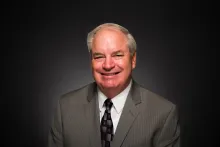
Robin Webber was born in Chicago, Illinois, in 1951, but has lived most of his life in California. He has been a part of the Church of God community since 1963. He attended Ambassador College in Pasadena from 1969-1973. He majored in theology and history.
Mr. Webber's interest remains in the study of history, socio-economics and literature. Over the years, he has offered his services to museums as a docent to share his enthusiasm and passions regarding these areas of expertise.
When time permits, he loves to go mountain biking on nearby ranch land and meet his wife as she hikes toward him.
