

Don Ward
This transcript was generated by AI and may contain errors. It is provided to assist those who may not be able to listen to the message.
On Friday evening, we observe the Passover that pictures, first and foremost, Jesus Christ dying for our sins and the sins of the world. By exercising faith in the sacrifice of Christ, our sins have been removed as far as the east is from the west to be remembered no more. Of course, our tendency is to drag those things up, which I would suspect is a stench in the nostrils of God, to drag those things back up again.
But the Bible says very clearly in Psalm 103, removed as far as the east is from the west. Also, it says not to be remembered any more. The plagues that God poured out on Egypt before the first Passover persuaded Pharaoh to let the children of Israel leave.
As we have heard so often, Egypt symbolizes sin and death. On the first Passover, the firstborn was delivered from death in Egypt because of the blood that was sprinkled on the doorpost of their homes. So we look now at Exodus 12 in verse 29, and we see that God passed through the land and everywhere that the blood was not on the doorpost, then they paid the price, the death of the firstborn, animals of human beings and animals as well.
In Exodus 12, verse 29, it came to pass that midnight the Lord smote all the firstborn in the land of Egypt. Focus on that word, firstborn. The firstborn in the land of Egypt from the firstborn of Pharaoh that sat on the throne and to the firstborn of the captive that was in the dungeon and all the firstborn of the cattle. Pharaoh rose up in the night, he and all his servants and all the Egyptians, and there was a great cry in Egypt for there was not a house where there was not one dead.
And he called for Moses and Aaron by night and said, Rise up, get you forth from among my people, both you and the children of Israel, and go. And notice this word, serve the Lord as you have said. Today, God is looking for the sacrificial blood of Jesus Christ to be sprinkled on the doorpost of our hearts.
At that time, they sprinkled the blood on the doorpost of their homes, and that blood was the blood of bulls and goats. So I want to go now to Hebrews 10. Let us go there. Hebrews 10 actually shows that we can live in the Holy of Holies now because of the blood being sprinkled on our hearts, that we have access to God through Christ and can live in the Holy of Holies. So we are now going to Hebrews 10 and verse 19. Having therefore, brethren, boldest to enter into the Holies by the blood of Jesus, so we can come before the very throne of God and make our wants and petitions known unto him by a new and living way which he has consecrated for us through the veil, that is to say, his flesh.
Of course, that veil was split there in the temple that divided the two sections from the Holy and the Holy of Holies and the Holy Area, that is to say, his flesh. So Jesus Christ gave his total being, and having a high priest over the house of God, let us draw near with a true heart in full assurance of faith, having our hearts sprinkled from an evil conscious, and our bodies washed with pure water. Let us draw fast, let us hold fast the profession of our faith without wavering, for he is faithful that promise, and let us consider one another to provoke one another to love and to good works, and not forsaking the assembling of ourselves together as a matter of some is, but exhorting one another and so much more as you see the day approaching.
Today, the blood of Jesus Christ is sprinkled on our hearts, making it possible for us to live in the Holy of Holies. The miracles that were performed in Israel were directed toward Egypt's gods, and in fact, those plagues that came upon Egypt show that those gods were no match for the God, for the true God.
So I want to go now to Numbers 33. Let's go there in Numbers 33. The book of Numbers might be likened into a journal of major events that happen along the way of Israel's journey to the Promised Land. There's some important historical information in the book. So in Numbers 33 and verse 4, For the Egyptians buried all their firstborn, which the Lord had smitten, so we read that from Exodus 12, 29, 30, 31, that smitten among them upon their gods also the Lord executed judgments.
You know that when Moses cast down his rod before Pharaoh, it became a snake, and then the magicians of Egypt duplicated it, but then the snake of Moses ate the snakes of the Egyptian wizards. So God always had the upper hand in that. Today, as Paul writes in Hebrews 12.1, we're accomplished about with a great cloud of witnesses, men and women, that have gone before, like Hebrews 12 catalogs, the names of the great men and women of faith through the ages. And we look at the mighty miracles that God performed before, and the examples of those who have gone before.
The mighty miracles that God performed before and after Israel left Egypt. And we stand in awe. We stand in awe of some of those examples, but we have the same source available to us that they had available to them. And I think we tend to forget that, and we view them in a different way.
We can, to use the vernacular, tap into that source the same as they did. Elijah was a man subject to like passions as we are, and he prayed, and the heavens were shut up for three years. He prayed again, and it rained. So we look at those mighty miracles and the men and women that went before, and the Old Testament, and we stand in awe and say, oh, there will never be anybody like that again. Well, Jesus said, you shall do greater works than I have done, because you have the Spirit of God, the very essence of God and Christ in you. Most of the world views those miracles, such as the Red Sea, as a myth.
Did they really happen? Did that really happen? Did God actually part the Red Sea so that the Israelites could walk through it on dry ground? Not only did God part the Red Sea, but He made the flooded River Jordan stand still. In the hymn that we sang, it says, and Jordan was driven back, and Jordan stood still. That was a mighty miracle, which we'll read about in just a moment. At Passover time in the spring of the year, the Jordan tends to be flooded way out of its banks.
So Israel came to the Jordan to cross over into the Promised Land in the early part of the sacred year when they went into the Promised Land. My wife and I crossed the River Jordan back in, I think it was, 1988. We journeyed from Amman, Jordan, down through what is now called the West Bank into Israel.
The Israelis have a mighty checkpoint there at the Jordan River when you cross from Jordan into the Promised Land into Israel. We were searched mightily. They even took away my snicker bars from me and said, you can eat them, or we can eat them. I said, you eat them. They took them away. It was a thorough checking at that checkpoint. The Allenby Bridge, that area in there where you cross over from Jordan into Israel.
So let's go now to Joshua chapter 3 and see about Jordan being driven back. Israel was freed from Egypt on that first Passover. I think we're going to find that it was 40 years before Israel observed another Passover. 40 years. There were long periods of time in the history of Israel in which they did not observe the Passover.
We can read about the restoration under Hezekiah, read about the restoration under Josiah. You know after the kingdoms were divided, after the kingdoms of David and Solomon, and Solomon's death, and the kingdoms were divided in the northern kingdom and the southern kingdom, there was not a single righteous king in the northern kingdom, Israel, from that point on. And only three or so in the southern kingdom, Asa, Hezekiah, and Josiah.
So what did I say? Joshua chapter 3. Here now, Israel, 40 years of wandering in the wilderness. They have finally come up through what we call Petra, that rugged wilderness area, and they are now ready to cross into the Promised Land, into Israel, what they call Palestine today. So in Joshua 3 verse 6, Joshua spoke unto the priest, saying, Take up the Ark of the Covenant, and pass over before the people. And they took up the Ark of the Covenant and went before the people.
Why was the Ark of the Covenant so important? See, this Ark of the Covenant preceded them in their journeys, because the Ark of the Covenant was the mercy seat, and above the mercy seat where God had made His appearance, where the Shekinah glory was in, that holy of holies above the mercy seat. And the Lord said unto Joshua this day, will I begin to magnify you in the sight of all Israel, that they may know that as I was with Moses, so I will be with you. And you shall command the priests that bear the Ark of the Covenant, saying, When you are come to the brink of the water of Jordan, you shall stand in Jordan.
And Joshua said unto the children of Israel, Come here, and hear the words of the Eternal, your God. And Joshua said, Hereby we shall know that the living God is among you. So they had so many wonderful signs and miracles parting at the Red Sea as we shall see Jordan standing still, raining manna from heaven, water out of a rock, sending the koyo at one time. I mean, just miracle after miracle after miracle. And it says, You'll know that the living God is among you.
Sometimes I wondered, Do we really understand that the living God is among us?
That the living God is among us? And that we have the very essence of that living God abiding in us.
Verse 10 again, Joshua said, Hereby you shall know that the living God is among you, and that he will without fail drive out from before you the Canaanites, the Hittites, Hibites, Perizzites, Gergesites, and Amorites, and Degebuchites. And the Ark of the covenant of all the earth passed over before you into Jordan. Now let's continue in verse 14. And it came to pass when the people removed from their tents to pass over Jordan and the priests bearing the ark in the covenant before the people. And as they bear the ark were come unto Jordan and the feet of the priests that bear the ark were dipped in the brim of the water, where Jordan overflowed all its banks all the time of harvest. So we already mentioned that before we began. That the waters which came down from above stood and rose up upon a heap very far from the city Adam, which is beside Zeratan. And those that came down toward the sea of the plain, even the salt sea, failed, the salt sea, the dead sea, and were cut off. And the people passed over right against Jericho. And of course, the last day of Unleavened Bread is when they took Jericho. But we're focusing on coming into the promised land at this time. And the priests that bear the ark of the covenant of the Lord stood firm on dry ground in the midst of Jordan, and all the Israelites passed over on dry ground until all the people were passed clean over Jordan. This event was a momentous event that you can hardly imagine. In chapter 4, verse 1, it came to pass when all the people were clean passed over Jordan, that the Lord spoke unto Joshua, saying, Take you twelve men out of the people, out of every tribe a man, and command you them, saying, Take you hints out of the midst of Jordan, out of the place where the priest's feet stood firm, twelve stones, and you shall carry them over with you, and leave them in the lodging place where you shall lodge this night. And so they did that, and they made a memorial there in the middle of Jordan to remind the people of what God had done.
Verse 23, For the Lord your God dried up the waters of Jordan before you, until we were passed over as the Lord your God did to the Red Sea, which he dried up from before us, until we were gone over. So the Red Sea event, of course, happened after that first passover.
This crossing over Jordan happened before the passover in the Promised Land. And as I said evidently, as we shall see, they did not keep a passover while they were in the wilderness.
We'll see that more clearly in just a moment.
But all of the people of the earth might know the hand of the Eternal, that it is mighty, that you might fear the Lord your God forever. Now in chapter 5, And it came to pass when all the kings of the Amorites, which were on the side of Jordan westward, and all the kings of the Canaanites, which were by the sea all the way out to the Mediterranean, heard that the Lord had dried up the waters of Jordan from before the children of Israel until we were passed over, that their heart melted. Neither was their spirit in them anymore because of the children of Israel. Can you imagine what your enemies might think? Here is people that have this God with them that can then cause the river of Jordan at its flood stage to stand still and for them to walk across on dry land, that you might know that the living God is with you. What would it take for us to know to understand that the living God is with us and He's not a far off?
In the opening prayers of each service, we ask for God's presence to be at the service.
Now, here's a part that might be a bit painful. Verse 2, At that time the Lord said unto Joshua, Make you sharp knives and circumcise again the children of Israel the second time. Now, none of these people had been circumcised. Those that had been circumcised before they died in the wilderness. And Joshua made him sharp knives and circumcised the children of Israel at the hill of the fourskins. And this is the cause why Joshua did circumcise. So why did he circumcise them? All the people that came out of Egypt that were males, even all the men of war, died in the wilderness by the way after they came out of Egypt.
Now, all the people that came out were circumcised, but all the people that were born in the wilderness by the way as they came forth out of Egypt, them had not been circumcised.
So now, if you hold your place there, let's look quickly at Exodus 1248.
Exodus 12 and verse 48.
In Exodus 12 verse 48, every time. Exodus 1248. So to keep the passover, you had to be circumcised. Now we go back to Joshua 5 and we continue in verse 8.
I would imagine it means until they stop bleeding.
Now this word rolled away is the meaning of YOGEL. That is the place, as we shall see.
This day have I rolled away the reproach of Egypt for 40 years, and especially after the Golden Calf incident, they had the reproach of Egypt upon them, the shame of Egypt, the reproach of Egypt. And when they came here to the promised land, and they were circumcised and about to keep the passover, the reproach of Egypt was rolled away, wherefore the name of that place is called GILGAL. And you can look up the etymology of GILGAL. It literally means rolled away or circular, called GILGAL. And to this day, by the way, GILGAL became sort of Joshua's headquarters for conquering much of the land. And the children encamped in GILGAL and kept the passover.
See, they kept the passover after what? After they were circumcised. And what we emphasize so much leading up to passover was to be ready for the passover. Make sure that you have repented, that you've been reconciled to God, to Christ, each member of the body of Christ, that you discern the body of Christ, that He died for your sins. And without His sacrifice, the death penalty is still on your head. All of those things and more in that examination, so that at the time when you took that passover, you were viewed as clean as whole. The reproach of Egypt was removed from you. Hold your place there, and we look at Romans chapter 2, and we see very clearly probably a memory scripture for some of you in Romans chapter 2 and verse 28.
For He is not a Jew which is one outwardly, neither is that circumcision which is outward in the flesh. Of course, at that time it was outward in the flesh under the Old Covenant.
You couldn't take the passover unless you were circumcised in the flesh, the males.
Today, you should not take the passover unless you are circumcised in heart, and hopefully we were.
But He is a Jew which is one inwardly, and circumcision is that of the heart and the spirit, and not in the letter whose praise is not of men, but of God. Now we go back to Joshua chapter 5, and so they kept the passover at even in the plains of Jericho on the 14th day, verse 10, verse 11. And they did eat the old corn, or as some translations say, the produce of the land on the morrow after the passover. And that's today, the first day of unleavened bread.
Unleavened cakes and parched corn in the selfsame day. And the manna ceased on the morrow after they had eaten the old corn of the land. Neither had the children of Israel manna any more, but they did eat of the fruit of the land of Canaan that year. So after they came to the promised land, and what God had wanted all along was for them to live by faith. And so they would have faith to believe that God would provide for their needs. No more did it rain manna from heaven, but they had to make their living from the produce of the land. Of course, they hadn't yet planted crops or anything like that. So they had to partake of what was there, probably in storehouses or whatever way they could get it. And they did eat the unleavened bread on that day. We can conclude that Israel had not observed the passover during the 40 years of wandering in the wilderness because circumcision was a prerequisite for keeping the passover.
And today, the terms of the New Covenant, the circumcision is of the heart, as we have read from Romans 2, 28, 29. The parting of the Red Sea, the stopping of Jordan, were indeed mighty miracles that only God could perform. I don't think there's any technology on the face of the earth at the present time that could possibly park the Red Sea or stop the Jordan at flood stage and make the ground dry so you could pass through it with thousands of people, with animals, with carts, and whatever else they had.
The parting of the Red Sea, the stopping of Jordan, mighty miracles, difficult to contemplate in some ways. But I believe that the opening of my mind and your mind, the opening of, like you opened the Red Sea, stop Jordan, to the precious truths contained in the holy word of God is a greater miracle.
Those two great, miraculous events, as marvelous as they were, are not to be compared with the opening of our minds to God's marvelous light and truth in today's world, that truth that can lead to eternal life and to being a member of the family of God in eternity.
As time goes by, more and more sobered by the fact that God allowed a person like me to understand his purpose and plan. And he has allowed a person like you to understand his purpose, his plan, his providence, that plan for bringing sons and daughters to glory in his family.
The realization of this great miracle should be impressed upon our minds more and more, and we should also come more and more to understand, appreciate, the sacred calling that God has extended to each one of us. The living God is among us. Yes, Jordan was stopped that they might know that the living God was among them. But, brethren, you have within you the very essence of God.
And so how thankful should we be for God's love, for his mercy, for what he has done for each of one of us. And why are you sitting here today and not your mother, your father, your brother, your sister, your husband, your son, your daughter? In some cases, they are sitting here in your most blessed. But in so many cases, they are not sitting here.
The answer is simple. The reason why they're not here is because God hasn't chosen to call them at this time, or perhaps they have neglected the call.
God had knocked on the door of their, the door close to their heart so many times.
It became hard. The reason we're here? It's simple. It's because of God's great love, grace, mercy for each one of us individually and specifically.
Now I want us to look at three of my favorite scriptures here, once again, in keeping with this how wonderful it is and the living God is among us to indelibly stamp this as much as possible on our minds in Ephesians chapter 1.
We'll start in 3. Blessed be the God and the Father of our Lord Jesus Christ, who has blessed us with all spiritual blessings in heavenly places in Christ.
We're allowed to sit there through Christ, according as He has chosen us in Him before the foundation of the world that we should be holy and without blame before Him in love, having predestined us unto the sonship, weothesea, of children by Jesus Christ to Himself, according to the good pleasure of His will.
How sobering is that? That God knows each one of us personally, individually. We look now at 1 Peter chapter 1 and verse 4. 1 Peter chapter 1.
1. We'll start in verse 2.
Elect according to the foreknowledge of God. Elect according to the foreknowledge of God. Foreknowledge means prokonosko. It means to know beforehand.
Now, if we say that applies, in other cases, does it not apply here?
2. Elect according to the prokonosko, the foreknowledge of God, the Father, through sanctification of the Spirit, unto obedience and sprinkling of the blood of Jesus Christ, sprinkled on our hearts, not on the doorposts, graced unto you, and peace be multiplied. 3. Blessed be the God and Father of our Lord Jesus Christ, which according to His abundant mercy, hath begotten us again unto a living hope by the resurrection of Jesus from the dead.
You know, Jesus said that He would go away when the disciples heard that they were sorrowful.
But He said, if I go not away, the comforter will not be sent to you. That is, the one alongside.
And the comforter is identified in John 14.26 as the Holy Spirit.
The Holy Spirit will not come unless I go away. So He went away, and the Holy Spirit, which proceeds the Father, was sent in the name of Jesus Christ and through Jesus Christ to us. 2. To an inheritance incorruptible and undefiled, that fades not away, reserved in heaven for you.
Because of God's great love and mercy, Israel was delivered from Egypt. Because of God's great love and mercy, Jordan was driven back. Now, let's look at this once again from the New Testament perspective of God's love, grace, mercy, and His calling in Romans 9. Romans 9.
Israel was delivered from Egypt because of God's great love, grace, and mercy.
We are delivered from sin and death through God's great love, grace, and mercy.
In Romans 9, we'll start in verse 11. Romans 9 and verse 11. For the children being not yet born, speaking of Jacob and Esau, neither having done any good or evil, that the purpose of God might stand according to election. See, we read about election there in Ephesians 1 and also 1 Peter 1. That the purpose of God might stand according to election, or according to God's choosing is another way to word that might stand not of works, but of Him that calls. It was said unto her, The elder shall serve the younger.
And so Esau came out of the womb first and should have had the birthright, but you know the story of how the birthright was gained. Rebecca and Jacob cooked up this situation, tricked Isaac in giving the birthright to Jacob, which was God's purpose and plan all along according to election.
And we'll read this about some people who say, well, isn't God unfair?
God has a great purpose. He has a great plan that He is working out. You're in that plan.
You're in the plan. Get used to it.
Think about it. Appreciate it. Verse 13, as it is written, Jacob have a love, but Esau have I hated or love less.
Now Esau became the father of Edom. And in fact, it says in one place that Esau is Edom.
And of all the nations on the face of the earth that God has nothing for, it is Edom.
What shall we say then? Is there unrighteousness with God? God forbid.
So you might say, well, God's unfair. Why didn't you do that? For he said to Moses, I will have mercy upon whom I will have mercy and I will have compassion on whom I will have compassion. So then it is not of him that wills nor him that runs, but of God that shows mercy. For the Scripture said unto Pharaoh, even for the same purpose, have I raised you up. Pharaoh, as we shall see, served a great purpose in the plan of God. As we saw also, shall see Pharaoh had at least two phony confessions or conversions. There weren't really true conversions, but confessions. And that my name might be declared throughout all the earth. Therefore hath he mercy on whom he will have mercy and whom he will harden.
He hardens. You will say then unto me, why does he yet find fault for who has resisted his will?
No, but, O man, who are you that replies against God? Who am I, who are you, to question God? Who am I, who are you to say, well, God's unfair?
He is, as it says in Romans 2, 10, or 11, that he is not a respecter of persons, than that every person gets his chance. But at certain times and certain places, people are used for a certain purpose to fulfill the total plan of God.
Shall the thing formed say to him that formed it, why have you made me?
Had not the potter power over the clay of the same lump to make one vessel unto honor and another unto dishonor? What if God, willing to show his wrath and to make his power known, endured with much long-suffering the vessels of wrath fitted to destruction? And that he might make known the riches of his glory on the vessels of mercy which he has had before, prepared unto glory, even us whom he hath called, not of the Jews only, but also of the Gentiles, the nations.
So, brethren, God is working out a great plan. He knows what he's doing, and he does what he does for the purpose of bringing everyone into a relationship with him. Is there unfairness with God? No. And the great question that people ask is, why does God do things the way he does things?
Well, you turn the page there to chapter 11, and you'll see the answer. Why does God do things the way he does things? Verse 33. O, the depth of the riches of the nollie of the wisdom and knowledge of God, how unsearchable are his judgments and his ways past finding out.
For who hath known the mind of the Lord, or who has been his counselor, or who has first given to him, and it shall be recompensed unto him again? For of him, and through him, and to him, are all things to whom be glory for ever and ever.
Now, verse 31 is somewhat of a summary verse of all of this. Even so have those, these also now not believed, that through your mercy they also may obtain mercy. For God hath concluded them all in unbelief, that he might have mercy upon all. So there's not any unfairness with God.
So none of these scriptures about God's love and mercy in calling us absolve us from our personal responsibility to walk worthy of the election and calling that God has bestowed on each one of us. You know, Jacob was tried and tested mightily.
I remember way back years ago I gave a series of sermons on Jacob. Jacob's life so fascinating, one who persevered through so many trials. Look at Colossians 1.10.
So it is incumbent upon us that we fulfilled the law, as you heard in the Offertory Sermon Ed in Colossians 1.10, that you might walk worthy of the eternal into all pleasing, being fruitful in every good work, and increasing in the knowledge of God.
Time after time, you will see this admonition to increase in the knowledge of God.
God is not going to axiomatically zot knowledge into your mind. You have to dig for it. You have to study and pray and ask God to give you that knowledge.
God deals with each person in his own time, in his own order, that he is purpose for that person.
In order for God to be fair and faithful to his word, he must present every person who ever lived, as we have noted, the opportunity for salvation. While in bondage, Israel cried out for deliverance.
God heard their cry. He delivered them.
God raised up Moses to lead them out of bondage. Moses was a type of Christ.
So did God deliver Israel from Egypt just so they could be free of physical bondage?
Has he delivered each one of us so that we could just be free of physical bondage?
Almost all the works of God are done for multiple purposes.
So let's see why God told Moses to tell Pharaoh, or what God told Moses to tell Pharaoh, regarding why he wanted Pharaoh to let Israelites go. I think sometimes we overlook this. Why did God say to Moses, I want you to tell Pharaoh to let my people go. Exodus 3.18. I will cover these rather quickly. I'm reading Exodus 3.18. They shall hearken to your voice, and you shall come, you and the elders of Israel, and the king of Egypt, and you shall say unto him, The Lord God of the Hebrews has met with us.
And now let us go. We beseech you three days' journey into the wilderness, that we may sacrifice to the Lord our God. Notice that word, sacrifice, that we may sacrifice to the Lord our God. In Exodus 5.3, very similar, let us go. We pray you three days' journey into the desert and sacrifice unto the Lord our God. In Exodus 5.8, let us go and sacrifice to our God.
In Exodus 5.17, let us go and do sacrifice to the Lord.
Sacrifice was a form of worshiping God. It is a form. A sacrifice demonstrated one's recognition and worship of the entity to whom the sacrifice was offered. Of course, Israel, in their backsliding, even sacrificed their children to Moloch, to your pagan God. But God wants us to offer up spiritual sacrifices today as a result of being delivered from sin. Let's look at 1 Peter 2 and verse 3. We're to offer up spiritual sacrifices. God told Moses, you go tell Pharaoh, go tell that old Pharaoh, that let my people go so they can go sacrifice to me.
And in this figurative sense, God is saying today, you go tell Satan, let my people go so they can offer up spiritual sacrifices to me that they can be converted and offer spiritual sacrifices. In 1 Peter 2, verse 3, Blessed be the God and Father of our Lord Jesus Christ, which according to the abundant mercy, hath begotten us again unto a living hope by the resurrection of Jesus from the dead.
The resurrection of Jesus from the dead is emphasized so many times in Scripture, because, you know, Christ, he had to go ascend back to the Father to send the comforter to an inheritance, incorruptible, undefiled, that fades not away, reserved in heaven for you, who are kept by the power of God through faith unto salvation, ready to be revealed in the last time.
Whereby we greatly rejoice, though now for a season, if need be, we're in heavenness through manifold temptations. So God is asking us to offer up spiritual sacrifices unto God. So God's desire to release Israel from bondage was inextricably linked to the covenant promises he made to Abraham, that overall overarching plan.
And Israel was to serve him in fulfilling the great plan of salvation.
Now I'm going to read, as I did with sacrifice, a few verses. I'm just the last word or so. Why did God tell Moses to go let my people go?
One was to sacrifice, and we are to offer up spiritual sacrifices.
Now, here are those verses.
Israel was to serve him in fulfilling his great plan of salvation. Ex. 7, 16. And you shall say unto him, that is, Moses, say unto Pharaoh, The Lord God of the Hebrews has sent me unto you, saying, Let my people go, that they may serve me in the wilderness, and behold, hitherto you would not hear.
In Ex. 8, 1, the last phrase, Let my people go, that they may serve me.
In Ex. 8, 20, the last phrase, Let my people go, that they may serve me.
In Ex. 9, 1, let my people go, that they may serve me.
And of course, we heard yesterday, Dr. Baker's sermon about servant leadership, and that's one of the reasons why God freed Israel, was that they might serve him.
One of the reasons he has freed us is that we might serve him.
And in a broader sense, we go now to Ex. 19, of why they were freed, and which is now passed on to the Church of God, was that they might bring all nations into a relationship with God. God's desire from the creation of Adam and Eve to the present time is that he might dwell with men, and he be their God, and they be his people.
In Ex. 19, Israel has departed from Egypt. They are now at Mount Sinai in the third month, about the time of Pentecost, according to Jewish tradition. They received the law on Pentecost.
Ex. 19, in the third month, when the children of Israel were gone forth out of the land of Egypt, the same day came they into the wilderness of Sinai, for they were departed from Rephidim, and were come to the desert of Sinai, and had pitched in the wilderness, and there Israel camped before the mount. And Moses went up unto God, and the Lord called unto him out of the mountain, saying, Thus shall you say to the house of Jacob, and tell the children of Israel, You have seen what I did unto the Egyptians, and how I have borne you on eagle's wings, and have brought you unto myself. Now therefore, if you will obey my voice indeed, and keep my covenant, then you shall be a peculiar treasure unto me above all, and you shall be unto me a kingdom of priests, and a holy nation.
These are the words which you shall speak unto the children of Israel.
And so God had called Israel out to be a kingdom of priests, and to take his message to bring all nations into relationship with him. But Israel failed to do that, and that was now passed on, or has been passed on, to the church. And we see that in almost a direct quote here in 1 Peter, chapter 2 again, verse 9. Very familiar scripture here, but the application maybe escapes us at times, and especially the succeeding verses. See, if you will, what we just read from Exodus 19, if you will obey me, keep my commandments, you'll be the special people. But you are a chosen generation, a royal priesthood, a holy nation, a purchased people that you should show forth the praises of him who has called you out of darkness into his marvelous light, which in times past were not a people, Lo Ami, but are now the people of God, Ami, which did not obtain mercy, Lo Ruhama, but now have obtained mercy, Ruhama. Dearly beloved, I beseech you as strangers and pilgrims abstain from fleshless which war against the soul, having your conduct honest among the nations, that whereas they speak against you as evildoers, that they may by your good works, which they shall behold glorify God in their day of visitation. So now the church of God is to bring the world into a relationship with God and Christ. Yet physical Israel will be restored in the millennium. So God has delivered each one of us from sin and death, from spiritual Egypt, that we might serve him. God has delivered us from the snares of the devil.
Moses went to Pharaoh several times. Pharaoh feigned several false conversions.
But God did not grant Pharaoh true repentance. God looks on the heart, not just words.
So what about our repentance? Is our repentance only skin deep as they say?
Does it only last until the wind blows in a different direction? You know, if we compare, let's compare briefly the reaction of the nation when the 9-11 terror attacks occurred in New York City and Washington, D.C. Well, for the next few Sundays, the churches of America had increased attendance. Now with the, I call it a terrorist attack, called a pandemic that is upon the world, what has that resulted in? Well, it's resulted in the churches being shut down to a large degree.
And just now some are opening back up. It has resulted in the people defaming God and going farther and farther away from God.
When all was said and done, Pharaoh did not stop his pursuit of the Israelites until he was destroyed in the Red Sea. Satan will not stop his pursuit of view until he is rendered of non-effect or until you are placed in the grave.
When God once again intervenes in the affairs of the world, the cosmos, the current world order, he is going to pour out horrendous plagues on humankind. There will be many plagues before the trumpet plagues of Revelation 8 and 9.
But sadly, there is no evidence of anyone repenting after the trumpet plagues began to be poured out.
Not a one.
God expects us to serve him in bringing all the peoples of the earth into a relationship with him. Today we've been given the mission that ancient Israel failed to fulfill, that is to serve as ambassadors of the coming kingdom and bringing sons and daughters into a relationship with God, relationship with Christ, each member of the body of Christ.
And as we have noted, we are to offer spiritual sacrifices.
So on this day of Unleavened Bread 2021, you, we, I, all of us, should offer the sacrifice of praise to God. The living God is among us.
No, we haven't seen the Red Sea parted. We haven't seen Jordan stopped.
But we have seen the mighty hand of God in our lives.
God has called you and me into his marvelous light, and the sacrifice of praise is one of the greatest spiritual sacrifices that we can possibly offer. We can be freed from sin and death because the blood of the Lamb has been sprinkled on our hearts through faith. Let's look at this sacrifice of praise. Hebrews 13 verse 5. Well, Hebrews 13 verse 5 is a reassuring verse I'll read.
You'll never leave us or forsake us.
Hebrews 13 verse 5, let your conversation, your conduct be without covetousness.
Be content with such things as you have, for he has said, I will never leave you or forsake you.
And now in verse 14, for here we have no abiding or continuing city, but we seek one to come. By him, therefore, let us offer the sacrifice of praise.
The sacrifice of praise, the sacrifice of prayer, the sacrifice of laying down our lives. There are just so many spiritual sacrifices that can be offered up. Not the blood of bulls and goats, but in fact the scripture admonishes us to become a living sacrifice in Romans 12, 1 and 2.
But let us therefore offer the sacrifice of praise to God continually, that is, the fruit of our lips giving thanks to his name. But to do good and to communicate, forget not, for with such sacrifices God is well pleased.
Israel replaced the firstborn of Egypt, and Israel became God's firstborn in the physical sense. And today the church has replaced the firstborn as the ones who will be the firstborn among many brethren. Not that once again Israel will be restored physically in the millennium. But we are among the firstborn. We're there in Hebrews 13, so let's just turn there to James 1, 17. We've read this three or four times in recent weeks. Every good gift and every perfect gift is from above and comes down from the father of lights, with whom is no wearableness neither shadow of turning. For of his own will, beget he us with the word of truth, that we should be a kind of firstfruits of his creatures. So Jesus Christ was the firstborn from the dead, and we will be among the firstfruits. Each man is his own order, as it says in 1 Corinthians 15. True believers are also called the church of the first begotten and the firstborn. Once again, back to Hebrews 12, back on page or two, once again, Hebrews 12, in verse 21.
Remember, Hebrews compares and contrasts elements of the Old Covenant with the New Covenant.
In verse 21, so terrible was the sight. Moses said, I exceedingly fear and quake, and that was the incident there at Sinai when the Ten Commandments were given.
But you have come unto Mount Zion, unto the city of the living God, the heavenly Jerusalem, and to an innumerable company of angels, to the general assembly and church of the firstborn, which are written in heaven and to God the judge of all, and to the spirits of just men made perfect. So here we see that we are likened unto the firstborn. We are the firstborn, the church of God. So our mission is to take the gospel message to the world for the purpose of bringing all peoples into a relationship with God and Christ, and with each member of the body of Christ so they will all be joined to the church of God, the general and assembly of the church born, of the firstborn. Look at Galatians 6. Galatians 6.
So God's purpose is for all nations and all peoples to become members of the church of the firstborn.
Gonna get to Galatians 6.
In Galatians chapter 6, we'll start in 15, for in Christ neither circumcision bails anything nor uncircumcision but a new creation. And as many as walk according to this rule, peace be unto them and mercy upon the Israel of God. So God has given us that mission to bring all nations into a relationship with Him. Of course, that mission will continue in the millennium of bringing all nations into a relationship with God and Christ and each member of the body of Christ. And God has decreed through Christ that this gospel of the kingdom will be preached to the whole world and everyone will have an opportunity to become a part of a D11 New World Order. A D11 New World Order. It will not have all of the foolishness that you hear today. It will not be filled with fake news or any such thing. It will not be filled with ungodly rhetoric. It will be filled with the knowledge of God. It says the knowledge of God shall fill the earth as sand fills the seashores. And what a wonderful time that is going to be.
That New World Order will be built on a foundation of truth and righteousness.
And brethren, the living God is here among us right now. We need to recognize that, need to believe it, need to act on it, and live according to that very fact. And may we all grow in grace and knowledge of our Lord and Savior, Jesus Christ.
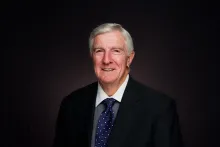
Before his retirement in 2021, Dr. Donald Ward pastored churches in Texas and Louisiana, and taught at Ambassador Bible College in Cincinnati, Ohio. He has also served as chairman of the Council of Elders of the United Church of God. He holds a BS degree; a BA in theology; a MS degree; a doctor’s degree in education from East Texas State University; and has completed 18 hours of graduate theology from SMU.
