
Don Ward
This transcript was generated by AI and may contain errors. It is provided to assist those who may not be able to listen to the message.
The title today, The Journey from the Red Sea to Sinai. The Journey from the Red Sea to Mount Sinai. Or we can title it, From Feast of Unleavened Bread to Pentecost. According to Jewish tradition, Israel crossed the Red Sea on the last day of the Feast of Unleavened Bread. This was their baptism. They had now left Egypt, symbolic of sin and death, and were to live by faith.
The Apostle Paul makes this very clear that this was the case in...he doesn't say it was the last day of the Feast of Unleavened Bread, but he does say that they passed through the sea, which was their baptism. So let's notice that in 1 Corinthians chapter 10 and verse 1. Moreover, brethren, I would not have you to be ignorant how that all of our fathers were under the cloud and all passed through the sea, and were all baptized unto Moses in the cloud and in the sea, and did all eat the same spiritual meat, and did drink of the same spiritual drink, for they drank of that spiritual rock that followed them, and that rock was Christ.
As we heard in the first message by Dr. Erwiller, baptism symbolizes the burial of the old man, the man of sin and death, and being raised to newness of life. It is the final demarcation, as it were, in the spiritual sense that we make, that when we are baptized, we're making our final break from sin and death, just as Israel made their final break from sin and death after they crossed the Red Sea. After they crossed the Red Sea, and the Red Sea swallowed up the host of Pharaoh, symbolic of Satan and the demons, they sang the victory song of Moses, which we mentioned in the announcements, the hymn of the day, and also the scripture of the day.
So let's go now to Exodus 15, and we will see there Israel's singing the victory song of Moses. You know, if you just picture Israel marching through the Red Sea on dry ground in the walls of water on either side, and the cloud above them, the presence of God, they were immersed in the very presence of God as they walked through the Red Sea.
In Exodus 15 and verse 1, they sang Moses and the children of Israel this song unto the Lord and spoke, saying, I will sing unto the Lord, for he hath triumphed gloriously the horse and the rider, hath he overthrown into the sea. The Lord is my strength and song, and he has become my salvation, and he is my God, and I will prepare him inhabitation. I will prepare him inhabitation, a dwelling place. Sometimes that is overlooked, and that's one of the things that we're going to focus on, because coming up on Pentecost, God's Spirit dwells in each one of us.
We are the habitation of the Holy Spirit, and as we shall see that Israel built God and habitation just as they sang in this song, and I will prepare him a habitation. We need to prepare a habitation for the Spirit of God.
Of course, hopefully God's Spirit is still in each one of us already, and that we can increase in the Spirit. I will prepare him inhabitation, my Father's God, and I will exalt him. You look down in verse 20, and Miriam the prophetess, the sister of Aaron, also Moses, took a timbrel in her hand, and all the women went out after her with timbrels and with dances.
Oh, mercy! We couldn't do that today, could we? And Moses answered them, seeing you to the Lord, for he had triumphed gloriously the horse and the rider, and had overthrown them into the sea. So once again, verse 2, one of their missions was to build an habitation for God.
Or you could say they were going to prepare a place for God to dwell among them. From time immemorial, God's desire has been to dwell with us, to live with us, and yea, even to live in us. Let's notice one of the first places that this desire is mentioned.
Go forward there a few pages into Leviticus, chapter 26, verse 11. Leviticus 26 and verse 11, you will see this desire expressed. And of course, Leviticus 26 and Deuteronomy 28 are oftentimes called the blessings and cursings chapter in the Bible. In Leviticus 26 and verse 11, and I will set my tabernacle, my dwelling place among you, and my soul shall not abhor you, and I will walk among you, and will be your God, and you shall be my people. From time immemorial, that has been God's desire to be among his people, and eventually, as the perfect plan of God calls for, not only to be among them, but also to live within them.
We go now to Revelation 21, and we see that this is going to become a reality in a permanent sense that God is going to dwell with his people forever and ever, the new heavens and the new earth. So in Revelation 21 and verse 3, Revelation 21 verse 3, and I heard a great voice out of heaven, saying, Behold, the tabernacle of God is with man, and he will dwell with them, and they shall be his people, and God himself shall be with them, and be their God.
And God shall wipe away all tears from their eyes, and there shall be no more death, neither sorrow nor crying, neither shall there be any more pain, for the former things are passed away. So God's desire eventually, of course, becomes a reality forever and ever. It's been a long journey, though, from the Red Sea to Pentecost to the giving of the Holy Spirit in 31 A.D.
and raising up the church in more 2000 years, now approximately from that time.
This period of time between the Feast of Unleavened Bread and Pentecost is one of the most interesting periods in the entire Bible. And after Israel crossed the Red Sea on the last day of the Feast of Unleavened Bread and sang the victory song of Moses, they were going to build him an habitation. They came to Sinai in the third month of the sacred calendar, and according to Jewish tradition, they received the law on the day of Pentecost. So now we want to go back to Exodus, in this case 19. Exodus 19, and we want to see here where they had come to Mount Sinai. In the third month, when the children of Israel were gone forth out of the land of Egypt, the same came they into the wilderness of Sinai, for they were departed from Rephidim, and were come to the desert of Sinai, and had pitched in the wilderness, and there Israel camp before the mount. And Moses went up unto God, and the eternal called unto him out of the mountain, saying, You shall say to the house of Jacob, and tell the children of Israel, you have seen what I did under the Egyptians, and have I bear you on eagle's wings, and brought you unto myself. Of course, God, if you read all of this, the accounts in between 15 and 19, you know that they went three days journey and began to murmur, and they murmured consistently throughout. God had to drag them to Sinai, and for 40 years he finally dragged them into the Promised Land. Now therefore, if you will obey my voice, indeed keep my covenant, then shall you be a peculiar treasure, purchased precious unto me above all people, for the earth is mine, and you shall be unto me a kingdom of priests and a holy nation. These are the words which you shall speak unto the children of Israel. God had brought them out for them to be the model nation, and for them to keep the covenant, and to serve as a witness to the other nations, and bring the other nations into a relationship with God and Christ. And of course, they failed in this venture. Now let's go. If you want to hold your place there, we'll be coming back to Exodus. But let's go now to 1 Peter chapter 2. 1 Peter chapter 2 will see that this mission of being a purchased people, a precious people, showing forth the praises, has now passed on to the church. Of course, we do not teach replacement theology. That is, the churches replace Israel because we know that Israel will be restored in the millennium. And in fact, the saints are going to rule and reign with God and Christ over the nations in the millennium, and they will be in the flesh. In 1 Peter 2.9, "...but you are a chosen generation, a royal priesthood, a holy nation, a purchased people, that you should show forth the praises of him who's called you out of darkness into his marvelous light, which in times past were not a people, but are now the people of God. They were not a people, they were loami, not my people, but now are the people of God, which had not obtained mercy. They were low ruhama, but now they are ruhama, they have obtained mercy." So now we go back to Exodus. So in the third month, they came to Sinai, and then much of the chapter 19 is taken up with instructions of what they were to do in preparation for receiving the law, and that is recorded in the next chapter. So if you would turn to Exodus 20 in verse 1.
So after they made preparation, God now spoke unto them, and God spoke all these words, saying, I am the eternal your God, which have brought you out of the land of Egypt and out of the house of bondage. You shall have no other gods before you.
You shall not make unto you any graven image or any likeness or anything that is in heaven above, or that is in the earth beneath, or that is in the water under the earth. And he continued and gave them the Ten Commandments, and then he gave them the statues and the judgments. And now we come to chapter 24 after receiving the statues and the judgments. In addition to the law, the statues and the judgments basically focus on the application of the law, and also, as you heard in the first message here today, that Jesus Christ came and magnified the law and made it applicable, and actually far more binding in the spiritual sense.
So in Exodus 24, in verse 3, Moses came and told the people all the words of the Lord, and all the judgments. Moses had gone up into the mountain and received these statues and judgments, and all the people answered with one voice and said all the words which the Lord has said, will we do? So Moses wrote these out, and he set up an altar, and they did sacrifice.
Notice verse 6, and Moses took half of the blood, put it in basins, half the blood he sprinkled on the altar. He took the book of the covenant and read it in the audience of the people, and they said, all that the Lord has said will we do? So this, in essence, was their marriage covenant, that they entered into a covenant with God in Christ, and Moses took the blood and sprinkled it on the people, and said, Behold the blood of the covenant which the Lord has made with you concerning all these words.
And so that covenant was ratified with blood, and the new covenant is ratified with the blood of Jesus Christ. By late summer, they had murmured against God 10 times. However, they did enter into this covenant in the third month, and remember what the victory song of Moses said in verse 2. We will build him in habitation.
So now we go to Exodus 25. In Exodus 25, we will see that after they received the law, the next thing was to build him in habitation. And the Lord spoke unto Moses, saying, speaking to the children of Israel, that they bring me an offering of every man that gives it willingly, and with his heart you shall take my offering. And so they were very generous in giving that offering, a tremendous offering that they took up, which was sufficient to do what they needed to do.
And so they built a sanctuary. Notice verse 8, and let them make me a sanctuary that I may dwell among them, according to all that I show you after the pattern of the tabernacle. The pattern that they were to build the tabernacle was based on the pattern of the temple in the third heaven, and the pattern of all the instruments thereof, even so shall you make it.
So the earthly tabernacle was patterned after the heavenly tabernacle. Now we go to Exodus 40. Much of Exodus is taken up with the details of building that tabernacle and all the things that went with it, a very fascinating read within itself. Now notice we get another date line here. We read from Exodus 19 that they came to Sinai in the third month. Now in Exodus 40 and verse 17, we're going to see, and it came to pass in the first month of the second year.
So the first month, remember the Passover is on the 14th day of the first month, and shortly after that, after they kept the Passover, they left Egypt on the last day of the Feast of Unleavened Bread. So here they are a week short of, or two weeks short of, that first Passover, and 15 days short of Unleavened Bread, and what, 21 days short of the last day of the Feast of Unleavened Bread of that first time that was kept by Israel.
It came to pass in the first month, and the second year, on the first day of the month, that the tabernacle was raised up. And what happened when the tabernacle was raised up? Verse 33, and he reared up the court, round about the tabernacle, and the altar, and set up the hanging of the court gate. So Moses finished the work. Then a cloud covered the tent of the congregation, and the glory of the Lord filled the tabernacle.
In other words, God's glory. His presence filled the tabernacle, and Moses was not able to enter into the tent of the congregation because the cloud abode thereon, and the glory of the Lord filled the tabernacle. Today, God does not dwell in buildings made by hands. Of course, that was symbolic of what was to come, but now we have come to a much greater reality. So we'll go to Acts chapter 7. In Acts chapter 7, it's basically taken out with Stephen's inspired sermon. Stephen was one of the seven deacons that was chosen in Acts chapter 6.
Stephen, a man who did many mighty works to the point that the Sanhedrin was so concerned about him that they called him before them for him to give testimony. And he basically recounted some of what we've just recounted here with regard to the history of Israel. But we want to read now verse 56, I believe it is. No, it's 47. Sorry. Acts 7 verse 47. But Solomon built him a house. Now, when Solomon built the temple, you can read about in 2 Chronicles chapter 5, where the glory of God filled that temple, Solomon's temple, when it was dedicated. But when the Restoration Temple was dedicated in Ezra chapter 6, you'll find that the glory of God did not fill that temple.
But that temple was pointing toward a greater temple, that is, a temple not made with hands which the Lord pitched. And so now we are at verse 48.
Howbeit the Most High dwells not in temples made with hands, as says the prophet. Heaven is my throne, earth is my footstool. What house will you build me, says the Lord, of what is the place of my rest? Now, quickly to Hebrews chapter 8. In Hebrews chapter 8, we'll see that this tabernacle, this temple, is the one that the Lord pitched. And on the way there, we could go ahead and quote Matthew 6, 18, where Christ says, And I will build my church. Well, I will quote the whole verse, and he said, I say unto you, Peter, Petros, little rock, that upon this rock, Peter, a big rock, I will build my church, and the gates of hell shall not prevail against it, the gates of the grave. Now we see here in Hebrews 8, Now the things which we have spoken, this is the Son. We have such an high priest who has set on the right hand of the throne of the majesty in the heavens a minister of the sanctuary of the true tabernacle.
See, that tabernacle that was raised up in the wilderness was a shadow of what was to come. And God's presence filled the tabernacle, the earthly, the material building, and God was among them but not in them. Of course, Moses was led by the Spirit and some others, a minister of the sanctuary in the true tabernacle, which the Lord pitched and not man. So God now dwells in us. I will build my church, the gates of the grave shall not prevail against it. So what conditions must we meet in order for God to dwell in us? As I said earlier, God had to practically drag Israel to Sinai, enter into the covenant. It seemed that they willingly built the tabernacle, but after building the tabernacle, by late summer, as we mentioned, they had tempted God 10 times, and God was ready to start all over with Moses, and Moses interceded, and God relented.
And everyone who had left Egypt saved those who were 20 years and under. And of course, all of those who had left Egypt, except Joshua and Caleb, died in the wilderness, did not go into the Promised Land. Even Moses and Aaron didn't go into the Promised Land.
So what conditions must we meet in order for God to dwell in us? In short, we must become converted and come out of this world. Become converted and come out of this world. Of course, the beginning steps of conversion. God calls us. We hear the Word preached unto us. We're convicted. We act on that conviction. Conviction will repent of our sins. We exercise faith in the sacrifice of Christ, or baptized, and receive the laying on of hands. We have to be converted and come out of this world. Now we want to go to 2 Corinthians chapter 6, 2 Corinthians 6, and verse 16.
And what agreement has the temple of God with idols? So you want God to dwell with you? You can't have idols.
For you are the temple of the living God. As God has said, I will dwell in them and walk in them. You see, with Israel under the law covenant, and the tabernacle, and the temple, God's presence was manifest, and he was among them, but not in them as a nation. I will dwell in them, walk in them, and I will be their God, and they shall be my people. Wherefore, in view of that, in view of the fact that you are the temple of God, come out from among them, and be you separate. Says the Lord, and touch not the unclean thing, and I will receive you. You see, God brought Israel out of Egypt. He separated them from that which is symbolic of sin and death, that they might become his people. And will be a father unto you, and you shall be my sons and daughters, says the Lord Almighty. In the process of being converted and coming out of this world, and for God to know us, and for us to know God, God comes to know us by trying our faith. So we go forward now to 1 Peter chapter 1 and verse 6. And we'll see here in 1 Peter 1 and verse 6.
Wherefore, we greatly rejoice, though now for a season, if need be, we are in heavenness, and we are in a season of heavenness. A whole world really is in a season of heavenness, probably unlike never before. The world is in a season of heavenness because this virus has invaded basically every country on earth, something like 170-180 countries. There may be two or three little countries not infected. Wherein you greatly rejoice, though now for a season, if need be, you are in heavenness through manifold trials.
That the trial of your faith being much more precious than a goal that perishes, though it be tried with fire, might be found unto praise and glory, unto honor and glory, and the appearing of Jesus Christ. Even the goal as a physical element will not last, but godly character, that which is refined and created within us through the trying of our faith, will never fade away. It will last into eternity. When you go into eternity, you never go through eternity. You're there forever. Job came to see God as he really is through trial. Let's go to Job 42. In Job 42, that's one of the main things to see God the way that he really is, not make God over in our image, not to accuse God of being unfair, which Job initially said that God was unjust in bringing that trial upon him. Job had to learn that God had to be justified and man-judged. In Job 42, verse 1, then Job answered the Lord and said, I know that you can do everything, and that no thought can be withheld from you, who is he that hides counsel without knowledge. Therefore have I uttered that I understand not things too wonderful for me, which I knew not. And of course, you could read the first chapter of Job and all the positive things said about Job. He was a great man of that age and of that time, but he still had a great lesson to learn. And to come to see God as he really is, and come to see what I so often quote, and thus the Hebrews 11 and verse 6, that those who would come to God must first of all believe that he is and a rewarder of those who diligently seek him.
And that means God always has our best interests at heart. Who is he that hides counsel without knowledge? Therefore have I uttered that I understood not things too wonderful for me, which I knew not. Here I beseech you, and I will speak, I will demand of you, and declare you unto me. I have heard of you by the hearing of my ear, and now mine I seize you. And we want to see God for the way he really is. Of course, in Revelation 22 it talks about that in resurrection we are going to look on the face of God. Wherefore I abhor myself and repent in dust and ashes. And of course, it is a time for self-examination, and we've been doing that now leading up to Passover and continuing. One of the most difficult lessons of all to learn is that God is always fair, and Hebrews 11.6 should ever be in focus, a rewarder of those who diligently seek him. So we can ask ourselves, how well do I, how well do you know God? Let's notice now 2 Timothy chapter 2. Paul writing to Timothy. Timothy was becoming a bit, well, he was drawing back. He was perhaps becoming ashamed of Paul. Paul was in prison, and Paul writes to him, encouraging him, stir up the spirit that's within you by the laying on of hands. Don't draw back. So in 2 Timothy chapter 2 and verse 19. 2 Timothy 2.19, 2 Nevertheless, the foundation of God stands sure, having this seal, the Lord knows them that are his.
Just let that soak in. The Lord knows them that are his.
And let every one of you, and let every one that names the name of Christ depart from lawlessness. But in the great house there are not only vessels of gold and of silver, but also of wood and of earth, and some of honor, and some to dishonor. Of course, there are terrors among God's people. There were in ancient Israel there are terrors. If a man therefore purge himself from these, he shall be a vessel unto honor, sanctified, set apart, fitting for the master's use, and prepared unto every good work. Flee also youthful lust, but follow righteousness, faith, charity, peace with them that call on the Lord out of a pure heart. But the foolish and the unlearned questions avoid knowing that they do gender strifes. So God knows those that are his.
And once again, we're admonished to come out of this world. Do we really see God as he is, or have we made God over in our own image? God wants to know us, and he wants to be our friend, and have continual communion with us.
He wants to know us, and he wants to have continual communion with us. I want to go now to 2 Corinthians 13. Back a few pages to 2 Corinthians chapter 13, and starting in verse 10.
Therefore write these things, being absent, lest being present I should be used sharpness according to the power which the Lord has given me to edification and not to destruction. Finally, brethren, farewell. Be perfect. Be of good comfort. Be of one mind. Live in peace. And the God of love and peace shall be with you. Greet one another with a holy kiss. All the saints salute you. The grace of God, the grace of the Lord Jesus Christ, and the love of God, and the communion of the Holy Spirit be with you all. Amen. The communion of the Holy Spirit. We have that as they say 24-7-365. We want to look at this word communion a bit. The word communion in Greek is koi noa eaia. Koi noa eaia. It means fellowship, association, joint participation, intercourse, the share with one anything, participation, intimacy. So, you know, Paul uses that analogy there in Ephesians 5 of a husband and wife being one flesh. And so with the Holy Spirit, the Holy Spirit is like one flesh with us. It is in us.
So it's like fellowship. The grace of a Lord Jesus Christ and love of God, and the communion of the Holy Spirit be with you all.
So let's let us notice about our habitation. Is our spiritual house clean so that we can have this communion? You know, sometimes I wonder if we are just aware of we have this, we have the Holy Spirit in us 24-7. This communion, this oneness, this intimacy is always there.
Oftentimes, the Feast of Unleavened Bread, and after it, we discover maybe things get worse than they were before the Feast. But we have been given during the lead up to the Feast of Unleavened Bread, and during Unleavened Bread, we've been given the Word of God. And remember that it is the Word of God that turned Satan away. When Jesus was tried after he was baptized, and he went into the wilderness fasted 40 days, Satan came to him. How did he rebuke Satan? He rebuked Satan with the Word of God. You know, some people basically take the Passover and go on a spiritual vacation until the next Passover. It's like, boy, if I can make it Passover to Passover. However, there's no such thing as a spiritual vacation. See, God wants to have this communion with us. He wants to come to our house every day. I love this story here in Luke 19. Let's go to Luke 19. We're used to seeing this way back in the Baptist Church about Zacchaeus was a wee little man and a wee little man. Was he? And he climbed up in the sycamore tree for the Lord he wanted to see. And as the Savior passed that way, he said unto him, Zacchaeus, you come down because I'm going to your house today. Something like that. So we look at Luke 19, and Jesus entered and passed through Jericho, and behold, there was a man named Zacchaeus, which was chief among the public as a tax collector, and he was rich. And he wanted to see Jesus, who he was and could not for the press because he was of little stature. He was a little wee man. And he ran before and climbed in the sycamore tree to see him, for he was to pass that way. And when Jesus came to the place, he looked up and he saw him. And he said unto him, Zacchaeus, make haste and come down, for today I must abide at your house. I want to have fellowship. I want to have communion with you, Zacchaeus. And he made haste, and he came down and received him joyfully. And when he saw it, they all murmured, saying that he was gone to guess with a man that is a sinner. And Zacchaeus stood and said unto the Lord, Behold, Lord, by half of my goods I give to the poor. And if I have taken anything from any man by false accusation, I restore him fourfold. And Jesus said unto him, This day is salvation come to this house, for as much as he also is a son of Abraham. And the Son of man has come to seek and save that which was lost. So Zacchaeus, Jesus saw in him that he had an habitation that was ready and fitting for fellowship with God.
So the Passover and Feast of Unleavened Bread should have prepared us to gain the total victory.
The total victory requires walking with, talking with, fellowshiping, seeking, obeying God, and living by faith.
The things that happened to Israel were written for our examples, as we have read from 1 Corinthians 10, I think, on the first Holy Day. And we know that the Holy Days give us a picture of the plan of salvation, and we must live what the Holy Days picture now. So you can have the intellectual side of what the Holy Days represent, salvation for all mankind eventually. But the point I want to emphasize at this time is that we must not only keep the Holy Days in the intellectual form sense, but we must do what they picture. Remember what Paul tells the Corinthians, that they are to keep the Feast of Unleavened Bread with the word of sincerity and truth, the word of God. The Feast of Unleavened Bread should be followed with victory.
Israel conquered Jericho on the last day of the Feast of Unleavened Bread. It says in Hebrews 11 that the walls of Jericho came tumbling down by faith. Let's go back to Joshua 5 verse 10 and read that account of the walls of Jericho come tumbling down.
In 1988, my wife and I had an opportunity to approach Jericho from the east. We had crossed over from Jordan, across the Jordan River and Allenby Bridge and into Jericho, and Fatah was on at that time, and Jericho was shut up the way it was here, as we shall read, because they'd heard of God's fame and what he had done to other nations that had resisted Israel on their march to the Promised Land. So Jericho is not much to be desired today if you want to drive through it. Maybe one day it will be beautiful once again. In Joshua 5 and verse 10, so they're finally crossed Jordan. They're in the Promised Land, and the children of Israel and Captain Gilgal kept the Passover on the 14th day of the month, even in the plain of Jericho, and they did eat the old corn of the land on the morrow after the Passover, on leavened cakes and parched corn in the selfsame day. And the manna ceased on the morrow after they had eaten of the old corn of the land, neither had the children of Israel manna anymore, but they did eat of the fruit of the land of Canaan that year. And it came to pass when Joshua was by Jericho that he lifted up his eyes and looked, and behold, there stood a man. He was as a man, but as a spirit being. And many think that this was Jesus Christ, a man over against him with his sword drawn in his hand. And Joshua went into him and said unto him, Are you for us or for our adversaries? And he said no, but as the captain of the host of the Lord, the host, the armies of God. So as the captain of the host of the Lord, am I now come, and Joshua fell on his face to the earth and did worship and said unto him, What saith my Lord unto his servant? And the captain of the Lord's host said unto Joshua, Loose your shoe from off your foot for the place wherein you stand is holy. So there could be could there be any doubt here?
In the presence, and Joshua did so. Now Jericho was straightly shut up because of the children of Israel. None went out and none came in. By that it means they had heard about all the victories that had been wrought and they were afraid. And the Lord said unto Joshua, See, I've given unto your hand Jericho and the king thereof and the mighty men of Valor, and you shall compass the city. All you men of war go round about the city once. You shall do it six days.
And then they talk about it doing that. In verse 4, the seven priests shall bear before the ark seven trumpets of ram's horn, and the seventh day you shall compass the city seven times, and the priest shall blow with the trumpets, and it shall come to pass on the long blast of the ram's horn. When you hear the sound of the trumpet, all the people shall shout with a great shot, and the wall of the city shall fall down flat, and the people shall ascend up every man straight before him. That was on the last day of the Feast of Unleavened Bread. As I said, the Feast of Unleavened Bread should prepare us for total victory. Our spiritual tanks should be filled. Now we want to notice the apostles. The apostles on their journey from Unleavened Bread to Pentecost, the apostles didn't do really well on their journey. Imagine being with Jesus Christ for three years, being taught by him, traveling with him, eating, sleeping, all the things that go with being with him, basically 24-7, 365 for three years. Let's go to John chapter 20. John chapter 20. It's amazing that you say, why didn't they get it, and why did it take so long for them to get it? And sometimes we think about the apostles as being so much different than us. You know, you can read that scripture there in James. It says, now Elijah was a man the same as we are, subject to the same passions that we are. And so after Jesus was resurrected, he came to them, and we'll read this here in John chapter 20 in verse 19.
Then the same day, at evening, before the first day of the week, when the doors were shut, were the disciples assembled, for fear of the Jews, came Jesus and stood in the midst, and said unto them, Peace be unto you. And when he had so said, He showed unto them his hands and his side. Then were the disciples glad, and they saw the Lord. Then Jesus said unto them, Peace be unto you, as my Father has sent me, even so, send I you. And of course, he commissioned them right at the end. And when he had said this, he breathed on them, and said unto them, Receive you the Holy Spirit. Now some people say, Well, that's when the Holy Spirit was given to the apostles. Oh no! This is an interrogative statement. It is in essence saying, Are you ready to receive the Holy Spirit? With what testimony and with what authority do I say that? Because of what the apostles did after that. You notice verse 26. So, and after eight days again, his disciples were within and Thomas with him. Then came Jesus, the doors being shut and stood in the midst and said, Peace be unto you. So the second time that he appeared unto them. And verse 27, then said he to Thomas, Reach here with your finger, Behold my hands and reach here your hand and thrust it into my sight, and be not faithless but believing. And Thomas answered and said unto him, My Lord and my God. And Jesus said unto him, Thomas, because you have seen, you have believed. Blessed are they that have not seen, and yet have believed. And many other signs, surely, that Jesus do in the presence of his disciples, which are not written in this book. But these are written that you might believe that Jesus is the Christ, the Son of God, and that believing you might have life through his name. So even after that, we go to chapter 21. And after these things, Jesus showed himself again to the disciples in the sea Tiberius and on this wise. And there were together Simon Peter, Thomas, Didymus, Nathaniel, Zebedee, and other of the disciples. Simon Peter said unto them, I go fishing. They say unto him, we go with you. They went forth and entered into a ship immediately. And that night they caught nothing.
And when the morning was now come, Jesus stood on the shore, but the disciples knew not that it was Jesus. And finally they came to see that it was Jesus.
And they went ashore after Jesus had told them to cast their nets, and they had such a rod of fish they couldn't bring them in. But they did have a meal, and then God challenged Peter especially with, Do you love me, Peter? And finally, when the day of Pentecost had arrived, the apostles finally got it, and they were ready. Jesus ascended after 40 days, and so that 10 days between the ascension and the day of Pentecost, they got it together. You look at Acts 2.1, when the day of Pentecost was fully come, they were all with one accord in one place.
And suddenly came a sound from heaven as a rushing, almighty wind, and filled the house, and where they were sitting there appeared unto them cloven tongues like his fire, and it sat on each one of them. And they were all filled with the Holy Spirit, and began to speak with other tongues, and the Spirit gave them utterance. So finally, they did get it. See, Jesus basically had to drag the apostles to Pentecost. He had to drag Israel to Pentecost. And so, what about us? Do we really get it?
God's dwelling place now is in each one of us. It's an awesome thing to even contemplate.
Those who truly understand, realize the total surrender, submission, and obedience that is required to walk with God. Do we really know that God requires total submission?
We can think we're converted. We can think we understand. But if we have not surrendered our hearts, mind, and total being to the will of God, you do not have real understanding, wisdom, and true fellowship with God, with God, with Christ, and each member of the body of Christ. So God wants that communion to be active, and for us to be aware of it. Intellectual assent to the truth is not the same as being convicted to the point of action.
Of all the things that God is, God is life, and He has given us the precious gift of life. And now I'm going to quote Romans 6.23 and notice it very carefully. The wages of sin is death, but the gift of God is eternal life through Jesus Christ. Notice that through Jesus Christ.
We must embrace it, believe it to the death of our being. God will not dwell in a divided house and a double-minded person who's filled with self-will and blind ambition. God is not going to change His character, His word for any man.
All of us need God's help. We need that communion continually. So, brethren, who are we going to dwell with? Are we going to dwell with God? Are we going to dwell with any other place?
Let's notice here Revelation 15. We'll close with this. Remember that when Israel came up out of the Red Sea on dry ground, they sang the victory song of Moses.
After the resurrection, and people can debate whether or not this is figurative or literal, I'm not debating that. I'm reading what the Bible says. We've already read it once, but we'll read into it. Revelation 15.1, I saw another sign in heaven, great and marvelous, seven angels having seven last plagues, for in them is filled up the wrath of God. That's chapter 16. And I saw it where a sea of glass mingled with fire in them that had gotten the victory over the beast, over the image, over his mark, and over the number of his name, stand on the sea of glass, having the harps of God. And they sang the song of Moses, the servant of God, and the song of the Lamb, saying, Great and marvelous are your works. I love that song, great and marvelous. Lord God Almighty, just and true are your ways, you King of Saints. Who shall not fear you, O Lord, and glorify your name? For you only art holy, for all nations, all nations shall come and worship before you, for your judgments are made manifest. I look forward to the day when we are all together and sing the Victory Song of Moses. Let's go forth and gain the total victory.
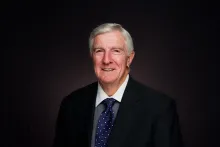
Before his retirement in 2021, Dr. Donald Ward pastored churches in Texas and Louisiana, and taught at Ambassador Bible College in Cincinnati, Ohio. He has also served as chairman of the Council of Elders of the United Church of God. He holds a BS degree; a BA in theology; a MS degree; a doctor’s degree in education from East Texas State University; and has completed 18 hours of graduate theology from SMU.
