

Don Ward
This transcript was generated by AI and may contain errors. It is provided to assist those who may not be able to listen to the message.
Title of the day, Overcoming Sin Through Faith. This day is rich in the history of Israel, according to Jewish legend. Israel crossed the Red Sea on dry ground on the last day of the Feast of Unleavened Bread. According to the apostle Paul, this was their baptism. Let's notice this in 1 Corinthians 10, where Paul says this was their baptism. It also shows us that Christ was the one that was leading them, the one who became Christ.
In 1 Corinthians 10, Israel crosses the Red Sea on the last day of the Feast of Unleavened Bread. More brethren, I would not that you should be ignorant how that all our fathers were under the cloud and all passed through the sea, so in that sense they were immersed and were all baptized unto Moses in the cloud and in the sea, and did all eat the same spiritual meat and did all drink the same spiritual drink, for they drank of that spiritual rock that followed them and followed can have the word connotation of leading them, and that rock was Christ.
This event that is crossing the Red Sea marked the final departure and deliverance from Egypt, symbolic of sin and death, after crossing the Red Sea on dry ground, the cloud over their head being led by Jesus Christ, the one who became Christ. The waters then came back together and they saw Pharaoh and his host drowned in the sea, the waters swallowing them up.
Pharaoh and his host represent Satan and the demons. They were now challenged, that is the Israelites, to look to God in faith and to live by faith. By the time the ten spies were sent out in the third month of their departure from Egypt, the Israelites had tempted God, that is, tried him, ten times, and those twenty years older and older were sentenced to wander in the wilderness for forty years.
Twenty years old was the age in which a person could go to warfare, and so those from twenty years up and older were sentenced to wander in the wilderness and they died in the wilderness. They never entered the Promised Land. Why? Let's go to Hebrews chapter 3. Why didn't they enter into the Promised Land? They had seen all the plagues upon Egypt, ten plagues came upon Egypt, including the death of the firstborn on the night of that first Passover.
They had witness after witness. They had seen water come out of the rock. They had seen manna rain down from heaven, and we could go on and on with all the marvelous things that they had seen. Yet, at times they said they wanted to turn back to Egypt, and this didn't seem to be able to get it together. Somewhat of a summary of why is given in Hebrews chapter 3, but we'll begin in verse 14.
Remember the title again, Overcoming Sin Through Faith. In verse 14, We'll talk about the provocation of Israel in the wilderness, as we shall see. Anyone can always harden their hearts, and a lot of people have their hearts hardened even before they hear the word of God. One of the duties, of course, of parents is to try to help children have a soft, malleable, teachable heart.
In fact, as James admonishes us, that we should all receive the engrafted word with a perfectly teachable heart. For some, when they had heard, did provoke, howbeit not all, that came out of Egypt by Moses, but almost all over 20 years of age, and only two of those over 20 entered into the Promised Land, Joshua and Caleb. Moses and Aaron did not enter in. But with whom he was grieved forty years. Of course, sin is deceitful, and sin, as we'll see in a verse later, sin grieves God.
But with whom he was grieved forty years. Was it not with them that had sinned, whose carcasses fell in the wilderness? And to whom swear he that they should not enter into his rest, but to them that believe not. And to believe not is to not have faith. It even says in the Gospels that Jesus Christ did no great miracles in a certain area because of unbelief.
So we see that they could not enter into because of unbelief, lack of faith. Let us therefore fear, lest a promise being left of us of entering into his rest, any of you should seem to come short of it. For unto us was the gospel preached as well as unto them, but the word preached did not profit them, not being mixed with faith in them that heard it.
So the gospel has to be mixed with faith. As Israel entered into the Promised Land, another great event took place on the last day of the Feast of Unleavened Bread. And we'll turn back to the book of Joshua now, the book of Joshua, to see this event. So Moses died, Joshua was ordained to take his place, and Joshua was now the leader, leading Israel to the Promised Land. Of course, they came into the Promised Land from the east side of Jordan.
They had traveled through the wilderness, up through the area that we call Petra today, and on up Mount Nebo. That's where Moses was able to view the Promised Land. One time one day, I stood on Mount Nebo and looked across there, but the smog and the fog were so great, we couldn't see the Promised Land. I think some days you might be able to see across Jordan from there. But then they journeyed on up and crossed into the Promised Land just east of Jericho. Of course, they camped on the other side of Jericho, on the other side of Jordan.
We have the east bank, and you have the west bank of the Jordan River. The Jordan River is about, looks much like Big Sandy Creek, about that size. I know that might be disappointing, but it's... Now, in the flood stage, it can, of course, go way out of its bank and flood a lot of area, and that's why in the Jordan Valley is where most of the produce is produced for both the nation of Jordan and the nation of Israel. It's rich alluvial land, like delta land that you might find in the Mississippi Delta. So in Joshua 5, verse 1, of course, there were great miracles, similar to the miracles that had occurred when Israel crossed the Red Sea.
That is, Jordan was held back, and they were able to go over Jordan, cross Jordan, on dry land as well. And after they had crossed, then the river began to flow again.
And, of course, those that were under 20 years of age and those that had been born during this period of time had not been circumcised. And they were circumcised. Of course, this circumcision is of the flesh, and today's circumcision is of the heart, as you know from the last two or three verses of Romans chapter 2. In verse 8, it came to pass when they had done circumcising all the people that they abode in their places in the camp, and they were whole until they were whole. So apparently this circumcision took place right after Passover. And the Lord said unto Joshua, This day have I rolled away the reproach of Egypt from off you.
Circumcision, of course, is the symbolism is to do away with the fleshly part, and today it is to circumcise the heart. Wherefore the name of that place is called Gilgal, which means rolled away into this day. And the children of Israel camped in Gilgal and kept the Passover on the 14th day of the month and even to the plains of Jericho. So I misspoke there that circumcision took place before the Passover. And of course, you want to get rid of the fleshly part before taking Passover anyhow. And they did eat of the corn of the land on the morrow after the Passover.
So the day after the Passover, they ate of the corn of the land, unleavened cakes and parched corn in the south same day. And the manna ceased on the morrow after they had eaten of the old corn of the land. So the manna that was rained down from heaven ceased when they crossed over Jordan, were circumcised, kept the Passover. Neither had the children of Israel manna any more, but they did eat of the fruit of the land of Canaan that year.
So once again, it's a call to the faith in God that He would provide. And of course, here they are. They hadn't planted crops or anything like that. And this manna ceases. And so it would be a test of faith even to get sustenance. And it came to pass when Joshua was by Jericho that he lifted up his eyes and looked and beheld, and there stood a man over against him with a sword drawn in his hand.
Jericho was a mighty city at that time, had walls around it, very difficult to scale and conquer. I remember after we crossed the Jordan River, and not far from the Jordan River is, you'll find Jericho. And when we came there, it was like a ghost town because an intifada was taking place, and all the shops were locked up, and the people were off the streets. And just sort of like passing through an old western town and passing through Jericho. And then you leave Jericho, you get into territory that looks much like Arizona as you travel toward Jerusalem.
So it came to pass there that Joshua saw this one standing, and Joshua went unto him and said unto him, Are you for us or for our adversary? Are you for us or against us? And he said, No, but as captain of the host of the Lord, am I now come. And Joshua fell on his face to the earth and did worship, and said unto him, What sayeth my Lord unto his servant? So evidently this was a theophany of the one who became Jesus Christ. And the captain of the eternal host said unto Joshua, Loose your shoe from off your foot, For the place where you stand is holy.
See, only God's presence. His Spirit can make things holy. And you are to be holy, as we'll see later. And if you have God's Spirit in you, you are holy. And Joshua did so. He took off his shoes because the presence of God was on him. Now Jericho was straightly shut up because of the children of Israel, like we read in verse 1, chapter 5, that the kings and leaders of the land were sore afraid and troubled because of the Israelites. So none was going out or coming in. In verse 2, and the eternal said unto Joshua, See, I have given unto your hand Jericho, and the king thereof, and the mighty men of Valor. And now, during the Feast of Unleavened Bread, they combused the city.
So you shall go around the city once, and you'll do that for six days. And then, on the seventh day, it was different.
And it came to pass, we're reading now verse 5, it came to pass when they make a long blast on the ram's horn, and when they hear the sound of the trumpet, all the people shall shout with a great shout, and the wall of the city shall come down flat, and the people shall ascend up every man straight before him. And Joshua, the son of Nun, called the priests, and said unto them, Take up the ark of the covenant. See, the ark of the covenant also symbolizes the presence of God, because above the ark of the covenant in the Holy of Holies, that's where God had placed his presence. And let seven priests bear seven trumpets of ram's horn before the ark of the eternal. And so they did as God had commanded, and they continued to do this.
And it came to pass, we're down in verse 15 now, after the six days of marching around the city, and it came to pass on the seventh day, the day we are observing today, the last day of the Feast of Unleavened Bread. And it came to pass on the seventh day that they rose up early about the dawning of the day, and went around the city after the same manner seven times, only on that day they accomplished the city seven times. And it came to pass at the seventh time, seven is one of the numbers of completion, when the priests blew with the trumpets, Joshua said, and the people shout, and the eternal had given you the city. And so the walls of Jericho came tumbling down, they did not fire a shot. They only marched around it as God had told them, and on the seventh time around, on the seventh day of the Feast of Unleavened Bread, with a mighty shout, the walls of Jericho came tumbling down. Now these two great events, let's turn to Hebrews chapter 11, these two great historical events of Israel crossing the Red Sea, and Israel crossing Jordan and entering into the Promised Land, and the walls of Jericho came tumbling down as the old spiritual goes. They're recorded here, chronicled in the book of Hebrews, in what we call the chapter of faith. In Hebrews 11 verse 29, Hebrews 11 and verse 29, By faith they passed through the Red Sea, as by dry land, which the Egyptians tried to do and were drowned. By faith the walls of Jericho fell down after they were accomplished about seven days. These two great events noted in the Word of God shows about faith, and how simple is this faith? It is so simple that the simplest definition of faith is to believe God, do what He says. Who would ever think you could conquer Jericho by marching around it for seven days, and then shouting, and the walls would come tumbling down. Almost any person in this audience today that's over five years old probably, when asked what do the days of unleavened bread represent, they would say, putting out sin. It pictures coming out of sin, because leavening can represent sin, and where to become sinless. Where to become d11 spiritually. How many red seas have you crossed, and how many walls of Jericho have come tumbling down in the past six days, the Feast of Unleavened Bread, or even before? Let's notice now Revelation chapter 2. We're going to note here in Revelation 2 and 3, a common theme that runs throughout, and see if you identify there are two basic elements to this. Identify it. It has to do with, and you can fill in the blank as we go. In Revelation 2 and verse 7, He that hath an ear let him hear what the Spirit says unto the churches. To him that overcomes will I give to eat of the tree of life, which is in the midst of the paradise of God. From these verses you'll see characteristics of God, and you'll also see the reward that awaits those who do blink. So in Revelation chapter 11, I mean chapter 2 and verse 11, He that hath an ear let him hear what the Spirit says unto the churches. He that overcomes shall not be hurt by the second death. Now you look at verse 17. In verse 17, He that hath an ear let him hear what the Spirit says unto the churches. To him that overcometh will I give to eat of the hidden manna, and will give him a white stone, and in the stone a new name written, which no man knows, saving he that receives it. So that's something to look forward to for sure. Now look at verse 26.
And he that overcomes and keeps my works unto the end, to him will I give power over the nations. We're going to be made kings and priests with God and Christ, and we're going to be with them in ruling the nations. Now look at chapter 3. In chapter 3 and verse 5.
He that overcomes, the same shall be clothed in white raiment.
And I will not blout out his name out of the book of life, but I will confess his name before my Father and before the angels.
Now look at verse 12.
He that overcomes will I make a pillar in the temple of my God, and he shall go out no more, and I will write upon him the name of my God and the name of the city of my God, which is New Jerusalem, which comes down out of heaven from my God, and I will write upon him my new name.
Now look at verse 21. Verse 21.
Verse 21, To him that overcomes will I grant to sit with me in my throne, even as I also overcame, and am sat down with my Father in his throne. He that hath an ear let him hear what the Spirit says unto the churches. Now quickly go to chapter 21. In chapter 21, verses 7 and 8. Chapter 21 of Revelation, verses 7 and 8.
Revelation 21, verse 7. He that overcomes shall inherit all things, and I will be his God, and he shall be my Son, but the fearful, unbelieving, and the abominable, and murderers, and whoremongers, and sorcerers, idolaters, and all liars shall have their part in the lake which burns with fire and brimstone, which is the second death. What is the common thing in all of these verses? What is the common phrase? He that overcomes. He that overcomes. That's the pivotal phrase in all of these verses. He that overcomes. In the first two historical events that occurred on the last day of Unleavened Bread, what was the key to overcoming the host of Pharaoh and crossing the Red Sea? What was the key to the walls of Jericho coming, tumbling down? It was faith in God. Once again, the simplest definition of faith is to believe God and do what He says. Moses believed God and did what he told him to do. For the most part, there was that exception where he struck the rock instead of speaking to the rock. Joshua believed God at the walls of Jericho and did what God told him to do. If we live by faith and do what God instructs us to do through His word and spirit, He will fight our battles for us. Let's look at 1 John, 1 John 5. So the people say, well, what's the meaning of Unleavened Bread coming out of sin? How do you overcome? Well, according to the Bible, you overcome through faith. In 1 John 5, in verse 5, Who is he that overcomes the world, but he that believes that Jesus is the Son of God? Also, look at verse 4. For whosoever is born of God overcomes the world, and this is the victory that overcomes the world, even our faith.
Even our faith. And people still continue to struggle somewhat between what I do and what God does. And it's ever present that we have to do everything that we can and believe that God will do His part as it were. Let's go back to Exodus 14. Exodus 14, this is the chapter that describes Israel being caught in this great trap. In front of them was the Red Sea. On either side was mountains and wilderness. Behind them, the host of Pharaoh closing in fast on them. And it looked very bleak at that time. What were they going to do? Even Moses himself was quaking a little bit with regard to this. But Moses states this. Of course, he did it under inspiration. Look at Exodus 14. 14, And the Lord shall fight for you, and you shall hold your peace. So let's look at verse 13. And Moses said unto the people, Fear ye not, stand still, and see the salvation of the Lord, which he shall show to you today. For the Egyptians, whom you have seen today, you shall see them again no more forever. The eternal shall fight for you, and you shall hold your peace. And the eternal said unto Moses, Wherefore cry you unto me, speak unto the children of Israel, that they go forward. And he told Moses what to do, that you're going to stretch out this rod over toward the sea, and the sea's going to part, and you're going to walk across that sea on dry ground.
And God was there protecting them, the one who led them to the Promised Land. You can read all of that. And so we look at verse 28, and the waters returned after they had crossed the Red Sea. The chariots, the horsemen, and all the hosts of Pharaoh that came into the sea after them, there remained not so much as one of them, but the children of Israel walked upon dry land in the midst of the sea, and the waters were a wall unto them on the right hand and on the left. We read from 1 Corinthians 10 where this was their baptism. Thus the eternal saved Israel that day out of the hand of the Egyptians, and Israel saw the Egyptians dead upon the seashore, and Israel saw that great work which the eternal did upon the Egyptians, and the people feared the Lord and believed the Lord and His servant Moses. But it lasted only a short time. As we've already noted, within the next three months, they had tempted God ten times.
So here we are on the last day of the Feast of Unleavened Bread, and we should ask ourselves, Can I, can we overcome red seas of sin? Red seas of sin. Are you using sin as an excuse to keep on sinning? Do you enjoy wallowing in your sins? You say, well that is a stupid question. Look at Proverbs 10.14. See, the reason some people don't change and come out of their sins is because their sin or their bitterness is their thing, and they like to wallow in their sins. And I've turned to the wrong verse, but as I used to say in the little cute song, it's in the book. It says, The man enjoys his bitterness, and the stranger does not meddle therein. Some people have this bitterness, this thing. It is their thing. It is their excuse for doing whatever it is that they do. And a man does not meddle with their bitterness or with their excuse. So, are you using sin as an excuse for sinning? Do you enjoy wallowing in your sins? Many people will proclaim that they've tried to live by faith, and it didn't work for them. But remember, you've got to keep this definition of faith in mind. Faith is to believe God and do what He says. Abraham, when he was asked to sacrifice, Isaac didn't question God. He said, okay, let's go, Isaac. And Isaac didn't question, except say, well, Father, where's the sacrifice? And Abraham said, God will provide. And Abraham, the father of the faithful, went, and in his mind, Isaac was as good as a— well, in one sense, as good as dead physically, but as good as alive in resurrection. For some strange and paradoxical reason, people are quick to accept the fact that they are sinners and in the same breath, quick to justify themselves that they are sinners. People love to talk in the following terms, especially people out in the world. And you hear it in the Church occasionally as well. You know, I'm no saint. I'm not holy. I'm not perfect. I'm human. You know, we all make mistakes. I did it ignorantly. I did it under pressure. I did it partly out of weakness, but I knew better. Now, let's examine a few of these statements in view of the Bible. The same Bible that convicts the world of sin convicts the world of righteousness. I think we focus more on the convicted of sin than convicted of righteousness. It's sort of like a dual kind of sword that the opposite of sinning, of doing sin, could be doing righteousness. Look at John 16, where I want to read the Scripture that says the Holy Spirit will convict you of sin and righteousness and judgment. And John 16. And one of the purposes here today is to help us to become more focused on becoming righteous. If we become righteous, then of course we're coming out of sin. You can look at it both ways. Generally, we focus on stop sinning, and of course we need to stop sinning, but focus on being righteous. In John 16.7, Nevertheless, I tell you the truth, it is expedient for you that I go away, for if I go not away, the Comforter, the Holy Spirit, John 14.26 says the Comforter is the Holy Spirit, the Comforter will not come unto you, but if I depart, I will send him unto you. And when he is come, he will convict the l'encho, the world of sin and righteousness and of judgment. We generally talk about being convicted of sin, but also convicted of righteousness, which is the opposite of sin.
Now, the statements that people make is like, I don't want to be thought of as righteous, I'm no saint. Well, if you're no saint, you're a candidate for the second death.
Look at Romans 1.7. We'll briefly look at some of these sayings and view the Bible and show that, in contrast to that, that God wants us to be righteous. He wants us to be holy. He has called us to be saints. And the word, we'll just go ahead and deal with this now, the Greek word that is translated, saints, is haggios, H-H-G-I-O-S, is the same word that is translated, holy. In other words, it's the same word, same Greek word. So in Romans 1 and verse 7, Do all that be in Rome, beloved of God, call to be saints. We have been called to be saints. We have been called to be haggios. Haggios means holy. So what does haggios mean in that sense? Separated to God, worthy of veneration. Its highest application is to God Himself. God is holy. And we are holy. We will read that, we are to become holy. His highest application is to God Himself, or its highest application. That is holiness. To be pure. To be majestic. To be in glory. To all that is in Rome, beloved of God, call to be haggios, saints, holy. Grace to you and peace from God our Father and the Lord Jesus Christ. If you turn forward quickly to 1 Corinthians 1 and verse 2, I'll show you two examples, of course. One should be sufficient, but in 1 Corinthians 1 and verse 2, Under the church of God, which is at Corinth, to them that are sanctified, set apart in Christ Jesus, called to be haggios, saints, with all that in every place call upon the name of Jesus Christ our Lord, both theirs and ours. Another saying we have is, I'm not perfect. And you say, well, no man is perfect. But we have been called to be saints, to be holy. And in Matthew 548, Matthew 548, which is a continuation of the Sermon on the Mount, in Matthew 548, See, that is the goal. In Hebrews 6, the seven great doctrines of the church, repentance, faith toward God, baptism, laying on of hands, resurrection, judgment, not laying again the foundation of these, but going on to perfection. In fact, Hebrews 6.1 starts off with, let us go on to perfection, not laying again the doctrine of repentance, faith toward God, baptism, resurrection, judgment. Let us go on to perfection. Let us go on to maturity. Look at Hebrews 12 verse 2. This kind of thinking, by the kind of thinking I'm trying to describe, and, of course, very imperfectly, because not many times do you try to do this, it's easy to say, okay, come out of sin. But on the other hand, think about being holy, thinking about being righteous, thinking about being perfect. And it's like in the pure group, and it's been that way from the days of Cain and Abel, where Cain slew Abel because Abel was a goody two-shoes. That is, Abel knew what he was, that he was a sinner, and he brought forth a sin offering, whereas Cain brought forth a think offering. Think about being as God is. In Hebrews 12.1, wherefore seeing were also accomplished about was so great a cloud of witnesses, we read about two of those, crossing the Red Sea and the walls of Jericho. Let us lay aside every weight in the sin which thus so easily beset us, and let us run with patience the race that is set before us, looking unto Jesus the author and finisher or perfecter of our faith, who for the joy that was set before him endured the stake, despising the shame, and is sat down at the right hand of the throne of God.
So think about being perfect. What about the one we all make mistakes? We've all sinned. Well, that's a universal truism. We have all sinned. You look at Romans 3.23, which we shouldn't have to turn there, all have sinned and come short of the glory of God. But it does not excuse sin.
We're all sinners, yes. But because everybody is a sinner, does that mean that I need to continue sin? It's like a paradox. Another one is we're all human, and we all make mistakes. That's a truism, but it is not an excuse to keep on doing whatever it is. Look at Romans 7.18. See, one of the things that the Apostle Paul gets, he gets out, he addresses, he says, of sinners I am chief. Of sinners I am chief. Okay, let's just admit it. We're all sinners. But that's not an excuse to continue where we are, to say, okay, I'm just human. We all make mistakes, and we all sin. That's true. Obviously, it's a universal truism. But it is not an excuse to remain where we are in Romans 7.18. For I know that in me that is in my flesh dwells no good thing, for to will is present with me, but how to perform that which is good I find not. And the way that he found to do that which was good was through the Word of God and the Spirit of God. And we all have this conflict going on of the mind of the flesh and the mind of the Spirit. And the mind of the Spirit, the new knowing within, the new conscience, must rule over the mind of the flesh. Verse 24, O wretched man that I am, who shall deliver me from the body of this death, I thank God through Jesus Christ our Lord. So with the mind I myself serve the law of God, that new knowing within, but with the flesh, the law of sin. That didn't mean that he was continuing sin, but that the battle was there, and it was always there.
So we can't say, okay, I'm human, we all make mistakes.
He continues here. Let's just deal with this. I think I have it later. Right now and continue in chapter 8. There is therefore now no judgment to them who are in Christ Jesus, who walk not after the flesh. This verse here shows what I just said in verse 25, that he was not saying that I can't obey. He was saying that with this mind of the Spirit, I can obey the law of God. If you're obeying the law of God, you are not sinning. But you still have the law of the flesh within you, which yearns to fulfill the lust thereof. The lust of the flesh, the lust of the eyes, and the pride of life. There is therefore now no condemnation of those who are in Christ Jesus, who walk not after the flesh, but after the Spirit. So that's what we are called to do, to become saints, to become holy.
For the law of the Spirit of the life of Christ has made me free from the law of sin and death. I've been freed from that fleshly, carnal existence, so that I can live the holy life. I can go on to perfection. I can stop using the weakness of the flesh as an excuse to stay where I am. And here's the clincher, as it were, for that. For what the law could not do, and that it was weak through the flesh, God sending His own Son in the likeness of sinful flesh and for sin, because we have sinned, we have to be bought back. That's why it says, and for sin, condemned or judged sin in the flesh. How did He condemn it or judge sin in the flesh?
They that the righteousness of the law might be fulfilled in us who walk after the flesh, but not after the Spirit. So how did Christ condemn it? He perfectly obeyed. He lived in the flesh and perfectly obeyed.
For they that are after the flesh, do you mind the things of the flesh, but they that are after the Spirit, the things of the Spirit. Now we always have our caveat here to add, and someone say, well, are you saying that we can be perfect?
Well, 1 John 1 says, if any man says that he's without sin, he's a liar. We know that we will sin after receiving the very essence of God within us. But 1 John 1 also says that if we confess our sins, he's faithful and just to forgive us of all unrighteousness.
So verse 4, that the righteousness of the law might be fulfilled in us who walk not after the flesh, but after the Spirit. The righteousness of the law. Are you convicted of righteousness? You can do it. You can be viewed as holy. You can be viewed as righteous. For they that are after the flesh, do you mind the things of the flesh, but they that are after the Spirit, the things of the Spirit. For to be carnally minded is death, but to be spiritually minded is life and peace, because the carnal mind is enmity against God, for it is not subject to the law of God. Neither indeed can be, so then they that are in the flesh cannot please God. But we can walk in the Spirit. So we can't use this thing of, oh, I'm human. What about ignorance? Look at Acts 17.30. Acts 17.30, where Paul is on Mars Hill at the Areopagus, where the great minds, so-called great minds, philosophers, met and debated the issues of life, so-called. And Paul comes among them, and he gives his witness, as it were, in Acts 17, and verse 30, And the times of this ignorance God winked at, but now commends all men everywhere to repent. After you have heard the message, after you have been convicted, there's really no excuse. And of course, one of the great things that especially the youth are under today is pressure, the peer group, controlled by the peer group. Pressure. Everybody else is doing it, why can't I? Well, do you want to follow everybody else off the cliff? Hopefully not. This thing of living by faith and understanding it is something I think we really need to spend more time with and grow in as much as we can. You know, I'm concerned when people say, I need to overcome this. I need to have more knowledge before I can be baptized, before I can come to church, before I can come to Bible study, before I can be the kind of husband, the kind of wife, before I can clean the house. I need more knowledge. Note the emphasis on I. Believe God, do what He says. You need to do as those who heard Peter on the day of Pentecost when they cried out, men and brethren, what shall we do? And Peter said, repent, be baptized in the name of Jesus Christ and you shall receive the gift of the Holy Spirit. And that day there were 3,000 people added. Apparently, their baptismal counseling was Peter's sermon. And they had a repentant and humble heart. And they were baptized.
And what about sin? Sometimes we have a very narrow view of sin, of what it is. Just about everybody, I know back, I don't know how it is today, but just about everybody could quote 1 John 3-4, what is sin? Well, sin is transgression of the law. Sin is transgression of the law. Well, you can sin in several different ways. There is commission and there is omission of sin. Probably more of us are guilty of omission than commission. You can sin without doing an act.
Christ said that you can look upon a woman with lust and you committed adultery in your heart. In Genesis 6, verse 5, see through thought, in your mind, in your mind, you can sin. In Genesis 6, verse 5, one of the reasons why God brought the flood upon the earth to wipe out the wickedness of the Lion of Cain especially, and the unrighteous line, I'm reading Genesis 6, verse 5.
The thoughts of his heart was only evil continually.
And it seems that the entertainment world, their big challenge is how can we top the last sensual and gruesome, whatever the theme of cult, movie, than the last one? How can we get closer to the edge than the last time? The disc jockeys begin to talk about the weekend is only five days away. Five days away, we can all go do the wrong thing. Desire. You can have wrong desire, similar to the thought in your heart. You can sin in word, and you can sin, of course, in deed. Comission. Omission. Let's look at James 4.
Overcoming sin through faith. Going on to perfection. Becoming holy. Living up to the calling. Call to be saints.
James 4, verse 17. Therefore to him that knows to do good, and does it not, to him it is sin. So, omission.
And then Romans 14, 23 says, whatsoever is not of faith is sin. Sin is vicious. Sin is deceitful. We should be convicted of and convinced of guilt, but we should not remain in our sins, seeking to justify ourselves by what we are. I mean, we read it for moment seven. We are flesh. We are carnal. The carnal of mine is not subject to the log. That's like using the excuse of what we are to keep on doing what we've been doing. I hope we see that that can be overcome. Remember, I read those eight verses from Revelation. And he that overcometh. He that overcometh.
Now, on the one hand, sin is the transgression of the law. On the other hand, the law was ordained for life. The law cannot give life, but the law can help sustain life. Look at Romans chapter seven again. Romans chapter seven gives you one of the most succinct descriptions of the law. In Romans seven verse ten, And the commandment which was ordained to life, to sustain life, Why? The wages of sin is death. And the commandment which was ordained to life, I found to be unto death. On the other hand, the wages of sin is death. But on another hand, it was ordained for life. Death, if you disobey it, life can be sustained. It doesn't give life, as it says in Galatians, for sin taking occasion. What brought about the death? For sin taking occasion by the commandment, sin the transgression of the law, deceived me and by it slew me. Wherefore the law is holy, commandment holy, just and good. Was then that which is good made death unto me? Was it the immutable spiritual law of God that killed me? God forbid, no, it was sin, transgression of the law. That it might appear sin, working death in me by that which is good, that sin by the commandment might become exceeding sinfully. It highlights it. It points it out. For we know that the law is spiritual, but I am carnal, sold under sin.
Sin, of course, is against God. Since God is the lawgiver, sin is against God. David, when he prayed his repentance prayer, this is Psalm 51, verse 4, says, Against you and you only have I sinned and done this evil in your sight. Sin can be against the brethren. If I cause my brother to offend, Paul says, I will not eat meat as long as the world stands. And of course, all sin is also against self, because the wages of sin is death.
Because if you sin, that's against you. And the penalty for that is death. And the only way back, as you heard in the offatory, is through the life of Christ, his blood.
Sin affects God in various ways. God is grieved by sin. It grieved God that the thoughts and intents of the heart of man was always on evil. Sin is something that God views as an abomination. Sin makes God angry.
Sin dishonors God. Sin makes God weary.
So why does God allow sin? Sin should teach us to hate its terrible effects. Look at 1 Peter 4 and verse 1.
Sadly, though, unless you have been called into God's truth, the lesson of 1 Peter 4 verse 1 goes over most people's heads. And they continue in their compulsive, addictive behavior, even though it's killing them and everybody around them. In 1 Peter 4, 1, For as much then as Christ has suffered for us in the flesh, arm yourselves likewise with the same mind. Arm yourself with the mind that was in Christ.
Of course, Philippians 2 gives an example of that. For he that has suffered in the flesh has ceased from sin. When you receive the pains and the penalties and all of the consequences of sin, and that doesn't teach you not to go that way anymore, then you're treading on very thin ice that he no longer should live the rest of his life in the flesh to the lust of men, but to the will of God.
For the time pastor of your life may suffice us to have done the will of the nations when we walked in lasciviousness, lust, excess of wine, revellings, banquetings, and abominable idolatries. Or in they think it's strange that you run not with them to the same excess of riot, speaking evil of you. Oh, yeah, look at him. He's now trying to be a saint. He thinks he's perfect.
So they criticize you. Wherein they think it's strange that you don't do what you've always done, who shall give account to him that is ready to judge the quick and the dead. So you turn back to 1 Peter 1 and verse 13, as I've mentioned already two or three times. Let's read it here in 1 Peter 1.13.
Think about that.
So I would like to be a Holy Joe and strive toward being holy.
So once again, I ask the following questions. How much sin have you overcome during Peace of Unleavened Bread? Can you overcome sin? How much sin have you overcome during Peace of Unleavened Bread? Can you overcome sin? Are you using sinning as an excuse for sinning? Do you enjoy wallowing in your sins while we've addressed all of those things? Hopefully the answer to that is, yes, you have overcome quite a lot. Can you overcome sin? Yes, we've addressed that in the example of Christ. Let's ask some other questions. Do you really feel weighted by sin? Of course, if your conscience has not been seared, you will feel guilt. If your conscience has been seared, how many thousands of people that, say 30 years ago, maybe 20, would be sitting in services somewhere around the world observing the last Holy Day, the Feast of Unleavened Bread, who are out working on their job today?
And for the first few, I am convinced that for the first year or so, they may feel pangs of guilt or wonderment. And then after a while, it's gone, there's nothing there. It's just an old vacuum, a vacuum that cannot be filled.
Do you feel that you can't obey God? We all can. God has given us the where-while to do it. Do you feel guilty part of the time and feel with anxious care much of the time? Do you feel that you're going backward instead of forward?
Do you feel your trials or your sins are greater than you can bear? So if the answer to any of these is, yes, we need to really wake up, examine ourselves, we can be in the attitude of Cain after God confronted Cain and then pronounced his punishment. He would be someone like a vagabond upon the face of the earth, but nobody was God-ordered, and nobody killed Cain. Cain said, my punishment, my trial, my sin is greater than I can bear. So let's stop using, stop using the old I am human.
We're all human routine. And really turn to God, believe and obey the truth. We can do it. God has called us to liberty. I want us to turn to John 8. John 8, verse 32 is a part of what I've said so often, philosophy of education of how you can be truly set free. The world is in a quest for freedom, they say today. George Bush says that there is a yearning within all humans to be free and to have a democratic government over them, so we're going to go to nation building in Iraq. Didn't turn out too well, but that's another story. In John 8, verse 31, Then said Jesus to those Jews which believed on him, If you continue in my word, then you are my disciples indeed, and you shall know the truth, and the truth shall make you free.
You can be free of all the guilt, fear, ignorance, superstition, dogmas of man, all the great minds who think that you can emerge from the slime as an amoeba in a tadpole and become a human being over the course of time. You shall know the truth, and the truth shall make you free. And what I read over the administration building engraved in stone the campus where I did bachelor's degree at Delta State said, God hath men hath decreed, or the state hath decreed, that only educated men shall be free.
The state hath decreed that only educated men shall be free, but God hath decreed that only educated men are free. I said it wrong, I'll say it again. The state hath decreed that only free men shall be educated, because there was a caste-like caste system even in ancient Greece, that the free man could be educated. But the slaves and the people who were the indentured ones could not receive an education. But God hath decreed that only educated men are free.
You see, the Church of God offers you a true liberal arts education. That education that frees you from fear, ignorance, superstition, and the dogmas of man. Notice their response. They answered him, We be Abraham's seed. We were never in bondage to any man. They were in bondage right then. How say you? You shall be made free. And Jesus answered them, Barely I say unto you, Whosever commits sin is the servant of sin.
And the servant abides not in the house forever, but the Son abides forever. If the Son therefore make you free, you shall be free indeed. And so, brethren, we have been set free. Christ has come. He perfectly obeyed the law. He set us an example. We must accept flesh for what it is. We must then obey the mind of the Spirit. We must not use our humanity or our flesh for justification.
Your humanity will never justify you. Neither will anything else, only repentance and faith in the sacrifice of Christ. Jesus Christ said, Be of good cheer. I have overcome the world. The Holy Spirit convicts of sin, of righteousness, and judgment. We want to be convicted. Obviously, if we have sinned, we want to go before God and confess our sins. He says, I am just to forgive you of all unrighteousness. It says in Psalm 103 that He removes our sins as far as the east is from the west.
He realizes that we are but dust, and He knows that our frame is weak. But yet, Jesus says, Come and learn of me. My yoke is easy, my burden is light. The last day of Unleavened Bread is a day in which that final demarcation was set historically when Israel crossed the Red Sea.
Later, when it came into the Promised Land, and the walls of Jericho came tumbling down. And whatever your Red Sea is, or my Red Sea, or the walls of Jericho, if we believe God and do what He says and live by faith, we will overcome. He that hath an ear, let him hear what the Spirit says to the churches.
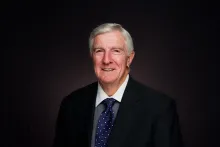
Before his retirement in 2021, Dr. Donald Ward pastored churches in Texas and Louisiana, and taught at Ambassador Bible College in Cincinnati, Ohio. He has also served as chairman of the Council of Elders of the United Church of God. He holds a BS degree; a BA in theology; a MS degree; a doctor’s degree in education from East Texas State University; and has completed 18 hours of graduate theology from SMU.
