
Robin S Webber
This transcript was generated by AI and may contain errors. It is provided to assist those who may not be able to listen to the message.
I think all of us at one time or another have tuned into television or seen something in a movie where they have a courtroom drama. And before a witness begins to testify or to be cross-examined, there's always that very famous line.
State your name, please. And are you willing to tell the truth, the whole truth, and nothing but the truth, so help you God?
With that said, let me personally put you on the stand for a moment and ask you in turn, are you willing to tell the gospel truth, the whole truth, and nothing but the gospel truth, so help you God?
Before going any further, before you answer that question, allow me to define some terms for you when we deal with the word gospel. I think that's important to give us a definition to where we're all together, and then we can move forward. Gospel comes from the Greek, of which the New Testament was written in. The Greek, the word there is euangelion, and in English we would translate that as evangel. That's where we get the word evangelistic. And initially, which is interesting, maybe you've never heard this before, just have to go to a commentary, initially it meant a reward. It meant a reward for good tidings. Later on, it just simply became defined as good tidings, and or a good message, and or what we might say, good news.
Now, that sounds easy enough, and you think everybody could rally around some good news. But let's notice for a moment, number one, a dilemma, a dilemma, and number two, a very stern judgment regarding this word gospel. Would you please join me in the book of Galatians? In Galatians 1, which is some of the first writings of Paul, probably written around 49 to 50 AD. So this is only 20 years after the teachings of Jesus of Nazareth, and what he had come to discuss and to talk about. And yet, right here in Galatians, early on, just within 20 years of Jesus' ascension, we have a problem. And we notice here in Galatians 1, Paul speaking, I marvel that you are turning away so soon from him who called you into the grace of Christ to a different gospel. But now, maybe you've never noticed before, let's go a little bit deeper here, which is not another. In other words, what Paul is really saying, it is not any gospel at all. It is not another, but which is not another. But there are some who trouble you and want to notice pervert the gospel of Jesus Christ. Key phrase there, it is not the gospel. Now, Galatians is dealing a lot with the situation with what we call Gnosticism that was creeping into Judaism, that was also creeping into the early Christian Church, which would not really become fully extant for about 100 years after this, but this was kind of the opening ripples of a great challenge. And we could speak about Gnosticism in the book of Galatians, but I just wanted to find a principle here. If it's not the gospel, it's not the gospel. There's not a shade of it.
It's got to be straightforward. Now, notice Galatians 2.14 when I use that word straightforward, which is going to lead, then, are you with me? To the title of this message. It says here in Galatians 2 and verse 14, But when I saw, this is Paul speaking, that they were not noticed straightforward about the truth of the gospel, I said to Peter before them all. And of course, we recognize the rest of the stories that Peter had gotten weak knees around those that came up from Jerusalem and was not eating with the Gentiles. And Paul just kind of had it straight out there with him in Antioch. But the phrase here, which is very interesting, is straightforward. Now, let's notice something here about this, that when we look at it, to be straightforward. Here's what I want you to think about. Straightforward with the truth of the gospel, what is very interesting, because sometimes we think something is in the Bible all of our lives, and then we find out it's not in the Bible. It's kind of like a lot of people with certain religious holidays that they keep, and they think they're in the Bible until they open the Bible, and they find that they're not mentioned in the Bible. Surprise! Well, we often talk, as I mentioned earlier, about the gospel truth. That's a colloquialism. You don't find those two words together in that order in the Bible. But there is a truth of the gospel. And when it's mentioning here in Galatians 2.14, and this is where you and I become involved, it's really speaking about conveyance. It's speaking about a transmission of one individual to another. The conveyance, the teaching, the telling. As we might say here in Southern California, are you with me? The whole enchilada. And not just a part of it, but the wholeness of it. And to get right to the meat of the subject and the topic of what Jesus Christ brought to this earth, on behalf of His Father. Well, we might ask, well, what happened not only in Galatia, but what happened in historical Christianity? What happened and why was there such confusion about gospels? And that there was more than one gospel floating around the Roman Empire. There were many, many, many, many gospels. Both that were being spoken in homes and actually that were being written down. Where did all of this happen? There are two pivotal questions that we need to understand and then we'll move into the main part of the message. Join me first in Matthew 16, 13. And may I say again, for you that are here today and those that may be listening to this in the future, this is fundamental. This is going to be a background of classical historical Christianity and what happened and what we are about today. In Galatians 16, 13, let's notice the first question that had to be answered, that had to be transmitted. We find in Matthew 16, 13, when Jesus came into the region of Caesarea-Phelopi, He asked His disciples and He said, Who do men say that I, the Son of Man, am? Who am I? And so they said some say John the Baptist, some Elijah and others Jeremiah or one of the prophets.
And then the cardinal moment, the big moment, came and He said to them, though, But who do you say that I am?
That's what God the Father and Jesus Christ want us to answer, each and every one of us that are out here today, individually. And it comes to us, not only when we're first being called and first drafted, but every day by our actions, by what Mr.
Osterly mentioned. We go back, who do you say that I am? And you have to have the right answer or you won't have the right response. And so this was one of the big questions. Let's go to another question now. Join me if you would in John 18.
In John 18, and let's pick up the thought in verse 33, we're going to break right into the discussion between Jesus on that last, those last few moments of his life as he is facing Pontius Pilate in John 18, verse 33. Notice this. Then Pilate entered the Praetorium again, called Jesus, and said to him, Are you the king of the Jews? This, brethren, is a question that must be answered, not only then, but in our lives, as to whether Jesus was a king and called to be a king. And Jesus answered him, Are you speaking of yourself about this, or did others tell you this concerning me?
And Pilate answered, Am I a Jew? Your own nation, and the chief priest have delivered you to me. What have you done? And Jesus answered, My kingdom is not of this world. And if my kingdom were of this world, my servants would fight, so that I should not be delivered to the Jews. But now my kingdom, now, hear me, now, for that time and for that moment, my kingdom is not of this from here. Verse 37, Pilate therefore said to him, Are you then, here come again, are you then a king?
And Jesus answered, You say rightly that I am a king, and for this cause I was born, and for this cause I have come into the world, that I should bear witness to the truth. And everyone who is of the truth hears my voice. So we have two questions that need to be answered that are a part of the good news of why you and I are here today.
Those questions are, Who do you say that I am? And number two, Are you a king? So with these questions as a guiding force, again, the title of this message is, The Fullness of a Straightforward Gospel. Speaking of the conveyance, the fullness, all of it, every part of it that comes from the Scriptures. Now, regarding question number one, Who do you say that I am? We're going to talk about classical historical Christianity for the first four to five hundred years for a moment.
So please stay with me on this one. Let's understand that we found that in Galatians, with churches that were founded by men and disciples of Jesus very early on, there was already confusion. There was confusion, especially with the Gnostic element, as to whether or not Jesus was even in the flesh. In the minds of many in antiquity, how could a perfect God be encapsulated in what they considered filthy, dirty, evil, human flesh? It just simply didn't qualify in their minds. And there were many other aspects. Was he the Son of God alone? Divine? Did he even leave footprints when he was on earth, if he wasn't in a body?
Was he just simply the Son of Man? Was he a good man? Was he just another rabbi? God just kind of infused with power and kind of blew up with the Holy Spirit? What was his relationship with God the Father? What was the relationship with God the Father, with Jesus Christ?
What was the relationship with the Holy Spirit, with Jesus Christ? This was on the minds of the people back then. People talked about this. Like today in L.A., we talk about the Lakers. Like they talk about the Lakers, and they talk about the Dodgers. This aspect, up to around 3-4-500 AD, is what men talk about at the bar as they got off the rocky roads of the village. This was an all-burning question.
Who is this Jesus? Very interesting. And so it was almost, when we talk about the Wild West, it was almost like the Wild West. There were many, many churches. There were many, many thoughts about this. Many Gospels were circulating. And that's why, after a while of time, there had to be a standardized expression of Holy Canon. Matthew, Mark, Luke, and John. Because these four were written by those that had either been with Jesus, like a Matthew, like a John, and were authorized by others that had been with Jesus, or had been apostles like Mark and Luke, when we think of Peter and Paul.
And these became what we call canon. These became what everybody began to wrap around, to understand. So there was a lot of confusion about this. From this, once things were canonized, in historical, classical Christianity, apart from those that believe as we do, what happened was they began to try to boil it down, that everybody had to kind of basically just put it on paper, and this is what you had to believe, because there were so many thoughts out there. And what happened was, by 325 they developed what you know and I know, and if not, I suggest you study the Nicene Creed.
The Nicene Creed under Constantine, who had just recently bumped into Christianity and oversaw the Council of Nicene, they put things into creeds. But the creeds were basically, the creeds were meant to unify a fractured body within the historical, classical, Christian sense, but they were just creeds. They were like small bumper stickers. They were important in that sense, because to a degree, not totally, they clarified that Jesus came to earth, born of the Virgin Mary, died, was in the grave for three days, etc., etc., etc. But what happened in making it so finite, they took the meat off of the bones, of the fullness of the message of Jesus Christ, that it was very much about Him.
He is the message of God, and we'll talk about that later. But they left out the story and the revelation of what He came and talked about in most of the Gospels. It melted and it just simply evaporated away. Here's another thing. Let's go to the second question. Are you a king? And it says, for this purpose, I came. But we also recognize, He said, that my kingdom is not of this world. For the first 300 to 400 years of people that espoused Jesus, whether they kept the doctrines we keep or not, but espoused Him, they still had a forward thought of a kingdom experience, of the kingdom of God ultimately coming to this earth.
But as it grew, both in the Eastern and the Western world, something happened. A church that had been by Jesus called a Little Flock, began to be inundated by this larger church. And this larger church began to take on what I would call the cloak of Rome. It began to take a top-down organizational government system, which controlled people's minds, people's thoughts, people's hearts. Even within that government position, it took an ancient title that had been used in Rome, Pontifus Maximus, which is interesting, which had been a religious title given to the council members of Rome, Pontifus Maximus.
The bishop of Rome, at that time, ultimately took that upon himself. It took on the clothing of Rome. It took on the purple. It took on the architectural veneer of its basilicas and made their buildings basilicas. What happened then, and you say, well, where is this all going, Mr. Weber? Thank you for asking that question. Stay tuned.
What happened was, as the Roman Empire began to go down in the 300s and the 400s AD, Augustine of Hippo in North Africa is gauging all of this, and he writes one of the great treatises of history. It's called the City of God. And in that City of God, he says, as the pagan Roman Empire is coming down and melting and evaporating, that a new empire, a new kingdom, is rising, and it's here on earth, to what he would call, at that time, the Church. By the 4th century, the 5th century, much, many of those that stated they believed in Jesus of Nazareth no longer looked towards a future kingdom, because in their mind, the kingdom of God was now here on earth. And with those thoughts, and with that new system arising, taking the cloak of Rome, taking the controlling manner of Rome over the populations, it would not bear any disagreement. And ultimately, other thoughts were stamped out, and for those that believed differently, they had to go into the wilderness. They had to keep their beliefs to themselves. Now, with all of this stated, we recognize that from that time, for about a thousand years, that one Church had control over much of mankind.
Ultimately, that control and that abuse of religious control led to what we call the Reformation. It led to the Reformation. Later on, that Reformation was blended with humanism during the Renaissance. And beyond that, then, there was the destruction, which maybe many of you are not familiar with, but those that are from Europe will probably understand more about this. There's what was called the Thirty Years' War. The Thirty Years' War was the last shootout between the Protestants and the Catholics a hundred years after Luther, in which one-third of the German population was decimated and died due to religious intolerance. This was religion, and this caused a stir within humanity. If this is religion, if this is about God, maybe we need to try something different, which is very interesting for us even to think about today that, and so important is what Lauren brought out, that we are examples of the Gospel, that we are examples of the life and the heart of Jesus Christ. Because when people see religion and the Gospel practiced poorly, it creates a vacuum. People look elsewhere. And that's what's exactly happened here, that people began to look elsewhere, and they began to change. I want to share something out of a book by N. P., right? It's how God became king. And it's very interesting because after the Reformation, we have the Enlightenment, that period of the 18th century, a period of which we would think of Rousseau, we would think of Voltaire, we would think of Thomas Jefferson, Ben Franklin, on this side of the Atlantic. He writes here simply this. Talking about that time period, when we examine the wider movements of thought and culture in the 18th century, where we find something of enormous significance for understanding why the Gospels were being read in the way that they were. At the heart of this Enlightenment was a resolute determination that God, whoever God might be, should no longer be allowed to interfere. See, mankind had pasted those that said they were of God and had said that they were preaching the Gospel for a thousand years and they had a bad taste in their mouth. And so it came to this point that whoever God might be should no longer be allowed to interfere, either directly or through those who claim to be his spokesmen in the affairs of this world. Hear me, please. Once man had come of age, there was no room for theocracy. It was as simple as that. God was pushed upstairs, like the daughtering old boss who used to run the company, but has now been superseded. He has, no doubt, a notional place of honor, a cozy office where he can sit and imagine he's still in charge. But nobody's fooled. The new generation is running the business now. They know it, and the supporters had better get used to it. Thus, for the European and American Enlightenment, 18th century, God was superannuated to a position of totally ineffectual honor. What is this telling you and telling me? God was basically put on a shelf by so many and brought out for holidays that they had made up. Interesting.
That's where we are today. Very interesting what Lauren brought out about being a peacemaker. Why do we not have peace in America today? It can very much go back. We have not had peace since the Garden of Eden, but it's continued. The difficulty with America today, which is still, amazingly, one of the most religious societies in the Western world, though the air is going out of the balloon. The air went out of the balloon back in the 1960s when they took prayer out of school. The air went out of the balloon when women were told that that little life that is inside of them, which should be the very safest place on earth for a little life to grow and to develop, was their decision, and their decision alone.
And to recognize that we cannot talk about the Ten Commandments anymore in schools. Is there any wonder why we are, as many are saying in this uncivil world of America today, that we have not really tasted it for over, oh my, my, since at least the Jeffersonian Adam elections of 1800? There are people that can't even sit down to dinner anymore. There are people that can't even go to a restaurant anymore.
One way or the other. We're not talking about one side being better than the other. We're just saying this is the world that we live in because people now have put God into a cozy little shelf that they allow to come out every so often, so they become God. They are their own ruler. They make their own rules. And for so many to recognize that that is where we are today.
But is this the message that Jesus brought with them? What did Jesus come to teach and to preach and to share? I'd like to share something out of the Interpreter's Bible commentary, page 656-657. It's from the commentary on Matthew and Mark, and it's on Mark 1.15. Now, I'm going to read for a moment. I know people don't like to be read to, but I'm going to read to you for a moment.
I'll try to make it interesting. But this is some of the most vital information that you and I need to substantiate why we live the gospel message that we live. So bear with me a second, would you please? Mark 1, in Mark 1, you can turn there for a second, please. Mark 1. Let's understand that Mark is written to the, in a sense, to the Roman world. Mark was a young man who he wrote. He wrote very action-oriented.
And he treats Mark as the Roman world was used to a king or a general coming through a gate and into the city. There was pomp, there was majesty, trumpets blared, there was a herald. So really the beginning of Mark is almost heraldry. And we notice this in verse 14. Now, after John was put in prison, Jesus came to Galilee preaching the gospel of the kingdom of God and saying that time is fulfilled, the kingdom of God is at hand, repent, and believe in the gospel. The kingdom of God is at hand. He was not talking about the kingdom of Rome or any shadow of it.
Thus, allow me now to go to this writing in the Interpreter's Bible commentary. Please bear with me. He says that the kingdom of God is at hand. This was, beyond all question, the main subject of Jesus teaching. The main subject of Jesus teaching was that this kingdom was at hand. The change in climates of opinion have passed over this theme. Especially as I explain historical Christianity with all the confusion, they tried to do a bare bones methodology of creating creeds, one-liners that everybody could wrap around.
The change in climates of opinion have passed over this theme. What Jesus meant by the kingdom of God, more almost than any other subject in the gospels, it has been exposed, listened to the constant danger of having men taking one fragment of the great conception and interpret it as a whole. The straightforward gospel, the conveyance of that gospel mentioned here, has always been in danger of being fragmented. To this entire matter, the words of Cooleridge apply.
Make any truth too definite, and you make it too small. You make one truth too definite. You can also make it too small, and you can also make other great truths small. In this kingdom of the God gospel, there is an apocalyptic element, an ethical and social element, but none of these alone is the kingdom of God. Ernest F. Scott puts it into one sentence, The kingdom as He, Jesus, conceived it was at once the higher spiritual order, the better righteousness, the larger human brotherhood, the life of inward fellowship with God, and none of these excludes the other.
Now allow me to be emphatic. The kingdom is the reign of God. Unlike what they thought during the Enlightenment and the conclusion that they came to, the kingdom is the reign of God. It is His sovereignty over mind and heart and will and in the world. It's not only macro, but it's individual. It's micro. It is sonship to God and brotherly relationship with men. It is in the future, but whenever a human life is brought into harmony with the Father's purpose, it's present.
That main theme of Jesus must be the main theme of His disciples and messengers if they are to truly be His messengers. The Great Tracton, this is profound. And perhaps why there is a challenge in the body of Christ as we know it today. The great tragedies of church history have occurred in those periods when Jesus' theme of the kingdom of God was made secondary or was forgotten entirely.
Whenever Christian teaching has been a device of force, is anybody listening? When Christian teaching has been a device of force in the body of Christ, whenever it is led, brother, to strive against brother, whenever it is failed to catch the imagination of men, it has been a long way from the teaching of the kingdom of God.
That kingdom must be preached in season and out of season. A world of competing sovereignty, that's what we see in our nation today, Lauren and everybody else, competing sovereignty under one flag. A world of competing sovereignty needs the sovereignty of God. It goes on to verse 15 for a moment. Again, repent and believe in the gospel. It may be me that Mark in this passage records Jesus is making an addition to the preaching of repentance by John the Baptist. But it's very interesting that Jesus never minimized sin or repentance.
He proclaimed it. And basically what he proclaimed was simply this. A new world order is at hand and get a mind that fits it. Get a mind that fits it. But he brought more than judgment and inflexible demand for turning away from sin. He brought good news. And he was the good news. May I say something as your pastor? This is one of the most profound definitions of the kingdom of God.
I have ever read. It is chilling. It is exciting. It is rewarding. For some of us that have been in this way of life for 60 years and left our comfortable pews in the churches that we were at, that were not preaching this gospel. And then we came into this small body of people.
And we learned about the importance of the kingdom of God. Your life has not been in vain. We have not, by God's grace, been wrong in this. This was the thrust. This was the overarching theme of why God the Father sent Jesus Christ to this earth to teach it. And it all involves, brethren, a very simple word. You might want to jot it down. Sovereignty, which just screams out of this presentation, the sovereignty of God.
Then, now, and always. Because in understanding God, in understanding the Scriptures that reveals God, there's always a tension. There's always a tension between the past, the present, and the future. Because God owns all of them, doesn't He? He's in the past, He's in the present, He awaits us in the future. And He brings that all together, and He is the same yesterday, today, and forever. And God has a purpose for His special creation. I'd like to share about this kingdom of thought. Join me if you would. Let's open up our Bibles. Sabbath day. We're in church. Matthew 6. Join me if you would there, please.
In Matthew 6, let's notice again some of Jesus' teaching. Not just in simple creed. Not just one-liners. Not just a bumper sticker. And may I say, some of those lines and some of those words in that are extremely important, and I'll be sharing that at the end of this message. Not the importance of the Nicene Creed, but I'm just saying certain fundamental beliefs about Christ. The disciples wanted to know how to pray. Back in that time, rabbis had a manner of teaching their disciples how to pray.
John the Baptist had taught his disciples how to pray, so now they wanted to hear what from Jesus was important. And notice what it says here in this model prayer in Matthew 6.9. In this manner, therefore pray, Jesus speaking, our Father in heaven, hallowed be your name. In some translations it says, may your name be hallowed everywhere. Your kingdom come. Your will be done on earth as it is in heaven. We notice here that it speaks right here in a prayer about the kingdom of God.
It's very interesting that when you go back to Genesis, I'm not going to go there right now, we're just going to paraphrase for a moment. We notice one thing that's very specific in the Scriptures, and you by God's grace have that faith to believe in the Scriptures, but the very first four words, the rest of the Bible is about those first four words, isn't it? In the beginning God. I think that's written for a purpose. When you recognize that Moses was inspired by God to write this for the Israelites, and to recognize that they were coming out of Egypt with gods and goddesses for every reason, for every season, that is very important we look at Genesis 1, that God inspires Moses to put him right at the top.
In the beginning God, and it is this God who created heaven and earth. And it's very interesting in Genesis 1 where it mentions the creation of the heavens, and it mentions the creations of the earth. Have you ever thought about that? Why? You might say, well, because they're created, and I believe in a creator, but I'm going to take it a step further, because God always saw ultimately that heaven and earth were going to come together under his rule, and under his reign, and under his sovereignty. Perhaps not immediately, but it would one day, that heaven and earth would intertwine, and that it would be one, and that there would be a unity.
The same when you go to Genesis 2, Genesis 3, where you see the aspect of the man and the woman, that there would be a unity, that there would be a oneness in that man and that woman as they were created, and created looking at the heavens and being on that earth, being in that sense Adam and Eve experiencing that kingdom of God in the Garden of Eden, that it would all come together.
That there would be a God, there would be a king, there would be rules, there would be laws, there would be territory, for then it was the Garden of Eden, wasn't it? And that Adam and Eve would be his first subjects. Interesting to think about that. We recognize when we think of Genesis 1, we think at the end of Genesis, in Revelation 21.
Just a shot down to Revelation 21, Revelation 21, when it is all said and done, it says that God is going to descend from heaven. From heaven. And he's going to come down, and it says he's going to dwell with men, heaven and earth uniting under the rule, under the sovereignty of God. That's always been God's purpose. That's always been God's desire. The great echo that comes, are you with me? The great echo that comes through the Scripture says, I will be your God, and you will be my people.
I will be your God, you will be my people. I'm in the midst of a spiritual creation, with July 4th coming up, e-prr plus unum, the old Latin phrase which means, from many one, that God was going to have this special creation. Many of us, men and women, and come into an awondness with him. God has always been God. The variable has been down here below. When we think of Genesis, and we think of Adam, and we think of Eve, the replacement of the Garden of Eden, and God gave rules, as a love and God would.
And he says, you can have the run of the whole place. You can have it all. You can have a relationship with me. You're going to get to walk and talk. And I'm going to be able to look into your face, and you're going to be able to experience me as well. There's only one thing I'm going to ask you to do.
You know the rest of the story. Just one thing. One item not to touch. And that's the tree of good and evil. It never says that the tree of life had a barbed wire around it. It didn't have a water, a moat with deep water, and it didn't have alligators in it. And it was the one rule that would test them. That if they obeyed it, if they obeyed it, that that kingdom experience would be theirs. The sovereignty of God, of that one that is in the beginning, before there was a beginning, He would be their king, and He would rule over their hearts.
You and I know the rest of the story. Adam and Eve decided to become little gods to themselves. They felt left out of the loop of opportunity. They took matters into their own hands because they did not think that God cared enough for them. They did not think that God had shared everything with them, so they took it with their own hands. And they were escorted out of the garden. But join me if you would in Genesis 3.15.
In Genesis 3.15, let's take a look here. For some of you that are new to the Scriptures and new to the Word, this is the first prophecy. First prophecy mentioned in Scripture. And even as Adam and Eve were being escorted out of the garden, and even as those carob guards were being put in place to protect the tree of life, we notice this, that God spoke to the serpent, which is a prophecy for all. And I will put enmity between you and the woman, and between your seed and her seed.
And he shall bruise your head, and you shall bruise his heel. The seed of the serpent, mankind apart from God, would bruise the heel of Messiah, would try to take away God's gift to humanity. But it says here, to the descendants of Eve, God would have mercy, and through that seed would come unknown as Jesus of Nazareth. Not only a son of woman, not only a son of man, but the Son of God.
What does this mean to you and I as we think of this Gospel? This is a part of the Gospel message. We as Christians, with this hope of the Kingdom of God, not only now in our lives, not only in our heart, is the Kingdom of God in our heart? I absolutely believe it.
Absolutely. But it's not contained there. That's not the whole deal. That's not the whole enchilada. The Kingdom of God is going to come in all of its fullness, in all of its breadth, in its depth, in its glory. We're going to read a few verses on that in a moment. And you and I are going to have an opportunity to experience that. Can you believe that? Can we wake up this afternoon and get excited that you and I are going to see the King of Kings and the Lord of Lords come to this earth?
And when it's all said and done, here He is, the King of Kings and the Lord of Lords, then He's going to hand the Kingdom, as it says in 1 Corinthians 15, over to His Father. I have a question for you. Is there any wonder why God the Father has made Jesus the King and the King of Kings and the Lord of Lords in our example? Because He's here to do the will of the Father. He's going to give the whole Kingdom over to His Father.
And you and I, as the first fruits of God, and we'll be spiritual beings then, but you and I are going to see that transition. Nor are we in America all either excited or in a hubbub right now about a transition on the Supreme Court. Are you kidding me? We're going to see a major transition of that moment in the Gospel history that's no longer going to be mystery, that Jesus is going to hand the Kingdom to us. What a transition!
Is that picture in your mind? Can you see it? Can you sense it? Can you experience it? That's why it's in the Bible. That's the Gospel of the Kingdom. But as conveyors of that Gospel, of messengers of it, we recognize that even as men and women were being escorted out of the Garden of Eden, at that moment, the greatest hope was given.
See, understanding the Gospel of the Kingdom, understanding the prophecies, and understanding how God does things, you and I this week, on Monday and Tuesday and Wednesday and Thursday, we'll throw in Friday. Maybe even this afternoon and even after church, we are to be purveyors and agents of hope, of hope, of encouragement, agents of a return. Leaders are dealers in hope. We don't make cul-de-sacs. We don't make dead ends.
Genesis 3.15 is about one of the great U-turns in history. That one day mankind is going to come back to the Garden of Eden. Let's go to Psalm 145 for a moment. We know that we look at this in Psalm 145 that, okay, did Jesus alone come preaching the Kingdom? Or had it not always been with the story of Israel?
Psalm 145. And allow me just to read some of these to encourage you and to help you see these things. Verse 10. All your work shall praise you, O Lord, and your saints shall bless you. They shall speak of the glory of your kingdom and talk of your power to make known to the sons of men his mighty acts and the glorious majesty of his kingdom.
Your kingdom is an everlasting kingdom and your dominion endures throughout all generations. The people of God, not only under the New Covenant but the Old Covenant, are you with me back there in the back row?
We're always projecting and thinking and experiencing, even if it's just in Scripture, that the kingdom of God one day was going to be over all of this earth and all of the kingdoms.
But it was going to be unlike any other kingdom, which we'll find out for a moment.
Let's take another verse in 1 Chronicles 29.
If you can't find 1 Chronicles, it's in front of 2 Chronicles. 1 Chronicles 29, verse 10.
Allow me to say this if this does not sound like what we call the Lord's Prayer out of Matthew 6. Blessed are you, Lord God of Israel, our Father, for ever and ever.
Yours, O Lord, is the greatness, the power, the glory, the victory, the majesty. For all that is in heaven and in earth is yours, yours is the kingdom, O Lord.
And you are exalted as the head over all.
Both riches and honor come from you, and you reign over all. And in your hand is power and might, and in your hand is to make great and to give strength to all.
See, the people of Israel, when their minds and their hearts were right, were looking to the kingdom of God coming. As much as the early Christians, our spiritual ancestors, were looking forward to the kingdom of God coming, this has always been the message. This has always been the meat that one day God is going to be with His people. And He's going to make everything right. All that Lauren mentioned that's going haywire today in America. And do I dare say in Europe? And do I dare say in Asia? And do I dare say in Oceania? In Africa? God is going to come and He is going to restore His kingdom of peace. Daniel 2, verse 34. In Daniel 2 and verse 34. This is the interpretation of the dream that Nebuchadnezzar had, who was that head of gold, who was the beast, who was the ruler of the Chaldean Babylonian Empire. And he wanted to have his dream, in that sense, a nightmare to him to be translated. And we find in verse 34 something important. You watched while a stone was cut out without hands, which struck the image on its feet of iron and clay, and broke them in pieces. Very important now. While a stone was cut out without hands, this too, which we're going to talk about in a few minutes, is also a very important part of the Gospel found in the book of Daniel.
Verse 44. And in the days of these kings, the God of heaven will set up a kingdom, which shall never be destroyed, and the kingdom shall not be left to other people. It shall break in pieces and consume all of those kingdoms, and it shall, notice, stand forever.
And in as much, verse 45, as you saw, that the stone that was cut out of the mountain without hands, and that it broke in pieces, the iron, the bronze, the clay, the silver, and the gold, the great God is made known to the king what will come to pass after this. The dream is certain, and its interpretation is sure. A little bit like out of the old Ten Commandments, Yo, Brenner, so let it be written, so let it be done. What's being spoken about here?
This is a Messianic prophecy about Jesus of Nazareth, that God the Father would send him to this earth. And it says that these kingdoms, that these men, men have built up and get puffed up about. They're coming down. And he says, at the end, once the stone made without hands, speaking of Jesus of Nazareth, Messiah, that there's going to be no more kingdoms left to man. Now, earlier on, I was talking about July 4th being kind of something outside of history. History has always had a succession of empires, from Babylon to Persia to Macedonia to Rome to the Eastern Roman Empire to the Islamic realms of the Middle East, later on the Holy Roman Empire as it emerged in Europe. We even come to our time where, at one time, the French were the big power in Europe, then the British were the big power in Europe, Pax Britannica, then we have today Pax Americana, the power underneath our nuclear umbrella around the world. But what's being stated here, if you've never heard this, is that a divine ruler is coming to this earth, and man will not ever rule again of and by himself. Is anybody awake out there? Have we heard this before? And what you've heard is correct. It was the message to ancient Israel. It was the message to the Israel of God, the early church, that prayed, Your kingdom come, Your will be done on earth as it is in heaven. This is the theme of God to Israel that was then transferred to Christ's message to the Israel of God today. Do you realize that over 120 times the message of the kingdom of God is mentioned in the four Gospels? There is an old phrase that says that the New Testament is concealed in the Old Testament, and the Old Testament is revealed in the New Testament. You see, that's why it's very important for some of you that are young, growing up in the church, may have never heard this before. That is why in the Church of God we believe that between these covers is one story, one family that is God, God the Father and Jesus Christ, in the Old Testament, God and the Word. It's not two stories. It's not two stories. It's one flowing story to the kingdom of God coming to this earth. The kingdom of God the Father through Jesus Christ is going to be the King of King and Lord of Lords. It's one book. It's not a mystery in that sense. It's one book. It's one story. Hebrews 13 says Jesus Christ the same yesterday, today and forever. And when Jesus came, He did not get rid of the story of the Old Testament. He expanded upon it, and He said that it's here. How important is that to you and to me? I want to share something with you, personally. Confession is good for the soul. It won't go too deep. Just teasing. That was to wake you up.
My mother, Thomasina Weber, was my Bible instructor from a very, very early age. From the time I was five or six, she instructed me about the love of God and about the role of Jesus Christ in that. While I was all boy—trust me, I was really on the move back then. I'm on the move on this stage, but I was really on the move as a young whippersnapper.
I was all boy, and I was not perfect. But I came to have an appreciation in my Sunday school days. My mother was my Sunday school teacher, and she was the superintendent of the Sunday school.
She taught me well a lot of those basics of the Bible.
Well, then you say, well, what happened, Mr. Weber? It's when we began hearing a voice on radio.
And we began hearing about the kingdom of God over a clear channel station. See, I had grown up with, quote-unquote, just an individual, personal relationship with Jesus of Nazareth.
And I, in a sense, understood the love of God. I understood the love of Christ. I knew a lot of the stories. I knew a lot of the parables. I knew a lot of the sayings and on and on, maybe like you did. But all of a sudden that voice came over the radio and was speaking about, there is a solution down here below. And this was in the 1960s, right, for those of us that are older. That was spooky. And there's a solution. The world is not going to blow up on its own by mankind's doing. You remember that? And we had hope and we had encouragement that God not only had an answer for me, little Robin down in San Diego, but he had an answer for all of humanity. It was called the kingdom of God. And it is being prepared. It's being shared to a few now, and you can be a part of that. And you can have the king of that king live in your life and in your heart now, and where the king, where he is, it is indeed near. But it's not all here. It's shared in the future, at that trumpet sound.
You see, that's very important to understand that. And it's beautiful to have that personal understanding about Jesus Christ of Nazareth in our life. That's why God the Father sent him. But there's more to the gospel than that. And the message that Jesus himself spoke of a kingdom. A kingdom, you want to jot this down? Some of you will remember it. Maybe you've not heard it since 1962. Every kingdom has what? Number one, it has a king. Am I on course? I'm watching Paul's face. Number two, it has territory. Number three, it has subjects. And number four, it has a law. That is what makes up a kingdom. That is what's going to make up the kingdom of God. And that stone that is made without hands. A stone that was denied by humanity is the same stone that is going to put out of business the kingdoms of this world. And you and I, we need to understand that. Again, as Jesus himself said to Pilate, For this cause I came into this world. But it's going to be a different kingdom than the kingdoms that are of this age. Join me if you would in Luke 4. This is not something to be afraid of. This is something to pray about, to be a part of. To give our lives for, to give even our lives totally for, if the need comes, as it has down through human history. In Luke 4 and verse 18, it says, The Spirit of the Lord is upon me, because He has anointed me to preach the gospel to the poor. He has sent me to heal the brokenhearted, to proclaim liberty, freedom. Talk about July 4th, freedom! Freedom! Notice, to the captives, and recovery of sight to the blind, to set at liberty those who are oppressed, to proclaim the acceptable year of the Lord. You notice verse 18, The Spirit of the Lord is upon me. Boy, when they heard that, really? You see, when a teacher taught, or when a rabbi came into the presence of an audience, they always spoke in the second or the third person. They didn't speak in the first person. They didn't talk about me. They didn't talk about I. They talked about Moses. They talked about Jeremiah. They talked about Daniel. Here, Jesus takes that authority, invested in Him by the Father, and it says, The Jubilee, which you knew of old, a time of release, that acceptable year of the Lord, the kingdom of God has started on earth. It's not finished. It has not yet come in its fullness, but it has started here. It has started in my hometown synagogue, just as much as I'm a hometown boy here in Pasadena, in Glendale. Jesus, God said, I'm the hometown boy, but I want you to understand something. The Spirit of the Lord is upon me. You say, well, what's that got to do with anything? See, in the Old Testament, Israel was used to the Spirit of God coming and going. It was transitory. It would come, and it would go. Another book, another chapter, it would come, and it would go. What does Jesus say?
It's on me. It's not just coming or going. Something had interrupted human history that had never happened before.
And that's why the disciples that were with him for three and a half years said, this is the great one. That great spirit resides in this individual. It's not transitory. It doesn't come and go like it did with Samson or the prophets of old. And so we look at this, and we're astonished.
And he says, I go and I prepare a place for you. Is it a cloud? No. It's not going to be a cloud. It's going to be a kingdom. Jesus says that I go to prepare a place for you. And he has offices for us. Now, he's going to rule under God the Father.
But he's going to, with us, give us an opportunity to experience that kingdom and to help others. What's that kingdom look like? Join me if you would in Matthew 5 a second. Who's going to be in that kingdom? Have you ever just thought of the Beatitudes as far as being?
Are you with me? Kingdom talk? Kingdom talk. The Beatitudes. Maybe let's look at them through a new lens of the kingdom. Okay? Blessed are the poor in spirit, for theirs is the kingdom of heaven, which is synonymous with the kingdom of God. Matthew calls it the kingdom of heaven, same as the kingdom of God. But you have to be poor in spirit. You have to be different than pride. See, God can't use pride no matter how great it is. But he can use humility as small as it is for his great purposes. Notice what it says here.
Blessed are the meek, for they shall inherit the earth. Blessed are the meek. They're going to inherit something. There's, in a sense, a birthright. I always remember what Mark Twain said, and Mark Twain kind of became a cynic as he got older. He said, I can't wait to see the meek inherit the earth, to see the unmeek take it away from them.
But then it's not going to be taken away, because Jesus Christ is going to be King of kings and Lord of lords. He's going to be the agent. He's the viceroy. He's the king under God the Father. And no human kingdom is going to arise again. See, a lot of people today, they experience, see these stained glass windows, if you're in a church, you might see St.
George and the Dragon, or you might see this figure or that figure or this figure, or you might see it in glass. We that are in the body of Christ don't simply look at stained glass, right? We're not just...the kingdom of God cannot be ethereal. We've got to feel it. We've got to experience.
We've got to know it. We've got to understand that by God's grace, by God's faith, our minds and our hearts have been opened up to a reality that is lost on mankind, that just goes by bumper stickers of religion. There's nothing, no meat left on the bone of the rib, and the meat is the kingdom of God. That there is an answer, that there is a hope, that there is a reality, and that Jesus Christ is going to land on the Mount of Olives.
And when it says he's going to land, I believe that his divine feet are going to touch terra firma. I'm sorry, I'm old-fashioned that way. We don't know when. And as a pastor, I'm never going to tell you when. You want a day, you want a date, go to another church, go to another congregation, because Jesus himself says, no man knows the day or the hour.
So sometimes people will come up with a minute. We don't know. But we do know that right now, that with the Spirit of the Father and the Spirit of the Son in us, the kingdom of God begins in us. Which takes me to another question. I'm going to keep it a little bit longer, because I'm not going to be here for several weeks, and I want to finish this thought, because this is germane to the point.
So stay with me. With this understanding that the message of Jesus Christ was about the kingdom of God, why then does the United Church have a biblical license to enunciate in our mission statement that we preach the gospel of Jesus Christ and the kingdom of God? Because that's on our mission statement. And I sense a lot of you are here because you believe in that mission statement.
But do we understand that mission statement? Are we talking about two gospels? Are we talking about one gospel? Sometimes we can get into the tyranny of either or. It's either or. You make one truth too great, you make the other small. Kind of like a water balloon. You push in here, it goes out another way. The big question simply comes to this, friends, as we just deal with this section for a few minutes. Is Christ merely a messenger?
Is He merely a herald? Some might think He's just a super-duper Gabriel, a messenger, a mailman, a postal service, that He brought something from heaven and just kind of delivered it. And you guys down here look at it. Or does He embody the face, the voice, and the heart of that kingdom? I'd like you to think of those three words. If you're taking notes, shot them down. Does the Lord of your life, does the one in whose name that you were baptized, is He the face of that kingdom?
Is He the voice of that kingdom? It's interesting what Lauren talked about, about thinking before we speak. He always thought before He spoke, because He's also the heart of that kingdom. He's the heart. The kingdom is not just merely about power. It's about a right heart. It's about having a beautiful heart. Let's understand that Jesus is part and parcel of that good news. Join me if you would for a moment in the book of Haggai. In the book of Haggai, and you might say, well, where is Haggai? You go to the end of the Old Testament here.
Book of Haggai. And I'm going to go to Haggai 2, verses 6 through 9. See, it's one story. With one family of God, God the Father and Jesus Christ, not working apart, but working together, they love one another. They work together, all through eternity. And in Haggai 2, verse 6, For thus says the Lord of hosts, Once more, and it is a little while, While I shake heaven and earth. See, God owns both of them. The seas and the dry land.
And I will shake all nations, And they shall come to the desire of all nations. And I will fill this temple with glory, says the Lord of hosts. The silver is mine, the gold is mine, says the Lord of hosts. And the glory of this latter temple shall be greater than the former, says the Lord of hosts. And in this place, Lauren, interesting, I will give peace to those that are peacemakers, says the Lord of hosts.
Back to verse 7. And they shall come to the desire of all nations. See, God is speaking back in the Old Testament about that kingdom to come in all of its fullness. And it says that they are going to come notice to the desire of all nations. Take a look, real close look now. If you can't see, we'll get out your magnifying glass. It says, to the desire of all nations.
That is a messianic name for Jesus Christ. Did you notice it's in all caps? Maybe that's the first time you've ever seen that. It's in all caps, isn't it? See, God's great gift to humanity, mentioned back in Genesis 3.15, the hope of return, that door. See, Jesus self-proclaimed.
He said, I am the door. It's one of his names. I am the door. What door was he talking about? He was talking about going back to Eden in that sense, that the way was clear through him. I am the way, the life. I am the door. And for some of you that are new students in the Scriptures, just to recognize, when he said, I, remember again, remember again that people, that were religious teachers back in his time, always talked about Moses, talked about Jeremiah, talked about...
He said, no, no, I am. So often, when speaking about the kingdom, when he said, Assuredly I say unto you, the kingdom is like this. Assuredly I say unto you, the kingdom is like this. Assuredly was a solemn manner of entering a discussion. He's like, get ready. Assuredly I say, I say to you, first person, when it says in the Gospels that the religious community was astounded at the authority that Jesus Christ spoke about, was it saying that he had a loud microphone? Did he have a voice that echoed through the can? No, no. The authority was, he was not only God's messenger, he was God in the flesh.
He was the pre-runner of that kingdom of God. And he said, I am here. He said, and this is how it's going to be. And he was not only the messenger, but he said that I am also, in that sense, the message. We're going to conclude here by just going to Colossians 1. Colossians 1. Do we have biblical privilege to mention that we do preach the Gospel of Jesus Christ in the kingdom of God? Yes.
The life, the death, the resurrection, and fully understanding that, it is good news. It is good tidings. The kingdom of God, which was the fullness of his message, of what he came to declare and to point to God the Father, that is good news. You know, when you think of the Bible as a whole, are you with me?
And understand the first Adam, and understand the second Adam, which is oftentimes what we refer to as Jesus Christ. And we have that permission by going to the book of Corinthians, understanding that. The first Adam could not commit himself, along with his wife, to God in the Old Testament. He thought that somehow life was ruined, and he was being left out of the loop of opportunity, and so he had to take matters into his own hands.
That second Adam, the good news, not only the messenger, but the face, the voice, and the heart of that kingdom came to this earth. And in that last moment of his life, are you with me? In that last moment of his life, as he was staked out with nails on the top of Golgotha, the last thing he said, unlike his forebearer, Adam and Eve, he said, Father, Father, into your hands, I commit my spirit.
Adam couldn't do that. Eve couldn't do that. God in the flesh, encapsulated in human flesh, born of Mary the Virgin, in the moment when he himself could have done something, had total faith and total confidence. Total knowing, total being, that his Father in heaven was there for him. And that through his name, and through his life, and through his death, and through his resurrection, and through his ascension, and through the example that he set us, he would be the way. He would be the truth.
He would be the life. He would be that door of return to that ultimate Eden that we read about in Revelation 20 and 21. Book of Colossians, you're there. I'm going to get there a second. Sorry. Colossians 1. And let's pick up the thought if we could in verse 11. Strengthened with all might, and according to his glorious powers, speaking of God the Father, For all patience and long suffering with joy, giving thanks to the Father, who has qualified us to be partakers of the inheritance of the saints in the light, and he has noticed delivered us, not only those in Colossae, but those in Burbank, Glendale, Monrovia, and Azusa, in Las Vegas, in Bakersfield.
And wherever this message goes out, he has delivered us from the power of darkness and conveyed us, notice now please, into the kingdom of the Son of His love, in whom we have redemption through His blood, the forgiveness of sins, and He is the image of the invisible God, the firstborn, or the author of that creation.
For by Him all things were created that are in heaven and that are on earth, invisible and invisible, whether thrones or dominions or principalities or powers, and all things were created through Him, and notice for Him. And He is before all things, and in Him all things consist. And He is the head of the body, the church, who is the beginning of the firstborn from the dead, that in all things He may have preeminence. For it pleased the Father. There aren't two stories going on here, brethren, about the gospel of God and the kingdom of His Son.
You notice what it says here, for it pleased the Father that in Him, speaking of Christ, all the fullness should dwell. And by Him to reconcile all things, because He is the way, He is the life, He is the truth, whether things on earth or things in heaven, because it's all going to come before God, having made peace through the blood of the cross.
So do we have, in that sense, brethren, I leave with this question, do we have Biblical permission in our mission statement? As much as we understand the thrust of Jesus' message was the kingdom of God, is Jesus good news? Is He ultimately the desire of all the nations? And in your life, nobody else's but your life, and I'm speaking to each and every one of you and myself today, is He the Lord Jesus Christ. Lord meaning King, Jesus meaning Salvation, and Christ meaning God's anointed.
No, one of the basic early creeds, bumper sticker, but I'll speak to it for a moment, was simply this, the Lord Jesus Christ. That said everything about that face, about that voice, and about that heart of the kingdom. Let's conclude in Acts 28, and thank you for your indulgence.
Acts 28, verse 31. Do you realize that there is no amen on the book of Acts? I remember back in Ambassador College learning that perhaps there's more chapters to be added. Maybe Larry, you remember that. Maybe I was the only one listening in class. But just teasing. But that we look at Acts 28, and we notice in verse 30, Then Paul dwelled two whole years in his own rented house, and received all who came to him.
Couldn't shut the guy up. He was full of the kingdom. He was full of the gospel of Jesus Christ in the kingdom of God. Notice verse 31. Preaching the kingdom of God, and teaching the things which concern the Lord Jesus Christ. Not in a whisper. Not knowing what he spoke about. But, but with all confidence. With a straightforward gospel. No one forbidding him. I gave this message to you today, brethren, because I wanted to encourage many of you that heard those broadcasts like I did back in 1962 and 63. Many of you that gave up your culture, gave up your life, sometimes even challenged in your marriages because of what God had called you to.
And sometimes say, was it worth it? Is this true? Is this real? This gospel of the kingdom of God? It is so very real, brethren. It was the meat. It was the core of what Jesus brought on behalf of his Father. But we extend it today in biblical understanding. Now that we're on the other side of Jesus Christ having come to this earth and now reigning at the right hand of God, do I dare say that's good news? I think so. And I do think you think so too. So that's why we have the straightforward gospel of Jesus Christ and the kingdom of God. I went a little bit longer than usual today and I felt it was important.
I owe you one in the future, but I wanted to get this across. This is why we exist. This is why we live. This is why we pray. This is why we tithe. This is why we act the way that we do because, why, brethren, the kingdom of God is not just simply in a stained glass window.
The kingdom of God means that now in your heart that you have surrendered your life to the sovereignty of God Almighty, God the Father, and Jesus Christ. That's what it's all about. So I suggest let's be about doing it.
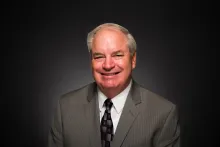
Robin Webber was born in Chicago, Illinois, in 1951, but has lived most of his life in California. He has been a part of the Church of God community since 1963. He attended Ambassador College in Pasadena from 1969-1973. He majored in theology and history.
Mr. Webber's interest remains in the study of history, socio-economics and literature. Over the years, he has offered his services to museums as a docent to share his enthusiasm and passions regarding these areas of expertise.
When time permits, he loves to go mountain biking on nearby ranch land and meet his wife as she hikes toward him.
