
Robin S Webber
This transcript was generated by AI and may contain errors. It is provided to assist those who may not be able to listen to the message.
Well, thank you gentlemen very much for the beautiful, beautiful special music. Want to welcome everybody to the United Church of God. And a special welcome to those that are subscribers to The Good News Magazine and or perhaps so received an invitation. And we want to welcome you. It's a very special day for all of us as Mr. Garnett brought out and appreciate what he brought to us. Why don't we all just rise for a moment and stretch because I don't have a watch and I don't want you to fall asleep. So let's just get up in place for a moment. Otherwise, in about a half an hour, you're going to start nodding. And I hope it's only nodding in agreement. So just kind of stretch. And if you see somebody that you haven't seen for a while, go ahead and shake a hand for a moment. Let's kind of stretch out for a second. Say howdy. And just shake hands with your wife. Don't hug her. Okay, here we go.
Just kind of get up a moment.
Okay, let's sit down for a moment. That's good. We don't usually have that as a part of our regular service, but seeing it's a little modified today, I wanted to get you up on your feet for just a second. Appreciate all the background work of our people setting up for today. And as is mentioned, this is happening around the world for the next couple of weeks. And again, as the United States of God and as Christians, we really do look forward to when we say, Thy kingdom come, we really do look forward to Jesus Christ coming back to this earth and all the fullness of that kingdom. And that's why we've been centering on these verses, and we'll continue to do that. We're going to be focusing again on certain words of Mark 1, 14 through 15 today. And then in a couple of months, we're going to be taking the next step. And a couple months after that, we'll be taking the next step. And in between all of those steps, and when we do have those seminars, we'd hope that you'd feel welcome to come. The United Church of God is always open. Our doors are open. We open our Bibles in the United Church of God, if you've noticed, and our hearts are open to receive the Word and the revelation of God. In today's first session, we discussed, as we heard from Mr. Garnett, the statements that are out of Mark 1, 14 through 15. And his focus was on the time is fulfilled. And as we came to understand, that means that the time had come. God, like a laser beam, introduced Jesus Christ onto the stage of human history. Another phrase that can be used in that sense is that the time was ripe. I'm sure all of us in Southern California, at one time or another, have had the opportunity to go out to a grapefruit tree or an orange tree. And where I live, in Riverside County, we have apple trees. And you know, sometimes you can go to a fruit tree, and you can kind of tug, and you can kind of tug. And actually, the fruit tree is winning because that piece of fruit doesn't come off. But sometimes you just go out, and you just go out and you just take that piece of fruit, and it just falls into your hands. The time is fulfilled.
The fruit is ripened, and it's delivery time. And that's exactly what Mr. Garnet was bringing out to us in his first message. The time was ripe for God to intervene in human history. Two thoughts.
He intervened, and he introduced somebody very, very special. What we do want to understand is that he did not introduce a different and a new God. He did not introduce a new ethic.
He did not introduce a new book. He did not even introduce a new story. But the next chapter of a continuing drama, designed from the beginning of time by him. A drama beginning with some of the great statements that we find in the Bible, where God turned to the one that is known as the Word and said, let us make man in our image and after our likeness. It concluded with reality in the first presentation that this very, very same God who controls the universe, who is able to deal with macro time and macro issues that are larger than we can even begin to understand, also has a purpose for us today. That he not only deals at a cosmic and universal level, because that would just make him one more deity that other people worship in other places around the world that have different names for. But the God of Christianity, the God that we're talking about in these seminars, is the God who comes to us at a personal level, desires to have a relationship with us, and has ripened the time for us to have this discussion today. Now, the second seminar, we focus on the next thought. And you might want to jot this down to stay with me, because this, in a sense, is a seminar and it's a class. And we're going to simply focus on these words, the kingdom of God is at hand. Other translations put it this way, the kingdom of God is near has come the kingdom of God. There's two major focuses that we're going to have, because we've been discussing the kingdom of God. But two very important words to focus on are going to be, what does is mean? What does the word is mean in relationship to the kingdom of God? And exactly, how near is it? We're going to come to find what is, and I put an emphasis on that because it's such a short word to begin with. So I want to get as much mileage out of it as possible. What is now?
At the arrival of this verse and the arrival of the one that is talking about, can no longer simply be reduced to merely behold, the days will come. The kingdom promises are now given new breath, new focus, expanded dimension through not merely the entrance of Jesus on the stage of human history. It is not simply just one more person being born, but the presence, the purpose, the environment he brings to those who believe it, believe on him, believe what the Father is doing, and believe it so much that their own personal lives change once and forever. Mr. Garnet alluded to Isaiah 46, 9-10. I won't have you turn there, one of those great scriptures of the Bible about how God declares the end from the beginning and the beginning from the end that his purpose might be, and that it's not only a purpose.
You and I have purposes. We study Western Civ, or we study comparative religions, and we can come to understand that the deities of other people, they too have purposes, but they're not the purposes of the God of the Bible. They don't come across to humanity in a sense out of a pleasurable sense and out of a desire when you and I read about the gods of antiquity, be it the Romans, be it the Greeks, be it the Mayans, or the Aztecs. They are a demanding deity. You cannot please them. All you can do is appease them by sacrifice, be it a goat or, as it was in Central America and down in Mexico, by human hearts. Today we're discussing a different God, a God who has an interest in the people of Los Angeles, and that's why we're having this kingdom of God seminar. In Isaiah 46 and verse 9 and 10, we've been there already, it says that, and I will accomplish all of my good pleasure. This speaks to the grace of God, and it gives a framework to Jesus' words. Come with me, if you would, to Luke 12 and verse 32. Luke 12 and verse 32.
Let's just focus on here for a moment where he says, do not fear. Do not fear. Mr. Garnet alluded to the world that you and I exist in today, the society that we're in, an America that at this moment, at least, is wobbling in a sense that it never has before, where we have an unsure future, unlike the future that many of us grew up in the 50s or in the 60s or in the 70s, where everything was always the same, etc., etc. We're living in a different society today. Maybe these words will resonate with you more than anything else I say in the course of this presentation, where Jesus says, do not fear, little flock, for it is your Father's good pleasure to give you the kingdom, to give what He has. It's interesting in other translations, it says, it's the Father's great happiness.
It's His joy. It's His desire. And the desire of relationship does not begin with us to Him, but from Him to us, where He finds us. When that moment comes of fulfillment, and when we are ripened to receive what He has to give. In this presentation, we're going to talk about the kingdom of God is at hand and discuss how to make this dramatic statement, not only a matter of drama, but a personal experience for us today. People misunderstand what it means about the kingdom and what it means that the kingdom is at hand. People misunderstand it on both sides of the road. You know, it's so hard to get right in the middle of the road. People usually either get in this ditch or they get over in this ditch. And we're going to look at Scripture and try to get it right in the middle. As mentioned at the start, this is an unfolding story of a drama that goes way back. Interesting in Hebrews 1 verse 1, Mr. Garnett took you to some verses. I'll take you to others. In Hebrews 1 and verse 1, let's take a notice here for a moment. If you'll come with me, let's open up the textbook. It's the Bible. It's right in front of you. Hebrews 1 and verse 1, God, who at various times and in various ways spoke in times passed to the fathers by the prophets, has in these last days spoken to us by his son, whom he has appointed heir of all things, through whom he also made the worlds. Previously, God had spoken his promises and his revelation through men alone. Now we have something added here. It is not just simply this prophet here or that prophet here. Prophets, basically, and the men that wrote the Bible beforehand, came from this country, that country. They came from many a country. There were over 20 occupations that they came from, from 10 different spots with hundreds of names. But now it all centers on this one individual spoken of as his son. What is interesting, then, Matthew 3 and verse 1, if you'll come with me there, please. Matthew 3 and verse 1, it's interesting. The one that came before Jesus, as was mentioned by Mr. Garnett, many of us that are familiar with the word will know that that's John the Baptist. But it's very interesting the words of the Baptist, what he says about his cousin, Jesus of Nazareth. And he says here, in those days John the Baptist came preaching in the wilderness of Judea, saying, Repent, for the kingdom of heaven is at hand. Totally different than what had come before.
It was always whether it be in that day and or behold the days will come. It was always off in the future, something that, well, you couldn't set a watch by. It was always distant. It was known by the people of God, the people of Israel, the Jews were not strangers to the promises, promises of Messiah. But it was not something that they could necessarily wrap their arms around and say it's going to be now. That is why Mark 1, 14 through 15 is so important. We pass through a tunnel of awareness. All before is basically BC, before Christ. Now we have something new.
Now the Son of God enters the stage of human history. And it's interesting, his cousin says, For the kingdom of heaven is at hand. These are words that Matthew uses that no other gospel writer uses. The kingdom of heaven, because that kingdom comes from heaven to this earth. But it's a phrase that Matthew uses that is also synonymous with the kingdom of God.
This is the same phraseology that Mr. Garnett picked up in the first session. The time is fulfilled. Jesus, now echoing the words of his cousin, says, And it is at hand. Now again, here we begin to move into the structure of what I want to get to you. But how was the kingdom at hand when Jesus made this statement? This is important. How, how, no, when you're doing a report, how, where, when, why, right? Remember eighth grade? You're doing a report. How, where, when, why? And like the owl, who, who? We're asking ourselves here, how was the kingdom of God at hand?
After all, that's nearly 2,000 years ago.
So is the kingdom of God at hand? Is it in Washington, D.C.? Is it in Brussels?
Is it in Jerusalem today? Is it in Moscow? Is somehow the rule of God under Jesus Christ extant throughout all this world? I don't think so. All I have to do is go to the newspapers and go to the magazines. Instead of news, they should call it bads. Because basically, you look at the headlines and it doesn't really make you feel like you're on an upper. Jesus is on the basis. Jesus said the kingdom of God is at hand. And yet, in one sense, we look around. If the kingdom of God is here, what grade would you give God today?
I'd have to give God an F. If I'm thinking that the kingdom of God and all of its fullness is at hand today.
I just noticed no lightning struck me after they would have given God an F, so I'm very happy.
I hope you're happy too, because lightning can travel.
I didn't miss something. You didn't miss something. We do realize that Jesus is going to come to this earth and His feet are going to land on the Mount of Olives.
And the earth is going to part. And it's going to be a knocking on the door that the 1000-year rule of the Son of God is going to come to this earth. But here it says the kingdom of God is at hand. We're not going to get away from that now. We're not going to get away from that.
We've already seen that the word keros speaks to a ripening of events to where it's just that right moment. It speaks of an immediacy. It speaks of an urgency. It speaks of now. The clause at hand, and or if you want to jot down a word, or near, denotes the same immediacy. I'd like to quote from Linsky's commentary on the New Testament, and it offers this consideration for you and me on this day. The perfect tense of the verb is, has the present connotation of the kingdom is now near. The idea is not that it is still a little way off, but is so close to the hearers of Jesus that they may enter it at this very moment. Now, how they may enter it, therefore, given to them, is in the very next words, through repentance and through belief. Now, let's build upon that as a class here for a moment. I'd like to go to the comments from the Interpreter's Bible, Volume 7, page 656, and it builds on this. Hear me plainly. The kingdom is the reign of God, sovereignty over mind and heart and will and in the world. I don't think there's a class at UCLA today on the sovereignty of God. I don't think it's at the 100 level. I don't think it's at the 400 level.
Sovereignty is a very foreign term in today's society. Everybody wants to be, I am my own person. I am my own woman. You know how it goes. You know the chant.
Nobody's going to tell me what to do. I've got a bill of rights.
Sovereignty. Does that not sound strange and stranger as time goes along to the 21st century mind? But here it speaks of the kingdom of God, the sovereignty over mind and heart and will and in the world at His sonship to God and brotherly relationships with men.
Hear me now. Very important. It is the future. It is the future. And we discuss that when we think of Zachariah and the feet of Jesus Christ landing on the Mount of Olives.
But hear what it says. But wherever a human life is brought into harmony with the Father's purpose, it is present. The kingdom of God is at hand. You might want to jot down this word to our own church as well. A key phrase in understanding that it is future and it is present.
In God's mind and in God's way, there is a positive tension between the present and the future. It simply is. With all of this stated, let's bring everything together for a moment. This may be new to some of you that are here at the seminar for the very first time. It's important to understand this. The two Testaments, the Old and the New, woven together, have one common theme.
If we were to give all Scripture one title, we might consider Bill Bright's assertion in his very fine book entitled, The Kingdom of God. Hear me. The Bible is one book.
Had we to give that book a title, we might call it with justice, The Book of the Coming Kingdom of God.
Now, what does that mean to you and me? The relationship between the Testaments is not one of contrast, but of progression from beginning to completion.
From beginning to completion. This is what Mr. Garnett and what I am alluding to today, the time is fulfilled. The Kingdom of God is at hand. We now move into the next chapter of the progression of the coming Kingdom of God, which will ultimately dominate the entirety of the world.
Bishop Riles once put it this way, the Old Testament is the gospel in bud.
The New Testament is the gospel in full bloom. Thus, both are incomplete, one without the other.
The Old Testament points to a city that the patriarchs longed for. The book of Hebrew speaks about it, that they looked for a city that was not in their grasp or in their country, but they looked for that city which is of God. The aspect of the Kingdom of God is not just something that came up in the New Testament. It has always been there from the very beginning, at the garden, at the foot of Sinai. When God says, tell these people, I want them to be a Kingdom of Priest. I want them to be of service to me, to my Kingdom. The thought of Kingdom was not unknown to the religious community of that day. They were looking for Messiah. They were looking for the Kingdom to be set up then and there, and to have the Romans knocked off. But God has a different... Have you ever noticed that in your own life? God has something different in store for you than you've already planned, or am I the only one? Just checking out there. The Jews won at one thing, but God had a purpose. That full ripeness is yet to come in the future. But make no mistake about it. Something new occurs in this verse when it says, the time is fulfilled. The Kingdom of God is at hand. Here's the reality. We move from prophetic hope of old to a reality that indeed God has acted through Jesus' entrance on the human stage. Jesus himself understood this. Join me if you would in Luke 4 for a second. Luke 4. Join me there. And interesting, here Jesus is giving a message to his hometown audience. And that's kind of interesting because I do that every other week here because you are, to a great degree, my hometown audience as I grew up in Pasadena. Now, I'm not going to say the same things about me that Jesus said about him, so don't worry about that. But let's just set the context. This is his hometown audience. So he came to Nazareth in verse 16, where he had been brought up. And as his custom was, he went into the synagogue on the Sabbath day and stood up to read. And when he was handed the book of the prophet Isaiah, and when he had opened the book, he found the place where it was written. The Spirit of the Lord is upon me, because he is anointed me to preach the gospel to the poor. He has sent me to heal the brokenhearted, to proclaim liberty to the captives, and recovery of sight to the blind, to set at liberty those who are oppressed, to proclaim the acceptable year of the Lord. Here, Yeshua of Nazareth is standing up, and he's quoting from Isaiah, and he is speaking of jubilee, of liberation, of the overthrow of the past, of a new life, and a new way of that which had been written 700 years before him.
Then it says he closed the book, gave it back to the attendant, sat down, and all the eyes were in the synagogue were fixed on him. Now notice verse 21, very important, and he began to say to them today, this scripture is fulfilled in your hearing.
Isaiah, and much of Isaiah, speaks of the servant of God, even speaks of the suffering servant of God, and yet nonetheless serves God. Here now at Nazareth, the ultimate servant states, he is here. His work has begun. Not a different story, not a different God, not a different ethic, not a different outcome, simply the turning of the page and the insertion of God's superstar, his son, Jesus of Nazareth, now on earth. What is this then that we come away with?
Let's understand what that work is. What is God telling us when we think of Mark 1, 14-15? As Mr. Garnet said, and I'm looking at him, the time is fulfilled. I'm talking to you about the kingdom of Nazath and what do you and I take away? I'm going to give you four points. Number one, a new age foretold of the prophets has begun. The way we put it in America is simply this way. Houston, Houston, the eagle has landed. We have a touchdown. The new age has begun. Number two, the long-awaited Messiah has come who is this Jesus. He says, behold, this day it is now fulfilled.
He's going to perform at mighty works. He will die. He will be crucified. He will be risen from the dead. All of that foretold by multiple scriptures of prophecy in the Old Testament.
Here he is, the one that's prophesied, Emmanuel, as it says in the book in Isaiah, God, with us, a king that comes down to be amongst his people. You know, you and I probably grew up on the fables of King Arthur where he would go ragtag out into the countryside to see how the folks are doing. And once he found out who the folks were, he got rid of the rest of his realm. He recognized that there were a lot of people between he and the folks. But that's a fable. That's a fairy tale. Fun to tell around day. I won't say it. A round table. But nonetheless, that's a fairy tale. Here is one who came from above, came to earth, God with us, to see what it was to be amongst his people. Why was that? The Father sent his Son Jesus to this earth for two specific reasons. Allow me to share them with you today. Number one, so that mankind might be able to touch God. Secondarily, so that God, in turn, might also be touched by mankind. Because it is through that experience of Jesus being on this earth, as he destroyed the works of the devil, as Mr. Garnett brought out, that he came to become qualified as that high priest. I didn't say qualified to be our Savior. He was our Savior from the beginning of time, slain from the foundation of the world. But he came in a sense of qualification in this human flesh to know our longings, to know our, at times, our feelings, to know our emotions, to know our desperation, to even know what it's like to be lonely, especially when you're nailed to a cross. And everybody's either jeering at you and or walking away. So we come to understand that. We see that. What do we gain by that? Colossians 1, Colossians 1. Join me if you would there. One of the epistles of Paul.
It's on page 817 of my Bible. That's not going to help you much, but I'm trying to get you there as quickly as possible in the seminar. Colossians 1 and verse 13. What did that death do for us? He has delivered us from the power of darkness and conveyed us into the kingdom of his son of love, in whom we have redemption through his blood, the forgiveness of sins. It is fascinating as we move through this continuous story that the kingdom of God that is rooted in the time of the patriarchs forward to the prophet and the deliverer, Moses forward, to the words of Isaiah and Ezekiel and Zechariah.
It is fascinating. The kingdom of God now becomes synonymous with what we see in Paul's words with the kingdom of Christ. The kingdom of Christ. The kingdom of God, the kingdom of Christ.
There is this transference that we are able to receive because he has rescued us from the power of darkness. We were, each and every one of us, drunken in our sins. We were in a stupor. We were drowning in this life. Have you ever noticed that a drowning person cannot save himself or have you met one? A drowning person cannot take himself by the scrape of his head and pull himself out of the water. That long arm of rescue has got to come from afar. Those that have accepted these words have been rescued by Jesus Christ to be accepted that of the Father. This is something that human works of and by themselves could never achieve. Point number three. Unlike the prophets of old who were men, and even some of those that had been raised from the dead like his good friend Lazarus, now we have a different difference here. Unlike the prophets of old and or even like his friend Lazarus or some of the examples in the Old Testament of resurrection, this son of God is now ascended to heaven. And he sits at the right hand of God. And the scriptures tell us that he is going to come to judge the quick and the dead. Now this is different. Think about this. Maybe we never thought it this way. We're just kind of breaking it down. Jesus lived, Jesus died. There have been people that have lived and they have died. I've met them. I will be one. Death and taxes escape none of us, does it? You've met people that have lived. We have sorrowed over those that have died. But this is one that died who is now risen. That is all the difference. And he sits at the right hand of God. And the book says that he's going to come to judge the quick and the dead. Thus we come to point number four. And this involves the time of ripening today.
Thus a decision is required of those that hear these words, of those who come into this contact with this new chapter, with this realm of sovereignty, with this environment of Jesus Christ being in the middle, that wherever he is, the kingdom of God is at hand. It is not just simply 10 years away or 20 years away. It's not on the other side of a Mayan calendar that says that the end of the ages is in 2012. It is not in the best predictions of sincere individuals that trespass on God's propriety. God says no man knows the day or the hour. But you know there's people that are out there saying, yeah, but he didn't say the second. There's always people that want to get one step ahead of God. And that's not it. God says, when he says that the kingdom of God is at hand, when he says no man knows the day or the hour, he's telling you and he's telling me this, I'm Dutch, I'm simple, but I think I got it. And that is simply this. You cannot know the date ahead. That is mine alone to know. But I am setting a date with you now as you hear these words.
When you hear the words of Jesus Christ, in that sense, the kingdom of God is near.
The environment is around you. And you have a choice. You have a decision to make.
And that is whether or not you will bend your knee at this time or bend your knee later, but you will come to a decision. Now, in all of this, let's understand something. Many of you are here today because of reading The Good News magazine. And thank you very much for being faithful in doing that. Why do we call it The Good News magazine? It's called The Good News magazine because the United Church of God preaches the gospel of Jesus Christ and the kingdom of God. They are two sides to the same coin. They're not two gospels.
They're not two different thoughts. Jesus Christ is the king of that kingdom. The Father has appointed Him. And it is good news. Christ is good news. When He said the kingdom of God is at hand in this personification, this was good news. The same one that says, by the way, you can call that who is above all of us, including me, we can now call Him our heavenly Father. Jesus came to reveal the Father and to allow us to understand a God that is above all gods.
He not only said that, but He said, come unto me.
So different than the deities of old that says, I'm coming down to get you.
I'm coming off Olympus to get that Greek village.
Oh, Jesus said, in a welcoming tone, come unto me. I want to share something with you.
That's gospel. That is good news. That will never leave us.
With these four points established and given, let's establish where we are as we begin to move to conclusion. What is the present reality? The present reality is the gospel of the kingdom of God is the good news that Jesus Christ died for my sins and your sins to rescue us from the penalty and the power of darkness. That's the present reality. The ongoing, number two then, the ongoing reality is the gospel of the kingdom of God also offers us the opportunity to be prepared and enrolled now in this life as citizens of that kingdom.
The kingdom of God has its seeds planted in our heart, but it doesn't just stay in our heart. I'm not here to diminish because God speaks so much about the heart and He deals with our mind and He deals with our hearts as we give Him over to God, but the kingdom of God is not encapsulated just simply in our heart. Just like I remember years ago when Walt Disney moved Disneyland down to Anaheim, which was all orange groves back then for some of you that'll remember, and it got trapped. He couldn't grow. It couldn't develop. It got stuck. Mickey Mouse couldn't get out, John.
It got trapped and it was boxed. The kingdom of God is something that is not just simply boxed in our heart. We are not just simply being at this time the message of the gospel, is not that we are just simply being called for personal salvation, comma, alone. We are being called, friends, as we accept this gospel, accept this life, accept this death, accept the risen Christ, understand that He will come to judge the quick and the dead, and understand that we have this opportunity now that we are being called to sacred service. And we already have our registration reserved in heaven. Join me if you would in Philippians 3. In Philippians 3, and let's pick up the thought. Pardon me, Philippians 3. And in verse 20, maybe you've never noticed this verse before.
I know that I am a proud America, and I am a proud American, red, white, and blue.
I love our country, and I'm proud to be an American, to be a citizen of this country.
But to those that accept this way, and believe in the kingdom of God coming in its fullness, and believing that the kingdom of God is at hand at this moment at the same time, we also have what we might call a dual citizenship. And we find it here in Philippians 3.24, our citizenship is in heaven, from which we also eagerly wait for the Savior, the Lord Jesus Christ.
Thus, like some of you that are out here, we have dual citizenship.
Some of you are citizens of Canada and the U.S. Some of you are citizens of El Salvador or Mexico and the U.S. Some of you are citizens of Texas and America. No, I'm so sorry, I didn't mean to say that.
If you're a Texan and you're a Christian, you have to forgive me.
What does that mean? Number one, our citizenship is given opportunity to be registered in heaven now, where the coming King that is going to come down to this world. And when we say, brethren, thy kingdom come, when it comes, don't worry about it. You will not miss it.
Those heavens are going to open up. Those trumpets are going to sound. Jesus Christ is going to come down with that voice of the archangel and he is landing in Jerusalem. So if you want to keep your eye on the world, you want to know where the bullseye of prophecy is, it is Jerusalem.
God has a love affair with that site, with that city. I didn't say it's always been responded in equal manner with his people. But that's where he's coming back. We don't know when he's coming back, but we know where he's coming back. Until that time, our citizenship is in heaven. Number two, such unique citizenship means that we can now experience spiritual benefits and an abundant, life-giving existence by living out the laws of God now. You know, there are some people out there that believe in this book, but they don't like this book. They take scissors to it. And somehow they talk about the law of God as being a burden, as something that is passe or extinct or done away with. I have a question for you. May I ask you a question? This is the personal part of the seminar. What part of God's law don't you like? What part of God's law is not holy? Jesus himself said, I am the Word. So are you going to do a scissors job on Jesus? You and I have an opportunity to understand that this is two covenants, not two stories, but two covenants, one ongoing drama within two covers. There are people out there that will tell you that the Bible is basically a discontinuous book. I do not believe that. Sorry. The Bible is one revelation. And what God does when we come to the New Covenant, not the New Testament, because the New Testament is never mentioned in the New Testament. Have you ever noticed that?
That's a man-made term. Did you know that? It's a man-made term. Well, I thought it was over in Matthew 15. No, it's not. That's just to divide the book to make it easy to read. When God talks about new, He's not talking about different. He's saying, I am breathing life. I am now expanding the drama. I am now expanding the story. I am now giving the rest and filling all of my purpose for mankind up. That's what the New Covenant is. That's the ongoing drama that God wants us to understand. And He wants us to live it now. He wants us to live that world tomorrow, now, when He says that the kingdom of God is at hand. Listen, can we talk? To realize this, there is going to come a time when those clouds are going to roll back, and Jesus Christ is going to come back as King of Kings. And He's not asking the United Nations, sorry. He's not going to say, can I come now?
You guys going to talk about it for 15 years like you're talking about Iran?
No, He's coming back because He's God, and He's about His Father's mission.
And at that time, the nations of this world are going to have to surrender. They're going to be conquered by the heavenly host of Jesus Christ. Now, you can either wait until then, or you can experience the kingdom of God now in that sense, in type, as we surrender our personal kingdom, our realm, all of our good ideas, all of our good ways, and we can lay them before the King of the universe and say, I'm going to give you my past, I'm going to give you my present, and I'm going to give you my future. I'm going to hand over all of the keys. I'm not going to keep one in my back pocket just in case I get locked out. I'm handing you the whole kitten kaboodle.
For some of you hearing this message today, the time is ripe. I'm not talking about an emotionalism like you turn on Sunday morning and you see people whooping and hollering and say, well, if you just say this prayer, you are now a citizen of the kingdom. You just say this prayer, you know, they were watching a soap opera an hour before, and they're supposed to say this prayer and be citizens of the kingdom. Our God is not that cheap. I'm sorry, He is not, and we must understand that covenant. We must understand that it is written in blood, and we must understand the terms of what that means, and we will be covering that in the next Kingdom of God seminar when Jesus basically said in the jargon of that day, a new order is at hand.
Get a mind that fits it, and that's what we're going to be talking about. But I do want to show you why it is so important that as we have this citizenship to understand that the kingdom of God is not just a destination. It's not just God coming down from heaven above to this earth, but to recognize that it is a way of traveling, that it is at hand today. And why is that so important? Because join me if you would in Romans 5 for a set out Romans Revelation 5 as we begin to conclude.
Revelation 5. And let's notice something here. Some people think that being in the kingdom of God will be to basically, you know, it's like a guy, a man on the street, and you go up to a man on the street and you put a microphone. Well, what are you going to be doing?
You know, you're a follower of Jesus, and what are you going to be doing? You know, up goes, you know, up, you know, right up the Adams, you know, up goes the microphone. What are you going to be? A lot of people just simply don't know what they are going to be doing when the kingdom of God comes. They say, well, maybe I'll have my own cloud.
That'd be kind of cool. See all those clouds out there today? That's kind of cool. Maybe I can kind of write that like a boogie board. I'll have my own cloud. Maybe God will give me my own harp. Maybe I can be a part of that celestial choir. I've always wanted to be a tenor, and I was born a base, but I'll have that new voice in that new kingdom.
People just don't know what God has in store for them. Revelation 5.10 tells us where the kingdom of God at hand, meeting up with thy kingdom come in all of its fullness where you and I can be as we accept the good news of Jesus Christ and the kingdom of God. Revelation 5.10. And it says here, out of all tribes and has made us kings and priests to our God, and we shall reign on earth. Did you ever notice what Jesus said in the Sermon on the Mount? He didn't say blessed are the meek, for they get a cloud.
He said blessed are the meek, for they shall inherit the earth. Hmm. So we need to look at our Bibles closer. I know a lot of us listen to a man. We listen to grandma. We all love grandma. We all are endeared to a nana. We listen to our mother, but we've never read the book for ourselves. And it says here that God is in the process of establishing and expanding his kingdom, calling us as dear children to be his subjects and to one day be in sacred service as a kingdom of priests dealing with the holy things of God in sacred service under that great high priest, that shepherd of the sheep, that you and I are being called to be in that Jerusalem.
And it says in the book of Revelation that we will not go out. We are going to be there in proximity and in nearness to the Christ in a way that, frankly, at this point, our physical bodies, our physical eyes, our physical ears, our physical minds just can't even begin to comprehend. All I know is this, that it says in the book of Hebrews that Jesus died on the cross for the joy that was set before him so that you and I could be there.
What does that mean to you and me as we wrap up the two sessions on the time is fulfilled and the kingdom of God is at hand? Join me if you would in Isaiah 55 and verse 6 for a final scripture. Isaiah 55 and verse 6, and thank you for your patience and your attention during these two seminars. We really appreciate you coming. Mr. Garnett, myself, Mr. Fish, who you heard in the opening prayer, Mr. Fish is going to be conducting this up in Bakersfield next week in one of our sister congregations.
But join me if you would in Isaiah 55 and verse 6 as we lead to conclusion. Out of the words of the prophet Isaiah 55 and verse 6, seek the Lord while he may be found.
And then notice what it says, call upon him while he is near. The same sense that I read to you earlier out of one of the commentaries, that wherever Jesus Christ was in the Galilee, or is, is, in these words before us, the same one as the word, the one that was the God of the Old Testament, inspiring Isaiah, said this about him, seek the Lord while he may be found.
There is in that sense the time is fulfilled. Have you ever noticed before that when you pick fruit, be it an orange or be it a lemon, there is a time to pick it. And then there comes a time of passing when that time has passed. When it talks about the time is fulfilled, it is not open-ended.
And again, another time, another discussion, this is not the only day of salvation.
That is what we believe in the United Church of God. But we do believe in a time of visitation.
We do believe that when God says now, he means now.
And perhaps today you just thought you were going to come here, one more message, go to one more church, have one more donut in the fellowship, Paul.
Maybe they have smaller holes in the donuts that I've gone to in the other church.
We're not talking about small, we're talking about big. We're talking about a time when Jesus Christ is not simply going to be the Lord of our life and the Master of our heart, but to understand that Jesus Christ is being sent by God the Father to save humanity from himself. And to recognize, as it says in all of that prophecy, unless those days should be shortened, there should be no flesh alive. You talk about the Master of Timing. If Christ comes back too late, it's there's going to be nobody left. And if there was one voice left alive just before they died, they say, why didn't you come sooner? And on the other hand, on the contrary, if Jesus comes back too earliest, we could have handled this all by ourselves. You see, that's why, as Mr. Garnett said in the opening, and as I close, God is not only the creator of time, but he is the Master of time. And now is the day of visitation. Now is the opportunity to draw near. And let's continue that discussion as good news readers, our own congregation, as we continue to open the Word of God here at the United Church of God Los Angeles. Our doors are always open. The Bibles go open. Hopefully our hearts are open to receive the instruction of God. And to recognize that we are not only here, no, we're not like Brigadoon. We just don't appear every four months, you know, to a fog. We are here every Sabbath. You will hear messages like this from Mr. Garnett, Mr. Helging, Mr. Fish, myself, every Sabbath. We are not here to philosophize. We are not here to ponder or to wonder. We are to read the Word of God and ask God for his revelation. We come to this book that men died for, that men died for because they translated into a language that you and I can understand. We honor them, and we honor the God that inspired them so that you and I can understand the good news of the kingdom of God, of the gospel of Jesus Christ and that kingdom which he is going to bring. And may the Lord and may our Father above hasten that day, and may it come soon.
After we have the Amen today, myself, Mr. Garnett, other elders will be up here. We'd love to meet some of those that have visited with us today. God bless each and every one of you. Thank you for coming. Let's have some fellowship together over in Wirtz Hall, and let's have a talk. Thank you for coming.
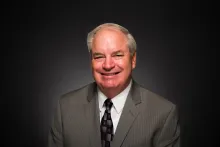
Robin Webber was born in Chicago, Illinois, in 1951, but has lived most of his life in California. He has been a part of the Church of God community since 1963. He attended Ambassador College in Pasadena from 1969-1973. He majored in theology and history.
Mr. Webber's interest remains in the study of history, socio-economics and literature. Over the years, he has offered his services to museums as a docent to share his enthusiasm and passions regarding these areas of expertise.
When time permits, he loves to go mountain biking on nearby ranch land and meet his wife as she hikes toward him.
