
Robin S Webber
This transcript was generated by AI and may contain errors. It is provided to assist those who may not be able to listen to the message.
Perhaps you've either received an invitation from the church. I talked to a lady here that was watching Beyond Today program that the United Church of God puts out. Others of you are here because of the Good News magazine. And that is just simply to mention, as has been stated, we meet here every seventh-day Sabbath, which is Saturday. We meet at two o'clock. And sometimes you hear about an open house, or you hear about a seminar. And as Mr. Star Wars did mention, we actually meet here every week. And it's very important for you to know that the United Church of God's doors are always open. We open our Bibles when we are in church. That is the Word of God. It has sovereignty in our life. That is our main textbook. We like hearing a song, as we did today, that is meaningful, but we're not into poetry or philosophy. We go right to the Word of God. And so that's going to be very important for you to understand. Also, depending upon where you live, we also do have several in-home Bible studies that meet every other week here in San Diego County. And we have one that is out in the East, and that is at the home of the Millers. And Skip, could you please just stand for a moment? Where's Skip? Oh, Skip is one of those that went out. Maybe he's having his own Bible study. Okay, Skip will be here. And at least I didn't call upon him for the opening prayer. And Mr. Clark, could you please rise? Mr. Clark and Mr. Colwell handle the North County Bible study. So please, you see one gentleman here, the other will be coming back. And so we do have Bible studies. They are interactive. We have a moderator. We're going right through the Bible. Sometimes you go through some of the great fundamental doctrines of the Bible. Not the church, but the Bible. The Bible is God's Word. This is a Bible-believing, Bible-living congregation. And we take God's Word very, very seriously. Well, I want you to know that over the last couple of weeks, we've had hundreds of these seminars around the world in Europe, and in Africa, and South America, and North America, and in Australia. But you're here today. I want to say thank you very, very much for coming. Now, after services, I will be available. Mr. Smith is available. Also, we have elders here. If you'd like to just any questions that come up because of what we are saying here today, if we preach it, we should be able to talk about it. And so please come up and introduce yourself afterwards, and we'd love to meet you.
Well, listen, let's move right into the second presentation. And what's advertised is we are going to be talking about the Kingdom is at hand. And that follows the first presentation that was given, and I appreciate where Mr. Paul Smith did bring us up to. As was stated, we're going through four seminars, basically dividing up all of that territory that is right in that one scripture, Mark 1, 14-15, where it says that Jesus came into Galilee preaching the Gospel of the Kingdom. And they're saying that the time is fulfilled, the Kingdom of God is at hand, repent, and believe the Gospel. And so we're breaking that down, and certainly appreciate the fine job that Mr. Smith did bringing us up to this point. And basically, the thought that he left us with is simply this. The time is fulfilled. We saw how God is not an absentee cosmic landlord, but is very, very involved and active in human history. And to recognize how he brought the Jewish diaspora, the Greek language, and again the Roman law, and the Roman roads all into play. And he, in his divine manner, knew just when the time was ripe. We kind of understand the term a ripe here in San Diego County. We have avocados, we have lemons, we have oranges. And you know how it is when you just go up to a fruit tree, and if you go up too early, you know, it's like a tug-of-war. And the tree's actually winning. It doesn't come off. But there comes a time, and we always want it beforehand, don't we? We always want everything beforehand. We want to have that juice in our mouth, or have that avocado in our munchkis. But there comes a time when it just, you take it, and it just falls into your hand. And that's exactly what our Father above did. When he sent his son Jesus Christ to this earth, he knew exactly the time of ripeness when Jesus would come onto the scene. There's one thing that we want to understand about this aspect of the time is fulfilled and or is ripe, and that is simply this. God intervened in human history. Had really been all along. The other thought that I want to share with you, two key words. And this is a class, this is a seminar. So I'm an old school teacher, so I'm going to kind of come at you like a school teacher rather than just a preacher. But I will preach before it's all said and done, don't worry.
And that is simply this. There's two key words I'd like you to jot down to stay with me. One is that God did intervene in human history. The second point, then, is he introduced. Intervened and introduced. Two key words. And what we need to understand, what he introduced, was not a new and a different God. He did not introduce a new ethic. He did not introduce a new book. He did not even introduce a new story, which Mr. Smith just brought out from beginning to end. It is a continuing drama. Think of that, of what we're talking about. It's a continuing drama. And the drama began in Genesis, as Mr. Smith brought out, where God, spoken to the Word, said, let us make man in our image and after our likeness. God was not speaking to the angels. The angels are immortal, they are spiritual, but they are not God. That was God speaking to the one that is the Word. The one that, later on, as Mr. Smith introduced, became that what we call the God of the Old Testament, ultimately revealed as Jesus the Christ.
Now, we're going to focus on the next thought, and that is the kingdom of God is at hand. And, or, out of the Greek language, which is rich, the Greeks often have two or three meanings for one word that we have in English. The kingdom is at hand, and, or you might want to jot down this four-letter word. Oh, what's that one? Four-letter word, and that is the kingdom of God is near. Or, near has come the kingdom of God, as some translations have. With this statement, we truly enter a new realm, and it is a new realm, friends, that we're going to be talking about here. What is is, it's kind of a term in a recent history. What do you mean by is? What is is now no longer is reduced to simply the future. As Mr. Smith brought out, out of Deuteronomy 18.15, a prophecy that there is going to be one that comes along like me that will be given unto you. Like a Moses, who was a deliverer, who was one that was raised up, one who was that gave the law. And the prophecies from that time forward were always basically foretelling. It was always in the future. In that day, behold, the day will come. Now we enter into a new realm as Jesus Christ comes to this earth. It is totally new. It is totally different. Because everything else that the people of God were doing before was always foretelling. It was always prophetic. It was always future. And basically, what we have again is like an American lexicon. When we talk about the space program, Houston, the eagle, has landed. And that's what we're talking about today. The kingdom promises are now given new breath, new focus, expanded dimension. Not merely by the entrance of Jesus Christ onto the stage of human history, but much more so. But let's think this through. By His presence, by His purpose, and by the environment that He brings with Him. He brings to those who believe it and believe it so much that their life changes because they give it to God. Jesus did not just enter the human stage as an individual. He began to bring that kingdom experience in a fullness that had not yet been. The kingdom, as Mr. Smith brings back, brought out, goes all the way back to the very beginning. It goes back even to the time of in the shadows of Sinai, before the Ten Commandments were given.
When God inspired Moses, saying, tell the people that I want them to be a kingdom of priests unto me. Sacred service to God Almighty. And then, of course, as God revealed Himself down the line through Israel, this was brought out that here was a unique realm in human history who had God as their king. But what was brought out is they did not appreciate that. But even as they were going one way, God was serving His purpose as Mr. Smith brought out to bring out His purpose. Where are we then? Today we're going to talk about two concepts.
We're going to bring them together. Have you ever considered this before? And that is simply this. That when you think about it, Jesus said in that model prayer that He gave to His disciples, pray, thy kingdom come. So as people of the book, we are to pray for thy kingdom come. But now we've got a problem. And sometimes problems are good things to have because Jesus said the kingdom is at hand. Now wait a minute. This is the same gentleman talking.
What is being talked about here? Because in one stroke of the brush, He says, pray, thy kingdom come. On the other hand, He says, the kingdom is at hand. Here's the question we have to ask.
Are you ready? That is simply this. Is this a contradiction? Or to use the space talk again, Houston, we've got a problem. I don't think we have a problem. I think we go through the book and we begin to understand what He was talking about. We're going to come to see that that kingdom experience is not solely a future event.
And it is, in part, a future event. The prophecies of the Bible clearly state, and we teach in this church, from the Bible, that Jesus Christ is coming back as King of kings and Lord of lords. And He is touching down at the Mount of Olives in Jerusalem.
So we want to keep our eyes on Jerusalem. When you consider prophecy, I have some thoughts for you to consider. You don't have to worry about Florida. I know a lot of people in this country right now are worrying about Florida with politics. Don't worry about Miami. Don't worry about Tallahassee. Don't worry about New Orleans.
The bullseye of biblical prophecy is Jerusalem. You've got to keep your eyes on what happens in Jerusalem. You see, God has a love affair with that sight, and so much of His will has been revealed of what He's doing and what He's about right in the environs of Jerusalem. But what I want you to understand, even while the prophecies, and to recognize that one-third of your Bible is prophecy, and most likely, 70 to 90 percent of that is yet to occur.
So that is yet to come, and we pray, Thy kingdom come. But Jesus also said, the kingdom of God is at hand. What does that mean? Simply put, you might want to jot this down. The kingdom of God is not just simply a destination, and it is not just simply a future event. The kingdom of God is an experience, and it is a way of traveling to that kingdom and all of its fullness.
That same kingdom that the patriarchs of old longed for gave their lives up for, as the book of Hebrews said. And they said, they gave up that country from which they came, looking forward to that better country, to that better city, to the city of God. And so they traveled as pilgrims. And in the kingdom experience, you and I too will travel as pilgrims. Now, in that sense, as we look at this, we're going to come to see that there is a lot of fire power, and there is a lot of love behind that little two-letter word of is.
As we move into this concept, it's going to be very important to consider. I think more than ever, we see this world that is around us today. We see a different society than many of us grew up in.
I know you probably thought I was a young man. I am not. I am a recycled teenager, but in a 60-year-old body. It's not the world that I grew up in. It's not the world that you grew up in. We see this world around us. We look at our newspapers. We see the challenges that are occurring to the nations of this earth. We see our own challenges as we're affected. We see our own challenges, and we don't have to blame Washington. We don't have to blame Wall Street because it's not always Wall Street.
It's not always Pennsylvania Avenue. It's our street. It's where we live. It's what's in our heart. It's what's happening in our life that we have to take responsibility for. But I want to share a verse with you to give you some encouragement as we move forward. Luke 12.32. Join me if you would there for a moment. Luke 12.32. In all of this, to show the God of this kingdom and what He is like, do not fear little flock, for it is your Father's good pleasure. Good pleasure.
Other translation says it gives him much happiness. Notice, to give you that kingdom. That's something that you can take to the bank. You know, in the scriptures, over 350 times in the book, it says, do not fear. Think God is trying to tell us something? That's why we're having these Kingdom of God seminars, to tell you that God is not an absentee cosmic landlord. He has a purpose. He has a pleasure about Him. And He wants to do something for this special creation called humanity.
Now, as mentioned at the start, this is an unfolding, continuous story. The United Church of God and this congregation do not look at the Bible as being two books.
Two different stories. It's as Mr. Smith brought out so well. It's progressive. It's continuous.
If you went to a fancy theological school and you went to seminary, you would hear about discontinuity versus the term continuity. God's Spirit inspires us to understand that the Bible is a continuous revelation. Now, what God does is He breathes newness into it. There are several Greek words that are for new, but the new that is being talked about is not different. Not completely something different. But the new that God does in His revelation is He breathes life into it. He puts more air into it. It's a continuing, expanding story as Mr. Smith brought out in his presentation. And that's the new that we're talking about here. Join me if you would in Hebrews 1, verse 1. Let's open up our textbook, the Bible. Hebrews 1 and verse 1. Let's notice what it says. God, 1st chapter, verse 1, at various times and in various ways spoken times passed to the fathers by the prophets. And that's what He did. And what they did, they, in that Greek word, a prophetaea, what they did is they foretold what would come to pass by God's will.
But, verse 2, has in these last times spoken to us by His Son. No longer future, but now.
Not something looked forward to, but has been, has spoken to us by His Son, whom He has pointed air of all things, through whom all He made the worlds. Let's move from this. Understanding that God did use those prophets of old Isaiah, Jeremiah, Habakkuk, Zephaniah, Haggai, Zachariah, throw in Joel. And they are all looking forward. But now something unique comes as the time is fulfilled. And God pulls off the wrappers through the John the Baptist. Join me if you would in Matthew 3 and verse 1. Matthew 3 and verse 1. Let's take a look here in this first Gospel. Matthew 3. It's on page 664 of my Bible. If that helps you get there.
In those days John the Baptist came preaching in the wilderness, saying, Repent, notice, for the kingdom of heaven is at hand. For this is he who is spoken by the prophet Isaiah saying, he talks about one crying in the wilderness. Now this is important. This is the cousin of Yeshua, of Nazareth, Jesus, and the Greek, who comes forward as a messenger ahead of time.
And he says, the kingdom of heaven is at hand. This is the language of Matthew. Now if you're a student of the Bible and you're not familiar with that term, and many people that come amongst us are more familiar with the term heaven than say the kingdom of God, I want to share something with you, okay? These are not two different places in that sense. The kingdom of heaven and the kingdom of God are synonymous terms. It is only in the Gospel writer, Matthew, where you find this term used, but it is also synonymous with the kingdom of God. Because right now, if I can kind of give you a hint, he's not in Washington, D.C. Some people might think he is.
But God rules from above. But that kingdom of heaven is coming to this earth. Do you remember just one of those little parables where it says, blessed are what? The meek?
For they're going to inherit what? A cloud? No. For they shall inherit the earth. So John was being used of God to prepare this way that something was coming down from heaven to this earth, which takes us then to Mark 1.14. Join me there. Again, Mark 1 and verse 14, just to glance at this major scripture. Mark 1 and verse 14, where it says this, now after Jesus was put in prison, Jesus came to Galilee preaching the Gospel of the kingdom of God. It was the Gospel that his Father had commissioned for him to bring to this earth. Same as the one mentioned in Matthew. They're synonymous. The kingdom of heaven, the kingdom of heaven, the kingdom of God, saying the time is fulfilled, the kingdom of God is at hand, repent, and believe in the gospel.
So it's at hand. It's no longer out, way out there. It is at hand. Now, members of this seminar, we've got to ask ourselves a question.
Just like you were taught in eighth grade class, journalism, as a reporter, you've got to ask the big questions. Who, how, when, why, where, and what.
What we're going to ask here is, how was the kingdom of God at hand? That's the big one, right? How, when Jesus made this statement. Because I didn't make it. He made it. Two thousand years ago. And this was two thousand years ago. And this kind of is what makes me scratch my head. I was going to say scratch my hair, but if I do any more, it's going to rub off altogether.
If Jesus said two thousand years ago, the kingdom of God is at hand, I look around and it says to myself, this is it. This is what it's about. If I looked around the world and I saw the events and the circumstances that are occurring all around the world, what grade would I give God if this is his kingdom and if it's at hand? We've got problems. We've got, as they say up where I live in the valley, we've got issues. What grade would you give God? If I looked around, I'd have to say I'd have to give God enough. And after I say that, I move away because the lightning's about to strike. And don't forget that lightning travels underground to you. So you're in trouble.
Which tells us and reminds us what Mr. Smith was alluding at this time. This is not the only day of salvation. There's a whole lot more in the story that we have to talk about. We've already seen about discussing the time is fulfilled. The word comes from caros, which means a ripening of events and immediacy and urgency. Now, the time is fulfilled. Stay with me. We're a class. We're into this together, right? That's when you start nodding. We're all together. Time is fulfilled. Now, what does it mean the kingdom of God is at hand? Because there is that same sense of, let's use these two terms. You might want to jot them down to stay with me. There is an immediacy and there is an urgency to these thoughts. It's fulfilled and it is at hand. Allow me to share Linsky's commentary on the New Testament. He offers you and me these considerations.
The perfect tense of the verb is, is, has the present connotation, the kingdom is now near.
The idea isn't that it is still a little way off, but is so close to the hearers of Jesus, thinking of when he spoke these words, that they may enter it at this very moment. Now, we don't have the glorified bodies right now. I don't think the resurrection has yet occurred or may even occur in the next five minutes. So, what are we talking about here? The question comes to this. How may they enter? What is that entrance about?
Therefore, we have to consider the next words. To enter into that kingdom experience, number one, they must repent. And number two, they must believe the gospel. Those are going to be future Kingdom of God seminar topics. Allow me to build upon this with comments from the interpreter's Bible, which are going to be very important to explain how the Kingdom of God is at hand.
The Kingdom is the reign of God. Quote, It is his sovereignty over mind and heart and will and in the world. Did you just hear that word?
That multi-syllabic word? I didn't say slavic. I said slavic.
So, sovereignty?
Now you've gone from preaching to the Medlin.
Sovereignty. I don't think at San Diego State, I don't think they're teaching the Aztecs a course on sovereignty these days. People today do not want other people telling them what to do, especially Americans. We come by naturally. Don't tread on me. Nobody's going to tell me what to do. By the way, out of my back pocket come my Bill of Rights. Now, please understand, I'm not dismissing our wonderful and beautiful Constitution, which is an outgrowth of our Declaration that says in the course of human events and talks about the benevolent God. But can we talk? You know what I'm saying? Sovereignty today more than ever. Nobody's going to tell me what to do. Nobody's going to tell me what to look like. Nobody's going to tell me this. Nobody's going to tell me that.
With that thought, and you know where we're at as Americans in 2012. Let me back up. The Kingdom is the reign of God. It says sovereignty over mind and heart and will of the world. It is His sonship to God. Brother relationships with man. Now it concludes with this. Hear me. It is the future of God. But wherever a human life is brought into harmony with the Father's purpose, it is present. Let's understand this. There is a divine tension, a taut wire, between the present and the future before the ageless God. He sees things as if they already are. And thus He establishes His presence and His purpose. And we submit to His sovereignty in our lives. While yet we look forward to the fullness of that Kingdom that is yet to come.
With all of that stated, let me bring everything together for a moment. The two Testaments are woven together in a common theme. The Old Testament without the New Testament, without the Old Testament, is utterly incomplete. Because it is an expanding story, talking about the Kingdom of God. You don't hear that in all churches. Oh, they will give credence to what we call, are you ready for this? It is usually said to say, we now will discuss the Hebrew Scriptures.
Kind of in a reverent tone, like out of a classroom in Oxford. We will now discuss the Hebrew Scriptures. Our friends of the book.
The Bible is one continuous story. As Bishop Riles once said, the Gospel in the Old Testament is the Gospel in Bud. The Gospel in the New Testament is the Gospel in full bloom. And it passes right through, the time is fulfilled, the Kingdom of God is at hand, and in the person of Jesus Christ. Join me if you would in Luke 4. Let's notice what it says here. The Kingdom of God is handed. There's no better way of putting it where here he is talking in front of his hometown church in Nazareth, Luke 4.16. It says he came to Nazareth where he had been brought up, and as his custom was, he went into the synagogue on the Sabbath day. That's why we are here today on the biblical Sabbath day, the seventh day. And he stood up to read, and he was handed the book of the prophet Isaiah. And when he opened the book, he found the place where it was written, The Spirit of the Lord is upon me, because it's anointed me to preach the Gospel to the poor, and he has sent me to heal the brokenhearted, to proclaim liberty to the captives, and recovery of sight to the blind, to set ad-liberty to those who are oppressed, and to proclaim that acceptable of the Lord, which speaks of jubilee, which speaks of God's system of writing everything. We hear a lot in the news and a lot in the politics today about equality or inequality, or this percent or that percent. God's plan was every 50 years. There became a level playing field, but I'm glad that God was doing it rather than a government. I'll just leave it there. That will make that kind of apolitical. But here's the point. He's reading out of Isaiah. Then he closed the book, gave it back to the tent, and sat down, and all the eyes were on the synagogue were fixed on him.
And he began to say to them, today this scripture is fulfilled in your hearing. Jesus came, the time was fulfilled, the kingdom of God was at hand. And he said, I am jubilee. You hear these words today, they are fulfilled in me. Can I share something with you?
No good Jew had ever said this before. The Jewish mode at that time was always this.
Moses says and or Isaiah says. It was always, always, always a reference back to what we call the Old Testament today, to what God had inspired the prophets. There was no first person. You see, when Jesus came, and it says in Matthew 7.29 that he came as one speaking with authority. It wasn't because he raised his voice real loud and scared everybody, or because he was good at a debate. It's because he spoke in the first person in a way that had never been spoken before. He wasn't always simply quoting Moses or Isaiah. He said, assuredly I say unto you. Can I share something with you? No Jew had ever done that before. He is speaking as God on earth, encapsulated in human flesh. The work of Jubilee had begun. What does this mean to, what do these words mean to us? Number one, a new age foretold of the prophets has begun.
There is now entrance and begins to be execution of God's plan. Number two, the long-awaited Messiah has come.
Who is this Jesus? He performs mighty works, and he will die, and he will be raised from the dead, as foretold by the Scriptures. He will be Emmanuel, meaning God with us, not any longer from a distance, but now with us. Why is he with us? You can get into great theological terms of why he is with us. I've always just kind of put it this way, because I think God is personal, and he wants to have a relationship with us. I remember the fable of King Arthur, how King Arthur went out of the back door of the castle one time and got some rags on, because he kind of wanted to see how the folks were doing. And boy, was he surprised about what his nights of the round table were doing to the folks. Well, that's a fable. This is reality. Jesus came down from heaven, came to this earth for two specific reasons. I'd like to share them with you. Number one, number one, that we as human beings might be able to be touched by God. And number two, through his experience, living in this flesh, that God in turn might be touched by us. Because now there's a high priest up there who has qualified himself in the human flesh. I didn't say qualified himself as Savior. He was our Savior from the foundation, as it says in the book of Revelation. But he did qualify himself by being encapsulated in the human flesh. He knows like you know, and like I know, and what we experience. We know what it means to be fatigued. We know what it means to be lonely. We know what it means to be sorrowful. We know when people have betrayed us.
We know when we kind of wonder, God, where are you? I'm here.
Jesus understands all of those emotions, and that's why he came. We understand that. Colossians 1.13. Colossians 1.13 in this regard.
Notice what it says in Colossians 13.
And you being dead in your trespassing, this is the verse I want to write. Yeah, it's Colossians 1.13.
Maybe 1.13. Oh yes, and you being dead in your trespasses and the uncircumcision of your flesh, he has made alive together with him, having forgiven you of all. Oh, you know, I'm 2.13. That's my problem. Pardon me. That was the part of the seminar that was not blessed. Okay, we're going to get back. Colossians 1.13. He has delivered us from the power of darkness and conveyed us into the kingdom of the Son of His love. Let's understand what this is speaking about. We are rescued. We are conveyed into a new experience, not in all of its fullness.
I'm still pinching myself. Are you with me? I'm still in this flesh. I'm not saying, friends, that the kingdom of God is just simply in your heart. That's where it begins. But it's going to wind up at the Mount of Olives, because when Jesus Christ comes back as King of kings and Lord of lords and his sins with the sound of the trumpet and the clouds rolled back, and we go up, we're coming back down. I've always said yes, in a sense, we're all going to heaven, but we're coming right back down with Jesus Christ, and we're going to land there. And we are in the process of being conveyed now within that kingdom experience. And notice what it says here, the kingdom of His Son, the kingdom of God and the kingdom of Christ are synonymous, because Christ is going to be the King of that millennium. Point number three. Unlike prophets of old, this Son of God is ascended to heaven and now sits at God's right hand, and He is shortly going to come to judge the quick and the dead. Now, this is where we're going to go personal, so stay with me. There have been other individuals that did mighty works. There are even other individuals that, are you with me?
Have been resurrected. We see that Elijah resurrected people. Other people have been resurrected. Lazarus was resurrected. You ever thought about Lazarus? You know how hard it is to die once? He had to die twice. He had to die again. Not good. Like always remember what Woody Allen says, I don't mind dying. I just don't want to be there when it happens. Lazarus had to do it twice. Jesus did it once and for all, for you and for me, and He's ascended. And He is trying to come back to judge the quick and the dead, which leads us to point four. Thus, a decision is required of those who come into contact with this new chapter, this new order, in the Kingdom of God, that it is at hand. See, when you understand the fullness of the Bible, and when you come amongst us and we read the Bible, we do believe in a benevolent God. We do believe in a first cause, but we also believe that there is a God who does judge our actions.
And that scares people sometimes. There's a judge up there. He might be meaner than Mr. Smith, I'm not sure. But let's remember that same judge that is up there... Now, this is really important.
That same judge that is up there to judge the quick and the dead is one who himself was judged unjustly and condemned unjustly. Who better, may I ask you a question, who would you want to be on that other side of the judgment desk other than the one that is Jesus Christ, who was thrown under the bus by the religious folk of his day, crucified on the cross by the pagans of his day. And in a sense, Caesar's kingdom went thumbs down just like a gladiator.
But after three days and three nights, God's thumb went up and said, you are going to be resurrected. There is no stone that is too heavy. It is going to be rolled away. You are going to be raised from the dead, and you are going to ascend to heaven.
Now, that same one then is coming back to this earth, which then leads us to point four.
You've got to make a decision if you understand that the kingdom of God is at hand.
The present reality is the gospel of the kingdom of God. It is the good news that Jesus Christ died for our sins to rescue us from the penalty of death and the power of darkness.
Beyond that, that is the present reality. Now, let me share something. The ongoing reality, which is where we are at now, is the gospel of the kingdom also offers us an opportunity now to be prepared and be enrolled in that kingdom experience.
See, what people don't understand, and we are going to begin concluding here, is this. A lot of people, and maybe some of you have been to tent meetings or some of you have been to big mega churches and they have a call to repentance. You all come down now. You've heard the word. Or somebody is in front of their television set. And just an hour before, on that same television station, they were watching a soap opera that no Christian should watch.
But all of a sudden, somebody says one little prayer. And if you said that prayer, now you're saved. This is not what we're talking about when it comes to the kingdom of God experience.
God does not want emotionalistic robots. He wants people that truly know what He is calling them to when He says, follow Me. He wants people that have the sovereignty of God over them, in spirit and in word. People that are willing to give up their past, willing to give up their present, willing to give up their future, willing to give up everything, willing to, I don't have it on me right now, but willing to hand over the keys to their life.
And even that key that's in your wallet, in case you ever get locked out of your car, you're giving Him that key too. You're giving Him the whole list. You're giving Him all the keys.
For anybody that's hearing these words today, these are the words of Jesus Christ. Behold, the time is fulfilled. The Kingdom of God is at hand.
And it's not just simply for personal salvation. Is personal salvation important? You betcha.
You betcha. And we are being called to a personal salvation. But that not alone. God is calling us to serve under Him in that Kingdom experience that extends. Join me if you wouldn't in Revelation 5 and verse 10. You know, a lot of people say, well, once I begin going down this process of experiencing the Kingdom, what is the reward? How big is my cloud going to be? How good a harp am I going to have? What place in the heavenlies am I going to be in the choir? Am I going to go from a bass to a tenor? An alto to a soprano? Or am I just going to kind of be like in a beatific vision?
Just kind of like if any of you remember Bugs Life? Did any of you see that movie? The little bug that goes to the front porch? You don't even see a movie to see that. It happens every night on your front porch. You know that little light's kind of going to, oh, it's so beautiful. You know, boom, gets come. Now, I want to share something with you. I have nothing against a beatific vision because when we have those glorified bodies, I tell you, friends, we're going to see things that no human eyes have ever seen, and we are going to be in the presence of absolute holiness.
But God has even more store. We're not dealing with clouds, folks. We're not dealing with harps.
We're dealing with something more. Revelation 5 and verse 10. Notice what it says here.
It says, and has made us kings and priests to our God, and we shall reign on the earth.
God's not calling us to collect butterflies or clouds. He's not calling us to be simply choir members. And do I believe there's music in heaven? Absolutely. I think it's probably unbelievable, but we just don't have the ears to hear it right now, or the eyes to even understand what God is like. But in the book of John, the epistle of John says that when that day comes, when that resurrection in the future comes, and when we are united with God the Father and Jesus Christ, we're going to be able to see Him as He is. We're going to be able to move beyond that unapproachable light that the Apostle Paul talks about to Timothy, and it's all going to be worth it, whatever we're going through right now. We're being called to reign, but why not share Philippians 3 verse 20, and then we come to conclusion. Philippians 3 verse 20.
Because I said that the kingdom of God is not just simply a destination or an event. It's a way of traveling. It's a way of traveling. And it's interesting that God sees things as if they already are. That's what's so neat about our God. And over in Philippians 3, and notice which you would in verse 20. For our citizenship is in heaven, from which we also eagerly wait for the Savior, the Lord Jesus Christ. Our citizenship. Now, many of us in this room are Americans, and we are proud of the red, white, and blue. Absolutely. We are blessed to be Americans, to be in this land of the free and the home of the brave. And even with America, with all of its challenges today, all of us that are Americans know that there is an exceptionalism given to this nation, not because of Yankee ingenuity, but because of the blessings of God that came through Abraham and his faithfulness. Even so, though, we have a dual citizenship.
Our citizenship is also in heaven. It is now. Number two, that means that we can have spiritual benefits. The United Church of God does not teach a health and wealth gospel. We're not talking about monetary benefits. Those are byproducts. That's fine. But we're not up here preaching and teaching that somehow we can jingle our way to heaven with the heavenly change. That God's just going to pour stuff into our pockets if we just do this or do that. I don't worship that kind of a God.
My God is not Pavlonian because I do this, he's got to do that. I live by his grace. I live in his will. But we are promised every spiritual blessing from above. And you and I can experience the Bible in its fullness. You and I can now live by God's holy and righteous law, given from Genesis to Revelation. Now, a lot of people, I don't know what it is. You ever go to some of these churches, they say, well, we're no longer under the law. It's as if law is a four-letter word. Last time I counted, it was three. Unless they went to a different school than I did. I ask myself sometimes, what part of God's holy, righteous law don't they like? Because they want to take scissors to the Bible. Or they want to take scissors to Jesus when he came and he said, I've not come to do away with the law. I've come to magnify it. I've come to fulfill it. So what part of the Bible are we going to cut out? Through that, the lightning will come. And it may travel. So what do we do, friends? Isaiah 55. Let's conclude here in Isaiah 55 verse 7.
Out of the scriptures of the Old Testament comes an echo from 27 years, 2700 years ago, Isaiah 55 and verse 7. Just notice what it says. Pardon me, verse 6. Seek the Lord while he may be found, call upon him while he is near.
There's a reason why we're having these kingdom of God seminars. Because we truly believe that we have been called to be fishermen of men.
And we have been called to lay the table for those that God might be calling.
Only God calls. I don't call. I can a hoot and a holler up here. I can preach and I can teach. And you know what? It's only God the Father that calls people. Jesus himself said, no man can come unto me unless first the Father calls him. So thus we come to understand something very cardinal and very germane if you want to jot this down. It is not whosoever will, but whosoever is called.
But I also recognize that God does not deal with manana, he deals with now.
And he likes Spanish. And I like manana. But when you notice the chorus of the Bible, it's always now and now and now. Not manana, not tomorrow, not next year.
What are we going to do when we hear the words of the one that came down from heaven above and walked this earth and said, the kingdom of God is at hand? That's why we're having these seminars.
That's what it's all about. Next seminar that we're going to have in several months from now is going to deal with the aspect of repentance. You see, what Jesus was basically saying is this, and I say it to you today, paraphrasing his words, the kingdom of God is at hand. A new order is here. And he's saying, get a mind that fits it. We're going to be discussing that mind next time. We're going to be discussing what kind of a heart is filled by that message next time. And before next time, always recognize that we're here every time, every week, at two o'clock here at the United Church of God. If you've heard Mr. Smith, if you've heard myself, you will understand what the other ministers and the other teachers of the Word will bring to you. And at the same time, I hope that you will continue to watch the Beyond Today program, continue to take the Good News magazine, and I hope that you will come up and meet Mr. Smith, myself, and all of our members. We're going to have fellowship afterwards. The booklets that are on the front, you've seen many of them advertised in the Good News magazine, or the Beyond Today program, they are yours for the taking. Thank you very much for coming today. I hope more than ever you understand what it means. The time is fulfilled. The kingdom of God is at hand. And may I say, as purveyor of the Gospel, may God bless each and every one of you that has come with us today. And I hope it has been meaningful.
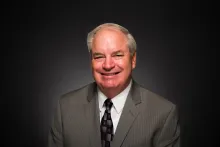
Robin Webber was born in Chicago, Illinois, in 1951, but has lived most of his life in California. He has been a part of the Church of God community since 1963. He attended Ambassador College in Pasadena from 1969-1973. He majored in theology and history.
Mr. Webber's interest remains in the study of history, socio-economics and literature. Over the years, he has offered his services to museums as a docent to share his enthusiasm and passions regarding these areas of expertise.
When time permits, he loves to go mountain biking on nearby ranch land and meet his wife as she hikes toward him.
