
Paul Moody
This transcript was generated by AI and may contain errors. It is provided to assist those who may not be able to listen to the message.
A title of my message for today is God Equips His Saints. And I did consider titling it, God gives us what we need when we need it, because that's a reality I've come to see over a period of time. But I figured God equips His Saints maybe fits a little better on that CD label that we mail out in the mail.
The last month's been a buzz of activity for me and I'm sure most of you as well as we came up to the Feast of Tabernacles and had all the preparations that were tied into that. Most of my focus was centered on preparing to go to Africa, to Togo, and then Gauna for the Feast. And now that I'm back home, I have to say pretty much the same thing that I said when I returned from my summer trip to Nigeria.
And that is there were a lot of firsts for me on this trip. A lot of firsts. And I guess that's to be expected when you're doing something for the first time. There's going to be a lot of firsts involved in that. But one of the lessons that I saw clearly on this trip is that when God's people submit their lives to Him, He calls us into His service. And when we willingly submit our lives to Him and we do our part in the service of God, He gives us what we need when we need it. As we serve God, God equips His things.
And, brethren, we need to learn to depend on that. Sometimes we walk through life and we have certain challenges or circumstances set before us. Maybe it's getting out of school or work to go and attend the feast, and somehow we wonder how this is all going to work out. But again, I've come to depend on the fact that it is God who gives us what we need when we need it.
When God calls us into His service, it is God who equips His saints for service. Darrell Kiesel and I arrived in Ghana one day ahead of the Day of Atonement. Darrell and Janet have attended the feast in Ghana for a few years now. And due to some health concerns, Janet decided it was best not to attend just shortly before the feast.
So Darrell and I connected in Amsterdam, and I suppose we were two lonely men without our wives making our way through Africa. But I very much enjoyed his company. We made that final leg in from Amsterdam into Accra the day before Atonement and basically hit the ground running. And Darrell stayed behind in Accra to assist with services for the Day of Atonement and the Sabbath before the feast. And Henry Akins took myself along with Franklin Hickaby. Franklin's a young adult in the Accra congregation. He's the one that came with me over to Dogo to be my translator. So Henry on that next morning drove us over to the Togo border where we met our elder from Togo, Kasi, and made our way across to Togo for the Day of Atonement and the Sabbath before the feast.
Togo is a French-speaking country, and the elder Kasi has been learning English over time, and he's doing quite well. He can speak enough English that we can communicate back and forth on a pretty solid basis. But if you're going to have messages translated from English into language that they're able to understand and gather your message from, you really need somebody who has a solid grasp on both languages. And so Franklin came along for that trip, and I appreciate his willingness to do that very much.
Franklin doesn't actually speak French, but he speaks the same local tongue as the brethren there. Because in Africa, a lot of times they will speak their local dialect, and they'll speak English if it was an English colony or French if it was a French nation. So Franklin's able to communicate with them at the same language on the local tongue. I appreciate him doing that. He actually works a steady job in Ghana. He took the bulk of his vacation time for the Feast of Tabernacles.
And then when he heard I was looking for a translator, he said, well, I have a few extra days left of vacation for the year. And he volunteered his time to serve God's people in that way. And I was very grateful that he did.
Lome is the capital city of Togo, and it sits right on the border with Ghana. It's where one of our two congregations in Togo reside. And that's where we spent, again, the Day of Atonement and the Sabbath before the Feast. And as we're crossing the border from Ghana into Togo, I kind of noticed that it seemed like there were a few more police than there were last time.
Mr. Mickelson and I had gone over, and it seemed like there was a lot more security in that way. And as it turns out, we hit the calendar date just right. There was an African summit going on in Lome for that week. It was a summit on maritime security. And so they had the heads of state of the 54 nations of the African Union all converged on Lome for that summit on maritime security. And if you've seen the movie Captain Phillips, maybe you have an idea why maritime security is important.
Africa is looking for their oceans to be kind of the key driver to their economic and social development going forward. And so shipping and cargo and everything comes in off the seas into the ports. And if you're having terrorists and renegades come in and hijack ships and block the transport of ships in and out, it creates a problem.
It's not good for business there. So those countries came together, the heads of those states, and they had the meeting there in Lome. And basically what it did was clog the city down, set up a number of roadblocks, and the police presence was very heavy just for the purpose of security. We were heading from the border to the hotel where I'd be staying. It's about a 20-minute drive. And after we had kind of run the gauntlet at the border, we were stopped twice by police roadblocks on the way to our hotel. And of course, that's police with machine guns, and they open up the vehicle and they take everything out and search through your luggage.
And again, it was increased beyond what it had been on my previous trip. And it used to be that was sort of a little bit scary, or maybe even a thrill. But the honest truth is it's just sort of business as usual now. It seems like part of the routine to get stopped, to get checked.
And in fact, I told Kosti, I said, you know, Kosti, I've only been stopped by the police two times in my adult life ever in the United States. And he was stopped twice on the way to the hotel. And he just couldn't even hardly believe it. I mean, it's just a total different scale in terms of how those things function. We got to the hotel. It was pretty much the same story. They had three armed police armed with machine guns just providing security for the hotel. I suppose there were some diplomats staying there.
Various people were coming and going during the day. But each time I came in and out of the hotel during that visit, had to be searched, had my bag searched, and be wanded by the metal detector and patted down. And by the end of the trip, having come and gone so many times during those days, and they got to know me, one of the guards that was checking me out the last time I came into the hotel, my bag was open and laying there.
And I just reached down and pulled out. I had a granola bar. And I just gave it to him. And he looked at me kind of stunned like somebody actually was giving him something voluntarily. And he's looking at this package, and he's turning it over, and he goes, Ah! Biscuit! And I said, yes, biscuit. You know, we didn't speak any language that was common the whole time, but I suppose by the end of those few days that I spent there, there's a few things that come to be common if you're dealing with the police.
You know, machine gun, money, and I guess now, biscuit can be added to the listing.
I always spent the day of atonement in Lomé with about 25 brethren. And I gave a sermon on the topic of binding Satan's influence in our life today. And I thought it was interesting because Kostya had just gotten up before me, and he read Dr. Ward's chairman letter, which had been translated into French. And so, of course, I couldn't understand what he was reading, but I'd read the letter before.
And Dr. Ward talked about living these holy days now. The fact that God hasn't called us out just to imagine something that will take place in the future, he's called us as his people to live these holy days now. And that tied in very much with my message on binding Satan's influence today. Because, brethren, God has called us out of darkness and into the light. He's removed that veil that was before our eyes, and now we can see Satan's influence for what it is. And we can resist him. You know, draw near to God, and he'll draw near to you. Resist the devil, and he will flee from you. We've been given those tools by God's mercy and his help and assistance today.
To see Satan for who he is, his devices for what they are, and to live our life in active resistance, thus binding Satan's influence in our life today. You know, the holy days aren't far off in some perspective that we celebrate something that will one day be here. We've been called to live those days today. So I appreciate very much Dr. Ward's letter in that regard. The sermon went very well. Franklin translated the sermon well.
He had mentioned to me it was his first attempt at doing such a thing, and I consider it God's gift. Because it's not like you can go out on the street and just grab somebody off and bring them in to do the translation. It's not exact. It's not word for word. I would speak and stop, and it seemed like wherever I went in the translator would speak twice as many words as what I said. So it's not word for word, but it's ideas and concepts. So you need somebody to translate who is familiar with the Word of God and the doctrines.
I don't want to be talking about the resurrection and somebody translating the rapture. It's not the point I'm trying to make. So to have somebody that could serve in that way truly, I believe, was God's blessing.
To me, the Day of Atonement was an example of God equipping those he called into his service to do his work. Because again, we don't speak in tongues. That's not my gift. And yet I'm in a French country, and these are God's people, and they're there, and they need visited. They need taught and encouraged, just like each of us do. And yet God provides what is needed when it is needed.
And I'm grateful he provided Franklin in that way. There's another element to this as well, because most of you know I don't generally do well on the Day of Atonement. I struggle when I fast. My blood sugar drops. I oftentimes will get a migraine headache. But what I've figured is the way around that, and the way to survive the Day of Atonement in good shape, is to give a sermon.
And it might sound silly. Mike was making the schedule a few years ago, and he said, I'm thinking of putting on the schedule for the sermon on the Day of Atonement. What do you think? And I said, well, God gives us what we need when we need it. So he put me on, and I thought, wow, you know, that worked pretty good. I spoke here, spoke in Spokane. I spoke in Togo, and I think it was the best Day of Atonement I have ever had in my life. And, you know, I almost thought, God, is that maybe a little too easy? But the blessing was there that God absolutely provides for us.
And more and more, I've come to realize that I need to depend on that. Absolutely. God gives us what we need when we need it. He equips his saints. And, brethren, when we're working in service to God, and we have done all that we can do, we've done our part to prepare, we need to put it into God's hands and trust and rely on the fact that God will indeed give us what we need when we need it.
If you look at the Bible, it's pretty clear that God does not call the equipped. It's the weak of the world. He hasn't called the high and mighty and the ultra successful in this world to come and run the ultra successful things that he needs done in his church. God does not call the equipped, but God does indeed equip those whom he calls. And that was a lesson I learned and would very much like to share with you today. Let's go to 1 Corinthians chapter 1, verse 25, and begin looking at this concept. 1 Corinthians 1, verse 25, is the Apostle Paul writing, and he says, the foolishness of God is wiser than men.
The weakness of God is stronger than men. It's not like you're even on the same scale. The strongest man, the most intelligent man you could even find, isn't even on the scale with the strength and the power and the wisdom of God. So, do you and I on our own ever think as mere men and women that we can do the things of God apart from God?
Certainly not. We shouldn't even imagine that the things of God would even be on the same realm of what it is that you and I could accomplish. And yet, God has called us into His service, called us to do the spiritual things of God, and we cannot do that apart from what it is that God adds to our frailty and weakness of the flesh. We're not equipped for service to God apart from what He adds to us.
Continuing on in verse 26, He says, For you see your calling, brethren, that not many wise according to the flesh, not many mighty, not many noble, are called. But God has chosen the foolish things of the world to put to shame the wise. God has chosen the weak things of the world to put to shame the things which are mighty, and the base things of the world, and the things which are despised, God has chosen, and the things which are not, to bring to nothing the things that are, that no flesh should glory in His presence.
So God didn't call any of us into the church because we were the special of the world, and we had something that we could contribute and add apart from our willingness to submit ourselves to God. That's really the only real useful thing in our life that we can contribute to God. It is our submission to Him and our willingness then to be instruments in His hands. It's not the degree you received at college. It's not necessarily even the work experience that you've had, other than maybe the life experiences that you bring with you.
But God calls the weak and the foolish, but then He adds unto us. And so we are not to remain the weak and foolish. We become now mighty in God for doing of those things which He has called us to do. Clearly, God does not call the equipped. But God in His mercy equips those whom He has called for His service. Carrying on verse 30, He says, But of Him you are in Christ Jesus, who became for us wisdom from God, and righteousness, and sanctification, and redemption, that it is written, He who glories, let Him glory in the Lord.
So the things that we might could even maybe boast about in our service to God, they're really not of us. They're of God and Christ in us. They are the things that God equips us with so that we can walk forward, still living in this flesh, but doing the spiritual things of God, submitting ourselves to His call.
Again, God gives us what we need in order to serve Him in whatever capacity He's called us to. But that doesn't mean we don't do our part. That doesn't mean we don't prepare. You know, it doesn't mean that we walk into a circumstance and just expect God to work it out through us anyway, not having done the things that we need to do to prepare for our service to God. Notice 2 Timothy 2, verse 20.
2 Timothy 2, verse 20, it says, But in a great house there are not only vessels of gold and silver, but also of wood and clay, some for honor, some for dishonor. Therefore, if anyone cleanses himself from the latter, from the dishonor, he will be a vessel for honor, sanctified and useful for the Master, prepared for every good work. And so we do our part by coming out of this world, by coming out of sin, by accepting the sacrifice of Jesus Christ, putting off the dishonor, putting on the honor through Him. We submit ourselves to God in humility, and then we are vessels useful in His service. Vessels of honor, not of dishonor. But again, that doesn't mean we don't have our part to play. Hebrews chapter 13 draws to a close in very much the same way. Hebrews chapter 13, again showing what it is that God adds unto us and works out in our life. Hebrews 13 and verse 20, it concludes by saying, Now may the God of peace, who brought up our Lord Jesus from the dead, that great shepherd of the sheep through the blood of the everlasting covenant, may He make you complete in every good work, to do His will, working in you what is well-pleasing in His sight, through Jesus Christ, to whom be glory forever and ever. Amen.
The New International Version puts verse 21 this way. It says, That He may equip you with every good, that He may equip you with everything good, for the doing of His will, and He may work in us what is pleasing to Him. And a number of the other translations render it very much the same way, the fact that God equips us for the doing of good, according to His will. Sometimes that's what we need to sort out. Is what we're doing according to our will, or is it according to God's will? But God gives us what we need when we need it in service to Him, according to His will. And it's quite interesting, I found that sometimes it's in such a way that once the moment's passed, you don't necessarily have that. But at the time you were on the spot, and God had given you something to do, and you needed to be equipped for carrying out that task, He gave you for that time and at that moment what it is that you need in service to Him. And again, brethren, we need to learn to rely and depend on that in our life.
When we've done the things that we can do to prepare in whatever avenue of service it may be, we then need to look to God and what it is that He supplies, the equipping that leads to good in our life.
The day after the day of atonement, Kossi and Franklin and I made a visit out to the region where the other congregation resides over in Momehogoo. It's about two hours outside of Lomeh.
Momeh is a village community, and if you've ever imagined in your mind what a village in Africa might be like, this is pretty much it. If you've gone on Facebook, you've seen a number of my pictures I posted throughout time of my travels there. But Momehogoo is mud huts, thatched roofs, and goats wandering about throughout the community. It's corn crops growing all around the village, planted and growing up underneath the palm trees. It's a pretty incredible place, really.
It was on a Thursday when we came to visit, so most of the men were out tending the fields.
We were received by most of the women and children and just a few of the men. When we arrived, they're sitting on the front porch of one of the members' houses, and they have the church hymnal out, and they're singing songs as we walked up. That was a very pleasant thing to walk into.
We sat down on the front porch with them, and Kossi kind of made introductions around. Then he looked at me and said, go ahead and speak to them. It wasn't like it was the time to pull out, well, where's the schedule here? I didn't see a Bible study on the schedule. That's just one of the things that you learn to take as it comes. One of the new activities that I figured out in Africa is the fact that suddenly you're just on, and you're expected to speak. So Kossi said, go ahead and speak to them for a while, and you just open your mouth, start to speak. Again, you rely on God to give you what it is that you need when you work in His service. So I did. I spoke for about a half an hour to them. It was run through translation through Franklin. But I talked about the coming Kingdom of God that the Feast of Tabernacles portrays. What will that age look like, and why will it be so? Why will God's blessings flow out over the earth?
Well, it's because the knowledge of the Lord covers the earth as the waters cover the sea, and people will submit themselves to the reign of the Kingdom of God. And so under that Kingdom, there will be blessings of peace and healing and fruitful abundance. We could see those things. But I also explained to them that God has called us to that way of life today.
You and I, brethren, live our lives now under the reign of the Kingdom of God. That's, again, not something that is far off. That's not something conceptual that we'll realize one day. God has called us out of this world, as Mr. Imes was talking about, and under the authority of His Kingdom. And so the blessings that we see portrayed during the Millennium, peace and harmony and prosperity, fruitful abundance, healing, those are all blessings that we should be able to recognize in our spiritual lives today. God has called us to peace. No matter whether you live in the United States or you live in Africa, God has called us to peace. Jesus Christ said to His disciples, My peace, I leave with you. If you look at that, He said that to them right before His crucifixion. Here He's getting ready to be delivered up into the most difficult trial of His life. He's going to be brutally killed. He knows what's coming. He says, My peace, I leave with you. The peace of God, which surpasses all understanding, is not peace that's dependent on the conditions on the ground and the prosperity that you have. It is peace that is dependent on your relationship with God and your trust in Him and His Spirit dwelling in you. And so God has called us today unto peace. He has intervened in our life with spiritual healing according to His Spirit of power and love and the sound mind. And God requires today that we would be fruitful. Just as the desert blossoms like a rose, God has called us today. We were once living in this spiritual desert. God has called us now to produce fruit in our service before Him. So again, these holy days are not something that are conceptual and far off. It is something that needs something that's been brought near in our life and should be active in the way that we live on a daily basis. So that's some of what I shared with them as we sat there. It was the basis of one of my sermons that I would give in Ghana at the feast, but it was just sort of off my head. And I walked away from there again just realizing gratefully that God gives us what we need when we need it. God equips us as His saints in His service. But again, we have to do our part as well. If you're going to be able to talk about the Bible and the hope that's within you, it has to be within you. You have to study it and read it and internalize it, make it a part of who and what you are, and then it will come flowing out in your words and your actions. Notice 1 Peter chapter 3 verse 15.
1 Peter 3, 15, says, But sanctify the Lord God in your hearts. Always be ready to give a defense to everyone who asked you a reason for the hope that is in you with meekness and fear.
So we always have to be ready to give an answer as God's people. I mean, there's a reason why we live this way and we do these things. What is it? Can you explain it? Can you answer the questions that an employer or a co-worker or your college professor might ask? So hope within us. Now, the answer we give might be a little more basic or less polished than the answer we could give if we sat down and prepared it in advance, but if you do your part, you know what God's word says and why you live this way of life, God will give you what you need when you need it. And, brethren, we need to learn to depend on that, and in that way your answer will be sufficient. Do your part. Rely on God. Doing our part in this case, according to 1 Peter, means to sanctify God in your heart. Set Him apart in your life. Set apart a place in your heart for God through the study of His Word, through prayer. You know, meditate on the things that you've read and spend time just internalizing those, making them a part of who and what you are. King David said in Psalm 119 verse 11, he says, Your word I have hidden in my heart that I might not sin against you. So the point is, carry God's word with you always. If it's hidden in your heart, it's going to guide and direct your actions on a daily basis. Your decisions are going to be made in perspective of what it is that's in your heart, and you will be able to give an answer to anyone who would ask you as well. As we sat there visiting, I finished speaking, and some of the young ladies sitting there then sang a song. I don't speak the language. I don't know what the words were, but it was a very, very beautiful song that they sang. And then one of the men brought coconuts and a machete and whacked open coconuts, and we drank together coconut juice. But it's always a mix of coconut juice. But it's always amazing to me to watch them. They take that machete, and in one hand, they whack that coconut and spin it and whack it again and spin it and whack it again, and then you take the top off with one final hit, and you can drink right out of it. But if you notice, they all have their fingers. And you can see the young children in the village sitting there with a machete hacking on the coconut. And I think, you know, if my daughter picked up a machete, I would say, put that down. You're going to hurt yourself. But, you know, they start at a very young age, and it's a part of their life. After we visited for a while, we walked over and took a look at the new church hall that Kosti is having built there in Moamay. It's a small piece of land that the church has bought. And the previous hall, I posted pictures of the old hall as well as the new one that's being constructed, but the previous hall is actually quite a low building.
Mr. Rimes would have to bend over as he walked through the front door.
Kind of very dark, really no windows, and the foundation of it is crumbling out. But it's where they currently meet, but there's a hall that's now being built. And, you know, it's not a big hall. It'll fit about 35 people, but it'll be good for their service. Many of the funds that were used and are being used to build that hall came from local donations that have been sent in for use in West Africa in that way. And frankly, the numbers in terms of finances is quite small, you know, in terms of what we would look at in that perspective. But they're able to take a small amount of funds, and this will be a decent building. It's a concrete block, not the mud brick that they dry in the sun, and it'll hold up in the weather, a metal roof. And they'll build now a perimeter wall around that property. And it's Cossie's hope to one day be able to sink a borehole there. Because the brethren themselves drink out of the well, there is no borehole in the village, and it would provide both clean water for the brethren and perhaps an opportunity to generate some revenue selling water to the village around them. So we'll see. I think it's a good idea.
Again, you can go on Facebook, and you can follow my pictures for my various stops on this trip.
Back in Lomé, we had a day to rest and catch up on a few things before the Sabbath, and then spent, once again, the Sabbath with the brethren in Lomé. Sunday, Henry came back to the border to Togo, and we returned with him then to Agona, or not Agona, but Acra for the opening of the Feast of Tapperknuckles. And I have to admit, this year the Feast was a bit different than any other Feast I've ever experienced, and probably because I spoke on opening night, and every day but one during the Feast, I kind of grew up wondering and looking forward to who the guest speaker would be at the Feast site, and you always kind of look up those things in advance and anticipate who will be there.
Well, this year, Darrell and I were it, and we spoke again every day at the Feast, except for one, and shared in various opportunities together. And I'm grateful to be able to serve in that way. I'm grateful Darrell was there as well to assist, and frankly, it gives some added relief to the men who are there locally, because they're speaking week after week, and to have somebody come in and visit and then be able to speak and teach is a benefit to them as well.
So I appreciate the opportunity, and I appreciate that Darrell was there assisting in that process as well. I had to come home here to see all of you and write some more sermons, but it was good to be together. And this year at the Feast, I would say that it provided an atmosphere that was different than my other visits, because a lot of times we just hit congregations and go on the move, and this year at the Feast I was actually able to stop and spend time with the brethren, and to get to know them on a very personal basis, and to do activities with them.
We had game nights that took place, where we would just all get together at the meeting hall and play games together, and to me that is part of laying a foundation of relationship, then that you can build on in the future. And so again, I appreciate that opportunity very much, and it was an enjoyable time. Our attendance in Accra was a high of 39 for the Feast there. Most of the brethren stayed on site in these small one-room apartments that surrounded a center courtyard that had the meeting hall in it.
And so everybody would stay in these apartments, and in the evening you would have socialization and visiting, where everybody would just kind of come out and visit, or you'd go into the meeting hall and play games, or do various activities together. We oftentimes had communal meals where we would be able to gather together as well, and eat and fellowship in that way. One evening I came over and just kind of wanted to see what was going on, and I heard all this yelling and excitement coming from the meeting hall, and walked in to find Daryl right in the middle of a high-stakes game of pit with the young adults there.
And it's a very active card game in your trading commodities, and literally they were having so much fun. I had to join in with them at about 10 o'clock. I mean, we played for hours, and 10 o'clock that night we decided we better call it in because just the noise level wouldn't allow anybody else to sleep if you were round about. But again, it's just part of what you do to build relationships. Because you can show up and give a sermon and go on your way, but I honestly believe if you take time to sit and visit and play, frankly, with people, you build a foundation by which then you can build on.
And if there's instruction or even correction, it needs to take place. It's coming from a friend, not from just the hammer of authority. And so I really appreciate the way this trip went and building of relationships in that regard. When you and I think of feasting at the feasts, our scale is quite different. Of course, we know that, but this gives you a little perspective.
Having a common meal with three pieces of goat meat on your plate, that's a big day. That is rejoicing and feasting before God. That's a good meal and people coming together. I got an email from Dari in Nigeria during the feast, and a number of their meals were prepared there for them, but they brought in some extra of what they would prepare for their movie night and their bonfire night just to kind of make things special.
And in the email, he said they were able to secure a ram, four goats, and 20 live chickens. And he followed that with five exclamation points. That's a good life. When it is very little that you have, brethren, it doesn't take much to be grateful and to rejoice. We have plenty. We have abundance, and that is our daily perspective.
So suddenly we go somewhere and we have to pop even that. How much is too much?
I do believe we should feast before God, and not everybody feasts in that way at that same level.
But I'm just saying, when your life is simple, simple pleasures really do bring about gratification. It was enjoyable to see that. Henry mentioned to me one day that a few of the families were going to have to move out of their room before the end of the feast, the tabernacles, because they couldn't afford to pay for the housing for the entire feast. And so I just said, well, how much is it, Henry? How much do they need to stay there so they don't just have to move out and pitch a tent? And so he sat down and he figured it up, and he said, $48 for everybody.
It was like three families that couldn't necessarily afford to stay in their housing through the feast. $48 solves the problem. For you and me, $48 is nothing. I mean, that's a cheap dinner, and yet it goes a long way. So I had some gifts that have been sent over from brethren to use in various ways over there, and I just gave Henry $100, and I said, make sure it's paid up, and if anybody needs assistance with meals or that sort of thing, you know where to use it. Small thing to us, but for them, they're just glad to be at the feast, and three families are going to camp over $48 and be happy. But we can be happy as well when God has blessed us and given us opportunity to to insist in that way. Out in the village, communities, many of them are farmers across the city site, so not so many are farmers in that way, but in Agona, as well as other areas, even in Nigeria, they're farmers. And their general level of second tithe is somewhere between $5 and $20. That's their year's tithe.
And that probably won't even get your family to the feast, much less keep you there. And so, as we can help and assist, that's surely been a blessing. And again, I'm just pointing out the fact that the scale is so different. When you have little and you share what you have and you rejoice, there's true happiness there. And it's not like we're lacking and we've got to go find the next great thing. After about three days, Daryl and Henry and I headed over to Agona feast site for a few days. We stayed out at Cape Coast, which is one of my favorite stretches of Ghana. It sits right on the ocean. And Cape Coast has the slave castles that you can go and tour. And a number of other attractions as well. I like just walking out on the beach and you can see the fishermen going in and out. And you can watch them right there on the beach making the boats. I mean, they're hand-built wooden boats and hand-drug nets. And they're out there working manually and fishing. And to me, it's sort of just like stepping back in time. And it's fascinating. So I really like Cape Coast region. We stayed there for the few days that we were visiting the Agona feast site. And Agona is a bit different than Accra. Because Accra is a city feast site, but Agona is very much a village community. Most of the brethren in that region are farmers. Daryl, in one of his messages, was talking about the blessing of the land in the millennium. And he asked, well, how many here are farmers? And over 80% raised their hand. They're working the land. And so it's a different region than Accra in that way. Definitely not city territory. I'll give you an example. One day we were heading out to the Agona feast site. It's kind of a curvy country road that heads out there. And we came around the corner and we saw a pole stretch across the road. And it's sitting on a couple barrels on both ends. And its point is to stop traffic.
There were a couple men standing out there. This is a homemade toll booth.
They're looking to make some money. If you're going to pass on that road, you're going to pay.
And so we came around the corner and we saw that set up out there. And I said to Henry, Henry, we're not going to play this game. And Henry slowed down and stopped and didn't roll down the window. And they kind of came up to the car and looking in like, are you going to pay us? And I just looked at the one closest to me through the windshield. I looked up at him and looked him in the eye and I just shook my head. And he looked over at the other one and they walked over and lifted up the pole and we drove under and we're on our way. But a couple of entrepreneurs, but I told Henry, we're just not going to play that game. But again, you're in the middle of nowhere. Most of the brethren in Agona do not speak English. Some of the leaders do and Benjamin does, who's the pastor. The fesite was actually a combination of three congregations, Agona, Winnibah, and Kuan Yaco, and Benjamin pastors, those three congregations. We can communicate well with Benjamin, but our sermons went through translators. And when you have a sermon translated, it knocks down very quickly the bulk of what it is you're going to say. You take out the illustrations and the stories that we tend to tell here and it becomes bullet points with scriptural references to back it up and maybe just a small amount of commentary. But the translator really does tighten up a message. Henry gave me the heads up that after services on the first day, we were going to have a leadership meeting for the leaders of the three congregations. So about 20 men gathered together for the leadership meeting. And I said, well, that's nice. I like leadership meetings. Who's given it? And Henry said, well, you are. Okay. So we sat down and took about 30 minutes. And again, you have to rely on God to give you what it is you need when you need it. And I spoke to the men for about 30 minutes, talked to the leaders about thy high calling of God to be teachers and leaders in the congregation. These are God's people. We have to handle our responsibility well. I instructed them to teach the Word of God faithfully. Teach from Scripture. Don't teach your own ideas, your own concepts. Point people to the Word of God for what it says.
Point people to God, not to man, not to self. We talked about David, who shepherded Israel with integrity of heart and skillfulness of hand. And both have to be involved. Because if you have somebody who has integrity of heart but not skillfulness of hands, it can really be a disaster. We've also seen in the history of church and politics and this world, people who have skillfulness of hand but the integrity of heart is perhaps missing. That has brought about much division and disaster as well. And so as people who would at least teach and instruct God's people, integrity of heart, skillfulness of hand, point them to God's Word for what it says.
Point them to God, not to man. And that's the general gist of what I covered with them.
Three out of the four pieces of luggage that I took with me to Ghana were books.
And they were biblical references, Bible dictionary. I pulled out the Strong's Concordance and I showed it to Benjamin, who's the pastor. I said, Benjamin, do you have one of these? I opened it up and here's these words are all in alphabetical order. You can look up the word in the Bible and gives the scriptural references and he says, no, I don't have one of those. And they don't have access necessarily to internet and the same as easily as we do. And so I hauled over a series of books to be left at each congregation for the leaders and those that would teach.
And Strong's Concordance and Mounts' dictionary. Biblical resources and references that we take for granted. I mean, probably all of us here have a Strong's Concordance on our bookshelf.
And our pastor and leaders over there did not. So this is part of what we're trying to do.
They have a church library. And so as I go over time, I'll be bringing more books, both to Nigeria and Ghana, just to try to build up the scriptural resource and the biblical study aids that the men can have for preparing messages. And it was a specific request from them.
After I presented that leadership workshop and I showed them the books and gave them some instruction on how to use them, I realized again, brethren, it was another example of God giving me what it was that I needed at that time in order to serve Him. Again, God equips those He calls and are doing His will. And it reminds me of the beginning of Jeremiah's service. Let's go to Jeremiah chapter 1. Let's kind of see the manner in which God sent Jeremiah here on his way.
Jeremiah chapter 1, beginning in verse 1, it says, The words of Jeremiah, the son of Hilkiah, of the priests who are in Anathoth, in the land of Benjamin, through whom the word of the Lord came in the days of Josiah, the son of Ammon, king of Judah, in the thirteenth year of his reign. Verse 4, it says, Then the word of the Lord came to me, saying, Before I formed you in the womb, I knew you.
Before you were born, I sanctified you. God says, I set you apart. I ordained you a prophet to the nations. And I like Jeremiah's response here. He says, Then I said, Lord God, maybe you have a wrong number here, God. Maybe you're calling the wrong person.
He says, Lord God, behold, I cannot speak, for I am a youth. But the Lord said to me, Do not say, I am a youth, for you shall go to all whom I send you, and whatever I command to you, you shall speak. Do not be afraid of their faces, for I am with you, to deliver you, says the Lord.
Then the Lord put forth his hand and touched my mouth, and the Lord said to me, Behold, I have put my words in your mouth. See, I have this day set you over the nations and over kingdoms, to root out and pull down, to destroy and to throw down, to build and to plant.
And we would recognize some of that prophecy as instrumental to the part Jeremiah played in the continuance of the line of David, building and planting. But the point was, God called Jeremiah to fulfill a special purpose, and Jeremiah said, Well, who am I?
Kinda like Moses, you know, who am I, Lord, to lead these people?
And God says, You know, it's not about you, it is about what I am doing and what I will do through you. I will give you the words, and I will be with you, but you go and do what I've called you to do.
And, brethren, God does the same with us.
Maybe not in so dramatic of a fashion as with Jeremiah, but God does not call his people to destruction. God doesn't call us into his service and give us opportunities to serve him, throw us in the deep end of the pool, and leave us on our own.
God gives us what it is that we need in our service before him. He equips us as his people for works of service. Notice what Jesus Christ told his disciples, Luke 21.
Luke 21 here, Jesus is telling them how they'll be equipped in their service to God. Luke 21 and verse 11, words of Jesus Christ, he says, there will be earthquakes in various places, famines and pestilence. Again, these are signs of the end of the age.
There will be fearful signs and great signs from heaven. Verse 12, but before all these things, they will lay their hands on you and persecute you, delivering you up into the synagogues and prisons, and you will be brought before kings and rulers for my name's sake. He says, but it will turn out to you for you to be an occasion for testimony. You know, this might seem like it's oppression or it's actions of aggression against the people of God, but he says, you know what, it's going to work out to put you before people that you would have never stood before on your own.
It will give you opportunity. It will turn out for you as an occasion for testimony. Verse 14, therefore settle it in your hearts not to meditate beforehand on what you will answer.
For it will give you a mouth and wisdom which all your adversaries will not be able to contradict or resist. And so their ability to speak boldly and with wisdom was not going to come of their own power. Now, they would have to do their part. They had to know God's word. They had to understand the gospel which they preached. But Christ said, you know, don't fret and stew about this in advance, what it is that you're going to say. It will be given to you what it is that you will say.
But if you're going to have it brought to mind, brethren, in order to express it, it needs to be in there to begin with. We need to study God's word and know it well.
If it's in there, it will call upon to give an answer. God will give us what we need to call those things into mind. But again, we must do our part. Philippians chapter 4, verse 13, we won't turn there for time, but Paul said, I can do all things through Christ who strengthens me.
Even the apostle recognized where the ability and the reinforcement and the true strength of what it was he was doing came from. It didn't come from his own power and wisdom and might. It came from submitting his life to God and conducting himself in service to that calling. Again, we must submit. We must do our part, but the equipping comes from above. We must never forget that, but we also must learn to depend on that in our life as well. We spent three days total with the brethren at the feast in Agona. It was a very pleasant time. We returned to Accra in time for the weekly Sabbath during the feast, and we remained there throughout the completion of the Feast of Tabernacles all the way through the eighth day. During a service on the Sabbath, I was getting ready to give up and give a sermon. Again, another similar situation arose. It was brought up in announcements that we would be having a Bible study Saturday afternoon. I thought, great, a Bible study. I like Bible studies. I wonder who's given the Bible study. It was announced, well, Mr. Moody is going to be giving the Bible study. It's a question and answer. Submit your questions and he will answer them. Once upon a time, I would have panicked at the thought of that. It just sort of sprung on me. But, frankly, at this point, I had seen God's assistance often enough that I was relaxed. I thought, okay, God will help here.
After the sermon was over, they collected up questions and handed it to me before they went off to the meal. At about 15-20 minutes, I sat down and took the topical index of Mark's and pulled out the scriptures that I would need to answer the questions. But, again, it needs to be in there and ingrained, but we need to rely on the fact that God as well equips us for what it is that we need. I want to read to you the questions that I received because I want you to think about it in terms of how you would answer. Again, we all are given opportunities to answer in our family, at work, at school, whatever it may be. We're to sanctify the Lord God in our hearts, or to study His word and internalize it and be prepared to give an answer for the hope that's in us. How would we answer these questions? I think most of us could probably answer a number of these on the spot with God's help, but just think about these. Question number one, why is it so important to marry in the church? You know, I was submitted by one of the young adults in the congregation, and you know what? In Africa, when you ask the question, why is it so important to marry in the church, it means that young person has kind of looked around the room and said, these are my options. So please tell me why. This is an important thing. Why is it so important to marry in the church? I'm sure we could all answer that. I'm sure there are scriptures that come to mind that we could turn to. Question two, if you vote for a government of your choice, is it wrong?
There's a presidential election going on in Ghana, as we speak, or the run-up to it anyway, just as there is here. And you know, they've watched the news. They're very familiar. The whole world knows what's going on here, frankly. But if you vote for a government of your choice, is it wrong?
How would you answer that? What does the Bible say? What are principles that we would apply?
What does the Bible not say? Again, how would you answer that? Question three, is it ideal to baptize an individual more than once?
Is it ideal to baptize an individual more than once?
Question four, is the rapture real and is it in the Bible?
Could you answer that? Is the rapture real and is it in the Bible?
Okay. Question five, what is the first—let me back up. They asked, what is the resurrection going to be like? The question was, essentially, what is the first resurrection going to be like? Will it all occur at one go? Is the first resurrection going to be everybody all at once?
Again, can you answer that? Can you think of scriptures that would back that up? These aren't exceptionally difficult questions, and I was thankful. But also, the fact is, all of us should have an understanding of the Word of God that maybe we couldn't just stick our finger right on the page where it is found, but I would think we could hopefully all pull up the answer and at least reference and quote scripture.
Question six, if Jesus and the resurrected saints are going to live and rule on earth, in what structures are they going to be in? Since it could be inferred from Acts 7, verse 48, that spirit beings do not live in physical structures.
I began the Bible study up front with saying something we need to understand is that, in many ways, we see through a glass darkly. And God gives us what it is we need to live this life, and He gives us what it is that we need to know for what His plan is. But on some things, we simply have a glimpse, and we don't have all the answers. And frankly, we have to be careful not to have answers just for the sake of having answers.
You know, if the Bible does not say, or you do not know, there is nothing wrong with saying, I don't know. I'll have to look into that. There's nothing wrong with saying, you know what? The Bible does not say. The problem we can enter into is, if we start to give an answer where there is no answer, then brethren becomes our words, not God's words. And I think sometimes it can be exciting to want to hear what somebody might say this might mean, but we have to be very, very careful. Maybe a little speculation is fun on a personal level, but like I told the teachers, if you're going to be teaching it, you teach from the Word of God and what it does actually say.
Again, that's important for answering questions as well. Last three questions. I'll call these extra credit questions because they came up after the Bible study started, so I saw them for the first time as they read them to everybody else. So question one says, I would like to know if someone could be baptized in the sea or a pond. And so you kind of have a little bit, there's some cultural superstition about the kind of water you're baptized in, not in the church, but just in society in general. They believe if you're baptized in a swimming pool or a small body of water, like a small pond, the problem is your sins haven't been washed away. They're still floating around. And if somebody else had happened to come along and jump in the pool now, your sin is stuck on them. So the concept is you need to be baptizing in a running stream or something, so those sins can just be carried away, never to be seen again. So can you baptize in the sea or pond? Doesn't matter. What are the requirements for baptism? Second extra credit question, does God Almighty have a real name, just like I'm called Paul? You know, we have real names, individual names. God Almighty have a real name. Can you answer that? What scriptures would you point to? The answer is yes. I would hope, again, most of us could answer these things.
Final question, is dancing in church biblical? Again, these come often from a cultural perspective.
If we were to ask questions here today, they would come from our cultural perspective and various things that we face. Dancing in church in various ways is very big. Is dancing in church biblical? You know, what are the parameters for worshiping before God and rejoicing before Him?
And what is it as well that can be set administratively in terms of how we conduct our service and things done decently and in order? You know, in the book of Nehemiah, I believe, Ezra taught the people. And the priests helped give the people the understanding of the Word of God.
But it says, they opened the book and they stood up and they listened to God's Word. And we sing and we rejoice and we sing three songs before services. That is our choice administratively. That's not necessarily biblical, although it talks about coming into His presence with singing. But again, there's just certain things that are cultural, but there's certain things that are right and prudent as well when we come together as the people of God, so that things are done decently and in order. So dancing in church biblical. So, brethren, I just throw these out to you just to thank and to consider. If we're to give an answer for the hope that lies in us, again, we have to put God's Word into our heart and mind, but we have to be coming to the point as well that we know we can trust in Him, that we can lean on Him. And that goes in so many different directions in our life. If you're going to take time off for from college, from your employer, do you trust in God? Do you trust in God providing? I know people that have gone to the feast under the threat that there will not be a job here when you return, and they've stepped right back into their job and nothing was even said. I know other people who went to the feast on the palm thread of losing their job have stepped right back into their job and were fired because they went to the feast. Does that mean they shouldn't have gone to the feast?
God says, you are my people. Assemble before me. I am your God. Your employer says, I own you. You are going to be here. Which is the highest authority? Who do we submit to? And yet God provides. He gives us what we need when we need it, that individual that lost their job upon returning from the feast, the door opened into a better job. It was a blessing. So God watches out for us, but He gives us what we need, but it's not always maybe necessarily in the way that we thought it should be done. But again, all these things are according to the will of God. I just want to conclude with a couple of final scriptures. Ephesians chapter 2, I'm getting verse 8. Ephesians 2 verse 8. Here's the Apostle Paul writing, He says, For by grace you have been saved through faith, and that not of yourselves it is the gift of God, not of works, lest any one should boast. For we are his workmanship created in Christ Jesus for good works, which God prepared beforehand that we should walk in them. So, brethren, God created us for good works. As his workmanship, he is working with us with his own two hands, if I can put it in that way. God is shaping us and molding us into the sons and daughters that we need to be before him in order to fulfill his purpose. And in that process, God equips us for those good works, and he gives us the tools that we need to accomplish those things according to his will. The greatest means by which God equips his saints is by granting us his Holy Spirit.
It's a spirit of power and love and a sound mind. But it's the power and love and sound mind of God in us, equipping us to do these things. Final scripture, Philippians chapter 2, verse 12.
Again, the Apostle Paul writing, Philippians 2 verse 12, he says, Therefore, my beloved, as ye have always obeyed, not as in my presence only, but now much more in my absence, work out your own salvation with fear and trembling. For it is God who works in you, both to will and to do, for his good pleasure. And so it is God working in us, by his Spirit dwelling in us and leading us, giving us both the desire and the ability to fulfill that which God has given us. Again, brethren, God is not calling us to destruction. He doesn't throw us into the deep end of the pool and say, okay, swim of your own devices.
He equips us with those things that we need in our calling before him.
What should our response to this reality be? The reality that we are God's workmanship, and we are vessels in his service. Since God is the one who must equip us to do his will, brethren, our response should be to seek him daily, to work daily in his scripture, to study it, to internalize it, to make it a part of who and what we are, and to depend humbly upon him. God calls us into this way of life and to represent him, to be ambassadors for Jesus Christ, citizens of the kingdom of God, a light to this world. It is not of ourselves that those things are accomplished. It's not my wisdom, my power, my authority that does it. It's not yours either. It is that of God working in us.
Again, brethren, God does not call the equipped, but in his mercy he equips those whom he calls. Brethren, on a day-to-day basis, let you and I take comfort and confidence in that reality.
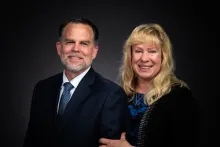
Paul serves as Pastor for the United Church of God congregations in Spokane, Kennewick and Kettle Falls, Washington, and Lewiston, Idaho.
Paul grew up in the Church of God from a young age. He attended Ambassador College in Big Sandy, Texas from 1991-93. He and his wife, Darla, were married in 1994 and have two children, all residing in Spokane.
After college, Paul started a landscape maintenance business, which he and Darla ran for 22 years. He served as the Assistant Pastor of his current congregations for six years before becoming the Pastor in January of 2018.
Paul’s hobbies include backpacking, camping and social events with his family and friends. He assists Darla in her business of raising and training Icelandic horses at their ranch. Mowing the field on his tractor is a favorite pastime.
Paul also serves as Senior Pastor for the English-speaking congregations in West Africa, making 3-4 trips a year to visit brethren in Nigeria and Ghana.

