
Robin S Webber
This transcript was generated by AI and may contain errors. It is provided to assist those who may not be able to listen to the message.
Today I'm going to be concluding a three-part series that we began a couple of messages ago after Thanksgiving and then today. And it's basically dealing with the subject of being a pilgrim of God. Right after Thanksgiving, we mentioned that a spiritual pilgrimage is not just simply an event. It's an existence. It's not like in America where in one day you stop, you have an event, you have a meal, you move on, and sayonara, and we'll see you next year.
What you and I have been called to as children of God, as we've been drawn out of, in that sense, a spiritual exodus of this world and our course is towards the kingdom of God, the ultimate promised land, it's an existence day by day, moment by moment, before the same God. Last time I was here speaking with you, we looked at an example of one who was called to be a covenant person in the Old Testament. He was on that exodus. He had seen the wonderment, the greatness, the miracles of God, and yet he turned aside. And to learn the lesson that negativity, sin can spread rapidly, and we need to be aware of that, and what we start can affect many, many other people. Last time, the second part of this series, we dealt with what I might call the un-example, or the bad example of Korah. Today, I thought I'd save the best for last, and we're going to deal with a very, very positive example in trying times. To develop that thought for a moment, I'd like to share some famous phrases, some famous events that have occurred in the Bible, and I'll just throw these out for what it's worth. We think of Queen Esther in the kingdom of Persia, who was in a very trying situation, and it all came down to her as to what she would do, or what she might not do, as all of a sudden she was put on the stage in Scripture. And it was her cousin, her family member, that mentioned to Queen Esther. She said, he said, for how do you know that for such a time as now the kingdom has come? That's a very gripping stage, a statement to make. Or we can take later on a Mary, who had become the mother of Jesus, when the angel Gabriel came to her, and it was said with all that was mentioned to her that was going to befall her, both the positive and the negative. She said, let it be according to your will. We could also think of Paul, and you might want to jot this down as far as the Scripture, because we'll end with it today, where it says in 2 Corinthians 5 and verse 17, we walk not by sight, but by faith, which will be very powerful in what we're going to be talking about today. Again, we could use another example like Meshach, Shadrach, and Abednego, when they were before that beast king Nebuchadnezzar, and when he was about to throw them into that fiery furnace, and they said, no, no, no, no, this will not be of us, for we worship God. And whether he saves us or not, at this moment at least, we're not going to do it. We're not going to bow with everybody else, with everybody around us. We are not going to submit. We are not going to surrender. We are not going to give up on our God who has given us so much. We could also then talk about Jesus himself in a moment of crux, literally in the Latin, that he said, not my will, but your will be done in a very trying moment. Where does this lead to? All of these individuals at one time or another were all people of covenant. Yes, the old covenant, but obviously there are deep, dynamic ties that we have with them, worshiping the same God in a covenant relationship. They were pilgrims in their time, just passing through towards the ultimate promised land. They were children of God, just as you and I are children of God, who faced giants in their time. Without all spoken, then, just as an intro today, I want to center on one pilgrim, a covenant person, a child of God, who set a marvelous example, one that is spiritually contagious, if we can learn from it and be emboldened by it.
If we allow it, as you and I too are about to cross over a boundary, you and I are about to leave 2022, and we're about to cross over a boundary in man's timing into a new calendar year. And so, I'd like to give you the title of my message today and move right into it, because we have a lot to unpack.
The title of my message is simply this today, Walking with Caleb, Walking with Caleb into 2023. I have a question for you, dear friends, and those that are online here today, are we ready for that walk? Because it's before us. And again, we're not only going to be walking with Caleb, obviously we're going to be walking before our God, but that all comes together when you understand the story of Caleb.
In so doing, I hope as I give this message and pray that it will encourage you to confront the giants before us. And not only the giants that lie before us, but also those giants that are within us that we have not let go of yet. All the wrong kind of giants, starting with fear, starting with trepidation, starting with, does God even know that I exist? Where is God when I need Him? These are giants that sometimes preoccupy the children of God, preoccupy the covenant people, preoccupy the people that become stalled on the pathway of pilgrimage to that ultimate Promised Land, as much as we talked about last time I was with you with the story of Korah.
Let's remember what Oliver Wendell Holmes once said. He said simply this, what lies behind us and what lies before us are small matters compared to that which lies within us. I'm going to repeat that because that's going to be the hallmark of this message. What lies behind us, we can't go back and deal with the past. Oh, you can try. Good luck. What lies behind us and even what lies before us. And maybe there are giants on both sides of our past and our present. Matter little compared to that which lies within us. So let's take a look at this.
Let's plunge right in. Join me if you would. A lot of this is going to be simply expository. That's why God puts stories in the Bible, doesn't He? Join me if you would in Numbers 13. Let's see how this works. Numbers 13. And now that you're at Numbers 13, if you do not know where Numbers is or Numbers 13, that is before Numbers 14.
So we'll get together what we call starting out on the same page in the same chapter. I've often said that the biggest words in the Bible are little tiny words. So, if, but, when. Here's another one. And just when you think you know everything, God turns the wheel. Uses a little preposition like that or whatever it is, and turns the wheel.
Notice what it says here in chapter 13, verse 1. And the Lord spoke to Moses. So we have direct contact between God Almighty and the Patriarch Moses. And He said this, send men to spy out the land of Canaan, which I am giving. I am giving to the children of Israel and take them from each tribe of the fathers.
From each tribe of their family, I can't read the fathers, you shall send a man, everyone a leader among them. So we notice something here. It says, and this is going to be really important in Jermaine as we build upon it. So we're going to kind of unpack this and break it down, which I am giving to the children of Israel. Keep your hand in the Bible. Join me if you would over in Exodus 3 17. In Exodus 3 17, let's see where this is coming from.
Then this was the very beginning of Moses declaration to the children of Israel and the Pharaoh. And in verse 17, it says, and I've said, I will bring you up out of the affliction of Egypt to the land of the Canaanites and the Hittites and the Amorites and the Parazites and the Hevites and the Jebusites.
Notice to a land flowing with milk and honey. So now let's understand what's going on here. This is the very beginning of this chapter. Notice is very important that the Lord spoke. The Lord spoke. This was not in Moses imagination.
This was not a Moses thing. He was merely sharing the words of God with the children of Israel. That God was going to be true to His promise and that they were about they were about to go into the land of milk and honey. For some of you that are new to the word, this was not after the 40-year pilgrimage through Sinai. This was just a couple of months afterwards and they were kind of like ready to, as we say, Bible talk, cross river just as much and you are about to cross calendar years.
So there's an analogy that I'm trying to share with you here and how we are going to cross over. And I noticed then it said, so Moses sent them, because he's going to obey God, so Moses sent them from the wilderness of the Peran according to the command of the Lord, all of them who were heads of the children of Israel. Now notice again, so very important. So Moses sent them according to what he made up, according to him being a little dictator.
No, according to what the Lord had said. And then we have all the names of the different heads of the tribes. So these were not just somebodies, these were big buddies. These were the leaders. These were the men that should have been leading their tribes behind Moses as he served God and to move the pilgrims of old forward to that promise God had made. So you see all of these. I will draw your attention to verse 6.
Out of the tribe of Judah, just so that you know, out of the tribe of Judah came Caleb, the son of Jepheninah. And then notice verse 8. And from the tribe of Ephraim, Hoshiah, otherwise known as Joshua, the son of Nun.
Now let's drop all the way. Are you with me? Let's drop all the way down to verse 17 now and pick up the story. Then once he had picked all of them, Moses sent them to spy out the land of Canaan, said to them, Go up this way into the south and go up to the mountains and see what the land is like, whether the people who dwell in it are strong or weak, few or many, whether the land they dwell is good or bad, whether the cities they inhabit are like camps or are they like strongholds, like castles, and whether the land is rich or poor, and whether they are forest, excuse me, and whether there are forests there or not.
And then notice what it says in verse 20. You might want to circle that if you're daring with your Bible. Be of good courage. Be of good courage and bring some of the fruit of the land. Now the time was the season of the first grapes. So here we have Moses on behalf of God is about to do something very strategic.
And so what is he doing? A decision has to be made. So Moses had to determine what was fundamental to know, which he shares. He breaks it down. He has a plan. He says, get the facts on the ground because it's on the other side of the river. And seeing is, after all, believing and will help us as we serve God and we move into this land, which he's going to give us. And not only that, but at the end, he gives them a, like in a huddle, he gives them pat on the back and he says, be of good courage.
How could he say that? Because he's the servant of the Most High. He is the one that God had worked with in bringing Israel out of Egypt, where there had been 10 plagues that had decimated the greatest empire in the West at that time. The same God that had brought his people out in one night and moved them towards that promised land. The same God that had opened up the Red Sea. And in that, not only did they pass through, but their enemy was decimated. The same God that had had water come out of the rock. The same God that had spoken to them through and down from Mount Sinai.
The same God that said that I will be your God and you will be my people if you will do my covenant, which was then laid out before them. The offering was there and they said we will do it. Now with all of that, being human beings, we can still have shaky knees, even if we've seen all of that. So Moses says you go in there, you're not alone and be of good courage. So they went up and spied out the land, verse 21, from the wilderness of Zinn as far as Rebaab, near the entrance of Hamath. And they went up through the south and came to Hebron and to Ehaman and Shishai and Teimai.
The descendants of Enoch were there. Now, Hebron was built seven years before Zoan in Egypt. That's just a geography note. So notice that right now, the sons of Enoch. The sons of Enoch. And then they came to the valley of Eshkal and there cut down a branch with one cluster of grapes and they carried it between two of them on a pole. And they also brought some of the pomegranates and the figs. They brought evidence. They were, so far, they were fulfilling the assignment.
That's important. Now, I know some of you like to, at times, I don't say frequent, I don't want to scare the rest of you, that they like to go up to Temecula and to the wine country. And you know who you are out there that do that. That's good. As long as we drink in moderation. But to recognize, I mean, have you ever seen that many grapes on a pole coming out of the vineyards up there in Temecula?
I mean, this was heavy duty stuff. Heavy, literally, because two men had to carry it on a pole. That's how big these grapes were in the land of promise. So the evidence was there. God knew how and where He was sending them for the good things that He had in store for His people. And they returned from spying out of the land. Notice now, very important, you may want to circle this, because this is going to be important. They were in that land. They'd gone into Canaan. They had crossed river. They were stealth personnel checking out the land.
They were there for 40 days. That's going to be very, very important as we do. Now, they departed and came back to Moses. That is the leaders, the 12, to Moses and Aaron and all the congregation of the children of Israel in the wilderness of Iran at Kadesh. And they brought back word to them and to all the congregations and showed them the fruit of the land. Then they told Him and said, we went to the land where you sent us. We followed your orders. It truly does flow with milk and honey, and this is its fruit. Look! You cannot miss it. No... Uh-oh. Take a deep breath.
Nothing like dissolving good news. Nevertheless, the people who dwell in the land are strong. The cities are fortified and very large. Moreover, we saw the descendants of a knock that were there. Now, a knock is just a fancy, semitic word which simply means people of the long neck. These people are like giraffes.
They're big. They're tall. But it doesn't seem as if they were as friendly as giraffes.
The bottom line is this. There be giants in the land. This is the theme of Numbers 13. There be giants in the land, and we're going to hear it again and again. There be giants. There be giants. What they shared in part was good, but they kept on going and said, but, comma, let us tell you the rest of the story. The Amalekites dwell in the land of South.
The Hittites, the Jebusites, and the Amorites dwell in the mountains, and the Canaanites dwell by the sea, and all along the bank of the Jordan. Now, notice what happens here.
This is the report from the Ten. But two of them are not going to join them.
And these two, while I'm sharing this story with you today, as the children of Israel would grow up and hear the stories of their forefathers, or later on after the post-axile period, as the Jews, they would reminisce, they would gorge themselves on the stories of their forefathers that would galvanize them. Stories about Esther, stories about Mary, stories about Caleb, stories about this Joshua, recognizing that there would continue to be giants that they would yet face. And that's why we're going over this story today. Notice verse 20. Then, love those small words. This is important. You know, ifs, ands, buts, so's. And then, then Caleb quieted the people before Moses. Notice what he said. He quieted them. He said, whoa, stop!
Enough already, as we would say in the 21st century. Stop it! Then Caleb quieted the people before Moses and said, let us go up at once and take possession, for we are well able to overcome it. His confidence, his faith, his trust in God, in God, and in Moses as God's humble servant, gave him that emboldened attitude and approach, for we are well able to overcome it. I like to kind of throw out a sentence here for you that you might want to do some homework and some hard work on right now, as whatever might be facing us is we're not just simply crossing the river. We're crossing calendar year, but there are giants that are going to be out there. Some giants that we're aware of already, that we're holding on to, and we're paralyzed by them, and some giants that we're not even aware of. And so this story speaks to all of us. But let us take the words of Caleb. Let us go up. Stay on your feet. Lean forward. And know that God has not called us to disaster, but to salvation. That we are on this exodus. We are on this pilgrimage. We are going to the promised land. Don't give up on God. God doesn't make mistakes. We're the ones that make mistakes when we don't have that faith and confidence in it. But the men who had gone up with them said, we are not able to go up against the people, for they are stronger than we. And they gave the children of Israel a bad report of the land which they had spied out, saying, the land through which we have gone as spies is the land that devours its inhabitants. Choose them up. And all the people whom we saw in it are men of great stature. There we saw the giants, the descendants of a knock, came from the giants. And we were like grasshoppers in our own sight. And so we were in their sight.
Interesting. And notice what happens. Those ten men—stay with me—those ten men, because of the report. Think of last time I spoke about Korah and his words and how it spread like cancers, spread like leaven, moved through the whole body. And notice what happened to the people. And this is their leaders. And the people, the congregation lifted up their voices and cried. And the people wept that night in the book of Joshua talking about this account. It said that their hearts melted. Their hearts melted like a Hershey kiss out on the 99 in Central Valley in July. Kishmushk. There's a word picture for you. It went flat.
And all the children of Israel complained against Moses and Aaron. And the whole congregation said to them, if only we had died in the land of Egypt or if only we had died in the wilderness. I mean, they just had this constant death wish. Why has the Lord brought us to this land who fall by the sword that our wives and our children should become victims? Would it not be better for us to return to Egypt? And so they said to one another, let us select a leader, one of our own, the majority of the leaders out of the 12 to 10, and the congregation. They said overboard. With Moses. Now notice this. Powerful. And I say it is powerful because I'm speaking to myself in this, that sometimes we living in modern-day Babylon become so com-si-com-sa with wrongdoing, with sin, with evil, that we no longer see it. We don't see its emergence. We don't see its baby steps that it's developing. And notice, I want to plant this impression on your mind in your pilgrimage. In your going over, not river, but into a new calendar year and what you take with you or what you're going to leave behind. Notice what it says, then Moses and Aaron, notice, fell on their faces before all the assembly of the congregation of the children of Israel. This is very similar to what we read a couple of weeks ago about in the time of Korah when Moses and Aaron saw what was going on. Now notice, we can read this, they fell on their faces. Well, I've fallen on my face, but not for the reasons that they were doing. And I stumbled. This was not a stumble. Stay with me, please. This was not a stumble. They recognized what was going on. They recognized the severity, and they hit the deck. They hit the hard pavement, the sand.
They were prostrate on the ground. They knew that sin lay at the door.
Can you imagine that? Now, I could right now get, go belly down here for all of you, but that might be a little weird. But I'm just saying you get the picture of what was going on. God is holy. His ways are holy. God was keeping His promises. God said He would lead them into the land. Caleb had given the report, but nothing happening there. Now, I want to share something else with you then. But Joshua, the son of Nun. Now, comes Joshua into the story. Caleb seems to, at this point, have been kind of like the Patrick Henry of the group. Give me liberty! You know, he was he was a talker. He was kind of a stand-up person. There's two different kinds of leadership, and obviously, later on, Joshua would become the leader. But notice what happens. But Joshua, now he's brought into the story the son of Nun, and Caleb, the son of Jephenah, who were among those who had spied out the land. Notice what they did. They tore up their clothes. Now, I want to share something with you. I was looking for a piece of clothing. Susan, don't worry. I didn't do it. I was looking for a piece of clothing that I might be able to show you for effect, and do a rip, and tear it up. But I didn't. But just imagine that this is their clothing. This is what they're wearing, and they tore it up. They recognized sin lay at the door. Something was going to happen.
So Moses and Aaron are belly flat on the ground. They're ripping up their clothes. Now, let's notice something here. Very important for you and me as we go through this coming year.
Let me take you back to verse 30. May I for a second? We're just really unpacking this chapter. Then Caleb quieted the people before Moses and said, let us go up at once and take possession, for we are well able to overcome it. Joshua is remaining quiet at this point, as much as we can understand. He was standing up, but he was quiet. Caleb was leading the discussion.
And Caleb, stay with me, stood up. Stood up out of all of those that went up and said, let us go up.
Now let's go back down here for it. That was the first time he stood up. Now notice what it says down here. And they, now it's both Joshua and Caleb, spoke to all the congregation of the children of Israel, saying, the land we pass through to spy out is an exceedingly good land. If the Lord delights in us, then we will bring, he will bring us into this land and give it to us, a land which flows with milk and honey that the evidence was already there. Only do not rebel against the Lord. Not Moses, not Moses. Stay with me. Don't rebel against the Lord, nor fear the people of the land, for they are but bread. Their protection is departed from them. And notice this, and the Lord is with us. Do not fear them. It's often been said, simply this, dear friends, and this is going to be the challenge for us in the days ahead or next year. It's one thing to stand up for something, but it's a totally different thing to keep on standing. It's one thing to perk up like a prairie dog on the plane, you know, if you've ever seen them.
But it's another thing to keep standing. Here's what I want to share with you today. And I'm echoing back myself with the challenges I'm going to have. It's one thing for the moment to stand up. But it's another thing to keep on standing. To keep on asking God to direct you in the promises that he has offered us as covenant people and as pilgrims. And keep on heading for the Promised Land as we understand it today. That's very important.
Do not fear them. And all the congregation said, how that was we say that, well how'd that go? And all the congregation said to stone them with stones. And now the glory of the Lord that Shekinah came down into that area, the presence of God, before all the children of Israel. And then the Lord said to Moses, how long will these people reject me? And how long will they not believe me with all the signs which I have performed among them? All of those that I had mentioned earlier, all the miracles, those 10 great features that God had done for them. What's going on here? Let me back up for a second. If you go back to verse 26, the term Kadesh, K-A-D-E-S-H. Kadesh in Hebrew means holy place. A holy place. It was just to that point an oasis. But it became an intersection of faith. That oasis, where water flowed, became an intersection of faith. As whether we would imbibe of the nourishment of God, or thirst to death and despair. To recognize that this was the crossroads of decision making that was going to impact that community for 40 years to come. Never underestimate what we're doing in our life that might just happen in the moment.
Eats up the rest of our life. And not the life that God wanted us to have. God is ready to do away with them. For sake of time, I'll let you read that at home. He says, watch out, clear out. In Hebrew, I just want a new come. They're done. I've done enough for them. Moses pleads for them again. So then I'm just going to bring this down real quickly because we don't have the time to go through every aspect of it. But no, let's go to verse. That's after all of that. And God says, okay, I will not destroy them now. Let's go to verse 20. Then the Lord said, I have pardoned them according to your word. But truly as I live, all the earth shall be filled with the glory of the Lord. And because all of these men who have seen my glory and the signs which I did in Egypt and in the wilderness and have put me to the test. Now these ten times and have not heeded my voice, they certainly shall not see the land which I swore to their fathers. Neither shall any of those who rejected me see it. Interesting. Why?
Ten men had gone into the land and they saw the same things. Stay with me. This is important. They saw the same things as Joshua and Caleb did. They were looking at the same sons of Anak. And you and I, as we go through this rest of our life and into this coming year, a lot of things we're going to see the same. But it's not how we see with our eyes. It's how we see with our hearts that we walk by faith and not by sight. And it recognizes that God has not brought us this far to fail and to falter in the wilderness of this world. But now notice what it says in verse 24, but my servant Caleb, because he has a different spirit in him and has followed me fully, I will bring into the land where he went, and his descendants shall inherit it.
Interesting. Drop down to verse 30. It says that, it's interesting that it says here, that all the congregation, all the congregation that was afraid that they might die as they cross the river, were going to die where they were. They kind of chose their place of death. They could have lived in the land of promise and died there, but they decided to live in the wilderness and to go around in circles for 40 years. Forty years for every day of unbelief when the spies went in. The spies were in for 40 days, and God said in verse 34, according to the number of the days in which you spied out the land, 40 days for each day you shall bear your guilt one year, namely 40 years, and you shall know my rejection. It's kind of just an old line that we often use and talk with people, sometimes with our children and grandchildren, or maybe our employees, or maybe we need to talk to ourselves more. Be careful what you ask for. God granted to them. They stayed put. They did not cross river. Down here it says, notice where it says here at the bottom, in verse 31, except for Caleb, the son of Jephanaah, and Joshua, the son of Nun, you shall by no means enter the land, which I swore I would make you dwell in. But your little ones whom you said would be victims, you said would be victims, I will bring in, and they shall know the land which you have despised. You thought I didn't care for your families. You didn't think I cared for your children. I cared for them more than you did. So you're going to rot in the desert. You may be able to look over, but you'll never enter. But those same children that you thought I had no care for, they will enter with Caleb and with Joshua. It's very interesting. And the importance of words, the importance of who we say them in front of. The spies when they went in, because they were only looking with their eyes and not remembering the promises of God and listening to the heart of God that should have been in them. It's kind of like they were what we call today first-hand smokers. They had first-hand fear.
Huh.
You know, so often we talk about people. Okay, I grew up with both my folks smoked a lot when I was younger.
But today we talk a lot about people that smoke firsthand, but then there's second-hand smoke, which can also be harmful. What the congregation of Israel breathed in was second-hand smoke, second-hand fear, because of the words that their leaders used. Each and every one of us as elders in our congregation deacons in our congregation. People that have been in this way of life for decades and as new people come in.
Let's understand how important our words are. Are they words of faith or are they words of fear? Do they move us as a pilgrim people forward to the kingdom of God? Or do we, and we may not even recognize it, paralyze people by our words? Stop them. Melt their hearts, as it says in the book of Joshua. That's our responsibility as the children of God, as new covenant people that are to be inside out holy before God, before a holy God. Interesting.
I'd like to go to a verse, if I can find it here. Ah, let's go to Isaiah 40. Let's go to Isaiah 40, 21.
We're going to have some grasshopper talk here for a second, okay?
Isaiah 41. Isaiah 40.
Notice what it says. Now, this will be written about 700 years later, but it would have applied then. Have you not known? Have you not heard?
Has it not been told you from the beginning? Have you not understand from the foundations of the earth?
It is He who sits above the circle of the earth. And notice what it says. And its inhabitants are like grasshoppers.
Who stretches out the heavens like a curtain and spreads them out like a tent to dwell in?
He brings the princes to nothing. He makes the judges of the earth useless.
Scarcely shall they be planets, scarcely shall they be sown, scarcely shall their stock take root in the earth when He will also blow on them, and they will wither.
And the whirlwind will take them away like stubble.
That's what He would have done to Canaan on behalf of Israel.
And then He says again, because we have to continue to have these questions come towards us, because especially in Semitic Hebrew Jewish thinking, the answer is in the question.
Just like Jesus, who then is neighbor without mentioning a name?
To whom will you liken me? Or to whom shall I be equal? says the Holy One.
Lift up your eyes on high and see who has created these things, who brings out their hosts by number, and He calls them by name, by the greatest of the might and the strength of His power. Not one is missing. Caleb and Joshua and the Ten saw the same land of Canaan, saw the same residents, saw the long-necked giraffe, Anak people, probably the great-great-granddaddies of Goliath. But they came back with a different point. They came back with a different way of being.
Dear friends here in San Diego, those that are listening today or maybe in the future, years from now, if you're listening to this, recognize that we are to walk by faith and not by sight.
Our eyes, and I've been speaking to this probably a little bit ad nauseam at this point over the last couple of months, we do not wrestle against flesh and blood. There are strongholds. There is a spirit world.
And I'm not just talking about God Almighty and His Christ and His angels.
There are spiritual giants that are out there that want us and cause us to stumble, to become paralyzed on the journey towards the Promised Land. And the one that leads us is that greater Moses, that second Moses, the immortal Moses, Yeshua, Jesus, Christ, who moves us through something greater than water from the shore of life, or should I say the shore of death through the shore of life, and to move us from mortality to immortality and to being the Promised Land of eternity with God the Father and Jesus Christ forever, and all of those that are yet going to be His children.
We've got to keep that in mind. We've got to see that God is on our side and not against us.
I want to share something with you.
Let's go to verse 36.
Now the men whom Moses sent to spy out on the land, who returned and made all the congregation complain against him by bringing a bad report of the land, those very men who brought the evil, reported about the land, died by the plague before the Lord. God did. In His wisdom and mercy, He spared Israel as a whole, even though the plague was going to come upon them. But an example had to be said of cause and effect.
Rebellion is as witchcraft, as it says in the Scriptures, and those men had to give their life, and they died by the plague before the Lord.
But, verse 38, Joshua the son of Nun and Caleb the son of Jephanaah, remained alive of the men who went to spy out the land.
And then Moses told these words to all the children of Israel, and the people mourned greatly.
Oh no, I mean, again. Oh no, we did it again. He turned chapter by chapter. Oh, we did it again.
But notice something very important.
And they rose up after they kind of, you know, cried in their manna.
And they rose early in the morning and went up to the top of the mountain, saying, Here we are, and we will go up to the place which the Lord has promised, for we have sinned.
And Moses said, Now why do you transgress the command of the Lord? For this will not succeed.
Do not go up. How opposite of what Caleb said. Let us go up. But that is as he was riding the wave of God's blessing.
This is from the people. This is not from God. Notice.
And he said, Do not go up, lest you be defeated by your enemies, for the Lord is not among you.
For they're going to run over you, and you're going to fall by the sword, because you have turned away from the Lord, the Lord will not be with you.
But they presume to go up to the mountain. And the bottom line is, they were defeated.
Let's understand something, dear brethren, as we move into 2023.
God is merciful, but he's also a God of judgment. And he will not be mocked.
God is our Father, and our Christ is the God of the open doors that were. And Jesus says, Follow me.
But they will not tolerate bad behavior, and we making our own decisions outside of covenant.
God had said, it's sealed off. I'm still your God. I'm still your God, folks out there.
No, you are not going to go up. You are going to stay put here on this side of the river for 40 years.
And you're going to die here. And then they said, No, we're ready now. We're ready now.
It's the same sad story that repeats itself for 6000 years of human nature.
Think of how Adam and Eve must have felt when the doors of Eden were closed upon them.
They have been offered paradise.
They've been offered paradise. They've been offered a promised land. They've been offered relationship with God to walk and talk with them. How neat is that?
And they gave it up for a piece of fruit. And they said, like Frank Sinatra, I'll do it my way.
Imagine the heartache they had looking back into Eden, thinking, Oh, if only.
Let's understand something. It's like the story of Jesus, where he talks about the fig tree.
He says, take that fig tree out. And the servant says, but master, I know you're to be a good man.
He said, okay, that's fine. A little bit just like what God's doing here. Okay. Let the fig tree be. It's all right.
But if it doesn't bear fruit next year, take it out.
And in that story of the fig tree is the entirety of the gospel. God is merciful. God is loving. God wants his best for us, but he will not tolerate the people of God, his children, made in his image, twice over, physically, and now in the new creation of the spirit, to go against him.
And the window only remains open so long. The door remains open only so long.
God will not tolerate fear. He will not tolerate unbelief, but he will tolerate cooperation.
Let me just finish with a few thoughts here. If I may for a second, what do we learn from all of this?
Why did Caleb have that different spirit? Why was his example galvanizing to generations that followed him?
Be it an Esther, be it a Mary, be it a Paul, be it Jesus himself as a young lad, learning about the example of Joshua and Caleb.
Learning to be galvanized like they were as he would as that second Moses, that greater Moses, that Passover.
He would also face obstacles. He would face the giant of crucifixion.
Pretty big stuff to be nailed to wood. And yet he knew that God had promised him and that he would be with his father.
And he had the confidence to cross the river of life to death to know that he was going to be resurrected by his father.
And he said, into your hands I commit my soul. Not my will, but your will be done.
Are we ready for that as we face the giants that are going to be coming our way, giants that we may not even know, or giants that we have become so comfortable with that we have forgotten that they even exist in our heart or in our life and we ignore them, but they really do still keep on coming our way.
Just a couple quick points.
Number one, it's more important for your heart to affect your eyes than your eyes to affect your heart.
That's very, very simple. Let me repeat it for those that want to learn and really grow rather than just passing time here today in church.
It's more important for your heart to affect your eyes.
The faith that is in our heart, not an organ in your body, but what motivates your life than your eyes to affect your heart.
That will not take away everything, but it will create perspective in the framework of God's promises to you and me.
And perspective and interpretation of the facts on the ground in our own personal recesses of our life that only we know, in our relationship with our mates, in our relationship with our children, in our relationships with our brethren, in our relationships with our neighbors, in our relationships with our neighborhood, in our relationships with the stranger that comes amongst us.
Nothing is left out there.
Number two.
Caleb, that different spirit that was in him, he understood that complaining will get us nowhere.
Complaining will get us nowhere.
At all.
Those that complained that allowed us were never allowed to be a part of the solution.
That doesn't mean you remain quiet and everything. I think you understand that.
Over the years, many years, being a minister and being in different positions and this, that, I've had to speak up.
There's a difference between speaking up out of love and concern for God's purposes, rather than being a stopgap to allow His perfect will ultimately to happen.
Number three. Very important.
Caleb tested the spirits. He was kind of head of John the Apostle in 1 John 4 and verse 1. You might want to jot that down.
Test the spirits. Test the spirits.
You know what Joshua and Caleb did that is a good reminder for all of us?
They recognize that the majority is not always right.
The majority, which can be giant in numbers, much less the giant issue that's in front of you.
Majority is not always right.
Jesus Himself said that in Luke 12, 32. I think that's where it is. He says, you're a little flock.
And within that flock are Caleb's and Joshua's amongst us right here in this room in the making that God is creating that are doing what that greater Moses, that second Moses, Jesus of Nazareth said to those that would be drawn out of this world in the Exodus and would be a pilgrim.
He said, follow me.
Follow me.
No, no, no. You know, we're, you know, being in America, we often hear, well, you know, democratic rule, even though it's a republic, you have to remember that, but democratic rule.
So the majority wins.
The majority may win for itself, but there's a way which seems right unto a man, but the end thereof is death.
Be careful. God has not called you and me, men and women of God to just simply yell with the rest of the chorus without thinking and having those eyes of faith and to stand up for God. Number four, and I'll leave it with this. He understood for courage and faith to be effective.
They must be combined with words and actions, not just good intentions. Oftentimes, and I'll share this being a child of this way of life and starting out in San Diego almost 60 years ago here, we've often heard of the importance of being a light, of being a light, of being a good example.
And if you're a little bit like me at times, you have heard, well, lights are not mouthy. People will pick up by our example.
So just let it be. Lights do more than simply glow. Lights at time will need to speak up, for the moment demands it.
As much as Moses and Aaron hitting the deck prostrate, or Joshua and Caleb. Turn to the close. Caleb seemed to be more glib. He was kind of a Patrick Henry kind of guy. You know, give me liberty, give me death.
I see Joel over here. I don't think Caleb was the sunshine patriot. I remember your message. He was a stand-up guy.
All different leaders have different personalities for different times. And sometimes, in just that moment of history, God will raise up an individual to speak out, speak up.
But he was not speaking out of self. He was speaking for the Lord of Life, the God Almighty that led Israel out.
And he had every privilege to point to who was delivering Israel. And it was not going to be those ten men. It was not going to be the majority of the pack.
He was going to be an individual witness. And we've got to recognize sometimes, in our own lives, in our own families, we will have to stand up. We will have to speak out.
And to recognize, I share all of this, brethren, because we are entering challenging times.
I talked to a number of the ministry, a number of our administrator leadership people. We recognize that something has occurred.
The world has taken a new turn and a different turn. Not that it hasn't been turning since the Garden of Eden.
And we need to be aware. We need to be on guard. We need to have that different spirit.
Like a Caleb, we have to recognize sin for what it is and to be able to separate the Holy from the profane.
We may become smaller in number, but the smaller the number, the greater our responsibility to lean on God, to keep ahead of us on the pilgrimage. And to whatever He offers us, whenever He says, follow Me, let's make sure, like a Caleb, a pilgrim, a child of God, a covenant person, a model, a Meshach, Shadrach, a bingo, a Daniel, a Mary, and an Esther, and a Jesus Christ as a youth growing up hearing about the heroes of His people. Let's each and every one of us walk by faith and not by sight.
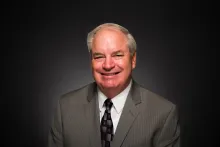
Robin Webber was born in Chicago, Illinois, in 1951, but has lived most of his life in California. He has been a part of the Church of God community since 1963. He attended Ambassador College in Pasadena from 1969-1973. He majored in theology and history.
Mr. Webber's interest remains in the study of history, socio-economics and literature. Over the years, he has offered his services to museums as a docent to share his enthusiasm and passions regarding these areas of expertise.
When time permits, he loves to go mountain biking on nearby ranch land and meet his wife as she hikes toward him.
