


Robin S Webber
This transcript was generated by AI and may contain errors. It is provided to assist those who may not be able to listen to the message.
Well, thank you, Dr. Henderson. And once again to the congregation, a warm and affectionate, good afternoon to each and every one of you. Here we are on Thanksgiving weekend, and it's a time in which, during this course of time, our nation gives thanks.
And a part of that thanks is to understand exactly who and what God is. Would you please join me over in Psalm 103? And let's use this as a foundation of where I would like to take you this afternoon in Psalm 103. And let's begin in verse 1. The psalmist tells us, Bless the Lord, O my soul, and all that is within me, and bless his holy name. Bless the Lord, O my soul, and then let's notice together, and forget not all of his benefits.
When I read this and focus on it, as I have been coming up to Thanksgiving, I've come to understand that our greatest blessing is that we worship a God that wholeheartedly desires to bless us. We worship the blessing God. Not everybody has that privilege today.
Not everybody knows that God. And yet you and I are here today, and we worship the God that blesses us.
With that said, from my mouth, I have a question for you. How would you describe your God?
How would you describe your God? Is your God a God of blessings? Do you feel blessed?
Boy, I'm supposed to because, well, it's Thanksgiving, and I ate the turkey. And I like the way the pilgrims dress, so maybe I'm supposed to feel blessed and thankful. But this is a very honest question that only you and you alone can answer. Do you feel blessed?
The reason why I mention that is many people approach God in many different ways and many different fashions. Their steps towards God are fashioned in a couple of ways. Perhaps it's due to their theological framework as to how they understand God or how God is revealing himself. And or perhaps it's just their own personality. It's their family way. It's their own personal religion, how they walk and how they talk during the day. And yet how we walk and how we talk is how we express how we feel that God is. Unfortunately, I think oftentimes people basically look at God with just simply one lens. Let's think about that for a moment. Some people worship the God of creation. Others worship the God of revealed truth.
Others worship the God that, well, He is coming back and He's bringing judgment upon the earth. Now with all of those things that I just mentioned, which are three, all of them are correct.
Each of them, of and by themselves, is correct. We worship the God of creation. We worship the God of revealed truth. We worship that God that is going to return. But if that's all we are worshipping, it's not enough.
It is just simply not enough, my friends. We must come to understand that we worship a God that desires to richly bless us.
Do you know that in your mind and in your hearts on this Sabbath day? Do you worship that God?
Sometimes there are people that are out in the world, and we can say out in the world, out in the unchurched world, non-churched members, but let's not just leave them out there. We might need to add ourselves a little bit. There are some people that can go to the New Testament and say, well, when I read the story of the that beautiful father image and the story of the prodigal son, and recognizing that that's about God above, that's a God that I can relate with. That's a God that I want to worship.
But that other God is that God of the Old Testament, you know, the one with the lightning, the thunderbolts, and yes, the earthquakes don't know about Him, can't relate.
But here's the thought. It's all in the same book, and it's all about the same God, and it's all about the one that has the same desire. What is the desire? Simply put, the desire is to bless you, and that's what we're going to talk about today.
We're going to be taking a look at a very special blessing given from God that describes exactly what He is like. Is there any scripture in the Bible that you can turn to that you keep on looking at it deeper and deeper and deeper, and it just begins to unfold exactly what God is like as we just heard in the last message. There's going to come a time in the future when before we can reveal certain truths about God, we're going to have to reveal what God is and what He is like, what is His nature, and what are His attributes, what does He really want to do for us?
And we're going to look at that today, and we can do that by turning to scripture because, after all, that's why God preserved the Bible. Do you know why you have a Bible on your lap today?
You have a Bible on your lap because God wants to tell you what He is like, and He loves doing that, and He wants you to understand that. And of all of the places in the Bible that tells us the most about God, it's going to be interesting we're going to turn to because we're going to turn to the book of Numbers. Numbers is not our first choice normally of going to where we think we're going to explore what God is like. When we think of the book of Numbers, we think of either A, wonderings, and or B, we think of a period of trials, and yes it is, because it's during the time when ancient Israel was wandering.
They were going from point A, are you with me? A, over to B. They were going from Egypt, and God was directing them towards the Promised Land. They were between two worlds. They were between two cultures, and they were wandering. And not only that, but there was a time of trials. Why? Because they had forgotten what God was like.
They tried to make them over into their own image, and at times they did disobey, and they forgot what God promised that He would do for them. Now, where's the catch for you and myself today? The Apostle Paul calls the Church the Israel of God. You can find that in the book of Galatians. And we also, as Christians, move between two worlds. We move from the world that God has called us out of, and yet that new world is not yet here in its fullness. And at the same time, we are wandering, and we are between two worlds. And as we live, we are existing in the culture wars.
We're existing in the wars of terrorism. We are existing in our own battles and challenges that are occurring in our mind. You know, that great battleground between the two ears here, which would, in a sense, make Waterloo look small sometimes, because of what's going right on here in between our ears. There's a whole field. There's a whole, to use a biblical term, there's a whole mageto of the gathering of thoughts and armies of thoughts that can pull us away from God.
So God says, I want to tell you what I am like. And so that's why, long ago, God told his servants, the priests, and I believe that we, as the ministers of God today, are told to offer this blessing. And the reason why he offers the blessing that we're about to read is, he says, I want my people to know how I feel about them. I want my people to know how I feel about them. So place this declaration of blessing on them, and do it again and again and again.
Never tire of it. Don't get over it. Do it until it is ingrained in their brain and engraved in their heart. And until they get it, why? Because it's true. I want to bless my people. And that's why God offers his self-revelation over in the book of Numbers 6.
Join me there, if you would, for a moment in Numbers 6 and in verse 23. And the Lord spoke to Moses, saying, speak to Aaron and his son, saying, this is the way that you shall bless the children of Israel, and say to them, the Lord bless you and keep you. The Lord make his face shine upon you, and be gracious unto you. The Lord lift up his countenance upon you, and notice, and give you peace.
And so shall they put my name on the children of Israel, and I will bless them. How many of you have ever heard that before?
It's often given us a benediction in many churches. We've all heard that. But have we ever understood that it's really God's self-expression about himself, and that there are seven eternal truths just in this blessing? Seven eternal truths that God wants us to understand every day of our life, that we worship a God that wants to bless us. But before we proceed, and look at it a little bit closer, first of all, we need to come and appreciate the rhythmatic nature of this blessing. Before we go any further, I want you to know what we're getting into, okay? We need to understand that there are three different sections, three different sections of this blessing. And each section, are you with me? Has two parts. Now, as we move into the sections, the section always begins with God, and then moves to the direct object of his attention and his affection. You know who that is? You! It begins with God, and then we're reminded that we are the direct object of his attention. And then, when adding the last part in verse 27, we move to seven truths. Now, that is very interesting. Three sections, two parts each, you're the direct object. We add the seventh part, and seven is a number that denotes wholeness or completeness. In other words, this blessing gives us the total picture of what God is really like. So, let's understand it. The first section, God reminds us that he alone is our provider.
And the first eternal truth regarding his provision is simply this. Let's notice, verse 24, the Lord blesses you. God tells us what he is like. He wants to bless us. What a wonderful word! And what a wonderful reality when we mention the word blessing. Have you ever thought about it? Blessings and its relationship with the Bible. Blessings are as old as the Bible. Let's go through it for a moment. Let's wander through for just a second. When you go back to the creation, God blessed the seventh day. He hallowed it. He blessed it. He took our forefathers, Adam and Eve, and in the garden, he blessed them, didn't he? He said, be fruitful and multiply and replenish the earth. God loves blessing. Later on, after the deluge with Noah, the first thing that happened when Noah came off the boat is what? God blessed Noah and the efforts that would proceed from him. Later on, he would bless the man Abraham. Later on, he would bless the children of Israel. He would bless them through this blessing that we're talking about. Later on, the book doesn't change as we go into the New Testament. Jesus himself, as God in the flesh, loved blessing. When he was on a mountain, what did he say? Blessed are you if you do this. Blessed are you if you do this. Blessed are you if you hunger and thirst after righteousness. Later on, what did he do? When the little children came to him, he did what? He picked them up in his arms, and he blessed them. And then, right before he departed to heaven, even as he was going up, he blessed his disciples, now apostles, and said, I'm going to give you power, and you're going to go out in the earth, and you're going to accomplish a witness for me. And did you realize that even from his heavenly throne today, he still loves to give blessings? There are the seven beatitudes and the seven blessings of revelation.
What we really come to understand is that the thought of blessing is likely to hammer on an anvil, in a livery stable. It's the continuous pound throughout the Bible that you and I have the privilege of knowing and worshiping a God that wants to bless us. But what does the word literally mean, and what is God telling us? Well, when he says that I want to bless you, we've got to put two languages together to understand. First of all, let's deal with the Hebrew for a second. In the Hebrew, the word is barak, B-A-R-A-K. I'll spell that because it's easy and it's short. Barak, and that means it's a declaration. God is giving a declaration, and the declaration is He wants good things for us as children. But perhaps once we understand it's a declaration, then we have to wander to the Greek meaning in the New Testament because, again, it's simply one book. And this begins to become very interesting. The Greek word to bless is makarios, M-A-K-A-R-I-O-S, makarios. And that means happy, just like when we go to the Sermon on the Mount. And Jesus says, blessed are you if you do this. Blessed are you if you do that. He's saying happy. You are happy if and when you do these things. Let's put it together now.
When God says, I want to bless you, this tells you what I'm like. He's saying this. He's giving a declaration that we might be happy. Sometimes it can even go happy, happy, because that's how much God wants to bless us. That word makarios is very interesting. Allow me to describe it for you for a moment. As it migrated into the Greek language, makarios was a term that was used for the island of Cyprus. It was used for the island of Cyprus. You've been to paradise. You may not have known it. In the Greek and the Hellenic world, Cyprus was considered paradise.
It was the happy place. It was the blessed spot. Everything was to be found on the island.
It had safe harbors. It had gentle slopes. It had water sources. It had fields that could be fertile. It was in the midst of the ancient world. In other words, Cyprus was self-contained and had need of nothing else. It could stand on its own without any external influence. Thus, it was called makarios. It was blessed. It was happy. When God blesses us and gives us makarios, which is coming from Him as the Creator, He is saying, you have everything that you need through my blessing because I am the blessor. And it's coming from me. Remember Psalm 23 and verse 1? The Lord is my shepherd. I shall not want. I can be makarios. And even when those external forces come knocking at my door of culture wars, of a war on terrorism, do I dare say personal family wars, family struggles, school struggles, marriage struggles. God says, I want to bless you. And what I have given you is enough. Now, think about that, from us. Some might say, well, by their words or actions, but wait a minute. You say that, Mr. Weber, but that's not happening in my life. It seems to me that God's got it in for me. God wants to curse me. My life isn't happening. But also, perhaps, we need to go back to basics 101 because for every cause, there is also an effect. For every cause, there is an effect. Let's go to Deuteronomy 30 and verse 19. But even with what is going on in your life right now, I want to share something with you. God does want to bless you. That is His way. It is His self-revelation of the kind of God that He is. Verse 19, I call heaven and earth as a witness today against you that I have set before you life and death, blessing, barak, declaration, and cursing. Therefore, choose life that both you and your descendants may live. God does want to bless us. That is His will. That is His desire. And we have to understand that about God. If we do not understand that God wants to bless us, I'm not talking about a wish list that you have, your own personal wish list that we've made up humanly in our small microscopic world.
But if we don't worship a God of blessing, you have not met God yet. You have not met God.
God wants to bless us and He wants to give to us. Join me if you would in Luke 12 and verse 32. In Luke 12 and verse 32, speaking of the Israel of God today, the church, do not fear little flock.
Notice, for it is your Father's good pleasure. In other words, He's happy to do this for us, to give us the kingdom. The first revelation from this blessing of God's self-description of Himself, that He wants to have us pound into our heads and pound into our hearts again and again and again until we get it, is that He wants to bless us. Number two. Number two, regarding His provision, it says, Lord bless you and keep you. Let's discuss that second truth for a woman. Yes, the God of blessings wants to reassure us that He is watching over us physically and spiritually. And that we are not alone. Now, this was very important to Israel as they had left home that had been their home for 250 to 300 years. And they were kind of in between. We know they couldn't go back to Egypt. We know what waited for them there. We also know what waited ahead of them, which was the unknown cross river. And God says, I want to tell you something about me.
You have a moment. I want to keep you. You're precious. And I am going to watch over you. Now, sometimes we forget that. And we begin to think that we're alone. Moses had that problem. Gideon had that problem. We know Elijah had that problem. And he had his famous cave in. And all of us sometimes join Elijah in the cave and think that somehow God has gone off and wandered. That is why this blessing needs to be looked at and administered and given again and again, rehearsed again and again in case we forget his benefits. That he's on the job and that he is awake. In fact, the word keep, K-E-E-P, in the Hebrew is shamar, which means to observe, to take heed. Some of the parents, you know, Bob was talking about being a grandfather and that, you know, he can kind of go and visit and then kind of go away. But when you're with children in the store, when you're in a Walmart and you have little ones with you, little babies or toddlers, you know that you are keeping them in your watch, aren't you, at all times? Those little precious ones where there's thousands of people maybe in a super Walmart with all of those aisles and little babies either with grandpa or grandma or with the parents or with a friend who's ever watched. And you're keeping your hands on them. You're watching them. And what happens if they're out of your sight for just a moment? Do I need to explain that feeling to you parents? When you don't have your child?
My mother was always going through this with me because I was a wanderer.
She's always looking for me. I was often, I have not been still since I was born. I was always on the move. Get lost in big hotels, theme parks, canyons, and yes, mountains. But in the normal family, no, just teasing. You're watching your child and that child is kept. Why is that?
Because you love that child. That child is an extension of you and the future. God says, like that child, that you are kept and I will keep you. And we need to remember that. We need to remember the source of our keeping. Sometimes we lose mind of that. We begin thinking that, well, nobody cares and I'm just keeping myself. That's why God asked us to look at Psalm 121. Join me over there for a moment. And sometimes we think that down here we can take care of ourselves of and by ourselves and that, hey, we'll be all right. We can make it.
But if you're like that, you're not allowing God to bless you.
Psalm 121 is very interesting. Sometimes people must understand the beautiful prose that is in this verse. I will lift up my eyes to the hills and from whence comes my help. And my help comes from the Lord who made heaven and the earth. Sometimes people think, well, what this is talking about is as I look up at the hills and I see the trees and I see the daffodil and I see the lilacs and I see the lilies and I see the creation and then I see the clouds and then my eyes are all of a sudden in the third heaven and I'm thinking of God. No. I will lift up my eyes to the hills. In ancient times, man protected and man protected himself by putting forts on hills. Forts and castles were always on the high places.
With that thought in mind, I will lift up my eyes to the hills because on the hills, even in Judea, were fortifications. Just think of the masada that would be built later on, not during the time of David, but during the time of Herod. It was up on a mountain. It was up on a hill. I will lift up my eyes to the hills. Question! Time out! Where does my help really come from? Man? And what man can do?
My help comes from the Lord who made heaven and earth. And he will not allow your foot to be moved. He who noticed keeps you. This goes back to Numbers. The God who keeps you will not slumber. And behold, he keeps Israel. And he shall neither slumber nor sleep. And the Lord is, not maybe, is your keeper. And the Lord is your shade at your right hand. The sun shall not strike you by day nor the moon by night. And the Lord shall preserve you from all evil. And he's going to preserve your soul. And the Lord shall preserve your going out and your coming in from this time forth and even more. See, God loves to keep you. And he wants you on this Thanksgiving weekend to know that. He'll keep you physically as it's a part of his will.
And spiritually, he will preserve you. Because ultimately, Scripture and the Bible is about spiritual salvation. Now, we need to understand that you and I are kept. Sometimes we forget that. May I make a comment? Are you with me? God, excuse me, not God, but Satan doesn't forget that. Satan knows that you and I are kept by God. Remember in the book of Job when Job opens up and the one that is known as Satan is having a conversation with you, you know who? God.
And they start talking about Job. And what does Satan mention? Well, what's so big about Job, God? You know that you've set a hedge about him. You've walled him in. He's your kept man.
He's kept. You've established a perimeter around him. He's blessed.
Just take down the beam. And let me work with him for a while.
But when you look at that, I don't think God plays favorites because God says he shows no partiality. I don't think that's just about Mr. and Mrs. Job and family. God doesn't play favorites. His eyes are on us. And I do believe that he does put a barrier around us. Let me just give you a few verses. I'm not going to turn to them, but the power of Scripture, the blessings of God. Second Thessalonians 3, verse 3, says that God is faithful. It says that he establishes us. It says that he guards us from the evil one. 1 Peter 1, verse 5, says that we are kept. I love being kept. I hope you love being kept. That's not always a nice term in society. I won't go there about being kept. But as a Christian, I love being kept by God. I feel kept. I know I'm kept because I worship the God of blessings. And that's a part of his blessing. He says he wants to keep me. Jude 1, in verse 24. Actually, Jude 24. Don't look for Jude 1. Jude 24, now to him who is able to keep us. And he is, from stumbling. Now, if you want to be kept, don't worry. God will keep us. But I want to bring up a point before we move to the next point. And that is that you and I also have a responsibility in this. Let's notice Jude 21. Let's turn to the book, Jude, towards the end of the Bible, right before the book of Revelation. In Jude, and let's notice verse 21. Notice what it mentions here.
Keep yourself in the love of God, looking for the mercy of our Lord Jesus Christ unto eternal life. Now, wait a minute. The Bible says that God wants to keep us, can keep us, and will keep us. And then the Bible says that we're to keep ourselves. May I ask you a question? Is there some kind of contradiction here? Is there something that we're doing, as if it's almost by works, that we're keeping ourselves? Because we thought, well, God did the keeping. Well, really, it's two sides of the same coin. Let's go a little bit deeper. And let's use this analogy for a moment, seeing as Grandparents Day with Bob and Elaine. Let's talk about children again, and come to this point. When we take the lead as a parent, ushering a child across the street from curb A to curb B, we want cooperation and understanding and appreciation of our role as the elder individual, as the mom, as the dad, as the protector. And when we're walking that little child over here, and we take them by the hand, it's always nice when they do put their little hand, you know, in our hand, and we begin walking them across. We don't want them to slap away our hand. We don't want them to run across the lines that are there for their protection. We don't want them to start talking back at us or whatever. What we're wanting is, we're wanting them to cooperate with us. We want them to understand that as we desire to keep them, that they also, in their own little juvenile way, are slowly understanding our love and our role as protector, and therefore we see their cooperation. Now, they are not us. We're the parent and we're the guardian. We're the big person in the crosswalk. But they also, in a sense, have to be in our keeping. Now, let's apply this when we look at it as a child of God, that when we understand who God is and that God wants to bless us and that God wants to keep us, we begin to understand God's love, then we're going to stay in that love. And we're going to begin to cooperate, keeping yourself in the love of God, understanding the blessing of God that as pilgrims and as wanderers between two worlds, and not yet having achieved the kingdom of God, that nonetheless, because we've given ourself to God, He wants to look after us actively, physically, and spiritually. Keeping ourselves in the love of God is very interesting. In the book of Numbers, chapter 6, you may never have seen the relationship between this blessing that we're talking about and what precedes it. Allow me just to explain it for a moment. Leading up to this blessing, while not solely specific to the blessing, but it is interesting in the relationship, it's speaking of Nazarites, and it's speaking of the Nazaretic vow. Maybe some of you are not familiar with the Nazaretic vow, but there were three things that a Nazarete had to do. Number one, the man had to allow his hair to grow long. That means, in a sense, that he humbled himself in an exterior fashion by having very, very, very, very long hair that was not cut by scissor, but was in a sense showing that he was humble before God because he understood who God was. Number two, that individual could not partake of alcoholic beverage. That means that they had to forego any temptation of perhaps becoming intoxicated, of not having a sober mind, of not being about their person. Number three, a Nazarete could not touch a dead thing.
Could not touch that which is dead or ceremoniously unclean. Now, you see, that's interesting. That's in the Old Testament, and they had to keep themselves that way in respect towards God.
As we keep ourselves in the love of God, isn't that what we're supposed to do now? Because we understand that God has blessed us, given us calling, given us privilege, given us opportunity to know Him, not only to know about Him, but to know Him. Thus, we humble ourselves, we separate ourselves, we make sure that we don't become intoxicated by the ways of this world. That's how we keep ourselves in the love of God. Here's something else I want to share with you and the thought that we need to talk about when it says that God will keep us. Do you realize that sometimes God keeps us in trouble? Hmm, I knew he was going to get to that. Do you realize that God keeps us in trouble sometimes? We've got to talk about that if we're going to be honest with the Scripture.
Sometimes God keeps us in the methods we have made until we understand Him and until we honor Him.
And sometimes He keeps us in trouble so that He might gain honor. Isn't that what He did with ancient Israel when they were led up against the Red Sea? That God might have honor over Pharaoh and the armies of Egypt. And what about the example of Daniel? God kept, in a sense, Daniel in the lion's den. He didn't take him out of there. But Daniel, later on through his verse, said he understood that God, through His angel, kept the mouth of the lion's shot. Daniel, not Daniel, Michelle, Hanani and Azariah were thrown into the fiery pit. God did not keep them out of trouble, but kept them in the trouble because later on then the king said, whoa, wait a minute, I've got a vision problem. I thought we threw three men in there, and now there's four men in there, and there is one who appears like the Son of Man. See, at times God will keep us in trouble.
Matthew 4 in verse 1 says that the Spirit, if you don't believe it, I'll let you turn to it later, it says that the Spirit led Jesus into the wilderness. Well, who was waiting there?
In Matthew 4 in verse 1.
Anybody know? You don't have to whisper it. You're in Redlands. Satan.
God is not always going to keep us from trouble, but He will keep us in the trouble with Him, because that's what the word paracletus means when speaking of the Holy Spirit, one who literally walks along a side of you. We worship a God that keeps us. That moves us to the second section, and these are going to go very rapidly now. The second section deals with how God is gracious. The third revealed truth of God's self-explanation of what He is like is that He is one that smiles. Have you ever thought that you worship a smiling God?
Well, I'm watching your faces. I worship the God of creation, of power, volcanoes, and lava, and upheaval.
I worship the God that's going to return in the voice of the archangel, in the voice of Christ, and will raise the dead. I worship that same God, too. But I'll tell you what comes to my mind more than not as I grow old and older, friends. I worship a God that smiles. The third revealed truth that God wanted these people to know is this. The Lord make His face to shine upon you. A shining face is the mark of pleasure as it is turned and directed towards someone. There is no greater gift. You've heard those at the feast about the gift of a smile. Everybody give us somebody a smile at the feast. Anybody heard that especially from me? Everybody give a smile at the feast. You can give away a smile. It won't cost you anything, and it's worth everything to the person that will receive it. Here it says that we worship a God that makes His face to shine upon us. You know what happens sometimes, again, with children when they're in a classroom, they're at an open house, they're in a ballgame, they're doing something. You know those eyes are always out there looking for the parents, aren't they? They're looking for the parents' approval. They're looking to see if their parents are doing what? Smiling at them and noticing them.
I still find that when I haven't seen the girls for a long, long time.
Adult girls now all in their mid-20s and above, and they walk in the room, or I have an opportunity to walk down the road with one of them. I just smile. I'm with Laura, I'm with Julie, I'm with Amy, and I'm proud of them. They're ours. I didn't say mine. I didn't have them alone. Susan's not here if you're my witness. It's that they're ours, and I smile, and I look at them. All right, old one, my mom has the opportunity. We as parents or grandparents or great-grandparents, our children make us smile. When is the last time you thought, God, you're smiling down on me? We don't worship a ticked-off God. We don't worship one of those Easter Island dudes. You ever seen those idols on Easter Island? They're all caved in, concave, stuffed in, ooh, you know, idol, ticky dude. We worship a God that smiles, a God that doesn't want more sacrifice. Back in ancient Egypt, this world that people were coming out of at that time, you couldn't satisfy their gods. In Babylon, you couldn't satisfy their gods. They had gods that wanted baby after baby after baby after baby after baby, put on their arms simply to fall into the fire. You couldn't satisfy that kind of God. You could never satiate the hunger. They always wanted more and more and more and take and take and take and take and you could never quite be good enough.
And God says in Micah, I don't want any more sacrifice.
Hold on to your bullocks. Hold on to your goats. But this is the man that I'll look to, a man that is humble, a man that is just, and a man that loves mercy because they're becoming like me.
And when we're becoming like him, can you imagine what a cosmic smile looks like in the third heaven? As God says, if they get it, if they understand and they know that I love them, we worship the good God. We worship the God who in flesh in the form of Jesus Christ said, I no longer call you simply my disciples. I'm calling you my friends. I'm smiling on you because I love you. And what we need to come to understand that God says this, not because everything in life is smiling. A Christian does not live by happiness. A Christian lives by joy. Joy and happiness are not synonymous. Joy is a deeper happiness where man and external events cannot touch. And yet, even at that point, God says, my care and my comfort and my concern come to you as your loving Father who is smiling upon you. The fourth revealed truth is that God is gracious. God says, in my grace, my graciousness be unto you. It starts with God, and then you and I become, are you ready? The recipients of all that God wants to give.
This is a godly reality, and it's a gift that we need to constantly be reminded of in a very ungracious world, and in a very rude world, which frankly you know it and I know it, is becoming more ungracious and more rude and more uncaring every day. A world where it wants a pound for every piece of flesh, a tit for tat, and you're only as good as your last success. And if you're not producing for the company, if you're not producing for the school, if you're not producing for this, you are forgotten.
And then that begins to kind of inculcate into us, and we kind of become a part of that system. We get into the get mode, and we look around, and we start getting this kind of rage and, you know, looking down on people. You know, when somebody gets pulled over, you know, the red lights go... get them! They deserve it.
But when it comes to us...
Do you have a moment? We want mercy, and we want grace, and we want kindness. That's what God wants to give us. The word grace can literally mean charmed and or offered favorable regard from God. So much so, so much favorable regard from God that He wants to, in a sense, give us unmerited pardon. What do I mean by that? Be ready to take notes. I'm going to give you three thoughts that are going to be very important coming up to the thought of God's grace to us. What do I mean unmerited pardon? We need to understand what justice, mercy, and grace is. Justice, justice is getting what we deserve. We got justice, you know, western style.
Hang on! Not red lights.
Mercy, mercy is not getting what you deserve. Mercy is not getting what you deserve, but grace, whole different level now.
Grace is getting what you don't deserve. Grace is getting what you don't deserve.
And what God offers us, His favor, His attention, the initiative that He started from the very beginning, we are less than ants. We are less than a bug. We are less than a molecule compared to Him that occupies eternity and that is not confined by time or space. And that is ageless.
And yet, He looks down and says, through Jesus Christ, who is here with us, I know where they're at. I know what they're going through.
And I want to love them. And I can forgive that. And I can put that aside. We need the love and support and forgiveness of God who constantly loves us and desires our success. Some of us no longer have fathers and mothers that are alive to tell us that they love us. Some of us have perhaps never had fathers or mothers as we've been alive. Perhaps we've had fathers and mothers that never had these kind of words or this kind of attention or this kind of manner come out of them. And that's why God says, you've got to give this blessing again and again and remind them that I'm the God that offers grace. I'm the God that will pardon.
I am the God that will go to bat when there's no bats left.
Remind them. It's very interesting. In the Lord's Prayer in Matthew 6, our Father, which art in heaven, hallowed be thy name. Thy kingdom come, thy will be done as earth as it is in heaven. Give us this day our daily bread and forgive us our debts as we forgive our debtors. It's very interesting the relationship between daily bread and forgiveness. And perhaps God not only wants us to remember that we need physical sustenance daily, but that we may be forgiven also daily because He is the God that is gracious and wants to bring His grace upon us. Let's move to the third section and conclude rapidly. The third section reminds us of God's inexhaustible favor, self-describing Himself. The fifth revealed truth is that God is forever attentive to us, lifting up His countenance. His countenance be upon us. What does that mean in everyday terms? Have you ever been in a conversation with somebody who doesn't want to be there with you? Or am I the only one? You say, but you're the pastor and they do that to you? Yeah. Nobody's laughing. You did it! No. You've been in a conversation with somebody and you know you just see them squirming. They want out of there. They are not interested. And all of a sudden their cell phone rings and, hey, how you doing? Fine. What you doing? Nothing. I'll be right over. And here you are pouring your heart out to them at that moment. How does that make you and me feel as human beings? Do we feel like we're being attended to, that we're important, that we're being loved? God says that He lifts up His accountants. We have, when we say our Father, which art in heaven, and when we say in Jesus' name, we have God's full attention. When it mentions lifting up accountants, that means to focus by looking and noticing and showing interest, to have the full attention of God. Now, when you do that, watch out what you're asking for, because you're going to get it.
Remember the story of Daniel and Daniel 9? You can jot to it later. Daniel 9 and verse 20 and 23, where he's praying and he's praying and he's praying about the meaning of a vision. And, you know, have you ever been there where you're praying and you're trying to make movement? You're trying to get those prayers up above the ceiling and you're hoping that they're going somewhere and you're hoping that God is going to answer? But it's just kind of like a bat, you know, with radar. It keeps on echoing back to you. Boing! There it comes again. Boing! Am I making progress? Is God hearing? And God tells Daniel through Gabriel, from the moment that you began praying, are you with me? The answer came from heaven, was on its way. From that moment, God was glued into Daniel and his petition for understanding. Again, God does not play favorites. He doesn't play favorites, you know, just because of Job or because of Mr. Daniel. We worship that same God. A believer has the expectancy that God is partnering with him throughout the day, as much as that spirit that walks alongside of us. Number six, the sixth revealed truth is that God gives us peace.
And my peace be unto you.
Is that talking about the kind of peace where there's an absence of conflict?
Where all the rifles are laid down? Where all the family members are happy? Where the boss has just given you a raise? Is that the kind of peace that we're talking about? No. The peace that is being spoken about here, if you'd like to jot this down, let me use this phrase for you. It's about a tranquility of heart. The peace that is being spoken about here is a peace that expresses positive well-being and the wish for an inner strength. Thus, what we're talking about is heart security, not external security, because we are in a wandering between two worlds. And we are pilgrims that have not yet met that destination, the kingdom of God. And so, there will not be total peace in this time. But God says, I give you peace. I give you that inner security. I give you that internal strength that whatever is going to come, whether I take you out of trouble or I keep you in the trouble, you are kept and I am with you. Why is that? Because I'm the God that gives you grace. I am the God that attends you. I am the God that smiles upon you. I am the God that keeps you. And when you know this, and brethren, I think more and more in the body of Christ, we need to know this.
We need to know this even more than facts and figures and dates. We need to understand that we worship a God that wants to bless us, wants to keep us, wants to smile on us, a God of joy, a God of happiness, a God of blessing. And when we worship that God, and when we express that God to others, they're going to want to know about that God as Bob was bringing out in his message. That's going to be different than what they're getting out in the world. That's going to be different than the theology that they're getting elsewhere. They're going to see a theology of breakthroughs. They're going to see a theology of the divine because this is not from earth, this is from above. And you yourself, as you change your mind and turn that clock inside out, and you begin to look for God's blessings in your life. I'm going to share something with you. Are you with me? Your life is going to change. Your life is going to change so much. Almost hour by hour and day by day, you will not believe it because we worship a God that wants to bless us. It wants to give us peace.
Which leads us to the last point. Let's go over to number six and conclude here.
In number six, and let's look at the end because I'm going to save the best for last.
In number six, verse 27, So shall they put my name on the children of Israel, and I will bless them.
This is the Christendoing element of the blessing because in verse 27, it is God who is saying that I will do it. Now, let's think about this. We worship the I will do it God.
We all know people in our families, in the workplace, in the school place, kids, you're growing up, it doesn't change, it's a human condition.
Where people say, oh yeah, sure, I'll do it tomorrow. So you young kids out here, you probably have a life. Have you ever, there's a change in school where there's always somebody that comes to school without a wallet and they want your five dollars? I'm just watching the eyes here for a second. And oh, I'll pay you back tomorrow, but you can just give me that five now, and I'll do it. Oh yes, I will. Well, well, you know. When somebody says, I'll do it, I'll do it, I'll be there. Everybody else won't be there, but I'll be kind of doing the Peter effect. I'll be there. Don't worry. I'll do it. I'll do it. Almost like the song, I'll do it. They never do it.
The power of this verse is simply this. What God is basically saying is, it's already done. I am the God that performs. It's already done. It's as if it's already there. See, God has already visited the future and waits for us there and wants us to have the confidence that we can meet him there. God is the God that will do it. And this was a powerful thing that says, I want you, the the servants of God, I want you to place. Notice what it says, you shall put my name on the children of Israel. Now, he didn't say, put my axe. He didn't say, put my signature, put my name. The name in the Hebrew context meant, I want you to put my persona, which is my nature and which is my attributes, all and all that I am. All that I am, all that I will, and all that I will always be doing because God is always. You can't put him in bookends. And I want you to put them on that. My name is what? The God that offers grace, the God that wants to keep you, the God that wants to smile upon you, the God that wants to what? Wants to be attentive to you, wants to give you peace. You put all of this on these children. And lastly, remind them that I will do it. The final act of blessing is powerful to understand. God was saying, put my name on them. This goes hand in hand with the formation of ancient Israel in the wilderness. The first thing that was set up when Israel in the wanderings was traveling, the first thing that went up was the tabernacle. Then the entire encampment around it was centered on what? On the tabernacle, where God was, where the Shekinah, the holiness of God was, where His name was. And everything in the camp then was centered around it. Wherever they went, the different tribes always had a different spot around the tabernacle. And God was in the midst. See, there's more than just prose to that. There's a reality. God was always in the midst of His people. Did you realize that by tradition, and the commentaries will tell you that this blessing out of number six was given every day at the temple in Jerusalem? Because God wants us to remember what He is like until we get it, unless we forget.
You and I are the temple of God. We are the Neos in AOS. We are the Holy of Holies. He now resides in us. His glory, His essence is in us. We no longer have to go to the temple. We are the temple. And this blessing should be exuding from us. And I hope it does. I hope you understand what number six tells us more than ever. And if in any way, and I've taken a few extra minutes, I've only done it because I think it is so very important, my friends. Dear brethren, that we really grow. And for some of us, it will be an even greater need to grow, to develop this growth spurt of conversion. To think of God as a God that wants to bless us.
And when you start looking for those blessings, I'll tell you something. Here we are at Thanksgiving time. You will have a harvest.
You will have a harvest of exactly what you need to make it the kingdom of God. Let's look at our Bibles one more time, and let's read it together to understand the full impact. The Lord bless you and keep you. The Lord make his face shine upon you and be gracious to you. And the Lord lift up his countenance upon you and give you peace. And so shall they put my name on the children of Israel. And notice the best part of all. I will bless them.
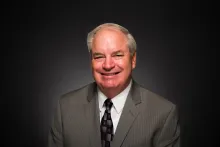
Robin Webber was born in Chicago, Illinois, in 1951, but has lived most of his life in California. He has been a part of the Church of God community since 1963. He attended Ambassador College in Pasadena from 1969-1973. He majored in theology and history.
Mr. Webber's interest remains in the study of history, socio-economics and literature. Over the years, he has offered his services to museums as a docent to share his enthusiasm and passions regarding these areas of expertise.
When time permits, he loves to go mountain biking on nearby ranch land and meet his wife as she hikes toward him.
