

Robin S Webber
This transcript was generated by AI and may contain errors. It is provided to assist those who may not be able to listen to the message.
I'm going to write down three words. You might want to jot them down in your notes, because this is what we're going to be discussing.
First word.
Big question.
What do you think the third word is?
You've heard it.
My question to all of you today, as covenant people of God, is simply this. Do you consider yourself as you go through life and as circumstances come to you? What word do you use when circumstances or events come into your life? Are you blessed and or are you lucky? How often have we, growing up, maybe in high school and playing a game or in college at an event or later on in life, this or that, or perhaps we're on the freeway as many of us escaped an accident even as we traveled through the roads of Los Angeles this afternoon, and all of a sudden something happens that we weren't expecting? What do we say and what are the words that come out of our mouth, out of our heart, out of who we exist and how we exist and who we exist for and where we're moving? Are we blessed and or are we lucky?
You think how often that maybe you have, as I have as an American, it's very common in our parlance, where I'll say, boy, was I lucky. But my question is simply this, should a Christian bet on luck and or should we exist in a world of blessings? And that's the question that I'd like to answer today, especially as we just had this beautiful ceremony that we traditionally have every year after the feast days, and that is the blessing of the children. But all of us in that sense are the children of God. In the Old Testament, God refers to the covenant people there as what? His children, the children of Israel. And not only that, but also in the New Testament, it says that we are heirs, that we are the children of God. And so with that, I'm going to build upon this and begin to develop this subject. We just recently departed the festivals, and wherever we were, at the end of the services on the eighth day, what was asked? What was the last word? The last word was a gentleman who got up there, and he asked what? God's blessing as we went back to our homes. Not only for physical safety, but that we might absorb and take with us the blessings of what we heard at the festivals. This morning, most likely, you asked God's blessing on you today, on his Holy Sabbath day. Also asked a blessing for all the people that are traveling around the world to a symbol where he's placed his name. You probably asked God's blessing on the speakers that they might be able to share the gospel in an effective way.
Today, we saw the infants that were blessed before us. What is interesting is, and I love it. I've got to share that. I just love it. Sometimes I'll be in a supermarket line, and I'll just talk to somebody that's in front of me. Not too much. Just, hello. And you think as I said, and I said, how are you doing today? And I love it, and it just resonates in my ears, and it fills my heart when somebody comes back and says, I'm blessed. When I hear that, I know that there is somebody in relationship with God that recognizes that their life is not accidental. That what they experience in their heart, and our mouths do not betray our hearts. They actually don't betray our heart. They portray what is in our heart. That there is an individual that believes that there is a sovereign and a loving God. And that they and humanity of and by themselves are not an accident. That there is indeed a purpose that is being worked out here below. I love it. Because those few little words, I'm blessed, create a lens to the heart of an individual. And a light shines in this very dark world that, you know, somebody gets it. Here's what I'd like to share, what our greatest blessing is, and why today, Robin Weber, fellow Christian, fellow sojourner, on the pilgrimage that now lies ahead of us as we come off the festival days, the pilgrimage is not changed. It's still there. We're headed towards the kingdom of God. We're headed towards experiencing God the Father in Jesus Christ in person. That's all ahead of us. But we've got this wilderness experience that you and I have to go through as pilgrims, as aliens, and that we're, as it were, to this world. And I want to share with you, as a fellow Christian, the best news that I could offer anybody. Are you ready for it? And here it is. Our greatest blessing is that we worship a God that wholeheartedly desires to bless us, to bless you. And on this day, I could have no better news than to share that with you. This is what it's about, our way of life, to recognize that we worship a being, whose wholeheartedness and whole desire and whole inertia moving towards us is to bless you and to bless me.
Now, I just mentioned that to you, but now let's back up for a second, okay? With that said, how would you, I'm talking to you, and I'm talking to you over here, how would you describe your God? How would you describe your God? I would ask you to write down some things, but it might take too much time, and then this message will go over time, and I don't want to press your conversion. So I'll just list some things here. How would you describe your God? Would you describe Him as a God of blessings? Is that what pops out first and foremost? Is He a God of blessings? Do you personally feel blessed? People approach God in many factions and in many ways, and some get stuck with just one set of limbs. Some worship a God of creation and or of first cause. Others worship a God of revealed truth, and I think that would be one that many of you might choose to put a handle to. Others focus just on the finish line of God who is returning to this earth to set things straight. And all of these are there. They are all handles, but something is still missing that must be added. Do we worship?
What does worship mean? It doesn't only mean bending our knees, but bending our hearts. Do we worship a God that we know in our hearts, desires to bless us? Question. Then we'll start filling in some of the answers. Do we exist in an environment of a loving God that we do know at the very root of our hearts, no matter what comes our way? And I'm not talking about the tough stuff that is not going to come in our way, but do we exist? Do we absorb? Do we internalize? Do we embrace that you and I worship a God that desires to bless us? Sometimes there are many people that will turn to the story of the father of the prodigal son there in Luke 15 and say, Well, there is a God that I can get used to. There's a God that I can worship. Not like that God of the Old. About 30 syllables on Old of the Old Testament that mean Old God in the sands of the Sinai. But what's interesting, as you know and I know and what we preach and teach, and I think all of us are of one accord here, this is one book, not two books. It deals with God, a God that along with his Christ is the same yesterday, today, and forever. It's not the story of a mean Old God and then the story of this loving God of the New Testament. God is God, and we're going to be talking about that as we go along. It's all in the same book. And God is always one to bless his covenant people. So here's the SPS today, if you like to do it, specific purpose statement. We're going to focus on the God who blesses us. The God who blesses us. We're going to focus on special blessings given from God, describing what he's really like, both in what man has devised as the Old Testament and the New Testament, and what he desires to do for each and every one of us. After all, that's why God preserves Scripture. You know why? On this day, on November 2nd, to let us know what he is really like.
A lot of people will tell you their own self-description of what they feel God is like. But that's why God put himself and inspired the Scripture so that there's nothing between you and me. The shortest distance between two dots is what? Straight line. So we're going to do some straight lining today. Stay with me for a few minutes. As to who is the God that we come before today that we worship and exist in, as we exist in this kingdom environment today, in the kingdoms of this world, and to recognize that we do not walk alone. Of all places, this beautiful description of God is found in the book of Numbers. So you can start turning to the book of Numbers, which conjures up, think about it for a moment, a time of wandering and trials, as Israel, the house of Israel, the children of Israel, were moving between two worlds just as much as you and I are. We're moving between two worlds. We are not of this world. We're in this world. But Jesus himself in John 17 says, these that I am calling are not of this world. But Father, keep them. So we're going to be talking today about being kept by God and how he does it. And to recognize that what happened with Israel is they forgot it. God self-described, self-disclosed exactly what he is like and what he wanted to do for these people that he called out as slavery.
The problem is, the problem is, they forgot. And this is going to be the power of discussing this blessing and to understand it. So let's take a look at this. Join me if you would in Numbers 6. You're already there in the book of Numbers 6. These will, in a sense, to a degree, be familiar terms to you, but we're going to dig deep and we're going to break them down. In Numbers 6, and let's pick up the thoughts we could in verse 22. Are you with me?
I'm going to share that I want to be worshipped, but I'm going to tell you how I am to be worshipped. And in that worship, what I will do for my people. Say to them, the Lord bless you and keep you. The Lord make his faith to shine upon you. Be gracious to you. The Lord lift up his countenance upon you and give, give you peace. We're going to describe that piece later on. It's not a piece defined by this world, but it's a piece defined by Scripture and understanding what this way of life is about. Now, excuse me, verse 27. This is the clincher and the closer. So they, those are those that will bless my people, the ones that I have chosen, they shall put my name on the children of Israel.
And I will bless them. And I will bless them. Notice that. It goes from this is how you shall bless them, starting with his human instruments, of which you just observed here in the blessing of the children. But then we are only his arms to reach. We're only his hands to hold.
It is none other than God himself. Are you with me? God himself that blesses us. So we read through it. Now let's understand what's going on here. What we've just read and maybe familiar to some of you that came out of other churches before you came into this way of life, that this is a normal benediction in other churches. The pastor or the leader of that moment will offer this blessing.
But it's very interesting that it says, this is how you bless. This is how you part. This is how you stamp my identity on people. And it was so very important. What was God telling us? I just want you to listen to me. I'm going to paraphrase it for a moment. Okay. I'm going to paraphrase it. I'm waving to the balcony up there.
I'm going to paraphrase it. They waved back. I'm going to paraphrase it for a moment. What is going on here? It's always important to get down, get into our own language, understand the moment. What does God say? I want my people. I want my people in the United Church of God Los Angeles to know how I feel about them. So place this declaration of blessing on them again and again, that whenever you do bless them, whenever you set them apart before me, as often as is needed, until they get it. Until it's engraved, until it's ingrained in their brains and most importantly, their hearts. Now, as we just read this verse, which is only like four or five verses, you might want to jot this down if you're taking notes.
What we're going to find here is that... Here's my eraser. We're going to find out something here. Here's the numbers. This is the numbers game. Okay? Here we go. This section of blessing is divided into three sections. You might want to jot this down. I'm not here to waste your time. I'm here to instruct and to encourage you. Okay? Three steps, three sections in all of this. Each of these sections have two points.
There are two points in each of these sections. And then, at the end, as we just read the last verse, I'm just going to put this down if you want to. A big exclamation point. Because the last verse, you know, sometimes God saves the best for last. And so that's what we want to understand here. So let's get right into it here. Here we go. Six great truths, six great truths of how God blesses and feels about us. And then there's an exclamation point.
And what we're going to come to understand that blessing is the rhythm of all scripture. There's always a theme or there are rhythms that go through the scriptures, and this is the same. And so we already talked about it, and so we're going to go right into it. Here's the first section. Here's the big header if you're taking notes, and if not, I just presume that they've been copied in your mind.
Okay? And that is simply this. The first section deals, God reminds you and me today that He alone is our provider. He alone is our provider. You know, we had four baptisms for those that we didn't read about. We had four baptisms in Oceanside during the feast. I had the privilege of taking four different people out into the ocean and baptizing them.
And when we said that, have you accepted Jesus Christ as your Lord and as your Savior? And we paused, and they said, yes. What they're saying is that they have, in that sense, covenant with God that He and His Son are their providers. We're going to build upon that in a moment.
I took them out. That's a whole long story. I took them out. It was a suit for those who was there at that baptism. Can I see anybody there? Yeah, right behind you, John. Is that what happened was that we went out. We thought it was going to be a beautiful day. It was a beautiful day, four miles inland, for those of you who are being QL. We went to the beach. Sometimes, there's just a big fog wall right at the beach, just about one block in. And there's the fog.
And then we go, oh, it's foggy. And then we noticed that it was a low tide. I mean, this thing was low. Have you ever seen some of those science fiction movies with a tsunami and the water draws back before the 500-foot wave approaches?
Well, it was one of those days. Okay. It was one of those... the tide was really... So I had to walk about 300 feet out in the ocean. It was only about here. Okay. In the fog, which I began to think, well, that's just the Shekinah presence I've got. The cloud has come down. It's going to be a holy experience. It had to be one of the most memorable times that I've ever had, not just that we baptized four ladies, but that they survived the experience as we...
as I held onto them. It's so funny. We're like this. We're locked in arm to arm and they keep on looking at the wave. They're looking at the wave, which I would too. They're still human. They're looking at the wave and saying, right here. Stay with me. Don't worry. Whatever comes. So we're like this.
And then finally, it get high enough that, you know, you're supposed to baptize in much water. So here... not the big wave, but secondary wave that kind of comes up about, you know, two feet and coming towards you. So I said, here it comes... oh, I was trying to go...
here it comes... like... then they just kind of start going this way to the shore. I had to hold onto them. I think they were... they thought that... they knew that baptism was a... what's the word I want? A type of a funeral. But I think they thought they were experiencing the second death. So anyway... which they were not. It all turned out really well as we had about 40 people watching all of this on shore. Now, how did I get off on that? Oh, yes. Surrendering and knowing that God is provider.
The divine fact... the divine fact is He wants to bless us even more than we... think about this for a moment... even more than we ourselves want to be blessed. I want you to think about that. God wants to bless us more than we even want to be blessed. Well, who doesn't want to be blessed? In this world with their jargon, who doesn't want to be lucky? But we're not lucky. We're Christians. And who does not want to be blessed? God wants to bless us more than we want to bless ourselves. Ever thought about it that way? Blessings are as old as the Bible. I just want to kind of deal with blessings. Blessings are as old as the Bible.
Let's just think about it. Because God was in the beginning. I didn't say God has a beginning, but when the creative world began, He was there. He was there. He blessed Adam and Eve. He said, be fruitful and multiply. He blessed the seventh day of creation. He blessed Noah on the other side of the flood. Melchizedek, that we believe was a theophany of the Word come to earth. That priest of righteousness.
He blessed who? A brahm. Who is what? The Father of the faithful. And what do the faithful believe? They believe in a good God. They believe in a God that intervenes in this world. And that He wants to bless them. He blessed, again, little children, as we saw today. He offered a multitude of blessings, almost blessings on steroids in what we call the beatitudes. Which are just blessed are. Blessed are. Blessed are. Blessed are. He blessed the disciples before He ascended. And even in the book of Revelation, stay with me for a second. Even in the book of Revelation, He offers, and all of that kind of, shall we say, tough news.
Between now and when Christ returns, He offers seven beatitudes. Seven blessings. I've given messages on that and written articles on that. You can deal with that one later. So, what we find is the constant rhythm of the Bible, our blessings. But what does the word literally mean and what is God telling us? We must combine two words out of Scripture and here we are. Number one, blessing in the Old Testament is the Hebrew word. You can just write this down. It's simple. Barak. B as in boy. A-R-A-K. Barak. And that's a declaration. This blessing, it's a declaration. It's a self-disclosure. In a sense, there's no reporters in between. God just tells it like it is. Also, then, in the Greek, the word there is macarios. Macarios. M-A-K-A-R-I-O-S. Macarios. Which means to be happy. Which means to be filled. So, there's two things that we find with these two terminologies in the two sections of the Bible. One is a declaration and it describes what God is in the midst of doing. That he is offering a blessing that moves towards eternal happiness. Let's understand that. A declaration. When Moses came up against the burning bush and the word revealed himself in that and said, Well, who should I tell Pharaoh that I'm representing? He said that I am that I am. You tell Pharaoh, boy, I am that I am. Now, we need to understand that there's two different ways of looking at I am. This first one, most importantly underlined, is it is describing the nature of God. He is always existed. He simply is. And sometimes we can blend, as it were, the nature of God with the attributes of God. God also is in that sense while the overarching point underlined here is that it describes his nature, his being, that he is self-existent, life-inherent. He simply is.
It also, to a degree, if we extend it, describes exactly his attributes. He simply is. He simply is.
He is, by nature, always. But in his attributes and what he projects upon you and me and his desire for us, it also is always.
The term macarios, used in extra-biblical literature in the Hellenistic community, was often, in a sense, defined by the island of Cyprus. You know where Cyprus is, below Turkey today. And it was used in the sense of everything is there. Cyprus was blessed. It was a happy place to be. You didn't have to go out of Cyprus to live. It had fertile farms, it had streams, it had mountains, it had harbors, anything and everything. You might say today that if it was Time Magazine or somebody else saying, where are the ten best places to live, Cyprus would be right at the top. It had everything. Why would you go outside of Cyprus? Why go adventuring elsewhere when you have everything here? That's why God says macarios, blessed, Cyprus, are those that will follow me and I will bless them accordingly. Which kind of reminds you again of Psalm 23 and verse 1, The Lord is my shepherd. I shall not want. So when we look at this and we see this, it says in verse 24, The Lord bless you and the Lord keep you. This is our Lord. The Lord that says, the Lord that wants to keep us. The Lord bless you and keep you. This is the God that wants to bless us. But some will say sometimes, well, maybe we've had those days. Kind of like Mrs. Job.
Oh, Job! Just curse God and be dying. Isn't that lovely? But humanly, we can kind of feel that way sometimes. But perhaps we need to go back to that basic lesson 101 of cause and effect. We need to be mindful if we're not being blessed. Two thoughts. May I share them with you, please? There might be two reasons why we are not registering blessings. Number one, disobedience. Disobedience shouldn't expect reward. Just like ancient Israel. Just like Ananias and Sapphira in the book of Acts. Disobedience should not expect blessings. And number two, obedience does not necessarily net its reward immediately.
It doesn't net its reward immediately. We do this, and therefore we think we're going to get blessed. One plus one equals two. But we're thinking in human time rather than what God wants to do. Let's look at Luke 12.32 just for a moment to encourage us on this Sabbath day. And I think the people of God do need encouragement. And that's one of the reasons why the Father sent His Son to this earth. And notice what it says in Luke 12.32. In Luke 12 and verse 32 it says this, God is excited. It's His pleasure.
And not only turn from the old world, but again to march towards His way of being in this world, as much as Frank brought out about the colony at Philippi. Romans that before had looked simply to Rome, being in a Roman colony, and now he said, You focus yourself and your citizenship, not on the Latin community, but you focus on the kingdom above. You focus on Jerusalem above.
Your citizenship is in heaven.
Wow! Blessings!
The second truth is, we notice this again if we go back to number 6. In number 6.
In number 6. Verse 24.
And keep you.
The second great truth is, the blessing that God gives us is He says that He will keep us. He wants to keep us. And to keep, let's just use the pronoun here, you.
He wants to keep you.
This God of blessings wants to reassure us He is watching over us physically and spiritually, and that we are not alone. Sometimes we forget, like a Moses, or a Gideon, or an Elijah. And thus, the importance, friends, please understand this, the importance of going back to numbers again and again and again. This is the blessing of God for all covenant peoples of all time.
That He will not only in that sense, you know, be there, in that sense, to be our God, but that He will keep us. He's on the job, and He is awake. The very word there, keep, in Hebrew, is Shannar. S-H-A-N-A-R. Shannar. That means He's going to observe. That means He's going to heed. That means He's focused. He's looking at us. We're kept. I like that feeling. I like being kept. That's not always a phrase that we want to use in society, somebody that's being kept. But in holy terms, you and I are being kept, as we'll find out later, that we are indeed the apple of God's eyes. Go to with me to Psalm 121 for just a second to focus on this point. Psalms 121.
Psalms 121. Let's pick up the thought in verse 1.
Psalms 121 in verse 1.
I will lift my eyes to the hills from whence comes my help. In ancient times, castles and fortifications were on the hills. But David is saying something different here. I'm going to lift up my eyes to the hills, but they ask, but where does my help... Are you with me? Where does it really come from? My help comes from the Lord, who made heaven and earth.
He will not allow your foot to be moved. He who, notice, keeps, keeps. You will not slumber. Behold, he who keeps Israel shall neither slumber nor sleep. The Lord is, notice, your keeper. The Lord is your shade at your right hand, and the sun shall not strike you by day, nor the moon by night. And the Lord shall preserve you from all evil, and he shall preserve your soul. And the Lord shall preserve your going out and your coming in through that great door, the door, the gate of the sheepfold, the great shepherd, the head of the body, the Lord of our life, Jesus the Christ. From this time forth, and evermore, we're being kept. What a beautiful thought. What an incredible blessing. He's always watching over us. Turn if you would in Jude for a second, at the very end of the New Testament, the Book of Jude. It's in what is called the doxology, which is a fancy Greek word for the end, and the blessing, and the praise towards God in the Book of Jude. Just notice what it says. Verse 24, Now to him who is able... No, oh my! What's that word? Can somebody help me? I can't read. I got my glasses off. What's the next word? Help! Larry? What's the next word? Who's got it? Pardon? Keep! Keep! Now to him who is able to keep you from stumbling. Why? Because his eyes are always on us. He's promised something. He said... His son said, I will never leave you nor forsake you. Lo, I am with you always, even to the end of the age. Now, let's go back to Numbers. The Book of Numbers. Let's take a look at the next one. So the first one was to show that God is our provider. The Lord bless you. He provides blessings. And He will keep us. Now, let's go to the next section. The next section deals with God is forever gracious. The third great truth here is simply this. The Lord make His face to shine upon you. The Lord make His face to shine upon you. A shining face is the mark of pleasure, as it's turned and directed towards someone.
You know, sometimes we talk about running into somebody with a smile that just melts you away. Just melts you away. What a smile is! A smile is the welcome mat of the heart. And, you know, it's interesting. It takes a lot more in our world of humanity. It takes a whole lot more muscles to create frowns, are you with me? Than it is to create a smile. But how often do we, knowing that we are in the presence of God, knowing that we are God's children, how many of us are just simply settling for a frown in our life, rather than recognizing what it's saying here, is God is smiling down upon us. Some of us have parents that we grew up with, that never told us that they loved us.
We have bosses that we run into every day that kind of give us a look that would basically put us six feet under. Maybe seven on a really bad day. But a smile! See, in the ancient world, in the ancient world of antiquity, we dealt with gods that were self-serving and wanted sacrifice and sacrifice and sacrifice. And you could never, ever appease them. Never, never, never! Just think of what used to happen in Tenochtitlán before 1520, 1521. Again and again. Kind of where that country song came from. You've got to have heart. All the sacrifices that went up on the Aztec temple. There were not enough hearts, not enough hearts to appease those gods. There were not enough little babies. Here today, we did what? We laid hands on these little babies in love and put them before love of God. Back in ancient Phoenicia and later in Carthage, there were not enough babies that were passed through fire or dropped in fire to appease the god. He never smiled! And you and I have the incredible opportunity and the privilege and the honor to be in relationship with a god who says and his count... Notice what it says, and make his face to shine upon you. The bottom line is simply in this. God was taking Israel out of Egypt and he wanted to remind them, I am the god that took you out of Egypt. And I'm going to smile upon you. I'm going to be your god and you're going to be my people. You're not going to be worshipping one more tick off deity. Psalm 86 verse 5, just to underline this point, Psalm 86 verse 5.
Is this how you view God? Is this our viewpoint of God? Psalm 86 verse 5. For you, Lord, are good. You're good. And I know that you're the Lord that wants to bless me. You're the Lord that wants to keep me. And not simply keep me at bay, but you really do want to smile down upon me. For you, Lord, are good and ready to forgive and abundant. Like water spilling over the dam, abundant in mercy to all those who call upon you. You see, God has called us to a relationship, friends, to a relationship. It's incredible. And He wants us to experience Him. He wants us to... He wants us, as you come off the Feast of Tabernacles and you're ready to plunge into the world that is around us, are you ready to experience... not only know about His love, but are you ready to experience His love? No matter where He takes you, no matter what He allows to come into your life, to not recognize that the moment necessarily defines God's love, but to recognize that God is moving you through this life, shaping and molding you, with hands that are not seen to circumcise our hearts, and to prepare us to be a kingdom of priests in the wonderful world tomorrow. Hmm. Something to think about. Psalm 17, verse 6. I love this verse. I hope you do too. You're saying, well, what verse is it, Mr. Weber? Well, you have to join me then. Psalm 17. The verse is verse 6.
I have called upon you, for you will hear me, O God, incline your ear to me and hear my speech. Show your marvelous lovingkindness by your hand. O you who save those who notice, trust in you. Know that you want to bless them, you want to keep them, you want to smile upon them from those who rise up against them. And notice, keep me as the apple of your eye. Hide me under the shadow of your wings. The apple of your eye. He can't keep his eyes off of us. We're in full focus. The fourth great truth that we notice here then, it says, and be gracious to you. The fourth revealed truth is God is gracious. And he says, bless them, and that speak of this God, that he may be gracious on you. This is a God-reality gift we need to constantly be reminded of, especially more and more in this world that is now post-Christian, where people are basically, because there is no GPS, there is nothing beyond their feelings, to recognize that we are living in a less and less gracious world. But to recognize that this is where God wants us to be. That's his gift. In this world, we're going to have eye for eye, tooth for tooth, leg for leg, arm for arm, tit for tat. That's not God. You know, today, when we were on the freeway, we see somebody pulled over. Because we were watching, we watched everybody on the freeway but ourselves. Get them! Just get them! There they are! You see that red light? You thought for a moment it was your police escort, it's somebody else's. The escort pulls them over. About time!
And we kind of look at everybody else and how gracious are we? I see some of you smiling. Killed! Okay. But what about us? What about God intervening in our life and pulling us over? And even in that, God is indeed gracious.
Grace comes from a word that means favor in Greek. It means favor. Or excuse me, grace in Hebrew. Pardon me, grace in Hebrew means favor. And the Greek, or charas, charismatic, that's where the long term comes from, it means charmed or gifted. It says, God be gracious unto us. And we do experience grace. It's not only, are you with me? It's not only an event, it's an existence. I remember when I was growing up long ago and far away in Pasadena, that you used to hear that grace is God's unmerited pardon for our sins.
Is that true? Yes, it is. But that's only the beginning, as we come into relationship with God. Grace is an existence. Grace moves beyond simply the unmerited pardon of where we were, and now God's taking us somewhere else. Grace is His sustaining favor. It's His sustaining gifts. It is Him being involved in us. I'd like to give you something that I gave at the Bible study real quickly.
I want to jot this down real quickly. Very important. Here we go. There are three different measures that we can apply to others and or ask how God applies to us being gracious, because this is talking about God's grace.
Number one, sometimes we say it's about time that justice is met out or met it out. Justice is met it out. Justice is getting, here it's very short, might want to jot it down. Justice is getting what we deserve. It's getting what we deserve. One plus one equals two. Well, then what is mercy? Mercy is not getting what we deserve or what you deserve or what I deserve. That's mercy. But grace is something completely different.
Are you with me? Grace is getting what we don't deserve. Grace is receiving what we don't deserve. And that's where God enters. We need to understand the love and the support and the forgiveness of a God who constantly loves us, who is gracious and desires our success and knows that we're going to stumble but never gives up on us.
I want to share how gracious our Father is above and His Son. When you read the story of ancient Israel, when you read the book of Ezekiel, what do your eyes focus on? Look at those people. Unbelievable. Can you believe it? Everything that God has done for them. A bunch of ungrateful people. And yet, if you really read the book of Ezekiel, are you with me?
The book of Ezekiel is about a book of return. Return, return, return, return, return. I'm here. I'm at the porch, just like that Father. I'm here. Turn, return. Wake up. I am the God that will bless you and keep you and smile upon you and be gracious unto you. God never gives up on one of His children. If one of our three daughters happened to fall over a cliff and was in a stream, guess what?
Now, I know a dog is a man's best friend. If Fido went over, I may not go into the stream. I know some people do. But Susan knows, and I know if one of our three daughters went over in a stream, I would not have a moment's thought that I would not plunge in and try to save them. Well, that's our God. We know our human fathers, but this is our Heavenly Father and His Christ, who even with Peter, Peter who thought he was standing, says, Peter, by the way, buddy, you're going down. You're going to go down. Yeah, you think it's very, no, you're going to reject me.
But when you come back, when you come back, you feed my sheep. See, God is always, He sees the future before it comes. He wants us to be a success for Him that He might be glorified. Last point, real quickly. Finally, the third section reminds us of God's inexhaustible. I love that word. Inexhaustible. You know what that means? I'm watching your eyes. That means inexhaustible. The fifth revealed truth here is simply this, that God is forever attentive.
He's always lifting up His countenance upon us. He's focused on you and me. In this day and age, especially with phones, I was going to go for my flip phone just to excite you again. I don't have it on me. But all of you that are smart and have smartphones, have you ever been in a conversation with somebody and you are pouring your heart out? I mean, you think, you know, you're in.
It's not just your eyes, but, you know, the hearts are just locked, right? You're pouring yourself out or you're sharing somebody the most wonderful news that you've ever heard. And I was saying, Brrrring! Brrrring! Oh, excuse me. I've got to take this. Oh, hi, Sally. How are you doing? Really? No. Coupons at Vons today? Over and out after today? Thanks. I'll be right over.
Never look at the person. Now, that's a little bit of an exaggeration. No, maybe not. To recognize this is opposite what our God does for us. Our Father above, He is always, always attentive to...
It says He lifts up His countenance. That means His eyes, His countenance, His persona, His everlasting being, His divine energy, His love, His power, His wisdom that He wants to afford us is a straight line to us. If only we will believe. This is the God that you and I worship. Sometimes we think that God isn't listening. I might just jot down Daniel 9 21, just for sake of time. That's the famous one where, you know, Daniel is really... Are you with me? He's really praying a good one. God! We! God! Deliver! Deliver! And He's just keeping on going on in Daniel 9. It's one of the great prayers of the Bible, and I don't mean to mimic it. It's a beautiful prayer because it's a we prayer. It's not only about His people. He's including Himself. And He just keeps on kind of keeping on just to get God's attention. Gabriel comes down and says, by the way, by the way, when you first opened your mouth, I was already the delivery boy. I was on my way. God was watching. He knows your needs. And I'm here to comfort you. I'm here to share God's revelation with you. See, we worship a God who can't take His eyes off of us. And He is that, since that, paracletus. He is the ultimate comforter. He comes alongside of us through His Spirit and through the Spirit of Christ. And we read, we read, we read. And that's why it's so important to open the Scriptures. We read to know that we are not alone. Sixth revealed truth. The sixth revealed truth is simply this. God gives us peace. And it says, notice and give you peace. We worship a God that's going to grant us peace. He's going to give us a certain tranquility of heart, heart security. Now, Jesus said in John 14 verse 27, My peace, I leave with you. Not as the world gives, but I give you that peace. In the world, peace is basically the absence of conflict. The absence of conflict. But that's not how the people of God, down through the ages, understood peace. When you're with a Jew, they will say, Shalom, to begin with. Shalom is a hello and it's also a goodbye. It's a kosher way of saying aloha. But the peace that they're talking about is not peace for peace sake. It's a blessing. Did you know that? Shalom is a blessing. Shalom. Shalom. Coming and going, that recognizing what you're going to go through, I'm asking for God's peace.
That whatever comes your way, that he may not have you avoid it, but he will give you the strength, the wisdom, the comfort and support of his love. That some of you are going through today with really, really big issues in your life. That he said, I will never leave you nor forsake you. That's the peace that we have. And the answers will come as we do not lean to our own understanding, but lean and exist in the love and the keeping and the smile and the attention of God. Conclusion. God saves the best for last. Just going to go about three minutes here.
Best for last, verse 27. Here's the... Remember this?
Bingo! The exclamation mark. And it says here, notice what it says. It says, verse 27, So shall they, my servants, put my name on the children of Israel and notice, and I will bless them. He's saying, I will do it. You can bet your life. You can surrender your heart. You can give your existence over to me, knowing that what I've said I will do, I will do. How often have we run into somebody and they said, well, can I have a loan and I'll pay you back in 30 days? Well, how'd that work? When God says that he's going to do something, you can take that to the bank of your heart. And, Pat, I should dare say that you can rest... Won't say bet, but you can rest your life on it. That's what you said at baptism. I give my life away because I trust in the God and the Christ that I'm going to be buried in the world. I'm going to be buried into their existence. I'm going to be raised ultimately into their glory. And I'm going to experience their spirit enemy that will give me a peace that passeth all understanding. The final act that God does is he places his name on the covenant people, either in yesteryear or today. A name to God, you know, when we think of a name...
When we think of a name, we think of John Hancock. I can't make it big enough. John Hancock. We think of a signature. That's what not... That's not the... We have to get into the mind of that audience. That's not what a name was. It was not just, you know, Robin Scott Weber. Now you know my middle name. Robin Scott Weber. It's not letters. It's the whole existence. It is the persona. It is everything that person is and God says, and I am going to place my name on this. You shall put my name on the children of Israel and I will bless them. My name. Everything that I am. All that is. They are mine. I am theirs. My name. And I'm going to dwell with them. I'm going to be their God and they will be my people and I will be the center of their life. My presence will be with them. My name is going to be upon them, just like these little ones that were here today. God's name has been put on them. Do you believe that? Do you believe that into the heart of your hearts? I'm not going to say they're going to be baptized tomorrow. They're about one year of age. We kind of wait for a while. But they've been put before God for a purpose and I will put my name on them. That's what we just did. We prayed in the name. We submitted them to the Father and we prayed the name of Jesus Christ on them. All that they are.
So why did I give this message? I remember growing up in the... I'm ready for this, going way back in the radio church of God. And I remember in Squaw Valley sometimes singing, I called out of the old gray mare, Himno. Count your many blessings, name them one by one. Well, that's what we've done this afternoon for a few minutes. And I'd like to just encourage you. I'm going to give you some homework, some heart work. If you just shot these two verses down, I would encourage you. And it was in my notes just to jot them down, unless you worry.
Go through Psalms 119. Count the blessings. Go through Ephesians 1. All the heavenly blessings that God has bestowed on each and every one of us. And if we believe that, stay with me. If we believe that, if we consider ourselves a blessed people and we experience that, we live in that, we live in God's love, we know that His name is upon us, we know that His eyes are upon us, we know He smiles at us. What a light! What a light the Los Angeles congregation can be in this community. There's going to be a difference in us. It's not only what we know, but it's who we know, who we know. Historically, we sometimes prize ourselves by what we know. Well, did you know this? Did you know that? Did you know this? No. What I want to start with is who we know. Put the engine in place and then let the cattle car follow it. It's who we know. And that was revealed by Moses long ago and Aaron. As God said, when you get together with my beloved people, here's what you want them to do. Here's what I want you to do. I want you to bless them in a way that they really know. I like them. I love them. I love them and I want their best. Can we go out this coming week and experience our Sundays and Mondays and Tuesdays, recognizing that we have come into a world that is not based upon luck as a covenant people, but a world that is based upon blessings by a loving Heavenly Father?
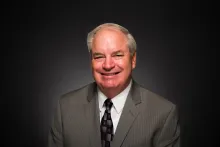
Robin Webber was born in Chicago, Illinois, in 1951, but has lived most of his life in California. He has been a part of the Church of God community since 1963. He attended Ambassador College in Pasadena from 1969-1973. He majored in theology and history.
Mr. Webber's interest remains in the study of history, socio-economics and literature. Over the years, he has offered his services to museums as a docent to share his enthusiasm and passions regarding these areas of expertise.
When time permits, he loves to go mountain biking on nearby ranch land and meet his wife as she hikes toward him.
