


Robin S Webber
This transcript was generated by AI and may contain errors. It is provided to assist those who may not be able to listen to the message.
Here we are a couple of weeks beyond the festivals that many of us just experienced. But I want to draw you back to the last day, the eighth-day festival, and to remember the end of that service that most likely either a senior pastor or perhaps the coordinator got up. And he gave a prayer, and in that prayer he asked a blessing. And he said, you know, what we have experienced here this year is so incredible and so fantastic.
And now, Father above, bless your people. Send them out. Help them to remember what they learned, and help them to indeed reflect your values and to spread your gospel. Whether we recognized it or not, basically we asked a blessing at that end of that festival. My question is, do you know how to use it? And do you know what it means to be blessed? We, at the beginning of this message, we asked a blessing. The gentleman got up and he asked God to be present. He asked God to bless the messages, to bless the fellowship. Oftentimes on the Sabbath of the year, we have a blessing of the infants, a blessing of the children.
We don't have any this year, but many years we do have that. At the end of this message, we are going to conclude with what? We're going to conclude with prayer and ask God to bless our fellowship, to bless us as we go back out to Pacoima or Arleda or Northridge or Woodland Hills or Ventura, or maybe back to Glendora. We ask God to bless us. Sometimes when we're in the supermarket or maybe in the line wherever we might be, or we have an encounter with somebody, not just people that are in our faith community, but people that we don't even know that are of faith community and we'll run into them and something will happen.
You'll share an experience or they'll share their experience. And what will they say? They'll say, I'm blessed. When you hear an individual say that, I am blessed, you know that there's something that's going on not only in their head, not only springing from their mouth, but there is something that is lodged in their heart. They are not living an accidental life.
They are living a life by design and a life that has been surrendered to the Almighty. And they look to that Almighty to intervene in their life, sometimes with things that they like, sometimes with things that they don't like, and yes, sometimes with things that they don't understand at that moment. But when I run into that individual and or individuals at times and I try to do the same, I never say that I'm lucky. As a disciple of Jesus Christ, I don't live my life by luck.
I consider myself a blessed individual. Allow me to begin this message by inserting right here that I hope that this will be one of the most important messages that you've heard in some time from me. Because I've thought about it and I want to share it with you from the heart. And something that I want to get right out front is simply this. Our greatest blessing is that we worship a God that wholeheartedly wants to bless us. We worship a God that wholeheartedly wants to bless us.
To bless us. Sometimes because of our background where we're from, life's forces, life's circumstances, it's hard for us to understand what blessings really mean. Well, that's what this message is about. Bottom line, I might ask you as we come off of the festivals, do you feel blessed? Do you feel blessed from the Almighty? If you do not feel blessed, I would suggest that there is something missing. And that's why I want to bring this message to you today. I want you to understand that in your heart of hearts, that God in his divine heart wants to bless each and every one of you.
Now, as we go a little bit further into this message, please understand, when I talk about God wanting to bless us, I'm not talking about a health and wealth gospel. Blessings entail a lot, and there can be a lot of bumps and lumps and mountains along the way. But the end result is simply this. I say, by the authority of Scripture, that God wants to bless each and every one of us. Sometimes people will look at the New Testament and they'll say, oh, I just love the New Testament. It is so positive.
It is so encouraging. Just just think of that story of the prodigal son in Luke 15. And with that wonderful father that is out there and the door is open and his arms are open and he's running towards the father, running towards his son that is returning back home. Now, that's a God that I want to worship. That's a God that I can embrace because I know he embraces me. At the same time, they might say, some will say, but that God that's in the Old Testament, he's kind of crusty.
That's the God of lightning bolts and thunder and earthquakes. I beg to disagree. I think we that are in the Church of God community and those that are visiting with us and beginning to open up the Scriptures recognizes that this book that we open up every week in our Church is really one revelation. It is one heart and one mind between two covers, isn't it? It is man that divides it between Old Testament and New Testament.
It's a man that talks about an Old Testament God and a New Testament God. Let's understand something, friends. God wants to bless us, and God has never changed his mind or his heart from the Old Testament through Malachi to the New Testament. He wants to bless us because God is the same yesterday, today, and forever.
So today, we're going to focus on simply this, and I'd like to give you the title of my message and exactly where we're going. And if you are daring enough, you want to take out a pen or a pencil and have a note, this is going to be what I call a note taker's delight because we're going to break down some verses. We're going to go by it word by word.
And what I want to do, brethren, in my heart of hearts and by God's blessing on me as the speaker today, is to be able to have you etched in your heart and in your mind and to divorce yourself from the negativity of this world and what's going on, or even the negativity of your past and the encounters of the past, and to recognize that we have a God that wants to bless us. So the title of my message is simply this, the God who blesses us. And in so doing, in so doing, we're going to go through a very special blessing that God gave to ancient Israel.
And it's not only a blessing for blessing's sake. I bless you. It's not just a blessing.
The blessings that God gave to be inscribed for all times upon a covenant people is more than just simply that goes out. God's blessings describe what He is like. That's what blessings do, okay? Blessings describe what God is like and what God is doing.
And that's why they're recorded in Scripture. Why does God give us Scripture? So that we can read it on our own with no man between us and God? So that we can understand and experience God unfiltered. Unfiltered. Undiluted by man. Undiluted by what others think about God, but what God says about Himself. And that is what is so important about blessings. And of all places to think about it, that we're going to turn to is the book of Numbers. Now, a lot of you might think, well, the book of Numbers is just about a lot of numbers and numbering of the tribes. And for those of us that have studied the Word of the Spirit, oh, that's the book with all the trials and all the problems and all the troubles and the Israelites. It seems like every time they went around the bend something was happening. But smack dab in the middle of Numbers is the blessing that God wants each and every covenant person to understand about Him. And not only Israel of old, let's understand what blessings are about. When God gave this to Israel of old, back in the book of Numbers, Israel was moving from Egypt, from what we might call the world, crossing a gulf of the Red Sea, and moving towards the land of promise. They were moving from one world that they had known for hundreds of years and moving to a new world that was promised. And they were going through a lot. At the same time, we that are the spiritual Israel of God, as Paul says in Galatians 6, 16. Again, covenant people, we're moving between two different worlds. The world that is around us, the world of humanism, secularism. Unfortunately today, the world of terrorism, the world of disease, the world of personal challenges that you and I have. And we're moving through that better world, that better society, called the Kingdom of God. So God wants us, just as much as ancient Israel, to understand that He is a God who blesses us. With that as a preamble, let's turn to number six. Number six, and you might want to put your book marker there, because we're going to go back and forth, and we're going to continue to focus on this. I like to read through number six, beginning in verse 22, and then move through it, and then we're going to go back and take it apart word by word and piece by piece. And the Lord spoke to Moses, saying, speak to Aaron and his son, saying, this is the way that you shall bless the children of Israel. In other words, whenever you bless the children of Israel, and so God already had an expectation in mind, when you do this, don't only just say, bless you, bless you, but this is the way that you will do it. Just like in the Old Testament, you come to understand, God not only wants to be worshipped, but He describes how He desires to be worshipped. Therefore, He says, this is the way you shall bless the children of Israel, to say to them, the Lord bless you and keep you. The Lord make His face shine upon you and be gracious to you. The Lord lift up His countenance upon you and give you peace. So they, speaking of the house of Aaron, the priest, so shall they put My name on the children of Israel, and I will bless them.
This is why, long ago, God inscribed this as a function of the priesthood. And I believe also it is a function of the ministry of Jesus Christ today to share this blessing, because it is God's self-disclosure about Himself. What He is saying, brethren of Los Angeles, is simply this, I want My people to know how I feel about them. I want My people to know how I feel about them.
So place this declaration of blessings on them again and again and again until they get it, until they understand it, until they absorb it, because I am their God and I want them, therefore, to be My people. That's what the Bible is about. And as they turn to Me, and as they surrender to Me, and as they covenant with Me, I will bless them. Now, them is a plural, and it's a collective, but we're going to come to see so often, because so often you say, well, what is in it for Me? We'll see that it comes down to, I will bless you individually. So, what we want to understand in this very short, brief set of verses, you might want to jot this down to stay within the message. There are six great truths, six great truths about God's and how He blesses, and therefore describing what He is like. But before proceeding any further and discussing those six great truths that describe the God of blessing, we also need to understand another rhythm about this blessing. Are you ready? I said there's six great truths. But to understand that this specific set of blessings is divided into three parts. Are you with me? Three parts. And each of those three parts has two verses to it. So far, so good? Are you with me? And also to recognize that there are two personalities within those blessings. It starts with God, but the direct object of God's blessing is a person of covenant, and it always winds up with you and what God has in store for you, and collectively what God has in store for us. Now there are six great truths, but I want to add one thing. There is also a seventh element to this, which is the very ending, which will offer the divine completion, which we're going to share at the end. Therefore, let's move together now as a congregation. The first section, you might want to jot this down to understand what our God is doing on your behalf. God reminds us in the set of blessings that He alone is our provider. God alone is our provider. Let's take a look at it right here. Verse 24, the Lord bless you. The Lord bless you. When I say this, brethren, and I realize some of the lives that you're living, circumstances that you're going through, can we talk? And let's be honest, some of us have a bumpy road ahead of us, maybe even today as we're coming into this assembly. The divine fact is He wants to bless us even more than we want to be blessed. If you're a parent, if you're a grandparent, you tend to understand that, don't you? You understand that you want more for your children and your grandchildren, even when they don't recognize it, even when they don't recognize it, how much you want to see life's blessings for them. God's blessing is a wonderful reality throughout the Bible. Blessings are as old as the Bible. In fact, blessings move beyond the Bible and move beyond time because blessings are a very part of the uncreated God. You know, when you think about the Bible, the things that occurred in the Bible, the blessings that occurred in the Bible, remember Adam and Eve, the very beginning, first man, first woman? What's it say? It says that God blessed them and said, Be fruitful and multiply. On the seventh day, this sacred day, this holy day, God said, He blessed the Sabbath and He hallowed it. He put His very presence into it. Noah, after the deluge, God blessed Noah. God blessed Abram. God blessed the children of Israel.
Jesus on the mount gave the seven Beatitudes and offered blessings. Even as Jesus was ascending up to heaven, as He was ascending, He blessed the disciples and gave them all power and all authority in His name and the Father's name and gave them a blessing to go out and spread the gospel around the world. Later on, you see the blessing that God gives in the book of Revelation. There are seven Beatitudes in the book of Revelation. What I want you to understand as one who shares the gospel of goodness and blessings is simply this. The Bible is not simply a book about love. It's not just simply a book about law. It is also, within all that, it is a book about blessings and what God wants to do for each and every one of us. But what does the word blessing literally mean and what is God trying to tell us about Himself? We've got to combine two different languages, two different words, and we're going to put it all together. The word in the Old Testament, which is written in Hebrew, the word is barak, which means a declaration. It means a proclamation. It means a forceful statement that is going out. Now, in the New Testament, interesting, takes a different slant. The word there is macarios, which means to be happy. Now, let's understand that in the first and second century, when you look at extra-biblical literature, that the world of antiquity used for the island of Cyprus. Do we all know where Cyprus is off of Israel? Cyprus was called the Happy Isle. It was called macarios. The thought there being that this island had everything that was needed to have a full society. It was fertile. It had harbors. It had flowing water from the mountains.
The world of antiquity kind of looked at Cyprus with a little bit of, do I dare say, coveting. This was the happy place. This is what is sufficient. It was all encompassing that they had everything that they needed, and therefore it was called macarios, happy.
What does that remind you of? Remember what we say at times when we repeat the 23rd Psalm? The Lord is my shepherd.
I shall not want. In Him is all sufficiency. In Him is the source of all safe harbor, all living water. All that might be fertile in my life comes from God above that has called me, saved me, and blesses me as He sees fit.
In all of that, some people, so when you look at, let's go back a second, so when you go to the Beatitudes and it says, blessed are those who mourn, blessed are those who are poor in spirit. That's saying, happy are they. Fullness is theirs.
But you have to surrender something. That means ourselves to be able to receive God's blessings.
How much does God want to bless us? Join me if you could in Luke 12, verse 32. Luke 12 and verse 32. Keep your book marker there in number six because we're going to go back to it. In Luke 12 and verse 32, let's see what God ultimately wants to bless us with.
It says here, do not fear, basically, because as human beings we do. Our knees can knock, our hearts can knock, but we're still in this human tent. Do not fear, little flock. For it is your Father's good pleasure to give you the kingdom. Again, notice what it says here. It's his good pleasure. In the Greek, the word pleasure means to think well of. And to what? To give you, to give me the ability to come into his presence and to experience his realm.
The first major self-disclosure that God gives us is simply this, and that is he's telling us that he wants to bless us. The Lord bless you. Number two, the second great truth is this regarding his provisions. He wants to keep us. Join me, if you would, again in Numbers 6 and verse 24. The Lord bless you. So all blessings proceed from him, and it says that he wants to keep us. You know, there's a phrase in our society. It speaks of a kept individual.
Well, you know what? I like to, this may surprise you, I am a kept individual. Hope that's not shocking. Sometimes it's used in a negative about a kept individual. I am kept. Number one, I'm kept by Almighty God through a covenant. Number two, they'll take care of it. You can just look up here. Don't worry about them. Number two is that I am kept also by my wife. I like being kept by Susan. I'm a kept man.
Again, another covenant relationship. But that all stems off of this, where it says that he wants to keep you. I want you to keep on going back and noticing the dynamics of the verse. Starts with God, and you are the direct object of God's attention. He wants to reassure us, brethren, that he is watching over us physically and spiritually, that we're not alone.
Because at times we do feel we're alone, and we're in, shall we say, good-bad company in that. At times Moses felt he was alone. Elijah felt he was alone. Gideon felt he was alone. We see in the book of Revelation that even the saints of God, down through the ages at times, feel that they are alone. And they say, how long, O Lord? Where are you? We need to recognize. And what this blessing does is to wake us up and to mold our hearts and to mold our minds that God is on the job and that God is awake. Allow me to use this word here. It says, keep, keep. The Hebrew there is the word, Shinar, which means to observe, which means to take heed. The Scripture tells us that God never sleeps, never slumbers. He's always looking down on this earth. In fact, it's very interesting when you see the apocalyptic literature of the book of Revelation, when it talks about one of the heavenly creatures that surround God's throne.
Hear this. It's that one that has all the eyes in the front and all the eyes on the back.
Kids, you know how your parents sometimes say that they have the eyes in the back of their head to keep watch on you? Well, there is an angelic being up there that has eyes, has more eyes on it on its front and its back than a zebra has stripes. What is that telling us? It's telling us that God is always watching. He's always observing. From those that are on the back row to those that are here on the second row, God never loses track of who you are, where you are, and what He's promised you and what He has done for you through His Son Jesus Christ. You are not alone. You're not walking down here alone. You're not like Tom Sawyer walking down the streets of Hannibal clicking a stick along the wooden fence to make some noise so you know that you're not alone. God knows exactly what's going on down here. Join me if you would in Psalm 121. In Psalm 121, let's pick up the thought, if we could, in verse 1. This is one of the more famous Psalms, but I think it's unique as we couple it with this thought about the God that keeps us. In Psalm 121, notice what it says, I will lift up my eyes to the hills. From whence comes my help. Very poetic, very prosaic, kind of beautiful literature. We read that sometimes, especially on funeral memos announcements, where it says, I will lift my eyes into the hills. From whence comes my help. Need to understand what this is talking about.
We as human beings tend to like to keep matters in our own hands. So did the people of antiquity.
A hill was normally where the castle or the fort was. Not so much a castle, but the fortification when this was written. You build it on the top because that's where it was secure. And so people, it says, from whence comes my help. And it says that from whence comes my help, I will lift my eyes to the hills. And that's a question mark. What it's saying is that where you really want to go. And is that where you want to lay your life down by what man can do for you? And or is there something else? David says, in a sense, I reject that. I dismiss that. I put that aside as lesser. Here's where my help, where my keeping comes from. My help comes from the Lord who made heaven and earth. He will not allow your foot to be moved. Notice, notice, he who keeps you will not slumber. Behold, he who keeps Israel shall neither slumber nor sleep. The Lord is your keeper. The Lord is your shade at your right hand. The sun shall not strike you by day nor the moon by night. The Lord shall preserve you from all evil. And he shall preserve your soul. The Lord shall preserve you going out. And he'll preserve your coming in from this time forth and evermore. The key here, brethren, is to recognize that the Lord is our keeper. But we also need to understand our responsibility. God not only keeps us, but we have a responsibility in this. Turn to it with me to Jude. The Book of Jude, small book, one page or so in the Bible, offers something very interesting that maybe we've never noticed before in our scripture reading. In Jude, that little book right before the Book of Revelation.
Notice what it says in verse 21. Keep yourselves.
Now we are kept because we have surrendered our personal sovereignty to the great sovereign of the universe. But then notice verse 21. Keep. So we have a response. God not only keeps us, but now we have a responsibility. Keep yourself in the love of God, looking for the mercy of our Lord Jesus Christ unto eternal life. It's hard to surrender your life to somebody that you don't fully understand. God does not want us to surrender our lives and our existence and our minds and our hearts and our souls out of fear and out of dread. He wants us to surrender our lives because He surrendered the greatest life of all.
He gave us His love, personified in the sacrifice of Jesus Christ. Sometimes people will say, well how do I really know that God loves me? And we always have to go back to this basic, God so loved the world. And you fill in the blanks and its two names, Jesus Christ. We have that responsibility and that's very important.
I want to now go to the... let's go back to Numbers. Let's go back to the second aspect, the second section that God deals with, section that God deals with in this blessing. And this section is designed to reveal that He is forever gracious. He's forever gracious.
The third... notice what it says here under this... the third eternal truth is this. The Lord make His face to shine upon you. The Lord make His face to shine upon you.
What does that mean? A shining face is the mark of pleasure.
The mark of pleasure as it's turned and direct-directed to somebody.
Now, when we think of a face, it can go two different ways. Now, this is going to be my PowerPoint, so get ready, okay? It's going to go real short. It's not going to be on the screen long because this is the screen. What kind of a face is this? I'm going to focus on Robert. Please don't take this personally.
He wilt it. What a difference from that. This is the best smile I can bring forth, okay? But, you know, and He's smiling at me. It's an upper. It brings you up.
A smile is one of God's greatest gifts that He put into the creation of man and woman.
And it is remembering that we are made after His image and likeness. God smiles at us. Have you ever thought of that? That God smiles at us? The Lord make His face to shine upon you. There's nothing better than a shining smile. There's nothing better than a child running to you and you picking him up in your arms and you holding him or a grandchild and setting them on your lap and they're looking up at your eyes and you're holding them and they're smiling at you and they tell you that they love you. That's a beautiful thing. And that puts a smile on your face.
It tells us that the God that I worship, that you worship, the God that is revealed in the blessings that He gives us, is a God whose face shines upon us. What a beautiful truth.
What an incredible experience. Why is this so important? That's to recognize that conversely, we do not worship a God that is ticked off. He's not a ticked off deity.
Have you ever been around people that you just seemingly can never please?
Oh, some of you are nodding. I'm not the only one. Good. There's just some people that you can never please. You can never measure up. It's always you get into this and religion is like this. Christianity can be like this. If I do this, if I do this, if I do this, and you start climbing this ladder of legalism. If I do this, if I do this, if I do this, if I do this, God will finally love me. God will finally like me. God will finally smile His countenance upon me.
And we probably transpose our past experiences, perhaps how we were raised.
There was a father that was not kind. There was a mother that was stern. There was a crazy uncle. It's always the crazy uncle. There was that teacher that was down on us. There was that bully that somehow we got to school and we had to start pleasing him so we wouldn't be beaten up. A lot of things go into our life where we spend the last 60 years of our life getting over the first 20. God says He smiles down upon His covenant people. And that's why He says, House of Aaron and ministers of God today, when you bless God's people, bless them with this blessing, remind them of what I am like. Not what man says that I am like. That's why He put it squarely right here in Numbers 6, 22 through 27. God smiles down upon us. Notice now the fourth great revealed truth that says here, And be gracious to you, and be gracious to you.
God is gracious and unto you make it individual, the good God, the great God, the loving God, the all-knowing God, the merciful God is gracious. And how wonderful that is.
That's hard to understand in a world that is increasingly, dear friends, becoming more ungracious. A world that in one sense has always been tit for tat, eye for eye, tooth for tooth, bone for bone, but it is even becoming more coarse, more ungracious, more busy. Have you ever been driving down one of your freeways here and you look in the rear view mirror and you see an officer in your rear view mirror and you're beginning to think of what did I learn or not learn at the DMV, right? You go, oh, I've really been trying to be, oh, oh, he passed me. And he gets the guy in front of you, get him! Oh, you've all done that, I can tell by your scallows laughter, okay? That's not what we want to be, brethren. You and I have been visited by God's graciousness and by God's love. We've had the sacrifice of Jesus Christ apply to us.
Grace means God's favor in the Greek. It means to be, in a sense, a gifted existence, a charmed life as it were, Charis in the Greek, charismatic, the gifts of God's Spirit.
And of all things, we've been gifted by God's grace.
I want you to jot down three words. Please jot these words down. They will change your life. Justice.
Justice. Underneath justice, put mercy.
Justice. Underneath that, put mercy. Underneath that, put grace. Are you with me? I'm going to give you a definition. Number one, justice. Justice is getting what we deserve. Justice is getting what we deserve. Mercy is not getting what you deserve. What's left with grace?
Grace is getting what you don't deserve. It's getting what you never expected, could never even dream of, is outside of the realm of the physical.
Actually outside of the realm of time and space that God intervenes in our life.
We need to understand that God is gracious. That same God who came in the flesh, Jesus Christ, who on that night of his betrayal looked at Peter, and Peter looked at him and said, though all men betray you, I will not.
And Jesus looked him squarely in the eye, and he said, Peter, you're going down because Satan has asked for you. He wants to sift you like so much wheat. So you're going down. Just get ready for it. I know you're not, but get ready. You're going to go down. But when you return, feed my sheep.
See, God, as the Son of Man and the Son of God, already knew what the future is going to be like because he knew what his and the Father's nature and attributes are all about. God is gracious. Brethren, as we begin to move away from the festivals and experiencing the kingdom of God for seven days plus one, this is the Christianity. This is the life. These are the promises. This is the approach. This is the attitude that we need to share with one another, that we can be a blessing to others as God is a blessing to us. That is the good news. That is a part of the gospel by how we impact people and as people see that lighthouse of God's way in our life. And we welcome them as God has welcomed us into his family.
Let's go to the third section very quickly. The third section is simply this. It reminds us of God's inexhaustible favor. The fifth truth, and these are going to go very rapidly now, the fifth revealed truth is simply this, where it says that he will lift up his countenance upon you.
He lifts up his countenance upon us. Let me ask you a question. May I? Have you ever been in a conversation with somebody where they don't really want to be there? Or am I the only one?
And I talk a lot. I talk to a lot of you. Oh, have you ever been with somebody that really wishes that they were somewhere else and they keep on looking around looking for somebody else to talk to? And here you are. You're pouring out your heart. You're pouring out what's going on. You're pouring out maybe a blessing. Maybe you're pouring out a challenge that you're going through. And all of a sudden the cell phone rings in the person's pocket. He picks up. Oh, be right over. And here your heart is out on the table.
If I can make a comment, the first time it happens, you can blame the other person. If you go back and try to do that with that person again, you've got a problem.
But the situation is simply this. How often have we needed attention? We've needed an ear. We've needed a heart. To understand where we're at in the journey of faith that God has set before us. And it seems like nobody's listening. Nobody's concerned. Nobody is being gracious. Nobody wants to keep you. God says, my countenance, my presence, you have got my full attention. Your hero above, that apostle, that heavenly apostle, that Savior, and that high priest, has brought your petition before me. God speaking, the Father. And you've got my full attention. I know exactly where you are. I know exactly where you've been. And you know what? I also know exactly the future that I have set before you. I am all ears. I am all eyes. I am all heart. I will be your God. You will be my person. You will be my people. And you can know that I am going, what I have started, I am going to finish to a good end. The sixth point that we look at here says this. The Lord lifts up his countenance upon you. You have his full undivided attention.
That's what makes God God. And it says, and I will give you peace. I will grant you peace. John 14, 27. Join me there for a second. In John 14 and verse 27, Jesus, on that last night of his life, gave a blessing. Gave something from God. He said that it would come.
In John 14 and verse 27, notice what it says here. Notice what it says here. Peace, I leave with you. My peace, I give to you. Not as the world gives do I give to you. It's not cheap peace.
Doesn't come even easily, but I will give it to you. Let not your heart be troubled, neither let it be afraid.
That's why, dear brethren, I love so very much our Jewish friends that when they come into somebody's life, they say Shalom. And when they leave somebody's life, they say Shalom. They say peace.
Shalom is not just only a word, it is a blessing.
So the Jewish faith community begins with a blessing as they greet somebody and they leave with a blessing.
Entering the door into a relationship, you are blessed. Is that not neat? And as you leave, I don't want to sadden Mr. John Garnet. I don't think he's here right now, but I think Shalom is even better than Aloha.
Because it's godly.
But when the Jews says that blessing, he's not just saying, oh, just have a wonderful existence. You know, just have a Disneyland world. You know where it's free admission to Disneyland every day.
That's not what the Jew is saying to the other person.
And that's not what Jesus was saying to the disciples then or now.
He's saying whatever you are going through, I will give you the tools. I will give you the spiritual instrumentation. I will give you my example. I'll give you my spirit. I will send my angels to you. Whatever it takes, the instruments, the tools, the wherewithal, it will be there. And at times you will feel lost.
Just as some of you in this room today may feel lost and may feel that your life is going nowhere fast. I'm here to remind you as God's minister, Jesus himself said, I leave my peace. You can understand the Bible. You can understand what may happen in the nations in the future and what's going to happen in the world in the future. And you can recognize that's going to be a problematic world. But if you do not understand the peace of God that you are blessed with now, how then can we help those that are in the future?
This is what we are to meditate on, brethren.
You want to see a church that is growing. You want to see a church that is a lighthouse to this community in Eagle Rock, San Gabriel Valley. You start going through the blessings of God and incorporate them in your life.
You begin to be that lighthouse. You begin to understand what God is like by understanding his blessings. Okay? And you will be the most attractive light that God can possibly use.
You don't have to be old like me.
You don't have to be middle-aged. You can be 12. You can be 15. You can be 18.
Brethren, we need to recognize as we move forward this instrument within the body of Christ that the gospel in the world of antiquity was carried by more than just simply a paul or a barnabas or a sylvanus or a timpothy. It was about people that were going from village to village.
It was about people that were sharing a life that had come to this world.
And the people that heard those people talking about that life saw that life in them and began to ask questions, began to find answers, and became a lighthouse to themselves.
Let's look at number seven. This is beyond the three sections. We'll conclude with this.
Join me again and we'll conclude in Deuteronomy 6.
Let's understand what God has said here. Here's what I want you to understand, brethren, as we conclude. God told His holy priesthood in Israel, and I believe that He tells His ministry today, when you bless the people, this is how you're to bless them. This is what you're declared of them to describe what I am like and what I want to do for them. The Lord bless you and keep you. The Lord make His face to shine upon you and be gracious to you. The Lord lift up His countenance upon you and give you peace. But now, point number seven. God saves the very best of last. Notice what it says, so they shall put my name on the children of Israel.
Notice the last part. And I will bless them.
Let's understand what that means. Today, in the modern world, we say, would you please write your name? So, in our western mindset, we look at a name as a signature. We look at it as a mark. It's a fancy X, sometimes multiplied 15 or 20 letters.
In the world of the Bible, a name encompassed everything that an individual was. The family name, the nature of the family, the attributes of the family, the history of the family.
God says, I will let them know that I am going to put everything that my names describe, and I'm going to place it on them. And He says, and I will bless them. Can I ask you a question? Last question I'm going to ask you. Have you ever run into a family member or somebody at school, and they said, you asked them of something, and you know what they did? They said, oh, I'll do it. Six years later, you're still waiting for them to do it. Well, I'll get to it.
See, brethren, what we've come to understand is the reason why many of you were baptized in this back history behind me, or wherever you were baptized, because you had a faith, and you surrendered your life. And you said, I'm going to surrender my life to God the Father through Jesus Christ. I'm going to repent. I'm going to believe. Because there's a promise.
A promise that says, I will be your God, and I will be your people. And I trust, and I have living faith in God, that when I come before His throne with Jesus Christ as my heavenly high priest, bringing my petition, and I ask God in His goodness and His graciousness to deliver upon that, I know He will do it. He may not do it the way I want it to be done, but He is going to do it so that I might move towards salvation. Brethren, this is an incredible set of scriptures. This is the kind of church, a godly church, that we need to be to understand beyond what God does for us, what He is. You know, I shared this thought. I didn't have a chance to express it on the eighth day, and I'll express it to you. I ran out of time, and that is simply this. On the eighth day, you know, so often we think that if we can only make it, if we can only be there, and we can't make it on our own, it's only by God's grace. But why do we want to share eternity in that relationship with God the Father and Jesus Christ forever? Just so that we can be able just so we can get some heavenly carrots. You know, we often lead people by carnal carrots, or we put the carrot in front of the mule. We put the carrot in front of the horse. We put the milk bone in front of the dog to have them do something, Pavlovian.
I have to ask myself, why do I want to share eternity with God the Father and Jesus Christ? Is it so I can gain one more thing from them? Is that why we follow God? Simply for a heavenly carrot. And the carrots are there. It says He brings His reward with them. Please don't dismiss that. But I would like to think that if God never gave me another thing in my existence, He has already given me everything. I don't need anything else but to experience Him.
He wants to experience me. I want to experience Him.
Because He's already blessed me so very, very much. He doesn't need to do any more.
If He does, that'll be His choice. But I want to share the eternity that lies beyond time and space so that I can meet, so that I can be with the One who blesses, the One who keeps, the One who smiles upon me, the One whose countenance is always upon me, the One whose name is upon me, and the One that has never failed me for 63 years. When He says through His ministry and through His priests of old, here's the story. Hear the blessings and remind them, as they've surrendered their life to me, just remind them one more time. Every time you bless them, just remind them, I will do it. May God bless each and every one of you.
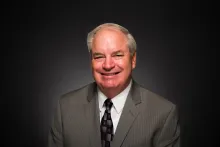
Robin Webber was born in Chicago, Illinois, in 1951, but has lived most of his life in California. He has been a part of the Church of God community since 1963. He attended Ambassador College in Pasadena from 1969-1973. He majored in theology and history.
Mr. Webber's interest remains in the study of history, socio-economics and literature. Over the years, he has offered his services to museums as a docent to share his enthusiasm and passions regarding these areas of expertise.
When time permits, he loves to go mountain biking on nearby ranch land and meet his wife as she hikes toward him.
