
Don Ward
This transcript was generated by AI and may contain errors. It is provided to assist those who may not be able to listen to the message.
As I said earlier, the title of the sermon today is Holy Relationships. Is God real to you? Is God real to your children? Those of you, young people there, five years old, six years old, and older. Is God real to you? You know, with our grandchildren, back earlier with our children, we used to ask those things. Who made the moon? Who made the stars? And all of that. And in Sabbath school, I've asked Mrs. Webb to really emphasize God and Christ, getting to know God and Christ, laying that foundation and developing a relationship with God and Christ. So is God real to you? No matter what your age is. God real to your children, to your grandchildren. Or is God a name that you use in abstract and refer to time to time as someone afar off? Invisible, yes, He is. But He says in His Word that He is ever present, that He's with us and He'll never leave us nor sake us. Do you and your children have a relationship with God?
Do you walk with God? Do you talk with God on a daily basis so that He is real to you? Not just abstract, not just someone that you would call on in a time of trouble, but someone that you daily have communication with. Do you know and know that you know that God is walking beside you? Beside you, side by side. Is it possible to develop a relationship with God to the point that you know and know that you know? Let's look at Genesis 3 at a man. His example here. I wonder what it would be like, of course, to live this long for one thing and to have a relationship with God and walk with God as this man did in Genesis 5.21. Genesis 5.21. And Enoch lived 60 and 5 years and begat Methuselah. And Enoch walked with God after he begat Methuselah 300 years. Enoch walked with God for 300 years. And all the days of Enoch were 365 years. And Enoch walked with God and he was not, for God took him. God apparently translated Enoch into a different place. Of course, some people say, well, he was taken up into heaven.
No, Jesus Christ clearly says in the New Testament, and also Peter's sermon in Acts 2 on the day of Pentecost, No man hath ascended into heaven except the Son of Man who came down from heaven. We know that at the resurrection we then will be caught up in the air and taken to wherever Christ wants to take us. Notice Jude 1. In Jude 1, in the New Testament, Enoch is spoken of almost the last epistle in the whole Bible. Jude is just before Revelation. Jude has one chapter. In Jude 14.
And Enoch also, the seventh from Adam, we just read about him, walking with God for 300 years, prophesied of these. Now, these, that pronoun is referencing those ungodly people, beginning with the angels that rebelled and on down to that time. Enoch, also the seventh from Adam, prophesied of these, saying, Behold, the Lord comes with ten thousands of his saints. So, Enoch knew about the coming of Jesus Christ way even before the flood, before Noah's flood. And he's coming to execute judgment upon all and to convince all that are ungodly among them of all their ungodly deeds which they have ungodly committed and of all their hard speeches which ungodly sinners have spoken against him. Now, who are these? Who are these? The ones that he's talking about here. These are murmurers, complainers, walking after their own lust and their mouth speaks great swelling words, having men's persons and admiration because of advantage. But, beloved, remember you the words which were spoken before of the apostles of our Lord Jesus Christ. How that they told you there would be mockers in the last times who would walk after their own ungodly lust. These be they who separate themselves, sensual, having not the Spirit. Brethren, are you constantly reminded about walking with God, talking with God? What about your children? Are they constantly reminded of God and who he is? How important it is to recognize God as your creator, as your father? As the article in the bulletin states concerning how even the majority of the youth who attend church in America today, and of course this is talking about basically the nominal Christian professing churches, that they have already separated themselves in their hearts. One of the things that I believe we have failed to do is teach our youth accountability and to let them know that they too can have a relationship with God and with Christ at a very early age. In other words, what this article is saying, what this research says, they're not really with it. As we say today, they are present in body and go through a certain form, but their heart and affections are somewhere else.
Now I'm quoting from the article, if you look around in your church today, two-thirds of the young people who are sitting among us have already left in their hearts, soon they will be gone for good. Sadly, historically, we've been able to maintain only about a fourth or so of our young people. The study found that we're losing our kids in elementary, middle school, and high school rather than college. And then this article says the Sunday School Syndrome is contributing to the epidemic rather than helping alleviate it. So what the churches of the world have done is try to develop all these programs that will attract the youth to their church services, and it becomes more of a social club, and then it does really a club about spiritual things. I shouldn't use the word club, but an organization, a spiritual organism that really teaches who God is, what God is, and what is His purpose. And how do I fit into that? Why was I born? Why am I here? Why do I draw breath?
And of course, they're taking that on up to the adult stage too of drive-in churches and drive-by churches, cowboy churches, and all kinds of churches, trying to appeal to some. And hopefully some way to get them to attend is if that is a goal within itself. They be all the in all. This is an alarming wake-up call for the church, showing how our programs and our approaches to Christian education are failing, and our children are paying the price.
Though the statistics reveal a huge disconnect taking place between our children and their church experience. And so many of our young people through the years have sat here until they graduated from high school, already knowing sometimes there isn't advance. As soon as I am able, I'm out of here. And somehow, this relationship with God and understanding who and what God is, what is His purpose, and who and what is man, and what is His purpose, we really need to teach.
So what about you young people? Are you developing a relationship with your Heavenly Father, or are you just biding your time? Going through the motions, can't wait until you can join the rest of the world in wallowing in the mire. Oh, it's not what it's cracked up to be out there. The sad stories, the tear-soaked pages, and blood-stained pages of human history testify to that fact. Look at Ecclesiastes. Ecclesiastes, after Proverbs, once again Solomon the Author, reportedly the wisest man that ever lived in the flesh other than Jesus Christ.
And Ecclesiastes 11 and verse 9. Why is it that Satan and his world, and you know Satan is the God of this world, is able to convince the youth, and of course he's convincing the adults as well, that you really can't have fun, and you can't really have a good time, and be connected to God in his way, in his law, and try to please him? Well, you've got to be somehow some kind of liberated. Rejoice, O young man, in your youth, and let your heart cheer you in the days of your youth, and walk in the ways of your heart and in the sight of your eyes.
But know you that for all these things, God will bring you into judgment. Just like we read from Jude, that Enoch prophesied that Jesus Christ is coming one of these days with ten thousands of his saints, and he is going to judge the world, and especially those who have done all of their ungodly deeds. Therefore, remove sorrow from your heart, put away evil from your flesh, for childhood and youth are vanity. Now, this word vanity here is not maybe what you think about vanity and being puffed up and that kind of thing. What this means is it is temporary. It lasts a short time.
It lasts a very short time. So in view of that, Chapter 12, Verse 1, remember now your Creator in the days of your youth, while the evil days come not, nor the years draw nigh, when you shall say, I have no pleasure in them. Life is even as a vapor. You're here today, gone tomorrow, just as the hot, burning desert wind will wither the grass. We're here for a short period of time. The United Church of God International Association has determined that its critical essence, in other words, the very heart and core of our message is to focus on helping people develop godly relationships.
This should permeate all that we do in our media efforts, in our preaching efforts, in our teaching efforts, godly relationships. This focus must apply to young and to old, and no one can wave a magical wand for you. It seems in some ways we sort of treat our youth as if we'll ignore you until you get to be about 18, and then magically you ought to wake up, go through baptismal counseling, get on the assembly line, be baptized, and become a member of the church. See, it has been determined through research that a child develops 80% of his attitude toward learning by the age of six.
Now, I don't know exactly what happens and how things happen with regard to how you develop a love for learning. I grew up in an environment, household, because we were poor. When my mother and dad admired, they were chaircroppers.
We had two books, Sears Roebuck Catalog and The Little Brown Shack Outback, and The Bible in the House. And of course, there might have been a few Sunday School books or something.
We had a radio, and I started surfing the dials of the radio when I was about three and a half years old. And somehow, developed that love, that curiosity, that desire to know. To know why we are here, what's it all about? Now, remember when I was five years old, maybe I had already turned six, I'm not sure, we went to visit my first cousin.
She was a year older than I, and she had already started school. She was then, in our particular school district, we had thirteen grades, primary, first grade, and so on. And she had that Trima Reader, and I got my hands on that thing, and I was just thrilled.
It was a Sunday afternoon, and it came time to go home, and I was through, I don't know if I threw a fit, but I surely insisted, I'm taking that book with me. But they didn't let me, they said it belonged to the school, to the state, to somebody else, so I didn't get to take it.
But whatever it is, and I don't know exactly what it is, that wakes up within a person this desire to know about God, about life, and what they can do. So are we here today because of our commitment to God the Father, Jesus Christ, and the truth? Or are we here for, we're sort of swept along by the culture from the days that we were young, so many of you are second, third, fourth generation Christians. This is just what we do. And this very close, intense, loving relationship with God and with Christ, are we developing that? Let's go to Deuteronomy 30, verse 19. Deuteronomy 30 and verse 19. Deuteronomy 30, verse 19. I call heaven and earth to record this day against you, that I've set before you life and death, blessing and cursing. Somehow we can't get in our minds that the reason human beings exist is because of God's love and mercy, and wanting to share His very being with us that we even exist.
I've set before you life and death, blessing and cursing. Therefore, choose life that both you and your seed, both you and your children may live. What good is the three score in ten, and then death, eternal death? What good is that? Is that all there is to it? Or is there eternal life? That you may love the Lord your God, that you may obey His voice, that you may cleave unto Him, for He is your life, and the length of your days, that you may dwell in the land which the Lord swear unto your fathers, Abraham, Isaac, and Jacob, to give to them.
Godly relationships fulfill the two great commandments. So let's go there and read the two great commandments in Matthew 22. Matthew 22, the memory of Scripture is for the day that's in your bulletin. That's where we're turning Matthew 22 in verse 37. Every person in this room should be able to quote Matthew 2.37, 22.37-39. And if you can't, do it. In Matthew 22, verse 37, He was asked, what is the greatest commandment in the law, which commandment is the greatest? Verse 37, Jesus said unto them, You shall love the Lord your God with all your heart, with all your soul, with all your mind. Everything that is within you, love God with all your being. This is the first and great commandment. And the second is like unto it, You shall love your neighbor as yourself.
Now, how important are these two commandments? Well, people want to talk about all kind of things out there in the twigs, and about who's doing what and who's going where and this and that and the other. This says, on these two commandments, hang all the law and the prophets. If you're not there with that, then you're going nowhere spiritually, and neither am I. Jesus came to the earth to reveal the Father and point people to the Father. Let me say that again. Jesus Christ came to the earth to reveal the Father and point people to the Father. And as you heard in the special music, to worship God. Now, Jesus did receive worship, but He pointed people to the Father. Back now in Matthew 11, verse 25. In Matthew 11 and verse 25.
In Matthew 11 and 25, at that time, Jesus answered and said, I thank you, O Father. Of course, Jesus Christ prayed to the Father, showing there are two distinct entities. Jesus said, I thank you, O Father, Lord of heaven and earth, because you have hid these things from the wise and prudent, and have revealed them unto babes. Even so, Father, for it is seen good in your sight. All things are delivered unto Me of My Father, and no man knows the Son, but the Father, neither knows any man the Father, save the Son, and to whomsoever the Son will reveal him. So one of the main things that Jesus Christ did was to reveal the Father and point us to the Father and tell us, show us, how we can have a relationship with Him. Come unto Me, all you that labor in a heavy laden, I will give you rest. Take My yoke upon you, learn of Me, for I am meek and lowly in heart, and you shall find rest unto your souls. For My yoke is easy, and My burden is light. Now in John 8, the Gospel of John 8, throughout John 8, Jesus Christ has this running debate, as it were, back in 2 between Him and the Pharisees of that day.
In John 8, 19, Then said they unto Him, Where is your Father? Jesus answered, You neither know Me nor My Father. If you had known Me, you should have known My Father also. Now in verse 28, Then said Jesus unto them, When you have lifted up the Son of Man, you shall know that I am He, and that I do no thing of Myself. But as My Father hath taught Me, I speak these things. And throughout this chapter, Jesus Christ points the Pharisees, and throughout His ministry, He pointed all of us to the Father to develop that relationship with the Father. In verse 42, Jesus said unto them, If God were your Father, you would love Me, for I proceeded forth and came from God. Neither came I of Myself, but He sent Me. Why do you not understand My speech even because you cannot hear My word? You are of your Father the devil, and the last of your Father you will do. He was a murderer from the beginning, a bow knotted the truth, because there is no truth in Him. When He speaks a lie, He speaks of His own, for He is a liar and the murderer, He is a liar and the Father of it. So there are many other places that we could turn and show that Jesus Christ pointed people to the Father. He came to do the will of the Father. He spoke. He taught. He preached the things that the Father had given Him to preach.
The Apostle Paul pointed people to the Father. You would now go to Ephesians 1. I would encourage all of you this coming week to read the first five verses of all of Paul's Epistles. Read the first five verses of all of Paul's Epistles, all 14 of them, and it will be, I believe, very instructive for you. In Ephesians 1.1, Paul, an Apostle of Jesus Christ by the will of God, to the saints which are at Ephesus, and to the faithful in Christ Jesus, grace be unto you, peace from God our Father, and from the Lord Jesus Christ. Blessed be the God and Father of our Lord Jesus Christ, who had blessed us with all spiritual blessings in heavenly places in Christ. Now, not every one of the Epistles begins with such a salutation pointing you to the Father, but most of them do. The Apostle Peter pointed people to the Father in 1 Peter 1, a similar kind of salutation at the beginning of his Epistle, 1 Peter 1. 1 Peter 1.
Verse 1, Peter, an Apostle of Jesus Christ to the strangers scattered throughout Pontus, Galatia, Cappadocia, Asia, and Bithynia, elect according to the foreknowledge of God the Father. So you are here because God the Father called you. See, no man can come to me except the Father draw him. God has personally said, I want you. I want you and my family. I'm going to call you now. And it is by grace that any of us are here, as in the sense of our calling, elect according to the foreknowledge of God the Father through sanctification or setting apart of the Spirit unto obedience and sprinkling of the blood of Jesus Christ, grace unto you, and peace be multiplied. Blessed be the God and Father of our Lord Jesus Christ, which according to His abundant mercy has begotten us again. See, it is the Father who begets you. Otherwise, you wouldn't be called a Father. He is our Father. He is our Creator. Don't you want a relationship with Him? To walk with Him, to talk with Him, to communicate with Him, to be His friend, and for Him to shower you with divine favor, who according to His abundant mercy has begotten us again unto a lively or living hope by the resurrection of Jesus Christ from the dead, to an inheritance incorruptible, undefiled, and that fades not away reserved in heaven for you, who are kept by the power of God through faith and salvation, ready to be revealed in the last time. You know, I was teaching ABC class, and we focus on the nature of God and Christ, and we especially focus on Christology, the nature of Christ, because the main heresies that develop with regard to nature and Christ develop with Christ, basically speaking. Has He existed in eternity? Is He coessential with the Father? Did He pre-exist? And when did Christ really come into being? And one student spoke up and said, You've done all this talking about Christ, but what about the Father? And then you begin to give the other side of the coin. Jesus Christ pointed people to the Father. The Apostle Paul pointed people to the Father. The Apostle Peter pointed people to the Father. John, the Apostle John, pointed people to the Father. Oh yes, you want a relationship with God and Christ. But in today's world, and many of the preachers of the day, like God the Father is like in the background, but if God the Father didn't call you and begat you with His word of truth, there would be no hope if God the Father did preserve you and keep you. And let's note this more here in this chapter, 1 Peter 1. Verse 18, For as much as you know that you were not redeemed with corruptible things as silver and gold from your vain conduct received by tradition from your fathers, but with the precious blood of Christ, as of a Lamb without blemish, without spot, who verily was foreordained before the foundation of the world, who manifested these last times for you, who by him to believe in God, that raised him from the dead and gave him glory, that your faith and hope might be in God. So Peter appointed people to the Father. John appointed people toward the Father. And let's note his first John. We're in that area of Father Justin. A few pages in 1 John 1. 1 John 1. One of the many reasons why John wrote this epistle and also the Gospel of John was to combat Gnosticism. The Gnostics taught that Jesus Christ was a phantom in human form, that he just seemed to be. That when he walked, he didn't really make footprints. And he was sort of like a ghost, you might say, in today's language.
John wrote the Gospel of John and 1 John to show how real God and Christ really are.
In 1 John 1.1, that which was from the beginning, which we have heard, remember what John 1.1 says, the Gospel of John, in the beginning was the Word, showing existence. And the Word was with God, showing relationship. And the Word was God, showing identity. That which was from the beginning, which we have heard, which we have seen with our eyes, which we have looked upon, and our hands have handled, and the Word of life, was a real person who lived in the flesh. For the life was manifested, and we have seen it, and bear witness, and show unto you that eternal life which was with the Father, and was manifested unto us. That which we have seen and heard, declare we unto you, that you also may have fellowship with us, and truly our fellowship, or you could say our relationship, our fellowship is with the Father, and with His Son, Jesus Christ.
I wish I had the ability to express it so that we just... You see, it's not just that you are affiliated with the Church of God.
You have entered into a covenant with God and Christ, a covenant of sacrifice. And God really wants a relationship with you. He wants you to come to know just as He came to know... He wants to know you just as He came to know Abraham and Moses and many others.
Everything that God does is motivated by love. The most powerful, positive, motivating force in the universe is love. And the statement, God is love. And He always has our best interests at heart. His law is the summation of His love. We're here in 1 John, so let's look at 1 John 2 and verse 3.
And here we know that we know Him if we keep His commandments. See, you can't have a relationship with God unless you love Him. He so loved us that He gave His only Beyotin Son. And what defines our love for Him? Our love for Him is defined by His commandments. He that says, I know Him and keeps not His commandments is a liar and the truth is not in Him. But who so keeps His word in Him verily is the love of God perfected, hereby know we that we are in Him. And now in 1 John 5 and verse 3. 1 John 5 and verse 3. For this is the love of God that we keep His commandments, and His commandments are not burdensome. They're not grievous. So if you're going to have the relationship with God according to the Scripture, you have to keep His commandments because this is the expression of love toward God and neighbor. God instructs us on how to build a relationship with Him that leads to respect, to reverence, to awe, a desire to please, to obedience, to submission, to service. One of the things I'm trying to focus on and start up about, I want to develop a closer relationship with God in Christ. You know this downtime that we have where they say that 70% of the time you're carrying on a conversation with yourself? Well, carry on that conversation with God and Christ. So another key, of course, if you're going to have a relationship with God, you have to recognize that the love of God, the relationship, has to be based on keeping His commandments. The next thing you have to do, communication is at the heart of relationships. Communication has to do with spending time with the one with whom you're developing the relationship. And one of the reasons why relationships are so shallow today, even in the families, is because we don't communicate as we should, and we don't spend the time that we should, because we're all caught up in the rat race in having to do and having to get to the next place. As we've already noted, Enoch walked with God for 300 years. During that time, doubtlessly, he spent thousands of hours communicating with God and God communicating with Him. Communication with God is viewed as a sacrifice. Let's go back to Hebrews, just back pages to Hebrews, chapter 13. Back a few pages to Hebrews 13, verse 14.
In Hebrews 13 and verse 14, For here we have no continuing city, but we seek one to come. By Him therefore let us offer the sacrifice of praise to God continually, communicating with God. The sacrifice of praise, that is, the fruit of our lips, giving thanks to His name. But to do good and to communicate, forget not, with such sacrifices, God is well pleased. So we communicate with God through prayer, through reading and meditating on the Word of God. We talk to Him through prayer. He talks to us through His Word. Can we say with David, Oh, how love I thy love! It is my meditation all the day. I have more wisdom than the ancients because I meditate on Your Word. See, God knows our thoughts and the intent of our heart and knows what we need before we ask. But He has instructed us to ask Him. One of the reasons why it's so important to ask is that through asking, we affirm that we recognize that He is our God and He is our Creator. Notice in Luke 11, verse 13. Luke 11, verse 13. All of us should be seeking a deeper relationship with God and a greater measure of His Spirit and His mind within us. And notice what it says here in Luke 11, verse 13. Luke 11, verse 13. If you, being evil, know how to give good gifts unto your children, how much more is your Father, your Heavenly Father, give the Holy Spirit to them that ask Him? And this word, ask, here in the Greek is ayeko. It means deep desire to yearn for, to seek. It's not just like stopping at the 711 and saying, well, do you know how to get to X place? It's far more than that. You know, you look at the Old Testament and what the Jews called the Shema and the Scriptures that surround it. I wonder, would we say that the Old Covenant people who were under the terms of the Old Covenant, were they more spiritual than we are? Well, let's look at Deuteronomy 6. Deuteronomy 6. I would think that all of us, I know I would have to confess, that I don't do this as I should. I didn't do it as I should, rearing our children. I should have done far more. Deuteronomy 6. Verse 5, You shall love the Lord your God with all your heart, with all your soul, and with all your might. It seems like we read that in the New Testament. Matthew 22, 37. And these words which I command you this day shall be in your heart. You shall teach them diligently unto your children. You shall talk of them when you sit in your house, when you walk by the way, when you lie down, when you rise up. You shall bind them for a sign upon your hand, and they shall be as frontlets between your eyes. If they are frontlets between your eyes, you have memorized that. It's in your brain. It's in your grey matter. And I know most people say I'm no good at memorizing, but you can be.
Of course, in the Spirit of God, as it says in Hebrews 8 and also Hebrews 10, will help write the Word of God upon your minds and heart, but you have to put forth some effort. You shall write them upon the post of your house and on your gates. And it shall be when the Lord your God shall have brought you into the land, which he swore unto your fathers, to Abraham, to Isaac, to Jacob, to give you great and goodly cities which you built not, houses full of good things. Verse 12, Then beware, lest you forget the Lord, which brought you forth out of the land, out of the land of Egypt, from the house of bondage. So, brethren, we have to continually be on guard. We have to continually build that relationship.
In recent years, so many other brethren have allowed ourselves to become caught up in issues that divide the brethren. They get caught up in debates over men and material things that do not edify.
Oh, it admonish all of us, do not allow yourself to get caught up into the issues that divide the brethren and destroy relationships. Not only will they destroy human relationships, but they will destroy your relationship with God. Because God is not the author of division. God is not the author of confusion. God is not the author of gossip and slander. Satan the devil is. Satan the devil comes before the throne of God from time to time, as you read in Job 1 and also Revelation 12. And he is the accuser of the brethren before the throne of God day and night.
If you look at the history of humankind, the sons of men had been historically divided because of jealousy. They could develop those close bonds in relationships and love that they should have for one another. And dating back to the first two humans that were born of a woman. Remember Adam and Eve were of special creation. Then their first two children, Cain and Abel. Cain killed Abel because he was jealous. Because Abel's offering was accepted and he was not. Why was Abel's offering accepted and Cain's denied? Because Cain brought a thank offering. He didn't recognize who he was in the sight of God. That he was a sinner, whereas Abel did. And from that time to the present time, humankind has given place to the devil and allowed themselves to be drawn away by their own lust and all kinds of sin while thinking in many cases that they're doing a service to God. Well, I'm here to say God is not well pleased with that. Look at James chapter 3, verse 13. James chapter 3, verse 13. Who is a wise man? We talk about wise men. Who are the righteous? Who are the wise? What are they like? How can we identify them? What do they do? Do they have a close relationship with God and Christ and each member of the body of Christ? Or are they doing something else? Who is a wise man, in dude with knowledge among you? Let him show out of a good conduct his works with meekness of wisdom. But if you have better envying and strife in your hearts, glory not and lie not against the truth. This wisdom descends not from above, but is earthly sensual devils. For where envying and strife is, there is confusion in every evil work. But the wisdom that is from above is first pure, then peaceable, gentle, easy to be entreated, full of mercy and of good fruits, without partiality, without hypocrisy. And the fruit of righteousness is sown in peace of them that make peace. See, one of the things that I think we've been missing, of course, we can always read John 13.35, where Jesus said, by this, shall all men know that you are a men's disciples, and that you have loved one for another? The kind of loyalty and love for one another we have lacked through the years. One of the presentations at the Barrow Conference of Elders is by Melvin Rhodes, who goes very often to Africa in some of the very dangerous situations. And he does not have to go. That is not necessarily his assignment. And whatever bad thing you might want to say about him, he's willing to risk life and limb, and he goes into some of the most dangerous places on the face of the earth. He went to this one African country a few months ago. They denied him and the man traveling with him access. After some time, he had a man with him from Oregon, who spoke French. This is in French-speaking Africa. And after some deliberation, they finally let him in the country.
And he gave his presentation about godly service and loving one another. And the members there in Africa, what they said to him was, we have not seen this love historically. And so we are challenged by that. All of us should be challenged and ashamed. It's something about human loyalty, and it ties in with the sermon to some degree of not giving up on each other. And of course, there is 2 John that I could turn to if they bring another gospel into your house, don't receive them. And so everything has to be balanced with the Scripture, and both sides have to be addressed.
So some are quick to throw their brethren under the bus, as they say, in order to make themselves look good. Well, you know him, the way he is, he's always popping off, or this or that of the other. I doubt any of us would have ordained Peter. What about Paul, who was killing Christians before God struck him down and made him an apostle of Jesus Christ? We should always remember the two great commandments and all our relationships. You cannot throw your neighbor under the bus and develop a relationship with God.
As it says in 1 John chapter 4, 19-20, to the end of the chapter, that how can we say we love God and hate our brother? How can we say that we love God, whom we've not seen, and hate our brother, whom we have seen? God gets to know us through the trials and testings that we go through.
And if we are truly faithful and really believe that God always has our best interests at heart, just like the song we sing, the words are, God will see us through. He will always deliver us.
So we are here to worship God. We are here to build a relationship with Him in spirit and truth.
Our commitment is to God and Christ. We have entered into a covenant of sacrifice with God and Christ. So we can ask ourselves, is my heart in the work of God? Is my heart in the church of God? And is my heart there for the right reasons? The church of God is about doing the work of the living God.
So, brethren, I am hoping that we all rededicate ourselves so that we will develop that close relationship with God our Father, with Jesus Christ, with each member of the body of Christ.
And now is the time as never before. We read the news. We know what's happening in this world.
We know that we live in tough, transitional times. We know that we are living in one of the most dangerous times, one of the most explosive times in human history.
So now is the time as never before to really examine our hearts, our minds, and ask ourselves, what does God think of me?
Is He well pleased with me? You know, after Jesus Christ was baptized and He came up out of the water, there was a voice from heaven saying, This is my beloved Son, in whom I am well pleased.
I wonder, at times I say, I ask God, what do you think about me?
Am I really pleasing you?
And I think all of us need to ask that question. Does He know my name? Is He well pleased with His begotten Son or Daughter?
The good news is we can all develop a deep, abiding, loving relationship with our Heavenly Father. Hereby we cry, Abba, Father.
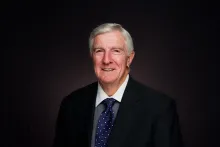
Before his retirement in 2021, Dr. Donald Ward pastored churches in Texas and Louisiana, and taught at Ambassador Bible College in Cincinnati, Ohio. He has also served as chairman of the Council of Elders of the United Church of God. He holds a BS degree; a BA in theology; a MS degree; a doctor’s degree in education from East Texas State University; and has completed 18 hours of graduate theology from SMU.
