
Don Ward
This transcript was generated by AI and may contain errors. It is provided to assist those who may not be able to listen to the message.
The title of the sermon today is The Four Passovers of Jesus's Earthly Ministry. We'll be focusing on the Gospel of John. If you want to go ahead and turn to the Gospel of John. The Gospel of John is one of the most remarkable books in the whole Bible. The vocabulary in the Gospel of John is on an eighth grade level, but the structure and syntax is unsurpassed in world literature.
Scholars marvel how could this fisherman, supposedly unlearned, uneducated, write with such profundity, such inspiring words? In the beginning was the Word, and the Word was with God, and the Word was God. I suppose that would be on a fifth grade level or less with regard to vocabulary. But in that one sentence, it shows the eternity of the Word, the relationship of the Word with the Father. And in addition to that, it shows the identity of the Word, the Word was God. The beauty, the power, the simplicity of these words, as I said, are unparalleled in literature. The book of John presents Jesus Christ as the Son of God and the Lamb of God, the one who takes away the sins of the world.
It presents Him as the light and life of the world, the one who dies for the sins of the world, yet living victoriously in resurrection. The Gospel of John reveals the true nature of God and Jesus Christ.
There's more about the nature of God and the Gospel of John than any other book in the Bible. God is Spirit. Those who worship Him must worship Him in Spirit and in truth. John is inspired to tell us that God will send us the comforter, and the comforter is the Holy Spirit. It's John 14.26. And through the Holy Spirit, the Father and the Son will abide or will live in us. That's John 14.23. So in the book of John, Jesus Christ is revealed as the Word, the truth, the light, the life, the Lamb of God, the only begotten Son, the bridegroom, the true bread, the bread of God, the bread of life, the living bread, the Son of Man, and the door of the sheepfold.
All of that and more is contained in the Gospel of John. The Gospel of John is, of course, the book we read from. After we do the foot washing and partake out of the bread and wine, we conclude by reading sections of John 13, 14, 15, 16, and 17.
And so it would be a good book to focus on if you are doing, quote, last-minute Passover preparation tonight and tomorrow. Nearly all the events recorded in the book of John focus on the four Passovers of Jesus' earthly ministry. In fact, the last 10 chapters from chapter 12 of John, from chapter 12 through 21, 10 chapters, focus on the last eight days of Jesus Christ's earthly ministry of his life here on earth. So let's note the first Passover of Jesus' ministry in John 2 and verse 13. In John 2 and verse 13, this event comes on the heels of him being, in a sense, publicly manifested at the wedding ceremony at Cana, in which he turned the water into wine after they had run out of wine.
Jesus' mother came and told him the story, and he performed what some say is his first public miracle of the water to wine. So let's read John 2.12, and after this, he went down to Capernaum. He and his mother and his brethren, his disciples, and they continued there not many days, and the Jews' Passover was at hand. So here is the first Passover of Jesus Christ's earthly ministry.
Notice what he did. The very first act of him coming to Jerusalem to begin his earthly ministry. Now, as far as the leadership in Jerusalem was concerned, from the high priests, the various priests, to the tribes of Pharisees, the Sadducees, the Essenes, and you could go on down the list of the various Jewish sects, S-E-C-T-S. There, he was an unknown carpenter's son from Nazareth, and what does he do?
Verse 14, and found in the temple those that sold oxen and sheep and doves and the changers of money sitting. And when he had made a scourge of small cords, he drove them out of the temple and the sheep and the oxen and poured out the changers of money and overthrew the tables and said unto them that sold doves, take these things from here, make not my father's house a house of merchandise. And his disciples remembered that it was written, the zeal of your house has eaten us up.
So the very first thing that he did here was to cleanse the temple. Now, you know that today we are the spiritual temple of God. And before we take the Passover, that spiritual temple needs to be cleaned. So in this act here, Jesus is showing us that we need to cleanse the temple before the Passover and before unleavened bread and be ready to receive God's Spirit on the day of Pentecost. And one of the main purposes of Passover and unleavened bread is so this temple, this place where in God's Spirit will dwell, will be cleansed and ready for the Spirit of God on the day of Pentecost.
There's an interesting couple of verses here, maybe three in John 20 verse 19. Of course, we'll be in John mainly today if you want to mark it.
In John 20 and verse 19. Now, this is way ahead of the game, as it were. This is after Jesus Christ has been crucified, buried in the tomb in their three days and three nights, and resurrected. And He appears to the disciples for the first time, evidently on that Sunday evening, after He was resurrected about 24 hours before on about sundown or just after sundown on the Sabbath before this, about 24 hours before, in John 20 and verse 19.
Then the same day at evening, being the first day of the week, which clearly identifies it as Sunday, when the doors were shut where the disciples were assembled for fear of the Jews, came Jesus instead of the mist and said unto them, Peace be unto you. And when He had so said, He showed unto them His hands and His side, then were the disciples glad when they saw the Lord.
Then said Jesus to them again, Peace be unto you, as My Father has sent Me, even so send I you. And when He had said this, now this next sentence that we're going to read here, a lot of commentators and scholars say, well, this is when the disciples received the Holy Spirit. But that is not the case. As you know, punctuation in the Bible is man-made. And what Jesus is saying here, it really should be punctuated as an interrogative, that is a question that Jesus poses to them, because at that time they were not ready. Even as you might read in Acts chapter 1 before His ascension, they were asking, will you restore the kingdom now? And Jesus said, wait here in Jerusalem for the receipt of power from on high.
So this question here, and when He had said this, He breathed on them and said unto them, Receive you the Holy Spirit? Are you ready to receive the very essence of God? Now we go to 1 Corinthians 3 and verse 16.
1 Corinthians 3 verse 16. Of course, many of the things that we say today relate to the sermon we gave here two weeks ago with regard to the sacrifice of Christ, the blood and body of Christ that was given for our sins.
In 1 Corinthians 3 verse 16.
Know you not that you are the temple of God, that the Spirit of God dwells in you.
If any man defile the temple of God, him shall God destroy, for the temple of God is holy, which temple you are. Now in order for things to be holy, they must have God's active presence within them.
Now you make the distinction between sacred and holy. Sacred things point to a higher reality.
Holy things have God's active presence in them.
Now back to John. So we see that the temple should be cleansed in every aspect of our being.
The first act that Jesus did when he came to Jerusalem, beginning his public earthly ministry, was to cleanse the temple.
Picking up again in John 2, 18.
Then answered the Jews and said unto him, What signs show you unto us, seeing that you do these things? And Jesus answered and said unto them, Destroy this temple in three days, I will raise it up.
Then said the Jews, 46 years with the temple and building, and will you raise it up in three days?
But he spoke of the temple of his body. When therefore he was risen from the dead, his disciples remembered that he had said unto them, and they believed the Scripture and the Word which Jesus had said. Now, when he was at Jerusalem at the Passover in the feast day, many believed in his name when they saw the miracles which he did.
But Jesus did not commit himself unto them because he knew all men, and he did not that they should testify of man, for he knew what was in man.
Now, evidently, the events of chapter 3, of course, you cannot prove this, but it is an assumption based on context that probably the events of chapter 3 also took place during the Feast of Unleavened Bread.
So, cleansing the temple. Jesus' first act when he got to Jerusalem, his first the first act of his public ministry was to cleanse the temple. So, let's focus on our temple for a moment, the various aspects of our temple.
We are physical. We are physical beings. We are social beings. We are mental beings. We are psychological, emotional beings. And we were created for a spiritual dimension to become spirit beings. And our life is a composite total package. In other words, the physical can affect the social and the mental and the emotional and the psychological. The physical can affect the spiritual. And then you can use each one of those. Your social life can affect your physical life, your social, emotional, and it can affect your spiritual. And you could say that about each one of these components that man is made of. So, let's focus on each one of these aspects here. What about your physical being? Are you defiling the spiritual temple of God by what you're doing physically? Now, we just read 1 John 3, 17. If any man defiles the temple of God, which temple you are, him will God destroy? So, how are you? How am I treating my body? What about diet? What about rest? What about exercise? I find out that this world, that every, basically every person that you want to talk to talks about that they are tired, that they're weary, that they are tired of the rat race they're caught up in. They can barely struggle from Monday to Sunday, as it were, as their cycle of the week usually is.
You know, the disc joc is they start talking about all three more days to go, including Wednesday on the radio or even the news commentators. Just, let's get through the week so we can pull it out on the weekend and repeat the cycle. So, how are we treating our bodies? What about diet? What about rest? What about exercise? Are you lying to yourself saying it's just a physical matter and you're letting your body go? Are you overeating? Are you drinking too much? Are you smoking? Are you taking drugs? You know, there are a lot of quote designer drugs today and more and more they're turning to prescription drugs, things like hydrocodone, that kind of thing, soma, the kind of things that they give you post-operative for post-operative pain, and people are taking those things along with the other drugs. So, how are we treating our bodies? And how important is it? How important are the words of 1 Corinthians 3, 16, 17?
Jesus' example of cleansing the temple. Now, we are social beings and you become as the people are that you interact with. It's just a fact you basically become the way that people are that you interact with. Now, there are a few exceptions. There have been a few exceptions in the course of human history, but all over, how many times have I heard? I've been involved in public or private education and church work and preaching and teaching for many years. And how many times have I heard, oh, you're such a fine boy, such a fine young lady, but they fell in with the wrong crowd, and they fell in with the wrong crowd and they led them away. And the pressure out there is for you to fall into the wrong crowd because the peer group has so much pressure on the youth today that they can hardly survive.
And the drug pushers and the dope pushers and the sex peddlers and all of that, I mean, you just listen to the news in Houston where openly up there in North Houston, in the Bell, around the Bell Air region, I don't know what's Bell Air, Bissonnette, that the street walkers are so prevalent out there that the residents there and the business owners in one place, they're parading before a church, is openly in the daylight. And one of the main reasons, of course, for prostitution and crime has to do with feeding the drug habit. Let's notice in the book of Proverbs about social interaction, you know, you've heard, and of course it is verified as we go to Proverbs 13 verse 20, is verified by the book of Proverbs, birds of a feather flock together. Oh, we found that at the college.
You know, you bring in 1200 students, which we had in the fall of 1990, 1200 students, 43 countries represented, give them a month, and it's like they fall into their various categories, as it were. The fringers, I'll find the fringers. The turned on ones, I'll find the turned on ones. The sort of middle of the road mediocrity, they sort of find each other, and we're one happy bell curve. And that's sort of the voice society is structured.
Striving for excellence. Striving for excellence. We want to be in that group. When Jesus Christ returns, He'll say, Well done, thou good and faithful servant that have been faithful over a few things, I will make ye ruler over many things. In Proverbs 13 and verse 20, He that walks with wise men shall be wise, but a companion of fools shall be destroyed. And a companion of fools will destroy you.
They'll destroy you more quickly than you may ever realize.
In Proverbs 22 verse 24, there are many places in Proverbs where we're going to hit a few highlights here, show how important the social aspect really is. In Proverbs 22 and verse 24, Make no friendship with an angry man, and with a furious man you shall not go, lest you learn his ways and get a snare to your soul. The word of God is very clear. Proverbs 27 and verse 17.
Iron sharpens iron, so a man sharpens the countenance of his friend. See, we all present a certain invitation, I might call it.
We present in our lives an invitation to life or an invitation to death. We present in our lives an invitation to become something either better or worse. And we can all ask ourselves, what is written on my invitation? You know, the Apostle Paul, let's go there to 2 Corinthians chapter 3.
He addresses this in sort of an oblique way in 2 Corinthians chapter 3. Do we begin again to commend ourselves? This is 2 Corinthians 3.1. Or need we as some others epistles of commendation to you or letters of commendation from you?
You are our epistle written in our hearts known and read of all men. So our lives present an invitation. What does that invitation say? We are a living epistle.
Or as much as you are manifestly declared to be the epistle of Christ, ministered by us, written not with ink, but with the spirit of the living God, not in tables of stone, but in fleshly tables of the heart. And such trust how we through Christ to God are Godward.
Not that we are sufficient of ourselves to think anything as of ourselves, but our sufficiency is of God. So we are a living epistle, and our life represents either an invitation to life or to death. In 1 Corinthians chapter 5, 1 Corinthians is evidently written during the Feast of Unleavened Bread we find in this chapter where Paul says, let us keep the the feast with the unleavened bread of sincerity and truth. In 1 Corinthians chapter 5 verse 1, I'll paraphrase the first few verses there, that it was commonly reported that there was an incestuous fornicator among them, and instead of them facing the situation and taking the action that they should have taken, what they did was, well, that's his business. It's no skin off my back. I'm doing the right thing. I'm so strong it's not going to affect me.
And then Paul says, don't you know that a little leavened leaven is the whole lump? Sin is like leaven. So he says, put that guy away so that he might learn, and so that his spirit might be saved in the day of the Lord. Now in 2 Corinthians, Paul is admonishing them to receive him back again.
Now let's notice further in this epistle, verse 9, I wrote unto you in an epistle not to company with fornicators, yet not altogether with the fornicators of this world or with the covetous, or extortioners or with idolaters, for then must we needs go out of the world.
But I've written unto you not to keep company if any man that is called a brother be a fornicator or covetous, or an idolater or a railer or a drunkard or an extortioner, with such a one, no not to eat. Now the message in the Bible from Genesis to Revelation, from Cain and Abel, to the present day is, you know, the great question that was posed that Jesus Christ came after Cain had killed Abel and he said, well, where's your brother Abel?
And Cain said, I don't know. Am I my brother's keeper? And from Genesis to Revelation, the resounding answer is, yes! A thousand times yes! And that's one of the main ways whereby we love one another and lay down our lives for one another in the spiritual sense. That is, to help our brothers and our sisters stay on the straight and narrow. This requires spiritual courage. You know, somebody's house burns down or somebody's sick. It's easy to do a physical act, but those acts that involve human relationships, like you heard about in the sermonette, those are the ones that really separate those who are really walking in the spirit and those who are not.
Paul continues verse 12, for what have we to do to judge them also that are without? Do not you judge them better within? Now, there has to be certain limits to this.
We have situations that exist today in the various churches of God, named churches of God, whereby they are told, some of the members, you can't even talk to your parents. You can't talk to your mother, your father, your brother, your grandchildren, or whatever. Of course, that is not what this is about. This is about leavening and about sin. And of course, it takes a great deal of wisdom to know how to interact with those who have departed from the faith. In the ostensible sense, I have people that are close to me that apparently have departed from the faith. Do I just cut them off? There is the verse in the Bible that talks about you go seek the one that is lost. You leave the 90 and nine and go seek the one that is lost. The whole chapter of basically of Ezekiel 34 is taken up with the shepherd who goes out and finds those. There's really a condemnation about the shepherds who have not gone out and sought those that are lost. And all of us could have done a better job. But the Bible is clear about not compounding and putting up with sin in the Church of God.
There's no question. That's what 1 Corinthians 5 brings out so clearly.
Well, what are we to do to judge them also that are without? Do not you judge that that are within, but them that are without God judges therefore put away from among yourselves the incestuous fornicator. And so they did. And so he repented. And Paul writes and says, receive him back again. Please turn to 2 Corinthians chapter 6. In 2 Corinthians chapter 6, beginning in verse 14, 2 Corinthians 6 and verse 14.
Be not unequally yoked together with unbelievers, for what fellowship has righteousness with unrighteousness, and what communion has light with darkness? And what concord hath Christ with malayal? Or what part has he that believes with an infidel, an unbeliever? And what agreement hath the temple of God with idols? For you are the temple of the living God. As God has said, I will dwell in them, walk in them. I will be their God, and they shall be my people. Wherefore, come out from among them, and be you separate, says the Lord, and touch not the unclean thing, and I will receive you.
We live in such a world today in which the goal is to meld all people together in some kind of giant soup pot in which every kind of behavioral and every kind of choice that you want to name, whether it be in the area of sexual preference or any other vice that you want to name, is like no big deal. We can take care of everybody in our great social melting pot.
And so, the big thing is tolerate. And they'll start talking about, quote, gay rights on such shows as The View or some other talk show. And whoopee will say, we have to love everybody. Yes, you love everybody, but you hate the sin. The Bible says that God is angry with the wicked every day.
He's angry with the wicked every day.
Maybe we can just, I think I'm just, hold your place here. Let's see if my hand falls on Proverbs 8, 13. And if that's not the right place, we'll just forget it and go on. We won't forget it.
The fear of the Lord is to hate evil.
Pride and arrocy in the evil way. And the froward mouth do I hate. So God hates sin.
See, what is happening in society is also, it influences us so that we become more tolerant of sin in sinful ways and social, quote, norms that do not meet God's standards, as defined by the holy word of God. 1 Corinthians 6 Wherefore come out from among them, and be you separate, says the Lord, and touch not the unclean thing, and I will receive you, and will be a father unto you, and you shall be my sons and daughters, says the Lord Almighty.
It is so sobering to just understand, you know the great God of the universe, and we can call Him Father, and we can come boldly before His throne.
We can be free of fear, ignorant, superstition, and the dogmas of man. We can know and know that we know. This is the truth. This is the nature of God and Christ. This is the nature of man. This is what we can become.
Yea, though I walk through the valley of the shadow of death, I shall fear no evil.
But Thou art with me, Thou rod in thy staff, they comfort me.
Come you out from among them, be you separate. Of course, the admonition in Revelation 18 about, come you out of this Babylonian world, so that you be not partakers of the plagues thereof.
Then there is a mental dimension to our life essence. We are mental beings. We can think, we can reason. We were created in the image of God with faculties of mind akin to God, able to think and to reason, to think in the abstract.
To be able to think about the future, immortality, living forever, and so many different things, the wonders of the human mind.
In Proverbs 23, Proverbs 23, I've had this verse committed to memory, I guess, for, well, don't guess, for many, many decades.
And so should all of us. In Proverbs 23, because as the saying goes, thoughts are the precursors of actions, and actions are the precursor of habits, and habits the precursor of character. And character, of course, is what you are, what you really are. And it begins with the thought processes. In Proverbs 23.7 says, For as he thinks in his heart, so is he. As he thinks in his heart, that's where it begins. The thought processes. And the conscious stream of awareness is recorded in your being. And it is stored in what we call, the psychologists call, the subconscious. I would like to call it the storehouse of memories. And anything that is in the storehouse of memories or the subconscious can be emitted into the conscious mind or the mind of awareness. So you might be sitting there at the traffic light, and suddenly you start humming amazing grace.
Or, mamas don't let your babies run, be cowboys. Sometimes those things get stuck in my mind.
But anything that's in the conscious stream, that is taken into the conscious stream of awareness, is stored there. You can't retrieve everything, but there's something about music that you're able to retrieve it more easily. In Proverbs 4, in Proverbs 4, in verse 23, Keep your heart with all diligence, for out of it flow the issues of life, for out of it are the issues of life. Your heart, your innermost seat of thought, emotion, your very center of being, of who you are. Keep it with all diligence, for out of it flow the issues of life. Now we go to Matthew 12, verse 34.
So you become what you put into your mind, the old computer adage of GIGO, as they say, garbage in, garbage out.
To a large degree, the human mind is somewhat similar to a computer. You know, they had this thing that they made big over on Jeopardy here a few months ago, where two of their champions, Jeopardy champions, two all-time winners, Jennings and another guy, played against Watson, and he showed this computer that, I don't know how much space it took up, but probably from this chair back to the wall of Watson. Now Watson was able to win. It was surprising, it would be just that all of this information was stored there, and it was just a mechanical process to retrieve it. But Watson is devoid of the kind of ability to think and to reason, and I know they're now making great strides in computers and artificial intelligence and that kind of thing, and will striving to eventually be able to duplicate the human mind. In Matthew 12, notice what Scripture says there, Matthew 12, verse 34, O generation of vipers, how can you being evil speak good things, for out of the abundance of the heart the mouth speaks. A good man out of the good treasures of the heart brings forth good things, an evil man out of the evil treasure brings forth evil things. And what I just read from Proverbs 4, 23, keep your heart with all diligence. We're out of it for the issues of life. Now to Philippians 4, verse 8. As you're turning there, I forgot one of the points I wanted to talk about, one of the things I wanted to mention with regard to this toleration of evil and how far we have come and who knows how far we are going to go with this thing of tolerating. Now it says in the Scripture, as it were in the days of Noah, it shows shall it be at the end of the age. One of the things we're doing now is a lot of children are confused with regard to their gender.
Is that amazing? It's amazing to me. Oh, I don't know if I'm a boy, I don't know if I'm a girl, I don't know if I want to be a boy or I want to be a girl. So now they have developed, and probably have some of this been around for quite a while, but anyhow, they can administer this drug which will delay the onset of puberty until the child decides which gender he wants or she wants to be. And the other thing is another thing is happening, especially with females, that puberty is being pushed farther and farther back so that some youngsters are entering puberty at the age of eight and nine. And there are quite a few pregnancies recorded of children 10 years old.
Now, can anyone explain that? Whereas you go back and you look at research, and it's in the 18th century, well even into the 19th century, the 1800s, that the average age of puberty was generally somewhere around 16. So it's amazing what has happened with the sexualization of our youngsters. In Philippians 4, verse 8, finally, brother, whatsoever things are true, whatsoever things arise, whichever things are pure, whatsoever things are lovely, whatsoever things are of good report, if there be any virtue and if there be any praise, think on these things.
As a man thinking in his heart, so is he, and that's what you will become. Thought is a precursor of action. Action is a precursor of habit. Habit is the precursor of character, especially in the human sense. Now, with God, God can create his holy, righteous character within us if we repent and turn to him and walk according to the Spirit.
Man is also a psychological, emotional being. We all need love, we need affection, we need approval, we need to have a sense of achievement. Back around the turn of the century, and that was, I'm talking about the 20th century, not the 21st, it was a shame for a person to get pregnant at a wedlock. It brought great repute on the family, the family name, and a lot of these young ladies were shipped off to various homes called family homes, where they would be taken care of and give birth. A lot of those babies were just left to themselves. They received no tactile sensation, that is, feel, touch from human beings, and some of them died a mysterious death.
Just in recent times, I've seen on television where they're talking about if a baby is not held and not touched, it will just, it will destroy it and even die. So the need for human contact and emotional reinforcement for a mother to pick up that baby and look into the baby's eyes and talk to the baby and say how much I love you, and usually to nurse that baby, makes all the difference in the world. We learn how to love. We learn about relationships early on in the family. Even from conception, in the womb, there's a lot of learning that takes place, and especially those first few weeks of life. Some of the things, unfortunately, that was taught in the Church of God with regard to child rearing were absolutely abominable. It should have never been taught. Hopefully we have learned many lessons since that time. There are many people, and I talked to them, who are in their 40s and 50s, who still are suffering, as it were, from some of the things that took place because of a misunderstanding of human beings. I taught the first philosophy class for credit at Ambassador, I taught the first general psychology class for credit at Big Sandy, I don't know if they had one before that at Pasadena or not. I taught child growth and development, and of course, I've seen a few people grow up over the years. But I think we have learned a lot in those areas, and even among ourselves. And one of our problems has to do with being so critical. It just seems, and I've tried to analyze how did this criticism, how did this critical attitude become so prevalent in the Church of God? And sometimes I think, well, maybe the spokesman's club patterned after the diner's club or whatever they called it, the after-dinner's speech club, and that as wonderful as the fruits were from that, how many men over the years and of course the women in their clubs have been able to grow and develop the ability to speak before audiences. But then, for your evaluation, and we are quick to evaluate. We're quick to criticize, because we somehow, because we know the truth, I guess we think we know everything about everything else. You know, if we were evaluating the Apostle Peter, if the Apostle Peter had been brought forth and suggested that he be ordained a gatekeeper in the Church, many would have been upset, much less an Apostle, because he always put his foot in his mouth. I mean, even he came to the point one time that Jesus said, get you behind me, Satan. You know, Peter said, Lord, that shall never happen to you. And Christ said, I'm going to be put to death. I'll never let that happen. Of course, that's one of the main reasons he came to the earth. If that hadn't happened, we wouldn't be sitting here today. Or the Apostle Paul, who was out killing Christians, tracking them down. Or David, or any...
being so critical.
And yet, Christ says, by this shall all men know that you are my disciples.
He loved one another like we sang in the hymn.
One of the great products of the Young Ambassador Movement, whatever you want to call it, Mr. Armstrong loved the Young Ambassadors. And the director of the Young Ambassadors knew how to please Mr. Armstrong. So he would write songs along the lines of what Mr. Armstrong and later the succeeding pastor general were preaching about.
Would write those songs, and then we paid out lots of money to have Hollywood producers produce some music, some beautiful music. I don't know. Most people probably don't know that.
Somebody didn't just sit down at the piano and all of a sudden, compose the music to what we were just saying in that hymn after the sermon.
Anyway, that's another subject.
The psychological emotional needs.
Let's go to Proverbs 16, verse 32.
In Proverbs 16, in verse 32, he that is slow to anger is better than the mighty, and he that rules his spirit than he that takes a city.
So the ability to control the emotions.
And then the ability to be able to share, as you heard in the sermon, this fellowship, this fellowship and this love bond between, obviously, it exists between the Father and the Son, and it exists between the Father and Son and each member of the body of Christ, and it should exist among the brethren in the Church.
You know, we all have different talents and gifts and abilities, and we need to be able to appreciate each other for those talents and abilities and gifts.
And then at the same time, we can work on the things that we need to work on.
But hopefully we can see that all of these dimensions, the physical, the social, the mental, the psychological, emotional, all of these also affect the spiritual.
So this brings us to the most important aspects of our lives. We were created to become spirit beings in the family of God.
Now we are back in John 3, at least we're going to go back there, and we said that probably John 3 was written, or the events of John 3, probably took place during that first Passover of Jesus' ministry.
In John chapter 4, Jesus leaves Judea, He goes into Samaria, showing that He is the Savior of all mankind.
So He has this interface with this woman at the well, the Samaritan woman, in John 4, verse 9. In John 4, verse 9, Then said the woman of Samaria unto him, He that it is that you, how it is that you being a Jew, asked Drake of me, which am a woman of Samaria, for the Jews have no dealings with the Samaritans.
And of course, the Jews did not talk, and part of their tradition and culture in the Middle East, which is still carried on to a large degree by the Arab countries, and you hear some of the ways that they treat women, that you didn't really speak to a woman in public if you weren't a family member. So Jesus, not only was she not a family member, she wasn't Samaritan, and He was talking to her, and she was astounded by that.
In verse 19, the woman said unto him, Sir, I perceive that you are a prophet.
Our fathers worshiped in this mountain, that is Mount Gerizim, where the Samaritans built a rival temple to that in Jerusalem.
And you say that in Jerusalem is a place where we ought to worship. Well, of course, that's what the Jews taught.
But Jesus said unto her, Woman, believe me, the hour comes, which you shall neither in this mountain, nor yet in Jerusalem worship the Father.
We were, you worship, you know not what.
We know what we worship for salvation is of the Jews.
But the hour comes, and now is, when the true worshipers shall worship the Father in Spirit and Truth, for the Father seeks such to worship Him. God is Spirit in they that worship Him, must worship Him in Spirit and in Truth.
So Jesus Christ shows by this interaction with this Samaritan woman that He is the God of all peoples.
Not only is He the God of men, but women as well.
Now we come to chapter 5 and the second pass over of Christ's ministry. Now it doesn't directly say that this is the second pass over, or that this feast was the second feast, or that this feast was pass over.
Scholars have debated this through the centuries. Most conclude that it was pass over season.
So we read in John chapter 5 verse 1, And there was a feast of the Jews, and Jesus went up to Jerusalem. Now there is at Jerusalem by the cheap market a pool, which is called in the Hebrew tongue Bethesda, having five porches.
And these lay a great multitude of impotent folk of blind, halt, withered, waiting for the moving of the waters.
For an angel went down at a certain season into the pool and traveled the water, and whoever then first, after the troubling of the water, stepped in, was made whole of whatsoever disease he had.
So there was this impotent man who could never get in the pool, because someone would beat him to it. And evidently, just the first person in the pool would be the one that was healed.
And Jesus came along and told him to take up his bed and walk in verse 9. And it was on the Sabbath day, and the Jews began to accuse him.
Verse 16, And therefore did the Jews persecute Jesus, and sought to slay him, because he had done these things on the Sabbath day.
But Jesus answered them, My Father works, and hitherto I work.
Therefore the Jews sought the more to kill him, because he not only had broken the Sabbath, but he said that God was his Father, making himself equal with God. So I said that in the book of John, you find more about the nature of God, and the nature of Jesus Christ, than any other book in the Bible.
Then Jesus says in verse 19, Verily I say unto you, The Son can do nothing of himself, but whatsoever he sees the Father do, for what things soever he does, these also does the Son like whites.
In verse 28, Marvel not at this, for the hour is coming, in which all that are in the grave shall hear his voice, and they shall come forth, they that have done good in the resurrection of life, and they that have done evil unto the resurrection of creases or judgment. So here Jesus Christ shows that he is the one that has power over life and death.
And when we come to take the Passover, we have to totally surrender, and realize that he does have this power over life and over death.
Verse 39, Search the Scriptures for them you think you have eternal life. And there they which testify of me, and the Jews thought that they were superior to every nation, ethnic group on the face of the earth because they had the Scriptures.
But the Scriptures in and of themselves do not give life.
The Scriptures cannot pay for sin. The Scriptures testify of the one who does pay for sin. Verse 40, You will not come to me that you might have life. You'll search the Scriptures.
Verse 41, I receive not honor from men, but I know you that you have not the love of God in you.
I am coming my Father's name, you receive me not. If another shall come in his own name, him you will receive. So Jesus Christ shows them that he has the power over life and death, and he is the way to life. Now in chapter 6, we come to the third Passover of Jesus' earthly ministry in verse 4. In John 6, verse 4, In the Passover a feast of the Jews was nigh, when Jesus then lifted up his eyes and saw a great company come unto him, he said unto Philip, Where shall we buy bread that these may eat? Now if you were asked that question, you might think as Philip did, just in physical terms, and Philip said, Look, there's a lad here who has some fishes and loaves, but what are these and so many? And Jesus told them to how the people sit down, and he blessed the fishes and the loaves, and they were able to feed the multitude.
Jesus Christ, as we shall see, and on the heels of this comes the Bread of Life chapter, chapter 6. Jesus Christ shows through a physical miracle that he can provide the life-sustaining bread in the spiritual sense, not only for the multitude, but for the whole world. In this third Passover of the ministry of Christ, he tells us how to have his life on a daily basis. The miracle that follows shows that he's the Bread of Life and can and will provide for our spiritual needs. So he did this miracle, and then he slipped away from the crowd, and he went to another place. But they were following him and trying to catch up with him, and finally they did catch up with him. Notice verse 25.
And when they had found him on the other side of the sea, they said unto him, Rabbi, when did you come over here? Jesus answered them and said, Verily I say unto you, you seek me not because you saw the miracles, but because you did eat the loaves and were filled. It was because of physical bread. You weren't really seeking spiritual bread. Labor not for the meat which perishes, for that meat which endures unto everlasting life. If you don't read any other chapter before you come to pass over, read and study John 6. And notice the emphasis on life, everlasting life, and live, L-I-V-E. Labor not for the meat which perishes, but for that meat which endures unto everlasting life, with the Son of Man shall give unto them unto you. For him hath God the Father sealed.
Then said unto him, What shall we do, that we might work the works of God?
Jesus answered and said unto them, This is the work of God, that you believe on him whom he sent. They said, therefore unto him, What sign do you show, that we may see and believe?
What work do you do? And they point out what their fathers did eat, manna in the desert, as it is written. He gave them bread from heaven to eat. And then Jesus corrects them and teaches them on the true spiritual bread that came from heaven, of which the manna was only a type, of which the miracle of changing the fishes and loaves into bread and feeding the multitude was only a type of that which was to come in the spiritual sense.
Verse 32, Then Jesus said unto them, Verily, verily, I said unto you, Moses gave you not that bread from heaven, but my Father gives you the true bread from heaven. For the bread of God is he which comes down from heaven and gives life unto the world. And they said, Evermore, give us this bread. They're still thinking in physical terms. And Jesus said unto them, I am the bread of life. And he that comes to me shall never hunger, and he that believes on me shall never thirst.
But I said unto you, that you also have seen me and believe not. All that the Father gives me shall come to me, and him that comes to me I will in no wise cast out. The emphasis is on eternal life. We pick it up again in verse 51. And of course, we'll be doing this tomorrow evening. Well, let's back up to 47. 647.
Verily, verily, I say unto you, he that believes on me has everlasting life.
I am the bread of life. Your Father is to eat manna in the wilderness and her dead.
This is the bread which comes down from heaven that a man may eat thereof and not die. I am the living bread which came down from heaven. If any man eat of this bread, he shall live forever. And the bread that I will give is my flesh, which I will give for the life of the Word. And we talked about this two weeks ago, in which we show that the sacrifice of Christ is not divided, that he gave his flesh and his blood for our sins. You know, I was thinking about that this morning. And if someone wanted to say, well, there is such a thing as physical sin, which you cannot find in the Bible, sin and sin, as we pointed out, the Scriptures yet say, without the shedding of blood, there is no remission of sin.
Some say, well, it's divided that Jesus Christ was beaten just so where, quote, physical sins could be forgiven. Anyhow, I don't want to get sidetracked again. You heard that sermon. Verse 52, the Jews therefore, shrill among themselves, saying, how can this man give us his flesh to eat? Now, they were familiar with figures of speech because even in the book of Deuteronomy, it says that man shall not live by bread alone, but by every word that proceeds out of the mouth of God. They understood, do, about figures of speech and where physical things could be used to represent types of spiritual things. Then Jesus said unto them, verily I send you, except you eat the flesh of the Son of Man and drink his blood. You have no life in you.
Whoso eats my flesh and drinks my blood has eternal life, and I will raise him up in the last day.
And of course, there was a big commotion about how can you eat his flesh and drink his blood. Are you talking about cannibalism? And of course, Jesus was speaking in spiritual terms, and that his body is also represented by his word, and we are to eat and drink of his word. Verse 63, it is the spirit that makes a lie, and the flesh profits nothing.
The words I speak unto you, they are spirit and their life. And then you add unto that, give us this day our daily bread. Matthew 4, 4, 2 Corinthians 4, 16, the inward man is renewed daily. Or Psalm 119 verses 9 through 11, your word have I hidden in my heart that I might not sin against you. So add 1 Corinthians 5, 7, 8, let us keep the feast within 11 bread of sincerity and truth. Now we come to the fourth Passover of Jesus Christ's earthly ministry in John chapter 12. And from John chapter 12 to the end of the Gospel of John is taken up with the events that surround Passover. John 12, 1, Then Jesus six days before the Passover came to Bethany, where Lazarus was, which had been dead, whom he raised from the dead. There they made him a supper, and Martha served, but Lazarus was one of them that sat at the table with them.
And here's the account of Martha, I mean, I'm sorry, of Mary taking a pound of ointment of spikenard and anointing his feet. And you know how in another account it talks about how Judas Iscariot objected to this, could have been sold, given to the poor.
Then in verse 12, on the next day, much people that were come to the feast, and this is really Palm Sabbath. The peoples of the Protestants talk about Palm Sunday. Actually, it's Palm Sabbath. It was on a Sabbath that Jesus Christ rode into Jerusalem, and they took the branches of palm trees and went forth to meet Him and cried, Hosanna, Hosanna! Blessed is the King of Israel that comes in the name of the Lord.
So on that 10th day of Nisan, Nisan, whatever it is, how do we pronounce it, Jesus Christ was set aside as the Lamb of God, slain from the foundation of the world, who knew His mission that He was going to give His life for the sins of the world.
In chapter 13, we come to the foot washing on that Passover evening before He inaugurated, instituted the symbols of the New Covenant Passover. Jesus Christ, who knew all things that had been placed in His hand, verse 3, Jesus, knowing that the Father had given all things into His hands and that He was comfort God and going to God, He rose from supper, took a towel, and began to watch the disciples speak. The greatest act in the physical sense of humility that one in that culture could perform.
What that symbolizes is our willingness to lay down our lives for the brother, some of which was covered in the sermon of our relationship between God and Christ. Let's go to the scripture in 1 John chapter 3 to show you clearly that the New Testament, the teachings of Jesus, and some people get caught up with what it says in 1 John 2, where it says, A new commandment I give unto you. And it was in this hymn we say, A new commandment we give unto you. What is the new part of the commandment? That you love one another as I have loved you. That we now have the example of Jesus Christ's love for us, in that he was willing to lay down his life for us.
And we are members, one of another, joined together by the Spirit of God.
So we come to 1 John 3, verse 13. Marvel not my brethren if the world hates you. We know that we pass from death unto life because we love the brother, and he that loves not his brother abides in death.
Who else, however, hates his brother is a murderer.
So you can sin in your mind without committing the act.
Hatred is equated with murder.
Who so hates his brother is a murderer. And you know that no murderer hath eternal life abiding in him.
Hereby perceive we. Or you can say, hereby, this is how we know that we love the brethren, or that the love of God is in us. Hereby perceive we the love of God because he laid down his life for us.
We ought to lay down our lives for the brethren.
So, brethren, here we are.
Jesus Christ has taught us to become a living sacrifice as we live the resurrected life through him.
A living sacrifice, symbolized by baptism going into the water and grave, crucified with Christ, raised the newness of life to serve sin no more. Living that resurrected life where our sins have been forgiven and we are set free.
And we are commanded then to offer up spiritual sacrifices.
Spiritual sacrifices to God. Let's note as 1 Peter 2, verse 4.
As we're turning to 1 Peter 2 and verse 4, I want to remind you of Romans 12.
Romans 12, I quoted briefly, it wasn't a little part just a moment ago. I said we're all members, one of another.
And we're all joined together through that spirit.
What Romans 12 does is show us it's a treatise on how to become a living sacrifice. Remember Romans 12.1 says, I beseech you, brethren, by the mercies of God, that you present your bodies a living sacrifice, which is your reasonable service.
And the rest of that chapter shows you how to do that.
And basically the rest of the book of Romans 12 through 16. In 2 Corinthians 2, I don't know what I said. I'm on 1 Peter 2.4. I have no idea what I said. 1 Peter 2.4, I think that's what I said. But anyhow, 1 Peter 2.4, offering up spiritual sacrifices, to whom coming as into a living stone disallowed indeed of men, but chosen of God and precious. You also, as living stones, were built up as spiritual house and holy priesthood, to offer up spiritual sacrifices acceptable to God by Jesus Christ.
Brethren, we can do that. We take the Passover, showing that we have repented of our sins. We recognize that apart from the sacrifice of Christ, that we're going to die. But through Jesus Christ and His sacrifice, we can receive forgiveness.
Our temples can be made clean, swept clean. Our sins are removed as far as the east is from the west.
And we can live in the Spirit and receive and grow in the Spirit of God.
So, brethren, we have now, what is it, about 4.30? So, we have about 27 and a half hours. We'll be sitting right here, right in this section.
To eat and drink of the Lord's Passover. So, let's be ready.
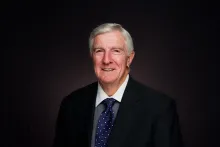
Before his retirement in 2021, Dr. Donald Ward pastored churches in Texas and Louisiana, and taught at Ambassador Bible College in Cincinnati, Ohio. He has also served as chairman of the Council of Elders of the United Church of God. He holds a BS degree; a BA in theology; a MS degree; a doctor’s degree in education from East Texas State University; and has completed 18 hours of graduate theology from SMU.
