

Steve Shafer
This transcript was generated by AI and may contain errors. It is provided to assist those who may not be able to listen to the message.
I want to talk about the fall feasts. They're just around the corner. We're all thinking about that now. They'll be coming up here in September and October. We'll have a fall feast. Of course, there's a spring feast, which we've all known for many years. Passover, Unleavened Bread, which tie into Pentecost because they have a countdown to Pentecost from Unleavened Bread. So that kind of ties all those together. As we've known for many years, that kind of picture is God's spring harvest, early spring spiritual harvest that we're all part of and called to be a part of. Then the fall feast is a major harvest, a large harvest, which will more pertains to all those that God is going to call. The rest of mankind will call after Christ returns. Looking forward to God's spiritual fall harvest, which will take place later. But those fall feasts are just a few weeks away. That will begin with the Feast of Trumpets, which this year will be September 21st on a Thursday. And then 10 days later, that will be followed by, of course, the Day of Atonement on September 30th. That's not to be on Sabbath this year. Atonement is on a weekly Sabbath. It's on Saturday, September 30th. Of course, the Day of Atonement, as we know, is the only feast day on which we fast. It's also a fast day. Then the seven-day Feast of Tabernacles will be observed in various locations around the world, from Thursday, October 5th this year through Wednesday, October 11th. I'm saying it that way because the Feast of Tabernacles is a seven-day feast, which will then be interned by the observance of the eighth day, which will be on Thursday, October 12th, immediately after the conclusion of the Feast of Tabernacles. I differentiate the Feast of Tabernacles from the eighth day for a reason.
Because they are two distinct feasts, each having a distinct meaning and purpose in God's plan of salvation.
I'm going to have a disciple bit in the sermon today as well. But today, then, as we once again think about and plan for, prepare for, to observe God's fall feasts and holy days, I want to review what they will mean, not only for us, but for the entire world. This is a review to get you thinking about that as we head into that particular season of the year. As we do that, I'm going to look at them in a little broader, deeper, more meaningful way, hopefully. I can bring out. If you want a title for my sermon here this afternoon, it's God's Fall Feast, Hope for a New Beginning.
God's Fall Feast, Hope for a New Beginning. Before I look into that, I want to take a look at a particular king of Israel. Actually, this is a king of Judah, not a king of Israel. All the kings of Israel are bad kings, and you look through their history. But Judah had a couple of good kings, and one of the earlier kings was a very good king, that was King Hezekiah. So I want to briefly look at one of the kings of Judah here, King Hezekiah.
He reigned over the southern kingdom of Judah for 29 years. That's recorded in 2 Kings 18, verse 2. I think it's interesting, I think about that, and I think about where we are today in this country. But it's very interesting. He did everything he could to try to restore Judah to its former greatness. Has there been a decline? We could say that he tried to make Judah great again. He referred to make America great again.
Hezekiah tried to make Judah great again. And his soul reign as the king of Judah was probably from about 716 BC to 687 BC, to say 29 years. Thus Hezekiah began reigning as the king of Judah. When you look at 716 BC, they think when Israel fell, the northern tribes of Israel, they fell around 721 or 722 BC. So he started reigning as the sole king of Judah, probably about 5 or 6 years after the fall of Israel.
After Israel fell to Assyria. But the interesting point which can tie into where we are now today in Genesis America is that Hezekiah began a number of building and reconstruction projects. And the population grew considerably during his reign. That's probably, most historians look at that, and they say that's probably the realm of the people from the northern ten tribes of Israel, that had been conquered by Assyria five or six years prior to that, I should say. Probably a lot of them were poured down to Judah. That's why there was an increase in population in Judah during that time. Because a lot of people were probably coming down from the northern ten tribes of Israel because it had been occupied by Assyria.
But as a result, here's the interesting part. You look at it, from historians, look at it. As a result, Judah began a period of great prosperity. And Judah became, as one historian puts it, the strongest nation on the Assyrian-Egyptian frontier. Interesting. But God said it wouldn't last. And if they had it truly repented, there's a nation that could have it. God promised it wouldn't last. Let's go to Isaiah chapter 39. Let's begin there. Isaiah chapter 39. Let's begin in verse 5. Isaiah 39 verse 5. Then Isaiah said to Hezekiah, Hear the words of the Lord of hosts. Behold, the days are coming when all that is in your house.
And what your fathers have accumulated until this day and all this great prosperity you have, it's going to be carried away to Babylon. Nothing shall be left. It's not going to last. Verse 7, They shall take away some of your sons who will descend from you, who you will beget, and they shall be eunuchs in the palace of the king of Babylon. So Hezekiah said to Isaiah, this interesting response here, Hezekiah knows what he says.
Hezekiah said to Isaiah, The word of the Lord which you have spoken is good. Wait a minute. Good? What in the world could Hezekiah mean by that? How could that be good? I believe the rest of her say. So Hezekiah said to Isaiah, The word which the Lord has spoken is good for Hezekiah, I should say, said, At least it will be peace and truth in my days. At least it won't happen until after I'm God.
At least it won't happen until after my reign is ended. After Hezekiah died, Judah went downhill. They had a few good times when they kind of came back a little bit, but they went downhill for the most part. Even though it would be about another hundred years before Judah failed to Babylon around 586 BC. But the next few verses here in Isaiah 40 sum up the meaning of God's fall feast. Think about it.
Not that they're tied in here to that directly, but they do in meaning. Next few verses of Isaiah 40 sum up the meaning of God's fall feast when it comes to hope for a new beginning, which I'm looking at value. Fall feast, hope for a new beginning. Isaiah 40, verse 1, said, Comfort, yes, comfort my people.
Says your God. Speak, comfort to Jerusalem, and cry out to her. Her warfare has ended. Her iniquity is pardoned. She is received from the Lord's hand, double for her sins. And the voice of one crying in the wilderness, prepare the way of the Lord, make straight in the desert a highway for our God. Verse 3 here in Isaiah 40 is quoted in Matthew 3.3 as being a prophecy, I should say, of John the Baptist who prepared the way for Christ. The voice of one crying in the wilderness, prepare the way of the Lord, make straight in the desert a highway for our God.
Every valley. I want to look at this spiritually. Verse 4, every valley should be exalted and every mountain and hill brought low. The crooked places should be made straight. The rough places should be made smooth. The glory of the Lord should be revealed, and all flesh shall see it together, for the mouth of the Lord has spoken. I want to think about this and think about many of God's fall feasts in holy days. God's fall feasts portray God's plan of salvation for the people of the world, and the Gergé God's fall harvest.
And these verses here in Isaiah 40 portray what that will mean for the people of the world. If you look at it spiritually, just to kind of draw that out. In other words, the time is going to come after Christ returns and warfare will be ended. And that's probably going to include warfare and personal relationships, and bring it down to a personal level.
Now, look at those mountains and so on in the valleys. Let's apply that to people. The humble are going to be exalted when Christ returns. Those who have true humility, they're going to be exalted. And the proud are going to be brought low. People's twisted and confused and crooked lies are going to be straightened out. And all the rough places are going to be made smooth. A lot of people need that. A lot of people in the world today, their lies are messed up, they need that.
Their lies need to be straightened out, and the rough places need to be made smooth. Verse 5, The glory of the Lord shall be revealed, and all flesh shall see it together, for the mouth of the Lord has spoken.
So these scriptures then can give comfort and hope for a new beginning for all of mankind, as portrayed by God's false feasts and holy days. So that then is just a brief look at King Hezekiah and his quest to make Judah great again, and how that greatness will eventually be restored by God.
Now, let's look more deeply at God's false feasts and holy days, and what they each portray, and how they each offer hope for a new beginning, because they do. Each one of them offers great hope for a new beginning for all of mankind. First, let's look at the Feast of Trumpets. Let's go in order. Feast of Trumpets.
Feast of Trumpets, or as it is in Hebrew, Rosh Hashanah, can be portrayed at least in two major ways, which can in turn offer hope for a new beginning for mankind. So we'll look at two major ways and some other sub-points as well, but two major ways. You may not have thought about this way before, but I'm bringing this up because this is the way it's portrayed by some. It can be portrayed as the birthday of the world.
That's the way some Jews portray it, as the birthday of the world. That's how orthodox Jews, or Judas, portrays it sometimes, as many do. They traditionally reckon as being the day God created man in His image and likeness. In other words, they portray it as being the sixth day of creation. Let's go back there and read that. Let's go back to Genesis chapter 1.
See what happened on that sixth day of creation. Genesis chapter 1 verse 26. Then God said, Let us make man in our image, according to our likeness. Let them have dominion over the fish of the sea and the birds of the air and the cattle and over all earth and every creeping thing, and so on. So God created man in His own image. In the image of God, He created him male and female. He created them. Then verse 31. And then God saw everything that He had made, and indeed it was very good. So the evening and the morning were the sixth day. So traditionally, Jews look at this as being what it all began as a birthday of the world, so to speak. A birthday of mankind, whom God created man in His own image and likeness. Now, if that tradition has any merit, it indeed would have been a hope for a new beginning. It would have been the beginning step in God's plan of salvation to make a family, to build a family, to begin building a family. We're doing that without them, and even they're descendants. But what lessons and what hope can we derive from the day of trumpet as being portrayed as being the birthday of the world, so to speak, or as being the sixth day of creation? I want to look at a few some points here. Number one, we have the hope that God can create order out of chaos.
Let's go back just to the first two scriptures, just one, just one and two. In the beginning, God created the heavens and the earth, and the earth was without form and void.
In Hebrew, the word world was tohu and bohu, as we've heard that expression before.
Tohu meaning, do I waste a desolation, a worthless thing, or without form?
And you think about that spiritually, some wives are in that condition today.
Bohu meaning, to be empty, to be an undistinctable ruin. How did God make it that way, or did it become that way? That's been a controversy in many ways. You could look at it either way. But Isaiah 45, 18 says this, For thus is the Lord, who created the heavens, who is God, who formed the earth, made it, and who established it, who did not create it in vain.
Vain being the word tohu, using just as one, and just one, there's two. Who did not create it in vain, who formed it to be inherited. Isaiah 45, verse 18.
Again, the Hebrew word translated vain there is tohu, the same word used in Genesis 1 verse 2.
Now, since the earth was not created without form and void, it must have become that way, because that's the theory, that's what we theorize and think of. And, of course, it's been thought in the past that was the result of Satan's rebellion. Now, some interpret all that differently, but that has been the long-time understanding of the churches of God. But the point I want to make is this, regardless of all that. God can and God will create order out of chaos. Many lives are now in chaos. Look around people's lives, you know the details of it, which you give all those individuals and realize they've got great order out of chaos, and give all those individuals a new beginning.
Now, what else does this verse tell us here? Just as 1-2.
The earth was out formed and void, and darkness was on the face of the deep. So, it appears that the world was someone in darkness at that time, and you look at the world today. The world today is filled with spiritual darkness. The world is in darkness today, spiritually speaking.
But there is hope for a new beginning. Also, the earth was out formed and void, and darkness was on the face of the deep. But then the Spirit of God was hovering over the face of the waters. And then God said, let there be light. And there was light.
See, if we think back about Trump is portraying the birthday of the world, the piece of Trump is also portrays how God will create order out of chaos, and how God will restore light from darkness. He's going to bring spiritual light, his truth, to the world. And of course, that can also be learned just from the fact when the piece of Trump is observed. As you know, the piece of Trump is the only holy day that always occurs on a new moon.
The moon is coming out of darkness and starting to give light again. So God's price is going to do an eternity and start to bring light to the world. He's going to restore light from darkness. Also, it's portraying the birthday of the world. Trump will also portray and give hope for something else. And we just read in the moment ago, verse 31. Thank God for everything that he'd made. Indeed, it was very good.
God can take what is very bad, and he can make it into something very good. Because if you see people's lives or something you think, it looks blessed with really bad, God can make it into something very good, and he will. Now, in addition to being portrayed as the birthday of the world, the second major way trumpets can be portrayed is a day of judgment.
When Christ returns and is portrayed by the Feast of Tropets, he's going to bring judgment.
Now, when we think of judgment, knowing what comes to our mind is a negative aspect of judgment. We think of condemnation or being condemned. But, of course, there's a very positive side of judgment that offers hope for a new beginning.
When Christ returns, His throne is going to be prepared so that He can reign on the earth as the King of Kings and Lord of Lords, as we know from Revelation 19.
But His throne is going to be prepared for judgment.
But how will He judge the world when He returns?
Will He condemn the world? He could.
Or will He judge the world in a way that will offer hope for a new beginning?
Let's go to Psalm 9.
Psalm 9. Let's begin in verse 6 of Psalm 9. Psalm 9. We're... Psalm is right here. O enemy, destructions are finished forever.
You have destroyed cities, and even their memory has perished.
But the Lord is going to endure forever, and He has prepared His throne for judgment. So when Christ returns, He's going to be prepared to judge.
But how will Christ judge the world when He returns?
Verse 8. He will judge the world in righteousness, and He shall administer judgment for the peoples in uprightness.
I look at that as a very positive verse.
He's going to judge according to God's laws, but He will also judge using mercy and faith in a way that will offer hope for a new beginning, in a way which people can learn how to become upright.
He will administer judgment for the peoples in uprightness, so they can learn how to live in an upright way, according to God's laws.
How is He going to do that? That is what I surmise. I think He's going to be looking for what is good, by looking for what is redeemable in people. Down inside, there's something there that He can... it's redeemable.
It's good that He could work with.
For... He's going to do that by looking for what He can find in people that can help them become really what they ought to be, what He wanted to be when He created mankind to begin with.
And what Satan now put away for a thousand years, Revelation 20, verses 1 through 3, Christ can then look for the good in everyone, so He can judge the world in righteousness, and so He can bring them to righteousness and offer them hope for a new beginning.
Let's now look at the Day of Atonement.
Of course, we know the Day of Atonement is a spiritual feast day. It's the one day each year that we are commanded by God to afflict our souls by fasting, by doing without food and water.
God, through the prophet Isaiah, gives lessons we should learn through fasting that offer hope for a new beginning. So let's go to the book of Isaiah. Let's go to Isaiah chapter 58.
Isaiah 58. Now I'll pick it up in verse 6. Let's talk about fasting here. Isaiah 58 verse 6, is this not the fast I have chosen?
And then he says, to lose the bonds of wickedness. How's that going to be accomplished?
It's going to be accomplished by removing Satan, which in turn will give all of mankind hope for a new beginning. Now it says to undo heavy burdens. Do any of us ever have to bear heavy burdens at home, maybe on the job, or maybe just trying to deal with situations in life?
If we were released from those burdens, would that give us hope for a new beginning?
See, with Satan removed, many of those heavy burdens are going to be undone and loosened.
They come upon the world now and upon all of us. Then it says to let the oppressed go free, that you break every yoke. What does a yoke do? A yoke binds an animal to a cart so they can't break free. They can then be oppressed by the wrong kind of a taskmaster. They can be dealt with nicely by whoever's controlling that, or they can be dealt with very harshly. So it is with much of mankind today. But the removal of Satan and the reign of Christ will offer all mankind hope for a new beginning once those burdens are removed and once mankind can no longer be oppressed.
Verse 7, Is it not to share your bread with the hungry, and that you bring to your house the poor who are cast out? When you see the naked that you cover him. To bring hope for a new beginning, fasting should not only involve our relationship with God, it should also involve our relationship with our fellow man. Satan's world has not been emphasized by Mr. Armstrong years ago. Satan's world is a world we get. Satan's way is the way of a get. You see that everywhere in the world today. Everywhere you look, you have a get attitude and a get mentality. God's way is a way of give.
You know, if everyone practiced the way of give, what a different world it would be than the other equipment.
That would indeed offer the entire world hope for a new beginning. If everybody practiced the way of give, God's way of give. There's a lot of part of verse 7, which is kind of a little bit awkward. I read it. When you see naked that you cover him and not hide yourself from your own flesh. Is this not the fast I have chosen for you not to hide yourself from your own flesh?
What in the world does that mean? And what does it have to do with the day of atonement and fasting?
In other words, what's saying really basic is don't give to others in a way that will take away providing for yourself and your own household.
That's lesson I have to learn. It's difficult to learn sometimes. Paul wrote to Timothy, if anyone does not provide for his own, especially for those of his own household, he has denied that faith is worth an infidel or worth an unbeliever. First Timothy 5 verse 8.
But by fasting and doing without ourselves, I do it without food and water ourselves through fasting, it can help us understand what our own family members can experience when they are faced or forced, I should say, to sacrifice and maybe do without.
That they can offer a hopeful new beginning for ourselves and our relationship with our own family members.
Verse 8 of Isaiah 58 says this, if we do these things, Then your light shall break forth like the morning, Your healing shall spring forth speedily, and your righteousness shall go before you, and the glory of the Lord shall be your rear guard, then you shall call and the Lord will answer. You will cry to Him and He will say, Here I am. As if you take away the yoke from your midst, the pointing of the finger and the speaking wickedness.
Fasting should humble us to take a deeper look at ourselves.
It should teach us to take personal responsibility rather than pointing the finger at others. And it should teach us to look at ourselves rather than maliciously accusing others by speaking wickedness, as it says here.
Verse 10, if you extend your soul to the hungry and satisfy the afflicted soul, and have that way of give when the opportunity rises in a way that you can maybe help, then your light shall dawn in the darkness. You're going to stand down to others. It's wild! That person's different. And your darkness shall be his noon day.
Then, verse 11 says, the Lord will guide you continually and satisfy your soul and drought, and strengthen your bones, and you shall be like a watered garden, and like a string of water whose waters do not fail.
And we fasten the day of a tome, and we are humming ourselves before God to show Him how much we all need His continual guidance, which we do is realize how we need your guidance. I can't depend on myself. I need you.
And if the Lord will guide us continually, we will then be satisfied and strengthened spiritually, be like a so-seer string of water whose waters do not fail.
Of course, all that's going to give us hope from the beginning.
Now, the Hebrew word for the Day of Atonement is yom kippur, which literally means day of covering or day of annulment.
Kippur or kaphar means to cover, to disannal, to forgive, to pardon, to pass over, or completely remove. Now, that meaning is summed up in the book of Micah. Let's turn to the book of Micah.
It's not talking about the Day of Atonement, but it just sums up the meaning of the Day of Atonement.
Very, very positive, encouraging, and hopeful scriptures give all of us hope from the beginning, all of mankind. Micah 7, verses 18, 19, and 20, last three verses. Micah 7, by the way, it's Obadiah, or is it? Isaiah, or Zola'imah, or Obadiah, or Micah, Nahum, or whatever, anyway, in the minor prophets. Micah 7, verses 18, says, Who is a God like you? Pardon in iniquity. That's what David told us all about, about covering our sins, pardon iniquity. Passing over the transgression of the remnant of his heritage. Who is a God that will do that, like you, who will pass over our transgressions? He does not retain his anger forever. We can sometimes do things that might make him angry, but he won't retain that forever. Why? Because he wants to extend mercy to people. Verse 19, he will again have compassion on us. He's going to do our iniquities. He's not going to bring them up, magnify them. He's going to put them down, obliterate them, remove them. He, you will cast all our sins into the depths of the sea, or they can't be seen or found or remembered again. That's what God wants to do.
You will give truth to Jacob and mercy to Abraham, which has sworn to our fathers from days of old.
See, when that's fulfilled, that will give hope for a new beginning to all our mankind.
Let's look at this piece of toma, David toma. Let's now look at the Feast of Tabernacles, how it gives hope for a new beginning. Of course, as we know, the Feast of Tabernacles commemorates God's deliverance of Israel out of Egypt and out of slavery. When they had to dwell in tents or booths for 40 years. Let's go back and read that. Let's go back to Deuteronomy.
Just talk about the end of that 40-year period. We pick it up here in Deuteronomy chapter 8. Let's go to Deuteronomy chapter 8, which now talks about the very end of that 40 years of wandering in the wilderness. This is where they're now about to enter into the land of Canaan, the Promised Land. Deuteronomy 8, beginning in verse 1, says, Every commandment which I command you today, you must be careful of the difference. Give them instructions on the going of the land of Canaan, that you may live and multiply and go in and possess the land that they're going to give you, which the Lord swore to your fathers. Verse 2, And you shall remember that the Lord your God led you all the way those 40 years in the wilderness, up to this point. Why? What do you want to do with you? You want to humble you, to test you, to know what's in your heart, whether you would keep his commandments or not.
So he humbled you and allowed you to hunger and fed you with manna, which you did not know, nor did your fathers know. He'd by make you to know that man shall not live by bread alone, but man lives by every word that proceeds from the mouth of the Lord, which was quoted by Christ in Matthew 4.4 after Satan came to him.
After Christ had fastened 40 days and 40 nights, Satan came to him and in one of those temptations he said, if you are the son of God, command these stones to become bread.
In Christ's answers, in verse 3 here, Deuteronomy 8, man shall not live by bread alone, but by every word that proceeds from the mouth of God.
Oh, you know, we know what happened, don't we?
All that generation of Israel died in the wilderness with the exception of Joshua and Caleb.
What happened?
Why did they have to wander in the wilderness for 40 years?
Living in the Tabernacles or roofs?
Because even though God had delivered them out of slavery, God had not delivered the slavery out of them. That was something they had to do.
They were not able to move beyond their slavery to themselves, their slavery to their own lusts and their own desires.
So their desires became their new masters. They remained enslaved to their former condition. Couldn't get beyond it.
I mean, just think about this. It's such an important lesson that we all need to learn. So many people need to learn. It's so difficult.
They were born in... This generation was born of slaves in Egypt. But a whole generation, they were born in Egypt as slaves.
Slavery was all they knew when God called them out. That whole generation.
They were thus never able to rise above the condition of their birth.
That's the point.
They never learned to master a key lesson of the afterlife story that would have given them hope for a new beginning.
What lesson is that?
The lesson is that we don't need to be bound by the condition of our birth, or by the circumstances of our past.
So many people have a hard time getting past that. Now, see, slavery is a condition. It's not an identity.
It's a condition. Sometimes we keep ourselves in that condition.
So don't let what happened to you in the past become who you are in the present.
Ask God to help you to let go of the past so you can have hope for a new beginning. Now, here's a second lesson we can learn from the pieces of tabernae, just so I can give us hope for a new beginning. The Hebrew word sukkah, or sukkah, for booth or booth, implies it as being a shelter, which it was. They're out there in the wilderness, the desert, the heat, the rain, the wind, and they had their little booth, and that became a shelter, a shelter from the heat, a shelter from the wind, a shelter from the rain.
So the Feast of Tabernacles or Feast of Booths can then pose this question.
When you think about it as a shelter, where is the true shelter for our lives?
Is our shelter or our security being within the walls of our homes and houses? Within the walls of our drawings, which are also temporary. We may not have nice homes, but they're still temporary, aren't they?
See, what, if something happens, which we're living a very dangerous world, we don't know what's going to happen, how circumstances might change, and what that might affect us. What if our world suddenly brings extraordinary circumstances? What if the world we now live in? What if the walls of our houses now, because of things that change, and the boundaries of our property are no longer safe havens? What if our houses could no longer be a safe haven or our property boundaries are no longer a safe haven? That happened in Germany, didn't it? World War II. Then what will our shelter be?
What about when we are removed from our homes because of maybe a severe illness? Is something that can happen to any of us anytime, a severe illness? Or when we face death in a hospital bed, may that take us from our home, and we all of a sudden are in a hospital or whatever?
What will then be our shelter? And where will our sense of security be when we get to that point in our life or when we're in that situation? Well, we all know that God used Moses to deliver Israel out of Egypt. I want to just point out one verse, two verses, actually. But what did Moses learn from dwelling in temporary shelters or dwellings for 40 years? God was using Moses to lead Israel out of Egypt. So he was with him, and all that 40 years they were dwelling in booths, and he broke up their dwellings. What did Moses learn from that? Moses wrote one of the Psalms. Let's turn there and see what he says. Psalm verse 90. Psalm verse 90. Look at the head. A prayer of Moses. This is the only Psalm attributed to Moses. A prayer of Moses, the man of God. What did Moses pray?
Lord, you have been our dwelling place in all generations before the mountains were brought forth. Or were you ever you had formed the earth and the world from everlasting to everlasting, you are God. See, our temporary dwellings are not our shelter. God is our shelter.
Shelter has to be in God and in our relationship with God.
Our real shelter and our real security is having God as our dwelling place. So the Feast of Sukkot, the Feast of Booths, reminds us that our ultimate security is not found within the walls of our homes, but it's found from the presence of God in our lives and having that strong personal relationship with God. And I could add that it should also be found in the presence we should all have with one another as well as members of the spiritual body of Christ. So that then is another major lesson from the Feast of Tabernacles that can give us hope for new beginning. Finally, what about the eighth day?
In the Bible, that's all it's called. It's simply called the eighth day. That's why I'm using the eighth day. Not other terminology we sometimes use, but I'm using the eighth day because that's the only thing that's really called clearly in the Bible. The Bible is simply called the eighth day sacred, New King James, or solemn Old King James assembly. It can be translated either way, but I prefer sacred as the New King James for a reason I'll give you momentarily. But the eighth day is the only name given to it and this given to this particular holy day in the entirety of the Bible. And if you go to look it up, eighth day, it's only mentioned five times in the entire Old Testament.
Five times. It doesn't say much.
It's very brief. We mentioned five times. Before we look at those five scriptures, which I'm going to read to you, let me ask this. Why is it just called the eighth day?
You know, look at all the other feasts and holy days. There's something about them that gives some kind of a description of what it has to do with passover, passing over our sins, unleavened bread, getting sinned out of our lives, or getting leavened out of our lives. Pentecost counts fifty. There's something involved in it that gives you some idea there might be some meaning there to what that says about it. Going of trumpets, fasting, living in booths. But what comes to the eighth day? Well, this is the eighth day.
Why isn't it given a more descriptive name?
Like the other feasts and holy days. Also, note as we look at these five scriptures, the eighth day is always mentioned here. It's always mentioned in conjunction with the seven-day Feast of Tabernacles and everywhere in the Bible. Look at it. Any place in the Bible where it talks about the Feast of Tabernacles and observing the Feast of Tabernacles, it always says, without exception, you observe the Feast of Tabernacles seven days. It never says eight days, seven days.
So why is that? Why is it always saying, observe the Feast of Tabernacles seven days? That's emphasized over and over again. Why is that? And what does it signify? So now we'll look at the five scriptures in the Old Testament referred to the eighth day. First reference is found in Leviticus 23 verse 36. Let's turn now.
I'll begin in verse 34. Leviticus 23 beginning in verse 34 says, Speak to the children of Israel and saying, The fifteenth day of the seventh month shall be the Feast of Tabernacles for seven days to the Lord. On the first day there should be a holy convocation. You should do no customary work on it. Verse 36, again, for seven days you shall offer an offering made by fire during those seven days of the Feast of Tabernacles. And then here's what it says in the latter part of verse 36. The first place it mentions the eighth day in the Bible. On the eighth day you have a holy convocation. You shall offer an offering made by fire to the Lord. It is a sacred assembly and you should do no customary work on it.
That's it. Typically, it's a sacred assembly. The next reference is also right here in Leviticus 23 verse 39. Just a few verses down. Verse 39. Also, on the fifteenth day of the seventh month, when you have gathered in the fruit of the land, you shall keep the Feast of the Lord. Thinking of the Feast of Tabernacles, you shall keep the Feast of the Lord for seven days. On the first day there should be a Sabbath rest. On the eighth day, a Sabbath rest. And that's it. On the eighth day of Sabbath rest. The third reference to the eighth day is in Numbers 29 verse 35. First, let's look at Numbers 29 verse 12.
Numbers 29 verse 12. On the fifteenth day of the seventh month, you shall have a holy convocation. You shall do no customary work. You shall keep a feast. Referring to the Feast of Tabernacles. You shall give a feast to the Lord seven days. Again, seven days. Then dropping down to verse 39.
And you shall present a burnt offering, an offering made by fire as a sweet aroma to the Lord.
No, excuse me. Wrong verse. Where was it? Numbers... Verse 35, I read. I read Numbers 29 verse 12. Let's go to verse 35. I meant, no, other than 39. Verse 35. On the eighth day, you shall have a sacred assembly. You shall do no customary work. So again, that's it. That's all that is said. On the eighth day, you shall have a sacred assembly. Now, the fourth reference to the eighth day is in 2 Chronicles 7 verse 9. So let's go to 2 Chronicles. 2 Chronicles chapter 7. Let's begin in verse 8. We'll talk about the time of Solomon. 2 Chronicles 7 verse 8. At that time, Solomon kept the feast seven days, referring again to the Feast of Tabernacles, and all Israel with him a very great assembly from the entrance of Hamot through the book of Egypt. And then verse 9. And on the eighth day, our fourth reference to the eighth day, and the eighth day they held a sacred assembly, for they observed the dedication of the altar seven days. And the Feast of Tabernacles seven days is referring to there.
But again, that's all it says about the eighth day. They observed sacred assembly.
The thing going on again, on the eighth day, they held a sacred assembly for the observed the dedication of the altar seven days, and the Feast of Tabernacles seven days. On the 23rd day of the seventh month, verse 10, he sent the people away to their tents, joyful and glad of heart for the good that the Lord had done for David and for Solomon and for his people of Israel.
The eighth day occurs on the 22nd day of the seventh month. So the 23rd day would have been the day after the eighth day sacred assembly, and they all went home, because we do.
Now, the fifth and final reference to the eighth day is in the Old Testament. It's found in the book of Nehemiah. Nehemiah chapter 8. I'll just rerun verse here. Nehemiah 8 verse 18. Nehemiah 8 verse 18. Also, day by day from the first day until the last day, and he's referring to the first day to the last day of the Feast of Tabernacles. Also, day by day from the first day until the last day, he read from the book of the law of God. And they kept the Feast of Tabernacles seven days.
And on the eighth day, there was a sacred assembly, according to the described manner.
Again, that's all it says. On the eighth day, there was a sacred assembly according to the prescribed manner. So my first question then is this. I've got a couple questions here. Why is it called the eighth day?
Why is it called the eighth day? My thought would be to distinguish it from the seven day Feast of Tabernacles. To the Feast of Tabernacles seven days. Within the eighth day would be the next day after the Feast of Tabernacles. But it's called the eighth day to distinguish it from not being a part of the seven day Feast of Tabernacles. Something happens afterwards, but right on the heels of it.
To indicate, it's called the eighth day because that indicates it's a separate and distinct Holy Day that has a separate and distinctive meaning apart from, in addition to, the seven day Feast of Tabernacles.
Second question. Since this meaning is not given in any of those five passages, how then can its meaning be understood? How will you ever come to understand the meaning of the eighth day? There's nothing descriptive given in those five places that refer to it.
God's Word answers that question for us. I'm just going to quote it, Psalm 111 verse 10.
Psalm 111 verse 10 says this, A good understanding of all those who do his commandments.
You know, Senator Equibach and Mr. Armstrong years ago, 1930s, he began observing the Feast in Holy Days.
As he began observing the Feast in Holy Days, you know why he did it? Because God said to do it, but he had no idea what they meant. Why was he? The only reason he was keeping him was because God's Word said to keep them. So he said, well, God says to do it, I'm going to do it. But he didn't know what they meant. But as he observed them, God gave him understanding. As he now does for all of us, as we observe those days, we get understanding what they mean. In other words, the meaning of the eighth day is gained by observing it. And by God then giving us understanding as to what it means has happened to Mr. Armstrong many, many years ago. But of all God's annual Feast in Holy Days, none are more significant than the eighth day when it comes to hope for a new beginning. Let's go to the Book of Ezekiel. Ezekiel 37.
Ezekiel 37, verse 1.
But then the Lord came upon me and brought me out in the spirit of the Lord, and he set me down in the midst of the valley. It was full of bones. Then he caused me to fight them all around, behold, there were very many in the open valley, and indeed they were very dry.
They'd been dead a long time.
And then he has this one question to Ezekiel. He said, it's not a man.
Is there any hope for these people? Can these bones live?
Is there any hope for a new beginning for these millions of people who are long dead?
So I answered, and I said, well, I don't know. Lord God, do you know?
And then again he said to me, verse 4, prophesy to these bones, and say to them, O dry bones, hear the word of the Lord. Thus says the Lord God to these bones, surely I will cause breath to enter into you. And you're going to live again.
I'm going to put sinews on you and bring flesh upon you. This is in a spiritual resurrection, a physical resurrection. I'm going to cover you with skin and put breath in you, and you're going to live again. Then you're going to know that I am God. You're going to know there is a God, there is a purposeful life. So I prophesied as I was commanding, and as I prophesied, there was a noise and suddenly a raveling of the bones. They all came together, bone to bone. And as I looked, the sinews and flesh came upon them, skin covered over them.
But there was no breath in them yet. And he said to me, prophesy to the breath, prophesy, send a man and say to the breath, thus says the Lord God, come from the four winds, O breath, and breathe on these slain that they may live again.
So I prophesied as he commanded me, and breath came into them, and they lived. And they stood upon their feet, an exceedingly great army.
The eighth day tells us there will be a new beginning, for all have died and who are now in the grave.
It's not just a hope for a new beginning, it's not just a hope, it's a sure promise of God. Surely I will cause breath to enter into you and you shall live. That's a promise of God.
One final question.
Why do I prefer that the eighth day be called a sacred assembly?
For two reasons. One, because it shows that every life is sacred to God, and that every life has meaning and purpose to God.
And two, because a sacred assembly is the meaning of the eighth day. That is the meaning, the meaning is there, and that is the meaning. The meaning of the eighth day is the sacred assembly.
See, when the rest of death live again after the memorial reign of Christ, a sacred assembly of millions of people will be resurrected to stand before God.
For what purpose? For learning the truth. And the opportunity to learn the purpose of which they were given the gift of life. What Ezekiel 37 10 says, it will be an exceedingly, and I should say as Ezekiel 37 10 says, it will be an exceedingly great army of millions and millions of billions of people, all of whom will then be given a new beginning. Quickly in conclusion, then, that then is what the fall, fish, and holy days will mean for all of us and for the entire world, and now they will offer hope for a new beginning to all of any God.
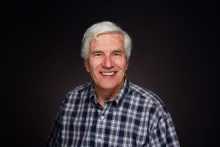
Steve Shafer was born and raised in Seattle. He graduated from Queen Anne High School in 1959 and later graduated from Ambassador College, Big Sandy, Texas in 1967, receiving a degree in Theology. He has been an ordained Elder of the Church of God for 34 years and has pastored congregations in Michigan and Washington State. He and his wife Evelyn have been married for over 48 years and have three children and ten grandchildren.
