

Mario Seiglie
This transcript was generated by AI and may contain errors. It is provided to assist those who may not be able to listen to the message.
Let's start with some facts. We know that the Feast of Pentecost is intimately related to the giving of the Holy Spirit during Pentecost after the death and resurrection of Jesus Christ. We can be sure of that. That's the basic theme of the Book of Acts, which begins right after Jesus Christ is resurrected, but before the Holy Spirit has come down. So, as you well know, Luke wrote two books in the New Testament. One is the Gospel of Luke and the other one is the Book of Acts of Luke. Basically, it's two volumes, but it's basically a continuation of the history. So, let's go to Acts 1. We can get some of the context. Acts 1. Verse 1. Because to understand Pentecost, we also have to understand what happened before then. Luke takes up this second volume. He says, So, Luke continues after the resurrection. Jesus Christ appeared for 40 days in different occasions. So, you have all of these testimonies of people. At one time, it says in 1 Corinthians 15 that there were 500 together when they saw this. So, it couldn't have been a mass hallucination. And he said, and by the way, you can still, even at the time of that writing of Corinthians, maybe 20-25 years later, he says, and you can still go to Israel and you can check with these. There are some witnesses that are still alive today. Although, he says, some have fallen asleep. They have died. Verse 4. So, after those 40 days, it says, It didn't give the exact timing, but we know it's 10 days later when that occurs because God is a God of order. And so, there are 40 days. Of course, 40 means completion. The ministry that Christ was carrying out, and as he completed his teaching, now it was time for him to go up to heaven. And then, 10 days later, to send that Holy Spirit, which is the essence and the power of God the Father and Jesus Christ.
So, he would continue to work with them now through that Holy Spirit. And we'll see the contrast that happened at that day of Pentecost.
It goes on to say, Verse 6.
Notice what he says in verse 7.
Which the Father has put in his own authority.
So, this means that eventually that gospel would go to China, it would go to all of the continents of the world, and certainly it has. Now, God is very careful not to give any specific dates, because as soon as you do that, you start calculating too much. And so, if Christ said, well, I'm going to come back approximately 2,000 years later, what would have happened? Oh, man, we can be merry and eat and don't worry about Christ coming, and so there would have been a letdown. So, there's always been this spiritual tension, because we should have a sense of urgency. And no, it can come. It's up to God the Father. When he says, enough is enough, then he will intervene.
Verse 9, now when he had spoken these things, while they watched, he was taken up, and a cloud received them out of their sight. So, here he's talking to them, and all of a sudden, he's raised up, and as you will see, they were on the Mount of Olives.
And as he went up, then there was a cloud that took him all the way up, and of course, they just opened yod, right? Open-mouthed. Couldn't believe this. So, here, you don't need wings to fly. You just need to have that spirit power, and you can do so.
One day you will.
And while they looked steadfastly toward heaven, so they were just transfixed.
As he went up, behold, two men stood by them in white apparel. These are angels, who also said, men of Galilee, why do you stand gazing up into heaven?
This same Jesus, who was taken up from you into heaven, will so come in like manner as you saw him go into heaven. So, here's an important statement. Jesus Christ is going to make the same trajectory. As he went up in a cloud, so he will come down in a cloud.
And where? It says here, next verse. Then they returned to Jerusalem from the mount called Olivet. In other words, it's the Mount of Olives, which is near Jerusalem. And this is the same thing that is mentioned in Zechariah 14. It talks about Christ and that his feet will stand in the Mount of Olives.
So, these are facts. And it tells us that when Christ comes back, there's not going to be any type of kind of a halfway point. And some people think, well, he's going to take us up to heaven first. Well, there's no indication because, after all, he would have had to do the same thing with his disciples if it says that he's coming in the same way, the same trajectory. So it goes on to say, So here's the first time we see that Mary becomes part of the church before she had not believed. So those 40 days were very important. And in 1 Corinthians 15, it mentions James was one of the last ones. His brother, who became one of the church leaders later on.
And in those days, Peter stood up in the midst of the disciples altogether. The number of names was about 120. And so we have basically 120 believers. But at that moment, there wasn't one person converted among them. As we would consider, because we consider a person that is converted as having God's Spirit in them. What they had at that time was God's Holy Spirit with them, but not in them.
Notice in John 14, verse 15.
Jesus is talking to them during that last Passover that he kept. He says, in verse 15, Of course, Jesus was no longer going to be on the earth. And so it's not talking about another person. It's talking about God's Spirit dwelling in them.
Notice, it says, That's the hope. The Spirit of truth, whom the world cannot receive. Because it neither sees him, should be sees it, or knows it. But you know it, for it dwells with you and will be in you. And so if there's any confusion, notice the next verse. It says, He didn't say, well, this third person, the Holy Spirit's going to come. So it says, I will come because I'm sending that Holy Spirit. There's a connection there. And that's what changed the disciples. Notice, it says here that the world doesn't know him, verse 17, for it dwells with you and will be in you. So God starts working, for instance, with a young person. You start feeling that attraction toward God's way of life. You start feeling being called to this way of life. But the Spirit is with you. It's not in you. I compare it when my daughters got into college age, and they had to drive a car to college. I couldn't be taking them, like in high school. And so we went and went to a car dealer, and okay, we had a little Toyota Corolla. So I said, let's drive it around. And she already had her license, and so she drove it around. And oh yeah, this is very nice. And I said, okay, well, let's drive it back. Now, you see, that car is not yours yet. You're using it, but we haven't signed a contract for it. Now, once we do, then your name is going to be in that contract. That pink slip is going to be there with your name, and then you take ownership of it. But before that, it's not yours. It's still the dealer's. And so it's the same way. God's Spirit works with you, but there hasn't been that commitment. There hasn't been that signature yet. That happens at baptism. But you're preparing yourself. God works with you. The only thing is you'll reach a spiritual ceiling where you can no longer grow spiritually unless you break that ceiling when it's not with you, but in you. And of course, that's such a relief when it happens, because now nobody can take it from you.
Now, you can neglect it. You can also lose it if you don't cultivate it, but it's yours. It's your responsibility. And so this is what happened as we go into now Acts 2. Now, I'll just mention what happened after they went during those 40 days. They went up to Galilee. And what did Peter say?
He says in John 21, verse 3, he says, I'm going fishing. And others of the disciples of Christ said, we're going with you. It was like, okay, it was a nice trip we had. We had a wonderful time, but it's over. And even with the different times they had seen them, they didn't have a converted mind until God's Spirit was in them.
And so notice in Mark 16, verse 12. Mark 16, verse 12 is an important passage because it's in none of the other gospels. John 16, verse 12, it says, after that, he appeared in another form to two of them as they walked and went into the country. And they went and told it to the rest, but they did not believe them either.
So, see, it's still a pretty carnal mind. It couldn't grasp that somebody could actually be resurrected into being a spirit being. They could see Lazarus, and Lazarus was just resurrected as a human being again. They could see that, but not a spirit being. They could appear and disappear. In verse 14, it says later, he appeared to the eleven as they sat at the table.
And he rebuked their unbelief and hardness of heart because they did not believe those who had seen him after he had risen. And so, you see, until you have that God-Spirit, you can still have full of doubt, full of ups and downs. And so what happens in Acts chapter 2, verse 1, we've read it several times already, but now in this context, Acts chapter 2, verse 1, it says, When the day of Pentecost had fully come, in other words, when it says fully come, the count had been fulfilled, the fiftieth day, they were all with one accord in one place, and suddenly there came a sound from heaven as of a rushing, mighty wind, and it filled the whole house where they were sitting.
Then there appeared to them divided tongues as a fire, which is a symbol of power and wisdom and the fruits of God-Spirit coming in them. And one sat upon each of them, and they were all filled with the Holy Spirit and began to speak with other tongues, other languages, as the Spirit gave them utterance. And then it goes on to say in verse 42, it says, And they continued steadfastly in the apostles' doctrine and fellowship, in the breaking of bread and in prayers. So before they were still very much like a wave in the sea, tossed to and through. Now there was this steadfastness. They knew what the mission was, they knew what they were accomplished and were given the power to carry it out.
That was the big difference. Paul later describes this experience because you see, for them, nobody had actually gone through this in the same way. And it was a collective group. 120 received it in this way. And it changed them from people that were doubters and having all kinds of issues.
Now there was this steadiness that was there because God's Spirit was working in them powerfully. Notice what it tells us in 2 Corinthians chapter 3 verse 4. Because Pentecost is all about receiving God's Spirit. It's important for us to understand a lot of these facts. 2 Corinthians chapter 3 verse 14. Talking about the Jewish people, they were certainly dedicated. I would say that if you had Jews from Jerusalem and Pharisees and Sadducees dedicated themselves and priests, then you have these 12 disciples. What titles did they have?
Zilch. Zero. Here the other ones were scholars and you had the scribes. And yet those 12 were the converted ones and not these others. And Paul, who had been a Pharisee, came to the knowledge how off base he was. And so he says here in 2 Corinthians 3, 14, it says, But their minds were blinded, for until this day the same veil remains unlifted in the reading of the Old Testament, because the veil is taken away in Christ. Only in Christ. I don't care how knowledgeable some rabbi is and all of these other things that can be brought up. Still, they have a veil.
They do not spiritually understand the Scriptures. It says, But even to this day when Moses is read, the first five books of the Bible, a veil lies on their heart. Nevertheless, when one turns to the Lord, when one accepts Jesus Christ, the veil is taken away. It's taken away at baptism. Not before. Because it's still beforehand you are unconverted. God is working with you, but don't make the mistake to think, that's good enough because it isn't.
Now, the Lord is the Spirit, and where the Spirit of the Lord is, there is liberty. So, we are given that liberty from false teachings, false ways of life. Christ said He will make us free. Free from all the deceit and errors that can be given. He says, But we, talking about the church, we all with unveiled face, beholding as in a mirror, the glory of the Lord are being transformed into the same image from glory to glory, just as by the Spirit of the Lord, or through the Spirit.
I like to read that last verse in the Good News Bible. It makes it clear. It says, All of us then reflect the glory of the Lord with uncovered faces, and the same glory coming from the Lord, who is the Spirit, transforms us into His likeness in an ever greater degree of glory. So, we're supposed to mature spiritually, supposed to grow from the time that we were baptized into a full and mature spiritual-minded person. And of course, that's a process. You don't climb the mountain in just one leap.
It's a long mountain of the knowledge and experience of God. You're going to go through plateaus, you're going to go through areas, gorges that are pretty tough to climb. You've got to take your breath, take your patience. Sometimes you might even slip down some. But the thing is, you'd never quit. Because when we finish our lives, nobody's going to get to the top. But as far high up as we can get, then in the resurrection, God is going to bring us to the top. He doesn't want us down at the bottom. No growth, no development from glory to glory. He's talking about the stages that we can have. And that is what I want to convey today.
Pentecost and those uncovered faces before Him. You know, the term showbread in the Old Testament has to do with the term which is used here.
L'hem panim, the bread of faces. That's what it means in the Hebrew.
And of course, being able to see God's face, we begin to do it spiritually in this life. But one day we're going to literally be able to talk with God face to face. And that's man's pursuit to have access to God, to feel not only as a father, but one day as being part of his family, being spirit beings, along with Jesus Christ, our elder brother. And it goes back to the Garden of Eden, which has already been mentioned, where Adam and Eve initially talked with God face to face. Notice in Genesis 2, verse 22. Genesis 2, verse 22.
This is when they were still following God, obeying Him. It says, verse 22, Then the rib which the Lord God had taken from man, He made into a woman, and He brought her to the man. So He didn't take the woman from the ground, He took him from the rib, very close to the man's heart. Some say it's close to the man's wallet.
But we won't get into that. It says, And Adam said, This is now bone of my bones, and flesh of my flesh, she shall be called woman, because she was taken out of man. Therefore a man shall leave his father and mother, and be joined to his wife, and they shall become one flesh.
And they were both naked, the man and his wife, and were not ashamed. There was nothing which dirtied that relationship. It was like a big honeymoon place where you were there with your wife. And that's the beauty of marriage, is that you can be together, and whether you're dressed or not, you still love each other, and there's nothing wrong at all with that.
So they could converse with God. And by the way, when it says there in verse 24, you look at Matthew 19.4-6, I'm not going to read it, but where it says that Christ was mentioning this incident, and God was the one that said that the man and the woman will be joined. So God was there with Adam and Eve, and he joined them in marriage. And of course, then we have the separation in Genesis 3, verse 22. Genesis 3, verse 22, after man disobeyed God. Verse 22, then the Lord God said, Behold, the man has become like one of us, to no good and evil.
So he's saying, look, the man has taken that free will he has to determine for himself what is good and evil. Just like God has free will. But of course, he didn't want man to just try to do it on his own with the help of Satan. This was going to cause a mess to occur. Says, to no good and evil. And now, lest he put out his hand, and also take of the tree of life, and eat and live forever. Therefore the Lord God sent him out of the Garden of Eden to till the ground from which he was taken. So he drove out the man, and he placed carobim at the east of the Garden of Eden, and a flaming sword which turned every way to guard the way to the tree of life. So basically, no more face to face with God. And that stage of history was put to an end. So the rest of the Bible is how God works now for us to be able to be face to face with him again.
Restoring that relationship of having access to God's face. The tabernacle symbolized that access to God. And already, this was brought up in the sermonette. When God was with them, because of the sins of Israel, he needed a separation. And so he developed this tabernacle, which actually are like seven stages of further access to him. So he was giving them a model from the heavens of these seven stages. And basically, it's the same stages of conversion and growth of a Christian. First, you had the courtyard, which had the curtain around. And nobody who was uncircumcised, talking about the males, they could not enter unless they had been circumcised, which is a symbol of the covenant with God. So it's symbolic of God's calling, because we have people outside doing everything they want.
But this is where the courtyard is. This is where people who have circumcised their hearts and their minds and have committed to this covenant with God, of keeping Pentecost. It's one of God's commandments. It wasn't made by human beings. Luther didn't come up with that Pentecost. Neither did the Pope. They're not keeping God's Holy Days.
And no man has the authority to change that. Satan is the one that changed it. That's why such few, probably a little over 120, are here present in other parts. But Pentecost is one of God's Holy Days. And so the courtyard is where a Gentile that was uncircumcised could not come in. And of course, a woman who was with the family, she was an Israelite, and she had access to the courtyard. It wasn't just men. God is always called men and women. And what do you have? The second stage? You have the altar of sacrifice.
Because when you come into that holy courtyard, you have to deal with the problem of sin. And although we've committed to God and everything, we're going to need to be forgiven. We're going to commit sins, and that was a symbol. That sin causes death, and then you have the symbolic death of an animal that dies for your sins. So here's, once you are called, then you deal with this problem.
Yes, I want Jesus Christ's sacrifice to be applied to me. That's the second stage. And then what's after that? Well, you have the big waterlaver, the big wash, big tub, where it talks about the cleansing to be able to be purified. And this is symbolic of the baptism and being washed, so that you can go further in this access to God. See, these are the stages that people go through. So then, after baptism, guess what? You're able to now enter into the tabernacle area. And there you have the golden candelabra, the golden lamp with the seven different lamps, which were full of oil, which is symbolic of God's Spirit.
So then, now you enter, and through the laying on of hands, you receive God's Spirit. You receive light. You receive the Holy Spirit. And then afterwards, you see the altar of incense. Now your prayers can be heard before God, just like that sweet incense that goes up.
It's before you were not inside the tabernacle. Now you are considered part of that family of God. And so that's that sweet incense with God's prayers that He hears our prayers. And then you've got the table of showbread, which I want to emphasize, because it is the sixth element there. And remember the two breads that were put in this table? And of course, showbread, when I heard that for the first time, what does it mean? Just, is that a showcase? Or is it a... No, it's a pretty bad translation.
It should be called the bread of faces. That the thing is, translators don't know what to do with. What just faces me? And this is symbolic, as we will see, of God's people. The twelve breads has to do with the children of Israel and the Old Testament. And now it's spiritual Israel. And those breads were prepared and placed every Sabbath before God. And for a week, they were there, present, and then they were eaten by the priests in a new batch.
So, let's go to Leviticus 24. Leviticus 24. Is anybody going to sleep yet? No? Okay, we can go on. Leviticus 24, verse 8. It says about this bread, Every Sabbath, talking about the priest, he shall set it in order before the Lord continually, being taken from the children of Israel by an everlasting covenant.
So, here, we don't have the priesthood making the bread, because it would be more symbolic of the priesthood. No, the priests take it, but it's from the people of Israel that this bread was made, because it represents them. It was made with leaven, because they also had sin to be forgiven. John Gilles' commentary, he was a scholar back in the 19th century, on Exodus 25.30, is spot-on about the meaning of the Shobred. He says, the number 12 means the 12 tribes of Israel, the number 12 of the breads, the whole spiritual Israel of God.
So, that's what it now means. They're being called Shobred, or bread of faces, or the presentation of themselves to the Lord in public worship. So, actually, each one of you is part of that bread. And your faces are looking toward God today, and smiling and praising Him. And it's the bread of faces that He sees in this day of Pentecost as well.
And there being ever under the eye and care of God, His face is toward us, too. Their being set on the table is their standing in Christ, not because of our own works, but Christ working in us through that Holy Spirit. Hence, the security is by Him, who is the foundation of the apostles and prophets. Their being set in rows are their order and harmony. So, it's not just piled up.
Everything is done just like in services. Everything is placed in its proper place. That's why we make such a big effort to have a place that glorifies God, that everything is orderly. And we can think without all kinds of chaos and chaotic music or something. No, first of all, God's truth comes through our minds.
And then, in peace, it goes into our hearts. Where there's chaos and confusion, there's none of this.
It says, their being renewed every Sabbath is their constancy of their worship and their succession of them in all ages.
So, God's people through the ages, these bread of faces, have met on the Sabbath, on the Holy Days, and that's what symbolizes this table with the bread of faces.
And the frankincense was put there in each row, represents their acceptance of their prayers through Christ's mediation. And again, it's not just on our own, even the frankincense. It's a sweet-smelling because of Jesus Christ working this way.
So, we can go spiritually to God now. Symbolically, talk face-to-face with Him as our loving Father and friend.
Their faces reflect God's Spirit, and they reflect those fruits of God's Spirit. Love, joy, peace, patience, goodness, kindness, faith, meekness, and self-control produced through Christ.
Let's go to Hebrews 10. Hebrews 10 and verse 19. This way is described so beautifully here.
Hebrews 10 and verse 19. It says, therefore, brethren, after He's covered the tabernacle and the symbolism that it had, and now how Christ is the one that fulfills all of this.
He says, therefore, brethren, having boldness to enter the holiest by the blood of Jesus. No high priest could enter except for the Day of Atonement. We can enter that holiest every day by the blood of Jesus, by a new and living way which He consecrated for us through the veil that is His flesh. He's the one that separated and split. And now we have access. That curtain is split.
And having a high priest over the house of God, Jesus Christ, let us draw near with a true heart in full assurance of faith, having our hearts sprinkled from an evil conscience and our bodies washed with pure water.
Let us hold fast the confession of our hope without wavering, for He who promised is faithful.
So here is our pursuit of seeking God's face, which means that relationship of a father and son or a father and a daughter that we're looking forward to in the future.
Notice in Revelation chapter 20, because in this life we are only going to be able to have that relationship in spirit with God. But one day it will literally be our presence before God. In Revelation 20 verse 6, it says, So first we're going to have that face-to-face with Jesus Christ for a thousand years. That we're going to have that intimate relationship. It's not going to be just this prayer and invisibly talking with God. No, it's going to be the presence physically. That's what's going to happen in the future. That's the blessing. That's part of this Pentecost, this fulfillment that we start with this Holy Spirit, and one day it will transform us completely to where we will be at one with God.
Continuing in Revelation 21 verse 1, this is now after the thousand years, after all the judgments that have taken place, the earth now is purified.
No more sin to remember. It says verse 1, Now when it talks about here the first heaven and the first... It's not talking about that it disappeared. No, it's been purified.
There are two terms in the Greek, you know, naos, and the other one is kainos.
Naos is the one that's completely new. No, this is more kainos, a renewed earth.
It's the same earth, but it's been purified now.
And also there was no more sin because everything was evaporated with that lake of fire covering the earth, purifying everything.
Then I, John, saw the holy city, New Jerusalem, coming down out of heaven from God, prepared as a bride adorned for her husband.
So here we have Christ first as the bride coming. I mean, we as a bride, he is a bridegroom coming, and for a thousand years now we come with God the Father and also have the same type of relationship.
And I heard a loud voice from heaven saying, Behold, the tabernacle of God is with men. So now he's dwelling with us, and he will dwell with them, and they shall be his people.
God himself will be with them and be their God, and God will wipe away every tear from their eyes.
I believe this is when God is going to explain the trajectory of all our lives, of everything that will happen, and it'll be in a private way.
He's not going to talk to anybody else, but he's going to say, you know, this is what I needed to do in this case and this other case, because he was with us.
He's with us in the good times and the bad times. He never will abandon us.
But just like those threads in a weaving, if you look at just the backside of the threads, it looks like a jumbled mess.
But you turn it around, it's a beautiful crown that God has weaved for all of us. There is order.
He says, there shall be no more death. Nobody will have to worry about dying, nor sorrow, nor crying, which is the result of death.
There shall be no more pain, for the former things have passed away.
Then he who sat on the throne said, behold, I make all things new.
And so it's a new start without human beings with pain and sin and all of these things that we are weighed down.
And so we have reached the end. In Revelation 22, verse 1-5, last verse.
So here we're now, after a thousand years with Christ, after that second resurrection takes place and the judgments and all of this.
Now God is with us. He brought that new Jerusalem. These are the new offices that he will have, basically, to be able to rule over the universe.
That's the inheritance that we are co-heirs with Christ. He will give us the instructions, but this is the relationship.
We are back to seeing God face to face.
Verse 1, he says, and he showed me a pure river of water of life, clear as crystal, because in God's sight everything is pure.
Everything is clear, proceeding from the throne of God and of the Lamb. Notice just them two.
In the middle of its street and on either side of the river was the tree of life, which bore twelve fruits, each tree yielding its fruit every month.
The leaves of the tree were for the healing of the nations, or here it talks about the refreshment. It's something enjoyable that we will be able to partake.
And there shall be no more curse, no more sin, in other words.
But the throne of God and of the Lamb shall be in it, and his servants shall serve him.
So it's all working together as a family.
They shall see his face, and his name shall be on their foreheads.
Yes, we've got the family name now. And there's no more barriers, so God has achieved his ultimate goal.
There shall be no night there, nothing of darkness. They need no lamp nor light of the sun, for the Lord God gives them light, his glory.
And they shall reign forever and ever. So we will be part of that in the future.
And Pentecost is just a glimpse. It's just that first foretaste of having God's Spirit now, of working, of developing it in our lives.
And so Pentecost is the beginning of that access. Let's keep it up. Don't let anyone take your crown, that future position in the kingdom. And every day, go before him as one of those bread of faces that bathes in God's light and has access to him. Happy Pentecost!
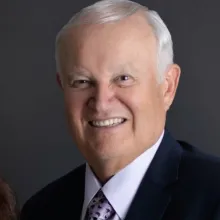
Mr. Seiglie was born in Havana, Cuba, and came to the United States when he was a child. He found out about the Church when he was 17 from a Church member in high school. He went to Ambassador College in Big Sandy, Texas, and in Pasadena, California, graduating with degrees in theology and Spanish. He serves as the pastor of the Garden Grove, CA UCG congregation and serves in the Spanish speaking areas of South America. He also writes for the Beyond Today magazine and currently serves on the UCG Council of Elders. He and his wife, Caty, have four grown daughters, and grandchildren.
