

Mario Seiglie
Each element of the physical Tabernacle carries symbolism which complements God's spiritual Tabernacle in heaven. In this series, we will learn about the meaning of these symbols and elements as described throughout the Bible. Download the handout to view in a separate tab or window.
This transcript was generated by AI and may contain errors. It is provided to assist those who may not be able to listen to the message.
As we have been covering in the past couple of weeks, Passover is soon coming, and God tells us we should prepare for the Passover. And I always marvel at how God's Word is so rich that you can just pick up one theme after another without repeating, and that goes for Passover preparation. One way is to appreciate the access that we have with God today. We sort of take it for granted that we can go and just directly go before God the Father and Jesus Christ up in heaven. He's our high priest, but it wasn't always that way. As you know, in the Old Testament, you had to go through certain mediators. You had a high priest. You had a tabernacle. You had sacrifices that had to be enacted in order to please God and to communicate with Him. What we're going to see today is the wonderful way that God has established to spiritually go through Him by understanding the meaning of the tabernacle in the Old Testament. I'm going to move this just a little bit here.
That's better. Everybody can see me now. I don't want to block the vision of the people. Let's go to Hebrews 8. Hebrews 8, verses 1-6. This is a fascinating area of Scripture that many times people don't go over it. Certainly, it's not something that is touched on by other congregations and churches, but notice in Hebrews 8, verses 1-6. It says, now this is the main point of the things we are saying. We have such a high priest who is seated at the right hand of the throne of the majesty in the heavens, a minister of the sanctuary, and of the true tabernacle which the Lord erected and not man. For every high priest is appointed to offer both gifts and sacrifices. Therefore, it is necessary that this one also have something to offer. For if he were on earth, he would not be a priest since there are priests who offer the gifts according to the law, who serve the copy and shadow of the heavenly things, as Moses was divinely instructed when he was about to make the tabernacle. For he said, see that you make all things according to the pattern shown you on the mountain. But now he has obtained a more excellent ministry in as much as he is also mediator of a better covenant which was established on better promises. And that's the covenant that we are now carrying out today. So we have a tabernacle that God used as a symbol of access to him. And we're going to see how carefully God gave every one of those items in the tabernacle to be symbols for us as we now have a relationship with him. The apostle Paul compared our spiritual life of overcoming to a race. And the reward is not guaranteed. This is a spiritual race that we have to cross the finish line at the end of our lives or if Christ comes before to be transformed. But it's not something of a given. And this helps us understand the preparation for Passover is not a given. It is something that God expects us to prepare spiritually in the right way. Let's go to 1 Corinthians 9, verse 24. Again, maybe these are not very popular scriptures that you're going to hear from traditional Christianity because many of them believe in this one-saved, always-saved mentality. And that's not a teaching in the Bible. Let's notice 1 Corinthians 9, verse 24. Paul is talking to his fellow brethren. And he says, verse 24, Do you not know that those who run in a race all run, but one receives the prize? Not everybody that runs is going to receive it. Run in such a way that you may obtain it. It's not secure. It's not guaranteed. He says, And everyone who competes for the prize is temperate in all things. Now they do it to obtain a perishable crown, but we for an imperishable crown. Therefore I run thus, not with uncertainty. Thus I fight not as one who beats the air, but I discipline my body and bring it into subjection, lest when I have preached to others, I myself should become disqualified. So Paul was still running that race. He didn't take it for granted. He was going to finish the faith all the way to the end. And so when we look at this tabernacle analogy, let's examine where are we in this analogy. Now I'd like for the deacons and others to go ahead and give you a handout of a graph of the tabernacle and the Old Testament symbol of access to God. And we're going to examine the symbolism and meaning of each one of these 12 items that comprise the tabernacle proper. There were 12 different parts to it.
And this is only going to be part one because it's so extensive. So we're going to go through the first six parts to the tabernacle. And the next time I'm going to have to skip a Sabbath because I won't be here, but the next one would be numbers 7 through 12. Everybody have one? No? Not yet? Okay. We'll go ahead and wait for that for a moment. But you're going to see these are like puzzle pieces all fit together. And once you get the graphic, you're going to see that the exterior part of the tabernacle was comprised of four different parts.
The curtain around which delineated the holy area. The second was the altar of sacrifices, which was in front of the curtain door. The third was the laver. This was a large bronze type of bathtub, big one, where the priests had to go and purify and wash themselves. Then you have the tabernacle proper. That's the tent. And then you have the golden lampstand inside and the table of showbread. So then later you have the altar of incense, the veil, all of these other points. So we're only going to cover the first six parts. And we're going to look at them from the Old Testament perspective and then from the New Testament perspective and then from the kingdom of God perspective. So you have the past with the tabernacle, you have the present meaning of it, and then you have the future meaning. That's why I divided it into the Old Testament, the New Testament, the new and living way to God, and the final way, which is after the resurrection, where you have direct personal access to God. So let's begin with the courtyard. This is important because God was in the midst of Israel, but most of Israel was not believing and they had all kinds of problems. And so there was this holy area. And notice in Genesis 1710, who were the ones that could enter that holy area? Genesis 1710. God told Abraham, he says, This is my covenant which you shall keep between me and you and your descendants after you. Every male child among you shall be circumcised, and you shall be circumcised in the flesh of your four skins, and it shall be a sign of the covenant between me and you. And so this is what separated in the Old Testament. God's people from the rest of humanity at that time. In Exodus 27, when the Israelites left Egypt, and then they built the ark and the tabernacle. Exodus 27 verse 9. And this is a whole area. I'm just going to read the most important parts here. Exodus 27 verse 9. God says to the Israelites, You shall also make the court of the tabernacle. For the south side there shall be hangings for the court made of fine woven linen, 100 cubits long for one side.
And basically a cubit is like a foot and a half, so basically you're talking here about 60 yards long, approximately. And it's 20 pillars and there are 20 sockets shall be bronze. The hooks of the pillars and their bands shall be silver. And so if you look at the graph you see here how this courtyard was set up. Notice now in Ezekiel 44, Ezekiel 44 gives you here a brief explanation of those who could come into this temple area or in the future, whether it was tabernacle or temple. Ezekiel 44 verse 9.
It says, Does says the Lord God, No foreigner uncircumcised in heart or uncircumcised in flesh shall enter my sanctuary, including any foreigner who is among the children of Israel. So you had to be circumcised. That's what made you part of the membership of Israel. And of course, it had to do with the males, but usually the women were already married to the family. They were both with their children part of Israel as long as a man was circumcised. You could not go into this courtyard or you would be killed if some foreigner tried to come in. And even in the book of Acts, you remember how they had the temple area, which was just an expanded courtyard, and they said they had a sign that no Gentiles, no uncircumcised people could go inside. And Paul actually brought one of the Gentile converts, but he never brought him inside. But since they saw him, they thought he had, and boy, they made this big tumult, and several chapters of the Bible have to do with the uproar. So it was a very serious thing.
And then secondly, you had the altar of sacrifices. Exodus 27, verses 1 through 8. Let's go there. Exodus 27.
And God speaking again, he says, you shall make an altar of acacia wood. Five cubits long and five cubits wide, the altar shall be square, and its height shall be three cubits. You shall make its horns on its four corners, its horns shall be of one piece with it, and you shall overlay it with bronze. So this was supposed to last. It was a metal so that they could take it, and if it was wood, it would have eventually rotted. But if it's covered, it protects it. It's like a vacuum then that seals with that metal the wood. And so this is the altar of the burnt offerings. Again, nobody but the circumcised Israelites with family could enter this place. It was exclusive. Gentiles had no access to it. The only way would be for them to be converted, be circumcised, and become part of God's laws, law-keeping people. And some did. But the second element to get closer to God was entering the courtyard through circumcision and keeping the covenant. Then comes the altar of sacrifices. You are to bring a sacrifice for your sins before God, and then you have what is called the laver. That's the big wash type of tub. In Exodus 30 verse 18, Exodus 30 verse 18, it says, You shall also make a laver of bronze with its base also of bronze for washing. You shall put it between the tabernacle of meeting and the altar, and you shall put water in it, for Aaron and his sons shall wash their hands and their feet and the water from it. When they go into the tabernacle of meeting or when they come near the altar to minister to burn an offering made by fire to the Lord, they shall wash with water lest they die. These things are very serious. See, God was enacting a teaching method here. Each thing had a symbolic means, and you could not come in in a dirty attire. You could not come in as a person that symbolically was dirty. And so this was the symbol to clean yourself of the sins. And then the fourth was the tabernacle itself. Leviticus 16 verse 12. Verse 2, rather. Leviticus 16 verse 2 says, The Lord said to Moses, Tell Aaron your brother not to come, in just any time into the holy place inside the veil before the mercy seat, which is on the ark lest he die, for I will appear in the cloud above the mercy seat. And so this was a tabernacle that if you went in and you were not authorized, you would be slain at that time. It was that sacred and holy. God had it in mind.
And then we have the golden lampstand, Exodus 25. Exodus 25, 31 through 40.
It says, You shall also make a lampstand of pure gold. The lampstand shall be of hammered work, its shafts, its branches, its bowls, its ornament, told knobs and flowers shall be of one piece, and six branches shall come out of its sides, three branches of the lampstand out of one side and three branches of the lampstand out of the other side. And so it goes on here. Actually had seven different places where the flame would go up. And then finally you had the table of showbread. Exodus 25, 23. It says, You shall also make a table of acacia wood. Two cubits shall its length, a cubit its width, and a cubit and a half its height, and you shall overlay it with pure gold, and make a molding of gold all around. You shall make it for a frame of a hand breadth around, and you shall make a gold molding for the frame all around. And then it says, verse 30, and you shall set the showbread on the table before me always.
So inside this tabernacle.
You can also put here on the tabernacle, it wasn't only Leviticus 16 too, it was also Exodus 26. Let's read Exodus 26, verse 1, where it says, Moreover you shall make the tabernacle with ten curtains of the woven linen, and blue and purple, and scarlet thread. With artistic designs of carobim you shall weave them. And so again, everything is very carefully done. So these are the six parts that we are going to cover today. And of course, Israelites for over a thousand years were going through every one of the holy days with that tabernacle.
Or later, the first temple, and then finally the second temple that was destroyed in 70 AD. But this was the symbolism that God had in the Old Testament. But let's look at, in the New Testament, the new and living way to God. So symbolic of the courtyard and circumcision, notice Acts chapter 10. Who can enter this access to God now? This is like entering into that holy area, crossing the curtains in Acts chapter 10 and verse 34. It says, Peter speaking here, then Peter opened his mouth and said, in truth I perceive that God shows no partiality. He's not separating now between the Jews and the Gentiles, but in every nation whoever fears Him and works righteousness is accepted by Him.
If you're going to commit to keeping God's laws, it doesn't matter what nationality, doesn't matter what race you are. He says, the Word which God sent to the children of Israel, preaching peace through Jesus Christ.
He is Lord of all, not just the Jewish people. Many Jewish people still believe somehow they are the only ones that God can work with and use because they rejected Jesus Christ the Messiah. So they're still stuck in the Old Testament way. And by the way, they still want to build a new temple in Israel and have sacrifices and have this whole Old Testament system back into operation. Just right now the politics doesn't allow it. But we know eventually there will be sacrifices that will be offered in Jerusalem again.
And that's part of the end time prophecies. But here Paul says that he is Lord of all. That Word you know which was proclaimed throughout all Judea and began from Galilee after the baptism which John preached. How God anointed Jesus of Nazareth with the Holy Spirit and with power who went about doing good and healing all who were oppressed by the devil for God was with him.
And we are witnesses of all things which he did both in the land of the Jews and in Jerusalem whom they kill by hanging on a tree. Him God raised up on the third day and showed him openly not to all the people but to witnesses chosen before by God even to us who ate and drank with him after he arose from the dead. And he commanded us to preach to the people to testify that it is he who was ordained by God to be judge of the living and the dead. To him all the prophets witnessed that through his name whoever believes in him will receive remission or what it means forgiveness of sins.
So brethren that courtyard is actually now extended to anyone who comes and is called by God and starts obeying God's commandments and accepts Jesus Christ as their Savior and it's a commitment. So now you don't have to be circumcised to come before the presence of God. It's like now that curtain has been opened to those of all the different races and nationalities that are being called and who commit to obeying God and his commandments and his way of life. And that's why I'm here and that's why many are here except for those that are of Jewish roots that are still with that covenant that they can come into the church already being circumcised and accepting Jesus Christ.
They would be ushered in as one of the descendants of Abraham. But notice what it says here in 1 Corinthians chapter 7 verse 19. Here's the condition that God puts for us to go before him into that third heaven that new and living way into that tabernacle not made by hands up in heaven. 1 Corinthians chapter 7 verse 19.
Paul said it here succinctly, circumcision is nothing and uncircumcision is nothing but keeping the commandments of God is what matters. That's the gist of it. That's the core. That's what unites us all. That's why we're here on the Sabbath because we're keeping the fourth commandment of God. It's not man. It's not Moses. It's God who established this day as a holy day, as a holy convocation. And so now we can go out to the world. It doesn't matter where. And we've got churches in just about every part on this earth. We've got people in Hong Kong that are church members. We have people in Asia, Latin America. We've got churches all throughout these countries. I don't go around saying, well, are you circumcised or not? See? No. Are you circumcised of the heart? Are you willing to repent of your sins and be cut in the heart for it? And God looks at the person. God looks at the heart. There's another scripture. Let's go to Romans. Romans explains this quite well. In chapter 2, verse 25, it says, For circumcision is indeed profitable if you keep the law. But if you are a breaker of the law, your circumcision has become uncircumcision. Just because you're circumcised doesn't mean God's going to give you access to him if you're breaking his laws, if you're not keeping them. Therefore, if an uncircumcised man keeps the righteous requirements of the law, will not his uncircumcision be counted as circumcision, and will not the physically uncircumcised, if he fulfills the law, judge you, who even with your written code and circumcision are a transgressor of the law? For he is not a Jew who is one outwardly, nor is circumcision that which is outward in the flesh. But he is a Jew who is one inwardly, and circumcision is that of the heart and the Spirit, not in the letter, whose praise is not from men but from God. So there's no boasting what your descendants are, what your pedigree is. That's not what's important. It's how you keep God's laws.
And so, once we have access, and in a way, once you have access to the church, you come in, no matter what you think, you come in uncircumcised of the heart. Because this is the way to obey all of God's commandments and way of life. We could have advanced quite a bit, and God's Spirit was with you, but it is not yet in you. Because you have not made that commitment with the minister of God who is following God's commandments and doing these things that are taught by Jesus Christ. And we are nothing, but it is God working in us that is something. And so, that's why we have to peel away that pride and that circumcision that we need to circumcise the heart and just come and say, when I came into the church, of course, I started keeping the Sabbath day. I started keeping the feast days. I started following this, but I came into this court now. Yes, I have access now to God so that I can become part of His church, but it's not a given. We are not deserving of it. It's God who places us here. And we go back almost 2,000 years to the Church of Jerusalem, faithfully passing the baton, one generation after the other, through persecution. Now we're in the 21st century. So, let's continue. So, what do you do once you are circumcised of the heart? There's the right repentance. There is the right attitude of obedience. Well, then it's time to accept Jesus' sacrifice, and He sacrificed only once for all of us. Notice Hebrews 7, verse 26. Hebrews 7, verse 26. It says, That's who we go before. It's the same thing with the altar of sacrifices. We come with the sacrifice of Jesus Christ. It has to be that second step. We have to accept by faith the sacrifice of Jesus Christ for our sins. And there's no other way for the path to go forward. Thirdly, is that labor, which was the washing that took place. Notice, should have put here Galatians 3. Sorry, still working on this. It's a work in progress. Galatians 3, 27.
Verse 27 through 29.
It says, There is neither. Let's go back. Yeah, verse 27.
It says, For as many of you as were baptized into Christ have put on Christ. There is neither Jew nor Greek. There is neither slave nor free. There is neither male nor female. For you are all one in Christ Jesus. So a woman is not a second-class citizen in the church. She is part of the same community, and spiritually she is equal of anyone else. For you are all one in Christ Jesus. And if you are Christ's, then you are Abraham's seed and heirs according to the promise. So once you go through the washing of the labor, the baptism, then that's when with the laying out of hands, which is going to come in a moment here symbolically. But that's when you are put into the body of Christ. That is where you have your brethren that all follow the same things. We don't have people in Africa doing their own things or something. No, this is a church. We're all in agreement. You can look it up here in the booklet, the 20 fundamental beliefs that we have based on the Bible teachings. And we're all united in this. And so now the fourth principle.
I'm not going to go into collagions too, but it also talks about the same thing about baptism. You can read it there. The fourth new relationship with God is established. Hebrews 10, 19 through 23. Hebrews 10, 19 through 23. It says, That's what you just did with the altar of sacrifice. By a new and living way, which He consecrated for us, he paid the price through the veil that is His flesh. So He gave up His life so that there would be access. So that veil, that curtain, would no longer be closed to us. And having a high priest over the house of God, let us draw near with a true heart in full assurance of faith, having our hearts sprinkled from an evil conscience, and our bodies washed with pure water. It has to do with baptism. Let us hold fast the confession of our hope without wavering, for He who promised is faithful. And let us consider one another in order to stir up love and good works, not forsaking the assembling of ourselves together, as is the matter of some, but exhorting one another and so much more as you see the day approaching. And it's approaching fast. World events are showing that. And so we establish we have our sins forgiven. It's like our body is the temple of Christ or of God, and the Holy Spirit can enter. First, you have to empty it of all the dirtiness. All the past sins have to be blotted out, and so then it's new, and the Holy Spirit can enter it. And that's the next step, because now you enter the tabernacle, and the first thing you have is that lampstand. Symbolizing God's Holy Spirit. Notice Deuteronomy 5.29. Deuteronomy 5.29.
God said, Oh, that they had such a heart in them, that they would fear me, and always keep all my commandments, that it might be well with them, and with their children forever. That's what God wants, that heart that is correct, that right attitude before Him, and that can only be done through God's Spirit.
In Acts 8.14, let's go there, Acts 8.14. It says, Now when the apostles who were at Jerusalem heard that Samaria had received the word of God, they sent Peter and John to them. Who, when they had come down, prayed for them, that they might receive the Holy Spirit. For as yet he had, or it should be it, because it's not a person, but here it's actually in the article is it. It had fallen upon none of them. They had only been baptized in the name of the Lord Jesus. It's not enough. You need to have hands laid on you, because again, it's like going in and skipping, going before the candlestick. That's the first thing. You need God's Spirit, and that's through the laying out of hands. And finally, the table of showbread, Exodus 25, Exodus 25, verses 23 through 30. It says, let's see, Exodus 25, 31. It says, you shall also make a lampstand. No, 23. Here it is. You shall also make a table of acacia wood. Two cubits shall be its length. And then it says in verse 30, and you shall set the showbread on the table before me always. And these were the 12 breads symbolizing the tribes of Israel. And now it is talking about the Israel of God, both Jews and Gentiles that are converted. And that bread was placed every Sabbath day. And it was just a week long, and then it was brought. And it has to do, as it says, your convocation of the saints from all races. And here, that's a reminder of God. And it actually, in the Hebrew, panim, has to do with the bread of faces. They look at God on the Sabbath day, every day, you know, fresh, new. And it's a way of reminding God of his people down here on earth. Used to be physical Israel. Now it's spiritual Israel. Notice in Galatians 6, 25, and I'll finish there. Galatians 6, verse 25, and 26.
Did I get that right? No, it's...
It should be 16. Galatians 6, 16.
It says, And as many as walk according to this rule, peace and mercy be upon them, and upon the Israel of God. Now he's addressing the brethren here in Galatia. They were Jews and converted Jews and converted Gentiles, and he calls them the Israel of God. That showbread reminds us that God is not forgetting us on the Sabbath day. Once you're a member, once you're part of God's people, you have been cleaned, you have received God's Spirit, you meet on the Sabbath, and God's face shines upon us. As we look upward, that table of showbread, brethren, is all of us. Have a fine Sabbath.
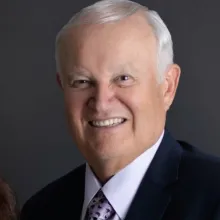
Mr. Seiglie was born in Havana, Cuba, and came to the United States when he was a child. He found out about the Church when he was 17 from a Church member in high school. He went to Ambassador College in Big Sandy, Texas, and in Pasadena, California, graduating with degrees in theology and Spanish. He serves as the pastor of the Garden Grove, CA UCG congregation and serves in the Spanish speaking areas of South America. He also writes for the Beyond Today magazine and currently serves on the UCG Council of Elders. He and his wife, Caty, have four grown daughters, and grandchildren.
