

Mario Seiglie
Each element of the physical Tabernacle carries symbolism which complement God's spiritual Tabernacle in heaven. In this conclusion, we will learn about the meaning of these symbols and elements as described throughout the Bible connecting OT symbols to NT symbols and to the seven Feasts of God. Download the handout to view in a separate tab or window.
This transcript was generated by AI and may contain errors. It is provided to assist those who may not be able to listen to the message.
So, brethren, today we're going to be covering the second part of the symbols of God's tabernacle.
And it is an important part of Scripture. If you think that of all the different chapters in the Bible, that God had 16 chapters in the book of Exodus. From Exodus 25 to Exodus 40, it's all about the assembling of this tabernacle. And then you have Leviticus, which is based a lot on the different offerings that are going to be done. So you got a book that's dedicated to the tabernacle, too. And then you have Numbers, where you have a lot of the assignments of the priests of Aaron. And then Deuteronomy also covers it. So if it's important to God, it's because it's important for us as well. And let me show you a Scripture, which God shows how the tabernacle is so important because of its symbolism, what it means spiritually. Let's go to Hebrews chapter 9. This is the second part of the series I'm doing on Passover preparation, the meaning of the tabernacle symbolism.
In Hebrews chapter 9, and we will be giving out the handout now, which we'll be covering in a moment, Hebrews chapter 9 verses 1 through 15 deals with the tabernacle, its symbolism. So it's not something that it's trumped up, it's imagined. No, it's really part of Scripture. It says in Hebrews 9 verse 1, then indeed even the first covenant had ordinances of divine service and the earthly sanctuary. That's the tabernacle. For a tabernacle was prepared, the first part in which was the lampstand, the table, and the showbread, which is called the sanctuary, and behind the second veil, the part of the tabernacle, which is called the holiest of all. And then it goes on to talk about the tabernacle because the golden censor was actually before the veil because Aaron or whoever was a high priest, he had to set up that censor and burns incense every day. And so he couldn't do that if it was going beyond the veil. But it's just kind of like a parentheses, and then it talks about, and the Ark of the Covenant overlaid on all sides with gold, in which were the golden pot that had the mana, Aaron's rod that butted, and the tablets of the covenant that talk about the Ten Commandments. And above it were the carobim of glory overshadowing the mercy seat. Of these things we cannot now speak in detail. Here he's talking about there's a symbolism here, but he can't go into it right now. There's what's called a typology. These are types of something greater.
And then he goes on in verse 6 to say, now when these things had been thus prepared, the priest always went into the first part of the tabernacle, performing the services. But into the second part, the high priest went alone once a year, not without blood, which means his own sacrifice for his sins, which he offered for himself and for the people's sins, committed in ignorance. The Holy Spirit indicating this, that the way into the holiest of all was not yet made manifest while the first tabernacle was still standing. That there was this basically unconverted people that were the Israelites with a few that God did give his spirit to guide them, like Moses and Joshua and others. But this was a carnal people, and God could not be in the midst of them directly because of their sins. So there was a sanctuary to keep the distance and having the priests be able to be mediators between the people and God. And so he goes on to say, it was symbolic for the present time in which both gifts and sacrifices are offered, which cannot make him who performed the service perfect in regard to the conscience, concerned only with foods and drinks, various washings, and fleshly ordinances, which I had to do with fleshly sacrifices, imposed until the time of Reformation. There was some better way that God was going to offer it. And so if you look at the chart, we see here that the first part has to do with the Old Testament, with those 12 different parts to it, which all had symbols. And we went through the courtyard, only circumcised Israelites come in or their family, the altar of sacrifices. They had to bring something for their sins, or the Thanksgiving sacrifice. The labor was where the washing took place of the priests. The tabernacle was the tent itself. The golden lampstand, which we already covered the last time. The table of showbread, the altar of incense. Like I said, these three parts were before the veil. And then you have the veil separating the holy place from the Holy of Holies. And then you had these three things that well, you had one, the Ark of the Covenant, with three different items inside. The tablets with the Ten Commandments, the golden pot of manna, and Aaron's rod.
It was the only one that flourished. Let's go to number 17, because this is important. Many people don't realize what was the symbolism of Aaron's rod. Why did God say to put that? Numbers 17, 5 through 11. It says here, God is talking, it says, it shall be that the rod of the man whom I choose will blossom. Thus I will rid myself of the complaints of the children of Israel, which they make against you. Talking about making it against Moses and Aaron.
So Moses spoke to the children of Israel, and each of their leaders gave him a rod of peace for each leader according to their father's houses, 12 rods, and the rod of Aaron was among their rod. That's what the one for Levi. And Moses placed the rods before the Lord in the tabernacle of witness. Now it came to pass on the next day that Moses went into the tabernacle of witness, and behold the rod of Aaron of the house of Levi had sprouted and put forth buds, had produced blossoms, and yielded ripe almonds. That was a great miracle because this thing wasn't even planted. This was a dead piece of wood that had been used for so often. Then Moses brought out all the rods from before the Lord to all the children of Israel, and they looked, and each man took his rod, each one of the tribes. And the Lord said to Moses, Bring Aaron's rod back before the testimony to be kept as a sign against the rebels. So here's you're talking about this was after Cora's rebellion, where they wanted to take over the leadership of Israel. That you may put their complaints away from me lest they die.
Thus did Moses, just as the Lord had commanded him, so he did. And so it's important because when you're involved with God's way of life and you're being part of God's way, it's not us who do the choosing. God is the one that calls the person, and there's been a succession through the ages where God has used his people and pastors who lay hands on others to do it. It's not up to the congregation to be laying hands on people. And we have seen that time and time again, and small groups go and they say, well, we don't have a minister. Well, let's ordain each other. That has happened. Just do that.
With what authority? Here it's talking about God designates things. And that was a lesson then, and it's still a lesson today because it's so easy to just set up something on your own self, name yourself, and that's not the way it works. But anyways, that's just one small lesson here that was part of a reminder in the tabernacle of Aaron's rot. Did you want to become a high priest at that time? Did you want to do the Levites work? You better not, because that was something assigned specifically for them. So then we come to the New Testament times.
It's called the New and Living Way to God. So what the Old Testament just had in physical symbols, the church now has with certain physical symbols as well, but they don't have to do with the tabernacle itself. So let's look at how of these 12 parts to the tabernacle, there are 12 parts to the spiritual church that we go through. So instead of a courtyard that separated the Israelites from the rest of the world, God has now opened up his calling to all the races, and the qualifications are by faith and obedience. So if you're willing to obey God and keep his commandments and follow God's truth and his word, you can be part of the church. There's no hindrance for man, women, anybody that has the maturity, usually at 18 years old, is when a person can begin to talk about baptism. They've already now been able to weigh the consequences, count the costs. Notice in Acts chapter 10, Acts chapter 10, in verse 34, here is the first Gentile that came into the church. His name was Cornelius, and he and his family all came in at that time. In verse 34, Peter opened his mouth and said, In truth I perceive that God shows no partiality, but in every nation whoever fears him and works righteousness. You see, it does require putting God's laws into practice, and works righteousness is accepted by him.
The word which God sent to the children of Israel preaching peace through Jesus Christ, he is Lord of all. That word you know, which was proclaimed throughout all Judea and began from Galilee after the baptism which John preached. And so here we have now the opening of all the races, and certainly we have just about all the races imaginable in the church. We have people around the earth. We've got a multitude of churches in Africa.
We've got a multitude of churches in areas like Latin America, which I serve. We have people from India, from Sri Lanka. We have them from Asia and all these areas of the world. So now it's obedience. Notice in Romans chapter 2 verse 25.
Romans chapter 2 verse 25. Who becomes an Israelite before God? Romans 2 verse 25. It says, for circumcision is indeed profitable if you keep the law. That's the same way as saying you obey God's law. But if you are a breaker of the law, your circumcision has become uncircumcision. And you see, that's why you need to keep the Ten Commandments. You can't keep nine of them because they're all together. And so it's not picking and choosing. That's why we keep the Sabbath's holy days, food laws. That's part of God's laws. It says, if you are a breaker of the law, your circumcision has become uncircumcision. Your heart is not open, and it is not circumcised before God. Therefore, if an uncircumcised man keeps the righteous requirements of the law, will not his uncircumcision be counted as circumcision, and will not the physically uncircumcised, if he fulfills the law, judge you who, even with your written code and circumcision, are a transgressor of the law. For he is not a Jew who is one outwardly. So it's not just getting circumcised, nor is circumcision that which is outward in the flesh.
But he is a Jew, it means God's person, an Israelite, who is one inwardly. And circumcision is that of the heart, in the spirit, not in the letter, whose praise is not from men, but from God.
So it's not a matter of just saying, oh, we're all circumcised, or we're all buddies, and everybody who's not uncircumcised, oh, they're out there in the world. They're condemned. That's not the case now. So this is the way we are able to come to God's presence, first of all, through God's calling. Secondly, when you go into this courtyard of the world, the earth, there is this altar of sacrifice that is symbolic before you, and that is accepting Jesus Christ's sacrifice for your sins. And he paid only once for all our sins. Hebrews 7, 26, Hebrews 7, 26.
It says, For such a high priest, talking about Christ, was fitting for us, who is holy, harmless, undefiled, separate from sinners, and has become higher than the heavens, who does not need daily as those high priests to offer up sacrifices, first for their own sins, and then for the peoples. For this he did once for all, when he offered up himself. He should just underline once for all.
And so that has to do with repentance and accepting Jesus Christ's sacrifice.
So that's symbolically like the altar of sacrifices. Thirdly, the washings that took place in the laver, this big bathtub type, round bathtub type, and the washings that take place. And that's symbolic of baptism. Notice in Colossians 2, chapter 2, verse 11. Paul is talking here. He says, in him, talking about Christ, you were also circumcised with a circumcision made without hands by putting off the body of the sins of the flesh, that's repentance, by the circumcision of Christ. And what is that? Buried with him in baptism. So that's why baptism is required. In which you were also raised with him through faith in the workings of God who raised him from the dead. And you being dead in your trespasses and down circumcision of your flesh, he has made alive together with him, having forgiven you all trespasses. So it shows now that you need to go through that spiritual labor in that tabernacle and be washed of your sins. So baptism is a symbol of, now we go to the fourth step, being cleansed of sin, you're able to enter the tabernacle and have a new relationship with God.
1 Corinthians 7 verse 19. Again, why can we do this? 1 Corinthians 7 verse 19. It says, circumcision is nothing and uncircumcision is nothing. Whether you're circumcised or not does not matter. Spiritually, now you are part of God's people. It says, but keeping the commandments of God is what matters. All of them. God did not give us pick and choose or eliminate the ones you don't like. And so we're able now to enter into the sanctuary. Hebrews 10 verse 19.
Hebrews 10 verse 19. It says, therefore brethren, having boldness to enter the holiest by the blood of Jesus, by a new and living way which He consecrated for us through the veil that is His flesh, and having a high priest over the house of God, let us draw near with a true heart.
And so here we are now. We're able to enter into the tabernacle area. And the first thing that we see is that golden lampstand full of oil, and it has the light that lightens the whole area, shines, and that's symbolic of the Holy Spirit. And so, having been cleansed through baptism, now you need to receive God's Holy Spirit. And so Acts chapter 2, Acts chapter 2 verse 1.
It says, when the day of Pentecost had fully come, it's one of the high days, they were all with one accord in one place. And suddenly there came a sound from heaven, and as of a rushing mighty wind, and it filled the whole house where they were sitting, then they appeared to them, dividing tongues as a fire, and one sat upon each of them.
Just like the lampstand had the fire through the oil that it was, it says, and they were all filled with the Holy Spirit and began to speak with other tongues or languages as the Spirit gave them utterance. Another scripture there we can read is Acts 8, 14 through 17. It shows it's not enough to be baptized. You have to have hands laid on you. It says verse 14, Acts 8, now when the apostles who were at Jerusalem heard that the Samaria had received the Word of God, they sent Peter and John to them, who when they had come down prayed for them that they might receive the Holy Spirit, for as yet he had, and it should be it, had fallen upon none of them. They had only been baptized in the name of the Lord Jesus. So that's perfectly legitimate, but it's not enough. Then they laid hands on them and they received the Holy Spirit. So it wasn't just anybody laying hands. It had to be a minister of God that does that, because he's kind of like the vehicle through which God's Spirit enters the person. And so, of course, now you fulfill the stage of the Golden Lamb's Day. And then you come to the sixth part, which had to do with a table of show bread. In Hebrew, it's lehem palin, which means the bread of faces. And commentators have always been very curious. What do faces have to do? That's why they use the word show. They have to do with the word show because it's like something that is shown before God. But the term has to do with faces. And the bread had to be prepared by the priests. And each Sabbath, a new round of 12 loaves were put on the table of show bread, fresh. And then that would last until the following Sabbath, from Sabbath to Sabbath. And it has to, it's a symbol because it also is dealing with the annual Sabbaths that we come before Him in holy convocation.
The meetings of the saints of all races come before God, and they are called the Israel of God.
So this is the spiritual Israel of God that we are a part of. And every Sabbath God looks down. What are the faces that are smiling up at Him? That are there whether they are listening on the cyberspace or not? Hey, we're all part of God's people. He doesn't want us to be working on this day. Wouldn't that be sad? Wouldn't that be insulting to God that on this day where His faces should be where the holy convocations are? People are doing something else. No, the bread of faces. Boy, those faithful people. And I'll tell you, when people, as they have been here for decades, faithfully to the end, they've had the bread of faces. That's symbolic of, yes, God, I'm going to be here till the end. I'm going to be faithful to the end. That is so rewarding and so pleasing to God. And then you have access to the next piece of furniture, which has to do with the altar of incense. And those have to do with the prayers of the saints. You already have God's Spirit. You've already gone this far. You're obeying God. So now you have access to God. Your prayers go directly to God. You don't need anyone except Jesus Christ as the only mediator and high priest. First Timothy 2.5 says there's only one mediator between Christ, I mean before God the Father and man, and that is Jesus Christ. And then, symbolically, you're able to go through that inner curtain. Christ's flesh opens the inner curtain. Remember in Matthew 27.51 it says that when Christ died, it says the temple veil just split in two from the top to the bottom. It wasn't something that somebody split from the bottom like men would do. Now this was split from the very top showing it was a miracle. And that's when open access to God that is available. In Hebrews 10.20, let's read this Hebrews 10.20, it says that we can go before Him by a new and living way which He consecrated for us through the veil that is His flesh. That's the cost of having that access to God.
And so now we come before God in a purified state. There is the Ark of the Covenant in Colossians 1.22. You don't have to jot anything down or I'll read it to you. It says Colossians 1.22. It says that in the body of His flesh through death to present you holy and blameless and above reproach in His sight. Talk about God, the Father's sight. He's able to present us in this way. And so once we do that, there are three great blessings after our death. Or if Christ comes before, that would be a transformation that takes place. But there are three things, three rewards that God is going to give us. First, the commandments will be permanently written in our hearts through God's Spirit. That's what Hebrews 10, 14 through 18. It says that He will write so it will be internalized. We don't really have God's laws completely internalized. We still got this carnal human nature. It's like soap and oil and water or something like this. Oil and water. They just don't mix very well. And getting rid of the human nature, that's tough.
And filling it more with the Holy Spirit's nature. God's Spirit in us. That's tough, but one day, we're not going to have this human nature to fight. And we'll be free from it. We won't be attracted to sin in any form. And then the second thing is we will receive the manna, which is the symbol of eternal life. In John 651, Christ said that He was going to provide that manna. John 551. It says, I am the living bread which came down from heaven. If anyone eats of this bread, he will live forever. And the bread that I shall give is my flesh, which I shall give for the life of the world. Brethren, during the Passover, it symbolizes that bread also, that we are committed to following God. We want that bread of life to be given to us, eternal life. And which has to do with Revelation 2 17. It says, I will give you of that bread, hidden manna that's in that flask. Again, symbolizing eternal life. That's one of the rewards of overcoming. See, it's not something automatic. We don't have an immortal soul now. Something that God has to give. And He can also take away what is a person's life. And finally, you have Satan being removed. This is Aaron's rod. Again, God places there because it's important. See, when Christ comes back, we're not going to have all of this infighting and different political parties and see who's going to prevail and bring in all their buddies and all of these things. None of that is going to happen. Christ is the perfect servant. He will choose and place us in the positions according to God's, the Father's will. They've been looking at us.
They want us to succeed. He's going to reward according to what we have done in this life to serve Him, to serve the saints. Remember how it talks about the parable of the pounds? He gives us a certain portion of God's Spirit and He says, work, use it to better ourselves spiritually and be able to help and serve and become loyal and dedicated and not some person there naysaying this type of chorus rebellion. They're ready to do anything to lead somebody out. We've seen too much of that. And so there's that symbol of Aaron's rod. What is that reward? Notice that it is in Revelation 2, Revelation chapter 2, in verse 26.
Christ said, and he who overcomes, that's his human nature, the temptations of the world and Satan, and keeps my works until the end.
It's like crossing a finish line. When we're baptized and receive God's Spirit, we start running this spiritual race and we have to be able to keep His works until the end. It doesn't matter what shape you show up at the end. Barely able to get around or what, but you're there. That's what's important.
To him I will give power over the nations. He shall rule them with a rod of iron, which means here, no, none of this frivolous type of things. We're not going to have rebels that are just going to take over. We're going to protect God's flock. That's what God always uses illustration of the pastor and the shepherd. The pastor has to be willing to give his life for the sheep, to be able to sacrifice themselves. He carries a rod of iron. It's actually one that was used against the predators. When they started trying to steal the sheep or come in, you had that club, but you didn't use that against your own sheep. It was to protect. That's why it says, he shall rule with a rod of iron. They shall be dashed to pieces like the potter's vessels, those that come up against Christ's reign. As I also have received from my father, and so Christ is going to govern with love, but he's not going to put up with shenanigans. We're not going to have all this silliness of infighting that we see everywhere. Also, Satan will be removed.
Notice in chapter 20, after Christ has returned, the one who was in authority here on the earth is going to be removed. Verse 1, Then I saw an angel coming down from heaven, having the key to the bottomless pit, and a great chain in his hand. He laid hold of the dragon, that serpent of old, who is the devil, and Satan, and bound him for a thousand years. And he cast him into the bottomless pit, and shut him up, and set a seal on him, so that he should deceive the nations no more, till the thousand years were finished.
But after these things, he must be released for a little while. And then after Satan and his demons and every there been removed, then the world can be ruled by Christ and his saints. And this is what happens immediately after verse 4. And I saw thrones, and they sat on them, and judgment was committed to them. Then I saw the souls of those who had been beheaded for their witness to Jesus, and the word of God.
So it can be not just getting beheaded, but just being faithful to the end, who had not worshiped the beast, nor his image, and had not received his mark on their foreheads or on their hands, which is these are signs of betraying Christ and God the Father. And they lived and reigned with Christ for a thousand years. I put here, Satan will be removed, the saints given rulership of the earth under Christ for a thousand years, and after, because they're still going to be ruling during that second resurrection period, when the great masses of humanity who never knew Christ, or who were deceived by Satan into some false religion and the traditional Christianity and every, they're going to come up, and they'll have a chance to know the truth and to obtain salvation.
So the rulership will continue. As it says here in verse 11 of Revelation 20, it says, Then I saw a great white throne, and him who sat on it, from whom faced the earth and the heaven fled away, and there were found no place for them. And I saw the dead small and great standing before God. And the books were open, talking about the scriptures, they were open to them, and also they condemned them for breaking what it said.
And another book was open, which is the Book of Life. They have a chance now. And the dead were judged according to their works, by the things were written in the books. So they'll have a chance to learn about God's church, be part of it, and one day also be part of God's kingdom. And so the final way that we will gain these three items will be for the first resurrection, being part of it, or success in the great white throne judgment era, which is the second resurrection.
That's the final way that we can have that direct personal access to God. Then, number three, the New Jerusalem now has no temple in it. And number four, we will be able to come face to face with God. Revelation 22, three through five. Let's go there. Revelation 22, three through five. So there's no need for a tabernacle. There's no need for a temple. There's going to be a temple during the millennium, which Christ is going to set up, because these nations still have to be taught symbolically what this system is.
In other words, they just don't have direct access at that time. They have to go through the same steps of salvation. And so in Revelation 22, in verse three, it says, and there shall be no more curse, but the throne of God and of the lamb shall be in it. Notice no third person, no trinity. And his servants shall serve him. So we're all one big team. We don't have people rebelling on this side and other sides. No, everybody is going to be unilaterally serving God.
And then it goes on to say, they shall see his face and his name shall be on their foreheads. Yes, we've got the God family name. That's part. He has reproduced himself spiritually now. There were children with God, the Father, and Jesus Christ as our elder brother. There shall be no night there, no lamp, nor light of the sun, for the Lord God gives them light, and they shall reign forever and ever.
So we've got a whole universe as we see it, that God is just preparing us to expand outwardly. With these children of God now ready to beautify all of these places and call them our own, to be able to invite each other. And it's like a feast of tabernacles, but for the entire universe one day. That's what God is calling us to do. And to finalize, here's one way that the seven feasts of God are symbolized by the tabernacle. I put one way because this is just one way that they fit, but the feasts of over here, the Passover, it has to do with the first three parts, which is, first of all, being baptized, coming before God into this courtyard, accepting the sacrifice of Jesus Christ, and being washed. And then the second feast, Days of Eleven Bread. The fourth part is that we're able now to be cleansed and to be in that tabernacle area. Pentecost symbolizes the golden lampstand about God's Spirit.
It always reminds us of that. It reminds us as well these other parts, which have to do with the Table of Showbread. So we are God's people, from Sabbath to Sabbath, from Holy Day to Holy Day, that we shine our faces to Him in happiness, in joy, in thankfulness for being part of this.
We're so privileged, and we take it for granted. And then we also have the Altar of Incense, which has to do with our prayers that can go to God with Jesus Christ as our High Priest.
And then we're able to enter into the Holy of Holies. Trumpets has to do with the rewards, which the first one, the commandments will be written in our hearts. We will receive eternal life, which is the manna, that little flask of manna. And the final part, which has to do with Aaron's rod, which has to do with authority. Governing under Christ has to do with the Feast of Tabernacles. Well, it has to do with Atonement, removing, first of all, who is in charge of this world. Because remember how Satan, when he talked to Christ tempting him, he says, all of this is under my authority. I can give you rulership over the world if I wanted to.
So first, it's the removal, in that way, removing the rod of authority that Satan has. Tabernacles is giving it to them, so now the Feast of Tabernacles, they will govern instead. And then we have the seventh feast, which is the eighth day, or the last great day, which has to do now with rulership in the second resurrection, as well, and beyond. All of these apply to the events in that second, twelfth, and final part of the Tabernacle.
So, brethren, let's prepare well for the Passover that's coming, and how God's Word never is void.
It always produces fruit, and where are we now in that part of the Tabernacle? And let's make it to the end, because it is worthwhile. God has called us with that holy calling and that coming Kingdom.
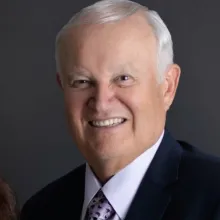
Mr. Seiglie was born in Havana, Cuba, and came to the United States when he was a child. He found out about the Church when he was 17 from a Church member in high school. He went to Ambassador College in Big Sandy, Texas, and in Pasadena, California, graduating with degrees in theology and Spanish. He serves as the pastor of the Garden Grove, CA UCG congregation and serves in the Spanish speaking areas of South America. He also writes for the Beyond Today magazine and currently serves on the UCG Council of Elders. He and his wife, Caty, have four grown daughters, and grandchildren.
