

Robin S Webber
This transcript was generated by AI and may contain errors. It is provided to assist those who may not be able to listen to the message.
I did recognize that over the last decade, the term—and I'd like to put it right out there for you— and is the term cancel culture. The cancel culture has come into play.
How has it entered our society and what does it depict in real time in America and over in Europe? It has entered our vocabulary with the thought of cancellation. The thought of cancellation of—let me throw out a few things for you to kind of get our minds working— certain YouTube venues on social media that are there one day and then not there the next. Also, that there are tweets that are allowed and not allowed.
One moment they're on, one moment they're taken down, and not always by the person that put them on there. Now, I'm not in the tweet world. I know that may come as a surprise to you. My name is Robin, and I do not tweet. I do not tweet at home, and I don't know how to tweet. So, if any of you—I can receive tweets, but I'm not tweeting back. So, you'll get an email from me, but that's also part of the cancel culture. There's also headline news events that are happening every day, and if you don't see it on the screen, you don't realize that it's happening. And because of the tense political scenarios of different stations, either on the right or on the left, there's just certain things that don't exist. They are canceled out. They don't want you to know that certain things are happening. That's interesting as well. There's also the aspect of the removal recently of monuments that have perhaps been on American soil for 60, 70, 100, and 130 years. These monuments have been removed by either mobs of people—I did not say peaceful protesters—but they have been removed by mobs of people in a violent, unlawful action, and or they have been removed by bureaucrats that did not ask the rest of the citizens of the community whether they should be moved or not. One day they're there. One day they're not. It's like, are you with me? They never existed. Let's think about this for a second. Exercising from society what many consider unacceptable is not merely reserved for we that are in the 21st century. This is not a new phenomenon. In a rush to change the future, faulty judgments can occur when we're not taking things into context. So let me let me let me mention a few things here to you. I want to go back a second, dealing with cancel culture. And I think over the years that we've often heard of the term of book burning.
Book burning. I remember many many years ago there was a a feature on the series called The Waltons about 30-35 years ago. Maybe up to 40 years ago. The Waltons depicted a family living up in central western Virginia, the state thereof. We might have called them people that lived up in the holler. John Boy and everybody else that was a part of the Walton family.
And what happened one time was it's probably now in the late 1930s, and it was nighttime. And they were having a book burning. They were having a book burning. And anything that was, because it was leading up to World War II, and anything that was written in the German language, any book, any manuscript, any maybe piece of paper that they'd had from learning German and school, etc., etc., it was all lighting up this fire. Just all lighting up this fire again and again. The fire was getting bigger and bigger. Everybody was getting fueled up to light the fire higher and higher. And they were grabbing things here and grabbing things there. Then all of a sudden, all of a sudden, the Baptist preacher, the Reverend, the preacher. Some of you will remember it was John Ritter before he went on to more comedic fame in other series. He just really played the part of an old-time Southern Baptist preacher. But even he got fired up, and he picked up a book, and he was ready just to keep that book into the fire. And all of a sudden, John Boy, John Boy grabbed his arm, just held it like a vice, and he said, Reverend, stop! Do you know what you're doing? Say what do you mean? It's German! It's got to go in the fire. Do you know what you're throwing into the fire?
It was the Bible.
It was the Bible. Written in German. About to be thrown into a bonfire, filled with emotion, the very word of God. And he didn't take time to recognize it. Cancel culture. Just throwing everything into a fire as if it ever existed. Let me talk about another form of cancel culture, history-based, and maybe you've heard about this before. But Thomas Jefferson, later in his life, and I think all of us recognize that Thomas Jefferson was a very unique individual, but later in his life, when he was ex-president, he decided to do something very daring, and it was only basically discovered later on. But what he did is he... I want to show you something right here. I've got some props. I'm an old teacher. You know that. So he took his scissors, like this, took his scissors, and he took... if I have it here, I'm trying to find it in my... Oh, there it is. He took a razor blade. He took some scissors, and he took the razor blade, and he took it to the Bible. And he focused on the New Testament and he took anything out of the New Testament that was either of, shall we say, a divine nature, a mystic nature, and the... and or the miracles of Jesus. He limited Jesus from being the Son of God and could accept him as a good teacher, this Son of Man, this human being that had moral principles. So he went away, and if I can show you something here for a second, here's the Bible, and you know, he got the scissors, and he's just cutting away and getting out the scalpel. And you know what? He canceled a lot of the Bible. He then called the term for that... the title of that manuscript was called The Philosophy of Jesus of Nazareth. And it was also called The Life and the Morals of Jesus of Nazareth. He willedled it down to 84 pages. And then this is something that the man of reason, the man of enlightenment, of humanism, of secularism, could live with and appreciate.
It's very interesting that Jesus himself, and I'm not sure if he kept it in there, said that man shall live by every word of God. Every word of God. Not every other word. Not the words that we like, not the words that we agree with, not the words that are comfortable. We're not to cancel the word of God. We're not to cancel portions of the word of God. All the word of God is good for reproof correction, edification, etc., etc. Very interesting. So we look at that.
Cancel culture. As if it never existed. Now, it's very interesting. I'll say something about Thomas Jefferson that maybe a lot of you don't know. Sometimes people project, but what they do later is interesting in their own lives. I think we're finding that out today on both sides of the political spectrum, called projection. And sometimes we don't know what they're doing in their own life. Actually, it's known that at the end of his life, Thomas Jefferson did have a Christian burial, just in case. A little bit like Ben Franklin, Uncle Ben. Just like Ben Franklin, just in case Thomas Jefferson had a Christian burial. So where does that leave you and me regarding the cancel culture?
Well, it's not so much about you and me, but this afternoon I want to give you the title of my message. What is God's take? What is God's take on the cancel culture? And this message is designed to answer why personalities in Scripture have remained on the pages of Holy Red for almost two millenniums, without being canceled, without a razor blade taken to them, or scissors. Some of it that is in Scripture may not be safe space for certain individuals, for men and for women, or for different groups of peoples, whatever that might be, whatever group, whatever category that might be.
Some of the stories that are told about those individuals could trigger, to use another phrase of today, trigger feelings of not being safe, or why would God even have them in the Bible? Why would God even use them? Why are those things even mentioned? So what I want to do is I want to answer the why. I want to answer the why. Why didn't a loving God take scissors to his own word for you and me, his dear children? And number two, what is it that God ultimately cancels? God does cancel something, and I think you'll find it very interesting at the end of the day, what is blotted out, and what is canceled?
So are we ready to go? Are you ready to go with me a little bit? We're going to kind of do a run through the scriptures, and with everything that's going on this day and age, I thought we'd start with Hebrews 11, and to go to what is called that proverbial Mount Rushmore of noted faithful people. There's a new term for Hebrews 11. I'm sure many of you have heard different terms over the years. There's a new one. The proverbial Mount Rushmore of noted faithful people. They are sculpted into Holy Scripture for us to learn something.
Let's open up our Bibles here for a second. I'm going to go to the book of Hebrews, if you want to join me. This is going to be rather rapid, because I want to deal a little bit more with other subjects down the line. But in Hebrews 11—interesting, not only notable figures, but you might say, when we think about it, what a cast of characters. In Hebrews 11 and verse 7, we're going to start with Noah. Noah, my faith, Noah, being divinely warned of things not yet seen, moved with godly fear, prepared an ark for the saving of his household, by which he condemned the world and became heir of the righteousness which is according to faith.
He's right up there at the top. Noah, the man that came through the flood, the second Adam, a man that later on God made the noation covenant with to start all over. Mr. and Mrs. Noah—you didn't know what Mrs. Noah's first name was, it was Mrs. But Mr. and Mrs. Noah, we're all related to them. We are family, and God commends him for that faith of what he did. But wait a minute, but wait a minute.
God's commending this. He's making for a moment, he is spotlighting this man as a man of faith, but this is the man that later got drunk, the man that later was taken advantage of, and a drunken stupor by a family member. Well, maybe we should erase that part. Or better still, maybe we should just erase Noah out of scripture.
Ready to go? A little bit further to Abraham. Look at Abraham. For it's saved by faith, Abraham obeyed when he was called to go out to the place which he would receive as an inheritance, and he went out not knowing where he was going. By faith he dwelt the land of promises in a foreign land, dwelling in tents with Isaac and Jacob, the heirs with him of the same promise. For he waited for the city which has foundations, whose builder and maker is God.
Later on in the book of Galatians, he's called the father of the faithful. God has applauded and put this man in front of us for thousands of years going back to Israel and to the Jewish community. Into the Israel of God today, I mean, he's front and center. Abraham is kind of like the the George Washington, humanly speaking.
He's right up there on that proverbial Mount Rushmore of the faithful people. But wait a minute, wait a minute. But isn't he the same guy that kept on trying to pawn off his wife?
Lied about his wife? Trying to get her married off to Pharaoh and a bimlech to save their own hides?
A man as much as we think of Abram and Sarai, Abraham and Sarah, being this unique couple that we mentioned in our marriage ceremony today, but he's the same guy that was a liar? Half truths are full lies. Half truths are full lies. Not only that, but had concubines. This man was not into the movement of respecting women. I think he just needs to be ... oh, the chief of blanks. What about Jacob? Notice verse 21, Hebrews 11. In verse 21, it says, By faith Jacob, when he was dying, blessed each of the sons of Joseph, and worshiped, leaning on the top of his staff. Jacob, at the end of his life, is commended as a man of faith. He put in the big chapter there. He's on the avenue of the faithful, on the road to the kingdom. But wait, wait, wait, wait a minute. Wasn't this the same guy that took advantage of his own brother at the weakest moment when the guy is starving? He squeezes him for a birthright? Isn't this the same guy that fleeced? Think that one through for a moment. Fleeced his own blind, dying, aging father? Not a head fake, but an arm fake, along with his mother consorting with him.
Is this who we should have in the Bible?
He seems all too human, and the glow is coming off of him. What about Moses? Moses, in verse 24, by faith, Moses, first still up there on Mount Rushmore, by faith, Moses, when he was born, was hidden three months by his parents because they saw he was a beautiful child, and they were not afraid of the king's man. And by faith, Moses, when he became of age, refused to be called the son of Pharaoh's daughter, choosing rather to suffer affliction with the people of God than to enjoy the passing pleasures of sin, esteeming the reproach of Christ, greater riches than the treasures in Egypt. For he looked to the reward. In a sense, he went to the Middle Eastern Valley Forge with his fellow Israelites.
But wait a minute. No, no, no, wait a minute. If we go elsewhere, we dig deeper, get into the man, we recognize that one of the first things we find out about him, he's a murderer. He murdered a man. He was on the run. In Egypt, he was a felon. Not only that, but later on, on the other side of the Red Sea, he whacked a rock. He became little God, had a hissy fit, because the water didn't come out on his time. Whack, whack! Is this anybody we ought to be looking up to? Hmm, here it goes again. Maybe it's time to cancel. What about Rahab in verse 30? By the faith, the walls of Jericho fell down after they were encircled for seven days, and by faith the harlot Rahab did not perish for those who did not believe, when she had received the spies with peace. It says right here, the harlot Rahab Maybe, maybe, well, it's a small verse, so maybe we'll just use the razor blade this time. Okay? Whack, whack, whack. We'll remove that word, harlot. Why does God have this in there? You know, it's interesting later on to recognize this, that not only that, but when we go to the New Testament, we find Rahab is in the line of Christ. Ouch!
Maybe we need to get our scissors out of that. This person certainly is not worthy of our thought and what their life is about. Verse 32, you notice here, it mentions Samson. And what more shall I say that would fill me to the tale of Gideon and Barak and Samson? Now, yeah, Samson literally brought the house down, as it were, on the enemies of Israel, but most of his life, unfortunately, he acted like a clown when he had been called out as a separated man and as a Nazarite. But he clowned around with the gift that God had given him, kind of like show and tell. Why is his whole story in the Scripture? Well, we're going to answer that in a few minutes. Verse 32, we notice here, it says, and David.
Now, we think of many things about David. We think of him in the Valley of Eloth with Goliath. We think that, again, as it says in Scripture, that David, Acts 13, 22, is like a man after God's own heart, his own heart, almost like a clone heart, as it were, in his desire to follow God. He was also a designer of the temple. He was also mentioned in Ezekiel 37 that he is going to be a ruler over Israel in the millennium. So, wait a minute.
No, no. We're in the 21st century now. There's things that perhaps a small group of people just want to take out of Scripture. Because, well, you know, you think about it. He was an adulterer. He was a murderer. He was, as God himself said, you can't build the temple because you are a bloody man. And, whoa, wait a minute. Master, maestro, polygamist, multiple wives, not good. We don't do that anymore. And thank God we don't. I say that we don't do that anymore. He's got to be, oh, my, my, my. Here we go. Let's take him out, too, while we're at it.
You could also, and I'll let you just jot this down. 2 Peter 2. 2 Peter 2, 6 through 8. It talks about righteous lot. This is Peter's writings, about 65 AD. He talks about righteous lot as an example of one that stayed in Sodom and mourned over their worldliness. Well, that's a great speech, and that's a great thing to say. But, whoa, whoa, whoa, wait. This is the same guy that after Sodom and Gomorrah were destroyed and on the way to Zohar, he had relationships with his two daughters. That's how Moab and Abun were created in a drunken stupor again. The girls got him drunk. Well, you know, obviously he is perhaps a candidate for cancellation. Let's go a little bit further for a moment. What about in Jesus' day?
As challenged or as we are today, as our fabric, the seams are kind of coming loose in our nation in so many ways, not just racially, not just ethnically, but politically, morally, you name it. The society of Jesus' day could perhaps be even more segregated than ours today, but let's talk about this for a moment. In Jesus' day, the Jews canceled out the Samaritans. I think many of us know that story. The Jews canceled out the Samaritans even though they worshipped in a sense the same God, but on two different mountains and in a sense ethnically different. Ethnically different. And so their worlds were different. They didn't enter one another's worlds. They didn't want to. They couldn't touch. They couldn't talk. They couldn't enter somebody's house. That's how bad it was. The Jewish community, the religious community of that day, separated themselves from tax collectors, from lepers, from what were the people of the plain, people that they looked down, not as good as themselves. Oh my, they were a highly segregated society. And yet Jesus did not cancel them out. That is who Jesus, that's who the Lord of your life hung with. That's who he came to first work with because those people knew they had problems. It's not like the other people didn't have problems, but these people knew their problems. They knew that they needed salvation, and the people that probably need salvation more than the people that know they need salvation are the people that don't know that they need salvation, thinking that they're saving themselves by their own good works and they're going good little rules.
Jesus spoke and touched them all. There was a group of men that were going to cancel out, blot out a woman that was caught into the act of adultery. They dragged her out. They didn't have any problem doing that. They were going to make a showcase of her right there in the square and the stone hurt. They were ready to cancel her. They were ready to cancel her. We're going to come back to that in just a few minutes and talk about that. They were ready to cancel her. The prodigal son, the story thereof, the brother, the older brother, the goody two-shoes, the man that had always done the right thing all of his life, was ready to cancel out his brother. In fact, he could not even call him his brother. It was the servant that called was speaking to him in that sense of brother to that man. He would try to cancel him out. What about the 12 disciples? Before they got the Holy Spirit, you might have called them the 12 rascals. You think about that. Would we have blotted them out? Should we have taken them out of the Bible? With everything that they did after everything that Jesus did for them? And yet Jesus saw something in them that was very, very special that we all need to know about. He knew that we needed to know where he picked them up on the Sea of Galilee and brought them forward to what he wanted them to be. Without that story, there is no contrast. There's no understanding of the power of God's love. There's no understanding of the intricacy of God's grace. There's no understanding of where they were picked up on the road to the kingdom of God or how God opens up that road to you and me, not because of who we are or what we have done, but because of who he is. These are the same men that one day are going to have their names written on the foundation of the heavenly Jerusalem's walls. These are the men that it says that are going to rule each over a tribe in the wonderful world tomorrow. Who's going to chip away? Who's going to take a spike and a sledgehammer and begin sludging their names away because of things that seem so human? Let's erase it. Let's not understand how grateful of God is. What about Paul? Paul was complex. He's complicated. He took God's people to the cleaners and more. He took them to trial. Most likely, some of them died. He could never get over that. He was amazed that God could even use him. He was humble when he said that I am an apostle of God. It's very interesting. What about Philemon? Philemon was a slave owner, and yet the church met in his house. Not only that, but Paul both told Philemon that he now had to have a different kind of relationship. Even as Onesimus, the slave, was returned to him, he was no longer going to be simply a slave, but now a brother, an expanded, dynamic aspect of the relationship. I could go on and on and on. There's one more. Peter, three times he denied the son of God, the son of man. What would the gospel be without Peter's humanity on full stage? Not what he did right, but what he did wrong.
And then in John 21, to see him restored.
Three times. Do you love me? Do you love me? Do you even like me? And then to recognize that Peter could get up on that day of Pentecost, knowing that he was no good of and by himself. His curve had been flattened, then unarrivaled. And that's why he became so effective. Because Jesus had restored him. His sins had been canceled. His sins had been blotted out. You see, that's our take on God. He gives us the full story. At times, he'll remind us of our story where he picked us up. How about you? And how about me? So that like Peter at Pentecost, that he could get up and he could speak as a dying man, a dying man. He wasn't there preaching at them. He was commiserating with them in the sense that I've been, I was you. I was you. I was a good Jew.
But God wanted me to be more. I was a sinner. I betrayed my rabbi. I betrayed the one. I betrayed our leader. And he forgave me. And he says, I'm going to give you a gift. I'm going to give you the gift of forgiveness. I'm going to give you the gift of that forgiveness as you repent. And I'm going to restore you. And I'm going to give you a new mind. I'm going to give you a new heart. I'm going to give you a new spirit. And yeah, you need to share that story before with people. Lest you forget and lest I forget. Now let me look at my notes just for a second. I'm going to see where I'm at here. Okay?
What we need to recognize, friends, is simply this. People and history are complicated and complex.
People are messy.
I'm a mess. I'm a mess of and by myself. And yet God, in His great mercy and in His unbelievable love, reaches down not only to this center, but to you in Las Vegas, to you in the Inland Empire, to you that are in San Diego, and to you that are listening in to us today. Because we've got to recognize, as it says in 1 Corinthians 1, 29, why He calls the base and the weak things of the world that no flesh should glory. No flesh should glory. People are messy. People are complicated. People down through history are in the time of that history in the culture and the cultural norms of that history. And they all have human nature. They have their own personal life within that own personal time. And God deals with them in their time and in their way as He's dealing with us. But to the same result, that no flesh should glory.
You know, a lot of people right now are saying, well, we need to do this. Let's take this statue down. Let's take this statue down. Let's take this statue down. Let's bulldoze over this. Let's do this. Let's do that. I want to share God's take on cancel culture. Join me, if you would, over in Romans 5. In Romans 5.
In Romans 5 and starting in verse 1. Therefore, having been justified by faith, we have peace with God through our Lord Jesus Christ, through whom also we have access by faith in this grace, in this eternal interruption into our lives, not because of who we are in our perfect slate, but because of God. Because of God. And it says, in which we stand. We can't stand on our own record. We can't stand on our own record. And rejoice in hope of the glory of God. And not only that, but we also glory in the tribulations, knowing that tribulation produces perseverance and perseverance, character, and character, hope. And hope does not disappoint because, notice, the love of God has been poured out in our hearts by the Holy Spirit who was given to us. A gift, not something we crafted on our own, not of our own making, not of our own resolve, not of our own resources. For when we were still without strength, in due times Christ died for the ungodly. He died for the ungodly.
Why? If you go to the beginning of the book of Romans, we've always had this disputation between the Jews and the Greeks at that time. The Jews kind of put their nose up to the Greeks, and the Greeks put their nose up to the Jews. And the story in Romans 1 and Romans 2 ends in Romans 3, 23, all have fallen short of the glory of God. Every human being has sinned. Every human being, by our own doing, have canceled out ourselves in that sense, and brought that death penalty, that blotting out of existence on ourselves, saved the grace of God and the intervention of God made manifest by the love of God. For when we were still without strength, in time Christ died for. For scarcely for a righteous man will one die, yet perhaps for a good man someone would even dare to die. But God demonstrates His own love towards us, in that while we were still sinners, Christ died for us. Much more than having now been justified by His blood, we shall be saved from wrath through Him. It's His blood that cancels our sins. It's His blood that blots the death penalty. It's nothing that we have done of and by ourselves. God begins the process, moves through us as many as are led by the Spirit of God, the same with the sins of God. It is the love of God that leads us to repentance, to that acceptance of Jesus as our Lord and our Master and the receiving of the Holy Spirit. We are in the flow of grace and the flow of God's love. Oh, we can resist it. Oh, yes, we can hinder it. But it's not about us. It's about God that then begins to involve us. But He is the engine and He is the caboose. He is the beginning and He is the end on that track to eternity, on that track to the kingdom of God. Much more than having not been justified as blood, we shall be saved from wrath by that blood which covers us. I want to just give you a couple verses if you're taking notes for a moment. But to recognize that when we talk about this, to recognize the blood of Christ and what it does, you might want to jot these verses down. Psalm 51 verse 7 says, that our sins are covered and we become white as snow.
That darkness, that somberness is erased. Erased. It is cancelled by no work of our own, but by the work that Christ did on Golgotha.
That victory is won and only the details had to be worked out. As God the Father begins to choose. No man can come unto me unless first, well, Father, draw him.
Not only are our sins blotted, but then the judgment, the penalty. We can look at Psalm 103 verse 12, where our sins are separated as far as east as from the west. In other words, the stinger of the death penalty, the sting of sin is parted and the judgment is going in opposite directions, east to west, and don't see one another again.
Cancel. Blotted out. We have a new story to tell, but let's also recognize that God's still we're still in this human sphere, and we have a story to tell. We don't have stories always to tell as to when we lean to the divine, but when we slipped up in our humanity. That's a part of life. That's a part of life. That's what Jesus was talking about when he rescued that woman from Biggestone. He said, you that are without sin, you that somehow think you're apart from the human condition, you who think that you are so good and an autobiography could be written about you that is pure as the wind-driven snow. You think twice. Just do it, because it ain't going to happen. All have fallen short of the glory of God. And I want you to remember, you know, when he dealt with Peter again, when he dealt with Paul, how often did Paul have to roll out that painful story? That painful... oh, no, Paul, no, I can hear Timothy and Paul. Paul, you don't really want to go down that path, you know? You might trigger people. You might not put them in a safe space. Hmm. And yet again and again, wherever you went, from Derby to Lestrom to Antioch of Bessidia to Ephesus to Troas, the story had to be told. Because it was a story that was not about him. It was a story about God and how he surrendered his life. How God had him come off that mule or that donkey, and he lost his sight that he might gain the vision that God is bringing all of humanity, black, white, brown, yellow, whatever color you want to bring into the rainbow.
And gave him that vision that all would have a common Heavenly Father, and that we would be one. I have certain stories at times that I share. I don't try to over humanize my story. My story is small, but there are times when I will hopefully share my humanity with you. I'm still working on that one. Isn't that what the Apostle Paul said? You know, everything I want to do, I don't, everything I shouldn't do, I do. He was complex. He remained complex on the other side of the road of Damascus. He probably remained complex the rest of his life. But let's go over there just for a second in Romans 7. In Romans 7, where he's kind of in this auto-biographical moment. Very good. Glad there was a blessing on the meeting today. In Romans 7, notice what it says here. I find that a law that is evil present with me, the one who wills to do good. For I delight in the law of God according to the inward man. Verse 23. But I see another law in me, members warring against the law of my mind, bringing me into captivity, the law of sin, which is in my members. O wretched man! This is the Apostle speaking. O wretched man that I am, who will deliver me from this body of death. I thank God through Jesus Christ our Lord. So then with the mind I myself serve the law of God, but with the flesh the law of sin.
It always went back. It was not his story. It was the story of Jesus Christ that was moving through him, that had a grip on him. That is, he says in other epistles, that I must lay hold of that which Jesus has laid hold of me for. Now, we're not apostles in the first century. We are men and we are women of the 21st century. Our role is to share a story. You say, well, my story might not be as dramatic as the Apostle Paul, it might not be as dramatic as Peter, but whatever story that you have is to share with others. Maybe one of the biggest stories, as we begin to conclude, I'm going to go about five more minutes here, one of the biggest stories that we have that we can share, because you're thinking, how can I get a story? Where's Robin going with this one? Probably one of the biggest stories that you and I can share is the love of God flowing through us to others.
The love of God flowing through others. We know that we live in a very negative, curse, tense, unforgiving society right now, and that can just simply sink into us. I just have a question, and I know when I ask this question, it might cause some pain, so please understand that. But it might also create some opportunity. How many people have you blotted out of your life?
How many people have you blotted out of your life because you don't think they're acceptable?
How many people have you canceled out of your life?
Because others canceled them, and you got caught up in the cure, just like John Ritter, the Baptist Reverend, who took a book that he didn't recognize and was willing to throw it in a fire because of the spirit, small s, that was on that mountain that night, that fueled people to create that own blaze and their emotions. Well, it must be right that we haven't taken time ourselves to stop, to look, to listen, not to what everybody else is saying, but what is God saying to us through His Word, every word of God. Not that word which we've canceled out, that word which we've blotted out, that word which is no longer, you know, oh, everybody's, you don't really believe that anymore, do you? I mean, that kind of came out of Sinai and those laws.
If you have blotted somebody out of your life, a family member, a spiritual family member, a neighbor, or a co-worker, because of what others have said, and you have not examined the book itself or the life itself or the person itself, you have homework, you have hard work, and the shortest distance between two dots is a straight line. Straight line, first of all, to God, that He will grant you to stir up His love, to stir up His Spirit of forgiveness, to stir up His Spirit of restoration, as much as can be possible with the situation that you're facing.
God does not like division. God does not like subtraction. That's not His math. That's not in His economy. He does love addition. He does love multiplication. He loves adding, and He loves expansion. And in this world that is becoming more caught and more fraught with the Spirit of the adversary, you and I have a responsibility to look at life as a whole and even to look at some of the lives that perhaps we're thinking about canceling or bodding out, but that for the grace of God, go you or I. And our greatest testimony, then, is that the life of Jesus lives in us, not because of what we know, but because of what we do. Let me share one last thought. I've given you some homework. People often say, well, is the message all theory? Give us specific takeaway. You just got it. And I'm seeing myself in this frame, and it's Amir, and I'm talking to myself. We all have that kind of homework. We all have that kind of hard work. I want to share one last thought about the Scriptures. I'm so glad that the book of Revelation was not canceled out. You know, I know today that in America that different statues and different monuments are being torn down or spray painted or bombed or chiseled away. I know all of us have different opinions on different of those statues. Some of those statues, because people don't learn history anymore, they quote-unquote got the good guy down, and they don't even know his history. It's just that it was on a pedestal. If it's on a pedestal, it must come down. But here's the one last thought I'd like to share with you about the Lord of the Sabbath, the Lord of our life and his heavenly pond. The book of Revelation 22 at the very end, when it talks about the heavenly Jerusalem on display, you recognize that there's not going to be any pedestals, and there's not going to be any monuments to men. No, not at all. No little gods, all lower caps. That will have passed away.
That which will exist and that which will remain standing tall and is tall because it is uncreated in this eternal. Because there will not even be any temple. It doesn't talk about that there is a temple. There is no building. There are no pillars. There are no monuments. What is foremost, and in the eternal square, not the public square, but the eternal square of life are those that are worthy of worship and praise. God the Father and the Lamb. They are centered. They are perfect. Always have been, always will be. And they are to be worshiped, and they are to be praised. Worshiped because who they are, who they are, and praised for what they have done with their take on cancel culture.
And what they did.
They together as an eternal duo from the beginning of the earth made a plan to cancel out our sins. To blot out our iniquity. To remove it from that from us that judgment.
They are worthy of praise. That is what they have done. Let us do likewise in our vein as to those whose path we cross in this life. Got some homework? Don't put it off. Allow the messages that Joel and I gave you today to drink them in, to let them sink in, and give the rest to God. And allow him and his Christ to go to work in you.
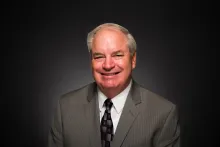
Robin Webber was born in Chicago, Illinois, in 1951, but has lived most of his life in California. He has been a part of the Church of God community since 1963. He attended Ambassador College in Pasadena from 1969-1973. He majored in theology and history.
Mr. Webber's interest remains in the study of history, socio-economics and literature. Over the years, he has offered his services to museums as a docent to share his enthusiasm and passions regarding these areas of expertise.
When time permits, he loves to go mountain biking on nearby ranch land and meet his wife as she hikes toward him.
