

Robin S Webber
This transcript was generated by AI and may contain errors. It is provided to assist those who may not be able to listen to the message.
I'd like to build upon the very fine foundation that Mr. McNeely laid, and again, what a wonderful opportunity that we have with the rich stories that we have in Scriptures to look at as a guide to develop in. And so I want to do that this afternoon. Kind of the theme that we're been talking about in the different congregations I've been visiting, plus I'm sure what's been here, plus what's being built upon today, is that this concept of the new lump is not just simply an event to be lost on seven days in the spring, but it's really pinpointing to an existence. And a part of that, which is so rich in the story of the strangers on the Road to Emmaus is simply this, to how do we go from having a heart that is slow to that burning heart that is described at the very end of the story. And that's a little bit what I would like to pick up upon, with another story that follows the resurrection. And that is simply this, the thought that I'd like to share with you today as we move on the other side of Sinai, not the other side of Sinai, but the other side of the Red Sea and the other side of these days of 11 Bread, I'd like to share a thought with you, and that is simply this, hold this one in your heart, come to expect the unexpected from God.
Come to expect the unexpected from God in the way that He is going to continue to mold us as that new man and that new woman, and I dare say also that new community that is being created to be able to serve Him for eternity. So that's kind of what we want to look at.
And the question I want to share with you to recognize that the days in 11 Bread are, it's like commencement. We say commencement from high school or commencement from college. It's not an end, it's really just the beginning of the rest of the story.
So another question that I'd like to lay down and then begin to create some answers is here, will you be prepared of the when and the where and the how God will enter your life, not just during the days in 11 Bread, but each and every day proceeding from this?
To guide us in this preparation of answering these questions of when and where and why and how that God is going to enter your life and, yes, my life, I'd like to share some thoughts that are capitalized in the title that I'm going to share with you. Here's the title of the message. Just so in about a half an hour you're going to go, what did Weber talk about today? Well, this is what Weber is going to talk about, okay? And it's simply this. It's called In God's Time and God's Way.
In God's Time and God's Way. And we're going to deal with the lives of one disciple, and we are disciples, and then we're going to put them together. And it's the life of a rather famous disciple whose name was Thomas and his famous encounter with Jesus Christ. And in all of this, we're going to come away with one grand and encouraging conclusion. Now, if it's not grand, and it's not encouraging, you come up and tell me afterwards, and we'll stay sat, and we'll do it all over again until it gets grand and encouraging, okay?
But here's the conclusion again, to come to expect the unexpected from God and realize the biggest, greatest point of all of this as we move forward from the Days of the Eleven Bread is that God never, ever, ever, ever, ever, ever gives up on us. He never gives up on a disciple. So we're going to find this story over in John 20. Join me if you would in the book of John, Gospel thereof, John 20. And this is now after the resurrection, just like the story that Mr.
McNeely gave us on the way to Emmaus in John 20, in verse 18. I'm going to read it through, and then we're going to go back, and we're going to unpack it, as we say today. In John 20, in verse 18, Mary Magdalene came and told the disciples that she had seen the Lord. Surprise, surprise! And that he had spoken these things to her. Then the same day, at evening, being the first day of the week when the doors were shut, where the disciples were assembled, for fear of the Jews, Jesus came and stood in the midst and said to them something really beautiful that just kind of hangs out there.
Peace, peace be with you. Now, being the Jew that he was, that when a Jew said peace, it has a different connotation than what we take, especially when they grew up in the 60s, the old peace sign, peace. Everything's okay, absence of conflict. When a Jew, or even a resurrected one, as the Son of God, the Son of Man, would say that it was a blessing, a blessing, not just a statement, but a blessing, that the God above will give us the wherewithal, that whatever comes our way, that he will be with us, and that he will give us the answers, and the calm, the direction that we need to move through that challenge.
And when he had said this, he showed them his hands and his side, and then the disciples were glad when they had seen the Lord. Now, he showed his hands, he showed his side. His hands had been nailed to wood, and his side had been pierced. He doesn't say that he showed his feet, because oftentimes at a crucifixion, they did not necessarily nail the feet.
That was something else. Now, the story was on that subject. So he showed his hands, he showed his feet, and they were so very happy.
And so he did that, and they were very glad, and when they saw the Lord. So Jesus said to them again, peace to you. As the Father has sent me, I also send you. Again, hitting that rhythm, that theme, the that prayer of the Lord on that night that he was betrayed, John 17, that there would be those that would believe that the one born in Bethlehem was indeed the one that God had sent. And when he had said this, he breathed on them and said to them, receive the Holy Spirit. And if you forgive the sins of any, they are forgiven. And if you retain the sins of any, they are retained.
Verse 24, now Thomas called the twin, one of the twelve, was not with them when Jesus came.
Hmm. Hmm. I want to take note of that for a moment. Thomas was not there. The other disciples, therefore, said to him, we have seen the Lord. And so he said to them, unless I see in his hands the print of the nails and put my finger into the print of the nails and put my hand into his side, I will not believe. And after eight days, so this is now well past today's beloved moment, after eight days, his disciples were again inside and Thomas now was with them. Now we have a different group of people because Thomas is with them. And Jesus came. Hmm. Knock, knock, no. It says that the doors were shut and he stood in the midst and said again, peace to you. One thing that we find with Jesus Christ is that he always wants peace to be amongst his disciples. And he wants peace in our hearts as a singular disciple. And then he said to Thomas, reach your finger here and look at my hands and reach your hand here and put into my side and do not be unbelieving, but believing.
And Thomas answered and said to him, my Lord and my God. And Jesus said to him, Thomas, because you have seen me, you have believed. Blessed are those who have not seen and have and yet have believed.
And it says in Jesus' dead many other things, which we know that in the book of Corinthians, it says that over 500 people, more than 500 people, actually saw Jesus Christ after his death experience and after his resurrection experience, that there might be a very sure, sure witnessing of that. Now, let's break this back. We're going to unpack it a little bit, see what's happening here.
First of all, when we deal with the story, let's appreciate that Thomas was not there at the initial appearance. Now, wonder if you were not in a room and then somebody told you that a deceased individual that you knew very well had just come through the walls and had revealed himself to you.
Let's do a little Thomas here for a moment. So we're not too hard on Thomas and recognize how God works with us. I'm sure that we would have, in that sense, what we call our doubts, because this phrase has come down through the centuries about a doubting Thomas. Where was Thomas and why did he miss that first assembly? What was Thomas doing? I think we can, do I dare say, have some informed imagination stretch the story a little bit, even though none of us are that old, none of us were there?
Just checking. Okay, so what was happening here? Let's understand for one reason or another that Thomas was not there, but let's just use some informed imagination. Let's understand that somebody very near and dear has died in your life. Everybody handles grief differently, don't they? Both men and women handle grief differently. Some women handle grief differently than other women. All of us as individuals handle life a little bit differently, not good or bad, but differently.
We inform our imagination of perhaps where Thomas was, in that we go just back to the story of Mary and Martha. You know, when Jesus was coming towards Bethany, we know Martha, being Martha, she's out the door. She's going to greet and meet Jesus and just going to give her a little piece of her mind where we've been. Where it says that Mary, on the other hand, is inside.
It's very, very personal. She wants to be alone. Everybody handles sickness and they handle death differently. Or am I the only one that's ever noticed that? There are some people that, when they're sick, they want to have everybody come by and visit them in their hospital room and give them whatever they have. No, just joking. Okay. There are others that just want to be left alone. If a dog is dying, they want to come and plop their head and their tongue on your leg and look up at you and love you one more time. What does a cat do?
A cat goes underneath a bush and dies. He wants to be alone. So everybody handles these things differently, don't they? So we're just using a little information that's sprinkled in the scriptures and wondering about Thomas. Another thing that we want to see in this story is that we can move forward in walking the unleavened footsteps of Jesus moving towards Pentecost. It's simply this. How often do we, as human beings, freeze frame individuals and we don't allow them to grow? We kind of remember somebody when they were young.
We kind of remember somebody when they were in their 20s. We just kind of snap a picture and we keep it, just like it's up on a dresser. And we don't allow people to grow. And we don't even, as New Covenant people at times, recognize or allow people to grow in the spirit of God and bear much fruit because we're kind of still remembering them in this spot or this episode. And perhaps God has forgiven them, but somewhere in our mind we've just kind of put them on the shelf and left them.
We pickled them in the juice of our mind and just left them the way they are. This is one of the great aspects is when we look at this story that we can begin to think like God. Be it a Thomas, whether it be a Peter. Oh, look at Peter, you know, walking up. Oh, great. Oh, you have little... Look. No, that's where the term Peter-ed out came from. You know, he petered out into the water, okay? So that, you know, sinker-swam. Oh, Jesus reaches a... which is a cool scene in the Bible. Jesus, you have an informed imagination. You can see Jesus, how about your friend, picking him up, restoring him and knowing that one day there's going to be another time when he's going to have to walk on his own in faith and give his life.
What about a Sam... Oh, Samson, what a dodo. That's Hebrew for dodo, is that, you know, look at this guy. He had so much going for him, and what a clown. I mean, you've got to... And just to show off, you know, just the gates of gath on, you know, show off. Look what I can do. And he forgot that his strength came from God, not from his hair. So sometimes we freeze-frame these people.
Brethren, if we're going to mature in Christ, we've got to learn not to freeze-frame people, whether it be a Samson, whether it be a David and the things he did, whether it be a Peter, you know, Peter was so Peter, you know, so out there. And we've got to recognize that God is doing something wonderful down here with each and every one of us. And we've got enough challenges in our own lives without worrying about the Peters, the Samsons, that God's grace and God's mercy can be on us. Now, let's go back a little on the story. Let's see how God sees things. You want to do that with me? Let's go to Luke 6 and verse 12. Let's understand that Thomas being in that room was not accidental. Actually, a very interesting story here in Luke 6 and verse 12.
In Luke 6 verse 12, if I can find it, let's remember how Thomas became a part of that group of 12 disciples. Now it came to pass in those days that he went out to the mountain to pray, speaking of Jesus, and he continued all night in prayer to God. And when it was day he called his disciples to himself. And from them he chose 12, whom he also named disciples. And he gives the list of disciples, and in verse 15 it mentions Thomas. Let's remember that Jesus was not only the Son of Man, he was the Son of God. Things were happening, and he was setting the table for the foundation of the church, because the church itself is based upon the foundation of number one. This is the interactive part. The church is based upon the foundation of the close foundation of the prophets and the apostles. So that foundation was going to be very important. It's all right, Howard. It's like sharing that guy in high school, the teacher, and your answer was really better than his, but he didn't want that answer, so he's still got an answer. Did you meet that teacher? No. Huh? Yeah, I know. No. You're pointing to me. Oh, no, no, I don't do that. Okay. But here's what I want you to imagine. Jesus knew that there was going to have to be a son of perdition. Jesus knew that there were going to have to be some example set down in scriptures like a Peter or a John or John and James when they had a hissy fit. Bring down, nuke him! Right? Nuke! Let him have it! And of course, what did Jesus say? You do not know what spirit you are of. So Jesus, with that divine mind and that human body, was setting the table, laying a foundation for us, frankly, to recognize how patient our God and how loving our God is, and that he'll see us through some of these things. So all of this happened. And not only that, why is it sometimes that it is Thomas that gets stuck with the term of doubting when all of the disciples on that given evening, when Jesus needed his close friends with him the most, they all doubted. They all ran like scaredy cats. They all left him to be. Interesting. Now, let's think another thing here. Let's go to Revelation 21. You want to join me over there, please? Let's open up the Bibles. Revelation 21. See, God sees things as if they already are. He looks beyond our foibles, because he's going to be working with us. And in the future, that he gave John this vision about the New Jerusalem. And it says here in Revelation 12. Let me actually go down to Revelation 21. She had a great speaking of the New Jerusalem, a great and high wall with twelve gates and twelve angels at the gates, which are the names of the twelve tribes of the children of Israel, and then three gates on the east, verse 13, three gates from the north, three gates on the south, and three gates on the north, which come up to twelve. Then notice what it says here, and now the wall of the city had twelve foundations, and on them were the names of the twelve apostles of the Lamb. You see, I believe that the Christ already saw Thomas in that foundation, but he had some work to do with him. Some work to get that mortar secured, to get that foundation secured in him of who he was and what he was about. See, brethren, the good news that I bring to you today, and as Mr. McNeely brought about how Jesus worked with those, or the Christ risen, worked with those individuals on the way to Emmaus, he doesn't give up on us. He keeps on coming at us. He opens up a scripture. He sits down with us. He breaks bread with us. This is the God that we worship.
We don't worship Thor. We don't worship the God of thunder and lightning bolts, a God that we have to appease, but a God that has always placed that sacrifice in place so that we can be at one with him. Hmm.
Now, John 11.
In John 11.
Very interesting. We break into the story of Lazarus.
We know that the news had come about Lazarus, who was a very near and dear friend of Jesus. The sisters, Martha and Mary, had sent a message.
And then it says, And so when he had heard that he was sick, he stayed two more days in the place where he was. And then after this, he said to the disciples, Let us go to Judea again.
And the disciples said to him, Rabbi, lately the Jews sought to stone you, and you're going to go.
Are you crazy? Are you mad? And then it says here, Jesus answered, Are there not twelve hours in the day? If anyone walks in the day, he does not stumble because he sees the light of this world. But if one walks in the night, he stumbles because the light is not in him. These things he said, and after these things he said, Our friend Lazarus sleeps, but I go that I may wake him up. And then his disciples said, Lord, if he sleeps, he will get well. However, Jesus spoke of his death, but they thought that he was speaking to them about taking rest and sleep. Notice verse 14. Then Jesus said to them plainly, Lazarus is dead, and I am glad for your sake that I was not there, that you may believe, nevertheless I go to him. Now, verse 16, you might want to put a circle around that verse. This is a fantastic verse. He says, Then Thomas, who is called the twin, said to his fellow disciples, Let us also go, that we may die with him. This is Thomas. This is the other side of Thomas. He is convicted.
He is ready to go. He is going to go, and if Jesus dies, his dear friend, his master, his rabbi, he is not going to abandon him. He wants to be there. This is Didymus.
But you know, there can be a little Didymus in both of us, in all of us that are here.
Didymus means twin. There can be two things happening in us at once.
Here is the challenge that faces Didymus, and here is the challenge that faces us as we move from the days of 11 bread. Didymus was willing, or Thomas was willing, to put his life on what he understood. And what he understood was that the possibility that Jesus was going to die, because men that don't like you are going to kill you, and then you are dead. And if Jesus was going to die, he wanted to be there. But there was another grander lesson that the Christ was going to bring him along to is that he not only died as the sacrificial lamb of God, but now that he is the risen lamb. See, Thomas could accept that man can die. That's how far he'd gotten along on the train of understanding. But there was something else that God wanted him to understand that he might go out and be that disciple that would travel through the world and say, Yes, I have seen.
I have seen him. I have handled him. I have touched him. And as stubborn as I was about being there for his death, now that I get it, now that I have probed, and he has allowed me to probe him, I will never change my mind again. I will be stubborn with the facts that are presented me, and I will not bend. Interesting. Interesting.
Let's now go back to John 20 and finish up the story.
In John 20, Didymus had not been there. Didymus comes in. Jesus has offered peace. And then he said to Thomas, Reach your finger here, and look at my hands, and reach your hand here, and put it into my side. Do not be unbelieving, but believing. Interesting.
This is really kind of an up-close-and-personal moment, isn't it?
Some of us have been in hospitals. Some of us have had to deal with wounds of loved ones, or dress them, to keep them, to nurse them. Sometimes I know people just haven't had my knee operation. I say, Do you want to see my skirt? No, no, thank you. I don't really want to see your right knee today. Thank you. I'm not going to show it to you right now. Don't worry. It's not going to happen. No, I think I'll pass on that one. But here was Jesus, and he recognized that he recognized what his, he recognized what Thomas's personality was like. You know, our challenge today is sometimes, even in the school system, some of you are teachers. There was a time in America where we taught everybody the same way, and if you teach everybody the same way, you're going to lose some people, aren't you? I see Stephen down here as a math teacher. I wish I'd had you as my math teacher.
You could have figured me out. Made me a better mathematician, okay? But that, that there are people that learn this way. They can learn through the ear, and or they can learn by seeing on a blackboard. They might be visual, and or they might be auditory, in that sense, from afar, and there's just some people that have to have a broken down more and more and more, and or they have to. You know, what is that old expression? I hear and I forget, I see, and I remember, but I do and I understand. And sometimes you just have to be hands-on. You know, you know, we have these young people, they go to these children museums, and you have these hands-on museums, and they they begin putting things together, and then they begin to understand it. And that's what we have to do with the church at large. We have to recognize that everybody, two things, are you with me? So that we can help everybody this coming year, right? As we continue the journey. Everybody learns differently, and we don't always come to the same conclusion at once. We don't have to judge. We need to pray, and we need to give it to God. And that's kind of what what Jesus was doing with Thomas. He said, look, you can probe me. You can get into me.
You can reach into me. Touch, feel, embrace, internalize. It's okay. I am inviting you to do that. And that is what we find in the sense with Thomas here.
So we look at this. We learn that. And it's all a part of that molding process.
As Mr. McNeely said, God is the potter, and we are the clay. And we have to have trust and confidence that God is going to with that master thumb of His, that divine thumb of His, is going to mold us and shape us in that faith and confidence that He knows exactly what He's doing.
And He's shaping us in different ways at different times. You know, the one thing about, you know, eternity with God is we're going to be individuals. We're all going to be different.
We're being shaped and molded for different purposes within His scope, and He's going to do it differently at different times. That's why the title of this message is, again, what? In God's way and in God's time. And we have to, if we're going to be an effective community, one thing that we have to understand is that if we're going to be an effective community within the body of Christ, is that we're going to have to understand we want to go all in the same direction, but we're going to have some differences. We're going to have some differences, and we're going to have to give some of those differences to God rather than judging people, and recognize that sometimes it just takes time. You know, that's why these two stories that Darris and I are giving, they just so match of how Jesus works with people, not only then but now in our lives.
These stories are here to encourage us that Christ did not give up on Thomas, which is the most beautiful thing. Revelation 3 and verse 20. I'm going to begin concluding here with some less, some takeaways. Revelation 3 and verse 20. Behold, I stand at the door and knock, and if anyone hears my voice and opens the door, I will come into him and dine with him and notice, and he with me. He stands at the door and knocks, but we've read that, but here's the thing I want to share with you. Sometimes he doesn't stand at the door, he comes right through the wall of our life, just as he did with the disciples. When we least expect it for the next lesson, the next layer to come at us. Come to expect the unexpected. Come to expect the unexpected towards the expectation that God the Father and Jesus Christ will never give up on us. They are going to keep on coming at us. It may not be in a day, it may not be in an hour. Some of us are going to be wrestling with God for a little while until we get off the throne of self and allow him to be our Lord. Just look at Jacob. Jacob was one tough hombre. Jacob was not a kid when he was wrestling, whether it was a theophany or whether it was an angel, whether it was a messenger, we'll just leave that, but he was a grandfather. You know, all the people were down at the river wondering about Esau. He's up there wrestling the the representation, and he's not going to let go. He's not going to let go, and God's not going to let go of him, and it's only after that that he's able to say, now he is my God.
Now I know. He wanted that blessing. All of his life he tried to get that blessing from God, but he did it all the wrong way. Then finally, with that wrestling, he says, I got it. It's not just the God of Grandpa, Father of the Faithful. It's not just the God of my Father, the Son of Promise. How much time to be in that household? You know, trying to find your own identity, trying to find your own image, you know, in life. What's your grandfather do? Oh, he he worked at being the Father of the Faithful, and or well, what's your daddy? What's your daddy doing? No, my dad is the Son of Promise. He was the big sacrifice. Jacob was running away all of his life, trying to seek his own identity, and that wasn't working, was it? Until he latched his identity with God and said, you are my God. That is going to be my identity. Not just a brahm, not just Isaac, but God.
Hmm. As we move into this year, friends, dear brethren here in Redlands, two thoughts I want to share with you. It's what I call the double knocking. Are you ready? The double knocking goes two ways. The great anthem of Matthew 7 and verse 7, I'm just glad that it's in Matthew 7.7. You'll remember this because Matthew is what? The first gospel, and then it's 7.7, which is godly. Matthew 7.7 is simply this. Ask, seek, and knock. Ask, seek, and knock. Acronym, ask, and knock.
Petition God. And at the same time, the double knocking is to recognize, as you say, ask, sit God, work with me, continue to develop this unleavened existence in me, this new lump, this new man, this new creation, then recognize that God is going to knock on your door. Christ is going to knock on your own, your door, and sometimes just come at you in a way that, you know, let's look over here a second, you know, not, not going to go work. Well, I, I ask God, I ask Christ to come into the door of my life. So I'll hold the door for him because this is what I expect. This is how God is going to work. Come right now. Oh, no. He just comes through the wall of our heart. He comes into a completely different direction because we tend to limit God based upon what we think we need, rather than how He arrives in our lives, when He arrives in our life, with the trials and the challenges, the opportunities that we have to face. See, we've got to begin to think outside of the box when it comes to God because you can't box in God. Do you know why? Because He's uncreated.
He's uncreated, and He's making us in that sense to become immortal.
Three or four little thoughts real quickly. You can't insult Christ.
When Thomas didn't accept it at first, Christ was not insulted. Did you reckon? He wasn't insulted. He invited. See, our thing would be humanly when somebody says, oh, you know, and our little banny tail feathers kind of get ruffled. Christ was not insulted. He was leading that person from faith to faith, from darkness to light. He said, get a hold of me.
Reach into me. Inviting. We look at that. Another story, another lesson that we learn away is this. God can deal with our lack of belief. How often do we have people that say, I believe, but they don't really believe? They can mumble the words, but they don't really believe them. One thing I want you to think about this. You may want to put this down in your notes, is that Thomas was not a phony. Thomas was willing to go up and die with Christ in Bethany. He was not phony. He was convicted. What he knew, he knew.
And that stubbornness that was in him, that stubbornness that was in him, you know, every strength has a weakness. Every weakness has a strength. He was one stubborn dude. And when he knew something, and when he was convicted, he was going to do it. He just had to be worked with a little bit more by Jesus Christ. And once he got it, you know, we talked today about fake news.
Thomas did not have fake belief. But once that belief was turned around, he was going to use it to the fullest. We know that by tradition that Thomas would be martyred, along with the others, save John. Tradition describes that, and there is a thought that Thomas, when even outside the bounds of the Roman Empire, he's often called the apostle of India. He was really ready to travel the distance, not only to India, but from life to death, once he got it and once he knew. And so we look at this. Now, what you think this through for a moment, when Jesus, no, excuse me, when the apostles told Thomas that Jesus had been resurrected, he could have done what we see a oftentimes in a crowd. Oh, yeah. Cool, man. That's great. Got it.
Really good. And he could have nodded. That's not what Thomas did.
Notting is not going to get you anywhere except put you to sleep.
He had to be convicted in his heart. He had to know. And once he knew, he was really ready to go the distance.
So where are we as we move into and away from the days of Unleavened Bread with this example?
I just want you all to know that our father above and his dear son are behind you and for you and are going to work with you in ways. Just get prepared. They're going to be, they're not just going to melt in the sun. They're going to be ways that are going to solidify us to be a witness. One thing that Thomas did is he had to go off in his grief. He had to have space. He had to have that individual time. And there's a time when each and every one of us have to go into the wilderness for that downtime, for that individual time. But that individual time is always to be called back to community. And finally, when he came back to the community of his fellow disciples, God was ready to act. I've kind of been glad to be able to give you this message today. You know why? Because my grandfather is named Thomas. And for you that knew and loved my mother, my mother's name is Thomasina. And I can tell you one thing. I didn't know my grandfather, but I knew my mother, and so did you. She was an unwavering lady, and when she believed something, watch out. And she believed it so much that she, God, used her to instill that in me from a young boy to now being a child of God. So glad to share this time with you. We're going to take a break after the song. Then we're going to come back, and Mr. McNeely's going to share some time. Never doubt doubting Thomas. Give him the name of Thomas. Brother. Disciple. And never doubt that God will not always be there for each and every one of us to love us, to embrace us, and allow us to poke him a little bit and to probe into him so that you and I can even have greater understanding for his glorious purpose for each and every one of us.
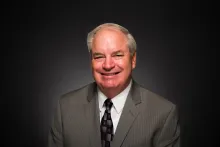
Robin Webber was born in Chicago, Illinois, in 1951, but has lived most of his life in California. He has been a part of the Church of God community since 1963. He attended Ambassador College in Pasadena from 1969-1973. He majored in theology and history.
Mr. Webber's interest remains in the study of history, socio-economics and literature. Over the years, he has offered his services to museums as a docent to share his enthusiasm and passions regarding these areas of expertise.
When time permits, he loves to go mountain biking on nearby ranch land and meet his wife as she hikes toward him.
