
Robin S Webber
This transcript was generated by AI and may contain errors. It is provided to assist those who may not be able to listen to the message.
Today is the Seventh-day Sabbath, God's Holy Day. And at the same time, it's July 4th, the All-American holiday, the birth of our nation. Both of these days, the Fourth of July, the Seventh-day Sabbath, have powerful meanings. They also have many similarities. And yes, they also have differences that are dynamic. But they both speak to the Christian in the 21st century. And thus, it's relevant to understand both in the course of the message that I'm going to bring you this afternoon.
And so I'd like to talk about the powerful purpose of both of these days. The title of my message simply is this, God's Weekly Independence Day. God's Weekly Independence Day. To understand God's weekly Independence Day, first of all, I'd like to discuss July 4th and then move into the Seventh-day Sabbath. Draw some parallels, draw some differences, and all for a purpose, which I'll explain in a few minutes. Let's begin by discussing July 4th. I hope that they're still teaching this to a degree in school.
I know many of our students are gone up to camp, and our staff has gone up to camp. But the rest of you are here, and we can all be students of history for a few minutes. Let's talk about this, what is now called the Declaration of Independence. Why was it written? And what was it about? It really serves a twofold purpose. When we think of July 4th, 1776, for those that are not versed in history, we think that was the starting blocks of the American Revolution.
And it wasn't. As was mentioned by Dr. Hoover, that what you heard here was in 1770, and you could already understand that there were feelings towards the royalty and towards the House of Britain. The American Revolution did not happen overnight. Its antecedents really go back to what we in America call the French-Indian War of the 1750s, which is really the root cause for the American Revolution later on coming. But for about ten years, from about 1765, Britain had imposed various measures to quiet and to cull the American colonies. Heated up, heated up, heated up. Then in 1775, some of the famous battles that you and I learned about in school began to occur.
There was the shot that was heard around the world at Lexington Green, as the British would march up to Concord to grab the armaments, and the Patriots would fight them at the Old North Bridge. So there was Lexington, there was Concord. A little bit later, there would be the Battle of Bunker Hill. The battle was already going on. They were fighting in the field. They were fighting on the plains of New England, and they were fighting in the woods of the South. And yet, it had kind of left out beyond the control of the politicians, and the theorists of why they were doing what they were doing.
And so, what was happening after a year, you'd have to understand that some of our forefathers, and the forefathers of all Americans, were fighting the greatest military force on Earth. Men that had been silversmiths, like Revere, men that were common everyday farmers, merchants, were fighting the greatest army that the world had ever known, the British. And a year had gone by, there were defeats that were out in the field, people were growing tired.
They were wondering, what was this all about, and what is this worth? A little bit like, as was mentioned by Dr. Hoover, about John Adams. Shall I? Shall I not? Shall I? Shall I not? They'd been away from their farms, they'd been away from their wives and children, and some backbone, some purpose, had to be given of why they were sacrificing life and limb. So that was one of the reasons why this statement had to be loud and clear.
The argument of why these men were fighting in the field. The second reason was to make a statement to the empires of Europe, as why the British colonies were separating from the crown, of why the Americans had decided, doing something that had not been done in human history, to set up a republic that large and that long against a coast had never been done before.
And so they had to give an argument. They had to state their grievances. They had to give political cause for this divorce from England. So you have two things happening. Are you with me? Number one, we had to give backbone to the patriots that were out in the field. Number two, there had to be an argument that was logical, that was precise to the empires of this earth, of this upstart nation developing on the Atlantic coast.
I'd like to read just a little bit of the Declaration of Independence to you. I'm not going to read it all, or this message would go three hours, and it might press your conversion. But let's understand that this document was written, basically the draft itself was written just today, by Thomas Jefferson. In one day he wrote it. Later on it would be edited by four other gentlemen. It would be published. Some of you may know this is a trivia question. It was not published on July 4th. It was published on July 2nd. Excuse me, it was ratified and it was approved on July 2nd. But something about saying July 2nd is not quite like saying July 4th, is it?
It was published on July 4th and public notification came of it on July 4th and not July 2nd. And the most important thing that I want to share with you, friends, because we are a church and we're here to discuss the Bible, it was not just merely and simply the product of what is called the Enlightenment. It had qualities of Enlightenment thought in it, which I'll discuss later. But it was also inscribed as a sacred document in word and in tone.
This, which is the founding document of all documents in America, whether it be the Articles of a Confederation in the 1780s or later on the Constitution. It all goes back to this, this declaration, this announcement of independence that had been unthought of in the world until now. Let me read it to you, just parts of it, to move us into the subject. When in the course of human events it becomes necessary for one people to dissolve the political bounds which has connected them with another, and to assume among the powers of the earth the separate and equal station to which the laws of nature and of nature's God entitles them.
The decent respect to the opinions of mankind requires that they should declare the cause which impels them to that separation. So you can see that a case is being built, and that's very important to understand. Later on, it says, we hold these truths to be self-evident. Basically what the authors are saying, this is absolutely clear. That all men are created equal. That they are endowed by their Creator with certain unalienable, not up for argument, unalienable rights. That among these are life and liberty and the pursuit of happiness. Many of you are familiar with those words, but you may not be familiar that after that, in this document, are 30 grievances against the Crown.
They are creating a statement and a position and a legal document for divorce. At the end of this, it says, we therefore, the representatives of the United States, in general Congress, assemble, appealing to the supreme judge of the world, for a rectitude of our intentions due in the name, and by the authority, not of royalty, not of kings and queens, but of the good people of these colonies, solemnly publish and declare that these United Colonies are and of right ought to be free and independent states.
And for the support of this declaration, with a firm reliance on the protection of divine providence, we mutually pledge to each other our lives, our fortunes, and our sacred honor. For those of you that have at one time or another heard or read the rest of the story, most of these men lost property, they lost limb, they lost life, at times family, they lost so many of them, lost everything, but they held true to their word.
Now, what is important to understand is that this document spoke to where they had been, where they were, and their hopes, their future in front of them, what could be. It had to be clear. It had to be a clear picture of the past, a clear picture of the present and the future to guide their path, to see if the other nations would come in and support them, of which there was only one later on out of convenience France, our first ally as a nation, and to give backbone, to give heart to the patriots that were out in the field.
Now, how does this come into play with why we're here today to study God's Holy Word? Let's also understand that, likewise, God gives us a 4th of July experience every seven days of the week. On the seventh day, the Holy Sabbath day, is God's Independence Day.
It's a day to remind us why we are in this way of life, of what God is doing, past, present, and future. At this time, or in the past, at least with covenant people, today with covenant people, and what He hopes to do with all mankind one day, all is within the scope of the Holy Seventh Day Sabbath.
It's a guide. It shows us exactly not only what is in God's mind, but what is in God's heart. And how then, we as followers of the Father, followers of Jesus Christ, who says to follow Me, is to understand then what kind of human beings we ought be as we incorporate God's ways, which at times means that we will have to separate, as America had to separate from the powers around it. Let's consider this. I'm going to give you three points. That'll be simple. I'm going to give you three points. Number one, this regards the Seventh Day Sabbath, God's Independence Day. Number one, the Seventh Day Sabbath reminds us of the past, of where we come from. Join me, if you would, for a moment in Exodus 20. Exodus 20, and let's pick up the thought in verse 8, which describes the fourth commandment.
But it's not only a commandment, but it's a commandment with a purpose, and it's a rule that points to a relationship that God instituted at creation. In Exodus 20, and picking up the thought in verse 8, Remember the Sabbath day to keep it holy. Six days you shall labor and do all of your work.
But the Seventh Day is the Sabbath of the Lord your God. And in it you shall do no work, you nor your son nor your daughter, nor your male servant nor your female servant, nor your cattle, nor your stranger who is within your gates. Why? Why? Four, notice, in six days the Lord made the heavens and the earth, the sea, and all that is in them, and rested the Seventh Day. Therefore the Lord blessed the Seventh Day, and he hallowed it. You see, Israel was pulled off the banks of the river Nile. They'd been a slave people for over 250 years. They needed to have a purpose in mind, that they were more than just slaves, that they were a part of a family, that they had roots going all the way back to creation, and to recognize that they were not simply Pharaoh's property, but that they were servants of this Deliverer God that had brought them out of Egypt. You notice what it mentions here in the commandment. It talks about a creation. What does that mean to you and me? Join me if you would in Genesis 1.26. Right in the book of beginnings, Genesis 1.26. Notice in verse 26, then God said, Let us make man in our image according to our likeness, and let them have dominion over the fish of the sea, and over the birds of the air, and over the cattle for all the earth, and over every creeping thing that creeps on the earth. Notice in verse 27, So God created man, not in the image of Pharaoh, not after the model of Egypt, not after the model of the Canaanites, that they would come into contact with. God created man in his own image, and in the image of God, he created him, male and female. He created them. God offered humanity an incredible start. When you notice that we are a creation, and we are reminded that we are a creation every seven days on that Independence Day, we are reminded that we are not to live a life by accident. We are not to live a life by folly. There's a purpose that is being worked out here below. That we are the creation of the Living God, and He has visited His grace upon us. He has touched us with the Divine that we have been made in His image and in His likeness. We are not an evolutionary accident. Evolution has no cause and no purpose but folly. That life we are taught, that life that we see all around us, that has order and design and symmetry, is somehow the product of millions, if not billions of years of accidents happening one after another, but in one of them something flicked out all right, and then survival of the fittest, and then we go to the next stage. Brethren, I don't believe in that. I don't believe in that at all. Every seven days, every seven days, Independence Day comes from that kind of a thought that you and I are just the end result of two lovesick amoeba in a slimy pond that have a photosynthesis party where the lights come on and life begins. I don't believe that. I don't think you believe that or you wouldn't be here. And because we understand that, we are to continue to live a life of design and not only be made in God's physical image, but God's spiritual similitude that we'll talk about a little bit later. God offered humanity an incredible start. Just as it says in the Declaration of Independence about this aspect of that, all men are created equal. God wanted the very, very best start for humanity. And yet, the story in Genesis tells us that they partook of the wrong tree and that man and the earth and society, and yes, the snake, throw it in too, were cursed. Have you ever thought about that curse that's mentioned in Genesis? Everything that came off of that curse because of man's decisions.
It was only then that man divided and subjugated one another, in which man and woman were no longer equal, where man fought against man, where brother murdered brother from the beginning, where the stronger subjected the weak and made them slaves from the beginning to one another. It all came after that curse. The Founding Fathers had it absolutely correct with fact and God's design. That is not the author of Confucian. When did they speak of that God of nature? Join me if you would in Psalms 8 and verse 3. In Psalms 8 and verse 3, let's take a look here for a second. Nature is God. Where they say it's clear, it is obvious that there is a symmetry. There is a lineup in the universe, in nature. And thus, it's only man... Are you with me, friends? It's only man that's out of sync. It's only man that's out of sync. Notice what it says in Psalms 8 and verse 3. When I consider your heavens, the work of your fingers, the moon, and the stars which you have ordained, what is man that you are mindful of him? When you look at the heavens, the work of God's fingers, which God has ordained, which other translations say are in order. It's only man that is out of disorder. Actually, in one of those translations, it says that he has set the moon and the stars in their place. I want you to think about that again. It's only man that is out of place with the Creator. And in all of this, a careful study of the Bible indelibly links the seventh-day Sabbath with freedom and not bondage. Join me if you would in Deuteronomy. Sometimes there are folks that somehow believe that observing the seventh-day Sabbath is somehow about works, about bondage. They're going to be anything further than the biblical truth. In Deuteronomy 5, let's take a look at this. This now, Deuteronomy, for those that are new to the Word, let's talk about it for a moment. Deuteronomy is the second giving of the law. The people of Israel are no longer going to be wandering in circles, but they're about to cross the river. They're about to become stationary. And they have to have a purpose, and they have to know, just as much as the revolutionary forefathers had to know what they stood for, and what was the guiding force, and what was going to be the guiding power, and the reason that they're there. Deuteronomy 5, notice verse 12.
Observe the Sabbath day to keep it holy. This is 40 years later, off of Sinai. As the Lord your God commanded you, six days you shall labor and do all your work, but the seventh day is the Sabbath of the Lord your God, and in it you shall do no work, not your son, your daughter, your male servant, your female servant, nor your ox, nor your donkey, nor any of your cattle, nor your stranger who is within your gates, that your male servant and your female servant may rest just like you.
Take a time out. Now, doesn't that sound a lot like Exodus 20 so far? That's when you're supposed to nod, because it really does still sound like Exodus 20. But now, now, something is added. Notice what it says here. And remember that you were a slave in the land of Egypt. The Sabbath is now not just simply pointing to the original creation, but to God establishing a people, rescuing them, redeeming them, saving them, liberating them, from 250 years of slavery, and that the Lord your God brought you out from there by a mighty hand and by an outward stretched arm. Therefore, the Lord your God command you to keep the Sabbath day.
It is not just simply a testimony towards creation. It is a commandment that we keep every seven days like a July 4th from Friday sunset to Saturday sunset to remind us that we serve the great liberator God. Now, yes, indeed. It was Moses that was given the point to go before Pharaoh and say, Let my people go!
But it was not Moses that brought the people out of the land of Egypt. Oh, yes, God had to use a human instrument. But this was the divine rescue. This was a redemption of people that could not lift their hands up against Pharaoh and that God would have to fight their battles for them. Absolutely. They couldn't save themselves. They were called to be a nation and to become a nation. Join me if you would in Exodus 19, which is the thought right before the Ten Commandments are given in Exodus 20.
Notice what God says in Exodus 19 in verse 4. You have seen what I did to the Egyptians and how I bore you on eagle's wings and brought you to Myself. Now therefore, verse 5, if you will indeed obey My voice and keep My covenant, then you shall be a special treasure to Me above all people, for all the earth is Mine. I created it. But you will be special. And you shall be to Me a kingdom, a priest. And notice, a holy nation.
They were not going to be a republic like America. God was going to be their king, and they were going to be His people. These are the words which you'll speak to the children of Israel.
How incredible! That God formulated a nation not on the coast of the Atlantic, but in the sands of the Sinai. The weekly Seventh-Day Sabbath is a weekly Fourth of July. It separates us under the New Covenant, as much as those under the Old Covenant, which I'll get to in the next point. It separates us unto God and from the rest of God's creation. And it's a declaration that He is our God, and we are His covenant people. Join me if you would in Exodus 6 and verse 7.
Exodus 6 and verse 7. God never changes His mind. His purpose stands. All man falls before it. All man falls before it, and all kingdoms ultimately will fall before the great God. Exodus 6 and verse 7, I will take you as My people, and I will be your God.
And then ye shall know that I am the Lord your God, who brings you out from the burdens of the Egyptians. God was bringing a people together that had not been a people. We talk about our 13 colonies. There were 12 tribes. And those tribes had all their differences, just like the original 13 colonies had their differences. The original 13 colonies did not think of themselves as Americans at first. They thought of themselves as British citizens.
They had been for 150 years. They thought of themselves as Carolinians. They thought of themselves as Georgians. They thought of themselves as Yankees. They even claimed God for His own. Did you hear that song we just heard? The God of New England. They thought of themselves as Quakers in Pennsylvania or Dutch up the Hudson River Valley, where my family originally came from.
But they did not think of themselves as Americans. And back then you had people that thought of themselves as people of Judah, people of Naphtali, people of Issachar, people of Gad. It would take time for God to bring them together. And it was always tricky business all the way through the history of Israel, as you and I know.
Exodus 31.13. Join me if you would there for a moment. And what would be that bind of all of these people? Exodus 31.13. It would be that weekly July 4th experience of God's Holy Sabbath day. Exodus 31.13. Notice what it says. Speak also to the children of Israel, saying, Surely, my Sabbath, you shall keep. For it is a sign between me and you throughout your generations that you may know that I am the Lord who separates you, sanctifies you. This will give you a backbone that the Creator God, the liberating God, the Redeemer God is your God.
And no matter what comes up against you, whether it be Israel of old or the Israel of God today, as spoken in the book of Galatians, that we have our God. Let's go to point number two. Point number two is the Seventh-day Sabbath defines the present life of a Christian. The Seventh-day Sabbath defines the present life of a Christian. The Seventh-day Sabbath not only reminds us what God has performed in a physical creation, but refreshes us and vitalizes us of what He's doing with a spiritual creation.
Yet to come in full fruition. He's not done. He's not done at all. Our God is not just simply a first cause. He's not just a Creator. As I spoke in the first point, He is a Redeemer. He is a Liberator. And He continues to intervene in human history with nations and kingdoms great and small, and people of all races and all backgrounds, men and women, boys and girls, people that will surrender their lives to Him through Jesus Christ.
He continues to intervene. Creation is a story that is not ancient. It's ongoing. God started with a world of dust, but He's creating a world of spirit, not only to look like Him, but to be like Him. God not only created man in His image and in His likeness, but He desires our hearts, that which is of a spiritual similitude, that which is after the heart of Jesus Christ in us, that which is the image of the Father in us, so that we can fully be made into His image and into His likeness.
Join me if you would in Ephesians 2. And let's pick up the thought that God has not completed His work of creation. In Ephesians 2 and verse 8, For by grace you have been saved through faith, not by our works, but by grace. And that not of yourselves, just like the Israelites in Goshen, couldn't get out of town.
Unless God had brought the house down on Egypt. For by grace you have been saved through faith, and that not of yourselves, it is the gift of God. Not of works, lest anyone should boast. Notice, for we are His workmanship created in Christ Jesus for good works. Notice the word, created in Christ Jesus for good works, which God prepared beforehand, that we should walk in them. God's not on a couch after six days. That was just His fiscal labor.
God doesn't get tired. God doesn't get pooped out like you and I do. He's still doing something. He's not just simply doing it with ancient Israel. He's doing it with people around the world today that come to Him in faith and keep the commandments and surrender their life to God Almighty through Jesus Christ. He's not done. What is the ultimate creation that He is establishing? Join me if you would in Hebrews 8. In Hebrews 8, and let's pick up a thought here in Hebrews 8, and let's pick up a thought in verse 10 if we could as a congregation.
In Hebrews 8 and verse 10, what is He creating today? For this is the covenant that I will make with the house of Israel after those days. Says the eternal, I will put my laws in their mind and write them on their hearts, and I will be their God, and they shall be my people. The great echo that moves throughout the pages of the Scriptures. God wants to be our God, and He wants a people. He is creating that people today. God says to the mouth and through the writings of the Apostle Paul, 2 Corinthians 5, verse 21, Behold, I create all things new.
So God is still creating. And this seventh-day Sabbath, this 4th of July, put at the end of the week, every week, reminds us that God is not done. Just a simple thought for you and for me. You know, and I know as Christian Sabbatarians, that keeping a seventh-day Sabbath in a world that does not follow the example of Jesus Christ, does not follow the example of the early apostles, does not follow the commandments of God. It's not easy.
It's not easy for you and your communities. It's not easy for you at work. It's not easy for many of our young people at school. Doing God's business on this world is humanly difficult. It just simply is. And to think about this, that what we're stating when we follow the commandment, because so often people will say, well, you know, that's a fossil out of Sinai. That's really... no, they don't just say that's Old Covenant. They say, that's really Old Covenant.
That's a burden. That's bondage. No, that's faith. That's faith. When we come up to sunset on Friday, through sunset on Saturday, and we do not raise our arms, but we relax our bodies, knowing that God will make up the difference, knowing that when we give God an honor the day that God gave, that He'll make up the difference of anything that we're lacking. Whether it's on the job, whether it's at school, whether it's something in the neighborhood, you can never outgive God. That's a matter of faith, and that's not a matter of works.
When you look at the example of Israel gathering in the manna in Exodus 16, where God said, on the prep day, on the day before, you will gather twice. You will gather twice. You cannot gather on that Sabbath day. That's a matter of faith. That's not a matter of works. That's living a life by design, not by accident. That is coming underneath God's grace, not trying to seek your life, trying to take care of your life by your hands, by your works, by your industrial labor. When that July 4th experience comes along, that Independence Day, you are independent of yourself.
You are independent of your works. You are in a revolution against human nature that says, I will grab what I feel I need to grab. I will do what I need to do. No, there becomes a freedom that is incredible because we have given ourselves to Almighty God. It is in this that there is a difference between the American Independence Day and God's weekly Independence Day. I am a proud American. Red, white, and blue today. But I'm also honest about America. Americans by nature are an independent, and they are a proud people. We all claim New England as being a part of our forefathers.
Our New England forefathers had a snake flag. It said, don't tread on me. The Texans have taken it to a different level. Don't mess with Texas. We speak of American ingenuity. We believe that we are the greatest nation that has ever been and or will be. Who can replace us? We say of ourselves that we are an exceptional nation.
I will not argue with that, but I will argue with the source of that exceptionalism. For otherwise, all nations and all empires rise and fall into the graveyard of history. And that graveyard of history awaits for every empire, every kingdom, every nation, and for each and every one of us if we do not honor God first and foremost, and recognize that He is our Creator, that He is our Redeemer, and that He is our sustaining force, and that His spiritual work is being worked in us today.
The Christian strength, your strength, my strength, that we found ourselves on on Mondays and Tuesdays and Wednesdays is not American ingenuity or capitalism for that matter. And I'm a capitalist, but that's not my religion. Christian strength is completely different. It's not based upon self. It's based upon what is said in the 23rd Psalm in verse 1, The Lord is my shepherd, in whom I shall not want.
The Christian is one that does not take for himself. The Christian is one that is the exact opposite at times of America in which we give of ourselves. We give ourselves away. We don't stand on our human rights. We don't stand on our human privileges. We don't try to save ourselves. A Christian gives themselves away. Join me, if you would, in Luke 1733.
Whoever seeks to save his life will lose it. And whoever loses his life will preserve it. A Christian gives himself away because he recognizes in so doing that that is where freedom comes. That is where the freedom in Christ comes underneath the umbrella of God the Father. That allows a freedom from sin. It allows a freedom from self. It allows a freedom and independence from the worldly society around us.
It allows us protection from the wiles of Satan. And God honors those who honor Him. Our strength is not our Yankee ingenuity. Our strength is found in Philippians 4, verse 13, that I can do all things through Christ Jesus. That same Christ that led Israel out of Egypt. That rock that was in the wilderness that Paul speaks about in 1 Corinthians 10, verse 4.
That same Christ, when we think about the Declaration of Independence, the Declaration of Independence for those different men gave away their life, their fame, their fortune on their sacred honor. It is that same Christ that says in Mark 2, 27-28, I am the Lord, I am the King of the Sabbath. Here I stand. This is my mark. The one that God used for the creation. The one that God used to bring Israel out of Egypt.
That greater Moses, not the physical Moses, but the rock. The one in whom we surrendered our lives to. When our dependence is on God, we are independent of all else. Friends here in Eagle Rock, and those that are listening to me, our blessings here in 2015 come from that same benevolent God that our forefather spoke about in the Declaration of Independence. It is He who has made us an exceptional nation and not we ourselves, due to the promises to Abraham, and to the factual reality that to the degree we honor God is to the degree that He honors a nation.
And to the degree that that same nation slips away from the precepts of God, nature's God, that benevolent God is to the degree that we will be in trouble. And we are seeing that on the horizon.
And that's why we have to be strengthened and encouraged and have the same backbone about God's 4th of July, every seven days on the week, to give us a GPS and to know that we are not alone and that there is a purpose that is being worked out here below. Which leads me to my last point.
The Sabbath day points us to a better future for all of humanity. For all of humanity. Show me if you would, in Hebrews 4. In Hebrews 4. And let's pick up the thought if you could in verse 4. For He has spoken in a certain place of the seventh day in this way, and God rested on the seventh day from all of His works.
So the author of Hebrews goes back to the creation story. And again in this place, they shall not enter my rest. But since therefore it remains that some must enter into it. And those to whom it was first preached did not enter because of disobedience. Again He designates a certain day, saying in David, today, after such a long time as it has been said, today if you will hear His voice, do not harden your hearts.
For if Joshua had given them that rest, which in the Greek is katoposis, which means a spiritual rest, that final rest, then He would not afterward have spoken of another day. Verse 9 says, therefore there remains a rest for the people of God.
Now there's a lot of rest being mentioned here. The former rest, katoposis, is speaking about that ultimate spiritual rest. And that confidence in God, the blessing therefore that comes. But this word that is used for rest in verse 9 is sabatismos. And out of the Greek comes sabatismos apalapatos, which means therefore there remains a technical observation of the seventh day Sabbath even now, especially in this epistle which is written to vaunt the preeminence of Christ over Moses, over the angels, the tabernacle in heaven, over the tabernacle of old.
So this is right in the center of speaking about Christ, and yet it says, there remains a rest for the people of God. There is that seventh day observance, the fourth commandment. God's July 4th at the end of the week has not been taken away. It remains to remind us that we are a creation both physically and spiritually, a redeemed people just as much as ancient Israel, and that all of humanity has a future ahead.
For he who has entered into his rest has himself also ceased from his works as God did from his. God has in store for all of humanity, not just Americans, but all of humanity in the future, an incredible hope, a wonderful future, a wonderful rest. It's very interesting that from the very beginnings of time that the early church had this, do I dare say this, sense about the seventh day Sabbath of being, as it says in the book of Colossians, a shadow of things to come.
Not a shadow of what is dead and fossilized, but as it says in Colossians, a shadow of things to come, pointing to the future. It is note that Hippolytus of Rome in the early third century wrote a commentary on the book of Daniel, and he said this, and six thousand years must needs be accomplished in order that the Sabbath may come.
Speaking of that cataposis, that ultimate spiritual rest. For the Sabbath is a type and the emblem of the future kingdom of the saints, when they shall reign with Christ, and when He comes from heaven, as John says, in his apocalypse, which you and I know is the book of Revelation. It was understood early on that the Sabbath was that embryonic picture of God's kingdom, and that the days of the week were a reference to man's kingdoms, and that only God's kingdom would come to this earth, and it would prevail.
Six days of human labor, six days of, at our best, moving seven feet, one foot forward and six feet down, but the God's perfect world would come. Therefore, friends, the Sabbath is not only a memorial of creation, it's not only a current sign of what God is doing, but it points to the good news of God opening up the door, ultimately, to all of humanity. It speaks to the brotherhood. When we think of the Declaration of Independence, all men are created equal.
And then when we undergird that with our religious understanding that God is not a respecter of persons, and we further undergird that, that every man and every woman is made in the image of God, therefore we think differently, we speak differently, we treat, don't we? Not treat one another differently, because God has declared His purpose to us.
When the Declaration of Independence was written, and later the Constitution would follow eleven years later, we were an imperfect union. What we stated in the Declaration of Independence was only a recipe, and it had to be expanded. Lincoln would build upon that when he said, four score, and seven years ago, going back to the signing of the Declaration of Independence, our forefathers brought forth on this continent a new nation, conceived in liberty, and dedicated on the proposition that all men are equal.
The recipe sounds good, though the results have not always matched that recipe. And thus we continue to grow as a nation. But more so, if the nation does not grow, then you and I ought grow as Christians, recognizing what the Apostle Peter said in Acts 10 and verse 34, For lo and behold, I have come to see that God has no partiality when it comes to humanity, that all are going to have that opportunity to partake of his goodness and his grace.
Martin Luther King built upon that statement by Lincoln a hundred years after Lincoln, at the foot of the steps of the Lincoln Memorial in 1963. I'd like to read it to you for a second. It's prophetic. He borrowed it from Isaiah 43 and verse 5. He said, I have a dream. I have a dream that one day every valley shall be exalted, every hill and mountain shall be made low.
The rough places will be made plain, and the crooked places will be made straight, and glory of the Lord shall be revealed, and all flesh shall see it together. This is our hope. This is the faith with which I return to the South. And it is with this faith that a Christian observes the Sabbath day, God's independence day, every seven days, this hope, that we do not go back, but we go forward, looking forward to the kingdom of God coming one day, our hope.
Isaiah 19. Join me if you would there for a second. We're about to conclude. Isaiah 19. This is what the Sabbath points to. What Hippolytus of Rome is speaking about in the third century. What you and I have hoped for, whether it be three years, thirty years, or fifty years in this way of life. This is what we look forward to. This is what the seventh day Sabbath reminds us of.
In Isaiah 19. I'm picking up the thought in verse 25. Actually, let's go up to verse 23. In that day, not today, but in that day, there will be a highway from Egypt to Assyria. And the Assyrian will come into Egypt, and the Egyptian into Assyria. And the Egyptians will serve with, not under, the Assyrians. In that day, Israel will be one of three with Egypt and Assyria, a blessing in the land. Whom the Lord of hosts shall bless, saying, Blessed is Egypt, my people, and Assyria, the works of my hands, and Israel, my inheritance.
People that had been enemies forever, with this hope, with this backbone of God's Independence Day, to move us beyond the moment, to move us beyond our human itch of fear, and to recognize, my, my, my, we serve an awesome God. Revelation 21. Revelation 21 and verse 1. This is what this day points to. Every day points to the seventh-day Sabbath. Every seventh-day Sabbath points to a festival of God and His purpose and His plan.
And every one of those festivals points to the kingdom of God, in which this is spoken in Revelation 21. Verse 1. Now, I saw a new heaven and a new earth. We have a vision spoken of and typed by Martin Luther King. And the steps are right here, and not in Washington, D.C. I saw a new heaven and a new earth for the first heaven, and the first earth had passed away.
And also there was no more sea. Then I, John, saw the holy city, New Jerusalem, coming down out of heaven from God, prepared as a bride, ordained for her husband. And I heard a loud voice from heaven saying, Behold, the dwelling of God, the tabernacle of God is with men, and He will dwell with them, and they shall be His people, and God Himself will be with them and be their God. That creation spoken of in Genesis will have become complete in the book of Revelation, from garden to garden. What an incredible blessing God has given us, dear friends, here in Los Angeles, and those listening to the webcast.
We have the blessings of being Americans. And I say it very clearly and very loudly, Thank you, God. It's nothing that we deserve but by His blessings.
And what a privilege to be able to live in the land of the red, the white, and the blue, the land of the free, the home of the brave. But you and I look to that far better kingdom, and we have a ways to go yet. And thus God gives us the seventh-day Sabbath every week to remind us of Independence Day, to give us a heart, to give us a backbone, to give us feet to walk towards that sure kingdom. It's been a blessing, opportunity, and honor to be able to speak about these things that are so near and dear to us, both as Americans and as Christians. For indeed, our citizenship is in heaven. Let's go forward on our Mondays, Tuesdays, and Wednesdays and Thursdays ahead, that that truly is in our heart, and that we are worthy of the grace that has been visited upon us to have our citizenship in heaven.
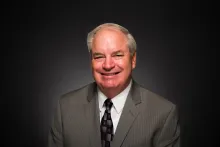
Robin Webber was born in Chicago, Illinois, in 1951, but has lived most of his life in California. He has been a part of the Church of God community since 1963. He attended Ambassador College in Pasadena from 1969-1973. He majored in theology and history.
Mr. Webber's interest remains in the study of history, socio-economics and literature. Over the years, he has offered his services to museums as a docent to share his enthusiasm and passions regarding these areas of expertise.
When time permits, he loves to go mountain biking on nearby ranch land and meet his wife as she hikes toward him.
