
Robin S Webber
This transcript was generated by AI and may contain errors. It is provided to assist those who may not be able to listen to the message.
So here we are in early summer. But let's go back many, many summers ago, as was mentioned in the opening message that I'm going to build upon, because it's in the same season, now past, that others gathered in the sweltering heat of colonial Philadelphia. For those of you that are from the Midwest and those of you that are from the East and really from the South, you can get what humidity is like in late June or early beginning of July and to recognize what it was like, especially before air conditioning.
But in that sweltering heat in Philadelphia, five men got together. They had been drafted by the Continental Congress to come up with a draft, a draft that would ultimately separate them from the mother country, from the British Empire, which at that time was the greatest empire on earth. You may have heard of Thomas Jefferson, of course, the president, and we normally call him the one that wrote the Declaration. That's not quite accurate. He was the main driving force, but there was a committee, and I'd like to acquaint you with some of the names here for a moment, of those that assisted Thomas Jefferson in drafting that.
Of course, again, Thomas Jefferson, there was John Adams. John Adams. There was also Benjamin Franklin, good old wise Ben from Pennsylvania. There was Robert Livingston, and there was also Roger Sherman. And all of them were involved in crafting a document that would revolutionize man's social contract. You might want to jot that word down, social contract, with other men by stating this, we hold these truths to be self-evident, that all men are created equal, that they are endowed by their Creator with certain unalienable rights, that among these are life and liberty and the pursuit of happiness.
What they were stating is that these unalienable rights do not come from fellow man, but there are privileges, there are life that give life that only come from a Creator, not from the governments of man or any man. It's very interesting that they encapsulated this new social contract, which is the key phrase and thought in this, within the framework of appealing to the Supreme Judge of the world for the rectitude of our intentions.
In other words, they were going to hand it over to God, and as we often say, God help us. It came to be known, as was mentioned in the first message, as the Declaration of Independence. How important was this message in human history? Abraham Lincoln called it the sheet anchor, the sheet, and or the paper, the document of all of our liberties that you and I enjoy today.
And its theme, its theme was simply this that we're going to build upon, its theme was freedom. Freedom. Why was this document written? Let's go back a second and gain the historical perspective. Americans' Republican experiment, which continues to this day in 2021 because it's always known as an experiment, it's always expanding, it's always extending itself, it's always bringing others into the full scope of what was stated there that all men are created equal. But why was this so important to be written in that summer?
Let's understand sometimes because we're not good with dates or what's happening. Let's understand what's happening. We often say, oh well, the American Revolution began in 1776. No, you'd be wrong if you stated that. F, wrong! It didn't begin in 1776. It began to really take off in 1775. It's in 1775, and some of you have been at these spots, where if it was the green at Lexington, whether it was the bridge it conquered or whether it was Bunker Hill on Boston Bay, the battle was already going. The battle was already initiated against the greatest empire that had existed to that point.
And here were farmers, merchants, craftsmen, young men, old men that were battling against the greatest army on earth. A lot of them had thought that they'd go and that they would help. But they had farms to tend to, they had businesses to go back to. They had wives to naturally that they'd longed for and missed and wanted to be with.
And to be very frank, it wasn't going very well those first couple of years. It just wasn't. And so those men need to know why they were leaving their wives, why they were leaving their children. They needed to have a concept, and they needed to have a vision that would keep them going, that would allow them to go through the hot summers and the cold winters and be there to do that which they had started out with. Freedom never comes easily and sacrifice is required. They needed to know and have staying power.
Proverbs 29 verse 18, if you'd like to just jot that down, simply says this, where there is no vision, it says that the people perish. You got to know what you're doing to stay in the march as was brought out in the first message, to stay in the fight. You've got to have the big vision and begin with the end in mind of where your actions day by day are taking you.
And so there would be great sacrifice. And what they did then, finally they needed to have a political statement. They needed to have something that they could wrap their hearts around and get into their minds. And so the body of men developed this statement.
And when you look at the Declaration of Independence, if you'd like to jot this down, it's really a divorce statement. It's a divorce statement from the rest of the family. You and I are normally familiar with the first paragraphs and the last paragraph about we give you our lives, our fortune, etc. But there are actually 27 points—I'm not going to go through the 27 points—27 points in there of stating why the separation. In other words, why are we doing what we're doing? And if you want to do something really worthwhile, and Susie and I are like this, we really get into these kind of national holidays that are worthwhile getting into, like the Fourth of July or Thanksgiving, is to look at those statements. They had to lay it out plank by plank to develop a floor to walk into the future by these minutemen and by these patriots. And so at the time of full fruition, the chief drafter would throw down the gauntlet in pinning these now famous words, when in the course of human events it becomes necessary. When the founders of the public would securely wrap themselves in the rightness of their cause, they affirmed their position and timing in relationship with the laws of nature and nature's God. That I understand at this time that there was a fusion of what we call the Age of Enlightenment, where everything became balanced as they look at how nature worked. The Bible itself, and yes, also in some sense, as they were reading those days, they were reading the novels, not the novels, but the history of Rome and the Greek philosophers. And Aristotle himself, ahead of the rest of the Greeks, had talked about this unmovable mover of the universe, the unmovable mover, that there was a God that changes not. Now, he did not know the name of that God, but he was pushing it forward that there is a force beyond man, there is a force beyond human history, and it is unmovable. You say, well, what does that have to do? Well, just look at Malachi 3, verse 8. It says, I am God and I change not. And so we see all of this kind of coming together in this time which is called the Age of Enlightenment. But here's what I want to ask you. Is such a phrase now lost in our history past? What is the phrase? In the course of human events.
That's what I'm going to dwell upon. And have you ever considered the ramifications of that? Well, today's message to you, for me, is simply this. Godly interruptions in the course of human events. We worship a God outside of time and space, and He is indeed a God. And He is uncreated. That's what makes Him God. But in the course of human history, He does choose to intervene.
And it moves well beyond 1776, and it starts way before 1776. So it's my purpose to establish how the God who created nature, not just nature's God. That's too a nature's God. What's that all about? He is the Creator. He is the God that created everything that is around us. And how He continues and has interrupted human society for His purpose in a course, in the course of human events. He sets the course. The Unremovable mover. The God of Abram, Isaac, and Jacob, the Father of Jesus Christ, continues to intervene in human history. Let's begin with, in the course of human events, Jeremy, if you would, in Genesis 1.26.
This God, the God that is spoken of in the Declaration of Independence, did something incredible. In Genesis 1, in verse 26, if you'll join me here, He not only made light out of the dark, and He went through five days of creation.
And then, in the course of where human events begin, He gave birth, in that sense, to man by the creation. Then God said, Let us make man in our image according to our likeness, and let them have dominion over the fish of the sea and over the birds of the air, and over the cattle and over all the earth, and over every creeping thing that creeps on the earth. So now, notice verse 27. In the course of human events, right at the beginning, then it says, So God created man in His own image of God, He created a male and female, and He created them. We were not an accident in a slimy, greenish, pleustocene pond when sun was shining, and the sun was shining, and the moonlight hit some amoeba, and there was a photosynthetic miracle.
There was life. If you simply believe in evolution for its sake, you are believing in a life of accidents. God, in the course of human events, made humanity in His image and His likeness, at least the first stage. He had made birds, He had made fish, He had made furry animals, He had made elephants, He had made mice, but it is only in man and woman that He made them in His image and after His likeness.
Where did this lead? This man, this woman, He put them in paradise. That's actually what Eden means, and sometimes they use that in different translations. He gave them everything. He gave them the freedom to succeed. If only they would follow His instructions, but we know that they did not. And so the door of Eden was closed. This wonderful freedom, freedom, that God desired for all of us and our ancestors. They turned thumbs down. God had to start all over again, when in the course of human events.
Join me if you would in Genesis 12. In Genesis 12, He'd start it with two, but then He'd start it with another man on the other side of the flood. Now the Lord had said to Abram, Get out of your country and from your family and from your father's house to a land that I will show you and I will make you a great nation and I will bless you and make your name great and you shall be a blessing and I will bless those who bless you and I will curse him who curse you and I will bless you and I will bless you and this is you.
And in you, all the families of the earth shall be blessed. Abram was told to break the mold of history. This was the time when populations were beginning to center on the great river valleys of China, of India, of what we now call Mesopotamia, and the great Mesopotamia, which you would know as Iraq, and the Nile. You normally learn that in Western Sib. There's the big four river civilizations. I came down today, along with the butlers from Riverside, probably Marianne, I'm not sure, but that you, you get to face, you get to be in line with everybody else going.
We don't know where they're going, but they're going somewhere. That's why sometimes we arrive late. So everybody is flooding to where everybody is going. And then sometimes you look over at the other lane and you go, oh, I wish I was in that lane. It's just one car going out of town. They're leaving Dodge, in a Dodge. Isn't that great? Well, that's what God asked Abram to do. He told Abram, I will be your God and you will be my man. But you got to do what I say. You've got to depend upon me.
And understand that you're going to be a part of a revolution based upon revelation, that I'm your God and you will be my person. So there's this one car going out of town when everybody else is coming into town. That's our spiritual forefather, Abram. He did something that nobody else had done. Just like the American Revolution, as it was coming about in the 1770s after 10 years of friction with England after the Seven Years' War, which you would notice the French Indian War in this theater on the North American continent. What happened was they were doing something that had never been done. There had always been kings. There had always been royalty. There had always been the big guys since Nimrod and his tower, trying to come between God and his creation. And what they did was so unusual. It was not just a hiccup, it was a burp of history. Because what the American Revolution did was that it was actually about 60 to 70 years ahead of the historical drift when the British Empire began to think, what are we going to do with all these people around the world? The concept of Dominion status, we call Australia was a Dominion. We think of Canada as having been a Dominion or New Zealand, what we now call the British. What do we do with them? They didn't really have the self-government that they have today. America was minimally 50 to 70 years ahead for a purpose that you and I know. But here's a Brahmin. He went out.
But later on, his ancestors were in Egypt. And when in the course of human history, these people that had gone down and become subjugated in slavery, join me if you would in Exodus 9, and let's see what happens in the course of human history. In Exodus 9, verse 1, this God who intervenes, this God who interrupts, he chosen a man, Moses. And in chapter 9, verse 1, then the Lord said to Moses, Go into Pharaoh and tell him, Thus says the Lord God of the Hebrews, Let my people go. Let my people go. God had interrupted. He was knocking on Pharaoh's door. He said, through Moses, who was his spokesperson, along with Aaron, let my people go.
Moses, on Mount Sinai, had been given a revelation. A revelation that then moved to a revolution that God, himself, would head up as he brought down the greatest empire in Western antiquity. The concept is that when they went out of Egypt, when they went out of Egypt, what did God tell them? To go out with a high hand. And they went out with a high hand. But they would be tested again in that system of this God that interrupts and where he might lead them. And so then we do find in Exodus 14, verse 13, they're up against the Red Sea. And Moses said to the people, Again, God intervenes. He interrupts. Nature's God, who controls the laws of nature and pulled back the curtains of the Red Sea so that his people could move forward.
Again, God had given Moses a revelation as he spoke to him. That would extend this revolution. Because God was doing something. As we're going to find out in a moment, he was doing something.
As they cross the Red Sea and as they come up to Sinai now, I want to share a thought with you. Exodus 19, moving this forward. In the course of human affairs, notice what it says here in Exodus 19. And let's pick up the thought if we could in verse 3. And Moses went up to God, and the Lord called him from the mountain, saying, You have seen what I did to the Egyptians and how I bore you out on eagles' wings and brought you to myself. Now therefore, if you will indeed obey my voice and keep my covenant... Now, before we go any further, remember the key phrase I used at the beginning of the message and they asked you to maybe jot down to stay. We have a new social contract. There's a social contract that's going to come from God Almighty to this people. Now therefore, if you will indeed obey my voice and keep my covenant, then you shall be a special treasure to me above all people, for all the earth is mine. And you shall be to me a kingdom of priests and a holy nation. These are the words which you shall speak to the children of Israel. So Moses came and called for the elders of the people and laid before them all the words which the Lord God commanded. Basically, that great theme of the Bible, I will be your God and you will be my people. He took a people that were not a people and was going to make a nation out of them and make them an awe of the people. The ancient world, lying between Egypt and lying between Babylon, that they might honor that God and keep His commandments that people might say, as it says in Deuteronomy 4, What kind of a people are these? And what kind of... Look at these laws that they keep and such a God that they were to be a light. They were to be a light to the Gentiles. God's used to taking something that is little and making it great. When you think of the American colonies back in 1760, 1770, to recognize that here were 13 colonies. They were not thinking unitedly at that time per se, but you do get united when you have a common enemy, okay? They were thinking of themselves as, back then they would call themselves Merrylanders, or they would think of themselves as a New England man, or they would think of themselves as a Carolinian. They were not thinking at that point, typically, one word, American. And we know that here, this was much like the tribes of Israel. They had a commonality, but they were separate. They thought of themselves as people of Judah, or Issachar, or Manasseh. And God began to galvanize these people to become something that would affect the rest of the world down to our day and age. Join me if you would, then, when we think about it, do it on me five. And do it on me five.
Let's pick up the thought if we could in verse 13.
Here we are today, on the Sabbath day. Have you ever wondered what the 4th of July and the 7th day Sabbath, think of those numbers, the 4th of July and the 7th day Sabbath have in common? Notice what it says here, verse 12. Observe the Sabbath day to keep it holy, as the Lord your God commanded you. Six days you shall labor and do all of your work, but on the 7th day is the Sabbath, the ceasing of the Lord your God. In it you shall do no work, you nor your son nor your daughter nor your male servant nor your female servant nor your ox nor your donkey, nor any of your cattle nor your stranger who is within your gates, nor your smartphone, nor the male servant and your female servant may rest as well as you. But God never gives us in His holy law something that doesn't bring about something else. Now notice, why do we do this? In part, why the 7th day Sabbath? And remember that you were a slave in the land of Egypt, and the Lord your God brought you out from the thereby a mighty hand, and by an outstretched arm, and therefore the Lord your God commanded you to keep the Sabbath day. What is this telling you and me? It's not just about Moses. It's not just about Aaron. It's not about humanity. But in the course of events when it came, nature's God and or the God of nature, that unmovable mover of history intervened and took a people that were not a people. They were slaves. He rescued them and gave them a hope beyond slavery and said, I'll give you a promised land. He gave us the Sabbath day to remember, dear friends, it's not about us. America today is not because of just simply Yankee ingenuity. Not at all, but because of what God promised to Abram, that all of humanity would be blessed first spiritually through his seed, Jesus the Christ. But number two, there would be physical blessings that come out of Genesis 49 and Genesis 50. When you recognize that he blessed the seed of Jacob and said that out of Jacob would come Manasseh, out of Jacob would come Ephraim. And the younger brother would first be greater and would be a company of nations. And that at the same time, Manasseh, the older brother, would have to wait a while because there was a switcharoo, remember? The switcharoo. But God doesn't have accidents.
After all, Americans need to learn a little patience, don't we? We had to wait.
And I tell you, if there's any proof of Genesis 49 and 50, you think of how America has been used to, yes, we've had our faults, we have our challenges, we are a human people. But in spite of that, how we saved God used America through this past century to save the world twice in world wars. And not only after that, but then after that also we fed the world. We restored our enemies. We were the breadbasket of the entire world. For those of you, I don't know if they still teach us in history, but the Marshall Plan of how generous and largess America was. But again, it's not just about us. It can't end here because of Yankee ingenuity and benevolence. God was using us. God had a purpose. And God also had a purpose for the British Empire and later America, that missionaries could go around this world, populate the world from China to Korea to Africa, throughout the West, and bring the Bible to people. That God might use that later on. But we're just instruments. We're not the end. And so often we can just look at this. Oh, look at us. The Sabbath directs us back. Are you with me? The Sabbath always gets, diminishes self, and we give the glory to God. Just as much as the Sabbath said, you will remember you were not a people. You were nothing. I took you just as much as God took that clay and Eden, and I made you something to my glory.
He also gave something else here. Let's go to Leviticus 25, verse 9. He knew that these people would need a sustaining. Leviticus 25, verse 9.
Before we go there, I'm going to watch your appetite a little bit.
July 4th would be nothing. You know, you think of what is called Carpenter's Hall, which later on became Liberty Hall in Philadelphia. Maybe some of you have actually been there. Have you been to Liberty Hall? Okay. How many of you have ever heard of the Liberty Bell? Oh, good. Okay. The one that's cracked.
Let me share something that you may not know. That July 4th, the document itself was ratified on July 2nd. May I jot that down? Big date. Don't set dates, but July 2nd is when the document was actually ratified. July 4th. Why do we keep July 4th? Because July 4th was when it was signed by the representatives of the 13 colonies. But the public did not really know about it. It began to be read in all of the public squares starting in Philadelphia to the battlefield to where the Patriots were. It began to be read on July 8th as it went out horseback around the colonies. On July 4th is when that Liberty Bell rang. It's very important to understand what's on the Liberty Bell, and it's in Leviticus 25 and verse 9. Let's take a look at this. Leviticus 25 verse 9, Then ye shall cause the trumpet of the Jubilee to sound on the tenth day of the seventh month on the day of atonement, and ye shall make the trumpet to sound throughout all of your land. And ye shall consecrate the fiftieth year, and here it is. This is what's on the Liberty Bell. And proclaim liberty throughout all the land to all of its inhabitants, and it shall be a Jubilee for you, and each of you shall return to his possession, and each of you shall return to his family. That is literally inscribed on that Liberty Bell. What did the Jubilee mean that came every 50 years? In the course of events. Number one, families that had lost their land had it returned. Number two, people who had become indentured servants due to economic conditions were released. And number three, in general debts were forgiven. Have any of you ever paid off a debt that was burdensome? Have any of you ever been released by somebody from a debt? Let me just read these through again. Families that had lost their land had it returned. Think of 2008 when so many people lost property, lost land. Number two, people who had become indentured servants, which was indebtedness due to economic conditions, they were released. Have you ever had a bird in the hand, taken a bird, a little sparrow that maybe had a little sparrow issue, and you pick up that sparrow and you feel this fluttering inside? You know, it says, don't box me in. Then all of a sudden, watch this, this is the PowerPoint, you go like this. That little bird just takes off, and all that is around is now that bird's. It's been released, and it's free.
You know, God must love sparrows because he made so many of them. And he wants to release every one of us that are his sparrows, and he wants to give us the same freedom that we're talking about today. But let's move beyond the Jubilee and come again to another Galatians 4 and verse 4. Join me if you would there. When in the course of human events, in Galatians, the epistle thereof, Paul's writings. Notice what it states here.
Galatians 4 and verse 4. But when the fullness of time had come, God sent forth his son, born of a woman and born under the law. He was Jewish. To redeem those who were under the law that we might receive the adoption, the adoption meant a totally new life. When you were adopted in the Roman system, you all of a sudden were no longer the person that you were. That person was now gone. You were given a new existence. You were given a new name. How many of you have ever seen the old movie, Charlton Heston? Really getting older, Charlton Heston? Ben Hur. Anybody seen Ben Hur? Remember when he saves the admiral? And the admiral is about to commit Harry Carey because he thinks he's lost the battle. And Judah Ben Hur grabs him, saves him, rescues him from the moment, as all of us sometimes have been rescued from moments in our lives. And after that, once they get ashore, this former galley slave is now walking on deck side by side with this admiral. The admiral then does what? The admiral then adopts him. He's no longer Judah Ben Hur, but he's given a Roman name. He's given a new name. He's given new clothing. And remember in the story of the prodigal son, when he comes to himself, that the father says, bring a robe, put some shoes on him, and also give him a ring. And I don't know if you remember in the movie that when he's gone back to Palestine and he's talking to somebody, he has that ring and he booms it right and seals that ring. He's got the seal of his father, and it's now a new name. It's a new life, and it brings responsibility, and he doesn't have to be afraid.
In our calling, that's a revelation that begins to, as Dennis brought out, a revolution in our lives, as to how we deal with the course of events that come our way. Jesus came that first time. And it's interesting that if you join with me a second in Luke 4. I mentioned the Jubilee earlier, but one of his very first sermons is incredible. When you go to Luke 4 and verse 17, speaking of Jesus, and he was handed the book of the prophet Isaiah, and when he had opened the book, he found the place where it was written. The Spirit of the Lord is upon me, because he has anointed me to preach the gospel to the poor. He has sent me to heal the brokenhearted, to proclaim liberty to the captives, and recovery of sight to the blind. And notice now to set at liberty, freedom, those who are oppressed, and notice to proclaim the acceptable year of the Lord, Jubilee. Jesus of Nazareth is the ultimate jubilator. It is all encapsulated in him, and that was his father and our father's intention to send him to prepare for the rest of us. I want to share a thought with you. Sometimes we can vaunt people, build them up. Think of George Washington. When I was a young boy, it was called... I was young at one time for some of you there on the right. When I was a young boy, and those that are moons older than I am, we celebrated alone George Washington's birthday. Most of you will remember that. It was a federal holiday. It's always very interesting in history when man begins messing with things, changing dates, changing names, and changing meanings. We know of George Washington as being the father of our country. Allow me to say something here. It's very well written in many, many documents that outside of Washington, outside of Washington, the American experiment probably would have wound up in failure. Because everybody in Philadelphia or Boston were politicians. I'll take that no further. Washington was on the ground. There were incredible defeats, one after another after another after another, winding up in 1777, 1778, and that winter thereof. He's in Valley Forge, which would have seemed to be the graveyard for the Continental Army. But out of that suffering, out of that knowing that they had a cause, going back to the Declaration of Independence, and one man, George Washington, had the fortitude, this big man out of Virginia. He held fast. One of the most authoritative books on George Washington, you may want to jot this down sometime and read it, it's called The Indispensable Man. It's by a gentleman named Flexner, F-L-E-X-N-E-R. He calls Washington the indispensable man. But here, as Christians today remember, there is really, truly no indispensable man. Men will come and go. And they do, because we're mortal. And in the course of events, we all die. There is only one insuspensable individual. Allow me to share this with you. When you think of American history, based upon the revelation that we have, there is the indispensable son of man. That's our Savior. That's Jesus Christ. The one that Flexner did not comment on, but God the Father commented on when he said, This is my son, in whom I am well pleased. That's the indispensable son of man.
Isaiah 9, verse 6. I'm going to throw a thought at you. Maybe you've never considered this. Stay with me. Isaiah 9, verse 6. You're familiar with it. You've heard this in an oratoryial form. For unto us a child is born, and unto us a son is given. And the government is a social contract between God and those that he calls his people. For unto us a child is born, and unto us a son is given. And the government will be upon him. And his name will be called Wonderful, Counselor, Mighty God. Now notice this because sometimes we say, well, how did this get into it with what we understand about Bible? Everlasting Father. I thought there's a heavenly Father. Yes, there is. Stay with me. Everlasting Father, the Prince of Peace. Now, how can this Messianic prophecy personified in Jesus of Nazareth, why would he be called the Everlasting Father? Because he's the first of the first fruits. He is the originator of the new. He is the original of the new creation. He is the first fruit of the first fruits. He is the first that has lived in this flesh, died, and then is resurrected. He is the beginning of God's purpose for each and every one of us, of when events come our way.
But the question is simply this. We said that Jesus is the great jubilator. That is not just simply an event. It's an ongoing experience for the world. My question is simply this. Paul said that when the time was fulfilled, but was everything fulfilled? No, that was his first coming at a nexus of human history when you had Roman roads, Jewish synagogues, and the Greek language to expand the Gospel. But now let's take it a step further, and that's simply this. It's to recognize that there is another event going to occur. Matthew 24-22. Join me if you would for a moment. Matthew 24-22. When in the course of events? There's another event coming up in human history. And you and I today, by God's grace, we have this revelation. Revelation can be before somebody, but perhaps their eyes are not open. Are you with me? Don't think it's about us. It's by God's grace. It's not by our intellect. It's not by our doing. It's by God in the beginning, moving through us, and giving him the glory at the end. Notice what it says here in Matthew 24. For then shall be great tribulation, such as not been since the beginning of the world until this time, nor ever shall be. And unless those days were to be shortened, no flesh would be saved, but for the elect's sake, those days will be shortened. There's going to be an intervention. Nature is God, or like I like to say, the God that created nature, put it in the right order. God is God. He's going to intervene. He's not just simply first cause. A lot of people today, even still in America, even as religious belief is going down, most Americans still believe in what we call first cause, that somebody had to wind up the top and give it a spin. And then, walked off and left us alone. The God that you and I worship today and why we are here is not just simply first cause. There was not just one event in the beginning God. He continues to intervene. He continues to interrupt. And it's telling us that there is going to be a greater turnover in the future than what happened in 1775-1783. Join me if you would in Daniel, the book of Daniel. Join me if you would in Chapter 2.
Daniel 2. Let's pick up the thought if we could in verse 44. And in the days of these kings, in the future, the God of heaven will set up a kingdom, which shall never be destroyed, and the kingdom shall not be left to other people. And it shall break in pieces and consume all these kingdoms. And notice that it shall stand forever. Inasmuch as you saw that the stone was cut out of the mountain without hands, and that it broke in pieces like the iron, the bronze, the clay, the silver, and the gold, the great God has made known to the king, speaking of Nebuchadnezzar, what will come to pass after this. The dream is certain, and its interpretation is sure. This stone, this stone, that is mentioned, that is going to break this kingdom in the future in pieces, is that same stone that scripture calls the stone that was disallowed, the stone that was rejected by mankind. What good thing comes out of Galilee? Why should we hear this man? For the sake of peace, let's just put him to death with a bunch of criminals up on the place of the skull.
On that time, and in that day, all of mankind was represented, both the religious community and the Roman Empire, representing all of mankind. Rejected, rejected, the spiritual George Washington, the father that is mentioned in Isaiah 9, rejected him. The stone that was disallowed is exactly the same stone that is going to come back. That kind of tells you and me if I can make a comment. We need to kind of look at things like God sees things. He takes kind of the stone that was disallowed, have you noticed that? He takes the people that were slaves. Even the Apostle Paul says in Corinthians that God calls the weak of the world, not the mighty, but kind of those that are in cultural flyover country. I'm in there.
To his glory and to his honor.
Hmm.
That he alone might have the glory. And the one thing when he sends Jesus Christ back, he's never worried about Jesus Christ giving glory back to his father. Because his mission was not about him, but to do the will of the one that sent him.
It's going to be wonderful freedom. Join me if you would in Romans 8.
1st 18 Remember why the Declaration of Independence was drafted? They give the people a vision. They were cold, they were hungry, they were away from their wives. Some of their best buddies had been shot by a musket right through the head.
They didn't have any shoes left.
Their feet were sore, they were cold, they were frostbitten in Valley Forge. And that Declaration of Independence that was written there in that sweltering summer in Philadelphia in 1776 was offered to give those men a vision of why they were there. Here's our vision. For I consider that the sufferings of this present time are not worthy to be compared with the glory which shall be revealed in us. For the earnest expectation of the creation eagerly waits for the revealing of the sons of God. For the creation was subjected to futility not willingly but because of him who subjected it in hope. Because the creation itself also will be delivered. There is going to be, in a sense, an end of human history. Not God's story because that's forever. But human history. This creation itself, not just man but the creation, was subjected to futility. But because of him who subjected it in hope. Because the creation itself also will be delivered from the bondage of corruption into the glorious liberty of the children of God. For we know that the whole creation groans and labors with birth pangs together until now. Not only that, but we also have the firstfruits of the Spirit. Even we ourselves groan within ourselves eagerly waiting for the adoption, the redemption. The redemption.
Redemption and redeeming is something that we can't do on our own. It comes only from God. We can't redeem ourselves. Good luck with that one. Redeeming, when something is redeemed, you're taking something that could not assist itself by itself. It's got to be that strong hand that comes from somewhere else. Drowning people cannot save themselves. It doesn't work.
There has to be somebody else that comes and approaches in the right way and rescues them.
Not only that, but we who have the firstfruits of the Spirit. Even we ourselves groan within ourselves eagerly waiting for the adoption of the redemption of our body. For we are saved in this hope. But hope that is not hope. For why does one still hope for what he sees? But if we hope for what we do not see, we eagerly wait for it with perseverance.
Back in that sweltering summer in Philadelphia, they did not stop. I think those men that were in Philadelphia, because they were so filled with what was on their plate and so excited about a possible future for their people, they didn't mind the sweat. They didn't mind the humidity. They didn't even mind what was about to come. Because we recognize that at the end of that statement, as was brought out in the first message, they simply said this. And in Affirmed Reliance, the protection of divine providence, we mutually pledge to each other our lives, our fortunes, and our sacred honor.
Where there is no vision, the people perish. So to go forward, wherever you are in life right now, we have to go back. And maybe if anything, in this message that you can take away two dates, two numbers, and always remember, if you could, what the Seventh-Day Sabbath has to do with the Fourth of July, that for you and for me, our Father above and through His Christ, gives us a weekly Fourth of July. From Friday night sunset to Saturday night sunset, where we come to rest. Because it's not by our works, it's not by our doing. But we've got something greater than a George Washington. We've got something so much more intelligent than a Thomas Jefferson. We have something greater than a Moses. We have Jesus, the great Jubilador, the one that gave Himself away, that we might have this social contract. New to humanity, and yet to be expanded, that our Father above, and we here below, we can call Him Father. He calls us His children. And He says, wherever you are this week, whatever is happening in your life right now, health, marriage, work, you name it. You remember what He did with Israel, a people that were not a people, slaves. And He said, I will be your God, and you will be my people.
Let's believe that longer than the ancient Israelites. As the Israel of God, that's something you can tuck away in your heart. You can die for, and you can live for, because after all, God is the great, great liberator.
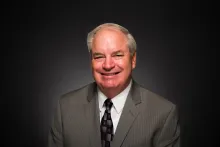
Robin Webber was born in Chicago, Illinois, in 1951, but has lived most of his life in California. He has been a part of the Church of God community since 1963. He attended Ambassador College in Pasadena from 1969-1973. He majored in theology and history.
Mr. Webber's interest remains in the study of history, socio-economics and literature. Over the years, he has offered his services to museums as a docent to share his enthusiasm and passions regarding these areas of expertise.
When time permits, he loves to go mountain biking on nearby ranch land and meet his wife as she hikes toward him.
