

Robin S Webber
This transcript was generated by AI and may contain errors. It is provided to assist those who may not be able to listen to the message.
Well, I know all of us certainly appreciate that beautiful, beautiful music. And when you think about all of the beautiful things that we have to experience here on God's Holy Sabbath day, it's a beautiful day, beautiful music, beautiful people, beautiful God, beautiful truth, beautiful future. There's a lot of beautiful out there for us to consider on this day. For those of you that are visiting us, and by the way, I'd be remiss if I didn't mention that we have Fred Crow with us. And we're always happy to have Fred with us. He's down visiting. Glad to have Fred. Susan and I went to school with that older man.
Susan would say, you look older than he does, because Susan is always honest. But anyway, glad to have Fred with us, who has extended family here. Glad to have you, Fred. For you and everybody else that is visiting us, we are in the midst of a series entitled, God's Will for the Body of Christ. And we've actually been going through this for nine or ten messages. And we probably have three or four more yet to go, because we are now going to begin to crescendo.
It's all going to come together. The grand doctrine of what God puts in the Bible ultimately produces, then, the grand behavior that we are to demonstrate to Him, because of what He and His Christ have done for us. We're going to be seeing that beginning to crescendo, especially as we go through chapter five.
And then, chapter six, we're going to be going through chapter five next time, well, after the Kingdom of God seminar, is we're going to be dealing with the subject of marriage. We're going to be dealing with the subject of child-rearing. We're going to be dealing with the subject of interpersonal relationships with the brethren and workers and employees and employers. And they're going to be working with that subject that does not quite yet go away, yet.
And that is dealing with the adversary and standing up to Him. So we have to have all of this spiritual ammunition in front of us to know why we are, to know what our purpose is in life, to why we draw breath, to why God has us interact with people.
I want to share a thought with you to begin with, especially as we come off the days of Unleavened Bread, to perhaps tie this somewhat into that experience that all of us have just gone through. But when I look at Scripture, I hear an echo that comes out of the pages of the Bible, and it reverberates with these words. Be holy as I am holy. Be holy as I am holy.
And this is why we're going through the book of Ephesians, why we are striving as a congregation to understand what the will of God is for the body of Christ. That grand mantra that comes out of the Scriptures is preceded by what God ensured the people of covenant before Him when He said, I will be your God, and you will be my people.
Because of that, then be holy because I am holy. But in all of that, there is one other thing that comes out of especially the Old Testament and then builds into the New Testament, and that is simply this, therefore, do not be like them. Do not be like them, but be like me. We've just gone through the Days of Unleavened Bread. A very familiar Scripture was read to you, but maybe you don't know the wellspring that it comes out of.
I'd like to have you turn back to the book of Joshua for a moment. The book of Joshua, and let's pick up the thought in chapter 24. Allow me to give you some framework for this because it's a comment and it's a hope and it's an instruction that God always has. I will be your God, you shall be my people. I am holy, therefore you be holy. And do not come, but be like me.
This is not just simply a New Testament thought, but it begins back in the Old Testament because the Old Testament is the gospel in blood, and the New Testament is the gospel in full bloom. And God breathes life as time goes along to let us know what he's doing.
We pick up the thought in Joshua 24. 14. Moses had given this instruction. Now Joshua is old, and they are about to settle down as a nation. They're no longer going to be simply a pilgrim people in their wanderings. And he is aged, and he leaves them an instruction. And let's look at verse 13. Joshua 24. 13. I have given you a land for which you did not labor, and cities which you did not build, and you dwell in them.
You eat of the vineyards and olive groves which you did not plant. God was saying, I am going to be giving all of this to you. This isn't about you. I, the great God, the holy God, am giving you this incredible, wonderful future. Now, therefore, fear the Lord, serve him in sincerity and in truth. Put away the gods which your father served on the other side of the river and in Egypt. Serve the Lord. Didn't somebody else talk about sincerity and truth? Somebody in the New Testament?
Somebody in the book of Corinthians? Somebody named Paul? God's mind never changes as to what he wants a covenant people to be to him. Let's continue this for a moment. Interesting. And if it seems evil to you to serve the Lord, choose for yourselves this day whom you will serve. Whether the gods which your father served that were on the other side of the river, or the gods of the Amorites in whose land you dwell. But as for me, Joshua speaking, and my house, we will serve the Lord.
So the people answered and said, Far be it from us that we should forsake the Lord to serve other gods. For the Lord our God is he who brought you up and our fathers out of the land of Egypt from the house of bondage who did those great things in our sight and preserved us in all the way that we went and among all the people through whom we passed. All along, God has desired for a covenant people to worship him in sincerity and truth. You may not know the origins of the word sincere. I'd like to share them with you for a second.
What it means to be sincere. When we're talking about somebody that is sincere, we normally think, well, here's a genuine article in front of us. Sincere is a Latin term, and it goes back to the days of antiquity when people used to take a statuary and they would put it on a cart taking it from one polis or one city in the Greek, one polis to another polis, one city to another city.
Here's a statuary, as best as they put it in the crate and tried to package it up. You can imagine what some of those roads might have been like as they journeyed without the superhighway system that we have. And oftentimes what would happen is that along the way that the statue would crack, there would be a fissure.
And so oftentimes what they used to do is they used to stuff it, though the wax were the fissures and where the cracks were, they would stuff it with wax to kind of get mold and get formation, get substance in there. Which was probably most of the time. So what you bought is not necessarily what you got. At the end there are some added elements. But if a statue made it from one city to another city without any fissure, without any crack, without any marring, it was called to be sincere.
That meant without wax. Because what you saw and what was sent to you is what you got. There was no phony baloney. There was nothing hypocritical about it. And that's exactly what God is asking for we today. People of covenant, people that have been enlightened with what God's purpose is for humanity.
That we, in turn, because of what our great God is offering us, not a land with olive trees and grapes, but an eternity of being in the presence and experiencing God the Father in Jesus Christ forever. Because He's done all of that for us, in turn He asks that we might respond and become like Him, patterning ourselves after Him and being holy as He is holy. Being sincere, being without wax, practicing what we preach, not only having head knowledge, but having heart knowledge. And we're going to see how that works now as we go to the book of Ephesians.
Let's open up to the book of Ephesians and join me if we, if you could, if where we left off last time, we're going to go to Ephesians 4 for just a moment. Because, again, what we're learning in Ephesians 4, and we've been there a little bit, is that Ephesians 1, 2, and 3 is telling us what God is doing, is doing, that is in the present tense, and is yet to do.
And there's a key word, then, that we pick up in verse 1, and that word is just simply this, therefore. I know I was talking to my wife, Susan, the other day, and she said, after this series, she will always remember the word therefore. Because therefore means that there must have been something that God was talking about beforehand that now we need to take notice of.
In other words, God is doing His part, therefore God is asking us to respond. And we notice, I therefore, the prisoner of the Lord, beseech you to walk worthy of the calling with which you were called. One of the key words that we're learning now as we go through Ephesians 4, 5, and 6 is this discussion of a walk. And it's a walk that is now new. It's a walk that is different. It was a freeway that we didn't know existed, that we had no means of being upon until God began to call and to deal with our minds and with our hearts.
So the walk is very important, and that walk goes back to John 14, 6. You can jot that down where Jesus says, I am the way, I am the truth, and I am the life. There's a way, there's a way which seems right to a man, and the end thereof is death. Jesus came to counter that. He says, I'm the way. And narrow is that way. It's not humanly easy. And so we find that in this calling there's a walk that is worthy. Does that mean when we use the word worthy that somehow we can work our way up to salvation?
Absolutely not. That's not what's being discussed. The walk that is worthy is a response. It's a response to what God has done, what God is doing, that He's giving us, as He did in ancient Israel, a land that we couldn't possibly imagine, we couldn't possibly have of and by ourselves.
But because of what He has done and what His Christ has done, our Christ, the one that died for us as we heard about propitiation, that because of that, as God does what only God can do, therefore then we respond, we reflect, we walk a walk which is worthy. We find as we go to Ephesians 4 and verse 30 then, we walk this walk that is worthy because of what that propitiation is all about and who has performed it.
I want to pick up the thought then here as we go to verse 30 of chapter 4, then we're going to launch into new discussion. Because two things come out here that are germane for us to go into, frankly, Ephesians 5. And frankly, next time into the discussion of marriage and interpersonal relationships. It says, do not grieve the Holy Spirit of God, by whom you were sealed for the day of redemption. Now the Spirit of God, the book of Ephesians, reveals to us it's a promise, it's a guarantee, and it's a seal.
That's in Ephesians 1, been there, done that. It says, don't grieve it. Don't grieve it. Because we're sealed. God has stamped His name on us. In the world of old, as perhaps a barrel of olive oil or wine was shipped from Alexandria to Rome, a seal would be put on it.
This is the implication. A seal would be put on it, saying that this is the owner, and it's going from here to there. There's a stamp. It belongs to someone. And this is the implication here. You were sealed. You belong no longer to yourself, but to God. Because of that, we don't want to grieve the Holy Spirit. It says, therefore, don't let any bitterness or wrath or anger and clamor and evil speaking be put away from you. Put it off. Get rid of it.
It's banished. It's not a part of the new society. It's not a part of the new clothing that God wants us to wear. Notice verse 32, because this becomes the preamble as we move into what man has devised as chapter 5 verse 1. Don't grieve the Holy Spirit. Put off what you were. Verse 32, and be kind to one another.
Tender hearted. Forgiving one another. Why? Even as God in Christ forgave you. So we have two issues that are going on here right now, friends. That is this. As we step into chapter 5, we don't want to grieve the Spirit. God says, don't go there. You the new people. You that have been granted the opportunity of a new citizenship. You that have been granted an opportunity to experience a new family. And you that are being fitly framed together to be the Holy Temple of God.
This is what the book of Ephesians is about. It's a blueprint of what God is developing and molding. It's called His Temple. We're going to discuss that as we go along. So we don't grieve the Holy Spirit. And number two, key point is simply this. And to be forgiving. To be forgiving. You say, Mr. Weber, I've been coming to church for 30 or 40 years. You're not telling me anything new. The message isn't over, folks.
And it's going to get even more personal after we deal with the Kingdom of God seminar because we're going to go into marriage. We're going to go into interpersonal relationships. We're going to be dealing with adult children. We're going to be dealing with the tykes. We're going to be dealing with all the kids in between those two terms. And we're also going to be dealing with situations that we did not ask for.
But God says, here's how to handle them. So that you don't grieve the Holy Spirit and you are forgiving. Chapter five, then. Are you ready? Chapter five. Notice what it says, then. There's that famous word. Because we do not desire to grieve the Holy Spirit and because we are to forgive, even as God has forgiven us, as Olay said to his forbearance, therefore we come up to this term. Therefore, it's like where there is the gong. Wakes up everybody and we come to attention.
Therefore, be imitators of God as dear children. And this is our calling in the new society. To be imitators of God as dear children. If we do not desire to grieve the Spirit, if we desire to forgive as God has forgiven in Christ, therefore then we have to be imitators of God as dear children. Let's talk about that for a moment. Imagine this. What is it talking about to you and to me on this Saturday afternoon, around 3.30, when we are here and we're talking about the Bible. Imitators of God. Here it is, folks. This is what it is. You and I, as members of the new society, are being called to practice being like God.
That's it. To practice being like God. The word imitators comes from a Greek term, which we often then use and call to mimic. Imitators. The word comes from a Greek word. I don't like to spell out Greek or even try to do an accent. But the word is to mimic. We've all been to perhaps a large festival before. We've been down to Sea World. I remember the mimes that they used to have down there. And you see how people mimic things. They pattern themselves after one another.
Therefore, because of what God the Father has done, what Jesus Christ is doing, and because we do not want to grieve that holy instrument that they have put in us, their very essence, their spirit, practice being like God. Not for a job like a mime, not for entertainment, but because Jesus Christ lived and died for us and showed us the way to practice being like God. It's very interesting that when Paul would have used this terminology, the Greek audience would have understood what he was talking about here.
Because what we're talking about as witnesses of God's kingdom on earth is communication. It's communication of how we express ourselves. And in the Hellenistic world of antiquity, people were given to what we call oratory. Communicating, talking. They would go on for hours. They would make one of Mr. Weber's sermons seem like a sermonette. Stephen Douglas, like a piker, just getting going. But what they would do, those that were learning oratory, number one, they would study theory.
They would study the science of communicating. Then, number two, they would study and imitate a master. They would study and imitate somebody that they thought highly of that knew how to communicate. And then, number three, guess what? Practice makes perfect. Doesn't that sound a tad like Christianity? That the Bible in front of us, in a sense, is words, it is that theory? And then, we go to the second part, where we strive to emulate it, where we strive to get a handle on it, where we strive to practice, where we strive to copy the example of Jesus Christ.
And then, we just have to plain go out and practice it, and practice it, and practice it. And sometimes, the lessons won't go well, just like a kid when they were learning violin, or playing the piano. But practice makes perfect.
This is what's being talked about here. But here's what I want to share with you that I hope will stun you somewhat into spiritual reality this afternoon. Who are we practicing being like? Number one, the giver of life. That's who we are striving to practice to be like, the giver of life. And number two, the one that we say is the Lord of our life. That's who we are striving to mimic. Therefore, we see all of this, and then it says, and walk in love, as Christ also has loved us and given Himself for us, as an offering and a sacrifice to God for a sweet-smelling aroma. There it is again, that term that keeps on coming up in the book here.
It's about the walk. It's not about the talk. Talk is cheap. Talk will not get you anywhere. It might get you in the door, but it's not going to keep you on the calling of being a Christian. It's all about the walk. When Jesus said, follow me, He didn't say, just take a step. It was going to be a pilgrimage towards the kingdom of God and beyond that eternity. So there's this terminology of walk. Notice what the walk is consisting of in love, in agape, in a manner that is outflowing and outgoing concern away from the self.
Away from the self, agape. Walk in agape as Christ also agape-ed us, gave Himself for us as an offering and a sacrifice to God for a sweet-smelling aroma. Very interesting as you conjoin the Old Testament, the New Testament, that this thought of a sweet-smelling sacrifice is mentioned over 50 times in the Old Testament. But now it's framed in the experience of Christ's life, His death, and His resurrection. Therefore, but now we go to another key word. But fornication and all uncleanness or covenants, let it not even be named among you as is fitting for the saints.
Neither filthiness nor foolish talking nor coarse-gesting which are not fitting, but rather giving of thanks. For this you know that no fornicator, unclean person, nor covetous man who is an idolatuer has any inheritance in the kingdom of Christ and God. And let no one deceive you with empty words, for because of these things the wrath of God comes upon the sons of disobedience. Therefore, do not be partakers with them. I am your God. You are to be my people. I am holy.
You be holy. Do not be like them. Be like me. Imitate. What is Paul talking about to that original audience and to you and me that are here today? When it says that Jesus was a sweet-smelling aroma, that can probably be broken down in two different ways. Number one, what reached up to the heavens, to God the Father, was that a life of perfect obedience to the Father. And number two, a life of perfect, outflowing, outgoing love to his fellow man. But this is interrupted now by this, but this worldliness, this old clothing that needs to be discarded, this fornication, this uncleanliness, this filthiness, this false talking.
Why is this being brought up? There are two or three things that are being brought up that I kind of want to put together here for us to understand. Number one, we recognize that it's the book of Ephesians. Ephesus was one of the five great cities of antiquity in the Roman Empire, and it was where East met West. It was a place that had been devoted to the worship of, for centuries before Paul, to the Greek goddess called Artemis, later defined in the Latin world as Diana, or Diana of the Ephesians.
The rites were rites of fertility. It was Diana. Artemis was the goddess of fertility. And they had that great temple, which was one of the seven wonders of the ancient world there. Incredibly large building for its time. And there were statues, a major statue of Diana of the Ephesians, which is made famous in the book of Acts.
This was a goddess of fertility that on her upper torso were many, many, many brass. Not just two, but multitudinous. Almost gross in that sense, over the top, literally. This is the world that Christians were being called out of. The old society, the old world, the walk that they had walked all of their life.
But what occurred here was that in Ephesus, as in many Greek cities, and going back to Babylon, that fertility rites were a part of the religion. In other words, you went in and visited the priestess, who was also the temple prostitute. So that you paid the fee for the service, and a part of the fee went to build the temple.
Think that one through for a moment. And not to be a part of this, and not to be a part of this walk, to be a part of this world, and to all of a sudden become moral, to become chaste, to become virtuous. What is unthought of? Because nobody else is doing this. A real God, real people, real things that were happening, and real challenges. This was their world, and Greeks and Romans were being called out of this society. A society that was not based upon sacrifice as the world that Jesus Christ brings us, but a world that was based upon self-indulgence. Not a world that is built upon eternity, but a world that is built upon sensuality and momentary pleasure.
Interesting. What is fascinating about all of this, brethren, that I bring to you today, because this is not just ancient history, but this is your world and my world today. We live in the world of the modern Romans. We live in the world of Ephesus. We live in the world of sensuality. We live in the world where men and women are degraded, where they are not respected for their God-plain development and purpose, for the things that are on the airwaves and on the internet and on the radio. Come at us 24-7. In days of yore, you had to walk up to the door of the temple. Today you don't have to do that, because you've got a television that is in your room. You might have televisions that are throughout your rooms. You might have an internet which has no walls to the world around us. You may go to a movie which more and more is just simply collective voyeurism in the R-rated and the PG-13 movies that are out there, that your father and that your mother and your grandparents would turn red and keel over if it had been in their time for what people go and watch today. And then you don't think that perhaps that does not affect a Christian mind and a Christian heart. You can't have two sets of clothing. You can't have your foot in this world and your foot in this world. You can have four-handed piano. You can have a duet. But God has not called you to play a duet in front of Him, one piece of the world and one piece of His holy Gospel. He wants to own you. He does own us. He's redeemed us. It is He alone through the sacrifice of Christ that allows us to have any worth. Therefore, we turn our backs on that society. Why is this so important? Because as we move to Ephesians, at the end of Ephesians 5, we're going to be getting into marriage. We're going to talk about Christ. We're going to talk about the Church and the holiness that is between them. When we fill our minds or entertain ourselves with the sensuality of this world, it doesn't fit. I want to show you something. Look at what it says in verse 4.
And up in verse 3, it says, Well, what's that mean? Is God sowing something? Yes! He's sowing together the body of Christ. Ephesians 1, 21 says that He is bringing this holy temple together, which is fitly framed. If we have one foot in the world of sensuality and one foot in the world of sacredness, it doesn't fit. It's like trying to take a square peg and putting it into a round hole, and we will not fit. That's why it goes back to Joshua. I'm giving you all of this that you did not work for. There's no way that we could ascertain it. It's what he's telling the Israelites. And now, through Christ, we have this field of eternity for us that we could never even dream of. But we must come into alignment and recognize what we're going through, brethren. Because it is seductive. We have to think ahead. We have to be full of our purpose. In Ephesus, you had to walk up to a temple. Today, you just have to drive down the freeway. Which way do you look? Where do you look sometimes? It's all out there. Can we talk?
And the Christian man and the Christian woman, men and women, not just men, men and women, must be filled with their purpose, filled with holiness. Recognizing that sex is for marriage and marriage alone. That it is God's gift. It is God's graciousness that this is what brings a man and a woman together in a committed relationship, blessed and honed by God, that it is of design. It is not by accident. It is not by evolution. It is not by too slimy amoeba in a sunlit pond in the Pliestocene that all of a sudden there's a photosynic... Help me, John. Photosynic? It's Greek. A moment of light. How's that? A moment of...
And the one amoeba says to the other amoeba, I love you. Let's have kids. It's so wonderful. Brethren and young people here today, you are not meant to be an accident. Your life is to be of design. Your life is holy. See, Paul also hears a dressing when you get down here into verse 6. Let no one deceive you with empty words, for because of these things the wrath of God comes upon the sons of disobedience.
What Paul is doing, in one sense, he's dealing with the pagan, ritualistic, sexualized world of antiquity. He speaks of these empty words. Now he's moving into another vein, which is speaking of Gnosticism. And what Gnosticism did was basically this. It's separated. I know we've already dealt with one big subject called propitiation.
Where are you, Ole? Where are you, Ole? Thank you. We're going to deal with Gnosticism for just a second. But Gnosticism was just beginning to spawn during the first century, and beginning to creep into Judaism and Christianity. Gnosticism basically said this. The body is evil. The body is bad. It's the spirit that is good. Bad body, good spirit. You can salvage the spirit. The body is bad. In other words, you say, well, Mr. Weber, why did you bring that up? Thank you for asking that question. It's simply this.
Because Gnosticism compartmentalized the human experience. Bad body, do what you want with the body, because it's not going to be around. It's only the spirit that will actually evolve and graduate and go into eons. Long discussion. I don't want to take you down that whole path. But basically, the body is going this way. The spirit is going this way. Highfalutin stuff. Very esoteric. Very philosophical. Brethren, the point I want to bring to you this afternoon is this.
That is anti-Christian. God looks at the body and looks at our spirit as one and always has. The body and the spirit are one. Not separate it. Not separate it. What we do with our bodies, what we allow to occur in our bodies, the choices that we make with our bodies, come from the head, come from the spirit, thus come back and affect the head, affect the spirit. Christianity is the antidote to Gnosticism, to compartmentalization, that I will do this over here, but I will do this over there, and everything will be even, Stephen.
Have I made this simple so far or not? That is not why you have been called. The Scriptures throughout reveal that the body, experience, and the spirit of man in us, and that converted spirit of God in us, is one. Not two. We cannot live a compartmentalized life, saying, well, I will give half to God and I will give half to Diana. I will give half to this world and I will give half to God.
I will live half a life of sensuality and half a life of sacrifice. God hasn't called us to that, brethren. To be real blunt, just Christian to Christian, when we went into the baptism pool, we said, Father above, through Jesus Christ, you own me. I've given up my past. I've given up my present. I've even put my future plans into your holy hands, because I want to be holy as you are holy. Brethren, this is not just a bunch of Greek and a bunch of Pauline theology. This is what you and I are going through today. Not to qualify us for the kingdom.
We can't. We can't earn our way to salvation. But because of what God has done through Christ and prepared a spot for us in eternity in the realm of His kingdom, we respond. We reflect. We mimic the giver of life and the master of our life.
Let's go a little bit further here. For you were once darkness, but now you are light in the Lord. Walk as children of light. Walk as children of light. Don't be a part of that dark world that I've called you out of. For the fruit of the Spirit is in all goodness, righteousness, and truth.
And finding out what is acceptable to the Lord. Not acceptable to your neighbor. Not acceptable to where you were before God began working with you, before you understood that Jesus Christ came to this earth in this marvelous presentation. I don't often say that, but that Mr. Garnett gave us last week at the Days of Unleavened Bread where Jesus emptied Himself of divinity. He says, I'm not going to hold on to the branch. I'm not going to grab and grope for that which I am, but I'm going to come down and live this life.
When we understand that, our life begins to change. And we see what is acceptable to the Lord. It says, don't have fellowship with the unfruitful works of darkness, but rather expose them, for it is shameful even to speak of those things which are done by them in secret.
Now, why is that so important for us to understand? That's why we have to understand the doctrine that is revealed in the book of Ephesians. I'm not talking about a rolodex of doctrine dealing with, at this point, the days that we observe and this or that, but the grand substance of what God is doing here. And to understand this, that when we look at this, and we understand this, that we don't want to go back and have any part of darkness.
We are going to shore up, brethren. May I make a comment? And I could raise my voice, and that's not my point. My point is this to get an effect. My point is, all of us are going through this together. All of us are going through this together. This is the world that we live in. Are you with me? And God will always place His disciples in the middle of the world. I wish it wasn't that way. It'd be a lot easier to be an Eskimo. And be at the top and just live life with the penguins. I think there are some movies like that, aren't there? I think I've seen one or two with the grandkids here. But God hasn't called us to be penguins. He always put His people... Are you with me? See where I'm going? He always put His people in the middle of the world. And then He said, He said, Don't be like them. When He took Israel, He didn't send them over to Bermuda. He put them in the fertile crescent. He put them in the way of the sea. He put them between Egypt and Babylon. With all of the Canaanites, all the Baals. Have you ever noticed that it doesn't just say, Baal, singular? Baals, plural?
And He said, Be ye holy as I am holy, and do not be like them. Now, when you and I just experienced the Passover, and we partook of that precious symbol of the bread, and we partook of that precious symbol of the wine, exude the bread, and then the wine that represents the blood, we were saying, We don't want to be like them.
We want to, even in our humanity, and in times our stumbles, we want to mimic your Son. Because if God was in human form of which He was, and if God walked of which He did on this earth, that is what He would be like. A life of perfect obedience and a life of perfect love.
And we said then that when we think of the words of Joshua, and later the words of Paul, that we are to be that unleavened bread of sincerity and truth to practice what we preach, to walk how we talk. But all things that are exposed are made manifest by the light, for whatever makes manifest is light. Very interesting, verse 14. Therefore, he says, there's another therefore, Awake, you, who sleep, arise from the dead, and Christ will give you light. Whenever you see a parenthetical indention like this, the commentaries will often bring out that it might have been a hymn that was sung by the early church. You'll see this in three or four different places in the New Testament, where there's this indention. It doesn't say necessarily who the author is. There is some simplines to it in Isaiah 26, verse 19. I'll let you jot that down and look at it later. But it was understood to the community that Paul was writing, even though the author is not mentioned. It might have been the fragment of a hymn. But what it is, it's a song. It's a wake-up call. Therefore, he says, wake up, and I as your friend and as your pastor and follow Christian in this walk, I'm simply going through the Scriptures today and sharing God's declaration and encouragement. Wake up! You, who sleep, arise from the dead.
And it says that Christ will give you light. If we do wake up, if we do begin to heed what we're learning through this series called the mystery or understanding God's will for the body of Christ, we can wake up. That's why we're now on, I think, number ten in this series.
To wake up, to recognize the incredible privilege and the high calling. And if we do wake up, look at what it says in verse 15. See then that you walk circumspectly, not as fools, but as wise, redeeming the time because the days are evil. What does this mean? It says that wise people, people that are utilizing not only the Sophia or the holy wisdom of God, but the practical wisdom of God, are going to do two things. Are you ready? This is simple. This is practical. Here are some steps. Number one, we will use our time, preciously.
And number two, we will keep ever before us our calling and our purpose. Let's go back for a moment. See then that you walk circumspectly. Latin word, let's put it into Anglo-Saxon. Walk carefully, not as fools, but as wise. It says then, redeeming the time because the days are evil. Two things are happening here. It says, number one, the days are evil. It brings us to a sense of urgency. Wake up, O sleeper, as the hymn declared. The term there, time, comes out of the Greek. It's keros. There's a couple different terms for time. What is being talked about here is a season. There is a given time to be able to work with end, just like harvest time. You've got to get out, and when that harvest comes in September or October, wherever you might be, you've got to get out in the field. There's only so much time to be able to harvest. See then that you walk circumspectly, redeeming the time. Buy up for oneself in this season. Harvest now, while available. This afternoon, when I was coming to church with Susan and our two granddaughters, I got a text message. It was from a gentleman that I went to school with. Fred would know him. Ted. Sorry. Ted, sorry? Do you remember Ted? You are younger than me. We knew Ted. We loved Ted. He was a fellow classmate at Ambassador College. He's 62 years old. His time of harvest is now over. Only two years older than I am.
That speaks to me and says, I need to be urgent about the privilege and the high calling.
That God has granted me and granted you. He says, therefore, don't be unwise, but understand what the will of the Lord is. What will a wise person do? Number one, redeem the time. Make it count every moment. Buy it up. Make it good. Cherish it. Give it to God. Walk the walk.
But understand what the will of the Lord is. What is the will of the Lord? We've been going to it again and again and again as we've opened up this series. The will of the God is that He brings all things in heaven and in earth unto Him in Christ. That's it. It's the will of God. Ephesians 1, 9-10. A lot of human man-made wills are 30 pages long. That's the will of God. That all that which is in heaven, the dominions thereof, and the realms of the spiritual world above, and all that which is below, might be brought to Him in Christ. Now, this is going to be very important. You say, oh, no, Mr. Weber, this is so much theory. But what we're doing is we're moving into, folks, two sermons from now, marriage.
Family relationships.
How long have you been married? Redeeming the time, making every day count, giving it to God, being as Christ in the church, doing all that we do in marriage, in our relationships with our children, with our grandchildren, with our employers, with our employees, recognizing that we're having these challenges coming to us from the adversary, and where Paul says, having done everything just to stand, a part of that everything is to understand the will of God and what He is already performing and will perform for us in Christ and by the Spirit that He gives us. That Spirit which is a seal, which is a promise, which is a guarantee. Let's continue. We'll finish. And do not be drunk. Don't be satiated with wine in which is excess. But now it says, be filled in the Spirit. Not only that it is a seal, not only that it is a promise, not only that it is a guarantee of a future inheritance, but that we have that indwelling, that's expanding in us, that essence of God, that all that God is, His wisdom, His love, His assurance. Do not be drunk with wine. Don't be self-indulgent. Don't titillate and tickle the senses. Don't have the big highs and then the crashing lows, but rather be filled with the Spirit. Now, how are you filled with the Spirit? It brings it out here. We're just going to go to verse 23. Speaking to one another in Psalms and in hymns and in spiritual songs, singing and making melody in your heart to the Lord. Verse 20, giving thanks always for all things to God, the Father in the name of our Lord Jesus Christ, and verse 21, submitting to one another in the fear of God. I just want to tackle this for a moment, then we'll conclude. How can you know, as members of the body of Christ, so that why do we want to know this as members of the body of Christ? Because He is our head. And if He is our head, then we are His arms. We are His feet to do His walking, to run His errands, and our tongue is to speak His praises of obedience and love. What does it say to do? Number one, it says, sing. We sing in church. We sing in church. It's about joy. It's about reverence. But more than that, not just that part of singing, but it's something that's occurring in our heart that we are drinking in of the water of the Word. The booze of this world.
This isn't talking about a worldly spirit, but it's talking about the Spirit of God that fills, that is the sure cure for depression, for monotony, for the anxiety that maybe we're wrestling with right now. To fill ourselves with the Word of God so much that when you and I go out in this world this afternoon, we are not going to be titillated. We are not going to be scintillated. We are not going to be hearing the song of the siren and going after that old way. But we're going to be pure before God. Here's one thing I want to share with you. We covered it last time. The body of Christ, two features of the body of Christ is simply this. Let's jot it down together as a congregation. Number one, we are to be unified. But you can do that and be on the exterior, unified. Number two, we are to be a... Are you with me? For a letter of word, oh, everybody woke up. We are to be pure. We are to be a pure people before the Holy God. So thus we are to sing. Number two, it says to be thankful. And there are things that come our way that sometimes we don't understand. Those words of Paul come up, you know, where it says be thankful in all things. Does that mean, oh, thank you, Lord. You know, I just had that auto crash. Oh, thank you, Lord. I just lost my... No. The thankfulness that is being talked about there is to be thankful to know that while this has happened, that God will give you the spiritual and emotional and mental well-being to be able to handle whatever challenges before you. Just like when a Jew tells another Jew, Shalom. When a Jew tells another Jew, Shalom, he's not going peace. Like back in the sixties. He's saying the peace of God be upon you. And we're not talking about a feeling, but we're talking about an assurance that God will create an environment and a framework around you to know that you are never, ever alone. So we fill our lives with the will of God. That's why we're going through Ephesians. We are a thankful people. It reminds me of a story. It's an old legend where a man came upon a field in Saul Barn, and he went into that barn, and there, you won't believe it, he found all of the seeds that Satan sows amongst humanity. But there was one seed that was more than any other seed. And you know what that was? The seed of discouragement. Well, you know that this is a story, and it's a legend, because what happened is Satan came into the barn and asked him what he was doing. And then this man said, are these all of your seeds, and do they fit everywhere? And Satan didn't like him asking that question. He says they fit everywhere, and they grow everywhere but one spot. And the man said, where? And Satan said, where? And Satan said, the seed of discouragement cannot grow in the soil of a thankful heart.
The seed of discouragement cannot grow in the soil of a thankful heart. Let's conclude looking then, dear friends, at verse 21, submitting to one another in the fear of God. What does that word submit mean? It means, out of the Greek, it means to withdraw, to yield, to retire. Now, you hear those words. They sound passive. If you're a little bit like me, and I don't have cold water running through my veins, this means activity of the Spirit. This is tough stuff, tough sledding, tough homework for any human being to do, other than one that is called of God and filled with the Spirit, that we are to submit to one another in the fear of God. It's not passive. It's a dynamic set of will. It is withdrawing from our agenda. It is withdrawing from our walk. It is withdrawing from lust to self-sacrifice. It is mimicking Jesus Christ, being an imitator of God. As we went through Passover in the Days of Unleavened Bread, where Paul said, Nevertheless, not I but Jesus Christ lives within me. I who have been crucified with Christ, nevertheless, I live. The mimicry of the God life is to live the crucified life, not just coming up to Passover, but every day past. Withdraw, yield, and retire from your agenda in the fear of God. The word there is phobus, like phobia, like fear. This means a reverential respect, which creates a constant carefulness in dealing with others. Yield, withdraw. Are you with me? Retire. Retire your agenda. The will of God is now upon us, a life of sacrifice, a life of obedience. We now, as we approach other people, we are careful, because as God has done this for us, thus we do this for others. This is a bridge statement. We conclude here, because next time then we go into the mystery, the spiritual mystery, and the divine gift of marriage, that you and I can be holy as God is holy. To remember, as we go out this week, be it a Sunday or a Monday or a Tuesday or a Wednesday, your God and His Christ have said, I will be your God wherever you go, and I want you to be my people wherever you go. Do not be like them. Be like me. Imitate me. Love me, because I first loved you. Look forward to seeing all of you after services.
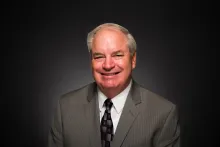
Robin Webber was born in Chicago, Illinois, in 1951, but has lived most of his life in California. He has been a part of the Church of God community since 1963. He attended Ambassador College in Pasadena from 1969-1973. He majored in theology and history.
Mr. Webber's interest remains in the study of history, socio-economics and literature. Over the years, he has offered his services to museums as a docent to share his enthusiasm and passions regarding these areas of expertise.
When time permits, he loves to go mountain biking on nearby ranch land and meet his wife as she hikes toward him.
