

Jorge de Campos
This transcript was generated by AI and may contain errors. It is provided to assist those who may not be able to listen to the message.
Well, we certainly want to say thank you very much to Liz and to Becky. We certainly appreciate that very, very beautiful music. Well, this afternoon, brethren, we are going to be continuing our series on God's will for the body of Christ. There is nothing more important that we can cover in understanding our Heavenly Father's desire for each and every one of us to be accepted and to be approved before Him and to come into His presence through the sacrifice of our Lord and Savior, Jesus Christ. And once that does occur, then to recognize that as God has done His part, then we respond in kind because of experiencing His grace and His revelation, that in that sense, humanly, by His Spirit in us or guiding us, should overwhelm us and guide us and lead us into a state of righteousness before Him. Let's begin by, again, going to Ephesians 1 for just a moment. We always want to start in the same spot because, again, God's will for the body of Christ is not a mystery. It is revealed before us. And we find it in Ephesians 1 and beginning in verse 9. Having made known to us the mystery of His will, that mystery not being like some secret note put in a treasure chest, put down seven feet behind your house, by the basement with a map. That's not what we're talking about. But it's an unveiling. It's a revelation to those that God opens their minds to, known to us to the mystery of His will, and it's according to His good pleasure, which He purposed in Himself. It begins, it moves through, and it continues to expand from God Almighty. It's not a God that we have to appease, but a God that has pleasure in sharing all that He has, in offering us a kingdom experience. And we're going to talk about that a little bit more today. And then notice what it says, that in the dispensation of the fullness of the times, He might gather together in one all things, all things in Christ, both which are in heaven and which are on earth in Him. It is God's desire that ultimately all might be approved, might be accepted before Him through Jesus Christ. That's His will. That's His desire. And that's why He gives us the book of Ephesians to understand what He is doing with what is called the body of Christ, the body of Christ, this spiritual organism that He is creating and continues to create and will continue to create for His glory and for His honor. He calls it different things in the book of Ephesians. Paul is inspired to use different metaphors. He speaks of the body of Christ having the opportunity to be citizens, to have citizenship in that kingdom. We have status. He speaks of the body of Christ as being brethren, of being family members. So He becomes very familiar, becomes very close, becomes very personal. So He speaks of us as being citizens. He speaks of us being a family in this body. And beyond that, in sharing the color of what this body of Christ is all about, He says that also that we have an opportunity to be a part of the temple that He is building.
That's fascinating in and of by itself. That as the body of Christ, not just a church here in Eagle Rock, not just a member of a church organization called the United Church of God, but a spiritual body, multicultural, multinational, multi-generational, that is honored, you and I, to have God's Spirit not only leading us, but being in us, and to understand what His will is for us to come together before Him and Jesus Christ. Now, in Ephesians, we've been talking a lot about God's purpose and what the body of Christ is and the purpose of Him designing it. Last time you were with me, let's please turn to Ephesians 4. We began to make a turn because now it was not only what God is doing, but because of what God is doing, we now respond to it. In Ephesians 4 and verse 1, I therefore, the prisoner of the Lord, beseech you, I implore you, I ask of you, I appeal to you, I the prisoner of the Lord beseech you to walk worthy of the calling, which you were called. He uses the metaphor of a walk because Christianity is not just taking an initial step, but it's a continuance. It's a pilgrimage. It's a journey towards the kingdom of God and eternity. It's not something that we just do in a day or an hour, in a moment, in a year, in a decade. It's a pilgrimage. He talks about it being a walk, but it's a different walk than where God discovered us. And God recognized what he was doing. He was calling people that had multi-languages, multicultural experiences, just the gamut, Jews and Gentiles, and bringing two people that were bitterly opposed to one another together in Christ. And he knew that they had to have a common purpose. And so the appeal that Paul begins with here, and appeals to you and to me today, is to have commonality of purpose. He speaks of each and every one of us to major in the majors and not to major in the minors. That's so often that people in church, brethren, call to the Father, embed it with the Spirit, striving to model the example of Christ, get caught in the majoring in the minors. Paul reminds us that we have one Father, we have one Lord, there is one Spirit, there is one calling, there is one hope, there is one baptism, and all of this is to unify us. And Paul puts forward this tremendous appeal, brethren, remember what it's about. Don't get caught in the minutia. You're a body, and to work together. And to do that, you'll have to remember what's important. That's where we were last time. That's what we discussed last time. The purpose of that is found and leads us then to Ephesians 4.
Ephesians 4, where the purpose is this in verse 13, "'Til we all come to the unity of faith, and of the knowledge of the Son of God, to a perfect man, not to a better self, not to a better self, as we come up to the New Testament Passover, we're reminded that Jesus didn't come to this earth to make good men better.
He came to deal with dead men walking, dead women walking, that were dead in their sins, that they might be alive before His Father and ours, to that perfect man, and to the measure of the stature of Jesus Christ.' With that said, are you ready to move on? Because now there's something else that God wants us to understand through the book of Ephesians so that you and I might better strive towards the will of God for the body of Christ. Ephesians 4 starts out with the aspect of unity of purpose. Unity of purpose. You might want to jot that down just so that we stay together because this is a class and we're talking. I think you know my style. I'll go from teaching to preaching and sometimes meddling with hearts. We'll do all of that in the next few minutes.
Now we go to verse 17. We pick up the thought where we want to be today. Are we all prepared?
We understand that to perform the will of God we must have a purpose and that purpose is unity.
Majoring in the majors that God puts before us, not that man puts before us. Now we come to verse 17. This I say therefore. There's another one of those therefores and whenever you see therefore in the Bible that means stop and pause because everything that's preceded before it now tells us we're about to take the next step. That there is a response from you and me that God desires.
Therefore, I say this and testify in the Lord that you should no longer walk. I'm going to hold it right there. We're going to talk about what that walk is in a moment. But notice there's a therefore and Paul kind of lays it down with with an authority. It is not his authority alone, but it is the authority in the Lord, the head of the body, the head of the body. And Jesus Christ is the head of the body. Then we ask that body are his arms to do his bidding. Our tongues are to do his talking and our legs are to do his walking here down on earth, not only to represent that kingdom, but to reflect its values.
That you should no longer walk as the rest of the Gentiles walk.
So now we're talking about two different walks. There was the walk where God found us and began to work with us, with his spirit leading us, as it says in Romans 8.14. And God in his mercy and by his grace took us out of the walk of the rest of humanity and said, now I want you to begin walking like my son, whom I sent to this earth, so that when he says, follow me, you'll know the footsteps. But now what Paul does, through the inspiration of the Spirit, is what is in the beauty of the Scripture that he offers a contrast. He reminds us where we were.
Are you with me? And then he's going to take us where he wants us to be, that preferred present and future for members of the body of Christ, that you no longer walk as the rest of the Gentiles walk. Now, this audience understood it in the sense of physical Gentiles, those that were apart from Israel.
I would like to broaden that concept and talk about spiritual Gentiles and talk about the world in general that was apart from God and didn't understand the law of God and the ways of God. So we're using a principle to where it was about the Gentiles, but we're going to use that and expand upon that because, frankly, brethren, all of us at one time or another have been apart from God until He began working with us. And notice what He says, this is where you were. You were in this walk and it was in the futility of their mind and having their understanding darken, being alienated from the life of God because of the ignorance that is in them and because of the blindness of their heart. Who being past feeling, and we're going to come to that, have given themselves over to lewdness, to work, all uncleanliness with greediness. The life application Bible puts it this way and maybe more familiar words that we can readily understand. With the Lord's authority, let me say this, live no longer as the ungodly do, for they are hopelessly confused. Their closed minds are full of darkness. They are far away from the life of God because they have shut their minds, hardened their hearts against Him. They don't care anymore. Don't care about right and wrong and they've given themselves over to immoral ways. Their lives are filled with all kinds of impurity and greed. Now again, when I read that last line, impurity and greed, let's remember something. The body of Christ has got to be united under two major points. You might want to jot this down and to begin a study on this. Number one is in commonality of purpose before the Father and before the Son. Commonality of purpose, that we're all moving in the same direction, hanging together, as we might say. The second thing is that we must have a commonality of purity. It's not enough just simply to be together. God is calling a pure bride unto His Son, being espoused to Jesus Christ as says the words of Paul. So it's not just commonality of purpose, it's commonality of purity and that's what we're going to be touching on today. And what is set up here in this contrast is simply this. This is where I found you. It says that you were walking in the futility of their mind. He's saying that the world that I found you in, you were concerned with empty things that don't really matter. Sounds like Solomon, sounds like the book of Ecclesiastes, a man who had it all. A thousand wives or whatever it was, 300 wives, 700 concubines, had an entire zoo of animals, had horse stables, had ports down there in the Red Sea, had this, had that. And he was like a hamster in a hamster cage on the wheel. A lot of time, a lot of energy, a lot of motion, a lot of activity, a lot of moving of bodies. But at the end he said, vanity of vanities. It's futile. It's accomplished nothing. What accomplishes things is obeying God, loving His commandments, keeping His ways.
But you and I don't have to wait till the end of our life to write that story.
God, through His Spirit, wants us to have that story written into us today, not on our deathbed, not because of us, but that we might glorify Him who is above. Feudal. And notice what it says, having their understanding darkened, minds that are in the shadows. And then notice where it goes next. It says, being alienated from the life of God, separated from God's purpose, separated from God's blessings, separated from even knowing that they are a creation, knowing that they're a creation, thinking that somehow the universe wound itself up by itself.
It reminds me of Sir Isaac Newton, who had tremendous historical appreciation for probably one of the greatest minds that ever was. And with all that he knew, with his limited technology, but with that great brain that he had 300 years ago, one day he was walking by a museum, kind of the planetarium, where you know the pendulum is going back and forth. I don't know if you've ever seen that, showing the rotation of the earth back and forth. And it was kind of knocking down those little dominoes that are set up as it goes back and forth, and back and forth. And somebody, Sir Isaac was walking by, and they said, well, well, Sir Isaac, what do you think about it?
And Sir Isaac just simply said, somebody had to give it a start.
And yet today, we live in a society, brethren, where that is diminished, where that is dismissed, that even when you hear the rhetoric that's on television today, that if you believe in a creator God, that if you don't believe in evolution, that somehow you're archaic. Somehow you are beyond the caveman. Somehow you're back there in the Middle Ages. Somehow you've lost your mind.
Alienate it. Alienate it from God, from the life of God, because of the ignorance that is in them, and then notice this because of the blindness of their heart. Now, blindness does not quite say it like it is. The word there is really a word. I'll write it down here for a second. I'm just going to give you two Greek words today. It's perousis. Perousis.
Same concept as paralysis. Same Greek root. That means hardened. That means petrified. That means fossilized. No longer alive, rigid, unable to bend, unable to move, unable to grow, unable to feel the warmth of the sun or the understanding of God's Word. They've been alienated from a God Almighty, wanted to give humanity at Eden. Their life's engine is shut down.
Who, being past feeling, have given themselves over the lewdness to work all uncleanliness with greediness. Who, being past feeling. The word here, perousis, pardon my Greek accent, perousis, is the same word that in a sense defines a callous, where you get a callous that is built up so much that finally you don't feel anything underneath. It gets toughened. It gets hardened. It is beyond feeling. This is a callous individual.
They don't even care anymore. They have abandon, the word given is a little light, they have abandoned themselves over the lewdness to work, and it is a work. You either work with the works of righteousness or you work with the works of this world. There's a contrast that Paul's sharing here with us, all uncleanliness with greediness. This abandonment, this uncleanliness, the uncleanliness that is being mentioned here is beyond hiding. No, maybe at first they began to sneak. Sneak this, sneak that, and you put in the rest of the blanks whatever people are sneaking and looking over their shoulder because they're almost embarrassed that they're doing it or scared that they're going to be caught. But what this is sharing is there comes a time that ultimately there is no shame at all. There is no shame. Shame is lost. Decency is forgotten.
This is the world that's around us today that you and I have been called to. This is modern-day America. This is Western civilization a la carte. It's on order. Just look at the television, all 500 stations. There is no shame. There is no decency.
And God's called us out of that.
What's your favorite show? Who's your favorite person?
To think about it. That everything is out there. It's worse than Sodom and Gomorrah. Because Sodom and Gomorrah was at least confined to a square mile on the Dead Sea.
Now you can tune in and have your personal Sodom and Gomorrah.
And some of those that have been called into the body of Christ and offered eternity and given the model of Jesus Christ and called not only have a commonality of purpose but a commonality of purity need to ask themselves, who am I? What am I? What walk am I on?
Am I going backwards? Or as I come up to this New Testament Passover, am I going forwards? It talks that there's this work of uncleanness with greediness. The greediness is unsatiable.
It's unsatiable. You can't fill it. Once you start down that line, you want more, you want more, you want more, you want more, you want more, do I dare to go on? I've been there, done that. You have, I have. We're all human beings. And God says, I'm rescuing you out of Egypt.
Egypt is something that was past, it is present, and it is in the future.
And the same one, the same I am that rescued Israel out of Egypt is rescuing you and I today out of modern-day Egypt, out of the slavery of human nature, out of the bondage of addiction, out of this cesspool, out of this humanism and this secularism. And you notice that sin has a slide. It doesn't just happen overnight. It's like the water that boils. It starts with, with a futility. Then it goes to a darkening. Then it goes to an alienation. Then it goes to an ignorance. Then it goes to a callousness where you just simply don't care anymore.
Now, as we're coming up to Passover, that may be your state today. Maybe there's a state in you that you have become callous. You have become perosis. And that's just Greek. Let's talk turkey.
Maybe there's come to a point where you no longer have that joy of salvation.
Ask God. Talk about word. Ask God during these days leading up to the spring festivals to restore to you the joy of His salvation, to help you wear down the calluses that have developed in the days and sometimes the years and sometimes the decades. And maybe we haven't even seen it coming on. And out of that neglect, it gets deeper and deeper and harder and harder. And then we are running on impulse. We're running on feeling. We're running on desire rather than on the calling that God Almighty has given us. Now, with all of that said then, let's go to verse 20. Now we have the contrast. This is where we were. This is where God wants us to go. This is the will because God never just says what not to do. He tells us what to do as well.
But you have not so learned Christ. But you, other commentaries or different translate, but as for you, or you, however, the focus comes down not to the entire body of Christ, this dynamic spiritual mosaic, but to each and every pile in peace that's within that mosaic. To those that are hearing these words today or reading these words in Ephesians, but as for you, you have not so learned Christ. If indeed you have heard Him and have been taught by Him as the truth is in Jesus. All of a sudden Paul opens up this metaphor, as it were, in a paragraph, that we're going to school. He talks about being taught. We're going to school. And God the Father has sent Jesus Christ to teach us. You have not so learned Christ. If indeed you have heard Him and have been taught by Him as the truth is in Jesus. What is interesting here is Paul is developing a sliding scale of growing in the grace of the knowledge of our Lord and Savior Jesus Christ. He says, you have heard Him. There were individuals, evangelists with a small e. There were teachers in that day that went about spreading and sharing the stories and the facts and the realities of the Gospel. So they had heard and it says, and have been taught by Him. How are we taught by Him? We're taught by His Word. When we open the Bible and specifically when we read the Gospels, Matthew, Mark, and Luke, and John, we might as well be in Capernaum. We might as well be in Bethsaida. We might as well be in Jerusalem. We might as well be on a hillside overlooking the Sea of Galilee. We might as well be in that synagogue of Nazareth as Jesus got up in Luke 14 and spoke about the day of Jubilee being fulfilled in Him. That we are personally being taught by Him. And then He says, as the truth is in Jesus. Now, let's look at that verse 20 for a moment because there's a name change here talking about the same individual, but there's a reason. Paul goes from speaking of Christ. Now he speaks of Jesus. Jesus is the historical name of the one that we worship. Yeshua, Jesus, Greek, salvation, Savior. He's speaking of the man in the flesh who lived perfectly, died in humility, raised in glory, ascended to heaven. The man who showed us how God would live on earth if He were a human being. And he says, and the truth is in Him. John 14 verse 6, I am the way, I am the truth, I am the light.
Truth was scarce in the Hellenic Romano world as much as it is today in the 21st century.
Now, let's understand before we go any further what's going to happen. We're being called to school. We're being told that Christianity is education in Christ, but you have not so learned Christ. So how do we then learn Christ? For this is the example that our Father has set before us. So we go to school. Now, let's understand something because the metaphors are going to move back and forth here first. So you have to stay with me. We've got an appointment. The bell has rung. God's Spirit has called us. God has called us above, led by the Spirit, accepted Jesus Christ as our Lord and Savior. We are now enrolled as members of the body of Christ, as citizens of the kingdom, as family members, and parts and pieces of that temple that is being assembled. When you go to school, or when you go to a wedding, or when you go to a funeral, or when you visit the President of the United States, or when you go to church, it used to be at least, you dressed up for the occasion. Sadly, you don't anymore. I'm so sorry sometimes, kids. I'm not dissing your whole generation. But I remember, some of you that are even older than I am, will remember that from sixth grade to seventh grade, sixth grade to seventh grade, you went from wearing Levi's that all of a sudden you went to school and you wore a dress shirt. You wore some nice pair of pants. You looked a little bit like you were growing up. And that just slouched in your TV room. You dressed for the occasion. You were being graduated to a higher level. You were going to be educated in something new. And this is what now this brings about when he says, you are in school and you are being tutored by none other than Jesus Christ. Now here's what you do. That you put off concerning your former conduct of the old man which grows corrupt according to the deceitful lust. And be renewed in the spirit of your mind and that you put on the new man which was created according to God in true righteousness and holiness. Here's what I want you to understand about the will of God for the body of Christ. That with this new society comes new clothes. Being enrolled in this new society, you now are asked, requested, required of none other than Jesus Christ and God the Father to put off and to put on something new that you might be able to walk the walk that is set before us. The Scottish commentator William Barkley even puts it even more bluntly. As members of the new society, there are things that are now banished. Oh, wow! Nobody's told me that recently.
I'm American. I'm going to hoist my flag. Don't tread on me. Nobody going to tell me what to do.
Have you ever noticed on cable television everybody talking over one another anymore? Nobody listening? Or am I? They're the only one. Let's not talk over one another in church.
Let's understand that God is talking to us through His holy written Word.
And He says that you and I have the privilege of being members of a new society, a new creation, family members, citizens of the kingdom, parts and pieces of the temple.
And as He reveals that to us, it's not by our works that were saved, but we now have a responsibility to respond to the instruction of God Almighty. He says there are certain things that are going to be banished in the former conduct, the former walk that you took, that old man which grows corrupt according to deceitful lust. And lust is deceitful. Lust is deceitful, whether it's mental, whether it's emotional, whether it's physical, whether it's after monetary gain or sexual gain. It's deceitful. It plays games with your mind and your heart. Deceitful lust, it's like, remember George Bush, fuzzy math. Deceitful lust is like fuzzy math. Deceitful lust tells you that one plus one equals two when what you're doing is one plus blank equals three. It doesn't match up. As was spoken so many years ago across the soroyal by an elderly man in Pasadena, for every cause there is an effect.
Our bodies can't outrun our shadows. And do I dare say we've all tried that game? It doesn't work, either physically or spiritually. Lust is deceitful. It is not a part of God's new society.
Now Paul comes down hard there, but then he says, but be renewed in the spirit of your mind. And then you put on this new man which was created according to God in true righteousness and holiness. The word there, renewed out of the Greek, means to make young your mind. Make young your mind. Make it young. Make it fresh. Make it active. God's done something with us. We're no longer of the world. We're no longer in that old walk. This young mind or this new mind, it's not new and improved. It's not in a long list of evolution of going from a Peking man to Neanderthal man to Cro-Magnon man. We're not talking about evolution. We're talking about what God is doing. That creation is still in process. That creation did not end in the garden. That's why God gave us the seventh day to remind us that the process of God's creative implements are still occurring, but it's of the Spirit now. Notice what it says. Be renewed in the Spirit. Not renewed in the mind, not renewed by simply your judgment or perception or your mental acumen, but your Spirit, the engine of your life, your heart, your motivation, that you are no longer bent towards the world, but now we're bent towards God. This is what Ward was telling us about in the message. We're going to sin. We're going to continue to falter. We're going to stumble as Christians. As I mentioned a couple weeks ago, it's like the little kid asked the mom, Mama, I've got a question for you. What's that, kid? No. What's that? And he said, well, well, well, well, Mama, if you sin after baptism, then why get baptized at all? Mother thought about it for a moment, said, here it is, sonny. Before baptism, I was running toward sin. After baptism, I'm running away from sin, but I'm still going to stumble. I'm still going to falter. But I'm going to understand, as we understand, as we come up to the New Covenant Passover, that when we come, that when we have accepted the life and the death and the resurrection of Jesus Christ and asked for that atoning blood to cover us, that, brethren, we are approved. We are accepted. And as we come before our Father in His Son's name, we literally enter the presence of God Almighty, God the Father, Abba, Father. And when we say in Jesus' name, we recognize that our Savior is at His right hand, our high priest is at our right hand, and that our high priest makes intercession for us, having been in this flesh, knowing the infirmities of the flesh, knowing the pools of the flesh. And yet in all things the book of Hebrews says, being obedient in that walk, in that mission that His Father set before Him, to enable Him to be there and to share with Him what you and I are going through, renewed in the Spirit, that you put on the new man. We put off, we put on. And what a wonderful thought, brethren, as we come up, you know, this time when we talk about the New Testament, but recognizing the antecedents of the Old Testament, recognizing that Israel was called out of the, out of Egypt. They were called off the mud banks of the Nile, and they were given glorious liberty. They who were a people, not a people, but a conglomeration of families and tribes. And God said, I'm going to be your God, and you are going to be my people.
And I'm going to take you out of the Nile, and I'm going to make a way across that Red Sea. And I'm going to put you in the middle of civilization to be a light, to honor me, so that people might say, oh, what people have such a great God? What have such wonderful promises? But He also made a very specific statement to ancient Israel that when you go into the land, you will put on a new way of being.
It will be a new walk. You will have new clothes. I will continue to educate you. I will be your people. You will be my people, and I will be your God. But there's one thing that you have to do. You have to put away the idols. You have to tear down the idols that are in the land. You have to rid yourself of those idols. You must go up to the high places and tear those things down that do not honor Me. Clothe yourself with Me. Clothe yourself with the Ten Commandments.
Clothe yourself with the statutes and the judgments. Now, that was for ancient Israel. Today, we're spiritual Israel. And that law is written in our hearts and our minds as we were discussing in the Bible study before church. And thus, we must do it not only by the letter, but in the Spirit. And that's why I appeal to you to listen to the rest of this now as we move forward. Therefore, now we get to the nitty-gritty and what we are to learn from Christ and to put off and to put on.
Because it says that we are to put on true righteousness and holiness. That holiness, in contrast to what we read about the walk of the world that is alienated from God and darkened in their minds and greedy. Contrast. What we're going to find as we go through this, because it says that God is creating according to God in true righteousness and holiness. Now, I want to share something with some of you that were not here before. Notice that verse.
It says that God is created. He's creating. We can even use that in a progressive tense. Creation is not over. I don't know how much I can get this across to you, dear brethren. We're not, we just have not joined a church. We just haven't joined another group with do's and don'ts. We haven't just joined some social society. As members of the body of Christ, as members of the body of Christ, God is creating.
And He's establishing and placing within us His righteousness in such a way that it said, as we covered before, that even the angels marvel, the angels marvel and begin to get what God has been doing from the beginning. Is that not a privilege? Does that not just set you on fire and thrill you and motivate your life of what God Almighty has chosen to do with us?
So therefore, this is what He says, because sometimes you can talk about righteousness or holiness and it can kind of sound ethereal or mystical. In each of what I'm about to bring about, the holiness that is spoken about is not mystical. It's not just performed in the vacuum. Holiness deals with people, deals with relationships. What we're going to find in this small list is that we're not only told what to do away with and put off, but also now what to put on as members of the body of Christ.
Verse 25, therefore, putting away lying, each one of you speak truth with his neighbor, for we are members of one another. The first aspect of putting off and thus putting on is very simple. You might want to jot it down. Don't lie. Tell the truth. Don't lie. Tell the truth. The followers of Jesus Christ should be known in our church community and in our neighborhood community and in our family community as honest and reliable people whose word can be trusted.
As we look at verse 21 again, it speaks of Jesus, who is our tutor, who is our instructor. It says, as the truth is in Jesus. That's why Christians don't swear. That's why Christians don't swear. It is taken for granted that a Christian will affirm and tell the truth. You don't have to swear on your grandfather's beard.
You don't have to swear on your grandma's best recipe that she's never given the rest of the family. Christians are to be transparent. Christians are to be pure, coming from pure motives. For we are members of one another. It's interesting that Paul draws back to this analogy of the body of Christ, that for us to tell a mistruth and untruth a lie is like stabbing one another in the body of Christ. Very practical. Dear friends of Los Angeles, as we come up to the Lord's table, this Passover, what have we been putting off? What have we been putting on?
Can God the Father look down from His throne and say, oh, I am so pleased and you fill in your name.
They are growing in the fullness and maturity of my Son, Jesus Christ, in whom is the way, is the walk, is the truth, in whom is no darkness, but only light. Be angry and do not sin. Do not let the sun go down on your wrath, nor give place to the devil. The first step is don't lie. Tell the truth. The second step is simply this. Understand Christian anger. Too often we are angry for all of the wrong reasons. Too often we're angry for all the wrong reasons because it's anchored to self. Have you ever noticed? It's not about concern about the other person, but because we've been embarrassed, our pride has been hurt, our pride has been dismantled, where we've been felt left out of the game of life, and therefore we get angry. So often, hear me please, we are angry for all the wrong reasons.
Often, though, we are not angry for all of the right reasons. And I think, more than not, this is what the Apostle Paul is talking about here, that as members of the body of Christ, as members of this new society, as people that have put off the high places and the idols of old and the walk of old, and now have been revealed what God wants to do for both all that are in heaven and in earth to come through Jesus Christ, and then to see it dismantled by darkness or ignorance or alienation or deceitful lust, the world around us. I get angry just looking at America today, a nation that talks about in God we trust, and then I see how we dismantle one another as a nation.
I turn on the boob tube. It's a good name for it.
And I say, this is what America has come to.
This is Sodom. This is Gomorrah. This is craziness. This is confusion.
This is illicit. This is nothing that we would have ever thought of 50 or 60 years ago in this land of the brave and the whole thing about America, the land of the free and the home of the brave, and in whose coin set in God we trust.
Today, it's in the buck that we trust. It's in sex that we trust. It's in commercials that we trust. It's in allowing people to come into our homes that our grandmothers and our mothers never would have allowed off the street with their language and their crudeness and their crassness and their non-understanding of sex to be confined to marriage and in marriage.
And yet sometimes we can say, well, I'm bigger than that. I am so mature. I've been around. That doesn't bother me anymore. I can handle that. Fui! Fui! That's Greek for fui. That's callousness. That's blindness. That's hardness.
That's not dealing up straight and real. Come back when we go through Ephesians 5 about not having any partaking with those that are in darkness. We'll be getting there. I don't know where in this series, but we'll be getting there. Sometimes we're not angry enough. Angry that causes us then to recognize that it's only by God's grace that he's called us out of the society to be a light, to be an example, to give him honor. To give him honor. To be a light, to be a reflection of what possibly can be.
And over the years, two of our granddaughters here on the second row, when their mothers' friends and their aunts' friends used to come over to our house, and again, Susan and I are not perfect. You already know that, but confession is good for the soul. But kids would come over and they'd say, this is a time warp. This is like leave it to Beaver, to beave. This is like the Partridge family.
What's on television? How I as a man treat Susan. The language that is used, the lack of crassness, the gentility of speech, the honoring of one another as family members. I can get angry about that because I would like everybody to have in that sense imperfectly, imperfectly, you can ask Susan later, imperfectly what we strive to do as members of the body of Christ. Therefore, we notice if God hates sin, we are to be angry over sin. Now, it's noteworthy in relationship and understanding our role in the new society is simply this. At some point, too, we need to recognize our natures. There's kind of a closeness between righteous anger and self-anger, and we need to understand that. That's why when you see the three points in here, notice, do not let the sun go down on your wrath, nor give place to the devil, and don't sin. Number one, it says, do not sin. So therefore, we have to ask if we are angry, what is our motivation?
What's turning our cork? Number two, it says, don't allow the sun to go down on it.
Anger is an alarm emotion. I'm sure all of us have an alarm or those famous alarms that we used to have back in the 50s or 60s, you know, alarms serve a purpose, don't they? But would you want to listen to your alarm clock all day long? No, when it's served its purpose and it's woken you up, you shut it off. Anger is an alarm emotion, good or bad? It's an alarm emotion, and there comes a point where you have to shut it off. It's served its purpose. Then you have to construct beyond that. Number three, it says, don't give place to the devil. There is a fine line, again, between godly anger, righteous anger, and human anger.
Satan can use anger if it's not used correctly because Satan himself is an angry spiritual being. Let's go a little bit further here. It says, let him who steal no longer, but rather let him labor, working with his hands what is good, that he may have something to give him who has need. It says, don't be a thief, either actively or passively. Sometimes it's not what you have taken, but it's what you're not giving. Just like when we're talking about lying, sometimes it's not what you've said, it's what you've held back and not said. But notice the whole motivation here. It's thinking about others. The Spirit through Paul says here, don't steal any longer, but rather let him labor. See, God's Spirit does not work in a vacuum. Satan does.
God's Spirit does not work in a vacuum. And beyond that, notice something. And I was reading this this morning, I thought, wow, how far we've gone from the basic Judeo-Christian principles of what made this country, the United States, great, working with his hands what is good, that he may have something to give him who has need. It seems today in America, everybody just simply wants for themselves. They're thinking of their entitlement. They're thinking of what is in it for me, rather than as I work industriously, as I give my being, as I give my all on the job, that then I might be able to help the next person over, be they in the body of Christ, or be they my family member, or be they my neighbor. You see how different the walks are and why we have to put off the other one? And to recognize that in this society, it's like water when you're in a bathtub. It just slowly begins to work with your skin till you look like a prune.
Just begins to mold and to shape you. Brethren, that's the challenge. That's the opportunity that you and I have to stand tall as members of this new society. Can't do it by ourselves. We need the Father's love. We need the example of Jesus Christ. We need the indwelling of the Holy Spirit to guide us and to lead us. Notice what it says, and let no corrupt word proceed out of your mouth, but what is good for necessary edification that it may impart grace to the hearers.
Oh my! When I think of today, when I turn on the radio, I turn on the television, when I hear people talk, even people that are older than I that were taught better back in the 30s or the 40s, and I hear what's out of their mouth. Their crassness, their coarseness, it troubles me. It pains me to recognize the degeneration of the society that is around us. Brethren, the reason I am saying this, please understand, is because after services today, you as members of the new society, as members of the body of Christ that have received God's grace, have received God's calling, have accepted Jesus Christ's sacrifice, and have the indwelling of God's Spirit in us, we're walking back out there in just a few minutes. That's the world we're in. So we have to be invigorated to know what God expects of us, that we might model our elder brother, Jesus Christ, and walk that walk and follow those footsteps and drop our nets. And when he says, follow me, understand that means we have to give up our old clothes and put on the new clothes and the new mantle of Jesus Christ, our Lord and Savior. Let's finish up here. Let's notice what it says. And do not grieve the Holy Spirit of God by whom you were sealed for that day of redemption. When we don't understand the full privilege of being members of the body of Christ, when we do and we don't intellectually, but then we don't live the life and the death and the resurrection of Jesus Christ as the molding force in our life, it grieves God's Holy Spirit in us. It grieves it. 1st Thessalonians 5, 19 says that we can quench the Spirit. Remember Jesus, that when he was on the banks of the Galilee, I believe he was in Capernaum, it says that he went into the village. I think it was Capernaum. You can correct me later if it's not. And it says that he went into that village. And what happened when he was in that village? It says that he could not do many mighty works. Why?
Because they did not believe. I have a question for you this afternoon. And it's a question that you have to ask as you come up to the Passover 2012. And that is simply this. It's a question that Jesus Christ asked every disciple and every follower and every would-be member of the body of Christ that new society which are citizens of the kingdom, family members, and pieces of that temple that he's building. And he asked just one question simply this. Who do you say that I am?
When we partake of that bread and when we partake of that wine on Passover evening, that will be your answer.
That will be your answer.
To start with.
The rest of the story then is what walk you will walk after you partake of that bread.
And you partake of that wine. And you wash one another's feet. Because talk is cheap. And as members of the body of Christ, this way of life, it starts with a commitment. And we're going to see that this afternoon with baptism. But then it is a commitment day by day, person by person, activity by activity that comes your way. And you recognize as a member of the body of Christ, this new creation, members of this new and beautiful and glorious society created to the honor of God are to rise higher than that which comes your way. Notice what we're going to do. Notice what it says. Let all bitterness, wrath, anger, clamor, and evil speaking be put away, banished, as our Scottish friend would say, banished, pulled down like Israel was to do with the idols of old, banished, pulled down, tossed away from you, and throw away malice while you're at it. Now notice the contrast as we conclude. And be kind to one another, tenderhearted, forgiving one another, even as Christ and God in Christ forgave you. I'm going to finish with this one word, and it's simply this. I've got to spell it out here.
It's going to look long and complicated, and then it's going to get real simple.
C-A. You can write this down if you want to. This will keep you awake for the last minute of the sermon. Charis, so, monoi. Now you might notice this, Charis, you automatically might know a little Greek. That's about gifts. Charis, or charity. Simply this. The word they're forgiving comes from the word charisominoi. Let's jot this down. Let's make this our homework. Let's make this our heart work for this coming week. Monday, Tuesday, Wednesday, Thursday, Friday. That means acting in grace. Acting in grace. Acting in grace. Not acting in anger. Not acting in words. Not acting in lying. Not acting in stealing. Not acting in crisis. Not acting in futility. Not acting in deceitful lust. But responding to the revelation that God has given us. That all things on heaven and earth are to come together through His Son Jesus Christ. As God in Christ, and remembering what Christ did as we come up to that Passover, forgave you. This is going to be cardinal as we begin to now develop and deal with other relationships in Ephesians. Member to member. Husbands to wives. Parents to adult children. Parents to younger children. Employers to employees. All hinges on the verse that we just talked about. As God forgave you in Christ. And so we today in the United Church of God have not so learned Christ as those that did not. But we've heard directly about the teachings of Christ today as we continue to explore the will of God for the body of Christ.
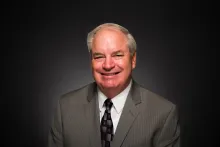
Robin Webber was born in Chicago, Illinois, in 1951, but has lived most of his life in California. He has been a part of the Church of God community since 1963. He attended Ambassador College in Pasadena from 1969-1973. He majored in theology and history.
Mr. Webber's interest remains in the study of history, socio-economics and literature. Over the years, he has offered his services to museums as a docent to share his enthusiasm and passions regarding these areas of expertise.
When time permits, he loves to go mountain biking on nearby ranch land and meet his wife as she hikes toward him.
