

Robin S Webber
This transcript was generated by AI and may contain errors. It is provided to assist those who may not be able to listen to the message.
We're here to speak about this day and what it represents and what it means to all of us, but not only what it represents, but our part in this, the Festival of Pentecost. Pentecost is often described as the birth of the church. It's the day that Christ promised that a helper would come, as we heard in the first message, would actually come about. And what an incredible difference that helper would make. In fact, it would make all the difference in the world.
Luke, the physician, Dr. Luke, who wrote both the Gospel of Luke and the book of Acts, mentions the Holy Spirit more than any of the authors in the New Testament. You know that doctors, what they do, other than charging you for their services and practice on you, is they observe and they make a diagnosis. And that's what Dr. Luke did as he saw the church of antiquity. He knew the past about these individuals. He knew what they had been like. Well, he had heard the stories, but then he noticed a difference in these men and these women, and he diagnosed it with one element.
And that was the difference that the Holy Spirit made from those that he recorded in the book of Luke to those that he told us about in the book of Acts. In fact, the Holy Spirit is mentioned about 54 to 60 times in both the book of Luke and the book of Acts, because in Luke's mind, it is indeed what made the entire difference.
This momentous festival allows us to consider some elements of what the Holy Spirit is about, and indeed, what is the church? In other words, Pentecost, we often say, is the birthday of the church. But what was given birth? I'd like to share a few questions to bring you into the message, and we will try to answer them in the course of this message. But here's a few that I'd like to just throw out, and if you want to take a few notes, that's fine, because I do hope that this will be a note-taker's paradise, and to give you some thoughts along the way.
Number one, just what is the church? What is the church? We often talk about the church. So what is the church? What was given birth, and in whom? What is the role of the Spirit? What is our role that I will be centering on in the later portion of this message? And why does God even allow us to participate in the matters of the Spirit, to enter in this realm of this interaction of His Spirit interlinking with our Spirit?
And thus, what is the fruit? What is the product of that? Let's begin this message by laying a foundation and focus on Jesus' declaration, found over in Matthew 16. If you'll join me there, please, let's open up our Bibles. That's why we're here today on the high day to hear and to read together the Word of God. In Matthew 16, verse 15, it says, And he, speaking of Jesus, said to them, But who do you say that I am?
And Simon Peter answered and said, You are the Christ, the Son of the living God. And Jesus answered and said, And blessed are you, Simon Barjona, for flesh and blood is not revealed this to you, but my Father who is in heaven. And I also say to you that you are Peter, and on this rock, notice, I will build my church, and the gates of the grave shall not prevail against it. Very interesting that if Jesus were just a good man, or if Jesus was just a prophet, how could he say that this would be my church? And use that personal pronoun that in your Bible is in a capital letter of my.
Let's notice a few things about this scripture, and then we're going to build upon it. There's a lot that comes just out of the scripture. Number one, there's a declaration, and or let's call it a proclamation. He says, I, speaking of Jesus, will build my church. It's a proclamation. Number two, there's a promise that even the gates of death, nothing will hold it. Nothing will hold it down, that it is an assurity, and that we can have confidence in that.
It's also a promise. It's also a promise, and it's a promise that's based upon a premise. That's where you and I come in, that we will utilize the Spirit of God, that we will understand what that means when Jesus says that I will build my church. So with that stated, allow me to give you the title of my message today, and it is simply this, allowing Christ to build my church in me. Allowing Christ to build my church, speaking of him, in me. What is our part? We know what Christ is doing, but what is our part, and what is being accomplished down here below?
Now, a lot of us over the years oftentimes hear a phrase, and it's called, are you ready? It's called the church. Have any of you ever used that phrase? The church. We often use that when we talk about the church, but we're all going to understand today what is the church and what it is composed of. Let's understand when we talk about the church. Many, many organizations use this word to describe their religious entity.
This may surprise you, but most churches think that they are the church, and they're not keeping Pentecost today, and they keep another day of worship for their weekly worship day. They also call themselves the church. We ourselves often use the term as well. We that are members of the United Church of God will often talk about the church, and, or at times, we'll use a wider group commonly called the church of God community, of which we have a shared past and which we have certain shared doctrines and teachings. But is this the biblical definition of the word the church? Until about approximately 250 A.D., the church was not defined by a building. It was not defined by an organization, or even a prescribed organizational orthodoxy of creed. That would come about around 250 A.D. as a group of individuals came together and became more and more, do I dare say, romanized.
Religious buildings began to be built on the pattern of the Roman model, basilicas, cathedrals, Romanesque in style, and much more so in the church government, romanesque and organized. But the church, the church that Jesus is building, is different. It was simply put this way, they were men and women that belonged to God and gave their lives to Him on a daily basis. All of it. They were totally in. And sometimes they gave their life, their last full measure of devotion, because they realized that Jesus Christ was building my church, His church, in them.
Let's talk about this for a moment. This is a profound understanding that I first came to as well. I talked to somebody here that was in the San Diego church when I first came amongst the church of God back in 1963. I came from a church that was a beautiful edifice. At least I thought it was at age 11 until I learned more about religious edifices. It was a beautiful, beautiful church. It had beautiful, beautiful plush carpet. It had beautiful, beautiful stained windows with all of the light coming into it. And we had a pastor who, for those of you that are older, remember Johnny Carson? Howard, you're starting to date yourself. But for those of you that are older that remember Orson Welles, this guy, our pastor, looked just like Orson Welles when he was still looking good. A younger version of Orson Welles, and with the voice, and with the girth, and with just the persona. But then I came to church in San Diego, California, later on Long Beach, California. And what was very interesting is it didn't look like the church that I had been called out of. There was no plush carpet. There were no stained glass windows. There was linoleum on the floor, and it was very hard and a little scratched. There were no pews that were made out of wood. It was all those old gray metal chairs. And it was the first time I ever heard piano used in a church, because we're used to an organ that's just filled the entire building.
But I learned something very profound there, brethren, that I share with you today. I came to understand that the people of God, those that Jesus is building my church in, do not go to church. They are the church. They are the church. They are the living flesh and blood, timber. Of what God is developing and building. Yes, we can go to the story of Eden, and we recognize that there's a physical creation. But now God the Father, through Jesus Christ, is focused on a different creation, a spiritual creation. And it is His church. It is the body of Christ. And those men and women, not only of yore and yesterday, but those that are giving their life every day, recognizing that wherever they are, whether they're in Mexico—I see Alan Pattier, or whether we're in the past up in Banning or Beaumont or Cabazon, or whether we're down in San Diego, whether down in Chula Vista, whether out in La Mesa or Lemon Grove—that wherever you are, you are the church.
You say, well, Mr. Weber, how can you say that? Thank you for asking that question. Allow me to bring you into concept of what God is doing with the church. Those men of yesterday and why you are here today is you recognize that—about Christ's statement—that you have been given a calling. Join me if you would in John 6, verse 44. We're going to build to a thought. In John 6, in verse 44, join me, please. And we notice something very special in verse 44. Jesus speaking, no one can come to me unless the Father who sent me draws him. And notice Jesus speaking of himself, and I will raise him up at the last day. Now, you can also see that duplicated in John 6, verse 65. Normally, when God says something once, it's pretty important. When he says it twice, it's very important. So, brethren, we want to recognize something. We do not join the church, the one that Jesus is building, the one that the Father is calling us to, because it's a calling. It's an invitation to us in this day and this age. Now, you may join a fraternal order. You may join a... you could join Temecia, Temecu Country Club, but you don't join the church. We are invited. It is an invitation. It is a... brethren, it is a miracle, as much as the day of Pentecost, 31 A.D., that God begins to work with our mind, as Joel brought out in the first message, where it is not conformed to this age, to this world, but begins to become transformed for, as it says in Romans, it says, for as many as are led by the Spirit. The same are the sons of God.
Brethren, we are, frankly, to put it bluntly, by God's grace, by His favor. We are a walking and talking miracle, and that by His great love, He has placed Himself inside of us. So we come to understand that we have a calling, and those that are called and receive and accept it, they become the church. But let's understand the church is not a building. It's not even an organization in that sense, even though God, down through the ages, has used instruments, instruments like the United Church of God, to teach His people, to bring them together, and to serve them. But to recognize the very word church, you might want to jot this down, because some of you have not been at a Pentecost service for many a year, and we want to welcome you back, or you do not hear this on a regular basis. The word church is ecclesia. That's where the term ecclesiastical comes from, ecclesia. That means those that are called out. Those are ones that are, well, just simply this, the called out ones. Christ also had a term for them. Join me if you would in John 8, 31. In John 8 and verse 31, let's notice the Word of God here, what Jesus called those that were following Him at that time that responded to Him when He said, Gentlemen, follow Me. And we notice this in John 8 and verse 31, where it says simply this, then Jesus said to those Jews who did believe Him, if you abide in My word, you are My disciples, indeed. And you shall know the truth, that is, if you abide in the Word, and the truth shall make you free. The early followers of Jesus were known as disciples. That's a Greek word that just simply means those that are learners, those that are seeking to be more than when God first called them, and now they are abiding in this way. Not only that, but join me if you would for a moment. Let's go over to Acts 9.
In Acts 9, and let's pick up the thought if we could in verse 1.
Again, let's remember the concept of the church being a building or an organization is something that came much later, around 250 AD, later on even further crystallized by Constantine when he proclaimed that Christianity would be part and parcel with the pagan societies of the Roman Empire at that time. But notice how these individuals spoke about themselves. We go to the book of Acts to gain our roots and to understand them. In Acts 9 and verse 1, then Saul, later Paul, still breathing threats and murder against the disciples of the Lord, went to the high priest and asked letters from him to the synagogues of Damascus so that he found that if any were of the way, whether men or women, he might bring them bound to Jerusalem. Any that were of the way. Now let's put some words together. Words together. Ecclesia, disciples, and those that were called out and those that were learning began to develop and follow in what was called the way. Many of you were not able to go to Ambassador College. I was able to, some of you were, but one thing that was hammered home long ago and far away was simply this. I always remember first-year Bible, Mr. Roderick Meredith, who was our our teacher at that time, that he went through the book of Acts and he said the early church were those that were in the way. And actually the term the way is actually mentioned eight to nine different times in the book of Acts itself. Why does it say the way? Let's talk about that for a moment and understand it. Simply this. The way is a scripture. It's a metaphor. Excuse me. When the Bible speaks about a way, it's speaking about a course. It's speaking about a path. It speaks about, frankly, as the famous book, it speaks about the road less traveled because you have made a decision to respond to the calling of God the Father and follow Jesus Christ. And again, remembering what John 14 and verse 6 says, Jesus' self-disclosure about himself, I am the way. I am the way. I am the truth. I am the life. And he was building on something that we find throughout the Bible, this terminology of the way. The scriptures speak of the way of wisdom. The scriptures speak of the way of the ant. The scriptures speak of the way to her house. All of us that go a long way back, remembering the Feast of Tabernacles days gone by. How often did we hear the terminology out of Isaiah 30 and verse 21? This is the way. Walk you in it. I know somebody that wrote a column with that title for about 18 years. This is the way. Walk you in it. It's a different way. And that's why this is the Feast of Firstfruits because not everybody is... Did you notice that there was... I was thinking about this. I didn't tell Susan coming up today. I was saying, wouldn't it be nice if there was a nice long ant line going up the hill to the country club up here and have those ushers that we used to have up at Squall Valley with the orange gloves? Because it was going to be so crowded today that Mr. Sharp would be out there without his coat and take off his tie and be organizing everybody, and that everybody in Temecula and Muriata would be here today.
Well, I don't want to break it to you. They're not. But you're here. Why is that, brethren? Because you have responded to the calling of God. You have had the courage and you've had the fortitude and you've had the help of God's Spirit to lead you for as many as are led by the Spirit of God. The same are the sons of God. And you decided to go in a very unique way. I actually went in a unique way this morning. Susan went along for the ride with me, which she's been doing for 44 years, almost. That is simply this. I missed a turn-off. I was thinking I was going to San Diego today because I'm used to that way. When you go to San Diego, you go that way through the boulders, right? Through a rainbow of all places. And I thought, well, I'm just doing fine. Then I found out I wasn't in the way. I had to backtrack and come back two miles. The way is very distinct, and the way takes you to a very distinct and purposeful destination. And that's why Jesus said, I am the way. This is whom you are to follow through the tangles and through the brush of this lifetime. And so we noticed that, and that's why it was called the way. Now let's understand something else about our calling on this day and what the church is, and where the individual, where the relationships begin. Join me if you wouldn't in 1 Corinthians 12. In 1 Corinthians 12, and let's pick up the thought in verse 27. Now do not leave the next five minutes, because I'm going to start with something, but we're going to complete it with another thought.
Because we're going to understand that there is an individual responsibility of what God is doing in you today as you being a part of Jesus, my church. And he starts out with us individually. Um, but a Christian is never to live in an existence of isolation.
There's more than just ourselves, because it's never just simply about personal salvation. In 1 Corinthians 12 and verse 27, notice what it says, Now you are in the body of Christ and members individually.
Hmm. Very interesting. What does that mean to you and to me? It says that we are members individually.
But then it says that we're in the body of Christ, but wait a minute. I thought Jesus died and was buried and now has a glorified body and persona in heaven. We're not talking about a physical body. The body that is being spoken here is of the Spirit. It's a spiritual organism known but to God. Those whose hearts and minds have accepted that calling, have elected to be a disciple for the rest of their life, have chosen to be a part of the ecclesia and remain called out, and to abide in the words and the example of Jesus Christ. This is what we've been leading up to, and that we are called individually. Now, let's understand something. What does that mean? Let's make a thought out of it. And I realize there are some out here that are going to be probably baptized in the next couple of weeks, which is always a thrill. And that is simply this. You remember when you were baptized? Did the whole congregation go down into the water with you?
Maybe they did. Maybe they were nervous that the minister was going to hold you down too long, and it just came for a baptism, not a resurrection. But you remember that time, wherever you were, whether it was a stream, whether it was a trough in some deacon's basement, whether it was a pool in Bassett College or more and more in Southern California, we really like to use the jacuzzis. But wherever there is, quote-unquote, much water, you were baptized. And you went down alone, and you alone answered for yourself. And the minister looked you in the face and said simply this, have you repented of your sins? Yes. And have you accepted Jesus Christ as your personal Savior? Yes. You said yes. The minister then said, because you have repented of all of your sins, which is the breaking of God's holy and righteous law, and because you have accepted Jesus Christ as your Lord and your Master and your personal Savior, I'm therefore going to baptize you not into what? Any church, sect, creed, and or denomination of this world. But I'm going to baptize you in the name of the Father and of the Son and of the Holy Spirit for the remission of your sins. And you that are baptized said yes. That was not the end of the story. That was the beginning of the story. And then you were immersed in water, and then you had the laying on of hands of which the Holy Spirit comes by. You came to God individually. And from that moment forward, we remember what the words say in Philippians 2 and verse 12 to work out your salvation individually. But now, with that stated, let's understand something else here as we go to 1 Corinthians 12, 27. But now you are of the body. Now we come to God, we respond to His calling individually, and thank God you're continuing to respond to that calling by being here today. But let's see how this works down in Ephesians 2, because it defines more in Ephesians 2 why Jesus could say, my church, because somebody gave it to Him. In Ephesians 2, join me if you would there, and let's pick up the thought on Ephesians 2, 15.
Therefore, I also, after I heard of your faith in the Lord Jesus and your love for all of the saints, it doesn't sound very individual. There's something that is going out, outflowing, and outgoing concern. Do not cease to give thanks for you, making mention of you in my prayers that the God of our Lord Jesus Christ, the Father of glory, may give to you, notice, the Spirit of wisdom and revelation in the knowledge of Him, and that the eyes of your understanding be enlightened, that you may know what is the hope of His calling. It is God the Father that holds that prerogative, brethren, to Himself. He is the great sire of the universe. We are His children, but we come to Him through Jesus Christ. And what are the riches of the glory of His inheritance in the saints? And what is the exceeding greatness of His power towards us who believe, according to working of His mighty power, which was described in the first message, which is the power and the indwelling of the Holy Spirit, which He worked in Christ, which He raised from the dead, and seated Him at His right hand of the heavenly places, far above all principality, in power and might, and to the dominion, and every name that is named, not only in this age, but also in that which is to come. Verse 22, And He put all things under His feet, speaking of Jesus the Christ, and gave Him to be ahead over all things to the church, to the ecclesia, to the disciples, to those that understand that the way is more than coming up or down the 15 on a Sunday morning, but is a lifetime journey, every minute, every moment, every hour, every person, every need, every deed, that we enact, that we are in that way. Notice. And that is why He put all things He's the head. And that's why Jesus said, I will build my church. Why? Because God the Father has given it over to Him, this spiritual creation. Not a physical creation, but a spiritual creation.
It's a wonderment. It's a wonderment. And that's why the Sabbath always points beyond just simply looking back to Eden as a day of creation. But what God has yet to do, and not only with you and me, this is just the firstfruits, but one day with His entire world, which is His body, the fullness of Him who fits all in all. Now, the church, the church, the ecclesia are His body.
And Jesus said, I will build my church. We understand what the church is now, our individual role, and that now He integrates us into the lives, into the hearts of others. Sometimes that we don't even know, but that we pray for. This morning, Jesus, Susan is not Jesus. Yeah, no, is that we prayed that God would bless all of those that are in the body of Christ today. God, you know who are yours. You know their names. You know their hearts. You know their being. Bless them and encourage them on this, your holy festival. God knows who's in His body because God is spirit. Now, when we look at this and the big question is this, what is God building through Christ? And we just need to find this out if you join me over in Ephesians 2. What is He building? Why are we going through this again? Pentecost is what we call the birth of the church as we know it. And Jesus said, I will build my church. So what has God the Father commissioned Christ to build? What does it look like? Will we be able to recognize it? How do we integrate into it individually and do our part? In Ephesians 2 verse 17, and He came and preached peace to you who were far off and in those who are near. For through Him we both have access, notice, by one Spirit to the Father. Today I was talking to a couple of ladies out here and I said, you know, we all have different mothers, but we have a common Father. It's God the Father. We all come from different backgrounds, but we have a common Father and we have the Spirit of the Father and the Son residing in us. Now therefore, you are no longer strangers and foreigners, but fellow citizens with the saints and members of the household of God. Having been built on the foundation of the apostles and the prophets, Jesus Christ Himself being the chief cornerstone, to whom the whole building, being fitly noticed, fitted together, grows into a holy temple in the Lord, in whom you are also being built together. Not individually, we are called individually and we have individual responsibility, which I'm going to be getting to later. But notice what it says here, for a dwelling place of God and the Spirit. Let's break this down just for a moment. Number one, what God is building, He is building a kingdom and He is creating a citizenry for that kingdom.
And that's important to understand when we look at here, and it says you are no longer strangers, you're no longer foreigners. What God is basically saying here through Paul, simply this, you just don't have a passport, you just don't have a green card, you don't have to be looking over your shoulder if your visa has lapsed. And they come by and say, bye-bye, and send you home on a jet or take you over the border.
What Paul is being inspired, brethren, and I share this with great joy with you today, we belong to God. He already looks at us as citizens of His kingdom. Just you might want to jot this down, look at it later, Philippians 3, verse 20, where He says that our citizenship is in heaven. That's where we look to. Very interesting, we look at the book of Philippians, Philippians, Philippi, from which Philippians comes from, was basically loaded with Roman citizenry after the great Macedonian war. And it became a colony for retired Roman personnel. And they were given all the rights of a Roman. So when it says your citizenship is in heaven, they didn't look at themselves as Greeks, but they looked, even though they resided in Macedonia in the sense of Philippi, they considered themselves Romans. That was their first allegiance. That's the background of being a citizen. We have dual citizenship. We are doubly, deeply proud of being Americans, we that are. But our ultimate citizenship is in heaven. Number two, He says that we are the household of faith. We are a family. We are a family. He speaks of an intimacy that the religions of antiquity did not have. How do you become family with an idol of wood or ivory? How do you do that? You go up and rub up against it and hope that something happens? No. No. God's called us to be a family. He's building a household, but not only a structure, but a home. I came in today, I just told Susan this morning, I'm just so glad to be amongst all of you today. I just feel at home. I feel the Spirit of God here residing. It's a beautiful thing when we come amongst Redlands and San Diego. And while individually we are San Diego, or individually we are Redlands, when we come together, can I tell you something, brethren? We all need one another. We are at home. And in a home not just based upon filly, but of an agape of outflowing and outgoing concern for one another. Even when we have our differences, even when we have our challenges when we come together, nothing holds us back as the people of God. Nothing holds us back as disciples of Jesus Christ. Nothing holds us back as members of the ecclesia. Oh, sure, we'll have our flare-up. Sure, we'll have our problems. Sure, we'll look down the aisle and say, what are they doing here? And if you said that today. But Jesus Christ died for each and every one of us. And all of us have responded to the calling of the Father. And you notice what it says here at the bottom? It says, in which he is developing a holy temple. Brethren, this is the most important thing that I think we as members of the Church of God have got to understand today. And Joel alluded to that in his fine message. God resides in us. We no longer in that sense have got to go up to the mountain like Moses did to find God. God has come into us by the indwelling of his Spirit. The Spirit of God is not just a screwdriver. It's not a hammer. It's not a pair of pliers. When God says that he's developing a holy temple, if you go back to the Solomonic Temple, that had the Shekinah presence in it. God dwelt in that temple and or would visit in that temple. Now, you say, well, Mr. Weber, how can you say that? Well, 1 Corinthians 3, 16 tells us Paul, as I've tried to for years now, says, don't you know that you are indeed the temple of God? God resides in his temple. You say, how can you say that, Mr. Weber? Join me if you would in Romans 8 for a moment. In Romans 8.
Let's pick up the thought here.
In Romans 8, verse 8, So then those who are in the flesh cannot please God, but you are not in the flesh, but in the spirit. And brethren, Pentecost comes around once a year to remind us that we are to be in the spirit, in the spirit, and if indeed the spirit of God dwells in you, not around you, not up on the mountain, not awaiting like the disciples did in Jerusalem, was proper and they followed the commands of Jesus, but has now come, dwells in you. Now, if anyone does not have the spirit of Christ, he is not his. So it speaks of both the spirit of the Father and the spirit of Christ, and if Christ is in you, the body is dead because of sin, but the spirit is life because of righteousness. But if the spirit of him who raised Jesus from the dead dwells in you, he who raised Christ from the dead will give also life to your mortal bodies through his spirit who dwells in you. Joel this morning in his message spoke to the power of God. Brethren, the spirit of God resides in us.
Paul had to keep on hammering this home. The batteries are in there. We just have to recognize and appreciate God's gift and use it so that we remain in the way to listen for it in that quiet, small voice that will come to us. This is the way. Walk you in it. Join me if you would for a moment. I skipped a verse, but I want to go back to it. Galatians 4.
Speaking about the spirit in Galatians 4, verse 6, and speaking about being the household of faith, brethren, allow these words to fall upon your ears and more so to reside in your heart on this Pentecost day. And because you are the sons of God, God has sent forth the spirit of his son into your hearts, crying out, Abba, Father. That spirit of his son in us allows us to call his father our father. Therefore, you are no longer a slave but a son, and if a son, then an heir of God through Christ. But then indeed, when you did not know God, you served those which by nature are not gods. But now, after you have known God, or rather are known by God, because the calling came from him, the question says, then how might we turn back? Allow me to share something that's very important now. We're going to talk about personal responsibility. I said, what is our part in it? We know what God the Father has done. He has called us. We know what Christ has done, and we need to be reminded of it because he died for us that you and I might enjoy and share and utilize that life-giving spirit today. So thus, how do we do that? What do we do individually? Are you with me? And what I'm about to share with you can change and revolutionize your life. I presume you came here not to be entertained today or just past the time. I do not come up as a minister of Jesus Christ to entertain or to pass the time. I speak from the scriptures and speak by the Spirit, brethren, because we have an incredible future ahead of us. What is our role with everything that God has given us individually and then collectively as we come together as a temple before God? This is what we should be doing every day. Basically, remember years ago, the Church of God had this phraseology and had this booklet. Why were you born? Why were you born? I'm going to give you two reasons why you were born. Number one, you were born to give God glory. You were born to give God glory. The word glory comes from the Greek, doxa. Oftentimes, when you're reading a commentary and you wind up at the end of a pistol, talk about the doxaology. Go to the Jude 24, which is an incredible doxaology, at the end of that pistol, giving God glory. It comes from the word doxa. What does doxa mean? Allow me to share some definitions of that, and you might want to write them down, and then ask yourself, as a disciple of Jesus Christ, as the ecclesia of God Almighty, does this define my way? Does this define my walk on Pentecost 2017? It means to magnify. To magnify. It means to extol. It means to praise. It means to ascribe honor to God. Just the opposite, brethren, of me, me, me, me, not the tune of human nature, not me, me, me, me, not talking about God, but somehow it all kind of comes back to home base here. But to give God the glory, to give God the honor, to have Him constantly in our hearts and our minds that whatever you do, wherever we go, whatever we say, how we interact with people, how we deal with our co-workers at work, how we deal with our fellow students on the job, how we talk to people on the phone that we have never met, how we deal with our fellow family members, even those that are sometimes a little problematic, may not see things the way that we do. Hmm. Those that are in our neighborhoods.
Do you wake up in the morning? I mentioned this the other day. So, after your cup of coffee, maybe not before. Some are better risers than others. But either after or before the coffee wakes you up or the smell of it is your first thought. Is the GPS of your life, of being in this way, of being a learner. It's something that you have to learn. You're on a journey. It doesn't all happen at once.
That I live and I breathe and I interact with others out in the world and amongst the household of faith. That I might give God glory. How important is that? Psalm 86, join me if you would for a moment. In Psalm 86, join me if you would there, please. This was on David's mind.
And it deals specifically with the first fruits too, which we're going to find out in a moment. Psalm 86 in verse 8, notice what says, among the gods there is none like you, O Lord. Nor are there any works like your works, all nations whom you have made, shall come and worship before you, O Lord, and shall glorify your name. For you are great and do wondrous things, and you alone are God. Now we recognize where David was in Israel. It was surrounded by all the empires of antiquity that were pagans. Not just pagans, but pagans. But he said, one day they are going to come and they're going to glorify you. But then notice verse 11, teach me now, notice, your way. This is a part of being in the way. O Lord, I will walk in your truth, and you nigh my heart. Don't allow me to be double-hearted.
Not you take the high road and I take the low road, but the one way, following the way, Jesus Christ, who humbled himself and gave God the glory. Unite my heart.
Help me not to have a double heart. Help me not to be double-minded. Help me not to be cross-eyed in that sense, but to have one vision of what I have been called to as a first fruit in God's hands. I will praise you, O Lord, my God, with all of my heart. And I will glorify your name forever, for great is your mercy toward me, and you have delivered my soul from the depths of Sheol. What the world is going to do one day, you and I are called to do today. You and I were born to do what Adam and Eve did not do. They were physically created. They had the tree of life right in front of them. And rather than glorifying God, they did, as we used to say back in the 60s, they did their own thing. How'd that work out?
We are to glorify God. It's a part of the gospel. You go to Revelation 14, 6 through 7. Worship God. Glorify Him. The everlasting gospel. The good news, brethren, is you and I have been called to walk a different way, not by our might nor power or by our strength, but by God's literal spirit dwelling in us and drawing upon that, believing that it is there, holding on to it, leaning on to it as we understand the example and the attitude and the approach of Jesus in a world of which He never really met a converted person when He was alive. That would happen on the day of Pentecost. But His whole mission was to glorify God. Number two, the next thing that you and I have been called to as first fruits of God is to be a blessing to others. And we will be. When we glorify God, when God is in our scope, when God is in our front mirror, this will, by and large, be the follow-up. We are to be a blessing to others. Do you wake up in the morning? When you do wake up, it's a good thing to wake up. I ran into somebody back there. It's a good day. He said, why? Because I'm up on this side of the ground. Okay? But when we wake up, what is your thought after the coffee? And I say that teasingly. What is your thought? Do you wake up that you are going to be a blessing to others? Or is your antenna already up beaming out the transmission WIIFM? What's in it for me? Where is the back scratcher? Do you wake up that you are going to be a blessing in God's hands? Do you wake up that you are going to be a blessing to your mate? Do you wake up that you are going to be a blessing to your children and to your grandchildren? Are you going to be a blessing to your fellow co-workers? Are you going to be a blessing to those that you go to school with? Are you going to be a blessing to those that are in your neighborhood? Jesus, as he walked this earth, the first of the first fruits, are you with me? He was a blessing to all that he came into contact with. Even when people didn't even get him, or even fully receive his message, they said, there is a man that has walked amongst us. That does indeed have that great spirit of God in him. Why is it important for you and me to be a blessing? Join me if you would in Matthew 5, verse 16. In Matthew 5 and verse 16, notice what it says, "'Nor do they light a lamp, put it under a basket, but on a lampstand, and it gives light to all who are in the house.'" You and I don't understand that in our society, since Mr. Edison was born and invented the electric light. Light is a blessing in the darkness. It just shines. It breaks through that which nobody can see. But then all of a sudden, the light comes and things and life changes, which is important. Let's just go to Hebrews 10, verse 24. Hebrews 10, verse 24.
And let us consider. See, it takes an action. See, Jesus made a proclamation, and he made a promise in Matthew 16, 18, but we also have a responsibility in this. "'Let us us.'" You might write down me. I could write down Robin Weber. "'Let Robin Weber consider one another in order to stir up love and notice good works.'" You know, there's two things that are very contagious. Are you with me? Have you ever noticed how when somebody says something negative, let's go back to a physical. Have you ever been like this in a class? You know, somebody yawns. Have you ever noticed this with congregations? When one person yawns, it all breaks out. Or if you've ever been with somebody and they're going like this and you're kind of talking to them, you're trying to keep your mind off of it, but pretty soon you're going like this yourself. You look like a couple monkeys down there in the San Diego Zoo.
Have you ever noticed that if somebody says something negative, oh yeah, now that you bring it up, thank you for reminding me. Remember when we were kids as a problem? I think girls did this too, but you know this?
Is that the only one that did that? You're looking at me strange.
This is not sign language, but we did that. So somebody begins something and they introduce a germ of negativity into a community, into a fellowship, into a conversation, into a meeting.
Oh yeah, oh yeah.
Sometimes we do that talking about, quote unquote, the church.
Well, why is the church doing this? Why is the church doing that? What's the church doing now? The church, the church, the church. Brethren, any organization is going to have its challenges, and also any pastor is going to be oh my, so human. But that's why I'm giving this in part today to remind you that you have your role and you have your part. You are the church individually and you come together as the body of Christ. God has not called you to have either a telescope on somebody else or a magnifying glass on somebody else. We have enough business all by ourselves, don't we? I have a lifetime of just dealing with Robin Weber, which is a lot to deal with. I've come a long way since I was 12 years old and came into the Long Beach Women's Club. I'm on a journey, and so are you. But I'll tell you what that journey is laced with. It is the GPS that I use. I don't have a GPS in my car, but this is the GPS I use for the journey on the highway to the kingdom of God, and that is to worship God. I worship God by my tongue. My tongue is tied to my heart. My heart is tied to my motives. My heart must be tied that Jesus Christ died for me while I was yet in sin. So then, who am I to judge another? Who am I to judge another? Who am I to condemn another?
Let's remember that all of these holy days, the centerpiece of God's great work in humanity, is Jesus Christ. And when we realized what the Father did for us and gave His Son for us, while we were yet in sin and swimming and enjoying it, He died for us.
What I am talking about of worshiping God, and what I am talking about as being a blessing to other people, can only be made and had when you recognize and keep ever before us what God the Father did through Jesus Christ. That the Son of God died. That that life-giving Spirit might be in us. Join me if you would in Ephesians 4, and we'll begin to conclude. This is a work of faith since I do not have a clock up here, but I realize you're a converted audience. Ephesians 4, join me if you would for a moment with this life-giving Spirit that God has given us. The greatest gift to be a first fruit. It's amazing and it's interesting what is said here in verse 30, and do not grieve the Holy Spirit of God by whom you were sealed for the day of redemption. Don't grieve it. Brethren, do you realize that we can grieve God's gift? That Spirit, that living Spirit that is in it, it's not a third person. No, not at all. How do I know that? Because all I have to do is go to Revelation 22, and there's not three thrones. There's only two. One and two, God the Father and Jesus Christ. Kind of makes it simple, but the Holy Spirit is no less than the essence of God dwelling in us. And we can, as it says here in Paul's writings, it says, do not grieve the Holy Spirit by whom you, Robin Weber, Susan Weber, Chuck Bory, Paul Smith, Larry Sharp, Bob Gardenhire, Roland Clark, better throw on a woman here, Elsie Helmut, do not grieve it. What does that mean when you grieve something? That means don't allow God to be sorrowed. Don't cause Him pain. Don't cause Him distress. Don't have Him say that we don't appreciate it. But what's interesting about Scripture, it's not just held to one verse because it tells us something here. How not to grieve it. Don't let bitterness. Don't let wrath. Don't let anger. Don't let clamor. Don't let evil speaking be put, and let evil speaking be put away from you with all malice. And be kind to one another. Tender hearted. Brethren, we live in a society, are you with me? We are in a society that is coming apart. Fellow Americans are dissing one another. Fellow Americans are no longer talking to one another. Families are not inviting certain other elements of their family over because of their political persuasions. People are talking over one another. You know, it's interesting when Howard mentioned Johnny Carson, I said, oh, bring Johnny back. After what I've seen on the net with some of these nighttime comedians, they're not comedians. They're foul, and they're wrong-headed.
And that's the world that you and I live in just as much as Ephesus and Smyrna and Pergamum and Thyatara and Philadelphia and Laodicean, where immersed in the culture. That culture can come into us. God has not called us out of this world. He has called us to be in this world, but He's called us to be different, to use that GPS by the power of God's Spirit. This is the way. Walk you in it. I am not of this world. I am not of this culture. I am a first fruit of the kingdom of God to come. That is what this Day of Pentecost is about. And not just say, oh, y'all come. God, the fire is saying, y'all come. He gives us the power. He gives us His Spirit. He gives us Himself to be different, to be like the way, the truth, and to have life. That's what Pentecost is about. That is the birth of the Church. Brethren, the Church, you are the Church. Allow Jesus Christ to build my Church, His Church, in you. Take this Day of Pentecost with great joy, with greater understanding of why we come together to understand the grace of God, the Father, through Jesus Christ. And let us not be wary in well-doing. And let us not have that spirit of fear that Joel talked about. For He that is with us is greater than anything that is out there. And thus, I leave you with one of my favorite verses in all scripture. And it's simply this in Philippians 4 and verse 4. I say, rejoice. And again, I say rejoice. Because we have a Father that loves us, a Son that died for us, is resurrected, and He kept His promise. He did send that other helper to know indeed that we do not walk alone. We do not live alone, but we live to worship God and to be a blessing to other people. See you afterwards.
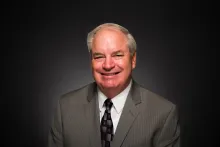
Robin Webber was born in Chicago, Illinois, in 1951, but has lived most of his life in California. He has been a part of the Church of God community since 1963. He attended Ambassador College in Pasadena from 1969-1973. He majored in theology and history.
Mr. Webber's interest remains in the study of history, socio-economics and literature. Over the years, he has offered his services to museums as a docent to share his enthusiasm and passions regarding these areas of expertise.
When time permits, he loves to go mountain biking on nearby ranch land and meet his wife as she hikes toward him.
