


Robin S Webber
This transcript was generated by AI and may contain errors. It is provided to assist those who may not be able to listen to the message.
Well, gentlemen, I want to say thank you very much. Beautiful, beautiful music on this Sabbath afternoon. Here in the Los Angeles congregation, we're going through the book of Ephesians. And we've basically given a title of this series called God's Will for the Body of Christ. Let's understand why. The book of Ephesians was written to a very special congregation beloved of the Apostle Paul. He's writing from prison. He's writing to the Ephesians.
And he's giving them an understanding that is rich and it's beautiful and comes down to us through the ages. Let's just for a moment to rehearse where we've been over the last three messages. So for those that might be here today, that they can come right along with us. And understand that in our first message, we came to understand that God is calling a spiritual people.
He is in the midst of molding and developing something very real and very special to His glory and to His honor. You might say, actually, He's building something.
In the book of Ephesians at times, it's called a building. Other times, a temple. Other times, it's called this incredible metaphor, the body of Christ. But God is building something. It's very interesting that it's written to Ephesus because that's where one of the wonders of the ancient world was. One of the great wonders, which was the temple of Diana, otherwise known as the temple of Artemis, which was actually about 600 feet in length with over 127 pillars and could be seen over a score of miles out to sea. It was a remarkable building. It was just and had always been just there. But that building doesn't exist anymore. All that lies where it once was is just simply a vacant lot, a green lawn. It is no longer there. But the good news, brethren, is that the body of Christ after 2,000 years is still being molded, is still being built, and is being called to something very special that I'd like to remind you of today. Just simply two words. Sacred service.
Sacred service. That you that are here today have not just simply arrived here today because you decided that, well, this is how I think. This is how they think. So I will go here and I agree.
Maybe you thought that's why you're here, but it's not because you can't join the body of Christ. You're called into the body of Christ. You're invited into the body of Christ. You are given the status of a saint, which is of that which is holy, and to recognize then that you and I are in training to be priests forever under the high priest, Jesus Christ. You and I, you and I have been called to sacred service. So we covered that the first message. The second message, we talked about the importance of praise. That the will of God is that those that are being trained now to become priests forever before Him under the chief priest, the high priest, Jesus Christ, are to learn praise in this lifetime. Not flattery, but praise because of everything that God has given us. The third message that I gave is to share with you that praise is not enough alone. Christianity is not just simply vertical, but it's also horizontal. It's not just simply enough to praise God, but we must be praying for others. And that's where we left off last time. And that's where I'd like to begin with this message. If you'd open up your Bibles that's come together as a congregation because we're here to have the Word of God exhort us. And this is where we left off last time in Ephesians 1. And I just want to review this for a moment because now we're going to take you to a deeper step than even where we were at last time, a couple of weeks ago. Because we notice that after Paul praises God, we pick up the thought in verse 16, "'Do not cease to give thanks for you,' that is, Paul doesn't give cease for giving thanks for you, making mention of you in my prayers." Amazing! Here's Paul, he's in prison, but he's not looking at himself in a mirror. His Christianity is not a matter of self-reflection, but he lives in a life of windows. He lives in a life of looking out because God had looked into his life and invited him and called him to this incredible sacred service. And so he's thinking of others by praying for them. And he says that the God of our Lord Jesus Christ, the Father of glory, may give to you the spirit of wisdom. That's the first thing that he prays for the body of Christ, that they might have a spirit of wisdom and that they might even have a deeper revelation in the knowledge of him. He also says that the eyes of your understanding might be enlightened, that the darkness might go away, that the filters might be taken away so that you can see what God is truly doing. It says further that you may know what is the hope of his calling and what are the riches of the glory of his inheritance in the saints. Each of these is a stepping stone of in this day and age, not in 65 AD or 55 AD, but in 2011, now moving into 2012.
It's not enough for us to just simply say, well, God, watch over the folks. Take care of the people. Go, God. You know who are yours. Be with them today. Amen.
The will of God, as shared by the words of the Apostle Paul under the inspiration of the Spirit, challenge us, motivate us to pray in this manner. Paul leads the way and shows us specifically how to pray for the saints of God in this very troubled and very darkened world.
And if we have the love of God in us, then we will pray this way and to pray that they might understand the exceeding greatness of his power towards us who believe according to the working of his mighty power. And Paul always goes back to this point of the historical demonstration of that power, that it goes right back to the resurrection, which he worked in Christ when he raised him from the dead and seated him at his right hand in all the heavenly places, far above all principality, in power, in might, in dominion, and every name that is named, not only in this age, but also in that which is to come, and has put all things under his feet and gave him to be head over all things to the church, which is his body, the fullness of him who fills all in all.
So Paul says, how do I know the power of God? And how will I know that your prayers will be effectual and how God will answer? He will answer in your lives and in the lives of those that we pray for with the very same power that he used to resurrect Jesus Christ, and not only resurrect him, but to allow him to sit, or excuse me, to ascend and sit at his right hand, and everything has been placed underneath his feet. And thus he's the head of the spiritual body. And then, if he is the head of the spiritual body, that leaves us, the rest of the body, to be his hands, to do his work, to be his feet, to run his errands, to be his voice, to speak on his behalf of encouragement, of blessing, of wisdom to others. Now, where we left off last time, as I read through these verses, is simply this. You may want to jot this down, that what we discussed last time as we went through this is what God wants us to pray for others about. But now, today, we're going to go a deeper step. And this, too, is in the will of God for the body of Christ, not just simply to utter words, but to understand why. And so, we're going to get into the why today. Let's turn the chapter, or let's turn the page if you want to, because now we're going to go to chapter two.
And it's unfortunate that there's a blessing and a cursing, if I can put it this way, when the good man put in these chapters. Because sometimes they help, and sometimes they hinder, because there's still really one story that is still rolling out of the heart of Paul, and onto the words of the page that the scribe was writing for him. Because he says that, look, this is the power of God, that he resurrected Jesus Christ. But now it's not left there. Yes, he was raised from the dead. We get this thought of ascension. We think of the heavenly places. He's sitting at the right hand, but now Paul is going to bring us right back down to earth into humanity about you and me. And notice chapter two in verse one. And you, not Christ, but you he made alive, who were dead in trespasses and sins. Now, most of humanity does not recognize the state of their being before God. Most people, if they gave themselves the pinch test, would say, ouch, I'm not dead. But we're not talking about physical life, which is but temporary.
What Paul is speaking about, to those that have ears to hear and eyes to see, he's talking about spiritual life with God. He's saying that you were dead. And many people don't have that urgency to recognize what they are apart from God. They don't recognize how important it is for now to act. They may not have tomorrow. All we have is today. Yesterday has gone by. Tomorrow has not arrived.
What about the present? Let me use a story to illustrate the presence in the state of urgency. Reminds me of the story of the man that went and had a battery of test. Went to a medical office, had a battery of test, and the doctor called him, said, come back in. The test of come back.
So the man came in. He said, well, Doc, how did I do? And the doctor says, do you really want to know?
He said, sure, Doc, lay it on me. And so the doctor said, do you want the good news or do you want the bad news? Which do you want first? Well, he said, Doc, I said, I think I'll take the good news. Well, here's the good news. The good news is that you have 20, only 24 hours to live.
The man, that's horrible. That's awful. That's the good news. That's the good news that you want to give me that I only have 24 hours to live. Oh, doctor, this is horrible. I can't imagine anything worse than that. And he said that there's bad news. I don't know if I want that or not, but go ahead and give it to me. The doctor said, you sure? He said, yeah, I said, the bad news is I was supposed to have told you yesterday. Brethren, dear friends, all of us have had that doctor's appointment. We just don't realize it. And we think that we can just go on and on and on.
It is said here, and you he made alive.
Paul is telling those that were in the body of Christ at that time that a miracle had been performed, that God was in the resurrection business, and that they had been spiritually quickened. They had been as branches attached to the vine to be cared for by the husband, God the Father, and that they were dead. They were dead men walking until God began working with them.
And then Paul, in a sense, as a spiritual doctor, gives a diagnosis. And basically, he shares three grim observations of the living death of humanity, apart from God. As I mentioned that, I'm going to draw a line here on the board just to keep your interest up. I won't say that this is an exciting line. It's just a line that if you get bored with me, you can look at the line. That's it.
Wasn't that exciting? But that line is going to mean a lot to you and your walk with God before this message is all said and done. And so Paul, as a spiritual doctor, gives a diagnosis of humanity apart from God. Three grim observations of those that have not had the calling of God, have not responded to the invitation of God, do not have God involved in their life, and thus are unredeemed. Allow me to put it this way as we go to verse one. And you he made alive. That's the good news. Stay with the good news, but we're going to go down deep for a while, okay? We start with the good news. He's made us alive, those that have responded to the call. But we've got to understand the what's of where we were before. And the reason why we're going through the what's, dear friends, is because we cannot pray effectively until we recognize what and why God called us out of what he did. And thus, we pray for others. It says that, number one, you who are dead in trespasses and sins. Point number one is this. We were dead. Now, this is not a figurative phrase, like in the prodigal son where, speaking of a son, it says that he were dead, but now he is alive. This is dead like Rover, the dog. Dead all over. This was dead. This was deeper. And to understand that we were dead. And that is everyone's condition outside of Jesus Christ. Dead.
Four-letter word, dead. We were dead. And it says, the reason that we were dead, we were dead, notice, in trespasses and in sins. Now, that might all seem like a part of the same phrase, but it's not.
Allow me to share a few thoughts. We actually have a stereo effect here of why, apart from God, we were dead. It says, number one, we were dead because we were in trespasses. The Greek word for trespass basically is talking about taking a false step and or trespassing. He said, well, duh, it says trespass or trespassing. But when you trespass, that means that there's normally a sign up there. It says, do not enter private property. Don't go there. Or you have the bones and the skeleton of poison. Don't touch. Don't be there. That's the kind of trespass that's being talked about. In other words, crossing over a known boundary that has been established. And thus, you on your own have created a deviation from a God intended on a set path. Bottom line, we were dead because we as human beings deviated from God's holy righteous law. Action. Trespassing.
Saw the sign. Repelled anyway. But Paul doesn't leave it there. He says, you're dead in trespasses and then he says that you were dead in sin. What does that mean? It's a different word.
It's all bad, but it's a different word. The word sin there has a sense of shooting. And some of us will be familiar with this analogy in the Church of God culture when so often we've talked about sin being missing of the mark. That the mark was set and God established what the mark was. He established the path to go down. He gave us a target to shoot for.
And yet somehow we missed the mark. And when you miss the mark, whether it's by an inch or whether by a mile, you have missed the mark. And thus you've come short of what God's standard was.
Basically what Paul is telling us just in this first verse is simply this, that we were dead until God raised us alive spiritually because number one, we were dead in A trespasses, B sin. In other words, we were dead twofold, two ways. You can't get out of it. This is every man's state apart from God. And that was either due to rebellion or due to failure in measuring up to the standards of God. Isaiah 59 verse 1. It places us as human beings in an alienated state from God. And Isaiah describes this in Isaiah 59 in verse 1, Behold, the Lord's hand is not shortened either that it cannot save nor his hair heavy that it cannot hear. But your iniquities have separated you from your God. God is still possessed in that sense. Your God claimed. God wants us. God loves us. He has set this way of life. But either due to either the rebellion of trespass and or the falling short of sin, it says this, that he has hidden his face from us and it has separated us from our God. And that's a great sadness. That's a great sadness that God from the very beginning, all God wanted as he looked down in that garden of Eden and looked down and saw what he had made out of the dust and later on from the rib of man, the man and the woman, he looked at them and he wanted relationship with them. He wanted fellowship with them. He wanted to love them and be loved. And he designed man and woman to worship and to understand what he had done that you and I from the very beginning with Adam and Eve had been called the sacred service in the shadow of the tree of life and to be loved of God and respond with like love.
But that cord was broken. You see, friends, sin is not just simply in the realm of theologians.
It is just not talk talk and it's not just print in commentaries. What Paul is saying here is, you were dead. I was dead. Sin is real. It is every man's condition apart from God through Jesus Christ. And he wants us to understand that. It's no philosophical invention. Brethren, it has separated seven billion people apart from God, either because of their rebellion, because of their failure, or because of Satan's deception. Sin is evil. Sin is awful. I think of what sin does to us as human beings. The first thing that it does is it kills innocence. When we are born and as we begin to develop and then sin comes into our life, it leaves a mark. Whether it was out of rebellion or out of failure, each way you look at it, it leaves a mark as much as the mark of Cain. It's not just anything that can be scrubbed off other than through the blood of Jesus Christ.
And it leaves a mark. It kills innocence. You know it and I know it when it happens. It kills the innocence that is in us. But if it was innocence alone, it might be all right. But also, it kills ideals. All of us, in a sense, from youth up are idealistic. We have, hopefully, values. We have ideals, notions that we want to live up to. But what happens is what was unthought of that we might never do. When we do sin, when we do trespass, when we go over that boundary that has been established by our God or by our parents that follow God and share those rules and those commandments with us, and we just break through that gate and we trespass it and go over it, what happens is sin kills ideals because what happens, it becomes easier and easier and easier to do it each time you do it, until it's simply our way of being. Another thing I'd like to share with you is that sin kills the will from innocence to melding-way idealism to simply killing our will. What oftentimes happens is when we sin, you can see that I have been a practitioner, hopefully God willing in the past, but when there is desire, that first of all is only desire. You say, I've got to have that. I've got to go through that gate. I've got to get over on that side of the island. I want that for myself, just as much as Eve and Adam wanted that fruit that was in the tree, and thus we go and we destroy our innocence. We destroy our ideals, and then what happens is the last step is that it is no longer desire, that it becomes a habit, it becomes an addiction, and pretty soon we are slaves to sin, and sin is our master. That's only the first grim observation that Paul had about the state of humanity apart from God. Now, notice verse 2. It says, in which you once walked, according to the course of this world, according to the prince of the power of the air, the spirit who now works in the sons of disobedience, among them also we all once conducted ourselves in the lust of our flesh, fulfilling the desires, the flesh, and the mind. And I'll leave it right there. What Paul says, number one, is that we were dead apart from Christ. There was a time that this world itself was Christ less, and there was a time when you and I, before God called us, were also Christ less. And this is the world that we're needing to pray for today. This is the society that we're praying for members of the body of Christ to remain strong in the Lord, to be vigilant towards the truths of God, and to keep the commandments. Because number two, basically what Paul is saying is that we were not, number one, we were dead, but number two now, that we were enslaved. We are enslaved by this world that is around us, this course of this world, this cosmos, as Mr. Hall brought out, this culture, this society. There's literally an air, and there's a way of being, and always has been.
You know, sometimes we fool ourselves. We say, you know, Susan and I, because we grew up in the, you know, the late 50s, you know, we, Ozzy and Harriet were our heroes. And we say, oh boy, you know, can you believe where the world's going? Things just aren't the same. You know, bring back Ward Bond and Wagon Train. You know, when the whole family could sit and watch things, or watch and leave it to Beaver, and we had our little sunbeam toasters. There were only three stations on the television. One got a little wobbly every so often, ABC, oh, life just seemed to be so simpler. And you know, just, you know, God was invoked more, and you know, society wasn't going this way and that way. And brethren, no, no, no, no, it hasn't been right since Eden.
Not 1958. Not 1958. We're talking about 4008, or whatever year you ascribe to it.
Ever since humanity rejected the ways of God, it alienated itself, became ensnared and enslaved in this system, this culture that Adam and Eve proposed that they push God out of the way and said, we're going to come up to the altar, and we're going to make ourselves flesh and blood gods, and we're going to decide for ourselves what is right and wrong. And we're going to have some experiments along the way. God, give us a break. We're just kind of like teenagers. Give us a break. We'll get there, but right now we're going to have our fun. We're going to see where this thing goes.
Kind of reminds me of the story of the man that jumped off the 20-story building, and he kind of set up people along the way to kind of have a scientific experiment so you know he could have proof solution. And so he jumps off the building, starts going down, and goes past the 20th floor, or 10th floor, and the observer says, how's it going? He says, so far, so good. Whoosh! Keeps on going down. Fifth story. How's it going? So far, so good. But you know what he did? He learned his jumping lessons from Adam and Eve, because there's a way which seems right unto a man, but the ways are death. And this is what Paul is bringing out was the state of man when the world was Christless, before God's grace was given, and he began to call people into the body of Christ.
That man was dead, walking dead. At number two, we see this aspect that we were enslaved by the culture of this world. Another aspect of this slavery, number two, was that there's the prince of the power of the air. And the term air there is very interesting in the Greek. It denotes murky or foggy, dark, not clear. That's exactly the kind of a realm that Satan likes to operate in. And it gives a sense by prince that he was over a realm, but not only a realm, but you see that it also seems to tie in this spirit that came from him, the spirit who now works in the sons of disobedience. Or we might just say the children of rebellion, and that there's a spirit that is working there. Now, it's interesting. The word there, work, is from the Greek word. This is a simple Greek word. I don't use every Greek word or share every Greek word, but the word there is one that you'll recognize. Energeo. Energy. Work. His energy, his spirit, is working in us. The only good news, as we're going to come down to this side of the line, is simply this. It's to recognize that God also works. See, Satan has a work. We often talk about the work. Have you ever heard that phrase over the last 40, 50 years? The work. Because normally when you and I use it, we talk about the work. The kind of Church of God talk. The work. Well, God does have a work, and God willing, we are part of the work. But we've got to also understand, Satan also has a work, and his work is to not have a picture in the frame. Remember what I showed you a couple weeks ago? He doesn't want a picture of you. He wants you absent. He wants you vacant. He wants you out of the body of Christ. The good news is that same word of work, Energeo, is used to the work of God. And I got good news for you on this day. God is in the process of putting Satan out of business.
Now let's understand more. Because now we come down to this aspect. Because we also have responsibility. We can't be just like Flip Wilson. Say, well, you know, the devil made me do it.
Because here we see something else. We were enslaved by the culture of this world. We're enslaved by the spirit of the prince of the power of the air. But also we have a part in it. Because it says that we also conducted ourselves in the lust of our flesh, fulfilling the desires of the flesh and of the mind. And we're by nature of wrath, just as the others. Now it's very interesting how that's put out. Because it talks here about, as we notice, if you'll look at verse three, it talks about the desires of the flesh and of the mind. So often we focus on people that perhaps are plagued by what we call the sins of the flesh. And when you are plagued by the sins of the flesh, they're noticeable. They're more out there. Sometimes for chance, good church people, they see somebody and they go, who let them in? Was Mr. Hull on duty? Where was Mr. Velasquez when we needed them? Does Weber know about this? Just look at them! What are they doing here? Because I'm the only one that does that. I'm the pastor.
Because we tend to judge a book by its cover. And sins of the flesh have a very colorful color, don't they? Sins of the flesh. And there are sins of the flesh. You know, God created food. There's nothing wrong with food. But if you overeat and are a glutton, that's a sin.
God created us to sleep. That's fleshly. But if we never get out of bed and never go to work, you know what? We're a sloth. And slothfulness is a sin. Sex. God created sex. And sex is good in marriage. And right and honorable, as the book says.
But sex outside of marriage is sin. There are sins of the flesh. And sometimes, as Christians and church folk, we can become hard on others, judge others, that do need to work on their sins and work on those sins of the flesh. But it also says here that there are, did you notice, of the mind? And those are a little bit deeper. Those are a little bit harder. And we tend to want to deal with the sins of the flesh rather than dealing with that which is in the mind. When it says, the desires, the flesh, and of the mind. When you think about that for a moment, what kind of sins might that be? Let's get specific. What about pride? Well, I keep the seventh day Sabbath. That's what we're talking about. That's what you're doing right.
Pride is a sin, and that's what you're doing wrong. Ambition! Yeah, but I'm at every biblical festival.
But that's not what we're talking about. We're talking about ambition. I help everybody that I run into. But you're a bigot. You look down on people.
You have racist tendencies. You look at different ethnic groups as being less than yourself.
You have pride of ancestry. You go, do you know who I'm from? Do you know who I'm from? It's always like this.
I say, no, but I know I'm from Adam. Okay. Do you know who's in my family line?
No, but I do know who is in Jesus' family line.
Steelers, robbers, and prostitutes. But you know what? It's not where you've been. It's where you're going. And God can take the imperfect and grafted even into the line of Christ towards His glory and towards His honor.
Sense of the mind.
Murderous thoughts. Oh, if I could just get my hands around their neck and keep them there and strangle them.
But I tithe. But that's not what we're talking about.
Rejection of the truth. Paul is bringing us to an understanding of what the world was like before God sent Jesus Christ to this earth. He's speaking of a Christ-less society with no way of return. He's basically boiling down to this point. He's working from the outside in and the inside out that there is nothing before Him that stands on its own. That man at his best is alienated from God. Notice what it says here, and we're by nature the children of wrath, just as the others. Now let's understand this. Number one, Paul is saying that we were dead. Number two, he's saying that we were enslaved. We were enslaved by the culture of this world, by the prince of the power of the air, and by our own flesh and by our own passions. But now he brings it home and basically says here, we were the children of wrath. And thus, point number three, we were condemned. We were condemned. That means that we were subject to the wrath of God.
Now let's think about this for a moment. That's unpleasant, but it's a truth. It's a reality.
It's right here in the Bible that those, because they did not keep the ways of God, were subject to that wrath of God. But let's understand something about the wrath of God, lest our knees start shaking and sets our heart in a flurry. There's a difference between the wrath of God and the wrath that maybe you and I have experienced in our lifetime from either a family member, from a mate, from an employer, from somebody that we thought loved us, somebody that we thought was a friend, and or even maybe a schoolyard bully. God's wrath is different than the wrath of humanity. Allow me to explain. Such wrath, godly wrath, is not temperamental. Neither is it out of control. Basically, God has driven to do everything that he could. He put humanity into a perfect environment, and that just simply wasn't enough. Because ultimately it was in us and not the environment. We've got to deal with ourselves and not the environment. God does not work from the outside in, but from the inside out. And so God did everything that he could for man. But finally, man decided to go on his own. And so truth of and by itself was not enough. Whether it be the the biblical truth of the Bible held by the Jews and or the biblical and excuse me and or the intelligentsia truth held by the Greeks. Truth of and by itself is not enough. You can know the truth and not do it. And so God let humanity go its way. Because you see here, if you go up to chapter two, verse one, and says, and you, he's speaking to the Gentiles that were within that spiritual community and Ephesus. But then he comes down to verse three and says, among whom also we he's speaking of his own people, the Jews. And then he comes down here to verse four, the children of wrath just as the others, just like everybody else. So there's a you, there's a we, there's others, all these pronouns come to one aspect, that humanity, humanity has by itself, not God's intention or God's will, alienated itself from God. And thus we see that God allowed this to happen.
He's temperate. He doesn't fly off the handle. He's measured. He says, if this is what you're going to do, then that is the judgment that's going to be upon you. He said, well, that's a mighty hard God to follow. But would you not want God to be consistent? I want to share something with you. Perhaps one of the, I hope one of the things that will mark your life is to, we want a consistent God. May I make a comment? Sounds funny. We want a God that is consistent in his wrath.
Or the lightning bolts. Because that tells us that he is true to his own law and to that, that moral standard that he has set. He does not equivocate. He holds that standard and is repulsed by sin. But here's what I want to share with you. This is the good news. God is not only consistent with his wrath. What's more beautiful, there's another point of he is also consistent with his grace. And we're going to come to that in just a moment. But here we were in this life. To this point, Paul's diagnosis is plain. Man outside of Christ is dead on arrival. He's dead. He's enslaved.
He's condemned. He's enslaved by the world, by Satan, by himself. The bottom line is simply this. Such dramatic circumstances demands dramatic intervention. And thus we come to verse 4, which is what's in your bulletin if you look at it. What we have here and what Paul is outlining, I'll make a couple of lines here, simply this. There comes a great word in here that is fantastic, but God. God uses the tool throughout the Bible. You might want to put this down. He uses the tool of contrast. The tool of contrast. He contrasts a world that is Christless with no way of return, with no ability to redeem itself, hopeless, helpless, dead, alienated from God, either out of rebellion or out of failure, pounded by the forces of the age of this world of Satan the devil, and yes, our own selves. And thus God allowed people to go their own way to become those children of wrath, or we might say the children of rebellion. But now comes one of the most beautiful words in the Bible, but. Allow me to share something with you. This is a big but.
But is one of the greatest words in the Bible. And I'm going to tell you why. I'm going to give you two or three examples. When you see the word but in the Bible, expect things to happen.
Remember how bad mankind was off the pre-Noatian world? Remember God wanted to destroy everybody off the map. But what did God say? But for Noah. That but introduced the man that God would work with and start the whole world over again. Let me allow it to use another example. Let's go to the New Testament. Another but. And that is, here's the early disciples. They're still running like scaredy cats. This individual named Paul has been plopped right down into their midst, and they don't know what to do with him. And you know, you and I would probably have the shakes too if we had known the former Paul, and then all of a sudden he's dropped into UCG LA. Watch him! But the Bible says, but Barnabas. What we have here in this line of demarcation here is to recognize something very important. What the world was like before Christ came to this earth as the gift of the Father.
And to recognize the darkness and the depression and the grim realities.
As we consider that, I want you to consider your world before God Almighty began to call and to work with you and to guide you as it says, and lead you by His Spirit. You thought, oh don't you understand, I joined this church. You can't join the body of Christ. You can't start your own membership. Are you with me? We're talking about the spiritual organism. You can't say, I'm placing my star here. God agrees with me, so now I'm going to go to God's church.
It's not how it works. You can't join the body of Christ. It's by God's initiative.
It's by God's invitation. And it's by God's continuing creative and resurrective powers in your life that you remain in this body called the body of Christ. And that's the story that I want to share with you for a moment. As we begin to wrap up, I didn't see what the time was. I could talk about this subject all day and have. But let's notice something. But God, who is rich in mercy because of his great love with which he loved us, even when we were dead in trespasses, made us alive together with Christ by grace you have been saved and raised up together and made us sit together in the heavenly places in Jesus, in Christ Jesus. Let's understand something. Let's go back to verse 4 and let's read it slowly. But God, who is rich in mercy, mercy is not just simply forgiveness.
He is not just a person who is rich in mercy. He is a person who is rich in mercy. He is a person who is rich in mercy. And because of his great love, not our love, but we were still out there doing our own thing, it all generates from God his great love with us. Even when we were dead in trespasses, made us alive together with Christ, and by grace you have been saved and raised us up together and made us to sit together in the heavenly places in Christ Jesus. What does this mean to you? The reason I am sharing this with you, friends, is that last time I spoke to you, we talked about what to pray about. Now we're talking about the why you need to pray this way. To recognize what the world was like and what people were like before. It was grim! It was just plain awful. And the world was headed one way in despair.
Now God wants you and me as members of the body to remember where God called us and reached down.
Like in the first commandment, remember, I am the Lord your God which brought you out of the land of Egypt. You shall have no other God. So God wants us to remember where he brought us into the pilgrimage, but he doesn't want us to remain there. If we're still lingering there after 30 months or 30 years, we've got some heart work and some homework to do. This is where we started. This is where we need to be down here with the verses. But God! And to understand what he's saying here, remember what we covered in verse 1. It says, you do this, you pray this way, and remember that they might know the power of God. And that power is demonstrated out of the resurrection of Jesus Christ. That's the argument. That's the proof. Notice what's happening here now in the language that's being used. He's saying you have in that spiritual sense and in that pipe been raised from the dead spiritually at this point. And that in that sense, he's using the historical pattern of Christ. He was raised, he ascended, he sat. And what is being discussed here is there is a likeness here that spiritually, when we recognize ultimately the destination is beyond the resurrection and the fullness of being in the family of God. But he's using a type here of showing us that God sees things as if they already are. And that as we have been resurrected from the spiritual dead, that our prayers, that our sacrifice does ascend to God. And to recognize that in that sense, as Christ sits at his right hand, that our prayers, our concerns, our hopes, our dreams, our thoughts, our angst can also sit right before God Almighty. Now why is this important?
Good question. And why this is important is why Paul could say, I am a prisoner of the Lord, and that I am not a prisoner of Rome. He could say that I am a prisoner of Jesus Christ, and I am not a prisoner of the beast power. He never considered himself trapped because God had entered his life and because he had Christ as his master. And thus he was able to transform his situation and to understand that his position before God Almighty, being spiritually in that sense, spiritually brought alive when he was dead, that the ascension of his life to God, that what he was in his prayers sat before God at the right hand of God, trumped any condition that was on the ground. If we are not growing today and burying much fruit, and we are just simply a seed holder, like we first started out 30 months ago or 30 years ago or three years ago, this is the reason why. I'm going to share a very basic truth with you, please.
God sees things as if they already are, and he sees us as that realm of priest of sacred service throughout eternity, serving underneath his son. That victory in his mind has already been won. The details have to be worked down here below on terra firma. And to understand something that is very important here, that when you see the words of the Apostle Paul, it is very important to understand a very basic point. Christianity is not only belief in Christ, but understanding this solidarity. It was very, very simple to the Apostle Paul. Jesus had been dead, but he had been raised up and exalted. We, you, me, others yet to come into this body of Christ were dead, but raised and exalted with Christ. The sequence was A and B equals C. Very simple. And for you and I to understand something that Christianity is not only belief in Christ, but the solidarity.
We want to talk about a solidarity movement as he was raised from the dead, as he ascended to heaven, and as he sits at the right hand of the Father. When you look at the language of Paul here, it says, made us alive together with Christ and has sat us together in verse 6 in the heavenly places in Christ Jesus. Why? We've discussed what God has done by his grace, but why?
That in the ages to come, he might show the exceeding riches of his grace in his kindness towards us in Christ Jesus. A lot of people share something very plain. His grace has been expended to you and I. What is his grace? His grace is his initiative. It is his invitation, and it is his continuing involvement in molding and shaping and developing us.
Creation was not over at Eden. That was simply man made from dust. Now God is making his future sons and daughters not out of dust, but out of the spirit and from the heart. To recognize then that when we look at this, the why, why, why, why, why, then it says here that in the ages to come, he might show what his kindness has done through Christ Jesus. To be blunt, brethren, God is going to forever utilize us and show us off as his trophies of his grace and what grace accomplishes and what it does. Trophies of his grace and showing his skill as a heavenly father who does not turn his back on his children but leads them, leads you, leads me, leads us as we pray for others in the body of Christ to have that hope of calling, to understand the exceeding riches of his mercy, to understand what the inheritance is. It's not just the what, these are the why's. The why's is because you and I in this entire world were over here. It was grim.
This is good. This is not easy. Jesus never said that it would be easy. He said it would be worth it.
Christ said, follow me. He never promised a love boat, but he promised that we would make it.
Notice what it says here, for by grace you have been saved through faith and not of yourselves. It is the gift of God, not of works lest anyone should boast. You know, sometimes in our human manner, and I'm plenty human, and sometimes when I first started this way of life in my juvenile manner, I thought, okay, God, I'm going to make a deal with you. Here's the deal. Want to know the deal that I made with God? That's when you're supposed to nod because I'm going to go about two or three minutes over time. Start nodding. Thank you. I made this deal with God.
God, I will experience and I will receive your grace, and I'll have a transaction with you, and that is that I will give you faith. There's a problem with that. That's not how it works, according to the Bible.
There's no transaction with God in that regards. Let's understand why. Notice what it says, for by grace you have been offered salvation or saved. You and I in Church of God understand that salvation is a process. It's this channel that we are yet moving towards and forward to the resurrection. But in that sense, we are in a state, in a progressive state of that salvation. For by grace you have been saved through faith, but it's not of yourself. You see, before we could even begin to approach God, He had to quicken us. He had to awaken us. His Spirit had to kind of... Is there anybody up there? That hurts. He had to kind of go like this and get our attention and begin to share His initiative. And then by His Spirit, His invitation, for as many as are called, are the sons of God. And then it says here that faith, that humble trust in Him is not in a package that we delivered, but a gift that He gave us.
For we are His workmanship created in Christ Jesus. This body, this temple that God is developing, is not made out of marble. It's not made out of wood or stone. The creation process continues. It's His workmanship. It's not by our works, but it's through Jesus Christ for good works.
Now let's understand something as we are almost concluded here, to understand that works do not produce salvation. There's just simply no possible way that we can turn the key on our side of the door. But works are an outcome and a consequence of God's grace and our acceptance of that. When you go to the book of Revelation, at the very end, Revelation 22, it says, I am going to reward you according to your works.
Our works, as we move through this process of salvation, say that we have understood the initiative, that it's all about Him. We have accepted the invitation, and we continue to open our hearts and open our lives as we pray for the saints of God abroad, as we talk and pray for the people that are of God yet to be called to understand that He just doesn't eat and run, but He stays with us. His involvement will be with us till we die. And that's something that some of you need to know this day that are running a little scared and are getting on exhaust with the fumes of faith.
God said, I will never leave you, I will not forsake you, and what I have begun, I will see through to the end. This is the God that we worship. This is why in the book of Ephesians, the will of God for you and I and the body of Christ is to pray for the fellow believers in this ever-darkening world to remember the hope of their calling that God brought down this veil. And there is a but God that has shown the way that here we were Christless, here we are with Christ in resurrection, in ascension, and in sitting down in type and figuration.
And to recognize then that our position before God, whatever it is, trumps any condition on the ground. You will say, well, Mr. Weber, that's hard, because some of the things that I'm going through, I'm at a place right now where I don't know whether to go left or whether I need to go right. I'm telling you, the Bible tells you the way, and God says to follow. But our knees get shaken, our heart gets a little wobbly, and we get stalled. Here's my encouragement to you as we go out on Sunday, Monday, Tuesday, Wednesday, Thursday, and Friday until we meet again.
You obey God. You recognize you are with Christ, you are in Christ, you in that sense have experienced a type of resurrection. Your prayers are ascending to God, and your heart and your hopes in your life sit before God Almighty and Jesus Christ. And with that understanding, you obey God and leave the consequences of that obedience with Him, recognizing that nothing with the saint of God is apart from His will. Brethren, as I conclude, I hope I have shared with you and I've encouraged you how important it is that we pray for the body of Christ.
There are no lone rangers. This spiritual mosaic known to God in all colors, races, and ethnic groups and genders goes around the world. The people of God more than ever, the people of God more than ever need praying for one another, just like we prayed for Jenny today and the Bradfords today, as many of you have been praying for the Rhodes today, as Susan and I today in heartfelt prayer held hands with somebody and prayed that God would guide them through a very challenging situation. Do you know what the will of God is, brethren? This is but an aspect that the love of God in you and the faith of God in you, that gift of God in you, is manifested enough in you and is bearing that fruit in you that you will pray the prayer of Paul.
And not only the what's, but as you pray the what's to understand the why's. Look forward to coming back next time in two weeks as we continue to explore the will of God for the body of Christ as we go through the book of Ephesians.
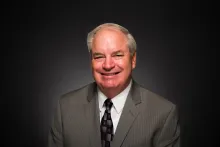
Robin Webber was born in Chicago, Illinois, in 1951, but has lived most of his life in California. He has been a part of the Church of God community since 1963. He attended Ambassador College in Pasadena from 1969-1973. He majored in theology and history.
Mr. Webber's interest remains in the study of history, socio-economics and literature. Over the years, he has offered his services to museums as a docent to share his enthusiasm and passions regarding these areas of expertise.
When time permits, he loves to go mountain biking on nearby ranch land and meet his wife as she hikes toward him.
