

Robin S Webber
This transcript was generated by AI and may contain errors. It is provided to assist those who may not be able to listen to the message.
I could begin this message by sharing a thought. The Yoruba tribe of West Africa has a saying. And it goes like this. However far the stream flows, it never forgets its source. Sounds like it's good for water, but is that the same with human beings? As human beings, by our very nature, we tend to forget to remember. And that's going to be a purpose of this message today, is to bring us into remembrance about nothing as important as the calling that God has given you and me. I'd like you to join with me, please, in Revelation 2. I'd like to take a peek at Christ's message to the Ephesian church in Revelation. In Revelation 2, as we open up our Bibles and take a look at it, let's read through the message to the first church. It says, to the angel of the church of Ephesus write, these things says he who holds the seven stars in his right hand, who walks in the midst of the seven golden lampstands. And this is just again showing that Christ is very aware of the temperature, as it were, and the health of his church, the health of a congregation, and the health individually of us as persons. It says, I know your works, your labor, your patience, and that you cannot bear those who are evil, and have tested those who say they are apostles and are not, and have found them to be liars, and you have persevered and have patience, and have labored for my name's sake, and have not become weary. To this point, that's a very, very positive and fine report. Nevertheless, I have this to say, I have this against you, that you have left your first love. Remember, therefore, from where you have fallen, repent, and do the first works, or else I will come to you quickly and remove your lampstand from its place, unless you repent. Now, I, looking at this audience, realize that many of you have heard many a message on the seven churches. Many of you have heard messages on the church at Ephesus. This is going to be a tad different to add to everything that you have heard, and it's a message that is important to all of us. I'm going to center, frankly, on one simple phrase, and that's in chapter 5, verse 5. Remember, therefore, from where you have fallen. Again, remember the saying from the Yoruba tribe of West Africa, however far the stream flows, it never, never, never forgets its source. And that's what I would speak today. Something around 85 to 90 AD in general, we're not sure, but we'll use that as a marker.
Something was happening. Let's understand that this congregation might have been a home church. It might have been several home churches that knew one another. We just don't know. You know what? You weren't there, and I wasn't there. But we know that there were the people of God that had been raised up in the city of Ephesus.
Perhaps now, one, two, maybe into a third generation, they were still there, but there was something missing that God wanted them to experience again. To know and have that connection with Him, and to go back and remember to go back again. How did it all start?
Let's understand what Ephesus was like at that time. Ephesus was one of the five great cities of the Roman Empire, especially in the Eastern sector. There's Rome, there's Alexandria, there's Antioch, there's Ephesus, and there was Athens. These were the great cities of the Empire, and you could also throw in the sixth being Carthage in the West. But Ephesus is very interesting. Allow me to share just a little bit, if this is the first time you've heard about Ephesus.
Ephesus is where the East met the West. It was both Occidental and it was Oriental, in that phrase, to use those terms. It was a crossroads of cultures. Everything met in Ephesus. It was a large city, perhaps a couple hundred thousand people. It was also a city that, for centuries, had been given over to the worship and, frankly, the tourist trade of Diana, of the Ephesians, the great goddess of fertility, that had one of the great seven wonders of the ancient world that just dominated outside of the city. That was so great and so vast that you could see it miles out the sea. Here we had a city that had been basically what we might call, in speaking through the Jewish mind, John being a Jew writing this, was a city of the nations.
It was a Gentile community, yes, infused with some Jews of the Diaspora. But it is here where East met West, where Jew and Gentile, master and slave, woman and men were meeting. But there was something missing. So he says, remember. What we're going to be doing today, not only with our dear friends and forefathers and foremothers in Ephesus, but to speak to us, there's four things that we want to jot down right now if you want to stay as a student of the Gospel.
There are four things that we're going to be looking at. Number one is Revelation. This is a revelation. Sometimes we don't see ourselves for where we really are as the saints of God. So this is a revelation that comes from none other than God the Father, through Jesus Christ, through the writings of John. Number two, and these are all ours, so there's revelation. Then there is also remembrance. Remember. Remember. Number three, once we remember, then he says, repent. And then there then becomes the possibility, then, by God's grace, of renewal. Allow me to repeat that, because these are going to be the themes we're going to be working with over the next few minutes.
Revelation. A wake-up call. This is where you're at. You think you're here, but you're really here. You've got a lot of good things going for you. God would always give a...Christ would always give a commendation to the seven churches. But then he would have a concern. We might even say in language, a complaint. You're good here, but this is where you're lacking. But he would always end with encouragement. Which then leads to the fourth, our renewal. Renewal to stay on the journey towards the kingdom of God.
Always the matter of return. So, what I want to return to...let's take a look at this for a moment. We're going to pause, we're going to back up. It says, Remember therefore from where you have fallen. How can we remember where they were 25 or 30 years before? Well, that's why we have to go to the book of Ephesians. Let's go to the book of Ephesians for a second. In the book of Ephesians, let's see how the Apostle Paul opens up his epistle to the Ephesians.
Just remember, this is one of the churches that Paul spent a lot of time with. Perhaps even years. He was always a friend to all of the congregations that were raised up by him. But he seems to have been particularly close to Philippi, the Philippians. He was also very close and had gone through a lot, personally, in his own ministry. A lot with the elders there and a lot with the members there. Let's open up here for a moment and see what God's message through Paul was to the Ephesians.
Ephesians 1 and verse 1. Paul, an apostle of Jesus Christ by the will of God. Again, as we begin this, let's understand something about Paul. I know oftentimes we will look at this term of apostle, which was a responsibility that had come out of the Jewish synagogue and had transferred over to the early church of those that are bearing a message, one with authority. But the sense that the commentaries give here about Paul at this stage, it is not stating, Oh, look who I am! But it's really rather a matter of incredible awe and humility that he has even been selected to be the messenger. And we sense that later on, especially because Ephesians 1, which we're not going to be fully going into, goes off as a song of praise and a prayer of blessing God the Father, of blessing Jesus Christ.
So let's understand, to be an effective servant and to remember where God found us and accepted us starts with humility. Then he says, to the saints who are in Ephesus and those that are faithful in Christ Jesus. He says, grace to you and peace from God our Father and the Lord Jesus Christ. Now, let's understand some of the language and to break it down for a moment. He says, and to the saints, those that are in Ephesus. In other words, God is speaking to you through my words. And we can learn from these words even today here in San Diego who are in Ephesus and are faithful in Christ Jesus.
The word saint there comes from the Greek language and the word there is hagios. I can just spell it. It's very simple. It's not one of those long syllables. It's just simply hagios. Hagios. Hagios. Now, let's understand what it means to be a saint. We hear that term from time to time, but let's break it down. It means to be set apart. It means to be chosen of God. Thus, it is sacred because it comes from God who is holy, God who is sacred, God who is perfect. And in this time and in this space, he elects people to become like him. And to the saints who are in Ephesus and those that are faithful. Faithful is an interesting word in the Greek. It's p-i-s-t-o-s.
Those that are faithful in Christ Jesus, those who trust, those who are of a good reputation because of what they're doing, having been set apart, having been chosen of God. They have given up all, including themselves, to follow God the Father through Jesus Christ. Now, grace to you and peace from God our Father and our Lord Jesus Christ. Many of the epistles, for those of you who are just beginning to establish yourself in the Word, many epistles, not only Paul's epistles, but John and Peter will often start out with this two-pillar anchor of grace and peace. God's favor, God's favor, God's face shining down upon you and interacting with you. And peace from God our Father and the Lord Jesus Christ. They're going to be set apart. They're going to be called. They're going to give themselves to God. But it's not going to be easy.
This peace that is being spoken about here is the same peace that Jesus spoke about on the last night of his life. And he says, My peace I give unto you. Not the peace that the world gives unto you, but My peace I give unto you. Let's understand something very quickly here, because it's going to become personal with you as we go into this message. And that is simply this, is that the peace that is spoken in the Bible is a peace that is not absent of conflict. It's peace that rises above that which comes to you. It's not the absence of conflict. As the saints of God, we don't grow without that pressure point coming at us. Now notice what it says in verse 3, Blessed be the God and the Father of our Lord Jesus Christ, who has blessed us with every spiritual blessing in the heavenly places in Christ.
Now notice, again, going back to the saints, just as He chose us. This is speaking of God the Father. I always have to, when you're studying the Bible, who is the He, who is the Him? Sometimes it goes back to Jesus. Sometimes it goes back to God the Father. Of course, they are serving and working together. But just as He, notice, chose us before the foundation of the world, that we, now here it comes, that we should be holy and without blame before Him in love. So let's just break this down for a moment. It says, just as He chose us in Him. John 6, 44, tells us that it is God the Father. He is the great sire of the universe that elects and chooses and ultimately gives birth to those that have that new beginning in Christ, who chose us. So it's a calling before the foundation of that we should... What's the calling about? Here we go. What is the calling about? Why are we here today taking up a seat in this building? Why do we do what we do or ought be doing on Sundays and Mondays and Tuesdays and Wednesdays and Thursdays and Fridays in between?
That we might be holy. Not that we might just simply be an information bank. Not just simply that we might be able to read the Word of God and then go our way and do our own thing. But it'd be something completely different, and that's to be holy, and without blame before Him in love. Now let me break that down for a moment. The word there that we should be without blame comes from the Greek term, ammos.
I'm not going to give you a lot of Greek today, so that'll be about ammos. And what does that mean? It means sacrificial... When it says to be without blame, that means like it's sacrificial language.
It is to be without spot. It is to be without blemish. Christians are to be different. The standard is perfection. Do you and I rise to perfection? No, we will slide down like a muddy hill. We'll want to climb, and then we hit a spot, and then we come back down, and we'll talk about that by...
towards end of this message. But notice what it says. It's sacrificial. There's so much loaded in here. And this is, in a sense, what Christ is telling the Ephesians church three or four decades later. Remember. Remember how it started. Remember when you began to receive this truth. Remember when you began to experience my love and my calling and your election, that you, in Ephesus... Not everybody in Ephesus right now, but you were going to be set apart to do something special. And having predestined us to adoption as sons by Jesus Christ to himself according to the good pleasure of his will.
To the praise of the glory of his grace. Why are we being called just for our own glory, for our own praise, for our own saving of our own skin? No. It is all directed back to God. When we sing in our hymn sing this afternoon, are we going to be talking about us or are we going to be talking about God? Why are we called? Our calling is very much just like those seraphim there in the book of Isaiah. Let's say holy, holy, holy and give God the glory and give God the honor and give God the praise.
We are dazzled and awed that we might even be a part of this program of becoming holy. To the praise of his glory and in him we have redemption through his blood, forgiveness of his sins. When it talks here about adoption, it's very interesting. They're not against one another. We oftentimes in the Scriptures will see the word adoption. Sometimes we'll see the word that we have been born again or born from above, which gives you more of a natural birth process.
They are not really opposite one another. When you bring them together, you get a bigger picture. Let's talk about what did this mean to the Ephesians? Christ is asking them now to remember Paul's letter. This adoption speaks to a term that is in Latin called patria potistas. In other words, the father's power, which was absolute in that Latin Mediterranean family. It's kind of what we might call macho and to recognize what was going on.
When a father would select somebody to be in his family, that person that was adopted had full rights, full privilege, as a legitimate son, as much as if it had come from his wife and it was his own seed in that new family. In the eyes of the law, that individual was a new person, a new person. All deaths, obligations were diminished, not connected. The past had gone down the drain. There was no pulling it back up.
It was extinct and it was a new beginning. Here we are 30-35 years later and it says, remember! Sometimes you can come to church and hear this and hear that. You just kind of get lulled to sleep. You're going through the motions. And of course, we as speakers, we can bore you to death, I'm sure at times. But to recognize always to take aback that you were called of God for a purpose, to be holy. And in our foolishness of preaching, we try to remind you, as did Paul here, as I do today, using Paul's words.
So we got back to the source. So here's the title of my message. Title is simply this and where we're going. Remembering our call to holiness. Remembering our call to holiness, because it's found right here in verse 4, that we should be holy. We are not just simply to be church tourists. We are not just simply to be truth-lucky-loose. We are not just simply to hold on to the truth, but understand how to express the great truths of God with love.
And doing it ultimately not because we have to, but because we have that desire. Like God had the desire to call you and me when we were in the dark. Let's go back then, as we've established that, that we're going to be talking, remembering our call to holiness. That's a couple of things we want to bring to the fore here. Number one, we recognize that this great God that has called us to this incredible opportunity to be holy as He is holy. And here we are on the Sabbath day. And what is the Sabbath day about? The Sabbath day reminds us that a holy God has created a holy day for a holy people for a holy purpose.
That's a statement that has a lot of holes in it, right? But it's full. It's a simple way of looking at it. And it's nothing new. I'll go back to Dr. Samuel Bakiyoki, for those of you that remember him about 35 years ago, who is a friend of the Church of God community and a great proponent of the Sabbath.
That was the phrase that came from him. What's the key word? You know it's like a nail? You're pounding a nail? It's holy. A holy God created a holy day for a holy people for a holy purpose. But when we go to Genesis, we recognize that there was a physical creation. And then it says that God rusted.
We know He's not a couch potato. He doesn't run out of energy. That means that He had now finished the physical creation. But what we are reminded of on the Sabbath day, why you and I are here as a holy people, before that holy God, is that that creation is now anew.
He created the kingdom of dust. He created the kingdom of clay. Adam came out of clay. But now what he is doing, now what he is doing, and yes, man was made in his image, in part. But now he's creating a spiritual world, a spiritual people. Not out of dust, but out of spirit. And not out of just the images of this world, but in the image of his son. And down through that time, God has done a lot of calling down through the ages. You know, it's interesting. Have you ever thought about it? No, we talk about when were you called? It's a common phrase in the Church of God community.
When were you called? And you think of the different people that God has called down through the ages. Have you ever just used that phraseology and thought that Adam and Eve were called? Were they given a calling? Or were they just tourists going through the Garden of Eden?
There they were in paradise. That's what Eden means. They were talking to God. And God was instructing them. Adam and Eve were in that sense called. Now, please don't take that any further about, well, is that it? Take it into judgment. That's not my point at all in this message. But they were called. What we do know is simply this, that they rejected. They rejected that calling.
It's often said that, you know, we use that phraseology when we speak about grace, that man fell from grace. No, no, he didn't fall from grace. He never climbed up on the rock to fall. He never accepted God. He never accepted what was going on from the beginning.
There was an idea to fall. There was a rejection. We also look further on that moment. God called Noah. And what a wonderful man it says. And God favored. God had grace towards Noah. But we also recognize, years later, we see where the family kind of went. By the time a couple of generations went by, they walked away. We come up with Nimrod. We come up with Babel. And then there's the man that I want to point out to for a moment.
And that's Abraham. Join me, if you would, in Genesis 12. And on this day, I would ask you to remember Father Abraham, who was first called Abram. Because he's a key example of where we want to remember and focus on. Genesis 12 and verse 1, would you join me? Maybe at home, if you want to join me, open up your Bible. Let's get this together. The Lord had said to Abram, get out of your country, from your family and from your father's house, to a land that I will show you. At that time, around 1800 BC, whenever that might have been, there a century or two, is that he was in Ur of the Chaldees.
That was the Rome. That was the Athens. That was the Ephesus. That was the Manhattan of his day. Instead of the East River and the Hudson, you had the Tigris and you had the Euphrates. It was crowded. It was given over to moon worship. And God said, get out of your country, from your family and from your house, to a land that I will show you and I will make you a great nation and I will bless you and make your name great.
And you shall be a blessing and I will bless those who bless you and I will curse him, who curses you and in you, in you, Abram, all the families of the earth shall be blessed. What did Abram do? Abram took God at his word. Just think that through for a moment. As you look back on your Mondays, Tuesdays, Wednesdays and on Friday, the voice of God came. Abram took him at his word and he got up, he got out and he got going.
And the rest is history. And the rest is history. To imagine what he did. Hebrews 11. Join me if you would there for a second. Hebrews 11. Again, an edition about Abraham. And Hebrews 11. Let's pick up the thought in verse 8. In Hebrews 11 verse 8, By faith Abraham obeyed, and when he was called to go out to the place where he would receive as an inheritance, and as he went out, not knowing where he was going, didn't have a GPS, didn't have a compass, God said, Get out.
He left and put his total reliance and total faith in where God was directing him to camp and at times to break camp.
And he went into, notice, by faith he went into the land of promise, as in a foreign country dwelling in tents with Isaac and Jacob. The heirs with him of the same promise, for he waited for the city, which has foundations, whose builder and maker is God, by faith, and goes on about Sarah. It says he went into a foreign country. He didn't go into a holy retirement home with everybody that thought like him. When it says he went into the Promised Land, that was Canaan at that time. That was northern Syria at that time. That was a place of idolatry at that time.
Later on, he'd wander through Canaan. That Canaan was just little Egypt without the pyramids, perhaps even more adverse to the God of creation, worshipping everything that crept, anything that they could stick in their pocket as an idol. And what Abram did, wherever he went, let's remember this, and I implore you today to think about this in our own life, wherever he went, he did not break promise for the God. There's two things that he always did. It says here that he put down his tent. One thing that he always did, he never became a part of the society that he was moving through. He was a pilgrim. He was a sojourner. He was not of this world. Are you with me?
So, number one, he was a pilgrim, and we are pilgrims, and that's a part of our calling. And number two, then, he always built an altar to God. We say, what? Big deal. There's all sorts of people that build altars to God.
It was the altar that he built. It was not the altar of this world. It was not the altar of paganism. And it was not to the altar in the ways of this world. And you say, well, yeah, but you know, think about this back in the days of yore, that, you know, there'd be these temples, and you walk in and be a big altar and big statue, man, woman, bull, whatever it was at the time. When a brahm built an altar, it was just stones. There were no images. There was no likeness. He worshipped a God that was unknown to this world, and he gave his life for it because he obeyed God. God had given him a calling. And that's why, when we think about it today, this brahm that was a man that was a pilgrim, he pitched tents, he pulled tents, he carried tents, and pitched them, pulled them, and carried them again. Hmm. And he built those altars wherever he was. Think of the altar of Bethel. No wonder he's called the father of the faithful. He did not only receive God's favor, but again, you might just want to jot down Genesis 26 and verse 5. We haven't turned to that in a long time because Abraham obeyed my laws and my statues and my judgments. We're going to be getting into those laws and statutes and judgments in a moment. God promised that there would be a descendants of a brahm. They would be multitudinous. They'd be like the stars. And only then ancient Israel came up and ancient Israel was delivered out of Egypt. They had a calling. I'd like you to go to Exodus 19 with me for a second as we look at this. Exodus 19. In Exodus 19, so often we go to Exodus 20 because we know in Exodus 20 anybody that comes through the Bible knows that's where the Ten Commandments are. But it's Exodus 19 that should excite us for a moment and to see where we are today, ultimately. In Exodus 19 and beginning in verse 3, Moses went after God and the Lord called to him from the mountain saying, Thus you shall say to the house of Jacob and tell the children of Israel, You have seen what I did to the Egyptians and how I bore you on eagle's wings and brought you to myself. Now therefore if you will indeed obey my voice and keep my covenant, then you shall be a special treasure to me above all people. For all of the earth is mine and you shall be to me a kingdom, a priest, and a holy... notice... holy nation. These are the words which you shall speak to the children of Israel. I have a question for you, dear friends. Is that a calling? Was Israel given a special calling?
So Moses came and called for the elders of the people and laid before them all these words which God had commanded. They were going to be a special treasure and they were given a calling. Out of all the nations and all the peoples of the world, those that were not a people became a people before God. And he said that you're going to be a special treasure. What was that calling ultimately be? Join me if you would in Leviticus 11.44. Leviticus 11.44. One of the great echoes that comes down through the different books of the Bible, but we find it here in Leviticus 11.44. The calling. The ultimate calling. The calling beyond knowledge, beyond even understanding. But sacrifice, remember that word of sacrifice, amamos, of obeying? For I am the Lord your God, you shall therefore consecrate. That means to separate, to set yourself apart, to prepare. And you shall be holy, for I am holy, and neither shall you defile yourself with any creeping thing that creeps on the earth. For I am the Lord who brings you up out of the land of Egypt to be your God. Now notice, allow this to be resonating in you, brethren. You shall, notice, therefore be holy, for I am holy. As Israel heard those words, as they would desire to respond to their calling, what would that word have meant in Hebrew? The word translated holy or holiness have to do with, again, being set apart, therefore being separate. Oh my, being different, and also being dedicated. You know, you can be different, but you may not be dedicated. You may be dedicated to something, but you may not be different. So all of these words are very, very important. The absolute moral purity of God's character was what was to set them apart, making them different from anything else. To take a look at this. Why were they to be holy as He is holy? Let's understand something. I'll be describing it a little bit later as well. That simply this holiness is God's essence. That's what God is. I'll be describing that a little bit more in detail in a few minutes. God is morally and ethically perfect by nature. So how can we set ourselves apart to reflect God's holiness as to how we live? Let's notice what He told the Covenant people of old for a moment. Join me if you would in Leviticus 19. In Leviticus 19, we take a look at here in Leviticus 19. If you'll join me. Verse 1, And the Lord spoke to Moses, saying, Speak to all the congregation of the children of Israel, and say to them, You shall be holy, for I, the Lord your God, am holy. Perhaps there is no better chapter in all the Bible than Leviticus 19 to explain what it meant for Israel to live as a holy nation. Through Moses, God spoke to the people. This is to be holy. And let's just read through what it meant to be holy in the Israel of old before we get to the Israel of God today. Every one of you shall revere his father and mother, and keep my Sabbath. I am the Lord your God. Do not turn to idols, neither make for yourselves moulded gods. I am the Lord your God. If you offer a sacrifice of a peace offering to the Lord, you shall offer it to your own free will. And it shall be eaten the same day you offered, and on the next day, and if any remains until the third day, it shall be burned in the fire. And if it is eaten at all on the third day, it is an abomination, it shall not be accepted. Therefore, everyone who eats it shall bear his iniquity, because he has profaned the hallowed offering of the Lord, and that person shall be cut off from his people.
Wow! Can I ask you a quick question? It sounds like God is a manager freak. Is there any wiggle room of what he asked ancient Israel? It sounds like a control freak. Do this, do that, do this, do that. And when you reap the harvest of your land, you shall not wholly reap the corners of your fields, neither shall you gather the gleaning of your harvest. And you shall not glean your vineyard, neither shall you gather every grape of your vineyard, and you shall leave them for the poor and the stranger. Why? I am the Lord your God. He was making people look beyond themselves, just as he was looking beyond himself to others, out of love. You shall not steal, neither shall you deal falsely, nor lie to one another. He's basically saying with memory in their minds, don't be like the merchants on the Nile. Don't be like the tradesmen that were on the Nile, taking advantage of people. You shall not steal, you shall not deal falsely, nor lie to one another. And you shall not swear by my name falsely, neither shall you profane the name of your God. I am the Lord. That's what Bob was speaking about a couple of weeks ago when he was talking about the Third Commandment. You shall not bear the name of God in vain. You're going to be a holy people. And you know what? As I call you and as I elect you to be my people, it's not all about you, because what you do reflects on me the great God that delivered you, and loves you, and took you out of season. I could have had anybody. I could have taken Babylon. I could have taken the Hittites. I could have taken the people of the Mycenaean civilization on Crete. And I took a bunch of slaves that I ultimately, I the Holy God, might have glory because of what people see in you. You shall not cheat your neighbor nor rob him. The wages of him who is hired shall not remain with you all night until morning. It just goes on and on and on. Look at verse 19. You shall keep my statutes. You shall not let your livestock breed with another kind. You shall not sow your field with mixed seed, nor...it just goes on and on in an orderly society. It just continues. Notice what it says in verse 32. You shall rise before the gray-headed and honor the presence of the old man and respect and fear your God. I am the Lord. And if a stranger dwells with you in your land, you shall not mistreat him. God's ways work best, and they work. So we take a look at all of this and come to understand that God goes into great detail as to what holiness looks like.
Look at verse 18. It says, God's law is not only about us, it's about all of those that are in our community.
It's not only about loving God. What did God say? Hear, O Israel, the Lord your God, the Lord your God is one.
And you shall love him with all of your heart and all of your mind and all of your soul.
And what follows it, you shall love your neighbor as yourself.
Where does this bear down on us as the holy people today in San Diego?
I know that many of you are here today because you deeply love God, and you want to worship him and you want to follow his way.
But ask yourself just humanly from no hands raising at this point, okay? But just to be holy is not only to simply love God, but to love your neighbor.
To love your neighbor. Just a question. Just meddling a little bit.
Who's your closest neighbor?
I live next door to Susan Elaine Limebach Weber.
She's my closest neighbor.
You didn't know who your neighbors were.
We have three daughters, Laura, Julie, and Amy.
How do we love them?
See, it gets personal.
It's not just taking care of the person that you'll never see again and give them a sandwich outside of 7-11, which is a wonderful thing to do if you choose to do that. But how do we love one another? How do we maintain a holy consistency throughout the day in being able to be holy as God is holy?
Why did God call Israel? Join me if you would in Deuteronomy 14.
Did I say Deuteronomy 14? Pardon me. Deuteronomy 4.
Let's pick up the thought in verse 4.
Surely I have taught you statutes and judgments, just as the Lord my God commanded me, this is Moses speaking, that you should act according to them in the land which you go to possess.
Therefore be careful to observe them, for this is your wisdom, and your understanding the sight of the peoples who will hear all these statutes and say, surely this great nation is a wise and an understanding people.
For what great nation is there that has a God so near to it as the Lord our God is to us, for whatever reason that we might be able to call upon Him? And what great nation is there that has such statutes and righteous judgments as are all in this law, which I set before you this day?
Only take heed to yourself and diligently keep yourself that you do not forget the things your eyes have seen, unless they depart from your heart all the days of your life and teach them to your children and your grandchildren. What is God saying through Moses to the children of Israel, as they're about to go into the land and become a stationary people, as they enter into Canaan? They enter into Canaan. Multiple cities, multiple villages, multiple idols, multiple kinds of wrong living completely adverse to the ways of God. He says, you keep my statutes, you keep my judgments, you be a light to the Gentiles. And perhaps allow that people will say, Who is their God? What makes this society work? This is what it's all about.
Same calling today. First Peter 2. Join me if you would a second.
First Peter 2.
First night. But you are a chosen generation. This is speaking now, dear friends. We're going to transition. Are you with me? We're now speaking to what Paul calls the Israel of God. We might call it the body of Christ. We might call it the elect.
We might call it Christians that really take God seriously. And not just one day a week, to be holy as He is holy. But you're a chosen generation, a royal priesthood, a holy nation, His own special people, that you may proclaim the praises of Him who called you out of darkness into His marvelous light, who were once not a people, but are now the people of God, who have obtained mercy, but now have obtained mercy. And then we are linked to a Brahm. Beloved, I beg you, as sojourners and pilgrims abstain from fleshly lust, which war against the soul, and having your conduct honorable amongst the Gentiles, amongst the Gentiles, that when they speak against you as evildoers, that they may, by your good works... Notice how this is going to reflect on what is back in Deuteronomy, that by your good works, which they observe, glorify God in the day of notice, visitation.
It echoes what is in Deuteronomy, that people say there's something different about this person. They're different. We're going to be going into those differences in a moment. We're coming out of the Old Testament and the New Testament to be different, to be like God. And to understand that, when we look at this, let's go up to 1 Peter 1, just on the same page up, where it says, verse 13, with that to be called a holy people, notice what it says, Therefore gird up the loins of your mind.
Gird up the loins. Strengthen yourself. Get ready for what lies ahead of us. Be sober and rush your hope fully upon the grace that is to be brought to you at the revelation of Jesus Christ. As obedient children, not conforming yourselves to the former lust as your ignorance, but as He who has called you as holy. You also be holy. And notice, what is that word right before your conduct? I'm going to call on a volunteer. Or is somebody in verse 15? Mr. Butler, what is the word that appears before your conduct? No, there's just a very easy word. No, right in front of your. It's got three letters. Three. Do I hear four?
Five. Here we go. Oh, thank you. The revelation came. Notice what it says. But just as He who called you is holy, you also be holy in all, all, not just part all, not kind of all, but all of your conduct, your moral behavior, your physical behavior, your family behavior, your community behavior, that behavior that goes on in our own individual minds, everything is to be in alignment with God who says, Be holy for I am holy. The Bible is one book in two covers. It is a story of the great Exodus that continues and that we're invited into it by God's grace.
And that's why I like to call us the spiritual Israel of God today. And we have that second Moses that leads us today, the greater Moses. On behalf of his father. A question. What does it mean to be holy as God is holy? I like to kind of cover this for just a second. Some of God's attributes, such as being all present, being all knowing, having sovereignty over all, and all, there's that word, all loving, will never be shared, will never fully be shared with created human beings.
God alone being uncreated. Jesus, the word, alone are uncreated, are, they're inherently, I want you to think about it, they are inherently holy. Similarly, holiness is not something that we will possess as an inherent part of our own nature. We only become holy in relationship through Christ to God the Father.
In 2 Corinthians 5, 21, you can jot that down, look at it later, it is his righteousness that is imputed to us, that allows us then to be in that shadow and grow in that maturity towards what God is. This holiness that God has separates him from all other human beings. What makes him separate and what makes him distinct from everything else, and to recognize then that we look at this, to use a word, if I can grab one, his otherness, because there's nothing like God the Father and Jesus Christ.
They're otherness. They're not of this world. They're not of creation. They don't seek out trying to find love. They don't seek trying to find hope. They are love. They are hope. It's inherent within them. And that's why they are transcendent. That's why we step back in awe and sing to God be the glory.
I want to share a thought with you in Ephesians 4. Join me if you would for more Ephesians. Remember what was mentioned is to remember. So I want to go to Ephesians. I'm picking up the verse 4. Ephesians. Now, I realize I might have... Are you with me? I might have lost some of you. I thought, oh man, all those Old Testament laws, all those do's, all those don'ts, and this and that. You know what? God has never made a law that is not good. As somebody that I know very well, my closest neighbor once said, What part of God's law don't you like?
It's all good. We know that it's all good, but our human nature sometimes gets in the way. Notice what it says here in Ephesians 4, verse 17. There I say therefore, in testifying to the Lord, that you should no longer walk as the rest of the Gentiles walk, speaking to the Ephesians, in the futility of their mind, thinking that they're going somewhere, but they're not, just like a hamster on a wheel. A lot of time, a lot of energy, a lot of motion, a lot of huffing and puffing, but at the end you don't have anything to show for it. That you should no longer walk as the rest of the child's walk in the futility of their mind, having their understanding darkened, being alienated from the life of God because of the ignorance that is in them, because of the blindness of their heart, who, being past feeling, have given themselves over to lewdness to work all uncleanliness with greediness.
But you have not learned so from Christ. If indeed you have heard him and have been taught by him, as the truth is in Jesus, that you put off concerning your former conduct, the old man which grows corrupt according to the deceitful lust, and notice and be renewed in the spirit of your mind, and that you put on the new man.
Who's that? The new man ultimately is Christ in us, which was created according to God in true righteousness and holiness. Now we're going to get personal for a moment. We're not going to be dealing with agricultural cycles back in the Middle East. But this is also, and I say this, do I dare say, because I'm here to challenge you to make you think today, I know that you desire with your heart to love God.
I know that you are a Bible-reading and Bible-believing people. God has led us to great understandings of who God is in Christ is, of how to worship them with the Sabbath and with the Holy Days, with tithing, with knowing how to separate between the clean and the unclean. I understand that, and that's good, but that's not being totally holy. What I'm about to go into is a deeper manner of understanding what holiness is, and that's why Paul was telling them. Therefore, putting away, now notice what it says, lying.
Sabotarians can lie.
Let each one of you speak truth with his neighbor, for we are members of one another.
It's not about you and me, it's about us. To be angry and don't sin. How's that work? We'll give another sermon on that. Do not let the sun go down on your wrath. Nor, no, here's holiness, nor give place to the devil. We can't use the Flip Wilson excuse for you that are older. Oh, the devil, maybe do it. Let him who stole steal no longer. Stealing is more than just material possessions. We can steal time from others. We can steal words from others. We can steal emotional well-being from others.
But rather, let him labor, working with his hands, what is good, that he may have something to give him who has need. It says, don't let any corrupt word.
If you're daring enough, are you with me? It says, let no corrupt word. Circle no, if you want to. Mark up your Bible. It says, let no, not every other word, but let no corrupt word proceed out of your mouth. But what is good for necessary edification, that it may impart grace and favor. It might uplift... Are you with me? This is the PowerPoint. That it might uplift those that are in your space.
That it might impart grace to the here. And do not grieve the Holy Spirit, sealed for the day of redemption. Let all bitterness... Is somebody out here today, in this room? And this is a wide net, living with bitterness. When the Holy God who says, I am holy, therefore be holy, says through the men of God, don't allow bitterness to develop a root in you.
Have you ever had a root? Have you ever... You know, Susan and I love to garden when we have the time to do it. You ever gotten a root that's just a nasty root? It has a mind of its own. And pretty soon, rather than you pulling it, it's pulling you. You're going down. It's hard. Well, that's what bitterness is. Bitterness is like a root.
It starts with not having needs met that then turns into anger. That then turns into bitterness. And God says, don't go there. If you're going to be a holy people, you need my healing. You need to get that out of you. You need to change the day. If somebody here has the root of bitterness, we need to pray to God. Any of us as human beings can have bitterness. That's not the ultimate problem. The problem is staying with it and holding on to it.
It becomes a possession that you carry with you. You're so used to it, you become comfortable with it because you're bitter. And you think nobody understands that you're bitter. God hasn't called you to be bitter. He's called you to be better. He's called you to be holy as a holy people. Let all bitterness, all wrath, all anger, and evil speaking be put away from you with all malice and be kind to one another, tender-hearted, forgiving.
This is what holiness is. Holiness is not something that you can't put a finger on. It's right here. How do I go to work on holiness? Just go down this list. This is the holiness list. And be kind to one another, tender-hearted, forgiving one another, even as God in Christ forgave you. Therefore, chapter 5, verse 1, be imitators of God as to your children, because he says, I am holy, therefore you be holy.
And walk in love as Christ also has loved us and given himself for us, an offering and a sacrifice to God for a sweet-smelling aroma. I'm going to conclude with Romans 12.1. Join me if you will there, please. I, therefore, brethren, by the mercies of God, that you present your bodies a living sacrifice, holy, acceptable to God, which is, after all, your reasonable service. And don't be conformed to the world, but be transformed by the renewing of your mind, that you may prove what is that good and acceptable and perfect will of God.
That is not a mystery. We've gone through the Old Testament. We've gone through the New Testament. We've gone through the words of which Jesus said to the Ephesian church, Remember when you started this journey with me. The mystery is not what God has in store for us, it's what we have in store for God.
And being like Father Abraham, the Father of the faithful, who obeyed the law, who obeyed the statutes, who obeyed the judgments. That's what Christianity is about. Christianity is not just simply that our Master sacrificed Himself on a cross and gave Himself like Master, like disciple. When's the last time that we chose by God's Spirit prompting us to give up things that we ought not be doing, not ought to be portraying, and we did not sacrifice? Sacrifice is not a... Are you with me?
We're going to conclude. Sacrifice is not an event, it is an existence when you're a human being because of the molding touch of God. So what do we have covered today? We've talked about a revelation, we've talked about remembering, we've talked about repentance, we've talked about renewal. Brethren, we live in times of them by themselves that can drag us down from that which is holy. The world is at wash with worldliness, and because they did not keep God in their memory, He gave them over to a reprobate mind.
That means a mind void of judgment. God is not elected to call us out of this world. He's elected to keep us in this world. But we've got to remember something. We are not just simply spiritual tourists. We are not just simply Bible thumpers. We are not just simply truth banks. God has invested His very spirit in us. That we might be holy as He is holy. Hope you'll think about that this week.
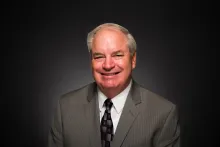
Robin Webber was born in Chicago, Illinois, in 1951, but has lived most of his life in California. He has been a part of the Church of God community since 1963. He attended Ambassador College in Pasadena from 1969-1973. He majored in theology and history.
Mr. Webber's interest remains in the study of history, socio-economics and literature. Over the years, he has offered his services to museums as a docent to share his enthusiasm and passions regarding these areas of expertise.
When time permits, he loves to go mountain biking on nearby ranch land and meet his wife as she hikes toward him.
