

Frank Dunkle
This transcript was generated by AI and may contain errors. It is provided to assist those who may not be able to listen to the message.
I would like to begin today on this message. It's going to be shorter because we're going to have a special presentation afterwards from the home office. I would like to begin by reading a Psalm of David. If you would please open up the Scripture before you, and let's read it together, because it'll be the foundation of where we're going, not only about the God that we're speaking about, but also what He has offered and given us, and what in turn we ought to be as well. This is a Psalm of David. Picking up the thought in Psalm 145, verse 17, it says, The Lord is righteous in all of His ways. He's gracious in all of His works. The Lord is near to all who call upon Him, to all who call upon Him in truth. He will fulfill the desire of those who fear Him and or revere Him. He also will hear their cry and He will save them. The Lord preserves all who love Him, but all the wicked He will destroy. My mouth, my mouth, as was David's mouth, as is our mouth, my mouth shall speak the praise of the Lord, and all flesh shall bless His holy name forever and ever. Here it clearly states that there is one with a capital O that is righteous, and that's God almighty above. But He also called a people, and He called them for a purpose, not only for themselves, but what they might project on the people that are around them. If you would please join me over in Deuteronomy 4, in Deuteronomy 4, in picking up the thought in verse 4, Deuteronomy 4, verse 4. And it says this, Verse 6.
Notice this very important as we bring words together, and what great nation is there that has such statutes and righteous. Remember, God is righteous. He is the one that is inherently righteous. Now He gives to His elected people, the chosen people of old, as well as today. Notice what it says, And righteous judgments, as are in all of this law, which I set before you this day, only, okay, here's the deal, only take heed to yourself and diligently keep yourself, unless you forget these things your eyes have seen, unless they depart from your heart all the days of your life, and teach them to your children, and to your grandchildren, and to the next generation.
It's very interesting as we read this. This was not only for the people of old, this was not only for the people of what we call the Old Covenant, but this is for New Covenant Christians. This is for the Israel of God, as Paul defines it in Galatians 6, 16. This is for members individually, not looking at somebody else but themselves, as to how they would adhere to the statutes and the judgments of that second Moses, that greater Moses, Jesus, Joshua, salvation, who would come and guide the Israel of God today.
He's talking about you and me. And what I'd like to talk about here for a moment, we can read Deuteronomy, we can read other verses, and it talks about doing this. What I'd like to do for the remainder of the message is what does this mean in real time? What does this mean in real time? Just one judgment, just one statue, just one instruction that we're supposed to adhere to. The title of my message is simply this, if you like to jot it down.
And if you don't, I've got notes for everybody afterwards that I'm going to pass out. So you can just take it like this, and you can do your own study off the notes that I'm going to pass. It's only one page, so this message isn't going to go long. So anyway, the title of my message is simply this, A Golden Nugget of Worth, A Golden Nugget of Worth from Deuteronomy.
I know all of us right now are studying through the book of Deuteronomy as a global church family. And what we're going to do, my purpose in sharing this nugget with you, this one judgment, this one understanding, is to excavate and to explore just one law that displays—and this is when you see God's law, and we're getting into Deuteronomy now with so many of these verses. What is that law and that statute and that thoughtfulness convey?
It displays God's love. It displays God's wisdom. And it displays God's care for those who are made in His image, you and me, and all of our fellow man. Let's understand the world of old. The world that Israel was going into and had come out of in Egypt and is about to go into was a lot like in the hollers here in the states. You know, remember the Hatfields and the McCoys? That whole region there in the Middle East still is today, as we know it's what we're watching right now, is very family tied together. It deals with clans. It deals with families. And when something happens to them, they come at you immediately.
They don't hesitate. They've heard something, and they act upon that. And they are willing to take their pound of flesh, not just an eye for an eye and a tooth for a tooth. And we'll talk about that verse at the very end of this message. But they come after somebody. In Deuteronomy 19.15, which we're now going to draw our attention to, which was our reading just a couple of days ago, join me in Deuteronomy 19.15.
And this is the one that we're going to look at. In Deuteronomy 19.15, talking about when an issue has come up amongst families, amongst community, amongst tribes, amongst a conglomeration of peoples like Israel, when it comes up to anybody.
Anyway, just this one verse, it says this, it says, verse 15, Just look at that for a moment. You might want to circle it if you're daring your Bible. If you don't want to do that with your Bible, that's fine.
Notice what it says. One witness coming against somebody is not enough. Now you know this, we've heard this verse, right? Everybody, that's when you can nod. We know you're alive out there. We've all heard this verse. But notice it says, not one witness. We always go to the two or three witnesses, yeah, but you recognize how God stamps this two or three times in the Scripture. One witness will not be sufficient.
You can also find that, and it's going to be in my notes I'm going to pass out to you, Numbers 35.30 and also in Deuteronomy 17.6. One witness is not going to be enough. You go, what? Come on. God says two or three witnesses. Now, why does God do that to you and to me and put that squeeze of responsibility and patience upon us? Join me if you would for a second in, I'm going to take a look here, in Proverbs 18.
Proverbs 18. The book of Proverbs, some of the wisdom that Solomon collected in Proverbs 18.17. Turn to my page. Here we go. Let's allow this to fall on our ears and our hearts and put this into action. The first one to plead his cause seems right until his neighbor comes and examines him. Interesting. What is this telling us? I'll be blunt. Don't be naive. I'm going to use a four-letter word. Don't be dumb. Understand what the Scriptures tell us to do. Let this percolate a while.
Let this rest. Let's see if it's true. Let's, as we bring the Scriptures together, let's allow patience to have its perfect work. Why is this relevant to us today? Let's take it out of the book of Deuteronomy, written probably around 1400 BC, 1440 BC, whatever date you want to put with the Exodus, long ago and far away. How does this relate to you and me? Back during World War II, there was an expression if you're working up in the Bay Area, maybe you're working over Newport News in Virginia, maybe down here in San Diego on the docks as you were loading munitions or maybe you were doing something with the ships or whatever.
There was a very famous phrase. Can somebody tell me what it is? Oh, none of you were born there? No, skip. No. World War I? No. No, no, what? What? Okay. Who said that? Nicole. One of the youngest here. Remember that. Okay, kids. Here we go. Loose lips sink ships. Somebody babbling without thinking. Somebody passing on something to somebody that ought not to hear it.
I want to share something with you. Loose lips sink more than ships. They can also sink hearts. They can also make families crumble that ought not crumble because of passing on. A rumor passing on a hearsay. How often have we said, did you hear this? All of a sudden your ears grow like an elephant. Not an Indian elephant, but an African elephant.
They go big. Lay it on me. And then somehow without thinking about it, we pass it on to somebody. Over the years I've told this story. You know, I haven't been here for half a century. You've heard all my stories, but I try to make them more interesting every time I give them. And that is simply it's like the man that goes to the priest. And he knows he's done wrong. He knows that he's shared some things that ought not get out into the hood.
And so he goes to the priest, goes to the fire and says, Sir, Sir, I've done something awful. I've spread something by my tongue that ought not to have been said at all to anybody.
What can I do? The priest says, My son. Here's what I want you to do. I want you to take goose feathers. And you take them and you put them on every front porch of which you have shared that which you know is now false. Then, oh, then come back to me. Oh, he says, Oh, Father. Oh, thank you very, very much.
I'll go do that right now. So he goes and does that and goes to each household that he has done this to. He's running back. He's just waiting for the good news now. Now, now, now, now. He's felt bad. He's done this action. He's learned his lesson. He comes back. He says, Father, he says, I've done all that you have asked me to do.
And the priest says, My son, now, go back to every porch that you went to. And you put that goose feather on. And I want you to pick it up. And I want you to bring each one back to me. Oh, no! How can you ask me to do that? It is all of those goose feathers have now blown to the wind. There's no way of getting them back.
And so the priest said to the parishioner, And so it is with your words, Go and sin no more. James 1 and verse 19 gives us instruction. Join me if you would there. James is kind of the New Testament Proverbs. It's a book of wisdom. James 1. And let's pick it up here. James 1. Hebrew James. See, I've always got to find Hebrews before I find James. James 1. And picking up the thought of verse 19, notice what it says here. That's not you. I meant Peter. Pardon me. Okay, I'm going to get there yet. Pardon me. Pardon me. Pardon me. James 1. Okay, here we go. So then, my beloved brethren, let every man be swift to hear. Okay, be swift to hear, but slow to speak and slow to wrath. For the wrath of man does not produce the righteousness of God. Be temperate. Be moderate. Which is a term that is often used in the Bible. What's that all mean? Back in Days of Yore, back in the Mediterranean basin of civilization, people often used mixed wine with water. Meditionally, just for health. There was a proportionality. There was a way of bringing things together to get a product.
To not be able to do that, you didn't really know what you were doing, and that's why people go out and not be moderate, and they get drunk, and they would abuse. They did not know how to use the practical moderation of something that was good for them.
Here, we, those that are listening, we that are here, myself, we're all in this together, we've been called to be moderate. We've been called to know how to bring things together in Scripture. We've been called to be guided by God's Spirit and not by our own particular impulses.
God's ways are measured. I'd like to go, in Deuteronomy 29, I want to show you something a second. Let's go back to Deuteronomy. Did I say Deuteronomy 19? We're going to go to Deuteronomy 19. I want to show you something. Deuteronomy 19. Now, this is the last verse. Now, notice this, and sometimes this is misappropriated, not understood. Your eyes shall not pity. Your eyes shall not pity. This is a matter of judgment. Your eyes shall not pity. Life shall be for life. Eye for eye. Tooth for tooth. Hand for hand. And foot for foot.
Wow! Sounds like you're in a hospital and they're committing surgery.
This sounds tough. It really needs to be taken in balance with it saying, be proportional in your measurement when it comes to judgment. Because remember, they had these tribes, these clans, these nations, these people under priest-kings, and they just go in and they would pillage and they would overdo. And or somebody, you know, the kin would go after somebody. And what we're reading right now about those cities of sanctuary, isn't that interesting? Have you read that one yet? About the cities of sanctuary in Deuteronomy? God told Moses, or told Moses, you know, the people going in, you're going to have cities of sanctuary. And not only that, but you're going to build roads to them. Did you catch that part? You are not going to have cities, but you're going to be like Romans before there are Romans. You're going to build roads so the guy that did something accidentally can hightail it and get to the sanctuary before the family comes after him. God is so neat about reading Deuteronomy right now and just kind of putting your eyeballs in it and just taking it word by word. It's so neat. So God's ways are measured. But the first way that we measure is do not take the word of one witness. As good as that witness might be. Can I share your story a second? You know about the one witness? This is a part of the prayer. He said you could. We always try. Susan was called up to court, and so she went. Then you get the morning and being patriotic and doing your civic duty. You get the ra ra ra and you're ready to go in. So Susan went back in the afternoon. She hadn't called yet to come home. She's going back in the afternoon. And what happened was there was a case that it was between an officer and a teenager.
And the only witness was the officer, which no, he's Mr. Officer. Understood. We want to respect our officers, you know. But there was only one witness.
And Susan told the court, you can imagine the lawyers listening to this, you know, and the judge, that I can't do this. Because there's not two witnesses. Bing! Bye-bye! But that was biblically. I don't know if there was a bing or a bye-bye, but it sounds better, doesn't it? So anyway, but that's what happened. Because just sometimes when you get into these juries that are Christian principles, Biblical principles, are going to stand fast, and you just simply can't do it. I'm going to begin to conclude real quickly because you're going to get my notes. Again, don't worry about it. Matthew 18, 25-20, that greater Moses, that second Moses, Jesus, once again, once again, outlines what he as the I.M. had inspired to the original Moses that brought Israel out of Egypt. Very important. One thing I want to mention here. I'm going to mention this. We're going to conclude.
My first sermon in about 40 years is almost over. And that is simply this. Think it about this way. God and Jesus practice what they preach. Have you ever thought of the book of Revelation? And in Revelation 11, for those of you who know that it's in Revelation 11, how many witnesses do we have? Suzanne, you can see this. I know what we go ahead louder. Two. God is about to. God is pronouncing. We're now moving away from the tribulation. The fifth seal. We're still there, but we're about to move away from it. And God sends forth how many witnesses? Two. And they are going to share why God is about to execute judgment on the beast and the false prophet and lovers of Babylon in the future. There are two witnesses. Two witnesses. I find that interesting. That God and Jesus Christ practice what they preach. Is there any wonder why Jesus would send out the disciples one by one? No. How many? How does it go? Two by two. The Apostle Paul in 2 Corinthians 13, verse 1, states, which is actually what we call 2 Corinthians, is actually probably 3 Corinthians. But that's a whole story in itself. But he says, I'm going to come back to you to see if things are so in the mouth of two or three witnesses. Now, what does this mean to you and me as we approach the autumn Holy Days? Join me if you would in Isaiah 11. And with this we will conclude.
Notice what it says here. What are we looking forward to? What does our world, what do our lives need more than ever? We need righteous judgment. We need a leader that knows what he is doing. And Jesus Christ is coming back to this earth. It says, there shall in verse 1, come forth a rod from the stem of Jesse, and a branch shall grow out of his roots. The Spirit of the Lord shall rest upon him, the Spirit of wisdom and understanding, the Spirit of counsel and might.
Wow. The Spirit of knowledge and of the fear of the Lord. His delight is in the fear of the Lord, and he shall not judge by the sight of his eyes. Nor notice by the hearing of his ears, but with righteousness he shall judge the poor. He will judge everybody in equity, in equality, one by one.
And decide with equity for the meek of the earth. This is what we're learning now so that we can assist Jesus Christ by his grace and by the grace of the Father in the future, as those that are being elected now to be in a realm of priests, to serve along before the high priest, who will give us function and give us responsibility and opportunity to teach his ways. Next time you have somebody come up to you and say, have you heard a question that only you can answer? What will you do after you've heard this message?
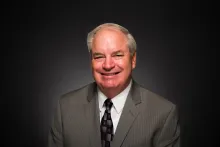
Robin Webber was born in Chicago, Illinois, in 1951, but has lived most of his life in California. He has been a part of the Church of God community since 1963. He attended Ambassador College in Pasadena from 1969-1973. He majored in theology and history.
Mr. Webber's interest remains in the study of history, socio-economics and literature. Over the years, he has offered his services to museums as a docent to share his enthusiasm and passions regarding these areas of expertise.
When time permits, he loves to go mountain biking on nearby ranch land and meet his wife as she hikes toward him.
