
Robin S Webber
This transcript was generated by AI and may contain errors. It is provided to assist those who may not be able to listen to the message.
Okay, well thank you very much to our trio. We appreciate that very, very much. I want to move into this second message today with something that I shared recently in the letter that I sent out before the Council meetings. I borrowed an old German proverb, and I'd like to share it with you for a moment to be able to move into the message that I have prepared for you on this Sabbath day. I wrote these words. They're not mine. They come from an old German proverb, and it simply states this. The main thing is that the main thing always remains the main thing.
In saying that, we have to create a focus as to what is the main thing regarding the Gospel of Jesus Christ and the Kingdom of God. Humanly, we can lose focus of what God is doing and what His purpose for mankind is and what our responsibility is to our Father above and to our brethren below. Over the years, and I pastored now for over 35 years, and at the same time I've grown up in this way of life for 50 years, I've seen people that have wandered away from what we might call the trunk of the tree.
When you hold on to the trunk of the tree, there's something to hold on to through the storms of life. There's a firmness, there's a girth, there's something that you can grab a hold of. Unfortunately, at times, people wander from that trunk of the tree and they go out on the little limbs or the twigs and the branches, and those seemingly firm twigs and branches ultimately snap. Now, when those people wandered out on there, they thought it was firm, but it was only in their imagination.
I think a lot of this is on my mind and on my heart right now, coming off of the meetings, as to where the United Church of God and its membership is going to move. A membership that is very much a part of the Gospel message and the messaging that God wants for this entire world. When we think of the Home Office in Cincinnati, we can think of the Beyond Today program with our three presenters, just like our lovely trio that was up here, presenting beautiful music.
We can think of the magazines that we send around the world. We can think of the activity and the efforts of many of our dedicated employees and or our pastors around the world. But really, when it's all said and done, we need to have this whole church effort. And we need to understand what God considers to be the trunk of the tree and our responsibility towards them. For you and I, as Christians, are not simply called to be lights underneath a bushel, but we are to be those lights, as Jesus speaks of, that are to be on top of that hill, a light on top of that city, so that all can see and so that all can grow.
I'd like to share a few thoughts from the letter that I recently wrote. I'd like to just read briefly to it, because it does affect people. Our role as a body of believers, an assembly called the United Church of God, is not just simply to share information out of the Scripture. Hopefully, by God's Spirit, that information becomes inspiration and ultimately becomes transformation to individuals that want to give their life to God Almighty through Jesus Christ.
We have such a case this afternoon. We're going to have a baptism after church. There can be nothing more joyous than somebody taking that covenant vow that they have surrendered their life. They're putting their life aside, and they're giving themselves to God the Father and Jesus Christ.
That's why we are here. That's why, as a whole, we do what we do. I'd like to just share a few thoughts out of this letter that I recently wrote regarding the retreat session that the Council had, where we gathered together and prayed on our knees and talked to one another, listened to one another, strove to listen to the words of God that come from the Bible, about how to grow in grace and knowledge in conveying the gospel of Jesus Christ and the kingdom of God in a compelling, loving, relevant, and hope-filled manner.
With today's fractured and distracted audience, how do we best grab their attention, address their personal needs, and make them consider the great questions of life? Who and what is God? Who and what is man? Why was I born? Why would God even care? What does it mean to believe in Jesus Christ? Does it mean simply to acknowledge Him and experience a casual acquaintance, or does it mean to follow Him by surrendering every fiber of our being into His service?
Those are the big questions of life, and they must be matched by the ultimate life-givers, big answers, that come directly out of the Scriptures that are on your lap. It's our collective prayer and continuing desire to effectively preach the gospel in such a manner that will move people to change their lives and echo the Apostle Paul's words. Allow me to share them with you. What things were gained in me? These I have counted lost for Christ. Yet, indeed, I also count all things lost for the excellence of the knowledge of Christ Jesus, my Lord, for whom I have suffered the loss of all things, and count them as rubbish, that I might gain Christ and be found in Him, not having my own righteousness, which is from the law, by what I could do, by what I did, but that through faith in Christ, the righteousness, which is from God by faith, that I may know Him and the power of His resurrection and the fellowship of His suffering, being conformed to His death, if by any means I may attain to the resurrection of the dead.
Philippians 3, 7-11. Again, let me just share one more paragraph with you. Allow me, myself speaking, to be clear. We are not out to grow a church by some worldly methodology. But first and foremost, always desirous of growing and understanding the depth of God's spiritual purposes, as defined by His grace, His love, His law, and His judgments. When we understand that this is an ongoing activity, till the day we die, then things begin to change in our lives, and in our families, our local congregations, and our potential impact expands to our fellow coworkers and neighbors.
As we do our part, God will do His part in what only He can do. Sometimes He adds to the church, sometimes He multiplies to the church, as it says in the book of Acts. We will leave that to Him. In the meantime, you and I, our responsibility, is to make ourselves ready as the bride of Christ.
The Council discussed in the recent meetings something that is very familiar that comes out of the Bible, and that is the aspect of growing in grace and in knowledge. I'd like to share a few thoughts, and you might be ready to take a note on this, because it may be something that perhaps we're not totally familiar with as to how it is in the Bible to grow in grace and knowledge.
And the word I'd like to focus on for a moment is the word knowledge. When you look at that word, that's not talking about a collection of information, like in an almanac or in an encyclopedia. It's not all the words that are in Wikipedia that are on the Internet. The knowledge here comes from a word I have the Greek called ganisco. And it's interesting, this knowledge is speaking of a relationship between the person knowing and the object of that which is receiving. The whole thought of knowledge that comes from the Scriptures, the word of God breathed by Him, is not just to be information.
It's not just Greek. It's not just Hebrew. It's not just facts. It's not a jigsaw puzzle for you and I to simply put together. It's about a relationship, and a value is placed on it, as it says in Vine's expository, to establish a union, to develop a connection, to develop a relationship.
And it mentions much as in the union of a man and a woman in marriage. In other words, oneness. This knowledge is of no use, no use at all, unless it is put into practice. Interesting. Likewise, it says that we are to grow in grace. To grow in grace. Grace and knowledge. I'd like to share some of that grace and knowledge with you this afternoon. And if I become repetitive over the months and the years ahead, well then, I'm in good company.
I grew up right across the Arroyo here in Pasadena, and I attended services for many, many years there. And for any of you that ever had that opportunity and pleasure to do so, there was a gentleman that used to speak on Friday Night Bible study and all the time in services. And I was always waiting for a new sermon to come from him.
And it seems like he got stuck. Like, for those of you that are older, remember when the needle on the record player used to get stuck on the 33 or the 45 and...
Kind of like Frank Sinatra's song, like, over and over, I keep going over. Just got stuck on that word. And I'd go to services. I'd be at Friday Night Bible study and, you know, come after a long day and just ready to hear something out of the Bible. And the gentleman would get up and say, I am so excited, brethren! I'm going to bring you something new this evening. I thought, wow! Because this gentleman was known to speak on the two trees. I thought maybe there's a third tree. I thought maybe there was something new here, new leaves. Not quite sure what was going on. Go right back in. Go right back to the very basis of where it all started. What God's pleasure was. What God desired from this special creation. Truth is never new. It's ageless. What is new, brethren, is how we respond to the truths of God and not only hear them, but live them. Likewise, I want to follow in that example because other than the two trees, there are principles that come out as the great rhythms of the Bible. And I'd like to share that this afternoon. The two words I'd like to acquaint you with this afternoon are just simply two words, not three, not four, not five. The two words are simply this, grace and peace. These are the two great words of the Christian faith. But there's something beyond just simply grace and peace. There's a demand item in this, and I want to share it with you. Grace and peace do not operate on their own. They are exercised by faith, and they are exercised by love. Not a love that we are born with, but a love that is given to us by God, by His Spirit and dwelling. And we can only exercise that love. We can only experience that grace and that peace that Christ spoke of on that last night of His life, that, in my peace, I give unto you. If we only understand what God is doing, not only understand it, but have faith in it, that God has that destiny for you and me.
It's noteworthy how most of the epistles in the New Testament open or end like bookends with these two words. I don't know if you've ever noticed that or not. I may be the only one. Not sure. But if you just do a thumbnail sketch, and I want to warn you, we're about to do that. We're going to kind of do a journey through the New Testament for a moment. You will normally find that every epistle begins with a thought of grace and peace.
And every epistle ends with a thought of grace and peace. And did you realize, brethren, that the book that ends all books, the end of the Bible, the way that it is placed, the last words in Holy Scripture are about God's grace? That no matter what occurs in our lives, whether we're in the first century A.D.
or that which is yet to come, or what might have occurred on your Thursday or Friday of this week, we that are under the New Covenant experience His grace and can have His peace. But we have to understand what it is. I'd like to talk about this for a moment. Grace itself always has two main ideas. And again, you might want to take some notes on this to stay with me. You don't have to. But I think it will help a little bit. Grace always has two main ideas. And I draw this from William Berkeley's commentary.
The Greek word is charis. That's where I get the word charisma. The Greek word is charis, which could mean charm, such as being charmed or being blessed and or given gifts. What is interesting, this word charis, this grace that is spoken about, always describes a gift. And it describes a gift which it would have been impossible for a man to procure for by himself, and which he could never earn in any way and in no way ever deserve.
Interesting. Very much with the thought of redemption, which was a term that was used about a gladiator or a slave or a criminal that could, of and by themselves, not purchase their own freedom. They were condemned. They were set in that cast of society with no glass ceiling above that could be broken. And God says, I give you grace. An individual that understands that they have been made free, that the chains are broken, and that they have been given this charis, this grace, this gift from God to be given a life.
There must be something that is then unique about that individual. Barkley is very interesting in his wording here. He says, there must be a certain loveliness in the Christian life. There must be a certain loveliness in the Christian life. And then he goes on to say this, which is interesting. A Christianity that is unattractive is no real Christianity. Kind of goes like this. Are you a Christian? Oh, yeah. If you put it that way, grew up in this thing, kind of went through the, well, kind of like television.
Can we talk? Can I share with you everything that's ever gone wrong with me in my life? Person says, you're a Christian? Yeah. Allow me to read again what it says here. There must be a certain loveliness in the Christian life. A Christianity that is unattractive is no real Christianity. I bring this up because more than ever we see the role of the church being not only what the gentlemen are doing on the Beyond Today program, our writers that are with the Good News magazine, but what all of us are doing as a church, as an assembly, as followers of Jesus Christ.
That that message of optimism and hope and enthusiasm that is generated from dedicated ministers and writers, men and women alike that write, and all that we do, there's got to be a seamlessness. There's got to be a seamlessness from what our ties and our offerings put out for the world to hear and to experience. And then when people come into our midst and they meet a Robert Lyons, they meet a David Hoover, they meet a Mr. Mueller, they meet a Frank Fish, they meet a young person like Isis Ahearn. They're looking for the real deal. I had a person, I have a lot of people calling me these days about attending services.
They don't always attend here in Los Angeles. It might be in San Diego. It might be in Bakersfield. It might be in Redlands. And interesting, this past week I got an email and it said, I'm searching for the church that Christ built. I talked to the woman on the phone. She said, I'm a seeker. That's how she described herself. She said, I'm a seeker. It means that she's not settled. She hasn't found it. What will people find when they meet you? Will they find that loveliness, that grace that is spoken of that has been visited upon each and every one of us?
Barkley goes on to say this, Thus, whenever we mention the word grace, we must think of two things. Number one, the sheer undeserved generosity of God Almighty. When we think of grace, we must think of the sheer enormity of His generosity that is undeserved and show gratefulness. And then number two, the sheer loveliness of the Christian life.
Another word that Paul uses a lot is the word peace. He couples that with grace. And I'd like to share that with you for a moment before we explore some. When we think of peace and connection with the Christian life, we need to be careful. We need to be discerning. In Greek, the word is arian. I'm not going to spell that for you. It's one of those Greek words you don't want to spell. But even in its translation from the Hebrew, the Hebrew itself is shalom. I think a word that we're more familiar with. That shalom, the shalom that is used in the Bible, is a piece that does not necessarily describe the absence of trouble or the absence of conflict.
Christian peace is something quite independent of outward circumstances. Interesting. Christian peace, that peace that passeth all understanding that is so deep inside of us because of our faith in God Almighty. And because of understanding the great love that He gave you and me when we did not deserve it, stays inside of us deep to where man and circumstances cannot touch. Ultimately, it is abiding. That means staying. You know, we use the word abiding. And it can seem soft. Abiding means anything but soft. It means being absolute, firm.
Firm within the purpose, the plan, the promises, and the provisions of God and Christ. It is having faith in Him, obeying God, and then leaving those consequences to Him. Peace. How do you define peace in the Christian?
Peace is basically this. Thy will be done in heaven, on earth, as in heaven.
And then living that, not just reciting it, but living it by thought, word, and deed in our lives. I'd like to go through an exercise for a moment. Let's open up our Bibles on this Sabbath day. Join me if you would. In the book of Romans.
Because one thing I always like to share with you, brethren, is simply this. The Sabbath day is not the beginning and the end of your spiritual life. It's just a springboard. It's Christians coming together, opening up the Word of God, and hopefully stirring up some thoughts. And then you take it from here, and then you have your own study. You go to God in prayer and say, well, the ministry or the speakers brought this up. We prayed about it. We invoked your name. This must be something that we need to get into and to understand. And then you do your own study on Sunday, Monday, Tuesday, Wednesday, Thursday, and Friday. And then pray about coming to church and being expectant that God then is going to give you the next assignment of heart work or homework. Let's just go through this exercise for a moment, because I think you'll find it interesting. Remember what I said before. Grace and peace are basically the bookends. Think of it that way. Think of it like a PowerPoint bookends. The bookends. It's what Paul and Peter and John start with. It's what they end with. Everything in between that—stay with me. Let's all look up here a second, please—everything in between that is held up by those two terms. Grace and peace. Everything else in between is fleshing out what God's grace is. It's fleshing out the peace that you and I can have as we go through the day, recognizing that Jesus never said that it would be easy. But He said that it would be worth it. With that thought in mind, let's go to Romans 1. Notice what it says. In the book of Paul, verse 1, chapter 1, a bondservant of Jesus Christ called to be an apostle, separated to the gospel of God, which He promised before through His prophets and the Holy Scriptures, concerning His Son Jesus Christ, our Lord, who was born of the seed of David according to the flesh, and declared to be the Son of God with power according to the Spirit of holiness by the resurrection from the dead. And through Him we have received grace and apostleship for obedience to the faith. Faith does have a demand. Obedience is the act of expression that you and I believe.
Among whom you also are called of the Lord Jesus Christ. To all whom are in Christ, beloved of God, called to be saints. It's very interesting that as the Apostle Paul opens up the book of Romans, he mentions two very specific words. You might want to circle them if you're brave enough to use your Bible that way. The one is bondservant. That literally means a slave. That means, out of the Greek, that is doulos. He has turned the sovereignty of his life, he that was free in his own eyes. He's turned that sovereignty over to God Almighty and to Jesus Christ. And when you look at verse 3, when it says, Son Jesus Christ our Lord, Paul uses his favorite word for Jesus Christ. Lord. It comes from the word kyrios, out of the Greek. Master, Lord, the King of my life. Now he sets the stage and then notice verse 7. Grace to you and peace from God our Father and the Lord Jesus Christ. This grace and this peace comes both from God the Father and Jesus Christ. God the Father is always mentioned up front and first. He is the ultimate chairman of the board of heaven and earth. And Christ is right there along with him. Join me if you would in the end of Romans. That's how it begins. And then there's this tremendous treatise regarding salvation in the book of Romans. But then let's go to the end here. Verse 24. With everything now stated, the grace, verse 24, chapter 16, the grace of our Lord Jesus Christ be with you all. Amen. Now to him who is able to establish you according to my gospel, this good news, and the preaching of Jesus Christ, according to the revelation of the mystery kept secret since the world began, but is now made manifest and by the prophetic Scriptures made known to all nations, according to the commandment of the everlasting God for obedience to the faith, to God alone, wise be glory through Jesus Christ forever. Amen. The Apostle Paul begins with grace. He ends with grace, and he speaks of this peace. The same peace that Jesus spoke of on that night in which he was betrayed, that he said, I will leave my peace, doesn't mean a life that is absent of conflict. I speak to the lady that's going to be baptized today, that when we covenant, sacred covenant with God, and we surrender our life to him, that does not mean that all the butterflies are going to be lined up in formation down here below, but to recognize that God is working with us and tooling and dying us spiritually in this sacred calling, that you and I might one day be in sacred service under Jesus Christ forever as a kingdom of priests. Let's notice then 1 Corinthians chapter 1 verse 1. Paul called to be an apostle of Jesus Christ through the will of God and the sustenance of our brother. Verse 3. Grace to you and the peace from God our Father and the Lord Jesus Christ. Grace and peace of what I've discussed, this undeserved pardon, this gift from above.
And the peace, the passive understanding, is the first thing that the Apostle Paul always talked to people about. I have a question for you. May I? Can we talk? What do you talk to people about when you talk about Christianity? Where's your head at? Just asking. Where is your heart at?
Are these the kind of spiritual dynamic topics that you discuss, Christian to Christian?
When people call me on the phone, and I always take a phone call, they want to know who we are. They want to know what the United Church of God is about. What do you think I tell them? Do you think I roll out a whole list of what we do and what we don't do? No. I always, first and foremost, tell them that we are members of the body of Christ. I tell them that we are an instrument within that body, that we're a Christian church, that we believe in God's grace and are recipients of that. And because of that, we come to God in faith. So we are recipients of that grace. We respond to Him in faith. And then, oh yes, and by the way, because of what God is, see, every time they call me, they get a sermon.
But this is how I share Christianity. Not by what I do, but what God has done. Focus on what God has done. And because of what God has done, then we read the book, then we see His will, then we see the example of Jesus Christ. And we respond, and we live like Jesus Christ lived when He was on earth as the Son of God. And then I say, and yes, and by the way, we do keep the Seventh-Day Sabbath. We keep the biblical festivals in the light of Jesus' life and death and resurrection and ascension. And by the way, our church members really, really believe in the Second Coming of God. And they really look forward to that.
Then I say, is there anything else you'd like to ask? But you see, you use the example that is set before us as to how to share the Gospel. It's a Gospel of grace. It's a Gospel of peace. I think I already covered the end of 1 Corinthians. Grace, let's get 2 Corinthians. Grace to you, verse 2, and peace from God our Father and the Lord Jesus Christ. Paul could never wander off or away from that trunk of the tree. Again in 2 Corinthians 13, verse 14, the end of 2 Corinthians. The grace of the Lord Jesus Christ, and notice the love of God, and the communion or the canos of the Holy Spirit, that oneness that comes through that. Be with you all. Amen. Let's turn a page and look at the book of Galatians, chapter 1, verse 3. Grace to you and peace from God the Father and our Lord Jesus Christ.
And then we go to the end of the book of Galatians, verse 17, chapter 6. No, verse 18. Brethren, the grace of our Lord Jesus Christ be with you. We be with your Spirit. Now notice Ephesians 1, verse 3. Grace to you and peace from God our Father and the Lord Jesus Christ. Now some of you out there might be saying, Mr. Weber, will you please change the dial?
Sounds like you're stuck on a rut. If we do not understand God's grace, that unmerited pardon, that light of life that is to live inside of us, and if we do not understand the peace of God that is to come upon us because of what He has done for us, and we believe in Him, as much as Father Abram left Ur and believed in Him, that when all the cars were coming into town out of antiquity to Ur, the Chaldees, there was only one car going out of Ur. Only one car. You ever been that under... You should have seen the freeway Susan and I were on today, 70 miles from here.
I had to say, peace is not the absence of traffic.
There is only one car going out of town.
That was Father Abram, later Abraham. Why am I saying this? If we do not understand the grace of God and His great love, and the peace that He desires to give us by what He shares in between these portals of grace and peace, the rest is useless. It's just going to be knowledge. You're going to be a walking, talking, two-legged almanac of knowledge. And you're not going to be developing the grace and the knowledge of that union and connection of Genesco, of the great One, the divine One, imparting this information to an object that you and I is special creation, so that we can come into a union and a relationship with Him that is sacred. Let's look at Ephesians, verse 2, Grace to you in peace from God our Father and the Lord Jesus Christ. The end of the book of Ephesians. Notice what it says, The grace of our Lord Jesus Christ be with you. Colossians, grace to you in peace from God our Father. Colossians 1, verse 2, and the Lord Jesus Christ.
Now, I could go on and on, but I'm going to skip the rest of Paul, and we're going to go to John. No, we're going to go to Peter. Come with me to Peter.
You say, well, Paul was really stuck on grace and peace. Well, let's notice another man that experienced grace, Peter. Peter 1, verse 2, Grace to you, and not only that, but may it be multiplied.
May it be multiplied. May we come to more deeply understand it.
May we have, as we understand it, more of that lovely countenance that people understand that they have experienced a conversation and time with a Christian.
And not the person that is, well, I'm just going to waiting for the second coming, because nothing sure is happening down here.
Did you realize?
I gave that message, I think, here recently on crowns, and that a crown of life is set aside, and for all of those that love his appearing. That word appearing is not perousia. It's a different Greek word that means it comes to the same word that we use as epiphany, that we now see the light of God's gift, Jesus Christ, in our life, that we're not just simply responding to a trumpet call, but we are responding to the Spirit of God, that for as many as are led by the Spirit of God, or the sons of God, and that we are living our life today under that grace and peace.
Because if we are not experiencing this epineus, this epiphany, or this appearing now, and responding to it with a life of grace and peace, the other one doesn't count. This is rehearsal. Mr. Pichka spoke about the Feast of Trumpets. Feast of Trumpets is for the world, in part. That's when Jesus Christ comes, and he comes, and he conquers the nations. We have an individual here today that is going to take a vow behind me in just an hour or so and she is saying, I am surrendering my personal kingdom to God the Father and Jesus Christ today. I'm doing this voluntarily. I understand the grace. I understand that the road ahead of me might be bumpy, but I know that I will not be alone. Let's notice the words of the end of 1 Peter. 1 Peter 1, verse 14. Peace to you all who are in Christ Jesus. And if so, amen, so be it. I'd like you to turn to the book of Revelation, because time is awaiting here. The book of Revelation was not only written to the first century, it's also written to all Christians down through the centuries to you and me today. And notice in verse 4, Grace to you and peace from him who is and who was and who is to come, and from the seven spirits who are before the throne. This is the set up because the book of Revelation is going to share what's going to happen from the first century A.D. to the people of God until Jesus Christ returns. You know that story, and I know that story. It's a revelation, and it's challenging. But then I want you to go to the very end of the book, Revelation 22. Don't know if you've ever seen this before. After everything that is spelled out here that's going to happen to Christians down through the ages.
Revelation 22, verse 20. He who testifies to these things says, Surely I am coming quickly. Amen. Even so, even with everything that you have said, come quickly. And even so, come Lord Jesus. Verse 21, the last verse in the Bible. The grace of our Lord Jesus Christ be with you all. Amen. Do you see the tremendous bookend effect of grace and peace? And our responsibility to understand it, to internalize it, to embrace it, and then to share that by our light of example, thought, word, and deed.
And to share that so that it is a lovely experience. To keep grace and peace first and foremost in our lives, we must understand God's great love. Join me if you would in John 3, verse 13. In John 3, verse 13.
Often we hear this phrase and we don't know the background. This is in the conversation with Nicodemus, who is basically saying, does a man have to be born again, as it were? What are you talking about, Rabbi? I don't understand. So we follow or we enter into mid-thought here. Verse 13.
And as Moses lifted up the serpent in the wilderness, even so must the Son of Man be lifted up. That serpent in the wilderness was lifted up. And it was lifted up between life and death. The plague had come into Israel because of their disobedience. They were cut off. People were dying.
And thus this emblem was raised up. This was a typification of, in years to come, how Christ would be raised up on a stake. And that He would be the salvation. That He would separate us from death. And accepting that sacrifice would give us life.
That whoever believes in Him should not perish, but have eternal life. For God so loved the world that He gave His only begotten Son. That whoever believes in Him should not perish, but have everlasting life. Then notice verse 17, for God did not send His Son into the world to condemn the world. The world is not our enemy.
Worldliness is God's enemy. Humanity is God's special creation, led astray, given a choice, and making a wrong choice at Eden. That door was closed. It was slammed shut by an angelic carob. Christ is that door. He is the door that allows you and me to return to that Eden, to where God will walk and talk amongst His people. You talk about Ward's message. What is that message about? From trumpets to atonement, to the Feast of Tabernacles, to the eighth day.
It is basically a return to Eden. When you go to Revelation 21 and 22, it describes a garden. It describes a garden. It describes, when you think of Revelation 21, where it says that, when it talks about the Bride of Christ coming down, when it talks about God walking amongst men, it is a typification of that future Eden, that God wanted for all of humanity from the very beginning, but Father Adam, Mother Eve, rejected, and you and I have done our part along the way. That is why Jesus Christ came. God loved us. When you understand grace and the peace that comes by that, you and I also have responsibility.
It's not only what God the Father has done through His Son Jesus Christ, but it's what God's expectations are of you and me today as we understand grace and that peace. Join me if you would in 1 John 4. 1 John 4, which speaks about love.
1 John 4, verse 6. I just had a lady die recently. San Diego died about a week and a half ago. This was a lady that was, if you talk about a record being stuck, the needle being cracked and going around and around, she had one thought on her mind. It's kind of interesting when you get older, how life simplifies and all the stuff that you thought was important. Can we talk? All the stuff that we thought was important becomes dribble, becomes like something that's in a five and dime store, which there aren't too many of anymore.
All the things that divided us from family and people and brethren, things that we just got agitated about, got out on the twigs, got out on the branches, thinking those were real firm. Kind of when you get older, kind of see life differently. It's been said that the poem that is read by the man that's 20 years of age, reads differently when you're 80. Think life has something to say about that?
And this woman, she got stuck on a Greek word, agape. And just like that gentleman that I talked to you about, about the two trees, this woman would write letters, and Susan and I and other members of the San Diego congregation, you ever got a letter where, you know, the envelope was really too small for the message that was in it, you know, like this, you know, and this woman is writing and writing and writing, and I mean, this thing, you know, if you landed on it from 30 feet, you'd be safe, it'd be like a cushion. And she'd just be writing.
She's 82 years old, and she's writing. You know what she's writing about? She says, I want you to get it. I want you to see it. This is what God's called us to. About three weeks ago, I went over to, there was a baptism down in La Maison, I went over and visited her because she's homebound, and there's a big piece of paper on there and kind of a drawing of crayon.
She's kind of a character, too. And it just said, agape. This is the way. That was her life. I have a question for you. What is your life about? What have you distilled it down to in your reading of the Bible, in your listening to God through His Spirit, in your emulating the example of Jesus Christ? It's a little bit like what we find in 1 John 4 and verse 6. We are of God. He who knows God hears us. He who is not of God does not hear us.
By this we know the Spirit of truth and the Spirit of error. Beloved, let us agape one another. Let us love one another. For this kind of love is of God. And everyone who loves this way is born of God. There's a match. You know how often if I talk to people, maybe you're the same way, you'll see a couple kids and you'll look at them, you'll just look at them and say, I know what factory they came out of.
You look at them, you look at the parents. You just know. You know the match when you see it. And that's what we need to be like as the people of God. That when people come into our midst, whether it's the workplace, for some of you that are younger, at college, at high school, junior high, in your neighborhood, they see the real deal. They see one that's born of God, born from above, one that matches what their Heavenly Father desires and His children.
He who does not love does not know God, for God is love. In this, the love of God was manifested towards us, that God sent His only begotten Son into the world, that we might live through Him. Our agenda is no longer at the top. How we would do things is no longer the prime force.
In this, it says this, in this verse 10, is love. Not that we loved God, but that He loved us and sent His Son to be the propitiation for our sins. With all this said, beloved, if God so loved us, we also ought to love one another. Because we've experienced this unmerited pardon, this charis, this charm, as it were, this charmed existence that we didn't pay for, but was granted us. No one has seen God at any time, and if we love one another, God abides in us, and His love has been perfected in us. By this we know that we abide in Him. Aha! We know now this is it.
John says, this is how you're going to know. No secret here. By this we know that we abide, that we stay firm within the walls of that grace and that peace. How? By this we know that we abide in Him and He in us because He has given us the Spirit.
And we have seen and testify that the Father has sent His Son as Savior of the world. And whoever confesses that Jesus is the Son of God, God abides in Him and He is in God. And we have known and believed the love that God has loved for us, that God has for us.
God is love, and He who abides in love abides in God, and God in Him. That's how people know. Well, you say, well, that just sounds like a bunch of love talk. Sounds like John Lennon, all you need is love. No. You and I are faced with that, brethren, every day and every way, as to what comes our way. In our own personal life, in this plane of marathon, this battlefield that lies between our ears, where we battle and we challenge ourselves and we go up and down, as to whether or not we understand the love of God.
The love of God is to come out of us, myself as a husband, Susan as a wife, as we have covenant with God to live all of our life together through thickness and through thin, for better or for worse. When you live with another individual, you recognize you live with another individual. When you recognize that you live with a woman, you are living with a woman. And by the way, they are living with a man.
And women don't think like men. And men don't always think like women. We all want the same thing. We want the same goal. We want to reach it. You know what I'm talking about? We want to reach it. But we're kind of moving in a little bit different tracks.
And so this love of God in me, in Susan, in you, in yours, in your relationships, we don't put what Robin wants, what Robin gets. We don't bark. We don't, you know, immediately jump. We recognize that I've been rescued myself. I've been given grace. And because I have been forgiven, and because God has been long with me and my inabilities, that when certain things happen between Susan and I, or you and your mate, you and your children, you and your grandchildren, hello, you and your employer, kids at school, things that happen in the neighborhood, you stop in your tracks. You recognize that you stand on the footsteps of Jesus Christ.
And you just don't blurt out what you want to say, what you want to think, what you want to do, and all of your good outcomes, because all of your outcomes, apart from this grace and this peace and the words that are in between these pillars in the Scriptures, lead to death. And thus, I stop myself in my tracks. Do I dare say as much as I can, not all of the time, but I strive, as you do too.
But brethren, it says to grow in this grace and in this knowledge. Let's complete the thought. There is no fear in love, but perfect love cast out fear because fear has torment. But he who fears has not been a perfect in love. We love him because he first loved us. It's something, brethren, that we have to continue to grow in if we are going to be pleased to God as individuals and as an assembly and to be a witness. I've been thinking about it quite a bit recently. And more and more, I think that the Church of God is a whole.
It's not what we preach over electronics. It's not what we publish. That's all well and good. But it's also what each and every one of us is doing here, that it's just got to be absolutely seamless. That God's name might be honored.
And that we can preach the gospel through our lives and through our example. And that there is something beautiful inside of us. Beautiful inside of us because of what God has done and not because of what we have done. Let's conclude by going to 1 Peter 2, verse 1. 1 Peter 2 and verse 1. Therefore, laying aside all malice, all deceit, all hypocrisy, all envy, and all evil speaking. And you know, unfortunately, that can even happen in Christian communities and in the Church of God as a whole. And that happens, brethren, when we stray out on the limbs, when we think that the twigs are the trunk of the tree, and when all we can see is ourself rather than seeing what God has done for us.
Put that aside. But as newborn babes desire the pure milk of the word, that you may grow thereby, grow in grace knowledge, grow thereby, if indeed you have tasted that the Lord is gracious. It's interesting, the Greek, that word tasted, you might want to circle it. The word there can mean if you have devoured the Lord or experienced, but God has done through Jesus Christ.
It is then that your life changes. It is then that we understand the grace of God. It is then that we understand that Jesus Christ never promised us, like that gal did about 40 years ago, a rose garden. But to those that understand that grace, understand that peace, He did promise us an ageless kingdom. Look forward to seeing you after services.
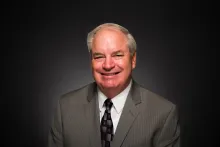
Robin Webber was born in Chicago, Illinois, in 1951, but has lived most of his life in California. He has been a part of the Church of God community since 1963. He attended Ambassador College in Pasadena from 1969-1973. He majored in theology and history.
Mr. Webber's interest remains in the study of history, socio-economics and literature. Over the years, he has offered his services to museums as a docent to share his enthusiasm and passions regarding these areas of expertise.
When time permits, he loves to go mountain biking on nearby ranch land and meet his wife as she hikes toward him.
