

Robin S Webber
This transcript was generated by AI and may contain errors. It is provided to assist those who may not be able to listen to the message.
I'd like to quote from a recent letter by Mr. Kubik and allow that to be a foundation and then move forward and actually practice what I wrote a couple of weeks ago to you regarding this time that has been set aside for any time that you might consider praying and fasting and beseeching God and having that time with Him. I'd like to just read this for a brief paragraph and then I'd like to build upon that for a moment. Mr. Kubik mentions here, as we strengthen our relationship with our Father in heaven, I would like to ask for a churchwide day of fasting between January 25th and February 8th, so over the span of a couple of weeks when you might be able to. What's very interesting here, and that's the reason why I want to focus on this for a moment, he specifically mentions we are not in a crisis, nor is there some monumental decision to make. I'm just asking for all of us to humble ourselves before God so that we can grow and bear fruit. And the growing and the bearing in fruit that he is speaking about is not numerical, but it is spiritual. It is of the essence of where God wants us to grow and become like Jesus Christ. Then he goes on to say, prayer is our lifeblood. Bible study is our food, but it's fasting that is the catalyst that focuses our special attention upon doing what we should. Over the last several months, Mr. Cupich has mentioned again and again, and it's basically a thought of thanksgiving that right now within the United Church of God, we've had a period of grace and of peace. Let's call it that. Grace and peace. And grace is God's favor, and peace is what he alone can give. And of course, Jesus Christ is the Prince of Peace. But as I have mentioned to other congregations in other places, what I like to say is grace and peace, because we know that there are different chapters in our personal life and in the collective life of the body of Christ. And as I have so often mentioned that when those days do come, those weeks do come, those challenges do come, that we do not find our values in the valley. We do not find our values in the trial. They don't all of a sudden appear like a genie. We take our values into that trial, into that chapter, with us. And that is going to motivate me forward to share with you, then, the title of the message of today. And that is simply, Teach Us How to Pray. Teach us how to pray. It's very interesting that Mr. Kubik uses these words, and he writes his own letters, so this is on his mind. He said, prayer is our life's blood. I have a question for you. Have you ever overheard someone else pray? And maybe they didn't know that you were listening. But have you ever listened to somebody else pray and just stand by the door? And I'm again talking about being a peeping prayer, or whatever that might be, where you're there peeping in, watching somebody pray. I thought that might get a laugh, I'm not sure. Maybe we just want to move on. But anyway, to over-listen. I think I've used that story many, many times before about the little girl that was praying in her bedroom. And her grandfather was coming down the hallway, and then all of a sudden heard all of this mumbo-jumbo going on there, and he didn't know what was going on. So he kind of opened the door like, watch out kids, like grandparents and parents do. And he put his ear and looked in, and he began talking to his little granddaughter, and he said, what are you saying and what are you doing? I don't understand. She said, neither do I. I don't know what to pray about, so I'm just giving God the letters, and I know that he'll figure out the words that I'm trying to speak to him.
And so, all the more so than that, when we look at this, overhearing somebody else, or at times, wondering what to pray about. And here's another thing, have you ever wondered what to pray about? Here we have this line out of a letter, and it says that prayer is our life blood.
I know all of us do desire to pray. At times, prayer is a challenge, both not only in time and in priority, but just being able to put one word after another. So, so how do we pray to God? How may our prayers be more effective? You know what's very interesting is that Jesus Christ, during his earthly ministry, never taught or instructed his disciples how to speak. And yet, so often, even in the church, we've often trained men how to speak, speak, speak, speak, and speak, but we have not always focused on teaching them to be people of prayer.
Jesus, on earth, did not have a spokesman's club. What Jesus did have is, he told us how to pray. And not only that, but he modeled how to pray by himself. The prayers spoke of the man, and the priority that he put on it spoke of his relationship with God Almighty. That again, then, is why I want to bring this message to you today. Teach us how to pray. And what I would like to do, then, is I would like you to open your Bibles, and I'd like to show you one of the great prayers, if I can put it that way, of Scripture that we're going to go through.
And it is not the Lord's Prayer, as we call it. We're not going to be going to the Gospels, but we're going to be going to the Book of Ephesians. For those of you that read the letter that I sent out a couple weeks, I said you might really want to focus on the Book of Ephesians, and to look at that. Because when we do that, when we do that, I think we are going to come to understand, then, how we might grow in grace and in knowledge. Just to simply say that we are a church that desires to grow in grace and knowledge, and just say we are going to grow in grace and knowledge, and or to develop and grow in spirit and truth.
That can just be a bumper sticker. That's just a bumper sticker. Now that's good. We want to do that, but we've got to flush that out, don't we? Otherwise, it just remains a phrase on a bumper sticker. Well, that's one of the reasons why God inspired the Apostle Paul to give us the Book of Ephesians, so that we would understand how to grow in grace and knowledge, the need to do so, and also to pray that others might also grow in grace and knowledge along with us.
Let's understand a little bit about the background of the Book of Ephesians for a moment. It's written by the Apostle, the man named Paul. It's very important to understand, and we'll speak to this later on, that the Book of Ephesians is written from prison. Paul is imprisoned. He is captive. He is a prisoner of the Lord. And he states that so in the Book of Ephesians. In fact, he mentions it twice. What is very interesting is because of his state of spirit and his mindset, it's very interesting that Paul never called himself a prisoner of Rome.
He never called himself a prisoner of Caesar. He said, I am a prisoner of the Lord. In whatever circumstance he found himself, he recognized that he was not outside the purposes and the will of God. No matter what chapter was in his life, whether it was the green pastures, whether it was the still waters, and or whether it was the valley of death, Paul always recognized that he was owned and belonged to God the Father and Jesus Christ, and that there was a purpose being worked out here below, even when he could not see it for the moment.
Now, what is very interesting then, here he is closeted as a prisoner, whether it's house imprisonment or a seller in a Roman jail cell, we just simply do not know. But we recognize that he was imprisoned, he was limited, and yet it did not limit his viewpoint of what God's purpose was for him and for you and for me. In fact, it's very interesting when we open up to Ephesians 1, and that's not where we're going to center, we're going to springboard off of that.
But when you begin with Ephesians 1, verse 2, it says, grace to you and peace from God our Father and the Lord Jesus Christ. That is always how Paul, and yes, Peter, also started their letters. It was always speaking to and recognizing the grace of God. Not only what God has done by forgiving us and his unmerited pardon, but that grace speaks to more than that, that it is God's ongoing, unlimited, unfathomable mercy and continued intervention in our lives directed towards us being a part of his ultimate purpose.
And he says, and peace from God, not the peace that's down here. Have you noticed how hard it is for man to make peace anymore, to finish up anything?
Matters just remain in turmoil, whether it's Afghanistan, whether it's Iraq, whether it is Syria. And seemingly more and more it's harder to deal with the Afghanistan, the Iraq, and the Syria's in our own life because so many laws are being broken.
Generationally or in our own life. That in a sense it's hard to put one plus one plus one together to make three. Everybody wants to come up with the same sum, but they want to do it different ways.
And so all of this was going on, and God says he gives us peace. Now peace is not the absence of conflict. The words here, grace and peace, are the two great anthems of the rule of antiquity by two of the great peoples of the rule of antiquity, the Greeks, the Jews. The Greeks would say charis, from which the word charisma comes from. May you be charmed. May you have gifts. May you have honor. May grace, charis, be bestowed upon you. And then Paul being aware of both cultures then added the great anthem of the Jews, which is both that are hello and goodbye, Shalom.
And when a Jew says Shalom, it's not he's granting you the peace of the 1960s with two fingers up. Hey man, peace. But he's asking a blessing upon you. He's not asking that you have a trouble-free existence. That's taken for granted if we're here on terra firma, but that is being stated that God above will grant us, grant us all of the tools and all of the wisdom and all of the prudence that we can have, that we might honor him and glorify him. Some of you today are needing more than ever God's grace. Some of you are needing that peace of heart and that peace of mind with some of the challenges that you're going through, whether it's in your marriage, whether it's in your finances, whether it's in your child rearing, whether it's on the job, whether it's something that is going deep in your own heart where the storms of life just seem to be passing through and never abating. God says grace and peace. And then what is very interesting from verses 3 through verses 14, verses 3 through verses 14, Paul opens up prayer and this is a prayer to God. We're listening in and for all of these verses it is one thought. I'll let you go back and read that. That's not where I'm going. But from verses 3 through verses 14, it is one continuous thought of breathless gratitude for what God has done. There's no period. It's as if Paul is, if you remember what a gaddling gun was like, you know, like that, is that it's just ongoing praise and praise based upon understanding of what substance God has revealed.
Now that takes us up to verse 15. And this is where I would like to springboard then and to move through these verses. And actually we're just going to go through verses 15 through verse 23. But I hope that you'll stay with me and see what we can learn from all of this.
Because now we come to Paul after his praise. I want to share a few thoughts that maybe you've never looked at before that hopefully will be of benefit to you. Notice then what he is doing.
Because during this two-week period of fasting, I didn't say fasting for 14 days, but sometime in there as God's Spirit moves you to take the admonition of the heat of Mr. Cubic that you might fast. Why are we fasting? And is it only for ourselves? And or are we also considering the body of Christ around the world, whoever, wherever they might be, that we also are mindful of them in prayer? So let's begin in verse 15 and work our way through and understand this because this is the example. Here is Paul, a man of God. He's in prison.
He's in prison. Life is not easy. And yet from that prison it's as if God's will, God's revelation is like a window. He's looking out.
It's not a mirror where all he sees is himself. The purpose, the plan, the scriptures of God are a window. They're an opening to heaven as to what God purposes, not only for you, but for every individual that's made in his image and after his likeness.
Therefore, now comes the transition because of all of this praise and everything that God is doing. And we're going to venture back a little bit later about that. But he says, therefore, I also heard of your faith in the Lord Jesus and your love for all of the saints. Do not cease to give thanks for you, making mention of you in my prayers.
He mentions here a note of encouragement. I do not think Paul practiced flattery, but it is amazing how a reputation can spread. Paul was most likely in Rome. This is in Ephesus, or an Asia Minor, minimally an Asia Minor. It might have been called Ephesus because that was the great city. So there were probably at least a thousand miles away, and this reputation had come to him about the Ephesian church in the area in Asia Minor. He says, and I heard of your faith.
That word, faith, you might want to just jot this little word down. It's not going to be a hard one to spell. It is pistis. P-I-S-T-I-S. Two syllables, pistis. And what he's talking about here is, I have heard of your steadfastness. I've heard of your conviction. I've heard of your faith. Faith is believing in that which is not visible but invisible, as the book of Hebrews brings out. And yet, while we cannot see that which we worship, we see what he is doing. And there was a faith, and there was a confidence, notice, in the Lord Jesus. And then notice what it says, not only your faith upward, not only your faith towards God the Father and Jesus Christ, but he says, and also in your agape, your agape for all of those that God has called the saints. Saints comes from the word hagos, comes from the word sanctified, those that God has set apart in this spiritual creation. Not a physical creation.
That was the first message, even though glory was given to God. The body of Christ, which the whole book of Ephesians is about, is speaking of God calling people individually by a holy calling and then placing them in this spiritual body that he alone knows. For you do the disciples, he says, I have sheep. I have sheep in another flock that you do not know. God alone knows. God alone knows who is calling. He says, and your agape, your outflowing, your outgoing concern for these people, I think we sang today, for the weak of the world, for the people. He says, I do not cease to give thanks for you.
Sometimes it's very hard to give thanks for some of the people that earn our life. Sometimes people can be crummy, humanly speaking. People can be difficult. People can be hard. But Paul's prayer to us and how to pray is telling us something very, very specific, that the totality of Christianity is not only vertical, but it is horizontal.
Let's consider that for a moment. The Pharisees of old, while their intent was good, the very word Pharisee means separate at once. And oh my, were they separated.
They were at times so separated and so righteous that nobody around the neighborhood could stand up.
So they separated themselves from the folks, from the people. And then later on, because this can be a human proclivity, not for the Jews, but later on when Gentile Christians emerged in the church in the first and the second century, there was that great hermit movement that occurred in Egypt and in Syria, where people divorced themselves from the community and they either lived on a pole, and there was a whole sect that actually lived way up high on a pole. They were called, where it's not quite coming to you, there's a stylist or something, but they would live way up above so that they could not be infected by the people down below. And are there people that remove themselves and where hermits the rest of their life? Now, is there a time and a place to remove ourselves? Absolutely. There's a time for space and there's a time for meditation. Absolutely. We even see that with the example of Jesus Christ, and sometimes the crowds were too much, and he said, time out! I need a breather. And he went off into the wilderness, but then he would always come back. So we notice that. And it's very important in this prayer that we are not only, I think the concept of prayer here is simply this. Praying to God is not only for us, but it's to bring others into the equation. To look beyond ourselves and to give thanks for people and making mentioning of them in our prayers. Now, let's understand something when it comes to prayer. Prayer is supposed to be modeled after Jesus Christ, where it says, your will be done on earth as it is in heaven. And at times we will say, you know, in our prayers, we want that. We say, what we're asking for is change rather than God's will being acted out.
And it says, don't cease, making mention of you in my prayer. So what we see here then, if you want to put down verses 15 and 16 of how to pray, teach us to pray, prayer is about double love. Double love. It is about doubling up. It's about expressing and praising and sharing our love towards God. And also love for those that God has brought into our life or will bring into our life because every individual is made after God's image and after his likeness. Then notice what it says here, that the God of our Lord Jesus Christ, the Father of glory may give to you the Spirit of wisdom and revelation in the knowledge of him.
Brethren, here's where we need to be now. Now we're going to get into the meat.
When we are praying, say, I don't know what to pray about. Open up the book of Ephesians chapter 1 verse 17. Don't allow external circumstances to constrict you, but allow the Scriptures to expand you. And look at these words. It says, to the God of our Lord Jesus Christ. Let's understand what that means again. So often we can say it. Let's define it. The Lord Jesus Christ. Lord comes to the word karyos.
Lord means king. Jesus, Yeshua, means salvation. Christ means the anointed. The one that is king, that is salvation, that is anointed as Messiah by God. It is to that Father of glory that is doing all this, may give to all of you. And I'm thinking that Paul would like a little bit more spilled on him. Notice the Spirit of wisdom and revelation in the knowledge of him. The word there is very interesting if you want to write down the word wisdom.
And the word there is sophia, or sophia. That is speaking of holy wisdom.
That is speaking of that which is not earthly. That is speaking of that which comes from God alone. Sophia, wisdom from above, and revelation in the knowledge of him. Now this is going to be very important because we're going to break this down a step further of what to pray for. We need to ask God, brethren, to not only show us and remind us and infuse us, but to infuse the body of Christ around the world, whoever, man, woman, whoever they may be, that they will get at, understand, what God is doing in their lives and that calling that they have been given.
That this is a veil that has been taken. You know, how many people today? I think we have 7.5 people on earth. How many of them are acting on the Word of God?
And those that God has called, how often do we get into spiritual amnesia?
You know what that is. You forget why God called you. Why me? Why now? Or maybe some people have just forgotten altogether that they're called and recognize what God is doing. And that we ask people, we ask God, God, shake up our people. Wake us up. Shake our hearts.
Allow us to understand the majesty and the purpose that you've called us for.
This is what was on Paul's mind and Paul's prayer. He had spoken to it over here in Ephesians 1, if you'll join me for just a second, where he says in verse 3, Blessed be the God and the Father of our Lord Jesus Christ, who has blessed us with every spiritual blessing in the heavenly places in Christ. God is holding nothing back, nothing to enrich and empower His people down here below. He's not stingy with His grace.
He's not stingy with revealing His purpose. Just as He chose us and Him before the foundation of the world, that He chose us, He called us before the foundation of the world, that we should be holy and without blame before Him in love, that we could appear before His throne as if whatever we have done has not been done, that we've been justified before the Father through Christ. And having predestined us to adoption as sons by Jesus Christ Himself according to the good pleasure of His will, that what is being spoken about here is the matter of the patria potestas, the power of the Father, that God's name is placed upon you and placed upon Me. And when God, in ancient times, in the Italian society, when the Father who ruled everything and owned everything, and that's a whole other case, but that was society, and that's the example that's being used, the Godfather, got it? The Godfather. You had to kiss the ring in Latin society. But when that Father in Latin society, when a child was put before Him, the family watched, for they knew not whether or not the Father would claim Him.
They watched. And if the Father reached down and picked up the child, He was family for life. I won't go into the rest of the story. That's a sad story.
But in the same with adoption in the Roman Empire, when somebody came into the family and they were adopted, which was very common by the first and second century AD, when they were adopted, their old name was extinct. Their past was extinct. They were fully a part of the family, as if they had always been there. That's what God is offering each and every one of us through Jesus Christ. That where we were is not where we're headed. Who we were is not what we are today. That all things are named underneath the name of God the Father. And it says in verse 7, in whom we have redemption through His blood, the forgiveness of sins according to the riches of His grace. And it goes on and on. And what Paul is saying here is, ask God's people, Father, we ask of you that you will give the Spirit this wisdom that is spoken about, you might want to jot down these words, is eternal truths. Eternal truths. I know everybody in America right now is very excited about tomorrow, the Super Bowl. Who's going to win? Who's going to be best? And there's hoopla, and there's hoopla for weeks ahead of time, and television coverage, and parties, and this and that. It's going to come, it's going to go. Quarterbacks that are strong and great that are 30 or 35 years of age in the middle of their life and at the top of their game. They're going to come, they're going to go.
Presidents are going to come and they're going to go. All those things that we fill ourselves with at times that occupy our minds, they're going to come and they're going to go. And what Paul is in his prayer and his petition to God is, give your people a spirit of wisdom on the eternal truce. You know, so often at times we can be at church, and it's good to catch up about things. It's good to talk to one another about how the week has gone.
But how often are we just sharing our problems rather than standing on the promises of God, confident in the eternal truce, speaking about what God is doing rather than what we are doing.
People sometimes go to church and they can feel very lonely at church spiritually because they're trying to find a conversation that will be spiritually appetizing. And sometimes then we set ourselves up for failure because they say, well, I'm going to go to church and I don't know if I'm going to find anybody to really link with. Pray about it. Pray about it. Do what Paul said, and ask that blessing upon the entire church worldwide. Ask that God will open up that spirit of revelation and that understanding that only he can do, and to have people capture again that first love. I remember when as a boy I came into church and one of the things that riveted me at age 12 was to understand—I haven't come out of a Baptist background initially.
Lutherans kind of tamed that down, but initially Baptist—and I say that with a smile towards our Baptist friends—but that when I came to understand the great truth that there is not an ever burning hell and that we can worship a God who loves his creation so much that he has a purpose and a plan for every human being that is made in his image and his likeness, it galvanized my mind. I was age 12. I said, this is it. I have found that pearl of great price. This is wonderful. This is a God that I can worship. This is a God that not only loves me, but those that don't even know the name of Jesus Christ yet. So often we operate as if we're ruling on our own ors, brethren, rather than the spiritual revelation and the understanding of God. We need to find this in our own congregation. We need to find this in the United Church of God. That when we meet—I say this as one who's been meeting for years and years in board meetings—that as we spend more time focused on spiritual meetings and on the Bible and supplicating God—I'm not saying that we do not, please understand—but as we expand upon that and put God first front and center and take time to read the Scriptures. And we've been trying to do that more, if I can say that, over the last couple of years, on bend at knee and reading Scripture and creating spiritual focuses in our meeting.
Meeting should be more about what God is describing and telling us rather than trying to fathom what He's saying and applying the spiritual wisdom. Can you imagine what the body of Christ around the world would be like if we could galvanize and pray this? I'm going to ask you today as your pastor to put this into practice. Don't just pray about yourself. Pray for the body of Christ.
Follow the example of Jesus Christ. You know, sometimes, like I said, people can be messy. Or am I the only one that's ever noticed that? I'm not talking about this congregation at all, or all of my friends, or all the brethren, but people can be tough. But you know what?
When people are the toughest is when you need to pray for them the most. You want to jot that down? When people that are in your life are the toughest, that's when you need to pray for them the most. You say, well, how do you know that, Mr. Weber? Because I read John 17. Join me over there for a second. John 17. This is the story of Jesus last night on earth as a human being. And we know what's happening. The disciples were arguing with one another who's going to be the greatest.
And there was one that was going to go out and betray him. And notice what Jesus says over here in John 17 and verse 20. I do not pray for these alone, but also for those who will believe in me through their word, that they all may be one, as you, Father, are in me and I in you, that they also may be one in us, that the world may believe that you sent me. And the glory which you gave me, I have given them, that they may be one just as we are one. Does it mean that they were one then on that night they sure weren't acting like it, but Jesus was praying for them not when they were at their best, but in some sense at their worst, arguing over who is going to be number one. Jesus set the example in this prayer, John 17, which oftentimes we've called as the true Lord's Prayer. It's not just a model, but the prayer. His focus was not on that night, the focus was not only on himself, he was praying for others. Let's go a little bit further here. Number one, we pray that God will grant his spirit of wisdom and revelation in the knowledge of him. Now, number two, verse 18, that the eyes of your understanding being enlightened may know what is the hope of his calling, what are the riches of the glory of his inheritance in the saints. Now, what's this mean? Are you with me? We are not only to pray for ourselves as well as others, and I'm talking to myself up here, folks, we are also to not only ask that God gives us revelation and these eternal truths, but then to ask, notice verse 18, the word there is tsunami. The word there is for understanding is tsunami, which means to set in order what you have perceived. In other words, once we remember what God is doing, and it's not about us, it's about God, what God is doing, how do we take that perception and that revelation and that wisdom, and how do we practically put it into our lives today?
How do we practically put it into our personal life, our prayer, our study, our meditation? How do we put it into practice as we honor and love our spouse? How do we put this into practice when we deal with our teenagers in that incredible period of time out from humanity that we call teenage, and work them back to the other side when they become our best friend? And you know, I'm smiling about that, Kyle, and others that might be teenagers, that how do we put this on the job?
When we are the only ones on the job that have an inch of religion in us because of what we hear, what we see, and what people are doing on the job, how do we stand up for the ways of God? So, number one, we have to pray that we get the big program, we get the revelation, and we keep it with us.
Not just in church when I'm up here, and as you know, I get excited talking about the scriptures.
And we're not just talking about inspiration, we're talking about your personal transformation that you're going to go out this week, and I'm going to go out this week, and I'm going to make it my duty not only to pray upward, but to pray outward. Not only to have passion towards God, but compassion for my fellow person, to commit the body of Christ, to commit the body of Christ, every one of them, to God Almighty. And I don't know who's all in that body.
And even in this circuit which stretches from Mexico to to Tulare and beyond, as you all know, I cannot simply be everywhere at once, or have you noticed that?
But what I do in my prayers is I commit the congregations in every one of you when I do pray.
I just say, God, I can't be everywhere. And I'm going to follow the example of Paul who says, I commit you to Christ. You say, that's it? That's what you do as a pastor? You just commit people to Christ? Can I tell you something? Can there be anything more beautiful or anything more wonderful?
When we are flesh and blood and we cannot be everywhere, that we pray that prayer that we are committing Christians into your hands for your angels to take care of, for your spirit of holy wisdom and revelation and understanding to be with them, even when I or an elder or a deacon or a fellow member, we don't even know what that individual is going through, that we have committed them to Jesus Christ. Brethren, those are not cheap words. We need to, in our prayers, if we are going to grow in grace and knowledge, in spirit and truth, we need to daily, I'm speaking to myself more than ever in this time of reflection and fasting, we need to commit one another and ask God to intervene as if we expect him to intervene. Let's take another look here, then, where it goes down further. So first of all, Paul says, I want you to remember the revelation. Number two, I want the church to have understanding. Number three, then notice of what is the hope of his calling. What is the hope of his calling? Now, Susan and I had a conversation a couple of weeks ago. She may have thought that I forgot it, but I didn't. Here it goes, honey. We're talking about the difference between faith and hope. Faith is believing in that which is invisible as if it were visible. That's what the book of Hebrews says, doesn't it? But then, what is hope? What is hope? So often, brethren, what we can do is we can see the grandness and the majesty of the Father. We can see the the personableness of Jesus Christ, that good shepherd. We have this picture. We can see it. We can see the the 144,000. We see the innumerable multitude, all the saints down through the ages and in the future. And we see everybody in the picture but ourselves because we have taken ourselves out of the picture, not God.
I want to share a really encouraging verse with you. May I? And it comes out of Psalm 139. Psalm 139.
I'd like to read it to you for a moment. Brethren, I want you to know something. You are special to God.
He has a wow factor when when He made you. He loves you. He's so crazy about you. He cannot take His eyes off of you. And not only that, but He gave His dear beloved Son that we might see Him as He is one day. And sometimes we we are so much harder on ourselves than God is who has given us everything. I'd like to just read Psalm 139 beginning in verse 13. I am going to read out the living translation. I think it makes it a little bit more personal. You made all the delicate and inner parts of my body.
And you knit me together in my mother's womb. He's talking about you and you just fill in your name.
Just fill in your name if you want to by that column. God knows who I am. Thank you for making me so wonderfully complex. Your workmanship is marvelous. And how well I know it. You watched me as I was being formed in utter seclusion, as I was woven together in the dark of the womb.
You saw me before I was born. Every day of my life was recorded in your book. Every moment was laid out before a single day had passed. How precious are your thoughts about me, O God!
They are innumerable. I can't even count them. They outnumber the grains of sand.
And when I wake up in the morning, you are still with me.
Isn't that wonderful? Hope. Hope is what God is doing with you in an individually wrapped manner.
See, as it says in the book of Corinthians, it says that we are called individually.
But within that same verse, it then says that He puts us in this spiritual organism, known to Him, called the Body of Christ. But it's not a blob. For those of you that remember the 1950s, the movie thereof, it's not a blob. It's not amorphous.
Even as He takes that individual human tile and puts it in this grand most spiritual mosaic of color and design and purpose, He always, always knows where we are.
Paul spoke to this in Romans 8 when he says, There is nothing, nothing at all that can separate us from the love of Christ, not height, not depth, nothing, nothing on this earth or in the world that we cannot see that spiritual world. So we notice then that as we go back to Ephesians 1 and center on this verse, it says that you may know what is the hope of His calling for us.
And what are the riches of the glory of His inheritance and the saints?
God simply does not want us to focus on what is. But to focus on the future and what He's going to give us that reward. There is a reward, brethren.
The early Christians, the reason why they were able to go through what they went through is they recognized that this life was not an end in itself.
But there was something wonderful. Jesus said, it is so wonderful that I have gone up there to prepare it for you.
Now, I'm going to take my time because it's really going to be neat. It's going to be wonderful.
So no man knows the date or the hour when I'm coming back because I'm up there. I'm working for you.
But there is reward. It's called a pearl of great price. And I've got one reserved for you. Sometimes I sense that times in the body of Christ we've become more earth-centric, focused on the here and the now.
And everything is coming at us so quickly, brethren.
There are pluses and minuses to the technology. But there are so many voices that are coming into us today that we never experienced before.
Now, I'm not... this is not an anti-technology message. I've mentioned that before. But it is realistic that the human mind is being impacted by issues and matters and facts at such a rapid level that it causes us to become distracted.
It moves our attention from those eternal truths.
And it doesn't allow us to have time to meditate on the ways of God.
Because we're looking at our telephones. We're tweeting. I haven't tweeted yet. My name is Robin, but I have not tweeted yet.
Oh, that pun was for the birds. Oh, that pun was for the birds. Okay.
Or I would just say that was foul. Okay.
I don't think the blessing covered that to begin with in the opening.
But, brethren, we have so much coming at us that it doesn't allow us to establish the focus of the holy wisdom that God grants us. The understanding of what Jesus is is Lord, Savior, and King.
We lose practice of meditating on then how do we take that eternal truth and move it into little building blocks that we apply in our life, person to person.
And then when we do become disappointed, everything doesn't happen overnight to recognize that we do have hope. That God has not moved. That we just need to get closer to Him.
Now, notice what it says here as we begin to wind down here.
It says, And what is the exceeding greatness of His power towards us, who believe according to the working of His mighty power, His mighty power, which He worked in Christ when He raised Him from the dead and seated Him at His right hand in the heavenly places.
The Apostle Paul, and it's in this prayer, always considered, ultimately, the power of God focused in the direction of the resurrection.
Allow me to read that again.
Our hope is according to the working of His mighty power, which He worked in Christ when He raised Him from the dead.
And seated Him at His right hand in the heavenly places.
Now, I have a question for you. May I?
If God the Father literally resurrected Christ in glory and brought Him from the dead and came out of that tomb, this sets the stage then of what we are asking in our prayers for ourselves and for the body of Christ at large.
Because I'm telling you, and I'm speaking to myself up here today, because we're all going through this together. I believe that the more that we pray for others, and we also put ourselves in that choo-choo train and along that railroad track, absolutely, I believe the more that we individually will grow in grace and knowledge and that we will develop in spirit and truth.
How often do you and I pray, thy will be changed rather than thy will be done?
Got that? How often do we pray, thy will be changed rather than thy will be done?
And I think to the degree that our passion goes upward and our compassion goes outward, and how we are praying for others. Because it's not about us, brethren.
It's not just about you and me. It's not just about the Redlands congregation.
It's not just simply even about the United Church of God. That's an instrument within a spiritual body.
It's about the body. And beyond that body, it's about the world that desperately needs the return of Jesus Christ and the salvation that God the Father wants to grant them through Him. I'm going to speak to that in a moment.
This resurrection, this power, if God can resurrect His Son from the grave, I have a question for you. Can He not then give holy wisdom to the body of Christ? Can He not grant understanding? Can He not grant us understanding the hope of our calling? Can He not grant you and I to understand that we are just simply passing through? It's like the rabbi. I've mentioned this story before. There's a rabbi and a guy came to visit him over in Paris. And the rabbi, the tourist, came in with his suitcase and he came to the rabbi's room. And he looked around and all there was was a mat on the ground and there was one table. And the tourist put his suitcase down. He said, Rabbi, I thought there would be more. There's nothing here. And he said, Son, I'm like you. See your suitcase? I'm just passing through. That's how the rabbi saw his pilgrimage on this earth.
He was just passing through. Remember how David in the psalm said, O Lord, bless the house of my pilgrimage. David never took it off his mind that he was but a pilgrim, a sojourner on this earth. You see, a pilgrim is one that is on the move. A pilgrim is one that does not set down permanent roots. As soon as a pilgrim sets down permanent roots, that means his journey is over. Our journey, brethren, is the future. Our journey is towards the wonderful world tomorrow.
Beyond that, lest we put the goal post too close, the journey that God the Father, through Christ, promises you and me is entering, immortally, into eternity, and to experience God, and to experience Christ forever. That is, the rest of forever.
That's the inheritance that he wants to grant us. Let's now close here. What he worked in Christ, he raised from the dead, put him on the right hand, far above all principality and power and might and dominion, every name that is named, not only in this age, but also that which is to come. Now notice verse 22, and he put all things, all things under his feet, giving him to be head over all, all things to the church, which is his body. And this is where this concept swells up through the words of Paul, through the inspiration of God, of this body, which is the fullness of him who fills all in all. This trumpets the thought over in chapter 1, if you'll come with me for a moment, in verse 9. Having made known to us the mystery unfolding it of his will according to his good pleasure, which he purposed in himself, that in the dispensation of the fullness of the times he might gather together in one all things in Christ. Isn't that incredible? You want to do something really exciting? Circle all. All things, all things, notice that, in Christ, both which are in heaven and which are on earth in him. All things. A unity that is so grand that, brethren, it's beyond human imagination. When Paul was writing this, there was such disunity on earth, and I don't think it's improved. I don't think it's improved since the Garden of Eden, but the disunity that Paul was speaking of, that there was the Jew against the Gentile. There was the Gentile against the barbarian. There was disunity, actually, within the very nations themselves. There was disunity between man and nature, as we heard today in the first message. There was a disunity. There was a disunity amongst ourselves, even right now, even as we are the saints of God. You and I are not totally yet in unity with God, because, like Paul said, all the things I want to do, I don't. And all the things I shouldn't do, I do. We ourselves are still disunited within ourselves, even though we are leaning towards God. And man himself is disunited from God. And the vision that Paul gave, and the prayer that we need to give is, Father, hasten the day your kingdom come, when all will be united under you in Jesus Christ. Jesus never had a class on how to speak. But when the disciples said, teach us how to pray, he taught him. And the words and the life of Paul also teaches how to pray effectively.
Paul was a prisoner of Jesus Christ, not of Caesar. If he had simply been the prisoner of Caesar, all he would have seen were four mirrors on the walls around him, and all he would have seen is himself. But because of that wisdom, because of that understanding, because of that hope, because of the richness of the inheritance that God had promised by the power that was of the resurrection of Jesus Christ, and the hope that that vision that he held on to steadfastly, that all things one day would become united in Christ. All the walls around him became windows that allowed him to see what God was doing rather than what he was doing. Brethren, at the end of this sermon, I just want to remind you something. It's all about God. And we've got to get on his wavelength. Will you, together with me, learn from this lesson? I look back sometimes and I say, I have been selfish in my prayers. I have been selfish in my prayers. Not wittingly, not on purpose. But I haven't really had this revealed to me the way it's been revealed to me as I put my heart and my mind to it over the last couple of days as we've gone through this period that we've been asked to go through, to meditate on that, to recognize that there's still some distance, still some things that still some homework after all these years to open up our hearts, and to recognize that you and I have the incredible gift and ability to pray to God Almighty, and that he might not only answer for me and you, but for the entire body of Christ.
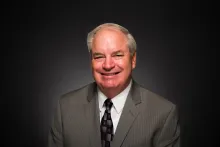
Robin Webber was born in Chicago, Illinois, in 1951, but has lived most of his life in California. He has been a part of the Church of God community since 1963. He attended Ambassador College in Pasadena from 1969-1973. He majored in theology and history.
Mr. Webber's interest remains in the study of history, socio-economics and literature. Over the years, he has offered his services to museums as a docent to share his enthusiasm and passions regarding these areas of expertise.
When time permits, he loves to go mountain biking on nearby ranch land and meet his wife as she hikes toward him.
