
Robin S Webber
This transcript was generated by AI and may contain errors. It is provided to assist those who may not be able to listen to the message.
Well, with all of that said, allow me to move right into the message for kind's sake. I want to give you my title right up front. I know oftentimes we hear messages in the last minute, you're still wondering, well, what was he speaking about? And so I always like to give my title right up front, and that way you'll begin to see it appear in the course of the message.
The title of this message is simply this for those that are taking notes, those that are listening. It is simply this, Heart of Stone and or Spirit of Desire. Heart of Stone and or Spirit of Desire. I remember many, many years ago, 30, 35 years ago, I had the pleasure and the opportunity to work with many gentlemen that were in Pasadena. I had different mentors, and I remember one mentor that I had that when he approached the subject of baptism, and we might be counseling somebody, and I was listening, and he was the one directing the counseling.
I always remember that he would always bring out the difference between a non-converted mind and the unconverted, excuse me, the non-converted mind and the converted mind, and or the converted heart set to the Ten Commandments and to God's way of life. He explained the contrast into this manner as being the difference between how one views the law of God and his ways that he bequeathed to mankind.
He said that the non-converted mind looked at this way when approaching the Bible and approaching this way of life. Looking, shall we say, boom, right up to Ten Commandments, that the non-converted mind looked at it as don'ts and or just simply do's and or simply as camps. Don't do this. Don't do that. Can't do this. Can't do this. Whereas the converted mind looked at it this way as the ability to can and the ability to do. In other words, one viewed them as a roadblock of constraint, while the other mind, the other heart set looked upon it as a pathway, as an avenue with positive outcomes, wonderful ways ahead, even though sometimes we would have to kind of plow through some of the challenges in between in a world that's apart from God, that there was a positivity and there was a desire, there was an upfrontness in the heart and in the mind that says, oh how love by thy law it is ever with me.
My question to you today is simply this on Pentecost. How does one move from one viewpoint to another? How does one move from the frown of endurance to a smile that abides in the creator's master purpose even when it is not easy? Even when we don't see the outcome at the end because for the moment we're up against a block wall that is in our life and yet we rejoice, yet we have the joy, yet we have the desire knowing that we are in the hands of the creator. Well, that's why God gives us the high days. That's why He gives us the Feast of Pentecost.
To understand, to understand what He is working in us. We often many years ago talked about the work of God and sometimes we talked about it in an activity sense or in an external sense. But the greatest work of God, the work that the Bible speaks to and of, is the work that God is working in each and every one of those that are first fruits.
Those that He has called in this age and in this time ahead of season. And what He is doing in our minds, what He is doing in our hearts, what He is doing in your life. You might be saying, talk about the person next to me, I'm talking to you.
You're talking about the person behind me, no, I'm talking to you. I'm talking about myself and what God is doing. As He begins to work with us and gives us a frame of mind and a heart that allows us to understand simply this, that this book that is in front of us is not just a rule book.
And yes, there are rules. And God's commandments are holy. But if we're just looking at the rules, then we are not looking at the outcomes. We only live and rise and die based on the rules. Rather than recognizing that our Heavenly Father, through Jesus Christ, is calling us, you might want to put this word down if you're taking notes, He's calling us to relationships.
Let's talk about that relationship for a moment. Let's define it biblically. Are we talking about a contract? No, we are not talking about a contract. You know why? Because contracts will come and go, and contracts normally are devised by lawyers, and I love all the lawyers that are in this room right now, all two of you.
But contracts have loopholes. And they have ways out. Just like the California Ground Scroll, it has two holes, one way in and one way out, in case things aren't working. And things aren't only working when the vulture is right above you in the hole, so you have that second hole to get out of it.
No, God's called you, and He's called me. By His grace, by His invitation and our acceptance, He's called us to covenant. He's called us to covenant. And a covenant is until death do you part. Conversion, baptism, marriage. Until death do you part. Not until things don't work out, or you can't see the sun coming up over the horizon. Because, are you with me?
A covenant is not based upon ink on paper. It's based upon blood.
Covenants both in the Old Testament and the New Testament. Based on the Old Covenant and the New Covenant are based upon blood. Somebody's put blood, it's to use the common phrase, blood into the game. But it's more than a game, it's life. Your life and my life. That we might have life beyond death. That we might have a worthwhile life. An eternal life beyond that. Sometimes we don't want to live for eternity because you say, if it's what has been so far in this life, why would I want to live forever? You got to be kidding me. God must be playing a joke on me.
But it is so incredible, brethren, it is so incredible what God has in store for each and every one of us. You say, well how incredible, how can I know? All I know is that a part of the Godhead came to this earth and died and gave his blood to allow us to be in covenant with him. So if he did that, I may not have all the answers. I may not be able to write down everything that's there. I see Revelation 21, I see Revelation 22, but I know that the kingdom of God must be really neat. It must be really incredible. That's what a covenant is about. As we begin here this morning, let's understand Pentecost 31 A.D. was a day when a promise was kept. And that's what I want to sit around with you today. It's when a promise was kept. It was a day of collective outpouring, as we heard from Mr. Moore, in Jerusalem of the Holy Spirit. We know that the Spirit came, he just told us, but what was brought with it? Just like a reporter, what, when, where, why, and how, what was brought with it? And how can we define it? What is the difference between what God did with the Israel of old and the Israel of today, the spiritual Israel of God that is mentored in Galatians 6 16? Where is the difference? Because it is in that difference between those covenants that allows us to understand the difference between the non-converted mind and the converted mind that looks at God's way of life as positive and without restraint, but an avenue to every opportunity that our great Creator wants for us. Certainly, if you went to Hebrews 8, here is the defining difference in Hebrews 8, and this is what was given in Pentecost 31 A.D., and what we observed today in understanding and in thanksgiving what our God has given us. Hebrews 8.
In verse 8.
Because finding fault with them, speaking of the people of old, he says, Behold, the days are coming, says the Eternal, when I will make a new covenant with the house of Israel and with the house of Judah. Brother, these are not just words. This is a promise.
Not only a promise that you can look for, but a promise that you can die for.
Because Jesus Christ, the Word, came to this earth and died that this promise might be.
And when I will make a new covenant with the house of Israel and with the house of Judah, not according to the covenant that I made their fathers in the day, when I took them by the hand who lead them out of the land of Egypt, because they did not continue in my covenant. And I disregarded them, says the Lord, for this is the covenant. If you haven't been listening yet to this message, this is wake-up time. This is the answer. This makes the difference. This is why we're here today. For this is the covenant that I will make with the house of Israel after those days, says the Eternal. I will put my laws into their mind and I will write them on their hearts, and I will be their God. And they shall be my people. There's a difference going on here between what was of old and what is new, and we're going to build upon that in a moment. But even as God's laws went from stone into our hearts and into our minds, there's an outcome. The rules are beautiful. The rules, the commandments, they come from God.
But what is the outcome? What is it that our God wants of you and me? It's right here. And I will be their God, and they shall be my people. God wants you and me on this day of Pentecost to be in an intimate, developing, growing relationship, to become like Him through the first of the first fruits that He granted us as a gift, His beloved Jesus Christ. So again, how do we make up that difference? Again, and what is God doing to do it Himself? Tell me if you went to Ezekiel 36 for just a second, because this further defines it. The words that I just spoke of are basically out of Exodus and out of Jeremiah, but I want to leave to Ezekiel again, because Jeremiah and Ezekiel were speaking to a people that needed hope. Their fathers or forefathers have rejected God. And so we look in the book of Ezekiel here, Ezekiel 36, which defines it and brings it down a little bit more. And let's notice what it says. I will give you a new heart. I'll put a new spirit within you, not S.O.S., not same old stuff. Something completely different. And do I dare say, I want to move you forward here a little bit. Not of this world. Not same old, same old, but a new spirit. And I will take the heart of stone out of your flesh, and I'm going to give you a heart of flesh. And I will put my spirit within you and cause you, not just ourselves, not just working on our own strengths and abilities and the vision that we have humanly or what we hear humanly, but I will cause you to walk in my statues. And you will keep my judgments and do them. And then you will dwell in the land I gave your fathers. You shall be my people, and I will be your God. Now, please stay with me. Let's allow us to be honest with the scriptures. May I? And that is simply to recognize that God does have unfinished business with the house of Israel, doesn't he? God never forgets, are you with me? And maybe this will give you encouragement on this Pentecost day. God never forgets those whom he has touched, those whom he has talked to, those that he has invited into his purpose. Even when they forget, he's made a promise. And this is one of the great promises of ancient Israel. Unfinished business yet to occur. And yet, those promises are also true to us as the Israel of God. We are the Israel of God. Not just Jew, but Gentile. Not just this person, that person, but God's plan for all of humanity that has come together. And as I look out, I see all of humanity in front of me. All racial groups, all ethnic groups, everybody. That what God is doing is he's calling many, many, many people under him at this time. So, when we look at this, then, let's understand how do we move from the frown of despair to the smile of joy.
And the reason why I mentioned this, and I'm talking to an audience, probably about 250 people, I realize that there are people here. They're just here because I'm supposed to be here. I've always come. I come. I go. I come. I go. My grandparents came. They're no longer here.
I come. I go. My parents came. I come. I go. I'm here today. I'm here today.
And even while I am here and I have a smile, an outward smile, maybe I have a frown on my heart. Maybe I am still living between two worlds. Two worlds, two ways, two gods, two outcomes. And I'm telling you on the authority of the Word of God that he wants all of you, not just a part of you. He doesn't want your frown. Oh yeah, life is tough. Life is hard. Life is messy. But he wants to see that smile on your heart. That's what joy is. There's a difference between joy and happiness. Happiness depends upon happenstances, external happenstances, that stimulate us and make us happy, happy, happy, happy.
Joy is completely different. Joy is having a smile of knowing on your heart, even when the tsunami of life is coming at you. And you recognize, are you with me? And you know, because we read to know that we are not alone. We know that we have the Spirit of God, the laws of God in our heart, to know that we are not alone. And then there's something special being worked out here below. Let's go back for a moment then to Pentecost of old. Actually, the Feast of Weeds, the Feast of First Roots back in the Old Testament. Let's go even beyond that, where it's mentioned. Let's go back to Sinai. We're going to be ready to hop back to Sinai for a second, then we can move forward. Let's understand what was happening in Sinai. Exodus 19 basically tells us and indicates, and we believe this by tradition. I think the Jews have even worked it out mathematically, but I'll just leave it at tradition at this point, because in Exodus 19 it says that they came up against Mount Sinai in the third month, which would indicate that the congregation of Israel was the core Sinai. And as by tradition, the law of God was given on that day, which we now observe as the day of Pentecost. They were told to cleanse themselves, for they were to come up to meet their maker. They were going to meet their deliberate facts. In fact, they were going to hear them initially, but then they banged off and said, Moses, it's too much you go off and you speak for him for us, and you bring down his message. You see, God was calling a very special people. In Exodus 19, you can just jot this down for time, Exodus 19 5-6, it says that God was calling these people to be a special treasure unto him. And they were going to be a holy people. They were going to be that way. And actually, Peter later on echoes that in his epistle in the New Testament. It's also very interesting in Jeremiah 2 and verse 3, where speaking of Israel of old under the Old Covenant, that they would be the first fruits of his increase. You see, first fruits is not just a thought in the New Testament. The first fruits are also a thought that is built upon from the Old Testament. So he dealt with this ancient nation called Israel. And God said in Jeremiah 2 3, Israel and Judah are the first fruits of my increase. Very interesting what God did. Let's join me if you would in Exodus 31. Exodus 31. Something that I want to show you. Maybe you've never seen this before. Maybe you knew this. Sometimes it's a good trivia question, if you're doing some Bible role. In Exodus 31. 18. Pardon me. Notice this. This is exciting.
And when he had made an end of speaking with him, speaking of Moses on Mount Sinai, he gave Moses two tablets of the testimony. tablets of stone and notice this.
Written with the finger of God. The initial thought is that that just sends the chills down me. God made it very graphic and he made it very intimate. He didn't send a fax. He didn't text.
He didn't do a copy job. With his own finger, he wrote law out on stone. That's how special. That's how beautiful. And that's how wonderful this is. You might say I remember that old song out of the 60s, being a baby groomer. Has a little rhythm to it. I want to do it up here. You know, signed, sealed, and delivered. And to recognize that's what God did. Signed, sealed, and delivered. None other than the Almighty. And then he told us to do something. He says this is how it will work.
I will go before you. I, God, won't go before you. And then you're going to, I'm going to give you the design. You're going to build an ark of the covenant. And in that ark of the covenant, you're going to put two tablets. You're going to put my law. And you're also going to add the blooming rod of Aaron and also a jar of manet, lest you forget. So here's how it's going to work.
I will go before you in that pillar of the cloud by day, in the pillar of the fire at night. I will go before you. And then wherever I am, my mind and my heart follow. And that is in the law. So I will go before you. And then the law will follow because wherever God is, there's the loving law that goes behind them. And then you, my people, my first truths, then you will be behind that. So are you with me so far? There's only three, not five, not six points like Homer. This is going to be easy.
God, the law, his people. Wherever God is, there is order and design, his law.
And then those that he is called to be first fruits will follow. That's how it was supposed to work.
But the law is more than just simply externals. The people did not understand that. Do we mean to win in Hosea 6?
In Hosea 6, we commonly understand what happened back here.
If you don't know where Hosea is, it's right before Joel.
And in Hosea, if you know where Joel is, we'll talk about it after church. In Hosea 6, starting in verse 6, For I desire mercy, and not sacrifice, and the knowledge of God more than burnt offerings.
The people of Israel, the people of Judah, were really good and very strict in a sense, as far as keeping the externals and keeping the letter of the law.
And they were on an activity wheel, buzzing, buzzing and buzzing and buzzing. But they never moved beyond what God really wanted.
And my question to you today, and why my voice goes off a little bit, a tad, is simply this, do you know what God wants out of you?
When does he simply want your brain because you understand that the law?
And the letter of the law?
Or does he want that heart in full charge that he has given you?
To understand, I want the letter, but the spirit of the law.
That sweet, reasonableness that lies just on the other side of the letter, which is indeed there, is indeed there.
And it is in that sweet, reasonableness that we come to understand the relationship that God desires of us, of giving our heart and being something different than when he first called us. I know that we sometimes have people that have been in our community for many, many years. They're great. They're wonderful people. They give, and they give, and they give. But sometimes we can get on an activity wheel thinking that we're pleasing God, and that wheel is going nowhere. I always think of Hammy the hamster, one of my favorite pets to talk about. Have you ever seen a hamster that is not dedicated when he's on a hamster wheel?
I mean, that's an oxymoron. That's why he called a hamster wheel. That hamster really thinks he's going places. And you know those little cute little cheeks, oh cute little furry cheeks, you know, they're popping and popping, you know, little whiskers. And they really think that they're going places. They are in place, as some might in this room today be in place, but in that, like that hamster wheel. We're not going where God yet designs for us to go as first troops. Are we putting in time? Yes. Are we putting in energy? Yes. Are we in motion? Yes. But all of our emotions, apart from understanding the miracle of God, of giving us a new heart and a new mind, will neither serve us nor serve Him. We need to understand that. Let's go to Jeremiah 24 and verse 7. In Jeremiah 24 and verse 7.
Let's notice what God promises. In Jeremiah 24 and verse 7, then I will give them a new heart, a heart to know me.
Not only to know the latter, not only to be impacted by the externals, not just simply moving through this way of life and frustration, but with the joy, with an understanding that this life is not an end in itself, that it is in preparation of the kingdom of God, that He's calling you and He's calling me His first fruits today to be a part of the solution under Him. And they shall be my people, and I will be their God. Notice, for they shall return to me. Notice with their whole heart.
Again, join me if you want in Ezekiel 11 to create a greater impact. Ezekiel 11.
And let's pick up the song verse 18.
That's actually verse 19. Then, now this is important, friends, so stay with me. Then I will give them one heart, and I will put a new spirit within them, and take the stony heart out of their flesh, and give them a heart of flesh, that they may walk in my statutes and keep my judgments and do them. And again, they shall be my people, and I shall be their God. He's going to give. One thing that we understand today, brethren, I spoke to it a little bit in the Operatory. We are not here because of who we are. We are here because of what God has done and elected and chosen to do by His grace. And that is to give us an invitation, to give us an understanding, to reach down where we were in our spot and said, I want you to follow me.
But you're not going to be alone. I'm going to give you something. I want to help you in this time. I'm going to help you in this age. You're going to be that new Israel. I'm going to do something marvelous with you.
What I want to share with all of this, because we're now going to switch into the New Testament, is simply this. Stone is simply where God began. I'm looking forward to one day when we're in the Kingdom of God and its fullness. I want to pull up a lot of videos out of the Kingdom of God library. I want to see that finger etching in the stone on top of Mount Sinai.
Might even make Charlton Heston's hair go whiter.
And whiter. Whiter and whiter!
Marvelous. But that's only where God began. That's only before God began.
You know, when we think of the days of creation, brother, and we think of the seven days of creation, we recognize that God made the physical world in six days. Part of that physical world was stone and mountains. But then he stopped. And he rested. He ceased. He paused. He, as it says in scripture, he shavatted. He stopped from his physical work. But that doesn't mean that he stopped from all of his work. He stopped from his fiscal efforts. He stopped from the fiscal labor. He stopped from the fiscal creation. The Sabbath points us, the seventh day, and the high days on top of that point to us about what God is doing spiritually. God is moving from the physical stones and from the physical hearts to a spiritual creation that he is creating in you and me step by step. And that's incredible. And that's wonderful. Join me if you would in 2 Corinthians 5, verse 17. Paul's words here, God's words through Paul, 2 Corinthians 5, 17. Notice what it says. Simply this. Therefore, if anyone is in Christ, he is a new creation. God is not done creating. That is the power. That is the breath and the depth of the high days, brethren. God, our great God, is not done creating.
And you're a part of that, molding and shaping us with new hearts with his spirit inside of us.
He is a new creation. All things have passed away. Behold, all things have become new.
When we understand that, then we want to do something that is mentioned in Galatians 5 and verse 16. When we have that new heart, when we have that new mind, we are then able to walk in the Spirit.
Let's understand that that Spirit of God was given at Pentecost in 31 A.D. And that is what made the great difference between the Israel of old and the Israel of God. For indeed, brethren, do you think this room, this is the PowerPoint? We don't want to miss it.
I'm going to go about a minute, so stay up here with me. Think about this for a moment. There is a difference between walking behind God. Israel of old walked behind God, walked behind the law.
It was not enough. It was not enough. How do I know that? How do you know that, Robin? Because the Bible tells me so, like the old song. The difference between the old covenant and the new covenant, and why you are here today, is that God has planted Himself in you by His Spirit, the Spirit of the Father and the Spirit of the Son. And it's one thing to walk behind God, but when we walk in the Spirit, we have God walking inside of us, moving inside of us, molding us, shaping us, and we surrender then to that. Even when it doesn't make sense at the time, knowing that you and I worship a good God. That is the difference. That is the beauty, and yet that is also the human challenge of walking in the Spirit, the Spirit of Christ, that Spirit that is in us. And I'm here to remind you today that, as Paul said in 2 Corinthians 13 in verse 5, he says, no you not! Because sometimes you've got to go like this because of all of life coming at us, right? Mr. Garnet, you may have to anoint me. That hurt. I have a Dutch hat and I thought it was as hard as Dutch shoes. It didn't work. I told Mr. Garnet earlier I was planning to come up and just speak without a microphone, so we really appreciate what the staff did. I said, John, after I come down, would you please anoint me? I may need an after that, but we appreciate what the staff did. But we're here to remind you, brethren, because sometimes a Christless Christian, and there are Christless Christians, they walk through this world and they think they're walking the walk of faith and walking in the Spirit, and yet all they do is they see themselves in the mirror alone, rather than recognizing as Paul says, no you not that Christ dwells in you.
That Spirit of joy, that Spirit of desire, that Spirit of not by my strength nor by my might, by your power, your Spirit, God, I will prevail. You will prevail. You will see me through this. That Spirit is in us. I ask you a question, may I? Please. What does that Spirit look like? All I have to do is look at the Gospel. I'm just going to run you through a few verses. You can jot them down for sake of time. I'm just going to go through them very quickly. What does that Spirit look like? What does that new heart look like? What does that new mind look like?
What did Christ look like when He was on earth? And are we exposing and sharing that now as it is in our life? Just a few verses to think about this. You know, the one thing about Jesus Christ that's really neat, can I tell you something? There's a lot of pictures that preach, but they don't practice what they preach. Jesus was the greatest preacher of all times, and He practiced what He preached. In John 4 and verse 34, He said that it is my will, not my agony, not my punishment.
It is my will to do the Father's will. It's my meat. It's what I live for. It's what I gnaw on. It's what I chew. It's what I devour, as Mr. Moore was bringing out in his six points in the first message. My meat is to do the will of the Father. Brother, as we are here on Pentecost, as we do not come up against Mount Sinai, but zhoyt above, I challenge you to go deep and to think it is my meat, is my substance, to do the will of the Father. Luke 22, 42. It is where Jesus said in the Garden of Gethsemane, not my will, but your will be done. Not my will. Resolve. Desire.
Eagerness. On the night before He was going to be humiliated, in the worst torture ever devised by man.
What are you facing right now that you think God is apart from you, rather than inside of you, that has not given you all that you need by His grace? And not just unmerited, pardon, but the sustaining grace of the heart and the mind of Christ in us to move through our gardens of Gethsemane. It was Jesus who said and followed through that on that night of Passover with His disciples, He said, with great, fervent desire. It's not that I can't, it's not that I want to be somewhere else. I want to be right here with you. I want to be in the middle of God's plan.
God's called me for a purpose. I am going to be the first of the first fruits. God has elected me, and I volunteered to come down here. I want to keep this Passover with you. And as He gave that wine and as He gave that bread, that was going to be about Him within 24 hours.
It is Jesus in John 18 and verse 37 that said, for this purpose, have I come. Have I come. That's what Pontius Pilate said, are you a king?
And Jesus turned that around. That's what you're saying, but that's the purpose that I came for, to be a king. Hebrews 12 and verse 2, let's think this one through and true it over for a moment and unpack it. One of the great verses that is written by the author of the book of Hebrews, where in Hebrews 12 and verse 2 it says, and for the joy that was set before Him, He endured the cross. Now let me tell you something about life, rather. May I for a second?
Human life, of and by itself, is messy. It's messy for you members and it's messy for pastors and pastors lives, because we're all in the same human condition. Jesus and the Father, when their Spirit came into us, doesn't mean that we became non-human. We're in a process of creation, and that creation is moving towards the kingdom. And it's tough. And sometimes we in our own life, are you with me? Let's talk. Sometimes we say, well, is this it? Is this what it's all about?
It's not working. I'm not getting all the blessings. It seems to me when I was reading the Old Testament, if I do this, God does this. If I do this, God does this. If I do this, one plus one equals two. Well, that's one of the finer times, and God does that. But a lot of time, God's math is simply this. One plus zero equals three. Because what God ultimately does is He is training us that three is in the future, as we are being trained as kings and priests, and as a special treasure. And we're not going to get it all here. And yet, sometimes, are you with me? You know, sometimes we want it all now. Or am I the only one? Oh, good. You're human. I want it all now. But God didn't call me to have it all now. It always reminds me of the man that went over to visit the famous rabbi over in Europe. He'd always heard about him and wanted to visit him. Plenty of knocks in his door, walked in, put down the suitcase, and here is this esteemed rabbi that had written and written and wrote, renowned and well-known. And he looked at the rabbi's place, looked it over for a moment. There was a mattress on the floor. There was a table. And there was a chair. And he looked at the rabbi. And the rabbi knew what he was thinking. And the rabbi said, where is everything else? And the rabbi looked at the man, the tourist, the man that came up and said, you don't understand. I'm just like you. I'm just passing through.
It wasn't everything that he was stuffing himself with in this lifetime. Not everything that he was gaining in this lifetime. That man, that gentleman, was training for something beyond the moment. And that's something we have to understand sometimes, brethren, if we are going to incorporate the lessons of Pentecost. And that what we're learning here is the difference between the unconverted mind and the converted mind. The unconverted mind wants everything now, just like Mother Eve, when she grabbed for the tree of good and evil. She wanted everything now. Rather than the patience and the faith that comes by imbibing and abiding of the fruit, of the tree of life, and under that shade of the tree of life, that God has something very, very special for you in store in the future.
Philippians 2, 12. Join me through it for a second.
I want to share something with you for a moment. It had a profound impact on me, but I was studying this. I've had to share something with you for a moment. Maybe you've heard it in different ways, different times, different thoughts. And I always thought this verse was about me.
I just kind of...are you with me? I just kind of saw this as as man. Oh boy, what am I good? What am I, which is always interesting, what am I going to do? Therefore, my beloved, as you have always obeyed, not as in my presence only, but now much more in my absence, it says, work out your own salvation with fear and trembling. And all I could see is the fear and I could see the trembling.
So, God was basically telling me through Paul to have the shapes.
No. This verse is not about me. It is, but not alone. For it is God who works in you, both to will and to do for his good pleasure. I am not alone. The day of Pentecost reminds us, brethren, that God has given us his Spirit. The essence of both the Father and the Son exist in us. And we've just seen the attributes of the Son as he lived this life, his word, his heart, that new heart, that new mind, that is precious to God, so precious that it is that heart, that mind, that blood of his that allows us to be reconciled to God and repentance and therefore receive that Spirit of God that we're talking about today. But I looked at this and said, well, it's the me. Let's go back here a second. What Paul is demonstrating here is simply this. It's not about fear. It's about respect. It's about a reference. It's about an honor of what God is doing in us and to do it with trembling. And I began to think, you know, I can't do this by myself. Neither can you. But this is what Jesus Christ did. Jesus honored his Father at every turn of life, every event that came his way. You see, they had a love affair. The Father loves the Son and the Son loves the Father. If you've seen the Father, you've seen the Son. If you see, well, you haven't seen the Father. But if you've seen the Son, you've seen the Father. We're indivisible.
And there was nothing that Christ would want to do, nothing to disappoint, and not to be in union with his Father. When you really love somebody, when you really love somebody, you do not want to disappoint them. You want to do everything in your being to honor them, to love them, to be there for them, even in our humanity when we fall over our own, feet at times and doing so. And that's how Jesus Christ was with his Father.
There wasn't a razor blade that you could put between their love one for another. And, brethren, that is exactly what this day of Pentecost is about. The love of God that is put in us by his Spirit. And the understanding of God that we must, with that love that we understand from him, move beyond some of our own personal moments and understand that God has a purpose that is being worked out here below. Some of you today might say, well, I'm here. I dragged myself to church. I didn't know what I had heard. Probably going to hear something that I've heard for the last 25 or 30 years. And or you might be out there saying, well, I can't do that. Mr. Weber, it sounds like theory. Mr. Weber, it sounds like high precept. I'm talking about what works, what the calling is about, why God has called you out of Garden Grove, why God has called you out of Monrovia, why God has called you out of West LA, why God has called you out of Hollywood, why God has called you out of Pasadena, wherever you came from, that there is indeed a purpose that is being worked out here below. My question to you is simply this. What do we offer our God today? I've got a little bag over here. I'm an old teacher, so I like props. I'm going to show you how it works.
They say a picture is worth a thousand words, so we'll be out of here by 3 p.m., okay?
This is a work of faith. Oh, there's the clock. We're going to go five minutes here, because this is the PowerPoint.
Let's see here. Adrian, come forward, please.
Just want to make sure I want you to verify, for the folks out here, that this is a stone. Now, do me a favor. You see the shape of the stone? Right? Good. Okay. I want you to kind of mold it for me. Kind of try to make it something different than it is. How you doing? These guys want lunch. How you doing? No lunch. Thank you, Adrian. Just so you know, this is not pre-rehearsed. All the individuals that are... I'm just joking. Stone. This is what God said about the Israel of old, that they had a heart of stone. Are you with me? Seeing is believing what is stone at all.
Yeah, he meant that. God etched His law on the stone, but that was only the beginning of where He wanted the law to go, from the letter of the law on a stone to the spirit of the law in our hearts.
Now.
This will come out.
Adrian, it's already coming out.
Boys like to throw things. Okay, so here we go. Okay, that's cool. They can't see you.
Okay, go to work, Adrian. Show them what you can do with that clag.
How's you doing? Let's give them a little round of applause.
See, this is what God is doing with each and every one of us. Not at Sinai, but before Zion above. He's called us to have clay-like hearts. But, you know, in the book of Isaiah, I'm not going to go there right now for time, but there in Isaiah 45, you might look at it sometimes. Here's the clay talking to the potter. You know, so often we go to Isaiah 64, where it says, you are the potter, and I am the clay molding. But in Isaiah 45, there's a reason, because here's the clay bawling out the potter, saying, what do you think you're doing with me? And you see, God is doing something very special with us, isn't he? He's molding. He's shaping us. And we don't always understand it moment by moment. My appeal to you, brethren, is simply to wake you up, because this sermon will come and go in a couple minutes. You're going to have to go out and ask yourself, you're going to have to go out and ask yourself, do I, high day to high day, Sabbath to Sabbath, day to day, event by event, word by word, thought by thought, motive by motive, is this what God has called me to? Is this it? To simply be a stone with the frown of despair, to have this heavy weight like a millstone around me, living in two worlds, I know this truth, but I want to be out there.
Or are we going to be wholehearted like the first of the first fruits?
Can we pray to our Father above today? Father, create in me a clean heart. I've been still. I thought that I was down here all by myself.
I didn't realize that there was something that you were doing special with me on this day, that there is a reason for my calling. Father, heal me, grant to me, clean up in me. Clean up in me. My heart. Change me. Not just externally. Change me internally.
Allow my heart, not just simply a green envelope during an off-putory. The greatest offering that we can give to our Father here on Pentecost is simply this, to move from the stone of despair to this, the heart of desire. And when you have a heart of desire, you know we talk about being putty in somebody's hands, then you will be clay in the hands of the great maker and our designer. That's what it looks like.
I had about two more pages, but we had to unbuild in patience, which is a bigger lesson for all of us today. Brethren, what I want to share with you today is we look at these two props at the end. And Jesus was really good at props. Remember what I talked about, about the finger of God etching into the stone there in Sinai? The same one, the Word, who was the pre-incarnate Jesus of Nazareth. He wrote on stone. He also had a way of writing in dirt. Remember when the woman was caught in adultery? And she was dragged before everybody? Not the men, but the woman. That's always interesting, isn't it, ladies? That's where you're supposed to start nodding. Okay, thank you.
And she was going to be stoned. And Jesus, think this sort of, Jesus verified the letter of the law, because he asked him, you that have the first stone, stone the woman. So he validated the law. He validated the letter.
But then he began writing. The one that was the word, the one that had written and stone wrote on the dust.
They all began to disappear.
He moved beyond the letter of the law and offered that, which is the sweet reasonableness that lies just on the other side of that letter. And the letter, please understand, I think we have no mistake here, the letter does exist. But if you live by the letter, as you walk in the Spirit, or you think you're walking in the Spirit, and you're only living by the letter, you are uncomfortable, and you are not walking in the Spirit.
Jesus said to that woman, mercy be upon you. Not only mercy, but go and sin no more.
Brethren, is there any reason why Jesus is not the first of the first fruits, as we observe this Pentecost?
And thank God. Thank God that our Father has called us. Our Savior has died for us, the first of the first fruits, and shown us today how to move from this stone of despair to this clay, to this freshness, to this heart desire.
May God be with each and every one of you on this journey. We're all in it together, but always remember this. We're not just following a cloud. We're not just following stone that is embedded in a wooden arc. The meaning of Pentecost is that our great God, gracious, loving, and wonderful as he is, has given us the greatest gift of all, that he has put his Spirit in us. He has written his laws into our heart and into our mind, so that we might be all for him as we move away simply from Mount Sinai and stand before him in faith and in confidence between Zion, which is about.
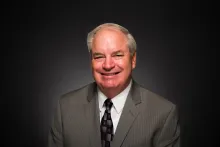
Robin Webber was born in Chicago, Illinois, in 1951, but has lived most of his life in California. He has been a part of the Church of God community since 1963. He attended Ambassador College in Pasadena from 1969-1973. He majored in theology and history.
Mr. Webber's interest remains in the study of history, socio-economics and literature. Over the years, he has offered his services to museums as a docent to share his enthusiasm and passions regarding these areas of expertise.
When time permits, he loves to go mountain biking on nearby ranch land and meet his wife as she hikes toward him.
