
Steve Shafer
This sermon was given at the Bend, Oregon 2012 Feast site.
This transcript was generated by AI and may contain errors. It is provided to assist those who may not be able to listen to the message.
Well, good morning, everyone! I'm glad I didn't drive a motor home today, anyway. We just really love it here at Bend. This is the first time we've been here. I grew up in the Seattle area, and we spent a lot of time. A lot of my childhood I spent over in the Lake Chelan area of eastern Washington. This is actually prettier here, but Lake Chelan is a beautiful area as well.
Chelan is a similar climate to Redmond, and so we just love this climate. It's just a wonderful climate. Very, very great fees, wonderful weather. So it's very, very enjoyable for all of us to be here with all of you. And I want to welcome all those on the webcast as well, whoever might be there on webcast viewing this morning, I should say, as well.
Like I said, I was born and raised in the Seattle area, so the Pacific Northwest has always been very dear to my heart. We were sent away from 1989. We actually transferred to Michigan. I was assisting Mr. Luca at the time, and then we were actually was assisting Mr. Luca, I was assisting Mr. Dickinson, but prior, Mr. Luca had already left to California. But anyway, we were sent to California, sent to Michigan, I should say, in 1989, and were there for 21 years.
And I just want to mention, I was very happy to be able to share the lectern here this morning with Mr. Rogers. Jim and Barb Rogers were members of the Flint congregation. We went there in 1989, and they were just extremely warm and hospitable, made us feel at home, and he retired from General Motors in 1991, and they moved to Arizona. But they have family in Michigan, as well here in Oregon, so we've kept in contact with them. They've been very dear friends for many, many years. Most of our family is still back in Michigan. We have a son in Mississippi and a granddaughter of Cindy, but our son from Mississippi and granddaughter Cindy are here with us, the feast this year, so it was really great to spend the feast with all of them.
We still have our home in Michigan, but we're here going in for up in Seattle, I should say, for Mr. Luecker, as long as he's serving as president. But anyway, it's very nice to be here with all of you. This is my, and everyone I ever talked about, this is my 49th piece of tabernacles. And I think, actually, it's the 49th one for Evelyn, for her attending, but she actually kept it the year before that with her aunt Nancy in Florida.
They weren't able to attend, but they kept it at home. So in that regard, then, it asks Evelyn's 50th piece of tabernacle. My first piece of tabernacles was in Squaw Valley as a freshman at Ambassador College in Pasadena back in 1964, I think, I guess it was. And back then, as you know, back in 1964, we all expected Christ to return within probably about 10 years or less.
But here we are, still observing the feast in 2012, and he hasn't returned yet. In the meantime, as we all are well aware, the world we are now living in is getting progressively darker, spiritually speaking, as evil men as the deucers wax worse and worse, deceiving and being deceived, as Paul writes in 2 Timothy 3.13. So what then should our focus be as we observe this feast of tabernacle in 2012? Now, even though it may appear that Christ's coming is being delayed, should that in any way cause us to lose our sense of urgency for the times we're living in and the calling that we've been given?
Those are questions we'll address here this morning on the second day of the feast of tabernacles here in Van Redmond, because we are now living in unprecedented times as we see what's going on in the world around us. And we are living in a time, of course, that it is going to lead up to eventually, to the return of Jesus Christ, and to the removal of Satan, and to the establishment of God's kingdom here on the earth, which the earth desperately needs.
It's the only solution to mankind's problems. But as evil men introduce his wax worse and worse, and as the world continues to plunge into more spiritual darkness, what is God now looking for in all of us? What's he looking for in me? What's he looking for in you and all of us here? What should our primary focus be at this time we're living in? And should we continue to have a great sense of urgency? I'll give my tie a little bit later, shortly, but Christ, as we know, gave many parables, and almost every parable, without exception, focused on some aspect of the kingdom of God.
And I want to begin with one of those parables, one we're familiar with, but I think is very apropos for the times we're living in, and that's Matthew 25 and the parable of the ten virgins. Matthew 25, and I'll begin in verse 1, where this is right after Matthew 24, where Christ gives the signs of His coming at the end of the age. And then He leads off, chapter 25, we let off with this particular parable of the ten virgins. It says, It says, Five were wise, five were foolish.
Those who were foolish took their lamps, and they didn't take any oil with them. But the wise took oil in their vessels with their lamps. But while the bridegroom was delayed, or seemingly delayed, and as time went on, it says they all slumbered and slept. Of course, Christ here is the bridegroom, and today it might seem like the bridegroom has been delayed. So as God now looks down on His people, and as Christ now looks down on His bride to be, that He wants to take to be His bride, what do they see?
What do they see in all of us as they look down from their throne in heaven? And I look at this myself. Have any of us slumbered and slept? Have we ever looked down a little bit spiritually at times? Have any of us at times maybe lost a sense of urgency?
Because, well, it's being delayed. Who knows when He's going to come? What's going to happen at some point in the future? Verse 6, And if midnight a cry was heard, behold, the bridegroom is coming, go out to meet Him. What's that going to happen? When will midnight come? How far away is midnight? You know, I look at myself. I'm 71 years old, and I think of my life and what I have left. And my midnight can't be that far away for me. My midnight could come at any time.
Thus as I apply this parable to myself, it tells me I must maintain a great sense of urgency in the years I have left. I should not let down. Now, what happens when we realize that we might not have much time left to get prepared? Well, we take action. Verse 7, Then all those versions arose, they trimmed their lamps. These are oil lamps, of course. It doesn't take long to trim a lamp. But since these are oil lamps, it does take more than a trimmed wick in order for them to burn, keep burning. Verse 8, And the police said to the wise, We'll give us some of your oil, because our lamps are going out. We don't have enough oil. But the wise answer to say, Well, no, that there should not be enough for us and you. But go, rather, to those who sell and buy for yourselves.
The obvious point here being that we must all take responsibility for ourselves when it comes to preparing to become the bride of Christ. Someone else can't prepare for us.
When it comes to spiritual preparation, we're all on a level playing field, regardless of who we are. We'll have the same amount of time and the same access to God's Holy Spirit. But becoming spiritually prepared is a daily task, it's something you have to do daily. It's not something you just put off until the last minute. It's a process that takes time. Going on in verse 10. And while they went to buy, the bridegroom came, and those who were ready went in with him to the wedding, and the door was shut. Afterward, the other virgins also came, saying, Lord, Lord, open to us. But he answered and said, Surely I say to you, I don't know who you are. I don't know you. How could that be? I mean, I think of this myself. Wow! What if that happened? What if that time came and Christ said, Well, I don't know you. I said, Wait a minute. You don't know me?
How can we be sure Christ never says that to any of us?
Verse 13, Watch therefore, for you know neither the day nor the hour in which the Son of Man is coming. Now, I think this can have a very broad application and also a very personal application. It's true we need to watch world conditions and world events, especially at this time we're in right now, and be aware of that. But in the context of this parable, we must also watch and be aware of our own spiritual condition. I think that is all important as we apply this personally to ourselves. Are we slumbering and sleeping? Are we letting down, thinking, Well, Christ doesn't come for the last 40, 50 years, maybe another 40, 50 years? A lot of us in this room don't have that much time anyway, do we?
Do we have enough oil at our lamps going out? And do we still have a sense of urgency? Watch therefore, for you know not neither the day nor the hour in which the Son of Man is coming. Now let me ask this question. What will take place at midnight?
Revelation 19 tells us what's going to take place when midnight comes. And midnight is used by Christ here in Matthew 25, simply being an expression to indicate that a time of preparation has come to an end. Because the bridegroom is now ready to marry his bride. Let's go to Revelation 19, beginning in verse 1.
Verse 5.
As the voice of many waters is the sound of many thunderings, saying, Alleluia for the Lord God omnipotent reigns. In verse 7.
Now here we have a very positive statement, a very encouraging statement. Something we all look forward to. The marriage of the Lamb has come, and His wife has made herself ready. It's from this very statement I've derived my title for this sermon here this morning. My title is, His Wife Has Made Herself Ready. A positive statement. His wife has made herself ready. It then goes on to say this, verse 8. And her it was granted to be arrayed in fine linen, clean and bright. For the fine linen is the righteous acts of the saints. And then He said to be right, blessed are those who are called to the marriage supper of the Lamb. Indeed, that is a tremendous blessing, and all this has been called to that marriage supper. We have been extremely blessed to have our minds open to understand these things, and to be called to be a part of that very select roof that can be part of the bride of Christ. And to be there for the marriage supper of the Lamb.
It's a fantastic calling, a fantastic opportunity that God holds before us. A calling and an opportunity that's going to have everlasting ramifications. Because this marriage is going to take place here between Christ and His bride. This marriage is going to last forever, for all eternity. It's going to be a very special marriage and special relationship we'll have. And to emphasize the sure reality of this monumental event that's going to take place when Christ returns, it then has this in Revelation 19, verse 9. And He said to me, these are the true sayings of God. Count your word on this. This is true. This is going to take place. God cannot lie. The marriage supper of the Lamb will come, and His wife will make herself ready. So the question then for all of us, including myself, is this. What must we do to make ourselves ready? How can we be sure that we are going to be ready when that time comes?
Actually, I'm going to let Christ Himself answer that for us in a very simple and straightforward way. With a Scripture we're all very, very familiar with. When I even tell you what Scripture it is, you already know what it says before I turn there. Matthew 6, verse 33.
This is not as clear as you can get. Matthew 6, verse 33. Seek first the kingdom of God and His righteousness, and all these things should be added to you. What must we do to make ourselves ready? Seek first the kingdom of God and His righteousness.
To make ourselves ready to be the bride of Christ, that must be our primary focus, and that must be our number one priority in our lives, whatever time we have remaining.
But there is something I want to mention here in this particular verse that's very important to understand. Seeking the kingdom of God and seeking God's righteousness are not two complementary goals. They are basically one and the same goal. The only way to be seeking first the kingdom of God is to be seeking God's righteousness. If we're not seeking God's righteousness, then we are not really truly seeking the kingdom of God. In order for the wife to make herself ready, she must seek first the kingdom of God and His righteousness.
Those two go hand in hand. You can't have one without the other. This leads to two important questions I'd like to ask. Number one, how do we seek God's righteousness? And number two, very important question, how do we distinguish God's righteousness from our righteousness? First, how do we seek God's righteousness? Now, the answer to that is also very simple. It's also very profound at the same time. And the Apostle Paul clearly understood the only way to seek God's righteousness. And he tells us in another scripture we're all very familiar with. When I tell you what it is, you'll know what it says before we turn there. And that's Philippians 2, verse 5. Philippians 2, verse 5, where Apostle Paul says, Let this mind be in you, which is in Christ Jesus. We have to have the mind of Christ in us. Or as Paul also put in his letter to the saints and faithful brethren in Colossae, he said, Christ in you, the hope of glory. Colossians 1, verse 27. So to make ourselves ready to be the bride of Christ, Christ must be living his life in us. It's only where we'll be ready. In order for Christ to live his life in us, we must be exercising in the mind of Christ. Let this mind be in you, which is also in Christ Jesus. That is the only way we can seek God's righteousness. And again, an entire series of sermons could be devoted just to that subject alone. But let's move on to the next question. How do we distinguish God's righteousness from our righteousness? Very important distinction. They're not one and the same. In the context of his life making herself ready, it says she was, quote, this Revelation 19.8. I'm quoting it again. It says she was arrayed in fine linen, clean and bright, for the fine linen is the righteous acts of the saints. Now, think about that Scripture we just read there. Think about what it says. Also, think about what it doesn't say.
It doesn't say the fine linen is the righteousness of the saints. It says the fine linen is the righteous acts of the saints. Why is that distinction important? Well, it's important because, even by ourselves, we have no righteousness.
We're all familiar with Isaiah 64.6, all of our righteousness is a filthy rags. Now, the Apostle Paul, very interesting example, because the Apostle Paul thought he was righteous. But then, as we know, God struck him down on the road to Damascus, and he blinded him so he could help him to see spiritually. He blinded him physically and opened his mind to see spiritually. And then Paul came to understand that there is none righteous, no, not one. Romans 3, verse 10. Notice how Paul came to understand about himself, as he has recorded in the very next chapter here in Philippians, in Philippians chapter 3. Philippians 3 beginning in verse 3. Paul wrote, We are the circumcision who worship God in the Spirit.
We are the circumcision who worship God in the Spirit. Now, before God spiritually opened his eyes, he thought he was righteous because he was physically circumcised. He then came to realize that true circumcision and true righteousness had to be of the heart, and of the mind, and of the Spirit, and not of the flesh. Verse 3 again, For we are the circumcision who worship God in the Spirit, and who rejoice in Christ Jesus, and who have no confidence in the flesh.
We have no confidence in our own righteousness, we could say. Verse 4. Though I also might have confidence in the flesh, if I wanted to boast, he says here. If anyone else thinks he may have confidence in the flesh, I could say more so if I wanted to boast in that way. If I want to look to that and rely on that, I was circumcised on the eighth day, according to the law. I'm the stock of Israel. I'm an Israelite. And more than that, I'm the tribe of Benjamin. I'm a Hebrew of the Hebrews. Concerning the law of Pharisee, I am a strict observer of the law.
Concerning zeal, persecuting the church, concerning the righteous, which is in the law of blameless. That's what we thought at one time. But Paul had to come to understand that true righteousness goes far beyond the righteousness, which is the law. Paul thought he could gain righteousness and gain salvation by and through all these things he just mentioned here at one time, before God called him and opened his mind. But then he came to realize he had to count all those things lost in order to gain true righteousness. Verse 7, Well, what things were gained to me at one time? He says, Those I have counted lost that I could gain Jesus Christ. Because he said, that's where my true righteousness has to be. It's got to be in Jesus Christ. So he came to understand. Yet indeed I do also count all things lost for the excellence of the knowledge of Christ Jesus, my Lord, for whom I have suffered the loss of all things and count them as rubbish that I may gain Jesus Christ.
So he had to give up what he thought was his righteousness. He realized that wasn't righteous at all. The only righteousness he could have would be that which he could obtain through Jesus Christ. And had to come from God. Verse 9, And be found in him, Not having my own righteousness, which is from the law, but that which is through faith in Christ, the righteous which is from God by faith, faith that Christ, as I yield to God, have the right attitude, that Christ will be living his life in me, and I can have the righteousness of Christ in me instead of my righteousness. I can have the two righteous which comes from God through faith in Christ. Again, as Paul said in Colossians 1, 27, Christ in you, the hope of glory. So what then are the true righteous acts of the saints? We talked about the noah versus the righteous acts of the saints. Well, the true righteous acts of the saints are the righteous acts of Christ in us. We really understand it. It's not our acts. The acts that Christ can perform in and through us as we yield to him. So our righteousness must not be our righteousness, I should say. It must be the righteousness of Christ in us. How is that going to be manifested? How are we going to know if we have that in us or not? As Christ himself said in Matthew 7, 16, you'll know them by their fruits. That's all you'll know. By what fruits, then, should we be known? Again, Paul records that for us in Galatians 5, and in another Scripture we're all very familiar with, Galatians 5, verses 22 and 23, where Paul tells us the fruits that we should manifest if we have Jesus Christ in us. The fruit of the Spirit is love, joy. Even though maybe things are not going great, you have a joy that's way beyond any human joy of things going well in your life. You can have a spiritual joy in knowing that you have a future in Jesus Christ in the kingdom of God. We can have peace. The world may be at war and may be in turmoil, but we can have peace that can come only from God, or peace that goes beyond understanding, as Paul put it somewhere else. Of long suffering, kindness, goodness, faithfulness, gentleness, or meekness, self-control against such, there is no law. So how do we distinguish God's righteousness from our own righteousness? We must go much deeper than the letter of the law. We have to go to the spirit of the law to see if we are producing the fruits of God's Holy Spirit in our lives. Let's go to a deeper level. Let's take this to the next level to see what it takes for his wife to make herself ready. Now, we all know Christ is the head of the church. He tells us that in Ephesians 1 and 18 and other verses as well. Christ also told us that the Father judges no one, but has committed all judgment to the Son. John 5, verse 22. As the bridegroom and as the head of the church, it makes sense that Christ will then judge who is going to be a part of his bride. He is going to choose his bride. Is Christ now in the process of making that judgment and that determination?
What did the Apostle Peter say? I'll just quote it, 1 Peter 4, 17. Another very familiar scripture. 1 Peter 4, 17, where Peter wrote, The time has come for judgment to begin at the house of God. And that judgment, if you want, as far as the people of God has called, over the last 2,000 years, that judgment has been going on in the life of everyone that God has called for the past 2,000 years. It's still going on today. But, as I just quoted 1 Peter 4, 17, do you remember the context in which Peter said that? What was the context?
Because the context of 1 Peter 4, 17 takes us to the next level when it comes to what it takes for the bride to make herself ready. And it addresses this question. By what means is Christ now judging his bride to be? Starting with 1 Peter.
First of all, to whom did Peter write? Who was he writing to? 1 Peter 1, beginning in verse 1. Peter, an apostle of Jesus Christ, to the Pilgrims, or to the sojourners of the dispersion in Pontus, Galatia, Cappadocia, Asia, and Bithynia, elect according to the foreknowledge of God the Father. So, here Peter was writing to Christians who had been dispersed and scattered in all these various regions he mentions here. When you look at this letter, you can just see there was not an easy time to be a Christian when Peter was writing this letter. It was not an easy time. Peter begins by giving them encouragement and by trying to get them to focus on the future of their calling, because they all were going through a difficult time. 1 Peter 1, verse 3.
And it's there waiting for all who want to obtain it, and it's never going to fade away.
So, never forget the tremendous calling that all of us have been given. Never forget the future God has in store for all of us by means of that calling. Now, why was Peter trying to get them to focus on their future and to rejoice in looking forward to that future in the Kingdom of God? Why was he trying to get their focus on that? Why was that the primary way he begins this letter? 1 Peter 1, verse 6.
You have been grieved by many various trials.
They were dispersed, they were scattered, and they were grieved and distressed, as my margin says, by many trials. But what was the purpose of those trials? It was a positive thing. Peter puts it in a very positive light here. Of course, Peter himself had many trials. What was the purpose for their trials? The purpose was to test the genuineness of their faith, as the next verse tells us. It also tells us how God views our trials and how God views the testing of the genuis of our faith. Verse 7, of 1 Peter 1. You have been grieved by various trials of the genuineness of your faith, being much more precious than gold that perishes, though it be tested by fire, by severe trials, may be found to praise, honor, and glory at the revelation of Jesus Christ. Much more precious than gold that perishes. Let's just stop there for a moment and ask this question. Why would the testing of our faith, or the testing of the genuineness of our faith, be more precious than gold that perishes? Because once we pass that test, and we prove our faith to be genuine, to be genuine that nobody is going to take it away from us, nothing can happen that's going to cause us to lose the genuineness of our faith. Once that happens, and when God knows that's going to be with him for life, there's never going to be a way to take that away from him, and it's not going to perish. It's more precious than gold because if God will know then that that genuineness is going to be with you, your faith is there, it's firm, it's within you, and nobody can ever take it away from you. And that makes it very extremely valuable to God, far more valuable than gold that perishes. That's how God views our trials. He views them in regards to an extremely positive outcome that they're going to bring in our lives, improving the genuineness of our faith, which is more valuable to God than anything.
The genuineness of your faith be much more precious than gold that perishes. Though it be tested by fire, by tested by severe trials, it may be found to praise, honor, and glory at the revelation of Jesus Christ. So God views our trials as being very precious because he knows that in the long run, they will be found to praise, honor, and glory at the revelation of Jesus Christ. If they can reduce something in us, it's never going to be taken away from us, ever.
Now notice the direct context in which Peter says the time has come for a judgment to begin at the house of God. For that, we move forward to 1 Peter 4. 1 Peter 4, let's begin in verse 12.
Where Peter writes, Beloved, do not think it's strange, concerning the fiery trial which is trying you, as though some strange thing has happened. I know that all of you have gone through a lot of trials. Maybe some of you are going through some severe trials right now. He says, don't think that's strange. That's part of our calling. Extremely important part of our calling. Do not think it's strange, concerning the fiery trial which is trying you, as though some strange thing has happened. But rejoice! Rejoice to the extent that you are partaking of Christ's sufferings. You're going through just a little bit of what Jesus Christ went through, so you can be like Him and see things from His perspective. And it is kind of compassion and love and concern for the people of the world. Sometimes they're going to help Christ to rule with their Christ to help them fulfill their calling. Rejoice to the extent that you partake of Christ's sufferings, that when His glory is revealed, you may also be glad with exceeding joy. Because if you are reproached for the name of Christ, consider yourself blessed. For the Spirit of glory and of God is upon you. Jesus Christ must be living His life in you. On their part, He is blasphemed, but on your part, He is glorified. But let none of you suffer as a murderer, a thief, or an evil doer, or as a busybody. Yet, verse 16, if anyone suffers as a Christian, as a true Christian, as a true follower of Jesus Christ, let him not be ashamed, but let him glorify God in this matter. If you suffer as a Christian, glorify God. Why? Verse 17, For the time has come for a judgment to begin at the house of God.
See, God is judging how we respond to and how we handle our trials. That's the means by which we are being judged. How is this person handling their trials? Is it bringing genuineness of their faith? Is that being developed within them? Are they learning patience? Are they learning my love? Are they learning my compassion for the people of the world? Is their faith becoming genuine as a result of these trials? This is God's looking. He is judging us by how we handle our trials. And God is looking forward to a positive outcome.
He knows that in the long run our trials will prove and bring about the genuineness of our faith, which is more precious than gold that perishes. It's like God is standing on the sidelines and saying, look, go for the gold. Go for the gold. It's right there for you to obtain. I want to shift gears for a little bit as we look for the outcome of our trials and how they directly relate to his wife making herself ready. Let's go to Revelation chapter 3.
I want to read just a little bit here what Christ's message is when he gets to the Church of the Laodiceans. I'll put this in a positive context because it is in a positive context. We look at it from God's perspective. But we know the time is coming when Satan was going to do everything within his power to try to get to the true people of God any way he can.
He's going to go after them, having great wrath because he knows his time is short. Revelation 12, verse 12. Some are going to be spared from Satan's wrath because maybe through their trials they have actually learned to prove the genuineness of their faith.
But that's going to cause Satan to become enraged with the rest of her seed, become enraged with a woman, and he then went to make war with the rest of her offspring who keep the commandments of God and have the testimony of Jesus Christ. Revelation 12, verse 17 indicates that some are going to have to be further refined through their trials. But again, God is going to be cheering them on. He wants their faith to be proven to be genuine.
Revelation 3, let's pick it up in verse 18. I counsel you to buy from me gold refined in the fire. I want you to have the generous of your faith to be proven. So I counsel you to buy from me gold refined in the fire that you may be rich and white garments that you may be clothed with the righteousness of Jesus Christ. You may spiritually rich and that the shame of your negatives may not be revealed and not your eyes with eye self that you may see because as many as I love are rebuke and chasten therefore be zealous and repent because Christ says, I want you to be a part of my bride. Behold, I stand at the door and knock. If anyone hears my voice and opens the door, I will come into him and dine with him and he with me. Now, to get the full impact of that, I think there's a tremendous amount in that verse. But to get the full impact of that, verse 20, I want to go to a book that we very seldom go to in sermons. Let's go to the Song of Solomon. Just before Isaiah, he had trouble finding it.
Turn to the Song of Solomon. In 1 Kings 4, 32, it says Solomon wrote one thousand and five songs. And this is by far the greatest of those songs. In fact, the original Hebrew title says this is the Song of Songs. The original Hebrew title is Song of Songs, as indicated in verse 1 of chapter 1, which says the Song of Songs, which is Solomon's, which Solomon wrote.
The two main characters in this Song of Songs are a Shulamite maiden and her beloved. The Shulamite maiden, looking at it allegorically, the Shulamite maiden portrays the church and her beloved portrays Christ.
I'm not going to go through this, but prophetically speaking, this, you could say, is the love story of all love stories, if you look at it allegorically. And the beloved's love for the Shulamite maiden, or we could say Christ's love for the church, is never in question, is never in doubt in this entire song. And Christ's love for his church and for all of us has never been in doubt. Christ has proven, he's already proven his love for each and every one of us. He suffered and died for us, and he desperately now wants to take us to become his bride. He knows everything we've gone through. He doesn't want any of that to be in vain. He wants us to prove the genuis of our faith, and he wants us to be his wife. Now, Christ's love for us has never been in doubt. Just as you read this story, the beloved's love for this Shulamite maiden is never in doubt in this story or in this Song of Songs. The only question is, to what extent does this Shulamite maiden love for beloved? To what extent do we, as members of God's church, what extent do we truly love Jesus Christ? And what will it take for his wife to make herself ready? In this Song of Songs, there's a Shulamite maiden's love that is being tested. Her love is being tested here. I'm just going to look at one portion of it in one chapter because the drama builds in chapter 5 with a very realistic and a very disturbing dream. In the Psalm of chapter 5, and I'll begin in verse 2, I sleep, she says, sometimes most of you might have a say, this is Shulamite maiden speaking here. She says, I sleep, but my heart is awake. I sleep, but my heart's awake. This is a very real dream. She's asleep, but her heart is awake. And this dream goes directly to her heart. It awakens her heart, we might say.
What is it that awakens her heart, that causes her heart to be awake? Verse 2, I sleep, but my heart is awake. It is the voice of my beloved. Her beloved is calling out to her, trying to get to her heart.
What is he saying to her heart? Verse 2, He not saying, Open for me, my sister, my love. In other words, open your heart to me is what he's saying. Open your heart.
What did we just read in Revelation 3.20? What does Christ say there to the church of the Laodiceans? He says, Behold, I stand at the door and knock. If anyone hears my voice and opens the door, I will come in and dine with him.
I stand and knock at the door of your heart. I want to get deeper. I want to get beyond the surface. I want to get down to your heart, to where real conversion can take place. Open your heart to me. Interesting here in Psalm of Psalm 5, the time sending is night. Or as Paul put it in Romans 13, I should say, verses 11 and 12 and 14. I'll just quote that in Romans 13, verses 11, 12 and 14. It says, Now it is high time to awake out of sleep, for now our salvation is nearer than when we first believed. The night is far spent, the day is at hand. Therefore, let us put on the Lord Jesus Christ. Psalm 5, verse 2, I sleep, but my heart is awake. It is the voice of my beloved. He knocks, saying, Open for me, my sister, my love, my dove, my perfect one. For my head is covered with dew, my locks, with the drops of the night. It's night time. He's knocking on the door. He wants her to open her heart to him. How does she respond? Verse 3, I've taken off my robe. How can I put it on again? I've already washed my feet. How can I defile them?
In other words, she's making excuses here as to why she can't fully respond. Finally, her heart begins to respond in verse 4. My beloved put his hand by the latch of the door, and my heart yearned for him. I rose to open for my beloved and my hands dripped with my fingers with liquid myrrh on the handles of the lock. In other words, she has a great deal of anticipation as she finally decides I'm going to respond. I am going to open my heart. So, with great anticipation and a lot of anxiety, she was about to open the door. But is it now too late? Will her beloved still be there? Is the opportunity still there? Song of Psalm 5, verse 6. I opened for my beloved, but my beloved had turned away and he was gone. Wow! My heart leaped when he spoke. I sought him, but I couldn't find him. I called him and he gave me no answer. The watchmen who went about the city, they found me. They struck me. They wounded me. The keepers of the walls. They took my veil of protection away from me. Her veil of protection is taken away. She now finds herself in the midst of a very, very fiery trial. Now her love is really going to be tested. And the genius of her faith is going to be found as well. She is now being counseled to buy from her beloved gold refined in the fire, if you will. That she could be clothed with the righteousness of Jesus Christ so she could prove her love for her beloved before the entire world, which she does. It's a positive outcome. Verse 8. I charge you, Jesus says, to the people of the world, I charge you, O daughters of Jerusalem, if you find my beloved. Tell him I'm love sick.
Tell him I am devoted to him. I am going to put him first in my life. I am going to seek first the kingdom of God and his righteousness from now on. That is going to be my number one priority.
And I want him in my heart. I'll do anything to prove my love for him.
Tell him I am love sick. The daughters of Jerusalem then ask her, verse 9, What is your beloved more than any other? Now, why do you think Jesus Christ has that important to you? What is your beloved more than any other beloved or fairest among women? What is your beloved more than another beloved that you so charge us to tell him that you are love sick and now you're going to do everything to put him first in your life? Show my maiden's response, verse 10. My beloved is white and ruddy. Chief among ten thousand, there is no one like my beloved. There is no one like Jesus Christ. He's done everything for me. He's proven his love for me, and I'm going to prove my love for him. He's chief among ten thousand. His head is like the finest, the finest, the finest, the finest. He's the greatest. He's the greatest. He's the greatest. He's the greatest. He's the greatest. His head is like the finest gold. There is no one like my beloved. From now on, he is always going to be first in my life, no matter what I go through, no matter what happens. Nothing will ever again come between me and my beloved and my love for him. He's always going to be foremost in my heart from now on. He's going to take first place. Tied to him with Revelation 3.20, this tells us that the rest of her offspring will be refined in the fire, and they will eventually be clothed with white garments. They will be contained the righteous of Christ, and once that refinement has occurred, Christ will come into them, and he will dine with them. In conclusion, let's turn once again to Revelation 3. Revelation 3, verse 19. As many as I love, I rebuke and chasten. Therefore, be zealous and repent, because behold, I stand at the door and knock. If anyone hears my voice and opens the door, I will come into him and dine with him, and he with me. And to him who overcomes, I will grant to sit with me on my throne, as I also overcame and sit down with my father on his throne. And to him who overcomes, Christ will also take to be his bride. Verse 22. He who has an ear to hear, let him hear what the Spirit says to the churches. So no matter how severe your trials might be, or what kind of trials you're going to face in the future, always count them as being more precious than gold, because it is our trials that help to refine us so we can become like Jesus Christ. So we can be a part of that very special group who will someday say, Let us be glad and rejoice, and give him glory, for the marriage of the Lamb has come, and his wife has made herself ready.
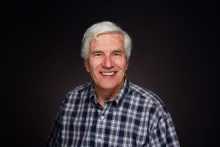
Steve Shafer was born and raised in Seattle. He graduated from Queen Anne High School in 1959 and later graduated from Ambassador College, Big Sandy, Texas in 1967, receiving a degree in Theology. He has been an ordained Elder of the Church of God for 34 years and has pastored congregations in Michigan and Washington State. He and his wife Evelyn have been married for over 48 years and have three children and ten grandchildren.

