

Steve Shafer
This transcript was generated by AI and may contain errors. It is provided to assist those who may not be able to listen to the message.
Last Sabbath, I gave part one of what I want to become a three-part series of sermons on the Song of Songs, or the Song of Solomon as it is in our Bibles. Last time, I gave the background and I introduced the main characters as to who they represent in a spiritual sense, looking at allegorically in a spiritual way. I also then showed how the Song of Songs can be viewed prophetically, because it is indeed a very prophetic message for all of us today. This is a point I'll ask time. This particular book is read every year by Jews around the world on the Passover to commemorate God's marriage covenant with Old Testament Israel. They tied in with that. It does commemorate something for us as well. For us, it commemorates and points to our marriage covenant we made with God and with Christ at baptism, because as we know, we are now preparing to become the bride of Jesus Christ. As we prepare for that, we have to make ourselves ready to become His bride. In the Song of Songs, just to go review the characters a little bit here before we proceed, the Song of Songs is that you might portray the true Church of God spiritually and all of us who have been called to the marriage supper of the Lamb, to the marriage of Jesus Christ at His return. The beloved in this story portrays Christ, who is our beloved, who will take us to be His bride at His return. The daughters of Jerusalem play a role in that story as well, and the daughters of Jerusalem, as I showed last time, portray those who are yet to be called and converted, or may have betrayed us at the time God called us before we became converted.
In Psalm, an interesting is appears in the Song of Songs several times. I think it was seven times He appears in there, and not as the author, although He was the author, but He doesn't appear in the story as the author, but He appears in the story as one of the characters of the story.
And in that sense, He portrays the glory and the riches and the pleasures of the world that can come between us and the relationship that we have with Jesus Christ and the commitment we made to Christ at baptism. So prophetically speaking, it's a story that very much relates to all of us in our calling. As we read this story and go through it, we ask ourselves a question, will we ever let anything ever come between us and the commitment we made with Jesus Christ and God, the Father of baptism? Can anything ever turn us away from that calling?
Within the Song of Songs, the Suleimite has portrayed us having two dreams.
Dreams would project our thoughts into the future.
And after these two dreams, she asked this question to her beloved. I'm just going to quote it again. This is in Song of Songs 6.13. This is what she asked her beloved after these two dreams.
She said, what would you see in the Suleimite?
As it were, the dance of two camps. So I have to think about that spiritually. When God looks down on His church today and all His people, what does He see? Does He see two camps? Or maybe more than two camps? Or does He see one group of loving, unified people of God?
Could these two dreams that she had, that she mentions that are in there in the Song of Songs, the first dream which we'll go through today, could these two dreams, each of which portray future events, be describing those two camps? If so, what is the defining difference between them?
The beloved, as we also covered last time, was a shepherd in the story of the Song of Songs.
A shepherd over both sheep and goats. Even as Christ, the chief shepherd over all of us, as is mentioned several times in the New Testament, is also a shepherd over both sheep and goats. And when Christ returns, we're told, especially in the parable of Matthew 25, verses 31 to 46, that when Christ returns, He's going to separate the sheep from the goats. Could these two dreams tie in with that?
Could her two dreams also tie in with Revelation 3, verses 7 to 22, to Christ's messages to the church in Philadelphia and the church of Laodicea? Could they tie into that?
I won't get into that until next time, but today in part two of the Song of Songs, we will look at how the Jews actually divide this story. If you go to San Sino's commentary, which is Jewish commentary on the Old Testament, you go into Song of Songs, you'll see there in the introduction how they divide this book into five segments. So we're going to look at that, but we're only going to look at the first two of those five segments today.
And we'll look at how this dream, this first dream of the Shulamite maiden portrays a major portion of God's church today. So my title here is the Song of Songs, part two, the Shulamite's first dream. First, I want to just briefly mention again about the Jews dividing the Song of Songs into five segments. And I'm going to go into the third, fourth, and fifth segment next time. I just want to look at the first two this time. But the first segment that they divide this song into is from Song of Songs, chapter one, verse one, through chapter two, verse seven. So 1-1-2-7 is the first segment as the Jews divide this song, verse of the five segments. As we'll go through this, we'll see that that first segment relates to something spiritual to all of us that we can relate to. It relates to our calling and our commitment. Well, let's just briefly look at a few scriptures in that first segment of the Song of Songs to betray that, to betray our calling and commitment. Let's go to the Song of Songs and put a marker there because we'll be going to other scriptures, but we'll be coming back to the Song of Songs throughout the sermon.
Song of Songs, we'll start with chapter one, verse four.
You've got my marker here.
There we go.
Chapter one, verse four. This is the first part of that where she says, here's a Shulamite speaking to her beloved, and she says, draw me away.
That's precisely what happened at the beginning of the process of our calling and conversion.
We first had to be called, didn't we? We were drawn away.
As Christ said in John 6, 44, and I'll just quote it, he said, no one can come to me unless the Father who sent me draws him. Any person's call, God has to draw that person to Jesus Christ. And even people that are raised in the church, they have a calling given to them by virtue of being raised in the church, but they still have to be drawn and make a decision to follow that calling that God has given them and allow God to draw them further and deeper into his church. And then after being drawn to Christ by God the Father, we had to decide if we would pursue that calling. And I can say, like everybody, every young child that grows up in the church, in a sense, has a calling, they have an opportunity to be drawn to God's truth, but they have to make a decision. Am I going to pursue that or not? They get up to be a teenager, an adult, they have to say, okay, am I going to go out in the world and make my profession there, or am I going to pursue the truth that I've been raised in? They have to make a decision. And after we were drawn to Christ by God the Father, we had to decide if we were going to pursue the calling that God has given us. We had to make a decision. And we were still unconverted at that point, as portrayed by the daughters of Jerusalem. And after our minds were opened, we then had to decide whether or not we would pursue the calling that God was giving us. And we had to make a decision. It had to be an all-out decision. We couldn't be hedging on it. We had to run, if you might say, as it says here. The song of songs I verse 4 says, Draw me away. And the daughters of Jerusalem, which portray what we recall we were still unconverted, they say, We will run after you. As noted in my margin, the word run, or excuse me, as noted in my margin, the word you here, is in the masculine singular, pertains to the beloved.
We will run after you. We will run after Jesus Christ in the calling that God has given us.
Why do we have to run in order to pursue the calling that God was giving us?
Because it had to be an all-out commitment. It couldn't be half-hearted. When you make that decision, you have to decide, well, I don't come here to be willing to give up everything. I want to pursue this. This is more important than anything else in my life. It had to be an all-out commitment. And our families, for some of us, some of you I know you probably experienced this, especially those of you who weren't raised in the church, but our families may have even been angry at us, with us, I should say, as depicted by what the shield might say in verse 6, where she says, My mother's sons were angry with me, because she was drawn away, and then she pursued that. She ran after it, her beloved. Sometimes when we make that decision to commit ourselves to God's truth and God's church and the calling that God was giving us, some of our families didn't like it. Sometimes we got angry. And then we had to find out, of course, once we had that calling and we wanted to pursue that, decided we were going to pursue it, we had to find out, well, where do God's people meet? Song of Songs 1, verse 7, the shield might hear to her beloved. She says, Tell me, O you whom I love, symbolic of Jesus Christ, tell me where you feed your flock.
What do they meet? What do they get their spiritual food? What do they, was the truth preached? Well, I can get more of it.
Where you make it rest at noon. For why should I be as one who veils yourself by the flocks of your companions? Why should I remain hidden from you in some other church that really isn't pursuing the truth?
Finally, we came to banquet spiritually with God's true church and we became lovesick to understand more of the truth and more of the true Jesus Christ. Chapter 2, the Song of Songs, verse 4, the shield might to the daughters of Jerusalem. She is saying, He, my beloved, He brought me to the manquitine house.
That's symbolic of us being brought into God's church where we can get spiritual food in relation to the truth and our calling and what the Kingdom of God is really all about. He brought me to the manquitine house and His banner over me was love.
Sustain me with cakes of raisins, refresh me with apples, for I am lovesick. Verse 5, I am excited about the truth. I'm excited to learn more. I'm in love with the truth that God has given me. I want to find out more.
But the timing of our calling and commitment had to be right.
Verse 7, the shield might to our beloved. Chapter 1, verse 7, Tell me, O you whom I love, tell me where you feed your flock, where you make it rest at noon, for why should it be as one who veils herself by the flocks for her companions? Then dropping over to 2, verse 4, I brought me to the manquitine house, His banner over me was love.
Now, verse 7 was the one I wanted. I got mixed up here a little bit. But verse 7, I charge you, O daughters of Jerusalem, by the gazelles or by the does of the field, do not stir up nor awaken love until it pleases. Like I said, the timing had to be right when we were called. God stirred and awakened our love for the truth and our love for Jesus Christ.
At a time that pleased God, when He knew it was right, when He knew it, the time was right for us to be able to make that commitment.
At a time that pleased Him, at a time we would make a firm commitment to follow and stay with the truth. So, love does not stir that up until it pleases God. I think it's the right time for this particular person. That's the last verse of the first segment, verse 7 of chapter 2.
The second segment then of the Song of Psalm is from Song of Songs 2 verse 8 through Song of Songs 3 verse 5. In chapter 3, the first five verses, that second segment concludes with the Shulamites' first dream. It will go through it a little bit later. Again, we'll look at the other three segments next time. But if the first segment then had to do with our calling and commitment, and with finding where God's true church really met, where the services were, what might the second segment deal with? Now, some of you have been in, some of us, I should say, have been in God's church for many, many years. Some over 40 years, some close to 50 years. But for as many years as we have been in God's church, what comes after our calling and commitment that we made at baptism?
We started learning about the Kingdom of God, and Jesus Christ is going to set up His Kingdom on this earth. What do we all anticipate and look forward to from that moment on? Notice how the second segment begins. Song of Songs 2 verse 8. She says, the Shulamites speaking here, she says, I hear the voice of my beloved. Behold, he comes, leaping upon the mountains, skipping upon the hills.
So the Shulamite here is looking for her beloved to return, to return speedily. And isn't that what we all anticipated? Once we learned about Jesus Christ, how He was going to come to this earth and set up a kingdom, and He's going to change His whole world? We look forward to that. We anticipated that. We, wow, come quickly, God. God, send your Son, Jesus Christ, quickly.
We'd like Him to return sooner rather than later. So we all look forward to and anticipate the return of Christ.
And we always hoped that that would be sooner rather than later.
We all hope for a speedy return, but here we are, still waiting, still anticipating, still looking as we look around the world and see things getting darker and darker, and all the problems in the world and all the hatred and violence we think, boy, it certainly must be time for Christ to return. We sure like that happen soon.
And I'm sure Christ Himself is anticipating. Look forward to that as well, as the next verse here in the Song of Songs tends to indicate. Chapter 2, verse 9, she says, My beloved is like a gazelle or a young stag. Behold, He stands behind our wall. Interesting statement. He is looking through the windows. He's gazing through the lattice. He's looking down. He sees everything, kind of from a distance, but He sees.
Christ sees the mess the world is in. He sees all the violence.
And He sees us once He's called. He knows all the trials and struggles we have, all the things we cope with daily in our lives, all the situations we face. And He hears our prayers. He knows our hearts. He knows how much we want Him to return.
But for now, it's like there is a wall holding Him back. He's behind the wall. He stands behind our wall, says. Now, it could be the wall that He's standing behind. It could be our wall, as it says here. It could be our wall that's holding Him back. What would that be? What would our wall be? What would be in our life that might be holding Him back? Well, we have to be made ready, don't we? Maybe we're not quite ready yet. You know, God is extremely patient, extremely merciful, extremely long suffering.
But He sees things in our lives that we need to overcome, that we need to make progress on. Maybe some things are more serious than others.
Maybe that wall could be we haven't made ourselves ready to the extent that we need to. That we still have things we need to overcome first.
But there's also another wall.
Just mark it again, mark your place here in Song of Songs, and let's go to Matthew 24.
Matthew 24, beginning in verse 32, from all of that prophecy that Christ gave to His disciples, just before He was taken away to be crucified. Matthew 24, verse 32, means pass away. But then notice verse 36, referring to the day that God the Father will send Jesus Christ back here to this earth.
So God the Father, and God the Father only, will determine when to send Christ back to the earth to rescue mankind.
So only God the Father will determine when that time is right for Christ to return.
But if that day and hour no one knows, not even the angels, but my Father only. But anticipation is a major aspect of the second segment of the Song of Songs, where I'm anticipating the return of Jesus Christ.
But there's also something else in this segment in addition to anticipating Christ's return, or what is that? What will happen at the time leading up to Christ's return? What does Christ Himself tell us right here in Matthew 24? Let's go back to the first beginning of Matthew 24 to Matthew 24 verse 1, because it talks of something that's going to have to take place.
It's very important, especially as it relates to all of us.
Matthew 24 verse 1, Then Jesus went out and departed from the temple, as disciples came up to show him the buildings of the temple. And He said to them, Do you not see all these things? Assuredly I say to you, Not one stone should be left here upon another that shall not be thrown down. And as He said on the Mount of Olives, the disciples came to Him privately saying, Well, where will these things be?
What will be the sign of your coming? What will be the sign that we're nearing the end of the age?
What was the first thing He told them? Verse 4, Jesus answered and said to them, Take, Keith, and no one deceives you.
For many will come in My name, saying, I am the Christ, and will deceive many.
How strong will that deception be?
Will it be so strong that maybe even some of the elect could be deceived, some of those who had their minds open to the truth?
Verse 23 of Matthew 24, Then if anyone says to you, Look here as the Christ, or there, do not believe it. For false Christ and false prophets will rise and show great signs and wonders, to deceive, if possible, even the elect.
Will some of the elect be deceived?
Will there be a falling away because of that deception?
However that plays out.
Let's go to 2 Thessalonians 2.
2 Thessalonians 2, verse 3, 3 Let no one deceive you by any means, for that day, that day of Jesus Christ's return, will not come unless the falling away comes first.
And the man of sin is revealed, the son of perdition, who opposes and exalts himself above all that is called God with his worship, so that he sits as God in the temple of God, showing himself that he is God.
Do you not remember that when I was still with you I told you these things? 2 Thessalonians 2, verse 6, Will this deception also be a wall, so to speak, that will hold up or possibly delay the return of Christ? That is, will these events described here have to play out first before Christ returns?
2 Thessalonians 2, verse 6, And now you know what is restraining that he may be revealed in his own time. 3 For the mystery of lawless is already at work, only who who restrains or holds back these things will do so until he is taken out of the way. 4 And then the lawless one will be revealed, and the Lord will consume with the breadth of his mouth and destroy with the brightness of his coming.
5 And the coming of this lawless one is according to the working of Satan, with all power, signs, and lying wonders. So Satan is the power behind this. 6 But what is all this deception talking about here? 7 What is all this deception really all about? What is really going on here? 8 What must Christ do in regards to his church before he returns? 9 There is something very important that has to take place. What is it? 10 Let's go back to the Old Testament right now.
11 Let's go back to the book of Malachi, the last book of the Old Testament, and our particular order and arrangement. King James. Malachi 3, beginning in verse 1. 12 Behold, I send my messenger, and he will prepare the way before me. 13 Of course, that was fulfilled by John the Baptist. We'll see if it has a latter-day fulfillment as well.
14 He will bear the way before me, and the Lord, whom you seek, will suddenly come to his temple. 15 Even the messenger of the covenant, in whom you delight. Behold, he is coming, says the Lord of hosts. 16 But who can endure the day of his coming? Who is still going to be standing?
Who is still going to be there anticipating his return, making themselves ready? 17 And who can stand when he appears? Who will be there? 18 For he is like a refiner's fire, and like a launderer's soap. 19 And he will sit as the refiner, and a purifier of silver. 20 He will purify the sons of Levi, and purge them as gold and silver, that they may offer to the Eternal, and offering them righteousness. 17 Zechariah 13, 9, adds, I will refine them as silver is refined, and test them as gold is tested.
19 What does Christ's warning mean, to take heed that no one deceives you? 20 What is that really all about? 20 What must Christ do before he returns? 21 Before he returns, he has to refine his church. It has to be refined. 22 It has to be tested. It has to be refined as silver is refined, and gold is refined. 23 He has to make us into a product of pure gold. 24 And the first step in that refining process is to take heed that no one deceives you.
25 That's the first test we've got to pass. We've got to know the truth, and we've got to be able to hold on to it, and never let any man take it away from us or deceive us. 26 Let me ask another question regarding deception. 27 When it comes to being deceived, who is the main one we need to watch out for?
28 The man of sin? 29 He'll be revealed in his own time. God will take care of that. 30 But who is the number one person we need to be aware of? 31 For the answer, let's go back to Jeremiah 17.
32 Thus says, 32 Eternal, cursive is a man who trusts in man, 33 and makes flesh his strength. He relies on his own strength, his own intellect. 34 Whose heart departs from the eternal? 35 He doesn't trust in God, in other words, instead. 36 For he shall be like a shrub in the desert, and shall not see when good comes, 37 but shall inhabit the parched places in the wilderness, 38 and assault lamb which is not inhabited.
39 But blessed, verse 7, is a man who trusts in the eternal, 40 and whose hope is in the eternal. 41 For he shall be like a tree planted by the waters, 42 which spreads out his roots by the river, 43 and he will not fear when the heat comes, 44 but his leaf will be green, 45 and he won't be anxious in the year of drought, when things really get bad.
46 Nor will he cease from yielding fruit. Why? 47 Where does fruit come from in our lives? 48 It comes from God's Holy Spirit.
49 That's the water we have to have to keep us from being drying out. 50 But who is the number one man we must not trust in? Who is the number one man who is the most likely to deceive us?
Verse 9, The heart is the seeple above all things, and deathly wicked, and who can know it? And I, the Eternal, I search the heart. 51 I test the mind, I test a person's thoughts and motives, even to give every man according to his ways, according to the fruit of his doings. 52 So we must never trust in ourselves or in our own strengths. 53 Why not? 54 Because our own hearts and feelings can be deceitful above all things, it says here. 55 So the most likely person to deceive us is ourselves. 56 That's the one we have to be aware of. That's why we have to have our mind focused in God's Word. 57 And Christ is now in the process of refining his church, and the first step in that refining process is to take heed that no man deceives you, and no one deceives you. 58 And we must especially take heed that we do not deceive ourselves, because the heart is deceitful above all things, and who can know it?
59 Towards the end of this in-issue refining process, what's going to happen next, prior to Christ's return? Let's go back again to Matthew 24.
Matthew 24, let's go back to verse 8. Matthew 24, verse 8.
After he talks about all these things in the first few verses, he says, 59 And all these are just the beginning of sorrows, because then they will deliver you up to tribulation and kill you, and you will be hated by all nations for my name's sake.
How great is this tribulation going to be? Verse 21, then there will be great tribulation, which has not been since the beginning of the world, until this time, nor shall ever be again.
And it will be so great, it says in verse 22, unless those days were shortened, no flesh would be saved. No flesh would be saved alive as it could be.
But for the elect's sake, those days will be shortened.
Now, while some of those elect, who have been anticipating the return of Jesus Christ, be spared from having to go through this period of great tribulation, that's going to come upon the whole world.
Will the elect, who have been refined by their trials now, and who have worked on overcoming some of their things, and they haven't been trying to hide them or cover them up, but they've been trying to really work on them and overcome with God's help, and they're being refined by those trials and things that they're struggling with?
Will they be spared from going through this great tribulation? Now, that takes us back to the second segment of the Song of Songs, and to what the Beloved says in response to the Shulamite's anticipation of His return. So let's go back there again to the Song of Songs, Chapter 2.
Again, the very beginning of the second segment, which began in Verse 8. Song of Songs, Chapter 2, Verse 10.
My beloved spoke to me as the Shulamite maiden, talking to her beloved. That'd be like the church crying out to Jesus Christ.
And He speaks back. My beloved spoke to me and said to me, Rise up, my love, my fair one, and come away. Come away. I don't want you to have to go through all this period of tribulation that's coming. We could add.
Come away and escape this tribulation that's going to come upon the whole world. Verse 11. For lo, the winter has passed for you.
The rain is over and gone. Your time of trial and testing is over because you've been refined. You've allowed me to refine you.
You've refined by the process of the trials and what you've learned from those trials and what you've gone through. So instead of tribulation, I'm going to bring you pleasant things, like flowers, singing, things that are of a pleasant fragrance. Verse 11. Winter has passed. The rain is over and gone. So for you, the flowers are going to appear on the earth. Time of singing has come. The voice of the turtle dove is heard in our land. The fig tree puts forth green figs and the vines with the tender grapes give a good smell. So rise up, my love, my fair one. Those of you who've been refined, who've worked on overcoming my help, rise up and come away.
Come away to escape the tribulation which is going to come. The theme of segment 2 of the Song of Songs is anticipating Christ's return and then escaping what's going to come upon the whole world. That's the themes you see in there in that particular segment. See, first comes our calling and commitment in the first segment. And then the second segment, our anticipation for Christ's return and our escape from the great tribulation which has come upon the whole world.
It's also clearly revealed to us in the book of Revelation. So let's turn there and just substantiate what I've just told you here. Going to Revelation 12, Revelation 12 beginning in verse 6 with a woman here, a symbolic of God's church. Then the woman fled into the wilderness where she has a place prepared by God that they should feed her there for 1,260 days or three and a half years.
And war broke out in heaven. Michael and his angels fought in the dragon, the dragon and his angels fought, but they did not prevail. There was a place found for them in heaven any longer. So that great dragon was cast out, that serpent of old called the devil and Satan, who deceives the whole world. He was cast to the earth and his angels were cast out with him.
Then verse 12, Therefore rejoice, O heavens, in you who dwell on them, but woe to the inhabitants of the earth and the sea. For the devil has come down to you having great wrath, which is going to bring great tribulation on the whole world, because he knows now that his time is very short.
Verse 13, When the dragon saw that he had been cast to the earth, he went after God's people.
He persecuted a woman who gave birth to the male child, who was proclaiming the true Jesus Christ. Verse 14, But the woman was given two wings of a great eagle, that she might fly into the wilderness to her place, where she is nourished spiritually, for three and a half years, for time and time and a half a time, from the presence of the serpent.
So she could escape Satan's wrath, and the great tribulation is going to come upon the whole world, because of Satan's wrath.
Now, those have been around for many, many years, as most of you have, many of you have.
We used to refer to this as going to a place of safety. Probably haven't heard that for a long time, but that's what it will be. And of course, we've always wanted where that place of safety might be.
Many years ago, we used to think it was Petra.
It's interesting to think about where did that notion come from? Why we used to think it was Petra?
Well, actually, that notion came from the song of songs. It came right here from segment two of the song of songs. Let's read it for ourselves. Let's go back to the song of songs again.
Now, my marker came out, so now I've got to dig and find it. Where is it? Tom Proverbs, Ecclesiastes, Song of Psalm. There it is. Let me put that back in there.
Let me be going back and forth quite a bit. It's not easy book to find. You don't have it marked. Song of Songs, chapter two. Verse 13.
The fig tree puts forth the green figs and the vines with the tender graves to give a good smell. Rise up, my love, my fair one, and come away. Come away to where? Verse 14.
All my dove, in the clefts of the rock, in the secret places of the cliff, let me see your face, let me hear your voice. For your voice is sweet and your face is lovely. You've got a great attitude. I want to hear your prayers. I want to hear your voice. I want to see you. I want to protect you.
Now, the Hebrew word translated rock here is Selah. C-E-L-A. It's number 5553 in Strongs. And it means, according to Strongs, it means to be lofty. It can mean a craggy rock or fortress or a stronghold. And of course, the area of Peter does fit that description. I was wondering, I made a mistake, which Evelyn corrected afterwards. I said, I said, you know, where's Petra? I said, I think it's in Turkey. And then, I said, no, it's not in Turkey. You Turkey? It's in Jordan. I should have known that. But Petra's in Jordan. She'll set the record straight there.
It's a major tourist attraction today. How many of you have been there? How many of you have been to Petra? Yeah, a few of you have been there. But it's a major tourist attraction. I think they have, you know, thousands go there every year. So it's not a real good place to hide for three and a half years. But it is noteworthy that that particular notion or location as a place of escape or safety came from the second segment of the Song of Songs, as did, as well as Revelation, also the idea that Christ might be there with His followers to give them additional training for three and a half years, which is indicated or insinuated maybe in verse 16. Chapter 2, verse 16, where the shew of mine said, My beloved is mine, and I am His, He feeds His flock among the lilies. Here, He feeds us. He's going to feed us here during this time. Of course, also, Revelation 12, 14 indicates that as well. It says she's going to fight to go to her place in the wilderness where she's going to be protected for three and a half years, and where she'll be nourished, it says, for three and a half years. But I don't know where the place of escape is going to be or how God's going to get us there. Or what exactly could go to take place when we get there? That would be all speculative.
And I will all probability find out after I'm resurrected. That's most likely, I think, at this point in my life. In fact, I almost would prefer it that way because the easiest place of safety is going to be in the grave. It's going to be hard going to there. If you have to, God has to get us there somehow, whoever those people might be. The easiest way would be to die and then be resurrected later because that will be an easy three and a half years.
But the point here is that segment two of the Song of Songs centers on anticipating Christ's return and escaping the Great Tribulation. All of us now leads us up to the Shulamites' first dream, which is in the first five verses of chapter three.
Let's read it. Song of Songs, chapter three, verse one. It says, By night on my bed I sought the one I love.
I sought him, but I did not find him.
I'll rise now, I said, and I'll go into the city, into the streets and the squares, and I will seek the one I love.
I sought him, but I did not find him.
The watchman who go about the city found me, and I said, Have you seen the one I love?
Scarce had I passed by them when I found the one I love, and I held him, and I would not let him go, till I had bought him to the house of my mother, into the chamber of her who conceived me. Then again, verse five, I charge you of daughters of Jerusalem by the gazelles or by the does of the field. Do not stir up nor awaken love until it pleases. That then ends segment two as the Song of Songs is divided by the Jews in San Sino's Old Testament commentary.
As being a part of the second segment, this first dream of the Shulamite would pertain to those who are going to escape the Great Tribulation in their anticipation of Christ's return.
What can all of us learn from the Shulamite's first dream that's given to us here? We just read in these first five verses of chapter three.
What must we do to be kind of worthy to escape the Great Tribulation?
See, it's interesting here, and we just read this in the first two verses, but twice here in the beginning of this dream, she says, I sought him, but I did not find him, verse one and verse two.
Now, when God called us and we came into God's Church and we started hearing the truth and hearing the true Jesus Christ, did we all find Jesus Christ at that time?
So what do you mean, I sought him, but I did not find him? How could that apply to us? Well, it would indicate that truly seeking Christ is a lifetime pursuit, it's a lifetime struggle, and would indicate that there is more to it than just knowing who he really is and what he taught. It's got to go much deeper than that. You could see Christ and find out who he is and what he taught, but to really find him, you've got to go a step beyond that, or several steps, actually. And the Apostle Paul tells us what it really means to us. The Apostle Paul tells us what it really means to see Christ until we truly find him. Let's go to Philippians 2.
Philippians 2, beginning in verse 1, where Paul writes, If there is any consolation or encouragement in Christ, if any comfort of love, if any fellowship of the Spirit, if any affection and mercy, fulfill my joy by being like-minded, having the same love that Jesus Christ had, find the same love that he had, find how to be of one accord, seek him until you can find how to have one mind, seek him until you can let nothing be done through selfish ambition or conceit, but in humility of mind, you get to the point where you can seek him to where you can esteem others better than yourself. Do we seek him to that extent? Do we really find him? Look, each of you look not only on his own interest, but also in the interest of others, and let this mind be in you, which is also in Christ Jesus. So to truly seek Christ, we must continually pursue seeking the mind of Christ and seeking to become like Christ. Unless you can find that, you haven't really found Jesus Christ yet. But to seek the mind of Christ means we all have to put the best interest of others ahead of our own interests, and then we have to humbly esteem others better than ourselves, even as Christ did for all of us. But if we really want to find Christ in the mind of Christ, we have to go even further than that. Verse 5, let this mind be in you, which is also in Christ Jesus. Then verse 6 adds, who being in the form of God did not consider robbery to be equal with God, or as the living Bible paraphrases it, who though he was God did not demand or cling to his rights as God. He didn't cling to his rights. He had every right to cling to his rights. He was the son of God, but he didn't. What do we like to do? We like to cling to our rights. What did Christ do instead? Verse 7, he made himself of no reputation. He didn't want a reputation. He took on the form of a bondservant or a slave, and he came in the likeness of men. And being found in appearance as a man, he hummed himself and became obedient to the point of death, even the death of the cross. For again, as the living Bible paraphrases it, he laid aside his mighty power and glory to instead die a criminal's death on the cross, so he could be our Savior. See, do we seek him until we come to find his mind in us?
Until we become like him? Or do we instead seek what Paul tells us in verse 21, where he says, we all seek their own, not the things which are of Christ Jesus?
To truly seek and find Christ is to seek the mind of Christ, and that is a continual struggle, requires a lifetime, persistent effort. Even as depicted in the Shulamites dream, where in her dream she says, I wake up in the night and I meditate. I think, where is he? How can I find him? When we wake up in the night, do we meditate on those things? How can I become more like Jesus Christ? What did I do today? How did I respond to this? How did I react to that? How would Christ have reacted? Did I really display his qualities? And we must strive to apply the mind to Christ when we, as it says in her dream, when we go about the city, when we go into the streets and the squares of the city, where the entire population is going the other direction, and where there's all these temptations and everything all around us that draw us the other way. Do we fight that? Do we resist it?
See, during those times we can't go along with the crowd. We have to instead seek the one that we love and the one who loves you and me. See, our minds and our thoughts must be continually guarded, especially in the world we live in today, to make sure they are centered and focused on seeking and finding the one we love, finding the mind of Christ and his attitude.
And see things, look at things as he does.
And as we continually engage in that struggle, if we continually engage in it, can you ask God's help and we strive to do that day in and day out? We will in that struggle and we will find the real mind of Christ and it will be developed in us. Because as Christ himself tells us, ask and it will be given to you, seek and you will find and knock and it will be opened to you. Matthew 7, verse 7.
Let's go back now to the Yeshua of Might's first dream. Let's read it again. Song of Psalm 3, verse 1.
By night on my bed I sought the one I loved. Did we do that when we wake up at night thinking about it?
I sought him but I did not find him so I kept seeking him. And I'll rise now, I sit and I'll go to the city and the streets and the squares and I'll seek the one I love. But as the long struggle was hard, I sought him but you know I still didn't find him fully.
But the washer to go out the city found me and I said, have you seen the one I love? And scarcely had I passed by them. After all these trials and difficulties, you go through these trials. As when you go into those trials and all these things you have to struggle with, that's where you really find the true Jesus Christ. That's where his mind is developed in you by struggling through those trials. It forces your mind to be on Jesus Christ and how he would handle those things.
Then I found the one I love. Once we find him, once we begin to exercise the mind of Christ and develop the mind of Christ in us, what must we do then? I found the one I love. So then what does he say next? I held him and would not let him go until I brought him to the house of my mother and into the chamber of who conceived me.
In other words, we have to hold on to the mind of Christ until we become ready to be the bride of Christ. The statement here, into the house of my mother, is referring to the place where they will be married and to the day of their marriage. But again, what about the final verse here in this dream? What about verse 5? I charge you, O daughters of Jerusalem, by the gazelles or by the does of the field. Do not stir up nor awaken love until it pleases. Why not? Because once that love is awakened, it's going to require total commitment to the end of our lives.
See here the Shulamite is telling the daughters of Jerusalem that those have not yet been committed to their lives to Christ fully. Do not awaken that love until they've counted the cost. So then make sure that once that love is awakened, that nothing is going to come between them and the relationship with Jesus Christ. If they've come to the cost, then nothing will ever separate them from that love of God that they have been given. Don't awaken that love until you're sure nothing will ever come between you and the relationship with Christ that they are committing to.
Even as Christ indicated to his disciples in Luke 14, let's go there, Luke 14, beginning in verse 25, it says, Great multitudes went with him and he turned and said to them, they're great multitudes, they're seeking him. But Christ knew that only a few are really going to find him because he realized that was going to be a tough road to go down.
It's going to be a lifetime struggle and commitment that it would take. So he lays that out a little bit here, beginning in verse 26, he says, if you really want to find me and be my disciple, my true disciple, and really receive my teachings and apply them in your life and develop my mind and become like me, and you want to come after me to seek me and really find me, he says, you better love me more than your father or your mother or your sisters or brothers or your own life.
Because if you don't love me more than anything else, any other person, any other family member that might be near and dear to you, if they're going to come between you and me, then you can't be my disciple. You're not going to really find me. Whoever does not bear his cross, verse 27, and come after me cannot be my disciple. You have to go through a lot of trials.
You can't let those trials discourage you or get you down. You can't let that become a stumbling block between really finding Jesus Christ. In fact, it's those very trials that we struggle with and that's going to help us to find the true Jesus Christ and develop his mind in us. Verse 28, in which of you, attending to build a tower, does not sit down first and count the cost whether you have enough to finish it? That's why we have to not stir up love until we know we can count the cost that we're going to stick with for the rest of our lives and never let anything come between us and our relationship with Jesus Christ and the calling that God has given us.
Less after he has laid the foundation and is not able to finish it, some will walk in saying, well, this man began to build, but he wasn't able to finish.
Or what king going to make war against another king does not sit down first and consider whether he is able to, with 10,000, to meet him who comes against him with 20,000?
When we made that commitment of baptism, Satan was looking down. While he was there, he was observing. He said, I'll see where is that person's vulnerabilities? Where's his weaknesses or her weaknesses? How can I get to that person? How can I prevent them from keeping that commitment they're making?
When we entered into baptism, we were entering into spiritual warfare, a life and death struggle to keep that commitment and not let anything come between us, no matter what Satan might be throwing at us that we may not even anticipate or see. We know that Satan is working behind the scenes. He's trying to prevent us from fulfilling the calling that God has given us.
He says, you've got to make sure you account that cost too, or else while the other is still a great way off, he sends a delegation because, oh, I don't think I can make this struggle. I'm so overwhelmed. I don't have the strength. That's why we have to go to Jesus Christ for his strength, because we don't have the strength. But we can never ask for a delegation and go ask for conditions of peace. In other words, let's compromise. Now, we can't compromise. It has to be all or nothing.
Verse 33, so likewise, whoever you do not forsake all that he has, or not willing to forsake all he has, not willing to make sure nothing can come between you and your relationship with Jesus Christ cannot be my disciples, cannot really find me, cannot really find the true Jesus Christ, where you develop his mind and become like him. So don't stir up or awaken love until it pleases, until you have counted the cost, or to where you have, you know that nothing is ever going to come between you and the calling and commitment you made at baptism and seeking Jesus Christ and really finding his mind in you. We'll end part two here for now. Next week, we'll conclude this three-part series on the Song of Songs by addressing the final three segments of the story, and I'll tell you what those relate to. And then we'll also go through the Shulamite Second Dream, which is a far more dramatic dream and a far more troublesome dream than the first one.
But it does, as we'll see next time, have a positive outcome.
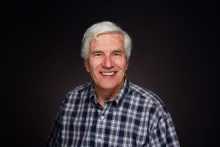
Steve Shafer was born and raised in Seattle. He graduated from Queen Anne High School in 1959 and later graduated from Ambassador College, Big Sandy, Texas in 1967, receiving a degree in Theology. He has been an ordained Elder of the Church of God for 34 years and has pastored congregations in Michigan and Washington State. He and his wife Evelyn have been married for over 48 years and have three children and ten grandchildren.
