
Steve Shafer
This transcript was generated by AI and may contain errors. It is provided to assist those who may not be able to listen to the message.
As we all realize now, we're about 10 weeks away from preserving the Passover once again. And every Passover, Jews around the world, read a particular book of the Old Testament on the Passover. They rehearsed that particular book because they feel it's extremely important and very significant to read at the time of the Passover. It's a book where they feel it commemorates the marriage covenant between God and the Old Testament Israel, which God made with Israel when He called them out of Egypt. In fact, God Himself clearly tells us it was that covenant He made with them when He called them out of Egypt. That was actually a marriage covenant. And He tells us that, specifically in Jeremiah 3.14, I'm just going to quote it. I'm going to turn there. But in Jeremiah 3.14, where God told Israel, He said, Returnal, backsliding children. For I am married to you. He said He was married to Old Testament Israel. That is, He had a marriage covenant with them. And when God called us out of Egypt, out of this world, and the ways of this world, and we were baptized, in essence, He made a marriage covenant with us, and we made a marriage covenant with Him. And we are now to betrothed the bride of Christ, who must make ourselves ready for the marriage supper of the Lamb. As you read in Revelation 19, verse 7. So what book then do the Jews read on the Passover every year? To commemorate their marriage covenant they made with God, and that God made with them. It's an extremely important book. It's a very important book to understand, I think especially at this particular time for all of us, as we strive to make ourselves ready to become the bride of Christ at His return. Now, as I'm wrong, this book is so important. In fact, so, you know, the Passover is probably the most important service of the entire year, and this is a book that the Jews choose to read on that particular time in the Passover. The ironic thing about this book is a book that we seldom ever read. Most of you probably very seldom ever read this particular book. When you do read it, you kind of want it while I don't understand it. So you kind of avoid it. And you rarely ever hear this particular book quoted in a sermon or sermonette.
So it's very seldom read, very little understood. The book the Jews read every Passover to commemorate their marriage coming with God is the Song of Solomon, or the Song of Songs. Now, some of you may remember many, many, many moons ago, many years ago, back in the 1970s, I think it was. I actually, down in Seattle, was a Scottish Rite.
I think I actually gave a series of Bible studies going through the Song of Songs or Song of Solomon. But this is not a Bible study. These are sermons, a little different approach I'm using here today. And besides, if you heard those, you wouldn't remember much about that anyway, a lot longer ago. I don't remember much about it. But anyway, in preparing for the Passover, I wanted to give a three-part series of sermons on the Song of Songs, as the actual title is, or the Song of Solomon, showing his relevance to all of us today, and as it pertains to the marriage covenant we made with God and baptism.
And in this series, I'm going to break up into three segments, three sermons, each sermon covering a different aspect of it. First, here in part one today, I will give you the background of the book and the main characters of the story. And I want to especially emphasize how it can be viewed prophetically, because it is very prophetic. Secondly, in part two, which I'll give next week, we'll go through the first of two dream sequences. There's two dream sequences that Shulamite made in their halves. And next week I'll go through the first dream that she has and some other aspects of the book, going through the storyline a little bit more in detail.
And then third, in part three, we'll go through the second of those two dream sequences that she has, extremely significant, prophetically speaking. So today, then, in part one of this three-part series, we'll look at the background, the main characters, and how the Song of Songs can be viewed prophetically speaking. Title is the Song of Songs, part one, background, characters, and prophetic aspect. So let's first look at a little bit of the background of this particular book. The Song of Songs, or Song of Psalm as it is in most of your Bibles, most of your Bibles is the Song of Solomon.
It's located between, it's a very short little book, located between Ecclesiastes and Isaiah, to help you find it. So let's turn there. You might put a marker in there because we're going to other scriptures throughout the sermon, but you will be coming back to it. Let's look at verse 1, Song of Songs, chapter 1, verse 1. I'm going to refer to it as the Song of Songs, as that is the actual, original Hebrew title. Verse 1, the Song of Songs, which is Solomon's. Again, that was the original Hebrew title, the Song of Songs, which is Solomon's, which is written by King Solomon.
Now, the first question that's interesting to look at here and look at the background is, how many songs did Solomon write? Because this says, this is the song of all of his songs. This is the greatest of those songs. How many songs did he write? I'm just going to quote 1 Kings 4, 32, where it says, He, Solomon, spoke three thousand proverbs, and his songs were one thousand and five.
It says, the Solomon wrote one thousand and five songs. But this is the only one we have in Scripture, and it is called the Song of all of those one thousand and five songs. Of all those songs, this is the Song of Songs. It's the greatest, most superlative, and most meaningful of all those one thousand and five songs, which Solomon wrote.
In the previous verse, and the one I just quoted in 1 Kings 4, 31, it also says this of Solomon. It says, He was wiser than all men. Why was Solomon wiser than all men? A lot of you know the story. When he became king of Israel after David, his father David died, and he became the king of Israel. He was very humble in his own eyes. Very humble at the beginning. When he became the king of Israel in place of his father David, God granted him a wish.
And Solomon wished for wisdom. Wisdom for ruling so great a people as a nation of Israel. He says, Who am I to rule this great nation? I don't have the wisdom to rule this nation. He asked God for wisdom so he could rule his people, God's people. He wished for, as it says in 1 Kings 3, 9, he wished for an understanding heart to judge God's people. So God granted him his wish and gave Solomon, quote, a wise and understanding heart, 1 Kings 3, 12. A wise and understanding heart to judge God's people.
And the Song of Songs was the wisest and greatest of all King's Psalm, his 1005 songs. And it was written with the wisdom that God gave to him. In other words, it was written under God's inspiration and God's wisdom. The reason the Song of Songs is the greatest is written with the very wisdom of God. It was God's wisdom which makes this the Song of Songs. And the Song of Songs, when prophetically and properly understood, was also written to judge God's people. It's a very good measuring mark to judge God's people, even today, as we'll see.
Now I want to just point before we get to the main characters, one of which is called the beloved in this story, in the subheadings. As you look at your Bibles, most Bibles have subheadings. So we know who in the story is speaking at that particular moment in the story.
Those were added by the translators to add clarification. In the original Hebrew, the speakers are identified by the gender of the personal pronoun. The personal pronoun either being masculine or feminine identifies who's speaking. Of course, we don't read Hebrew, so the translators have clarified that by having a heading there indicating who's speaking.
But the real additional point I want to make here is that the beloved in this story, in the Song of Songs, cannot be Solomon. It can't be Solomon. Why not? 1 Kings 11, the first four verses, verses 1-4, 1 Kings 11 says, King Solomon loved many foreign women. He says he had 700 wives, princesses, and 300 concubines, who turned away his heart after foreign gods.
And yet the Song of Songs is the love story of all love stories, especially in regard to the love the beloved displays towards this shoe-mite maiden in this story. Contrary to that, Solomon, among his 700 wives and 300 concubines, never really found true love, true lasting love. Never found it. And none of Solomon's wives or concubines would have felt that Solomon was devoted to them and to them alone. He had to share them with dozens and dozens of others, hundreds of others. Totally contrary to how the shoe-mite maiden viewed her beloved in the Song of Songs. Let's turn there. Song of Songs 2, verse 16.
Well, the shoe-mite says, the shoe-mite speaking here, if you have the subheading over that, says, the shoe-mite says, My beloved is mine and I am his. So the beloved in this story cannot be King Solomon. None of his wives or concubines could say that.
Although King Solomon is mentioned a number of times in the story, as we'll see.
Well, with that brief background, I should say, let's move on to the characters. Let's look at the main characters to see a little bit who they are and who they represent. Now, I'm not going to take much time to discuss who the real characters may have been. We'll touch on that, but I will tie in some of the pertinent points regarding who they were. What's far more important is to who do they represent? Who do they symbolize spiritually speaking? Is there a spiritual aspect to this story that is extremely relevant to all of us? And who do these characters represent spiritually speaking? Who do they portray spiritually? Now, the first main character mentioned in there is an unnamed, I should say, Shulamite maiden. It's just called the Shulamite. She's an unnamed Shulamite maiden. She's called the Shulamite in Song of Songs, Chapter 6. Let's turn to Chapter 6, Verse 13.
Song of Solomon, or Song of Songs, Chapter 6, Verse 13. It says, the beloved and his friends says to the Shulamite, Return, return, O Shulamite! Return, return, that we may look upon you.
So here she's called a Shulamite.
And going on, the next part of the latter part of Verse 13, the Shulamite says, What would you see in the Shulamite? As it were, the dance of two camps? Very interesting verse. She's asking her, beloved, when you look down and look at me, what do you see? Do you see as it were the dance of two camps?
Do you view me as a dance of two camps, or do you see me as one unified camp of people? Very interesting question. But at any rate, she is here called a Shulamite. So also note whether this is the only place in Scripture in the Bible where that name appears. And the Bible doesn't mention Shula as a place or as a person.
There's nobody called Shula in the Bible. There's no place called Shula in the Bible. So there's no way of knowing for sure where she actually came from or who she may have descended from. We don't know.
But the name Shulamite is significant when you look it up and note what Hebrew word it is derived from. The Hebrew word Shulamite is thought to have derived from the Hebrew word shalom, S-H-A-L-A-M, which means, the Hebrew word shalom, from which they think the word shulamite was derived, means to be completed, to finish, to perfect, to restore, to make restitution for, can also mean to prosper, to be at peace, and to be safe. And you stop and think about that. All of those descriptions, all of those things can describe God's desire for His church, for His pride to be. God wants us to be completed, spiritually speaking. We're not a finished product yet, but He wants to complete us. He wants to make us in the very image of Jesus Christ. He wants to finish the spiritual work He has begun in us.
He wants to restore us to His spiritual image and likeness. He wants to make restitution for us. He wants us to prosper, to be at peace, and to be safe.
All of which can be likened to the meaning of the Hebrew word shulamite.
So you have to ask, when you look at all those things, you start putting those things together and digging a little deeper into the story, you have to ask, is there more to this story than meets the eye?
Notice how she's described by her beloved in the Song of Songs, chapter 4, verse 10. Song of Songs 4, verse 10.
This is the beloved speaking. And he says to her, he says, How fair is your love, my sister, my spouse?
Now the Hebrew word for spouse here is kalak, a-l-l-a-h, if I'm pronouncing that correctly, which slowly means bride. It is from the Hebrew word kalak, a-l-a-l, which means to complete or make perfect. Webster's dictionary defines bride as either a woman who has just been married or as a woman who is about to be married. Both those definitions apply to bride. Of course, spiritually speaking, we are now the spouse bride of Christ, about to be married to Christ at the time he returns. We're preparing for that. And we are also, as we know, Christ's spiritual brothers and sisters. In other words, Christ could well be saying to his church, How fair is your love, my sister, my spouse? That could, spiritually speaking, be something that Christ would direct and say to his church, to all of us.
So who does the shoe of my maiden and bride to be represent spiritually speaking? We'll put a marker here because we'll be turning back here. Let's turn next to 2 Corinthians 11. 2 Corinthians 11.
2 Corinthians 11 is written by the Apostle Paul. Notice here in this particular verse, 2 Corinthians 11.2, how Paul viewed his responsibility to the church that he was serving at that time. 2 Corinthians 11.2, he says, For I am jealous for you with a godly jealousy. For I, Paul is speaking here, For I have betrothed you to one husband, That I will present you as a chaste virgin to Jesus Christ.
So Paul realized his role and responsibilities as the minister of Christ Was to help present the church to Christ as a chaste virgin. I'm going to say that a little bit later. There was a chaste virgin, and she was forgiven, she was restored. So she could then make herself ready. Ready for what? Let's read it. We all know what it is, but let's go to Revelation 19. Revelation 19, verses 7, 8, and 9. This is what we must be making ourselves ready for. Revelation 19, verse 7, Let us be glad and rejoice, and give him glory, For the marriage of the Lamb has come. And his wife, that's us, that's his bride-to-be, has made herself ready. And to her then it was granted to be arrayed in fine linen, clean and bright, For the fine linen is the righteous acts of the saints. And then he said to me, right, blessed are those who are called to the married supper of the Lamb. And he said to me, these are the true sayings of God.
This is the plan God has, the store for all of us.
At the end of that marriage covenant, we made it baptism, become the bride of Christ.
So spiritually speaking then, the Shumai maiden represents the church, all those called out now to be a part of God's church. God's called out once. The Shumai maiden represents you and me as Christ's bride-to-be. Keep that in mind as we go through this book. The second main character in the book is, one that's her beloved. It's called her beloved, or the beloved. Also unnamed.
But the Song of Songs does identify him as being a shepherd.
Let's look at that. Going back to the Song of Songs, Chapter 1. Song of Songs, Chapter 1, Verses 7 and 8. Verse 7, Shulamai maiden here talking to her beloved, Shulamai maiden here talking to her beloved, says, Tell me, O you whom I love, tell me where you feed your flock. So he's a shepherd. He has a flock, a flock of sheep.
Where you make it rest at noon.
For why should I be as one who veils herself by the flocks of your companions? Interesting. When you think of that spiritually, we'll get into that maybe a little bit later. Not today, but next time maybe. Next time maybe.
And then, Verse 8, the beloved responds, If you do not know, O fairest among women, follow in the footsteps of the flock, and feed your little goats beside the shepherd's tents.
And go to Song of Songs, Chapter 4.
We'll begin in Verse 1, the first two verses of Song of Songs 4. Song of Songs, Chapter 4, Verse 1, where the beloved says to the Shulamite, Behold, you are fair, my love. Behold, you are fair. You have dove's eyes behind your veil. Your hair is like a flock of goats. He compares her to goats, going down from Mount Gilead. Then in Verse 2, He compares her teeth to sheep. Your teeth are like a flock of shorn sheep, who come up from the washing.
In that particular, those two verses there were said, they were basically repeated in Song of Songs, Chapter 6, Verses 5 and 6, almost pervade him. So He compares the qualities of the Shulamite, maiden, to those of sheep and goats. That's interesting.
Again, I'm indicating that He is a shepherd, and He is a shepherd over both sheep and goats.
And as we read in 2 Corinthians 11, 2, the beloved that we are betrothed to is Jesus Christ.
Is Christ also referred to as being a shepherd? Does that fit with the beloved in the Song of Songs? Let's go to Hebrews 13, Hebrews 13, Verses 20 and 21.
Hebrews 13-20, Now may the God of peace who brought up our Lord Jesus from the dead, that great shepherd of the sheep, through the blood of the everlasting covenant, make you complete in every good work to do His will, working in you what is well pleasing in His sight, through Jesus Christ, to whom be glory forever and ever. Amen. So here Christ is called that great shepherd. Let's go now to 1 Peter 5. Just a few pages towards the back. 1 Peter 5, beginning in verse 1. The elders who are among you I exhort, I who am also a fellow elder and a witness of the sufferings of Christ, and also a partaker of the glory that will be revealed, shepherd the flock of God which is among you, serving as overseers, not by compulsion, but willingly, not for dishonest gain, but eagerly, nor as being lords over those entrusted to you, but being examples to the flock. So we're all likened to being the spiritual flock. In verse 4, And when the chief shepherd appears, you will receive the crown of glory that does not fade away. So here Christ is called the chief shepherd. And we are part of his flock. We are his flock.
Let's go to John 10.
John 10, verse 11. Christ speaking here, we have a Bible that will be in red letters, is Christ speaking here after Christ's words, where he says, I am the good shepherd, where he calls himself a shepherd. I am the good shepherd. The good shepherd gives his life for the sheep. Verse 14. Again, I am the good shepherd, and I know my sheep, and am known by my own. As the father knows me, even so I know the father, and I lay down my life for the sheep. And other sheep I have, which are not of this fold, them also I must bring, and they will hear my voice, and there will be one flock and one shepherd. So here Christ is called the good shepherd. He calls himself the good shepherd, and the one shepherd, whose voice the two sheep will hear. Christ, spiritually speaking, is the shepherd and the beloved in the Song of Songs. The beloved in the Song of Songs, who is our shepherd, he represents Jesus Christ, the great shepherd, the chief shepherd, and the good shepherd. Another group of characters in the Song of Songs are called the Daughters of Jerusalem. Who are they? Who they represent? They're actually mentioned seven times in the Song of Songs. I just want to read two verses where they are mentioned. Again, let's go back to the Song of Songs. This time let's go to chapter 3. Chapter 3, verse 5.
And this is a shoelace of the Lord. Shulamite speaking at this particular point. But she says, I charge you, O daughters of Jerusalem, by the gazelles or by the doze of the field. Do not stir up nor awaken love until it pleases.
Very interesting.
Think about that. How does that apply to our calling?
But here, these other group is introduced, the Daughters of Jerusalem. And they're mentioned here in the context of the Shulamite's first dream, which we'll go into next time. Very interesting. Keep that in mind. And the second, another place where they're mentioned is Song of Songs, chapter 5, verse 8.
Again, the Shulamite speaking here to her beloved. She says, I charge you, O daughters of Jerusalem, if you find my beloved. Now, this is a little different here. She says, if you find my beloved, tell him I'm lovesick. Tell him how much I love him. Tell him how important he is to me. Very significant in the context in which this is said in this context here. This is said in the context of her second dream, which we'll get to in part 3. Very significant for all of us today.
So who do they represent spiritually speaking? Well, look at two additional places where daughter or daughters of Jerusalem are mentioned. In other books of the Bible, we'll look at one place in the Old Testament, and then another place in the New Testament. First, let's go to the Old Testament, to a scripture where the daughters of Jerusalem are mentioned, or the daughter of Jerusalem is mentioned. That's in Lamentations. That's also a book you don't go to very often, look at very often, a very small book. It's right after Jeremiah, so you can find it more easily. Find Jeremiah and go right after Jeremiah, you'll find the book of Lamentations.
Let's go to Lamentations 2, Lamentations 2, verse 11, where it says, My eyes fail with tears, My heart is troubled, My bile is poured out on the ground, because of the destruction of the daughter of My people.
Now, the daughter of God's people are here also called as we'll see, a few verses after this, they're called, O daughter of Jerusalem, and they're called, O virgin daughter of Zion.
You know, we sing the song, Mountain Zion.
Mountain Zion was the highest place in Jerusalem. It's also a part of the city of David.
So Jerusalem and Zion, Zion is the high place in Jerusalem, the highest piece of ground. It's called Mountain Zion. As we read in that, as we sang, I should say, in that one particular psalm. Also, it's interesting, I'll just quote, in Galatians 4, 26, Paul said, The Jerusalem above is the mother of us all. So this is talking spiritually, a spiritual Jerusalem, pining it in with God's kingdom, and God's eternal plan of salvation.
The Jerusalem above is the mother of us all, which shows we are all God's children, we're all God's sons and daughters, whether or not we have been called and had our minds open to the truth. And here in Lamentations, God says this in Lamentations 2, again, verse 11, My eyes fail with tears, my heart is troubled, My bile is poured on the ground, because of the destruction of the daughter of my people.
Because the children and the infants, they faint in the streets of the city. It is depicting a very difficult, very hard time, very trying time.
Desperate time. They say to their mothers, Where is grain and wine, as a swoon like wounded, in the streets of the city, as their life is poured out in their mother's bosom? How shall I console you? To what shall I liken you? O daughter of Jerusalem, where is that term again? Daughter of Jerusalem. What shall I compare with you, that I may comfort you? O virgin daughter of Zion. Again, Zion is a part of Jerusalem, against the city of David. It was the highest part of ground, mountain Zion, as it's called.
How may I comfort you, O virgin daughter of Zion? For your ruin is spread wide as the sea. And who can heal you?
Now, you stop and think of this. This is an amazing verse, when you think about it. It shows the tremendous extent of God's mercy and forgiveness, which is absolutely unfathomable and amazing. Here, God's people are about to be destroyed for turning away from God, and you take the whole context of lamentations. And not be destroyed for their disobeyings to God. They're called by God, right here. They're called, O virgin daughter of Zion.
Think about that. God here does not call them what they are. He calls them instead what they will be, after they are restored and forgiven and healed. He calls them what they will be.
Now, obviously, here in lamentations, the daughters are daughters of Jerusalem, referring to those yet to be called, or yet to be consoled, and yet to be comforted. Yet to be healed. What they're going to be.
Now, the second reference, which is in the New Testament, to the daughters of Jerusalem, is given by Christ Himself, as it has been led to Calvary, to be crucified. Let's go to the book of Luke, Luke chapter 23.
Luke chapter 23.
And I'll begin in verse 26.
As they led Him away, they laid hold of a certain man, Simon, a Cyrenean, who was coming from the country. On him they laid the cross that he might buried after Jesus. And a great multitude of the people followed Him, and women were also mourned and lamented Him, followed Him. But Jesus, turning to them, to the women, were there lamenting Him. He said, daughters of Jerusalem, daughters of Jerusalem, do not weep for me, but weep for yourselves and for your children.
For indeed the days are coming in which they will say, blessed are the barren wombs that never bore, and breasts which never nursed. And they began to say, to the mountains fallen us, and to the hills cover us. For they do these things they're about to do now, but at the green time, in the green wood, when things are relatively good, what's going to be done when the dry comes, when things really get bad, when there's famine and no food, and people are turning against one another in hatred?
What's going to happen then?
So who are the daughters of Jerusalem?
What would appear from this, that they are the ones who are yet to be called and converted?
Now one final character who's mentioned there several times, I think seven times, in the Song of Solomon, in the Song of Songs, I should say, is Solomon himself. Solomon's mentioned seven times by name, in the Song of Songs. Let's go back to the Song of Songs again.
Just read a couple of those references to Solomon.
It's very interesting when you read this, where Solomon's mentioned in the Song of Songs. He's not mentioned as being the author. He's mentioned as being one of the characters in the story, as the story is playing out. He's one of the characters in the story. He doesn't come across as being the author or writer.
No, he was the writer, but he's portrayed as being one of the characters in the story that has meaning to the story.
Song of Songs, chapter 3, beginning in verse 6. Here the Shulamite is looking. She's viewing Solomon, and she says, Who is this coming out of the wilderness? Like pillars of smoke, with all this fanfare. Wow! Perfume with myrrh and frankincense, with all this costly essential oils and so on, with all the merchant's fragrant powders. Behold, it is Solomon's couch, with sixty valiant men around it. Wow, he's got all these sixty valiant men, all this wealth and protection.
Sixty valiant men around him, with a valiant of Israel, and they all hold swords. They're expert in war. Every man has his sword on his thigh, because of fear of the night.
Of the wood of Lebanon, Solomon the king made himself a lonquin, that is, a portable chair that he was carried on. He was the king. He had his servants carry him on this portable throne chair.
And it wasn't just any normal portable throne chair. No, it's what it was made of. Verse 10. He made his pillars of silver, its support of gold, its seed of purple, its interior, paved with love by the daughters of Jerusalem. But you have to ask here, if you think about this in the story of Song of Songs, what kind of love did they just play? Verse 11. Go forth our daughters of Zion, and see King Solomon with the crown, with which his mother crowned him, on the day of his wedding, the day of the gladness of his heart. Now, wait a minute. I've got to stop and ask myself, a question here. Since Solomon had 700 wives, so which wedding, to which of his 700 wives would that have been, that's talking about here?
I don't know. When you have 700 wives, you don't have really much of a special wedding, do you?
You stop and think about all this. What does Solomon represent? In this story of the Song of Songs, I would say he represents everything mentioned in Ecclesiastes 2, verses 1-11. I'm not going to read there, but you can go there and read it. He talked about all of his wealth, money he had, he had everything he wanted. Anything he wished for, he could go out and contain. All the horses, the stables, the servants, everything he wanted he could have, and all the gold, silver, wealth.
He had an all-white wealth. He had an all. Anything his heart desired he could obtain, tells us that in Ecclesiastes 2, verses 1-11.
So, Solomon, I would say, represents all the glory, riches, pleasures of the world.
Everything that can come between us and our relationship to God and to Jesus Christ.
When Solomon came to realize, at the end of all that, his experiment, he came to realize all that he contained was nothing more than vanity and grasping after the wind. Ecclesiastes 2, verses 11. That was his conclusion.
So, Solomon then represents anything that can come between us and God.
Anything that can dampen our love and commitment to God and to Jesus Christ.
So, those are the main characters. There's the shoe of my maiden, representing the true Church and all of us who are called to God's purpose at this time. There's the beloved, who represents Jesus Christ. There's the daughters of Jerusalem, representing those yet to be called and converted, even though many of them acknowledge they are trying to follow Christ. And then there's Solomon, representing the glory, riches, pleasures of this world. All of which can potentially come between us and our relationship and commitment and love for God and Jesus Christ. So, let's now then go to the prophetic aspect of the Song of Songs.
To how it can be viewed prophetically. Now, originally, when the Old Testament was canonized... I'm going to talk in general a little bit about the Old Testament. I was canonized, because that ties in here, to realizing the Song of Songs is prophetic. Originally, when the Old Testament was canonized, it consisted of 22 books, not 39. Same books, same information. Nothing changed there, but instead of 39 books, it was 22 books. It was just a range of different. All of those books were compiled together with one book. For example, the Twelve Minor Prophets was one book.
But those 22 books, which also correspond to 22 letters of the Hebrew alphabet... The Hebrew alphabet has 22 letters, and the Old Testament has 22 books, which is interesting. But those 22 books were originally arranged in three overall divisions. The Law, the Prophets, and the Writings.
Christ himself upholds that inspired order and arrangement of the Old Testament. It's quite interesting what he says in regards to that arrangement, which we'll read here in just a moment. But, you know, when you stop and think about it, you think about the Law. I think, well, the Law wouldn't be prophetic.
We may not think the eleven books of the Writings would be prophetic either, except for maybe the Book of Daniel.
And there also, when you get into the Prophets, the Prophets were divided into two subdivisions. There was the former Prophets and the latter Prophets. All the latter Prophets are books that we would recognize as being prophetic. Isaiah, Jeremiah, Ezekiel, the Twelve Minor Prophets. But would you look at the former Prophets? There were two books in the former Prophets. And when you look at those books, those aren't prophetic, they're just historic.
The former Prophets consisted of two books. One was Joshua Judges, which was combined into one book, Joshua Judges. And the second book was Samuel and Kings. First and second Samuel, and first and second Kings were all combined into one book, which was called the Book of Samuel and Kings. And we think of those books, Joshua Judges, first and second Samuel, first and second Kings, we think of those as being historic books. But they are indeed very prophetic. As they describe or prophesy what happens to a nation when everyone does what is right in his own eyes, as what occurred during the time of the Judges, and is stated clearly at the very last verse of Judges. And also it shows what happens when Judges and Kings and leaders of a nation worship idols and disregard God and God's laws, as happened as is documented in the books of Samuel and Kings by the leaders of Old Testament Israel. Thus those books indeed are very prophetic, and they belong in the division called the Prophets. What about the Law and the Writings?
The Song of Songs is actually in one of the eleven books included in the Writings. Let's note what Christ himself says in this particular three-fold arrangement. Let's go to Luke 24.
Luke 24, verse 44. This is after Christ's resurrection, when he appeared to his disciples during that forty-day period before Pentecost, before he ascended to his father, but after he was resurrected.
Luke 24, 44. Then he cried, said to them, These are the words which I spoke to you when I was still with you, back before he was crucified, that all things must be fulfilled which were written in the law of Moses, and the prophets, and the Psalms concerning me. So here, Christ is acknowledging that three-fold division. The Writings were sometimes referred to as the Psalms, as Christ does here, because Psalms was the first book of the Writings.
It's also the longest book in the Bible. And also because the Psalms is full of prophecies concerning Jesus Christ. In fact, I would say you could argue that Psalms is the most prophetic book in the entire Bible, in many ways.
Just a little side note, Psalms is actually divided into five divisions. And each of those five divisions portrays, when you go through, each of those five divisions has a theme. You can read through each one of those divisions. In fact, most of those divisions are called book one, book two, book three, book four, book five, and a lot of the Bibles will have that up there. They'll tell you when book one, two starts, and book three starts, so you know how it's divided. But if you go through there and get the theme of each of those books, that theme will portray a prophetic time period. In the history of mankind. So there's five prophetic time periods that Psalms focuses on, all the way from going way back to the future when Christ returns. So it's very prophetic in many, many ways. But here in Luke 24, 44, in reference to all three of these Old Testament divisions, Christ says, there are things written which must be fulfilled concerning me. So there's things written throughout the entire Old Testament, in all the books of the Old Testament, of things written concerning Jesus Christ, prophetically speaking. So Christ is saying to one degree or another that all these divisions, these three divisions, are prophetic, and that they all contain books that are prophetic concerning Christ and Christ Church to one degree or another. And of course, that would include the Song of Songs. And I would say that would especially include the Song of Songs, which is the first book of the second division of the writings.
The writings were subdivided into three sections. The first section was called the Poetical Books of Psalms, Proverbs, and Job.
The second section of the writings, with the five scrolls, with the megaloth, as they're also called, that consists of the Song of Songs, Ruth, Lamentations, Ecclesiastes, and Esther. And then the third division, or subdivision, of the writings, called the Prophetic Historic Books, or the Restoration Books, of Daniel, Ezra and Nehemiah. Ezra and Nehemiah was condensed into one book originally, with Daniel, Ezra and Nehemiah, and Chronicles. Chronicles being first and second Chronicles, which was also combined into one book originally. It's also really very relevant to understand that arrangement, because it gives you a lot more meaning. It shows how the Old Testament is unequivocally linked to the New Testament, because in the Inspired Order and Arrangement, the last book of the Old Testament is Second Chronicles, not Malachi. And the very last verse of Second Chronicles 36 prophetically ties directly to Matthew 1 and the birth of Jesus Christ. It links the Old Testament to the New Testament in a very prophetic and profound way.
But also, as indicated here in Luke 24, even the five books of the law, the five books of Moses are prophetic. Let's go back just a few verses to Luke 24, verse 24. And certain of those who were with us went to the tomb and found it, just as the woman had said, this is of course the tomb after Christ was resurrected, and they found it empty. But him they did not see. Christ was talking to some of them there, and they said He didn't understand that it was who He was. They didn't understand He was a Messiah, they even resurrected. They didn't understand, they didn't believe. But then He, Christ, said to them, O foolish ones, and slow of heart to believe, and all that the prophets have spoken, ought not the Christ to have suffered these things and to enter into His glory. Isn't that what all the prophets said, went all the way back throughout the whole Old Testament?
So then Christ says in verse 27, beginning at Moses, and all the prophets, He expounded to them all the Scriptures, in all the Scriptures, I should say, the things concerning Himself, how they prophesied what He was going to go through, and how He'd be the Messiah.
So He began at Moses in the book of the law. So even the books of the law, verse 5 books of the Old Testament, the books of Moses, the books of the law are prophetic, as indicated by Christ Himself, right here. Of course, now when you go back there, you especially note that in two particular chapters of the law, Leviticus 26 and Deuteronomy 28, which is the blessing and cursing factor of chapters, they're obviously very prophetic. But the point is, there is a prophetic aspect to nearly every book of the Old Testament, as it's expatuated by Christ Himself, in Luke 24, verse 44 that we just read. And that especially pertains to the Song of Songs, which pertains to the love of a Shulamite maiden toward her beloved, and which prophetically shows, when you read through the story, we'll touch on it beginning next time, but she has a lot of trials. She's going through all kinds of trials and tests as He searches for her beloved, from whom she seems to be separated. I mean, it's very fascinating when you go through there, it's like, her beloved is right there, right nearby, but he's also a little bit separated. There's a separation, but there's a closeness. You see both of those things, and with a Shulamite maiden's relationship to her beloved. It's time, kind of like our relationship to Jesus Christ. He's close. He's at the right hand of the Father in Heaven. He's right there. We pray to Him every day. He's real to us. He's a part of our lives. He's supposed to live in us, and He's supposed to have His mind. Yet, at the same time, He's kind of far off. We wish He was right here. We could talk to Him personally. We're separated right now, but we want to be closer. That's kind of the way this story unfolds in the Song of Psalm and the relationship between the Shulamite and her beloved.
Also, it's very interesting in the story of the Song of Songs. The love of the beloved toward the Shulamite maiden is never in doubt, never in question.
It is her love for her beloved, which is being tested and challenged in and throughout the story of the Song of Songs. That, indeed, is prophetic of Christ's relationship with all of us and our relationship to Christ. As we know, Christ's love and devotion to all of us that He has called, and to the entire world for that matter, is never in doubt. It's never in question. Christ Himself promised that He would never leave us nor forsake us. Hebrews 13, verse 5. He also said that He would be with us always, even to the end of the age. Matthew 28, 20. Christ's love for us is never in doubt. It's never in question.
As we know, He loved us so much, He willingly suffered and died for us.
Like the beloved in the Song of Songs, His love is never in doubt. The question is, to what extent do we love Jesus Christ?
Could anything ever separate us from seeking, finding, and holding on to the calling that God has given us to become the bride of Christ? Anything come between us?
I want to conclude part one by looking at one parable that directly relates, I think, to the Song of Songs. In Song of Songs 1, verse 8, the beloved is portrayed as a shepherd, who shepherds both sheep and goats, as we covered and touched on. In Song of Songs 6, 13 asks this question, What would you see in the Shulamite? And I'd have to say, what would you see in God's Church today? Would you see, as it were, the dance of two camps? Or do you see one unified camp of people?
Could those two camps, and I think there's two things that can be likened to, I'll get into the other thing next time, but let's look at the first one first. Could those two camps be likened to the sheep and the goats? Remember, he was a shepherd over both sheep and goats. Could those two camps be likened to the sheep and the goats? Let's go to Matthew 25.
As I said, the special music was very apropos for today. Matthew 25, I'm not going to read the whole section. You heard it sung. Let's just look at a few verses. Verse 31. Matthew 25, verse 31. This is Christ Himself speaking. This is our great shepherd, the one shepherd of the flock, speaking to all of us, His sheep. When the Son of Man comes in His glory and all the holy angels with Him, then He will sit on the throne of His glory. In all the nations we gather before Him, and He will separate them one from another as a shepherd divides his sheep from the goats.
And He will set the sheep on His right hand, but the goats on the left. And then the King will say to those on His right hand, Come, you blessed of my Father, inherit the kingdom prepared for you from the foundation of the world. So when Christ returns as the one who is currently the shepherd over both sheep and goats, even as the beloved was in the Song of Songs, when Christ returns, He's going to separate the sheep from the goats. So that then becomes a very important prophetic aspect of the Song of Songs.
So that then just gives us a little bit of background, a little bit of introduction to the main characters, and to the all-important prophetic aspect of the Song of Songs. But I'll conclude part one of this three-part series here. Next time in part two we will go through the Shoot My Maidens' first dream and give you some more aspects of the story as well, to see how that first dream prophetically pertains to our lives today. As those called to be the Bite of Christ were now being tested to prove our love and devotion to our beloved, to Jesus Christ.
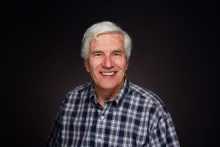
Steve Shafer was born and raised in Seattle. He graduated from Queen Anne High School in 1959 and later graduated from Ambassador College, Big Sandy, Texas in 1967, receiving a degree in Theology. He has been an ordained Elder of the Church of God for 34 years and has pastored congregations in Michigan and Washington State. He and his wife Evelyn have been married for over 48 years and have three children and ten grandchildren.
