
Greg Thomas
This transcript was generated by AI and may contain errors. It is provided to assist those who may not be able to listen to the message.
Well, hello and happy Sabbath once again.
Well, as we approach the fall Holy Days this year, I thought it might be helpful for us to review the observance of God's annual festivals in the future. We talk a lot about the God's feast, and we often go to the New Testament. We talk about how Jesus observed the feast, Paul's example of keeping the feast. But I think sometimes we don't appreciate the way that God's festivals are talked about being observed in the future, and what we have come to know as the world tomorrow, this little phrase that we often use in the church. And that's what I would like to talk about today. Prophecy reveals that Gentile nations will be expected to observe God's festivals in God's kingdom or the world tomorrow. Some of the scriptures we're going to look at today are actually an embarrassment to many progressive theologians who attempt to discount some of the prophecies that I'm going to read. One of my favorite phrases is one who will remain nameless, said that the prophecies in Ezekiel and Isaiah are, quote, colorful imagery of an old covenant people, end of quote. It's not literal. It's not meant to be taken seriously. It's just kind of mythical visions of people who were part of the old covenant, and so therefore it doesn't have any validity for us today. That's actually an attitude. That does exist among many scholars, including many Protestant scholars today. And when you point out particular scriptures to them that talk about the Holy Days, talk about the Sabbath in the kingdom of God and Gentiles observing the Sabbath and the Holy Days, they usually reply, well, it's just imagery. Or it's just a spiritual representation of that. That's not really what's going to happen. That's not literal.
There's a spiritual rather than a literal interpretation of those scriptures. That's usually what they will say. And this isn't surprising since many of these same theologians believe that the kingdom of God is not a literal kingdom to be established on the earth. However, we know different. We believe that the scriptures from cover to cover are the inspired word of God and that they do have meaning. And that's why I wanted to focus on some of the Old Testament scriptures today and then maybe talk about something that's a little bit confusing to many people as the Old Testament prophets spoke about a temple existing in the future and spoke about a Levitical priesthood existing in the future, spoke about animal sacrifices happening in the future. So what about all that? So we'll kind of talk about that today as well. Let's begin by going to the book of Isaiah. Isaiah chapter 33 and beginning in verse 17. That's where we're going to start and that's where we're going to pick up these scriptures we want to look at today.
This is a prophecy about the return of Jesus Christ immediately after all the horror that has occurred with the great tribulation, the Day of the Lord, the Battle of Armageddon, which isn't that far away from Jerusalem and all the terrible things that just happened. Isaiah chapter 33 and verse 17. Your eyes will see the king in his beauty, referring of course to Jesus Christ and his return is beautiful. They will see the land that is very far off. They will see a land, a new kingdom, a new way of life, a new culture that's going to be established on the earth.
Your heart will meditate on terror. Now the better translation of this is your heart will ponder on the previous tribulation that just occurred. So that's what it means there when you see the new king James. Your heart will meditate on terror as you're going to ponder what you just experienced.
Some of the horrors that you just recently experienced before this king came to this earth. Where is the scribe? Where is he who weighs? Where is he who counts the towers? You will not see a fierce people. No longer will you be oppressed by foreigners who speak a different language and there will be armies that surround Jerusalem in the latter days before the return of Jesus Christ. A people of obscure speech beyond perception of a stammering tongue that you cannot understand. So you'll no longer be conquered. You'll no longer be oppressed by foreign peoples.
Verse 20, look upon Zion, the city of our appointed feast. Your eyes will see Jerusalem, a quiet home. No longer a city of turmoil. No longer a city that is conquered by foreign armies and invaders. But a quiet home, a peaceful place, a tabernacle that will not be taken down.
Not one of its stakes will ever be removed, nor will any of its cords be broken. But there the majestic Lord will be for us. You see, God is on our side. God will be on the side of his people, a place of broad rivers and streams in which no galley with oars will sail, nor majestic ships pass by. For the Lord is our judge. The Lord is our lawgiver. The Lord is our king.
He will save us. So this prophecy begins here in verse 17, and it pictures the majestic king, whom we know today, of course, is Jesus Christ in his return. And these events will immediately be after the final battle of Armageddon and all the horror that will have occurred on earth due to the great tribulation in the day of the Lord and that final climatic battle of Armageddon and the literal death of billions of people on this earth.
That will all be gone. That will all be over. A new culture, a new kingdom will be established beginning in Jerusalem. Jerusalem will once again be the center of God's appointed feast as an example to the whole world. Verse 20 said, look upon Zion, the city of our appointed feasts. Let's go back now to chapter 25 here in Isaiah. Isaiah chapter 25 and verse 6, a statement about the feast that obviously relates to observing the Feast of Tabernacles. Isaiah chapter 25 and verse 6, and in this mountain, the Lord of Hosts, will make for all people a feast of choice pieces, a feast of wines on the leaves, of fat things full of morrow.
You see, these feasts aren't simply for those who are the descendants of Abraham. They're not limited to people who are of Hebrew descent or Jewish descent. They are intended ultimately for everyone to enjoy over all the world, continuing of well-refined wines on the leaves. And he will destroy on this mountain the surface of the covering, cast over people and the veil that is spread on all nations.
I'm going to read verse 7 from the New Century Version because that's really poorly translated from the New King James. Verse 7, on this mountain, God will destroy the veil that covers all nations, the veil that stretches over all peoples. You see, brother, there's a veil of blindness right now that encircles the earth. God is only calling a few, and generation after generations of people have lived their lives, lived and died with a veil over their hearts and over their minds. No access to God.
Many of them really even had no interest in God or had no interest in religion, had no interest at all except their daily survival. And there's a veil of spiritual blindness that's been over humanity since the rebellion of Adam and Eve in the Garden of Eden. And except for those few whom God chooses to call, the world has been blinded and not able to understand God's calling or what God is doing in this world. Again, this veil is a spiritual covering that blinds individuals from knowing God or knowing the truth. As Paul stated in 2 Corinthians chapter 3 and verse 16, and I'll just read this, he says, nevertheless when one turns to the Lord, the veil is taken away. And until we willingly turn to God and seek conversion, we are under that veil and that blindness, and we just can't get it. We may be very sincere, but we just can't get it, and we can't understand what God is doing in this world. Now in verse 8, in Isaiah 25, he will swallow up death forever, reminiscent of a phrase in the book of Revelation, and the Lord God will wipe away tears from all faces. Again, repeated in the book of Revelation, the rebuke of his people he will take away from all the earth. No longer will he punish the descendants of Abraham. For the Lord has spoken, and it will be said in that day, behold, this is our God, and we have waited for him, and he will save us. That process of salvation can finally begin, and people's lives can be changed.
This is the Lord. We have waited for him. We will be glad and rejoice in his salvation.
So the tide had turned. No longer is Satan the God of this world. No longer are is everyone just blinded, or virtually everyone blinded with this veil, and they can't understand God, even if they wanted to, and they just don't understand what God is doing in this world. And it's impossible to have a relationship, a close intimate relationship with God, because the Father does the calling, and no man can come to God, can come to Christ, unless the Father draws him, unless the Father makes that effort to make that the time of that person's opportunity for salvation. And obviously, this is a prophecy about the kingdom of God, or the world tomorrow, after Christ's return.
Again, I want to emphasize and mention that the veil that blinded all people is finally beginning to be withdrawn, to be removed from the earth. And again, we need to understand that this is a process. I think one of the myths that maybe a few of us cling to in the church, and this was emphasized what I'm about to say a lot in the early 70s, and many of the sermons at the Feast of Tabernacles, is a myth about how Jesus Christ operates, and how we view humanity.
The myth was that Jesus Christ is going to return with a rod of iron, and he's going to beat everyone into submission. Did you look at me wrong? Oh! And that everyone is going to be kowtowed, forced, whether they like it or not, to keep the Sabbath and the holy days, and to keep God's way of life. Well, indeed, Christ is returning with a rod of iron to deal with the nations that are assembled against him in the Battle of Armageddon, but that is not his usual mode of operation. That is not how he generally deals with people. There is a crisis on earth, and unless God cut short those days, no flesh would be saved. So, yes, he comes back with a rod of iron to deal immediately with a crisis. And when that crisis is gone, when it's over, then he deals with the nations and the peoples of this earth with patience, and mercy, and compassion, knowing that the full establishment of the kingdom on the earth is going to take some time. Let's continue here. Let's go to Isaiah chapter 56 and verse 3.
Chapter 56 and verse 3. Prophecy about gathering the physical outcast from around the world.
As we know, many of the Hebrew people have been scattered around the world. That was part of their punishment. First, the people of Israel were scattered, descendants of the nation of Israel, the northern tribes, and then Judah themselves. And sure enough, when you go to many nations on earth, you will see people who have remnants of Israelite or Jewish names and influence over virtually within, I should say, every nation on earth to a certain degree.
Isaiah chapter 56 and verse 3. Do not let the son of the foreigner, that is the Gentile, who has joined himself to the Lord speak, saying, The Lord has utterly separated me from his people. Don't say that, God says. The person says, well, I'm not an original Hebrew, so I'm really like a second-class citizen. And God says, no, don't say that. That's not true. Nor let the eunuch say, someone who is not whole, who lacks wholeness, let not the eunuch say, I am a dry tree, meaning I can't have children, I can't have generations beyond me. I'm a dry tree, and by the way, in Deuteronomy chapter 23 and verse 1, it basically said that if you were a eunuch, you could not be within the congregation. That was a law within the Old Covenant. Verse 4, For thus says the Lord, to the eunuch who keeps my sabbaths and chooses what pleases me, and holds fast my covenant, even to them I will give in my house, and within my walls a place and a name better than that of the sons and daughters I will give them an ever-lasting name that they shall not be cut off. Complete reversal of what the law was in the Old Covenant.
So even someone who is not whole, but someone who is a repentance, someone who wants to know God, someone who's willing to keep the Sabbath and change their life, God says, you're not a second class citizen in my eyes. You're not inferior in my eyes. If your attitude is right, I will work with you. I will love you. How about those who are Gentiles? Verse 6, Also the sons of the foreigner who join themselves to the Lord to serve him and to love the name of the Lord to be his servants, everyone who keeps from defiling the Sabbath and holds fast my covenant, even them I will bring to my holy mountain and make them joyful in my house of prayer. Their burnt offerings and their sacrifices will be accepted on my altar. For my house shall be called a house of prayer for all nations, not just for people of Hebrew descent, which is wonderful and good if you are, but for all nations. Though the Lord God who gathers the outcast of Israel says, I will gather to him others besides who were gathered to him. So God's calling is to everyone, ultimately Gentiles, people that are maimed, people from all walks of life, if they're willing to humble themselves and come to God and willing to change their lives, keep the Sabbath and be able to begin to respect God's law. So this scripture, speaking of the salvation, God is offering to all Gentiles, even the maimed individuals, we say individuals who lack wholeness, and who turn to him. They are encouraged to keep God's Sabbaths, and they are told that those who do respect the Sabbath and the covenant will be brought to God's holy mountain, and they'll be made joyful, and they will be in God's house, and they'll be as equal as anyone else, not second-class citizens. So the question is sometimes asked, will there be literal animal sacrifices in the world tomorrow? That's what the scripture just said, didn't it? Or is it merely symbolism? Are not sacrifices old covenant? So since we are under the new covenant, why would there be old covenant stuff going on in the world tomorrow or in God's kingdom? Well, the answer to this question is yes, animal sacrifices are certainly old covenant, and you and I would not sacrifice animals because Jesus Christ was the ultimate sacrifice, and it's by his shed blood that our sins are forgiven. We understand that, and we live that way of life. But I want you to consider this.
Early in God's kingdom, many nations and many peoples are not going to immediately accept Jesus Christ as Savior. It's just not going to happen. So what relationship will the nations and people who do not yet accept Christ as King and Savior, what will they be accountable for? What will they be accountable to honor? Well, the indication from many Old Testament prophets, not just Isaiah, but also Ezekiel, particularly after chapter 40, the indication is that the old covenant is what God will require of peoples, some peoples at least, until they wholly accept Jesus Christ like the firstfruits of the New Testament church has.
The purpose of animal sacrifices in the old covenant was twofold. First of all, it represented the needed sacrifice of Jesus Christ and revealed that sin can only be forgiven through the shedding of blood. And ultimately, God wants people to accept Jesus Christ as their Lord and Savior and realize that these animals were only symbolic of what has been already fulfilled and is possible in the crucifixion of Jesus Christ. Secondly, animal sacrifices taught that sin is costly. It was expensive to bring your best unblemished animal to be killed to atone for your sins.
This message will still be effective to a converted, or I should say a carnal, unconverted people in the world tomorrow. There's always a price to pay for sin. As my stepfather used to tell me growing up, if you want to hear the fiddler, you have to pay for the music, right? So there are consequences to everything that we do, and sooner or later, particularly when it comes to sin, a price must be paid.
So again, the indication from many prophets is that a physical temple and physical Levites and animal sacrifices will be instituted in the kingdom of God for some physical peoples.
And the reason is, is that God understands that a man convinced against his will is of the same opinion still. You can't force people to worship Jesus Christ. You can't force people to accept Jesus Christ as their Lord. Did anyone force you to accept Jesus Christ? Anyone hold a gun to your head to force you to accept Jesus Christ as your Lord and Savior? Jesus wants people to love him voluntarily, to accept his sacrifice joyfully with their whole heart. Christ wants people to worship and love him voluntarily because they choose to. And the indication is, is that God is going to give some peoples time early on in the kingdom of God by allowing some peoples, and it could be the remnants of Judah and Israel, to live under the auspices of the Old Covenant.
Or it may be that God is saying to the physical descendants of Israel, I love you. I had a covenant with your ancestors, and they broke them, and they violated my covenant. So for a short period of time, you're going to keep that covenant so that we can always say that my people fulfilled the oath of keeping the original Old Testament covenant, and after a time, then they're ready to accept the new covenant and the sacrifice of Jesus Christ. So if you, as you go through many of these scriptures in the Old Testament, and you see a reference to a temple, often, you see a reference to animal sacrifices going on.
You see a mention of Levites. There is no temple today, in case you didn't notice. No one knows who the Levites are today. Yes, there are some Jewish people who claim to be of Levitical distinction, but technically there is no class of Levites today that can be proven. Just a lot of speculation, you know, a lot of opinion. So that is the reason that you will oftentimes find the temple and animal sacrifices and Levites mentioned in these prophecies.
Now let's go to Isaiah chapter 58 and verse 8. Isaiah chapter 58 and verse 8. Isaiah wrote, then your light, that means your righteous example, speaking in the future of God's people as they respond to him, shall break forth like the morning your healing shall spring forth speedily and your righteousness shall go before you the glory of the Lord shall be your rear guard. So you're going to be protected. You're going to have divine intervention and protection like we heard of today in the sermonette.
Then God, or then you shall call and the Lord will answer. You shall cry and he will say, here I am. If you take away the yoke from your midst, if you stop sinning, if you stop making those compromises, the pointing of the finger, stop being self-righteous and judgmental, and speaking wickedness, if you extend your soul to the hungry and satisfy the afflicted soul, if you begin to care about the needy, not always say it's someone else's problem, then your light shall dawn in the darkness and your darkness shall be as the noonday.
The Lord will guide you continually and satisfy your soul and drought and strengthen your bones and you shall be like a watered garden and like a spring of water whose waters do not fail. Those from among you shall build the old waste places, those that were destroyed during the world war that occurred before the return of Jesus Christ.
We might say the last world war, world war three, as we would know it today. You shall raise up the foundations of many future generations and you shall be called the repairer of the breach, the restorer of streets to dwell in. If you turn your foot away from the Sabbath from doing your pleasure on my holy day, and in context this is talking about making money, that's what most people defined, as their pleasure on the holy day.
People are focused on money. The love of money is the root of all evil and many people who even know better continue to work on the Sabbath day and continue to violate the Sabbath day because of their quest to make more and more and more money.
I've said before growing up as a small child they may have had the wrong day of the week but most the nation, including Ohio, had Sunday laws where businesses could not be open on Sundays. The idea was is that it was a religious day. It was not a day to make a buck. It was a day to go to grandma's house and have dinner and be a family and share time with one another. Well, those days are long gone.
Now it's about making a buck 24-7 so all of those laws have been pushed aside. But as he says, if you'll take away your foot from the Sabbath from doing your pleasure on my holy day, making money, and call the Sabbath a delight, and I hope that's our attitude before we walk in the door, and as we're fellowshipping with people here today, and as we're eating that delicious cake, I hope we consider the Sabbath a delight.
The holy day of the Lord, honorable, and honor him not doing your own ways nor finding your own pleasure, not speaking your own words.
You know, I think there's some good caution there. You know, our conversation, our fellowship after services, should not be focused on the latest thing that Trump or Biden said or what's going on in government. I mean, who cares? It'll all be overthrown in a short period of time anyway.
Our conversations should not be circulating on every sports team and politicians, and woe is me. You can't have a day of delight if you're walking around, oh, woe is me, the world is bad, everything's bad, woe is me. There's a contradiction between having that frame of mind and also having a day of joy and delight. There's a contradiction to each other, nor speaking your own words. Then you should delight yourself in the Lord, and I will cause you to ride in the high hills of the earth and feed you with the heritage of Jacob, your father, the mouth of the Lord has spoken. So those who build the old waste places, who rebuild these cities that will be destroyed, and those who are restorers and repairers of cities will keep the Sabbath, as scriptures say. Why? Because it forces us to step out of our workaholic world, work, work, work, work, and delight in God's values and love for mankind. I know I sound like Mr. Scapiro's last two sermons, but we do come from a Puritan mindset in the United States, and as far as most nations of the world, we do focus on work and have less days off than most Western nations do in the world today, because we are focused on work and making money that comes from our Puritan heritage here in the United States.
So keeping the Sabbath forces us to get off the merry-go-round, to delight in God's values and his love for mankind, the weekly Sabbath, and all the feasts help us to focus our minds and Christ and his kingdom. Let's take a look at Isaiah chapter 66 and verse 22, and this was actually given in a sermon by Mr. Butram a while back, and what it shows is there's going to be a totally different cultural mindset. The mindset today that most people have is, what's the least that I have to do to please God, to be in the church? What's the least that I have to do? The mindset in that culture will be, let's look for additional ways to worship God. Let's look for additional ways in order to take time to stop that pause that reflects, that refreshes, and to worship God. Isaiah chapter 66 verse 22, for as the new heavens and the new earth which I make shall remain before me, again another scripture referenced in the book of Revelation, says the Lord, so shall your descendants and your name remain. It shall come to pass that from one new moon to another and from one Sabbath to another all flesh shall come to worship before me, says the Lord. To every Sabbath all people will be expected to worship God in delight in the seventh day Sabbath. And why does it mention new moons? Well, the Bible does not command at their observance in Leviticus 23 like it does the feast days that God established. As a matter of fact, you may or may not know this, but because each month was calculated by the observance of the new moon just to be safe so they didn't mess up, usually most Hebrews kept two days they didn't work. Just in case the sighting looking up into the sky was off or it was a cloudy night and they wouldn't be criticized, they actually took two days off. So that can also be a complication.
So why does it mention new moons? Well, again, the Bible doesn't command their observance. However, ancient Israel did blow trumpets and they offered sacrifices and they honored the new moon since they established the beginning of each month. They did not have a calendar like you and I have. If I want to know when December 1st is, I have the luxury of flipping a couple of pages and I know when September or December 1st is and I can look on a calendar months in advance and pinpoint it the exact day. They didn't have that luxury because you really didn't know. Next month could not be determined until someone sighted a new moon and if it was a cloudy night they might postpone it to the next night just to be safe or to be sure. So there was no way to plan ahead in that culture. In our culture, we can plan ahead. But my point is, as the indication from this scripture, is that in the world tomorrow people will take the time and spend more time seeking God and they'll look for days and reasons to have festivals and to worship God instead of the mentality of what's the least that I have to do, people will say what are other ways that I can find that can give blessing and honor to God. A godly culture will look for ways to worship the creator God for people to stop from their daily activities and worship God in every opportunity that's available. Let's go to Ezekiel chapter 21. Now to a few verses in the book of Ezekiel. Again, Ezekiel is someone else who predicts a temple and sacrifices and the great influence of the Jewish people and Levites, particularly after chapter 40. Most Bible scholars today dismiss these prophecies as not literal. They say, well, it's spiritual and it's symbolic and they represent this and they represent that. And they arbitrarily decide what they think is literal and what is symbolic in the book of Ezekiel as they do many of the other prophets. So let's read some of these scriptures whose time setting is in the future kingdom of God.
The first is a comment that Ezekiel was making in his day, in his very own day, about King Zedekiah and then we'll parallel that with what the prophecy might be, might indicate in the future.
So Ezekiel chapter 21 and verse 24, therefore says the Lord God, because you have made your iniquity to be remembered, and he's talking about the people of Judah, specifically King Zedekiah, in that your transgressions are uncovered, so that in all your doings your sins appear, because you have come to remembrance you shall be taken in hand. And indeed it's talking about Zedekiah who literally was taken captive. When the Babylonians came in and conquered Judah, they took Zedekiah captive. They blinded him. First they killed his children in front of his eyes and then they blinded him and he was taken captive back to Babylon. So this prophecy was fulfilled. Verse 25, now to you, O profane wicked prince of Israel, whose day has come, whose iniquity shall end, thus says the Lord God, remove the turban and take off the crown. Nothing shall remain the same, exalt the humble and humbly exalted, overthrown, overthrown. I will make it overthrown. It shall be no longer until he comes whose right it is. So no one will be on that throne until the one who's right it is. That is Jesus Christ sitting on the throne of Judah and I will give it to him.
I want you to notice that the prince spoken of here is small p, not capital p. It's talking about a human being and again this was talking about the last of Judah's kings, Zedekiah, who lived from 597 or reigned from 597 to 587 BC. He did not heed the warnings of Ezekiel and Jeremiah and he also rebelled against Babylon. King Nebuchadnezzar came and he led an army that besieged Jerusalem for 18 months before the city fell. So when you read a prophecy here and you see this phrase again in chapter 45 about the prince or a prince, what it's talking about is a representative of the earthly secular leadership that will be in the world after Jesus Christ returns. So let's read about that. Ezekiel chapter 45 and verse 20. This is a term today we might call this individual a prime minister, but when we look at this prophecy, now we're going beyond what Ezekiel wrote about his age and what he was talking about, Zedekiah. Now this is prophetic in the future and he's going to refer to a prince. Ezekiel 45 verse 20. And so you shall do on the seventh day of the month for everyone who has sinned unintentionally or in ignorance, thus you shall make atonement for the temple. See? The temple exists. In the first month, on the 14th day of the month, you shall observe the Passover, a feast of seven days, unleavened bread shall be eaten. And on that day, the prince, small p, not referring to Jesus Christ, the prince shall prepare for himself all the sins of the people of the land, a bowl for a sin offering. On the seven days of the feast, he shall prepare a burnt offering to the Lord, seven bowls and seven rams without blemish, daily for seven days, and a kid for the goats daily for the sin offering. And he shall prepare a grain offering of one ephah for each bowl and one ephah for each ram together with a hen of oil for each ephah.
I want you to notice these are all Old Covenant rituals. These are all parts of the law of Moses that are being conducted and according to Ezekiel's prophecy that are happening after the return of Jesus Christ. In the seventh month, on the fifteenth day of the month, that's the Feast of Tabernacles, at the feast he shall do likewise for seven days according to the sin offering, the burnt offering, and the grain offering, and the oil. So here we see mentioned both the spring holy days and the fall holy days is being observed in Ezekiel's prophecy. And not observing it the way that we will, not observing it the way we do today from a New Covenant perspective, knowing that that's all been fulfilled in what Christ represents through all of the feast days, but they're doing it in an Old Covenant perspective. And again, we have to accept that and understand that. Otherwise, if we don't understand that, if we don't accept that, then it just does not make sense. People will point out to all of these areas in the Old Testament that talk about the world tomorrow and talk about the kingdom of God and they'll say, well, what about this sacrifice, and what about the temple here, and what about this animal offering that's gone, and what about this?
And if we don't understand what God is doing, then we won't have a reasonable, logical response or answer for that question. Let's go to Zechariah chapter 8 and verse 18. Zechariah chapter 8 and verse 18.
Zechariah chapter 8 and verse 18, Then the word of the Lord of Hosts came to me, saying, Thus says the Lord of Hosts, the fast of the fourth month, the fast of the fifth, the fast of the seventh, and the fast of the tenth. But we're familiar with one of those fasts. It's called the Day of Atonement. But what about the other fasts that are mentioned here? It looks like people will be looking for opportunities to fast at that time. Shall be joy and gladness and cheerful feast for the house of Judah.
Therefore, love truth and peace, says the Lord of Hosts. People shall yet come, inhabitants of many cities. Again, peoples shall yet come, not just the descendants of Abraham, but people in time from all over the earth, inhabitants of many cities. The inhabitants of one city shall go to another, saying, Let us continue to go and pray before the Lord and seek the Lord of Hosts. I myself will go also. Yes, many peoples, again, many peoples who are not the descendants of Abraham and strong nations shall come and seek the Lord of Hosts in Jerusalem and to pray before the Lord. Thus says the Lord of Hosts, in those days ten men from every language of the nation shall grasp the sleeve of the Jewish man, saying, Let us go with you, for we have heard that God is with you. We want to know more about this God, more about how he desires to be worshipped, more about his values as reflected in his commandments and his way of life. Take us, teach us, guide us, direct us, because we have heard that God is with you. So, brethren, as God's kingdom is established on earth, the feast of God will be taught eventually to all nations. Many peoples will come to Jerusalem to worship and learn of God. Jerusalem will be the capital of the world, and all nations for the holy days will attend or send ambassadors to the holy days to worship in Jerusalem. That will be an expectation, and we'll read about that directly referring to the Feast of Tabernacles in just a few minutes. God will expect all nations to send representatives to Jerusalem to worship the king during the Feast of Tabernacles. Now, let's go to Zechariah chapter 14 and verse 16 and read about this.
Zechariah chapter 14 and verse 16. And it shall come to pass that everyone who is left of all the nations which came up against Jerusalem shall go up from year to year to worship the king, the Lord of Host, and keep the Feast of Tabernacles. And it shall be that whatever the families of the earth do not come to Jerusalem to worship the king, don't send representatives there, the Lord of Hosts, on them there will be no rain. If the family of Egypt will not come up and enter in, they shall have no rain. They shall receive the plague which the Lord strikes the nations who do not come up to keep the Feast of Tabernacles. This shall be the punishment of Egypt and the punishment of all nations that do not come up to keep the Feast of Tabernacles. So, brethren, it takes time.
And I want to emphasize again, as I conclude this sermon today, that it's a process ushering in the kingdom of God. God does not believe in magic wands. He leaves that the Disney characters.
God knows that good things take time, and they progress just like your life. It takes lots of time. Sometimes we do things the wrong way before we learn and then turn to the right way.
God is very patient and he's very merciful, and he'll be that way with the peoples who exist on earth after the return of Jesus Christ. What a beautiful picture. All people finally having the opportunity to personally know God and worship him during the Feast of Tabernacles.
The very Feast that represents the joy and abundance of the kingdom of God. So, as we begin to prepare for the Fall Feast this year that began during this very month that we've already started, let's appreciate that the ancient prophets all looked forward to a time when the Feast would be observed by the whole world. But they knew it would take time. They knew it would be a process and not something that just happened instantaneously. It may be a gradual process. Some may be reluctant at first. Some may observe the Old Covenant with its animal sacrifices for a time. Before, they are ready to accept Jesus Christ as their personal Lord and Savior. At least is the indication of what some of these prophecies say. God is patient and merciful, but eventually His goal is that all peoples of all nations will worship Him and will observe His Sabbaths and His Holy Days. And here's the good news. We can do that now. We've been given an invitation and the privilege to do that right now in this lifetime, in this time of our calling, and we can begin doing so as those days approach us, beginning in just a few weeks.
Let's plan and prepare and have a wonderful fall Holy Day season.
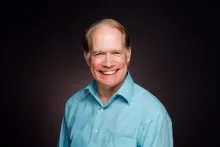
Greg Thomas is the former Pastor of the Cleveland, Ohio congregation. He retired as pastor in January 2025 and still attends there. Ordained in 1981, he has served in the ministry for 44-years. As a certified leadership consultant, Greg is the founder and president of weLEAD, Inc. Chartered in 2001, weLEAD is a 501(3)(c) non-profit organization and a major respected resource for free leadership development information reaching a worldwide audience. Greg also founded Leadership Excellence, Ltd in 2009 offering leadership training and coaching. He has an undergraduate degree from Ambassador College, and a master’s degree in leadership from Bellevue University. Greg has served on various Boards during his career. He is the author of two leadership development books, and is a certified life coach, and business coach.
Greg and his wife, B.J., live in Litchfield, Ohio. They first met in church as teenagers and were married in 1974. They enjoy spending time with family— especially their eight grandchildren.
