

Don Ward
This transcript was generated by AI and may contain errors. It is provided to assist those who may not be able to listen to the message.
As we look at the world around us, and you hear the news each week, and you, of course, we just got snippets to really know what's going on in this world. It would be so mind-blowing, we probably couldn't stand it. But anyhow, in view of all the things that are happening, I am very encouraged. I'm not depressed at all with regard to what I see here in the response of our people in this area.
This congregation here has exhibited the kind of love, care, and concern that God really wants us to have, to have the same love, care, and concern for one another. And when a need is there, you come to the rescue and you respond. Mr. Blue played the piano this morning up in Texarkana. I wonder at times if we really grasp and fully comprehend what we're involved in as a result of being called into God's marvelous light.
There are different ways to state it. The Battle of the Ages. The Battle of the Ages began when Satan rebelled and drew one-third of the angels with him. Sin and evil, darkness, was introduced into the universe and the world. The Battle of the Ages with regard to humankind in the Garden of Eden, and Satan was there deceiving Eve, and Adam willingly went along with it. And the battle between good and evil, between light and darkness, has been with us since Satan's rebellion, the Garden of Eden, to the present day. And here we are. We are to be a light that is set on a hill, and we're instructed to let our lights shine so that others will see it and glorify God.
Not to put that light under a bushel, under a basket. We're involved in the Hope of the Ages. Mr. Bauman sent me an article this week, of course I already knew some of it, about life in India, where a large percentage of the population, they don't have running water, they don't have toilets, they don't have electricity. And there's really no hope, because there is a caste system. Their culture, their religion, holds them captive, and they are taught to be passive, and to just bear it, and to have some kind of meditative peace of mind through yoga, meditation, or so on, so that they become passive recipients of captivity by Satan the Devil.
So many different isms and schisms within Hinduism and Buddhism. Buddhism is probably far more unified than Hinduism. At the present time in India, the Ganges River, which they consider to be holy, the Ganges River is flooding. 500 have died so far, and thousands are missing. Great floods are ravaging Calgary, Canada, the past couple of days. But the hope of the ages, there's no hope for India. India is not going to change in this age, and we just choose India at this time. There are many other countries. There's no hope for them. The hope of the ages. We are involved in the hope of the ages, the work of God, because God's goal of purpose is to bring all human beings into a relationship with Him, and eventually into the Kingdom of God.
We're involved in the Church of God, the Body of Christ. And at times, I wonder if we remotely grasp, understand, appreciate the significance of our calling, how awesome it is that we have been called by the Supreme Being of the universe, who personally knows each one of us.
Let's look at 1 Peter chapter 2 verse 9. 1 Peter chapter 2 and verse 9. 1 Peter chapter 2 verse 9, you are a chosen generation. That word chosen in the Greek is eklektos.
Most often it is translated elect. We have been elected. Strong says, picked out, chosen, chosen by God to obtain salvation through Christ. We are the chosen. We are the elect. Electos. You are a chosen generation. God has personally chosen you, a royal priesthood and holy nation. This is one of the few places in the Bible where the Church is called a holy nation. A purchased people that you should show forth the praises of him, who has called you out of darkness into his marvelous light.
That darkness, that battle the ages between light and darkness, that battle between good and evil, you are the light of the world. A city set on the hill. Let your light so shine before men that they will glorify their Father who is in heaven. It is because of God's grace that he has called us. Now grace, the Greek word is karas. It means divine favor. Divine favor has so many different dimensions. In the broad sense is God's love, care, and concern for his creation, both the physical creation and human beings. And of course, there is the animal creation as well.
It is because of God's divine favor, because he wanted to share who he is and what he is with humankind. He ordained the great plan of salvation. He in the Word ordained this great plan of salvation before time began, as we'll read later, time in the sense that we know time. God in the Word exists in eternity. No beginning, no end, without Father, without Mother, without descent, or end of days. Because he loved us, he has called us into the work of God and the body of Christ. And I think each one of us could ask, why me?
Why would he choose me? And for so many of us that are sitting here this afternoon that have been in the church 30, 40, 50-plus years, you wonder, he called us out of this world. And then we have second generation, third generation, probably has fourth generation children here with us this afternoon.
Their calling, in a sense, is somewhat different, because if you're, quote, born into the church, you've really known nothing else, and you are sanctified, you're set apart, you are not cut off. And as one of our hymns goes, God is calling children.
So in a sense, you're like set in the Garden of Eden, and you have an opportunity to partake of the Tree of Life. But always, as he was deceived, Adam wasn't, but you can always resist the Tree of Life if you mind to do so. We're familiar with John 6, 44. We want to turn there.
We want to turn to a few scriptures here now to show, and what we're showing with this is the Father's direct involvement. God the Father, the greatest, the supreme being in the universe.
You could go to some of the Protestant denominations for church services and seldom hear the word Father. It's this just believe in Jesus Christ. He did it all. He'll be saved.
But the understanding of how awesome the plan of salvation is and what we have been called to, and how directly involved the Father is with each one of us, is to me very sobering and humbling. In John 6 and verse 44, no man can come to me, Jesus Christ speaking, except the Father, which has sent me, draw him. Those of you who have come out of this world, the Father has drawn you. And if you are a second, third, or fourth generation person, how blessed you are that from a child, as Paul wrote to Timothy, that you have known the Holy Scriptures from a child that are able to make you wise unto salvation. No man can come to me except the Father, which has sent me, draw him, and I will raise him up at the last day. Now look at James 1.17. We read this last week in our Bible study, but let's focus on it again because we are showing in these scriptures here the Father's direct involvement, the supreme being of the universe, how that he of his own will, as we will read here in James 1.17. Every good gift and every perfect gift is from above and comes down from the Father of lights. So anything that is worthwhile, anything that will last comes from the Father, with whom is no veribleness, neither shadow of turning. The character of God is the same today, yesterday, and forever. God has dealt with human beings in different ways through the ages, and the overall plan is to eventually bring them to Christ so their sins can be remitted and that they can be viewed as sinless and receive his spirit and become children of his, of his own will, God's will, of his own will, but yet he is with the word of truth.
It's God's will. He had a hand in it, eklekdos, chosen, picked out, selected, that we should be a kind of firstfruits of his creation.
Now in Romans 8 and verse 28, once again a scripture, hopefully you could be able to quote if asked to do so. Romans 28, but let's focus on a particular word here. In Romans 8 and verse 28, and we know that all things were together for good to them that love God. And what is the definition of the love of God? 1 John 5, 3, for this is the love of God, that we should keep his commandments, and his commandments are not grievous.
Jesus Christ summarized the commandments when asked, Master, what is the greatest commandment in the law? And he said, you shall love the Lord your God with all your heart, mind, and soul. And the second is like unto it, you shall love your neighbor as yourself. On these two hang all the law and the prophets. So that's a short summary definition of the love of God. To those who are called, we know that all things were together for good to them that love God, to them that are called according to his purpose. God has a great purpose, and he has called each one of us for a great purpose. As you used to hear so often, God has not called us just to salvation, but he's also called us for a great purpose to help bring others into a relationship with God in Christ and each member of the body of Christ. Forward now to 1 Corinthians chapter 1 verse 2. 1 Corinthians chapter 1 and verse 2.
1 Corinthians 1-2, unto the church of God, which is at Corinth, to them that are sanctified, set apart, is what sanctified means in the broad sense, set apart in Christ Jesus, called to be saints. Now some might say, well, I'm no saint. Well, it's loud. Everybody's quick to say I'm no saint. But if you aren't a saint, you won't be there. So you better hope you are a saint.
Call to be saints with all that in every place call upon the name of Jesus Christ our Lord, both theirs and ours. Verse 9, God is faithful by whom you were called. Who were you called by? God. God the Father, whom you were called unto the fellowship of his Son, Jesus Christ our Lord. Who called you? God the Father. No man can come to me except the Father draw him. Now in verse 24. But unto them which are called, both Jews and Greeks, Christ the power of God, and the wisdom of God, because the foolishness of God is wiser than men, and the weakness of God is stronger than men. All people like to make fun of God and religion today. And the great goal of so many is to erase any trace of the memory of God from out of our storehouse of memories.
To them, the so-called educated elite, they think that to believe in God is foolishness, it's superstition. For you see your calling, brethren, how that not many wise men after the flesh, but you can be very wise after the Spirit. You may not be one of the great of the world.
Very few of us are, or ever have been or ever will be in this world. But you may be doing spiritual works in God's great spiritual house, laying up treasure for yourself in heaven, and no man can break through and steal or take that away. No matter what the stock market does or the financial system does, you can have treasure that will never be taken away.
But God had chosen the foolish things of the world to confound the wise, and God has chosen the weak things of the world to confound the things which are mighty, and base things of the world, and things that are despised, as God chosen you and things which are not to bring to naught things that are. No flesh should glory in his presence. See, every good gift and every perfect gift comes down from the Father of lights, with whom there is no bearableness, neither shadow of turning.
But of him, God the Father, are you in Christ Jesus.
Who of God is made unto us wisdom and righteousness and sanctification and redemption? He bought us back, redeemed us, that according as it is written, he that glories, let him glory in the Lord. Now in 2 Thessalonians chapter 1, 2 Thessalonians chapter 1 and verse 11, when Paul wrote 1 Thessalonians, apparently he and the Thessalonians thought that the return of Jesus Christ was imminent, but by the time he wrote 2 Thessalonians, he realized that several events had to transpire before the day of the Lord and the coming of Jesus Christ. In 2 Thessalonians chapter 1 and verse 11, wherefore also we pray always for you that our God would count you worthy of this calling. And at times when you examine yourself and I look at myself, why in the world would God call someone like me who has the problems that I have? And I'm not a lot of different than anybody else that's sitting here today. We all have our problems. We all have to contend with our flesh. We all have to contend with whatever was transmitted to us through our parents, our environment, and our own thoughts. We talked about thoughts in the Bible study last week. Keep your heart with all diligence. We're out of it. Flow the issues of life. As a man thinketh in his heart, so is he. Wherefore also we pray always for you that our God would count you worthy of this calling and fulfill all the good pleasure of his goodness and the work of faith with power, that the name of our Lord Jesus Christ may be glorified in you and you and him according the grace of our God and the Lord Jesus Christ. You're seeing over and over again the role of the Father. Now we go to Hebrews 3 verse 1. In Hebrews chapter 3 and verse 1, remember the book of Hebrews compares and contrasts elements of the Old Covenant with the New Covenant. There was an earthly calling under the Old Covenant, but what we have been called to is a heavenly calling, as we shall read here in Hebrews chapter 3 and verse 1. Wherefore, holy brethren, partakers of the heavenly calling. It's not some man, some priests, it's not Moses or any other human being.
It is a God who draws you to Christ. Wherefore, holy brethren, partakers of the heavenly calling, consider the apostle and high priest of our profession, Christ Jesus, who was faithful to him that appointed him. God the Father, of course, Jesus Christ, before he was Jesus Christ, was the Word, and he humbled himself, willing to take on the form of a man. Of course, I'm quoting now here from Philippians 2, which said that thought it not robbery could be equal with God, and being in the form of God, he humbled himself and took on the form of a man who was faithful to him that is God the Father, that appointed him as also Moses was faithful in all his house. For this one, man is an italics, not in the original, it's Jesus Christ, was kind and worthy of more glory than Moses, inasmuch as he who had built the house has more honor than the house. For every house is built by some one, but he that built all things is God.
God's great care and love and concern for us is really beyond our comprehension. It is difficult with our human minds because to a large degree we relate to how people might think about us based on our experience with others, beginning with our parents and our brothers and sisters and the relatives, and then it goes to the peer group and so on. But God is so concerned about us that it's difficult to comprehend. Let's look at Psalm 139.
Psalm 139. You've heard the old expression, out of sight, out of mind. Well with God, we're not out of his sight. The hairs on our head are numbered, not even as far off the ground unless he is aware of it. So he is vitally concerned about his creation in all aspects of it, and especially those that he has ordained to have eternal life. In Psalm 139, in verse 17, how precious are your thoughts unto me, O God! How great is the sum of them!
If I should count them, they are more in number than the sand. When I awake, I'm still with you. Of course, God has a headquarters in the heavens, the vision given by the revelator in Revelation chapter 4 of the view of God's throne and the beings around God's throne, the glory, the splendor thereof. Yet, at the same time, his spirit, his presence pervades the universe.
He is present with us. His thoughts are ever toward us. And that should be just so... it's a mind-boggling thing. It just... when you really stop and think about it. We must never get the idea that God has run off somewhere and fall into the trap of asking, where is the God of judgment? We go to Malachi now. Malachi, the great rhetorical question in Malachi, is in Malachi 2.17.
Malachi is a monologue. A monologue means that one person is doing the talking, and God is the spokesman through Malachi. It is a monologue, but it's written in the form of a dialogue. God gives his part and the part of the people. Now, the people weren't literally saying this per se, but through their example, that's what they were saying.
In Malachi 2, in verse 17, you have weared the Lord with your words, yet you say, we're in and we're at him. When you say, everyone that does evil is good in the sight of the Lord, and he delights in them, or where is the God of judgment? Where is God in all of this? Why do we have all the evil in the world? Why do we have the suffering, the misery, the agony, the pain, the wars, the diseases? Why do we have all of that?
It is because people have not responded to God. See, as we have already read, and we'll read a verse here in chapter 3, once again from James 1, 17, every good and perfect gift comes down from the Father of lights with whom is no veribleness, neither shadow of turning of his own will beget, he asks with the word of truth, that we should be the firstfruits of his creation. So, the understanding here of who God is, see, God is long suffering. He gives people space and time. Now, long suffering is to be distinguished from mercy. We talked about this in our monthly Bible study recently.
Mercy cannot be extended unless a person repents.
When long suffering, God may go and be patient with you a long time, but eventually judgment does come. And just because sentences are not executed against an evil work speedily, some begin to think, well, must I be a God? Oh, yes. Look at verse 6. Where is God? Well, God's where he's always been is on that throne we briefly referred to earlier. For I am the eternal, I change not. Therefore, you sons of Jacob are not consumed.
So, brethren, we are involved in the hope of the ages, and we don't want to fall into the trap of where is the God of judgment. We don't want to fall into the trap of self-pity. We want to keep in mind how awesome our calling is and the promises that God has given us, and that his thoughts are ever toward us. And he is there always to help us. He will never leave us. He will never forsake us. In verse 13 here, your words have been stout against me, says the Lord. Yet you say, what have we spoken so much against you? You have said it is vain to serve God. See, Job fell into this trap. Job was what you would call a model person, one who feared God and eschewed evil. That's what he says, I think, in verse 2, chapter 1. But yet, Job had one of the greatest trials to come upon him that has ever come upon a human being. And when faced with that trial, he began to blame God and say that God was unfair. But if you really have faith, you know and believe that God always has your best interest at heart. You have said it is vain to serve God. And what profit is it that we have kept his ordinance and that we have walked mournfully before the eternal host? What good is it? Where does it get us? And now we call the proud happy. Yes, they that work wickedness are set up. Yes, they that tempt God are even delivered. Look at that! Where's fairness? Where's judgment? Then, when this is going on, when people are behaving in that way, thinking and behaving in that way, then they that feared the eternal spoke often one to another, and the eternal hearkened and heard it. And a book of remembrance was written before him for them that feared the eternal and that thought upon his name. Instead of crying out, where is the God of judgment, they spoke often one to another. They encouraged one another, as you heard in the sermonette.
And they shall be mine, says the eternal host, in that day when I make up my jewels.
And I will spare them as a man spares his own son that serves him. Then shall you return, and discern between the righteous and the wicked, between him that serves God and him that serves him not. That scripture there in Galatians is ever present. Be not deceived, God is not mocked, for whatsoever a man soweth, that shall he also reap. Where is the God of judgment? Swear has always been. But see, the reason I bring this up in context with our calling is that you can get discouraged through trials, trouble, tribulation, and all the various things that come upon us. And some might say, well, where is the God of judgment, as the people in the world are saying, but if we know this and we know and know that we know, we can speak often one to another. We can encourage one another. And I see that happening. And the people here in this congregation and in Ruston and Texarkana, I don't know for sure what's happening in other congregations altogether.
But I see something that's encouraging, and I hope that we continue. Do you believe that your calling is just as important as Abraham and others?
You say, oh, Abraham is a father of the faithful, and so he is called that in Romans 4. But at the same time, God is not a respecter of persons. Does he want Abraham to be in the kingdom more than he wants and desires you to be? I doubt it. He wants us all there, and you are the apple of God's eye. Let's look at Zechariah. It's back just a few pages behind Malachi and Zechariah. Zechariah chapter 2, of course, the context of Zechariah is that Judah had gone into captivity after about 70 years there. Cyrus issued a decree that they could return. So they returned in 538 BC. We're now down to 520 BC, and not much has been done with regard to rebuilding the temple. And God sends these two prophets, Haggai and Zechariah, to stir up the spirit of the people and to get busy and build this house of God, this restoration temple, which in a way was a shadow, a symbol of the spiritual temple to come. In Zechariah 2 and verse 8, For thus says the eternal host after the glory, as he sent me unto the nations which spoiled you. Of course, Babylon had spoiled them. We're living in this Babylon-ish system and society that is so very oppressive. As you read about the description of the king of Babylon, what he has done in Isaiah 14, we recently read that in a sermon two weeks ago, For he that touches you touches the apple of his eye. And God does not take it lightly. For behold, I will shake mine hand upon them. They shall be a spoil to their servants, and you shall know that the eternal host has sent me. Sing and rejoice, O daughter of Zion! Remember, Zion symbolizes the church, Hebrews 12, 22, 23. You have come to the city of the living God, the general assembly, church of the firstborn, Mount Zion.
I come and I will dwell in the midst of you, says the eternal. Many nations shall be joined to the Lord in that day, as we merge into the millennium, that prophetic utterance in that day, and shall be my people. I will dwell in the midst of you. You shall know that the eternal host has sent me unto you. The eternal shall inherit Judah, his portion in the holy land, and shall choose Jerusalem again. Be silent, O flesh, before the eternal, for he is raised up out of his holy habitation. Yes, he's going to come, and as Jude prophesied with ten thousands of his saints, and he is going to execute judgment throughout the world.
And the saints are going to be with him and help him in executing that judgment.
So how much do all of these things mean to each one of us? Just a realization how directly God, the Father, the supreme being of the universe, is involved in our lives and thinks about us. Now, in addition to that, it is God the Father who baptizes you into the body of Christ. We talk about, are you baptized? Well, is he baptized? Is he a baptized member? Well, we're generally referring to the water baptism ceremony, which is necessary. It is a prerequisite to the laying on of hands, but it is God the Father who baptizes you into the body of Christ. Look at 1 Corinthians 12, verse 12.
1 Corinthians 12 and verse 12.
1 Corinthians 12, 12, For as the body is one and hath many members, and all the members of that one body being many are one body, so also is Christ. See, it's one body. In Romans chapter 12, we'll probably turn to read that later, but in Romans chapter 12, it talks about that we are all members, one of another. If the church ever learns, the members of the body of Christ ever learns the significance and the total impact of, we are members, one of another. We will even have greater unity, greater love, care, and concern for one another. Paul writes in Ephesians chapter 5, For no man ever yet hated his own body.
When you do something to injure the body of Christ the church, in effect, you are injuring yourself because we are all members, we're all joined together. We're members of that one body, the body of Christ. See, the great rhetorical question of 1 Corinthians is, is Christ divided?
For by one Spirit are we all baptized into one body. Man does not do that. Of course, man can lay hands on you, and that's part of it, as in Hebrews 6, and asks the Father to beget you with his Spirit. But I cannot give the Spirit, and you cannot. Neither can any other person, but God the Father. For by one Spirit are we all baptized into one body, whether we be Jews or Gentiles, whether we be bond or free, and have been all made to drink into one Spirit. And as we have noted, God has called you and I for a great purpose.
It is his doing. It is not yours. It is not mine. And he has called each one of us to bear fruit. Let's go to the Gospel of John, chapter 15, where he talks about this bearing of the fruit.
John chapter 15 is in context with that Passover, where Jesus Christ instituted the symbols of the New Covenant Passover on the night that he was betrayed and tried, and the next daylight part of the day was crucified. In John 15.1, I am the true vine, and my Father is the husbandman. My Father is the husbandman. Every branch in me that bears not fruit, he the Father takes away, and every branch that bears fruit, he the Father purges it, that it may bring forth more fruit. You get the idea of how involved that God the Father is with each one of us. Now, you are clean through the word which I have spoken unto you. Abide in me, abide in me, and I in you, and that's through the Holy Spirit, as the branch cannot bear fruit of itself, except that abide in the vine, no more can you accept you abide in me. I am the vine, you are the branches. He that abides in me, and I in him, the same brings forth much fruit, for without me you can do nothing.
If a man abides not in me, he is cast forth as the branches withered, men gathered them, cast them into the fire, and they are burned. So, you see, the key to bearing fruit is to abide in him through the Spirit.
So, are we asking for God's Spirit on a daily basis? With regard to the Spirit, simplicity that is in Christ, it plainly says in Luke 11 that God gives his Spirit to those who ask him. Turn back there a few pages, Luke 11.
It compares and contrasts what an earthly father will do as compared to what your heavenly father will do. If your earthly father will give you good gifts, how much more will your heavenly father, that's the message that is being brought out here. Verse 11, Luke 11, 11, if a son shall ask bread of any of you that is a father, will he give him a stone?
Or if he asks a fish, will he for a fish give him a serpent? See, oftentimes we have more faith in our earthly father and mother than we do in God the Father. When my dad was alive, I knew that I could call him, and no matter where I was or where he was, if there was a way, he'd come to my rescue. He would do whatever he could, no doubt. And I basically know that with regard to my children, and you do too with yours.
Verse 13, if you then, being evil, know how to give good gifts into your children, how much more shall your heavenly father give the Holy Spirit to them that ask him? So, Father in heaven, please give each one of us the Spirit that is necessary to fulfill the great calling that you have given each one of us. In Acts 5.29, it says, God gives his Spirit to those who obey him. So that's like a reciprocal with faith. Faith is the only thing that's listed as a gift of the Spirit and a fruit of the Spirit.
So, if God convicts you through his Spirit and word and you obey, then he reciprocates. God gives his Spirit to those who obey him. And so, you bear then fruit. And then Jesus Christ says in John 6.63, the words I speak, they are spirit and they are life. So, when you ask God for his Spirit, when you obey God, when you ingest, when you eat of his word, those are ways to increase the Holy Spirit.
And then it is through this Spirit and the talents that God gives each one of us that we can bear fruit. And some might say, I have no talent. I have no talent. I'm just here. I'm a sponge.
And I guess you know what sponges do. But anyhow, to say that we have no talents is to deny the graciousness and generosity of God. I don't think you want to deny the graciousness and generosity of God. We have been called to bear fruit. God gives us his Spirit. And through exercising that Spirit, we can bear the fruits of the Spirit. 1 Corinthians 12.
1 Corinthians 12. I'm not going to read every last verse. You already have this memorized.
In 1 Corinthians 12, verse 8, For the one is given by the Spirit, the word of wisdom, to another the word of knowledge, by the same Spirit. And nine gifts of the Spirit are listed.
Now, everybody has some kind of gift.
And we have been called to bear fruit and to become living sacrifices. So let's go to Romans 12. 2 Corinthians 12. Oftentimes we'll read Romans 12 and 1 and go on from there. We, over the years, the church has spent ministers and sermons and Bible studies, has spent hours and days in the first several chapters of Romans. But what Romans 12 to the end of the epistle does basically is to tell you, instruct you on how to bear fruit and to be a living sacrifice.
Romans 12. 1, I beseech you therefore, brethren, by the mercies of God, that you present your bodies a living sacrifice, not dead, holy, acceptable unto God, which is your reasonable service. I mean, that's just based on everything that God has done for us. We're bought with a price, the life of Christ. In turn, it would be reasonable to expect something in return. And be not conformed to this world, but be you transformed by the renewing of your mind, that you may prove what is that good and acceptable and perfect will of God. For I say, through the grace, the divine favor given unto me for every man that is among you, not to think of himself more highly than he ought to think, but think soberly, according as God had dealt to every man the measure of faith. And he has given various gifts, for as we have many members in one body, and all members have not the same office, so we being many are one body, very similar to 1 Corinthians 12, 12, 1 Corinthians 12, 13, and every one members one of another. And having then gifts differing according to the grace divine favor that is given to us, whether prophecy, let us prophesy according to the proportion of faith.
So God says that we are to bear fruit, that he gives us the Spirit, and through his Spirit we can bear the fruits of the Spirit. And he has called us to bear much fruit.
Basically, the rest of the book of Romans instructs us on how to become living sacrifices.
Look at verse 9, let love be without dissimulation, and pour that which is evil, cleave to that which is good. Be kindly affection one to another with brotherly love, in honor preferring one another, not slothful in business, fervent in spirit, serving the Lord.
Rejoicing in hope, patient in tribulation, continuing instant in prayer, distributing to the necessity of saints given to hospitality. And that verse that you have done here in this congregation is so encouraging to me.
Bless them that persecute you, bless and curse not, and it goes on.
To come to the point of what it says here in Romans chapter 12, separates men from the boys, as it were. Verse 18, If it be possible, as much as lies in you, live peacefully with all men. Dearly beloved, avenge not yourselves, but rather give place unto wrath, for it is written, vengeance is mine, I will repay, says the Lord.
Therefore, if your enemy hunger, feed him. If he thirst, give him drink.
For in so doing, you shall heap coals of fire on his head. Be not overcome of evil, but overcome evil with good.
And basically, the battle of the ages has been, if you do that to me, I'm going to do something worse to you. I'm going to be the ruler because I'm stronger than you are. I'm going to rule over the nations because I have the power to do it. And so the nations today, they're trying to see who can be most powerful, heaping to themselves armaments, thinking that the state of the world, and the state of the peoples of the world, is going to be improved by securing the nuclear weapons or weapon.
Well, you know that that is not the way.
As you heard in the sermonette, very encouraging, very, very, very relevant to our times. A touch, a pat on the back, a good word, a good deed, make all the difference in a person's life. It can turn the person's life all the way around. When you set high expectations for people, they can generally reach them. I remember this is sort of the, now this is the opposite. One of Dr. Torrance's sayings, most of you remember Dr. Torrance, he said that students will go as high as you can kick them.
But at the same time, he was one of the most generous people and helpful people with students, and really liked to, one of his major things was matchmaking.
But if you set expectations, high expectations, chances are that people will do whatever is necessary to try to reach those expectations. If you set for them low expectations, you can expect low achievement. You will never amount to anything. You are just like your daddy. Look at him. And so on it goes. You've heard the lines before. Whereas, you know, when if you're in out in the world, you have to set goals and so on. In this book, we have the goals and the promises and everything that's laid out before us. We have high expectations.
And we need to cling to and cleave to those high expectations into those promises.
Helping people attain to the kingdom of God is what Christian leadership is all about. Once again, that's helping another person achieve their God-ordained potential.
The greatest satisfaction that we will ever get out of life, because we can't not take anything with us. You may be the richest person in the world. When they lay you in that tomb and put you six feet under, you're like everybody else. You may be the poorest person in the world. And when they lay you in that tomb and put you six feet under, you're like everybody else.
Of course, death is a great equalizer. And those, like it says in 1 Thessalonians 4.18, that they are without hope. But we have hope. We have hope, and we have that great consolation.
So, basically, the first question that I'm asked when I go to church anywhere, if it's not readily apparent, is, is Mrs. Ward with you? She's the real one.
I was asked that today. I said, yes, as Dr. Hay would say, she is here. There's a funny story about Dr. Hay who went on this church visit out in Virginia, and he had told the pastor that he was coming and that he would be evaluating his marriage, his home life, and all of that, and that his life would be with him, probably. So the pastor went out and met him at the airport.
And the plane, they were de-planing, and Dr. Hay comes in, and it's like he's ready to go. He has on two suits of clothing and no luggage. You have to think deeply.
Then the pastor says, well, did your wife come with you? He said, yes, she is with me.
And eventually he saw her coming, and she was lugging a sewing machine by herself. So each one of us has different gifts according to the Spirit and according to the faith that God has given us.
And our gifts are different, but they're all important. None of us have the perfect complement of gifts.
But, brethren, we must never allow ourselves to get into the woe is me and get down kind of thing. We have to keep in view this heavenly calling that we've been given. To get down in the woe of me is to deny the one who redeemed you and blessed you, who gave you his Spirit, who has given you spiritual gifts so you could bear much fruit and fulfill your calling.
Look at Matthew 11, verse 25.
Matthew 11, verse 25.
When I think of this about the woe is me and getting down, I think about the Apostle Peter. I remember the story in the last chapter of John where Peter and some of the apostles, they reasoned within themselves human reasoning, great enemy of faith.
Well, we thought he was a messiah, but apparently he's not, so we're going to go fishing. So they went fishing, fished all night, caught nothing. And then toward daybreak, they saw see this one standing on the bank, and they finally recognized it's the Lord. It's Jesus Christ.
And he calls out to them, if he caught anything, and they say, no, we said, well, cast your net over here. And the drought of fishes is so great, they couldn't pull them in. Then they had a meal on the shore there, and then Christ turns to Peter and begins to ask that question, do you love me? If you do, feed my sheep. And then it finally gets down to what's going to happen later. And Christ says, well, Peter, when you're old, they're going to carry you where you don't want to go, and you're going to stretch forth your hands, signifying what manner of death he would die. You're going to be crucified, Peter. This is how you're going to get out of this life. This is how you're going to meet death. You're going to be crucified. And Peter lived his life knowing that. Yet he is what I would call the apostle of hope.
We'll read in a moment what he says. Let's read this, Matthew 11 and 25. At that time Jesus answered and said, I thank you, O Father, Lord of heaven and earth, because you hid these things from the wise and prudent and have revealed them unto babes, even so, Father, for so it seemed good in your sight. All things are delivered unto me of my Father, and no man knows the Son but the Father, neither knows any man the Father, save the Son, and he to whomsoever the Son will reveal him. Come unto me, all you that labor and are heavy laden, and I will give you rest. Take my yoke upon you and learn of me, for I am meek and lowly in heart, and you shall find rest unto your souls, your inner being. You can experience not only peace with God but the peace of God, for my yoke is easy and my burden is light. Do we really believe it? Now we go to 1 Peter 5. So Jesus Christ has ascended back to heaven, and we're decades along the way. Peter goes to the area of the world called Babylon, which is modern day Iraq, and he writes this epistle. And notice how he starts it off in chapter 5. This chapter, 1 Peter 5, 1, the elders which are among you I exhort, who am also an elder, and a witness of the sufferings of Christ, as he was there when he was crucified, also a partaker of the glory that shall be revealed. That's talking about Peter James and John was taken by Christ, the mount of transfiguration, and they saw in a vision Jesus Christ coming in glory. Feed the flock of God, exactly what Christ told him. Feed the flock of God, which is among you, taking the oversight thereof, not by constraint, but willingly, not for filthy lucre, but of a ready mind.
Neither is being lords over God's heritage, but being examples to the flock. And when the chief shepherd shall appear, he shall receive a crown of life that fades not away.
Likewise, you younger submit yourselves unto the elder. Yes, all of you be subject one to another and be clothed with humility. That's one of the things I gave a sermon some years back, was titled, God is in the clothing business. And he wants us clothed with humility, for God resists the proud, gives grace to the humble, humble yourselves therefore under the mighty hand of God that he may exalt you in due time, casting all your care on him, for he cares for you. Let's say somehow we want to bear the whole load, thinking that somehow that sort of like the Catholic doctrine of penance, that somehow that that'll make it better.
But God has called us to freedom of the spirit and mind, that regardless of the situation or circumstance, we can be free and we can realize that God is faithful who is promised.
So, brethren, here we are. We need to make our calling and election sure.
I'm not going to read that chapter, 2 Peter chapter 1, about making your calling and election sure. That could be one of your assignments for this week. As you complete the one for James, and those of you who haven't started on James, you can start.
The God of the universe, our Creator, has called us to the marriage supper of the Lamb. You've been sent a personal invitation. You have been given the Spirit of God. You've been given spiritual gifts. You have an invitation. We've been espoused to Christ. That's what Paul says. 2 Corinthians 11, 2, I have espoused you to Christ. The marriage supper of the Lamb is coming. In the parable that's given about the marriage supper and the invitation going out, there was a man there who didn't have on a wedding garment. And, of course, he was cast out.
So we have to make our calling and election sure. It has to come to the point that we are able to internalize, realize, internalize how awesome the calling is. That the supreme being of the universe, God the Father, has of his own will, he's drawn us, he's begotten us with the word of truth.
His thoughts are ever toward us, the hairs on our head are numbered. Cast all your care on him, for he cares for you. God has promised that if we're faithful, he will preserve us, and he will give us a crown of life. So, brethren, let's make our calling and election sure.
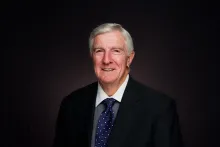
Before his retirement in 2021, Dr. Donald Ward pastored churches in Texas and Louisiana, and taught at Ambassador Bible College in Cincinnati, Ohio. He has also served as chairman of the Council of Elders of the United Church of God. He holds a BS degree; a BA in theology; a MS degree; a doctor’s degree in education from East Texas State University; and has completed 18 hours of graduate theology from SMU.
