

Don Ward
This transcript was generated by AI and may contain errors. It is provided to assist those who may not be able to listen to the message.
Today I want to talk about our calling and our talents. God has not called us to just sit on the sidelines. God has called us to utilize our talents and every bit of energy and talent that we have in serving Him and serving others. So sometimes it's good to just sit back and to meditate on what are we really involved in. There are different ways to state it. One way is the battle of the ages from the Garden of Eden to the present time. It actually started way before the Garden of Eden when Satan and the demons rebelled in the first place that this battle between good and evil, between light and darkness ensued at that point. And of course it reached into humanity in the Garden of Eden. Another way we could express it, we're involved in the hope of the ages. We're involved in the work of God, involved in the Church of God, involved in the body of Christ. And I wonder at times do we remotely grasp, understand, appreciate the significance of our calling and what we are involved in and what we profess to be. It is because of God's grace that He has called us in this age is what's called the oeconomia, the dispensation, the administration of grace. Paul calls it in Ephesians 3 in verse 1. At this present Church age, we're here because God called us and we responded to that call. And it's like some people think that the calling is almost like you grab somebody by the nape of the neck and you you throw them down and put them in the Church. Well, in a few cases you might point out like the Apostle Paul that he had sort of that kind of calling. But people can either respond to the call or not respond to the call. But God has called us because He loves us and He's called us into the work of God and the body of Christ. And I believe He calls us at the time that is best for us. God's great care and concern for us is beyond human comprehension. Let's notice Psalm 139. Psalm 139 in verse 17. Of course, the things that we say here today could also be our calling and our talents, but also our comfort, encouragement, exhortation, understanding of God's great love, care, and concern for His creation. That's what grace is all about.
In Psalm 139 in verse 17. How precious also are your thoughts unto me, O God, how great is the sum of them! If I should count them, they are more in number than the sand. When I awake, I'm still with you. God's thoughts are toward us. Verse 16. Your eyes did see my substance yet being unperfect, and in your book all my members were written when in continuance were fashioned, when as yet there was none of them. So God's thoughts are ever toward us. He knows all about us. The hairs on our head are numbered according to the Gospel writers. The hairs on our head are numbered. Not even as Pharaoh falls to the ground unless he's aware of it. He calls the stars by name. Can you imagine that, calling the stars by name? You look up there and they say maybe we can see six thousand at one time, but there are thousands upon thousands upon thousands, and on it goes that we cannot see. He calls them by name. We must never get the idea that God is off somewhere and fall into the trap of asking where he is the God of judgment. Look at Malachi.
Malachi is a book about messengers. In fact, Malachi's name comes from the Hebrew word for messenger, Malach, M-A-L-A-K.
And Malachi can refer to a human messenger or a divine messenger. So Malachi was one of the messengers, the John the Baptist, Jesus Christ, the priest, and Elijah or the other messengers mentioned in Malachi. The great rhetorical question of Malachi is Malachi 2.17. The great rhetorical question. Malachi is a monologue. In other words, God is doing all the speaking through inspiring Malachi, yet it's written in the form of dialogue in which God gives his part and the part of the people. So a monologue written in the form of dialogue.
You'll notice this in just verse 17. You have weared the eternal with your words, yet you say, wherein have we weared him? When you say, everyone that does evil is good in the sight of the eternal, and he delights in them. Or where is the God of judgment? Where is God in all of this? Where is God when I'm going through all of this? Where is God in my trials and troubles?
And so, in effect, we're asking where is the God of judgment? Is God really care for us? Is he really concerned about us? In response to this, chapter 3 is really a response to that rhetorical question. Verse 1, "'Behold, I will send my messenger, and he will prepare the way before me.'" That's John the Baptist. Mark in his gospel quotes this in the first three or four verses, two or three of Mark. "'Behold, I will send my messenger, John the Baptist. He shall prepare the way before me, and the eternal whom you seek shall suddenly come to his temple, even the messenger of the covenant whom you delight in.'" That's Jesus Christ. "'Behold, he shall come,' says the eternal host." And when he comes, he's going to begin to set things right, first of all, beginning in the church and eventually to the whole world and the millennium and beyond. Now, verse 6, where is the God of judgment? Well, he's where he's always been. Look at verse 6. "'For I am the eternal, I change not.'" And some people, when they read the Scripture about the eternal changes not or Jesus Christ changes not. They apply it to everything under the sun. What this means is, and what it means with Jesus Christ is, God's character, his being, who he is, what he is, never changes. He is the same today, yesterday, and forever. In other words, his qualities, his characteristics, his love, his mercy, his long-suffering, his patience, and you could go on and on with all those qualities and characteristics, they do not change. Now, with regard to how God deals with human beings in various administrations, that has changed from time to time. And there have been seven basic administrations, but that's sort of a different subject. "'I am the eternal, I change not. Therefore you sons of Jacob are not consumed.'" God is long-suffering, merciful, not willing that any should perish, and if we really got justice, then none of us would be able to stand. So, brethren, we are involved in the hope of the ages. Just like you heard in the special music, you are, God is our only hope.
Do you believe that your calling could be just as important as a brahm and others? That you are the apple of God's eye. God is not a respecter of persons. Does he love someone else more than he loves you when it comes to spiritual love and with regard to your potential and what he desires for you and being in his family and in his kingdom?
Let's notice Zechariah chapter 2. Remember the time setting of Zechariah. Zechariah. Haggai and Zechariah came on the scene during the time that Judah was attempting to rebuild the temple.
Cyrus had issued a decree in 538 allowing the Jews to return to Palestine, to the environs of Jerusalem, to rebuild the temple. That contingent of Jews who came back to Palestine rebuild the temple were under the leadership of Zerubbabel, the civil governor, and Joshua, the high priest. And they had basically wasted 18 years. The only thing they had managed to do was to lay the foundation of the temple. And so in 520 BC, God raised up two prophets, Haggai and Zechariah, to rebuild this temple. Actually, it wasn't much of a rebuilding. It was a restoration temple, the second temple. Nebuchadnezzar had burned the first temple. So much of Haggai and Zechariah in symbolism not only has to do with the restoration temple to a large degree is symbolic of that which is to come the spiritual temple, the temple of God. Of course, we have had in the church through the years different ones who have said that they are Joshua or there's a Rubble Bell. And they have said at times, well, Joshua's Rubble Bell, whomever that symbolizes, will be the two witnesses. And we've had witnesses to come and go.
And of course, one of the ones who claimed that he was one of the two witnesses was convicted of tax evasion this week. And he's to be sentenced in September, confined now to his home. In Zechariah 2, verse 10, sing and rejoice, O daughter of Zion. Zion symbolizes the church, as we've said a million times, Hebrews 12, 22. For lo, I come, and I will dwell in the midst of you, says the Eternal, and many nations shall be joined to the Lord in that day, and shall be my people, and I will dwell in the midst of you, and you shall know that the Eternal of Hosts has sent me unto you. And the Eternal shall inherit Judah his portion in the Holy Land, and shall choose Jerusalem again. Be silent, O all flesh, before the Eternal, for he is raised up out of his holy habitation. Of course, as Stephen brings out in his inspired sermon in Acts 7, that God no longer dwells in buildings made by hands, but he dwells in each one of us, and now we are the temple of God. Zechariah 3 is taken up with Joshua in his role. Zechariah 4 is taken up with Zerubbabel in his role, and they were a type or symbolizing that which was to come. That is, that in the kingdom of God, you are going to be kings and priests. See, Joshua was a high priest. Zerubbabel was a civil governor. And in the kingdom of God, they were symbolic of that which was to come. But who will build the the spiritual temple? Well, we should all know that, as in Matthew 16, 18. But look at Zechariah 6, 12, Zechariah 6, 12, that also tells you. And summarizes to a large degree and should put to rest a lot of the claims that various people make with regard to who is Joshua, who is Zerubbabel, and all that kind of stuff, writing their names in the Bible where God has not written. I would submit to you that it is not wise to write your name in the Bible where God has not written. In Zechariah 6, verse 12, And speak unto him, saying, Thus speaks the eternal of hosts, saying, Behold the man whose name is the branch. And in Isaiah 11, you can see him identified as Jesus Christ, the branch, the offshoot out of the stem of Jesse. He shall grow up out of his place, and he shall build the temple of the Eternal. Now, of course, God uses human beings to labor in his spirit of the temple. As you know, in 1 Corinthians 3, Paul writes, that I have laid the foundation, and Apollos watered, but God gave the increase. Verse 13, Even he shall build the temple of the Eternal. He shall bear the glory, and shall sit and rule upon his throne as a king. And he shall be a priest upon his throne, church and state combined. We will be made kings and priests, Revelation 5, 10. And the counsel of peace shall be between them both. I want to read once again back in Zechariah 2. Verse 8, For thus says the Eternal of Hosts, After the glory hath he sent me unto the nations, which spoil you. For he that touches you touches the apple of his eye. No doubt that the church of God is the apple of God's eye today. This is what we are involved in, in building this spiritual temple.
So how much does it mean to each one of us? God has called each one of us personally and individually, has given us the pearl of great price.
We're all familiar with John 644. No man can come to me unless the Father draw him. No man can come to me unless the Father draw him. Now let's turn and read James chapter 1, verse 17 and 18. James chapter 1 verses 17 and 18. James 1 verse 17. Every good gift and every perfect gift is from above, and comes down from the Father of lights with whom is no verbleness, neither shadow of turning. Here's that same thing worded in a different way. "'Behold, I am the Eternal, I change not, of his own will begat he us with the word of truth, his own will, that we should be a kind of firstfruits of his creation.'" And so the church, in the church age today, we're being called out as firstfruits. It is called you and is baptized you into the body of Christ. Let's go back to 1 Corinthians chapter 12. 1 Corinthians chapter 12 verse 12.
So in these first few minutes here, 15 or 20 or so, we are laying the foundation of how important God views the church, views each one of you, each one of us, that he is personally involved in our lives, and we must never forget that in 1 Corinthians 12 verse 12. For as the body is one and have many members, and all the members of that one body having many, being many, are one body, so also is Christ. The great rhetorical question of 1 Corinthians is 1 Corinthians 1 13, is Christ divided? And basically Paul shows from your calling to the resurrection Christ is not divided. Though Corinth had just about every problem that you can imagine, even to the point that some were saying there is no resurrection from the dead. How on earth could you be sitting in the church of God and at the same time saying there is no resurrection from the dead? But clearly Paul says in 1 Corinthians 15, think of verse 12, that some were saying that. For by one Spirit are we all baptized into one body, whether we be Jews or Gentiles, whether we be bond or free and have been all made to drink into one Spirit. See, man can baptize you in water, and we do baptize people in water, but only God can baptize you with his Spirit. The Holy Spirit proceeds from the Father, John 15 26, that is shed abroad on us through Christ, Titus 3 verses 5 and 6. Somehow Christ plays a role in it, and of his own will beget he us with the word of truth. So if you have the Holy Spirit, God begat you with that Holy Spirit. God has called us for a great purpose, a great purpose that we should bear much fruit. We go back now to John 15. John 15. John 15. The context of that is within that night in which Jesus was betrayed, betrayed and also the mock trial and sentenced to death. The next day, I guess it was. In John 15 and verse 1, I am the true vine, and my father is a husbandman. So we consider up front now all the things that God has done for us, what we're involved in, how important it is to God. Now, in view of that, what is our response?
I am the true vine. My father is a husbandman. Every branch in me that bears not fruit, he takes away. So the father is in the role of the husband pruning. Every branch that bears fruit, and every branch that beareth fruit, he purges it, trims it, that it may bring forth more fruit, prunes it, as we say.
Now, you are clean through the Word which I have spoken unto you. The washing of the water of the Word is very important. Abide in me, and I in you, and of course that's through the Holy Spirit, as the branch cannot bear fruit of itself, except it abide in the vine. No more can you accept you abide in me. I am the vine, you are the branches, he that abides in me, and I in him.
The same brings forth much fruit, for without me you can do nothing. In the spiritual realm, according to the words of Jesus Christ, without me you can do nothing. Now, a human being can do all kind of marvelous works in the secular sense, in the sense of helping people and all kind of physical things.
Well, we're talking about spiritual things that lead to eternal life. If a man abide not in me, he is cast forth as a branch, and is withered, and men gather them, and cast them into the fire, and they are burned. If you abide in me, and my words abide in you, you shall ask what you will, and it shall be done unto you.
Herein is my Father glorified that you bear much fruit. So shall you be my disciple. So one of the requirements of being a disciple in the true sense of the word is to bear much fruit. The key to bearing fruit is to abide in him. And Christ abides in us, and God the Father abides in us through His Spirit. Look at John 14. John 14. Of course, John 13, 14, 15, 16, 17 is all within the context of from implementing the symbols of the New Covenant Passover and the foot washing to the time that Jesus and James Peter and John went away to pray, and then he was betrayed.
In John 14, verse 18, I will not leave you comfortless. I will come to you yet a little while and the world sees me no more, but you see me because I live, you shall also live. At that day you shall know that I am in my Father and you and me, and I in you. So we have that unity. Now look at verse 23. Jesus answered and said unto him, If a man love me, he will keep my words, and my Father will love him, and we will come unto him and make our dwelling place with him.
So you can say, God in you, Christ in you, there is one Spirit, and we are joined together through that Spirit. So the key to bearing fruit brings out in John 15 is to abide in Christ. So are we asking on a daily basis for God's Spirit? I mean, as simple as that is. See, what so many have done through psychology and everything from cybernetics to Freudian psychology to Rogerian psychology. Rogerian psychology is one of the most harmful, damnable things that has happened on the planet. It is a combination of existential humanist psychology, which I'll explain to you in a few words.
It's non-directive. So if you're a Rogerian counselor and you're sitting there and you say, well, I haven't been getting along very well with my wife lately, and the counselor says, so you haven't been getting along with your wife? And he says, yes, we've been having trouble. So you and your wife have been having trouble? Yes. And it goes on like that. And so it's non-directive so that the person himself comes to the solution of his problem, and you are non-directive. And it's also involved in that kind of learning theory as well of a hands-on, outcome-based kind of learning, Rogerian psychology.
And where I'm going with that is, more and more in today's world, and I see this in the church with regard to some of our parents. And I don't know any here. I'm not listening to any one of you. But I have observed it, that the word no is no longer the vocabulary of parents. Do not tell that child no. Okay, where are we?
Are we asking on a daily basis for God's Spirit? In Luke 11, I was talking about the simplicity that is in Christ, where you're not involved in these various theories and trying to solve the problems of the world through Freudian psychology, or through Rogerian psychology, or perceptual existential psychology, or none of that. There is great simplicity in Christ, and the word of God is sharper than any two-edged sword, dividing us under the thoughts and intents of the heart of man.
So if you want to be laid bare, you can read the Bible. In Luke 11, in verse 8, Luke 11, in verse 8, and I hasten to add that I am not saying that you should never see a psychologist. I'm not saying that, or an outside counselor. I'm not saying that.
In Luke 11, verse 8, I say unto you, though he will not rise and give him, because he is his friend, yet because of his importunity he will rise and give him as many as he needs. Talking that a person keeps on asking for something, and because he keeps on asking for the bread, as in verse 5, finally gives in. And I say unto you, ask, and it shall be given you. Seek, and you shall find, knock, and it shall be opened unto you, for every one that asks receives and he that seeks finds, and to him that knocks, it shall be opened. If a son shall ask bread of any of you that is a father, will he give him a stone? Or if he asks a fish, will he for a fish give him a snake? You know, I had such confidence in my earthly father, and probably you do yours, and tomorrow is Father's Day. And of course, those kind of people that I just mentioned, the various perceptual existential psychologists, the Rosurin psychologists, the Freudian and their others, have tried to make fatherhood, to some degree, obsolete. Fathers are no longer important. Just sit down over there, Dad, and be quiet. We know how to run the world.
But I knew that if my father, if I asked my father, whatever, in the deepest, darkest hours of the night, if it was in his power, he would do it. I believe my children and grandchildren know the same thing about me. Am I more righteous than God? Are you more righteous than God? You will do the same thing. If a son asks bread of any of you that is a father, will he give him a stone? Or if he asks a fish, will he give him a snake? If he shall ask an egg for an egg, will he offer him a scorpion? If you then, being evil, know how to give good gifts unto your children, how much more shall your heavenly Father give the Holy Spirit to those that ask him? So are we asking on a daily basis? Seems so simple.
Father, give me the Spirit. Give me the Holy Spirit. And one of the things I try to ask on a daily basis is give me the gifts that are necessary to try to perform what you want me to do and carry out your will for me. So that is very simple to ask God for his Spirit. God gives his Spirit to those who obey him. Let's go there to Acts 5. In the early days of the church, after Christ's ascension, where the apostles were going in and out of Jerusalem, remember Christ had commissioned them and said that you shall preach this gospel beginning in Judea, Samaria, and to the uttermost parts of the world. In those early days in the church, Peter, James, and John, especially Peter and John, and especially Peter, were very bold. They were commanded time after time not to speak in the name of Jesus Christ. They were thrown in prison. They were beaten. And yet they continued on. In Acts 5.29, then Peter and the other apostles answered and said, We ought to obey God rather than men. The God of our fathers raised up Jesus whom you slew and hanged on a tree. Him hath God exalted with his right hand to be a prince and a savior, for to give repentance to Israel and forgiveness of sin. And we are his witnesses, these things of these things, and so is also the Holy Spirit whom God hath given to them that obey him. So asking God and obeying God, we want to abide. You can't bear fruit unless you abide in him, according to John 15. And then, of course, is to eat and drink of the Word of God. To eat and drink of the Word of God.
Notice John 6.63. I was talking with a person in Texarkana after services today, and he said, You have emphasized the Scripture so much, and said, I have finally internalized it, and I've got it through my thick skull, and I understand now the importance of it. And you can read right over it time after time after time. Jesus Christ is the bread of life. We call John 6 the bread of life chapter. And he says, You have to eat of my flesh and drink of my blood. If you don't eat of my flesh and drink of my blood, you have no life. You're not going to have eternal life. And of course, that is symbolic of ingesting the very mind and essence of God. That is His spoken word because He equates His word with His Spirit. John 6.63.
It is the Spirit that makes the life, or quickens, the flesh profits nothing, the words that I speak unto you. They are Spirit, and they are life. So it's the nourishment in the spiritual sense. So somebody asks, How can I bear fruit seeing that I have no talents?
You know, I understand it's really important, the calling and what God has done. And I understand that you can't bear fruit unless you abide in Him. Now I'm willing to ask Him for the Holy Spirit, and I'm willing to obey Him, and I'm willing to read the Bible and study and ingest the Word of God, be nourished thereby. But I don't have any talents. So what am I? I'm just an observer in the arena of life.
To say that you have no talents is to deny the graciousness and generosity of God. God gives talents to every person. Let's go to 1 Corinthians 12 in verse 4. 1 Corinthians 12.
One of the big problems in Corinth had to do with speaking in languages. The Corinthians thought they were really spiritual because they apparently had the gift of language, as Paul says in chapter 1. I thank God through Jesus Christ that you come behind in no gift. 1 Corinthians 12 verse 4. Now there are differences of gifts, diversities of gifts, but the same Spirit. There are differences of administration, but the same Lord. And there are differences of operations, but it is the same God which works all in all. But the manifestation of the Spirit is given to every man. Everybody has something to give. There is not a person on earth that doesn't have something to give. They may not have, like Peter and James said, or James and John, whichever it was. Peter and John think it was. When they saw the beggar there, and they came in, he was begging alms, and they said, Silver and gold, have I none? But it's what I give, what I have, I give unto you freely. How about getting up and walking? It's a little bit more important than silver and gold. Every person has something.
The manifestation of the Spirit is given to every man to profit with all. For one is given by the Spirit, the word of wisdom, to another the word of knowledge, by the same Spirit, to another faith, by the same Spirit. Faith is a really interesting thing. We had a sermonette on it, very good. And you could talk on faith until the Lord did come, and you still will not have covered all the dimensions of faith. It's such a broad topic, such a wonderful thing. Faith is the only one of these gifts that is also a gift of the Spirit and is a fruit of the Spirit.
To another the gifts of healing by the same Spirit. To another the working of miracles. To another prophecy. To another discerning of spirits. To another different kinds of tongues. To another the interpretation of tongues or languages. But all these works that one and the self same Spirit dividing to every man severally as he will. And then this great unity scripture we've already read that the body has many members, but it's one. The body is one with many members however you want to word it. Now notice Romans chapter 12. So God says he gives to every person severally as he wills to profit everybody. It's nothing to boast of. In fact, it's something to be humbled by and to be sober regarding it. One of the things that it's been a good thing through the years in the church from the days of the spokesman's club all the way down through the various leadership training programs and ambassador clubs at the college and all of that that it raised the level of our awareness and our ability to communicate and to also relate to and be able to speak with people across a broad spectrum of the socioeconomic strata and to understand all other people's some wonderful training that has taken place. But in some of our training and that kind of thing, it's like those that get up in front of people and give a sermon or give a Bible study or make a presentation, whatever they do, it's like those are the most important ones. Well, that's not true. Because everybody has a role to play and God has given different gifts to different people.
Romans 12, 6, having then gifts differing according to the grace divine favor carous that is given to us. So to deny that you have that you don't have any time to do that, to deny that you have that you don't have any talent is to deny God's grace, his generosity, what he's given you. Whether prophecy, let us prophesy according to the proportion of faith, or ministry, let us wait on our ministering. It's another way of serving or running through the dust for others, or he that teaches on teaching, or he that exhorts an exhortation, he that gives let him do it with simplicity, he that rules with diligence, he that shows mercy with cheerfulness, let love be without dissimulation, without hypocrisy, without putting it on. That's the way you really are. Now pour that which is evil, cleave to that which is good.
See, God has given everybody some measure of the Holy Spirit and gifts.
There are people who are good at encouraging others.
Sometimes a touch, a touch on the shoulder, a pat on the back, a good word, a smile, make make all the difference in a person's life. Never underestimate the gifts that God has given you. To do so would be to take your calling lightly and also to reject bearing fruit.
Look at Matthew 25.
We oftentimes turn to Matthew 24. We talk about the Olivet prophecy. Actually, the Olivet prophecy includes Matthew 25. The Olivet prophecy ends with verse 1 of Matthew 26. In other words, I'm telling you that Matthew 25 is a part of the Olivet prophecy.
There's a continuation. Really, there should not be a chapter break. We can look at the last verse or two there in 24.
In verse 46 of 24, it says, Blessed is that servant whom his Lord, when he comes, shall find so doing. He will make him ruler over all his goods. But if that evil servant shall say in his heart, My Lord delays his coming, shall begin to smite his fellow servants to eat and drink with the drunken. And of course, that's one of the things that's been taking place, especially for the past few decades of smiting fellow servants. We're more righteous than you because we adhere more to this teaching than you do.
And we require more of this or that than you do. Therefore, we are more righteous than you. And you need to be with us because if you're not with us, you may have to go through the Great Tribulation. And it just depends on which organization you're in. Don't believe that. I mean, you could swap organizations every day, and it won't change your heart and your being. Now, I would submit to you that keeping company with the right people will also help. But in and of itself, just hopping around is not going to help.
Smite his fellow servants to eat and drink with the drunken. I get so fed up, like with CNN, the Democrats walk on water. With Fox, the Republicans walk on water. With CNN, the Republicans are evil. With Fox, the Democrats are evil.
And so this continual political haggling that you see. And you try to make the other people look as bad as you can. And somehow the gullible public, if they believe certain things, will believe what you said that's bad against them. They call it negative campaigning or whatever. Have we ever had that in the church?
The Lord of that servant shall come in a day when he looks not for him, and in an hour that he's not aware of, and shall cut him asunder and appoint him his portion with the hypocrites. There shall be weeping and gnashing of teeth. Then, when then, when that's going on, shall the kingdom of heaven be likened unto ten virgins, which took their lamps and went forth and meet the bribery. Five wise and five foolish. Then, after the five wise and five foolish are dealt with, chapter 25 verse 13, watch therefore, for you know neither the day nor the hour wherein the Son of Man comes. And then there are three parables given that will ensure that you would be so doing and ready when Christ comes. There's a parable of the talents. Now, how important is it that you increase and utilize your talents? Look at verse 24, Matthew 25, 24. Then he which had received the one talent came and said, Lord, I knew that you are a hard man, reaping where you have not sown and gathering where you have not strawed. And I was afraid and went and hid your talent in the earth. Lo, there you have what's yours. His Lord answered and said unto him, You wicked and slothful servant, you knew that I reap where I sowed not and gather where I've not strawed. You ought therefore to have put my money to the exchangers, and then at my coming I should have received mine own with usury. Take therefore the talent from him, give it to him which has ten talents, for unto every one that has shall be given, and he shall have abundance, but from him that hath not shall be taken away even that which he has. And cast you, that unprofitable servant, into outer darkness there shall be weeping and gnashing of teeth. So how important is it that we try to utilize what God has given us? So never underestimate the gifts that God has given you and try to make the best of it. The fruit you bear is best measured by how much you can help another person to achieve his or her God-ordained potential. My definition of true leadership is to help people achieve their God-ordained potential. And whatever talents or gifts that you or I might have, and there are many different ways to help that. Basically the first question that I'm asked when I go to church anywhere, anywhere, if it is not readily apparent, is Mrs. Ward with you? Now people over 50 say Mrs. Ward, and those under 50 say, is Wanda with you? Or, hit, hit, you take Mrs. Pyle. Mrs. Pyle would never deign to say Wanda. She would always say Mrs. Ward. Now, don't take that the wrong way.
Her gifts are totally different from mine, but just as important.
So brethren, we must never allow ourselves to get into the woe-is-me state of mind. To do so is to deny the one who redeemed you, blessed you with spiritual gifts so you could bear fruit and fulfill your calling. So God has not called us to sit on our hands and withdraw from the arena of life. You must stay in the arena and fight the good fight of faith. As Paul writes in Romans 8.31, If God be for you, who can be against you? God commands us to walk worthily of His calling.
Let's go down to Ephesians. Ephesians 4, verse 1. And Ephesians 4, verse 1.
When speaking of different gifts, like I said, my wife has totally different gifts than I have. She lights up the room to some degree. I guess I make it dark.
Just the ways to some degree the skin stretched over your face can be a blessing or a curse, especially depending on how you practice it. But some people just have that natural, ever-vescent kind of personality that you just feel warm and fuzzy all over just being around them. What a wonderful gift that is. A lot of people have that, and it seems that just as a general rule, as an ethnic group, it seems that the Oriental people have this sort of kind of spirit of service and doing things for people like you. It's just a great honor to be able to serve you or whatever. And I just marvel at some of the people with the gifts that they have in helping people and making them feel at ease and comfortable and that kind of thing. Because a lot of people, so many people, virtually every person on the face of the earth, to some degree, feels some measure of self-consciousness and feels like that somehow they don't quite measure up or whatever at times. And to be able to relate to people, make them feel like they're wanted and needed and all that is a marvelous gift.
In Romans 8, verse 31, which all of us should be able to quote, in Romans 8 and verse 31, what shall we say to these things? If God be for us, who can be against us? I mean, how much is He for us? He that spared not only His own Son but delivered Him up for us all, that's how much He's for us, that He was willing to give His only Son. Would you be willing to give one of your children that somebody could be in the kingdom of God? Well, God does not ask you to do that, thankfully, or me either. But God was willing to give His only begotten Son up so that we could have our sins be forgiven, that we could be reconciled to God. Who shall lay anything to the charge of God's elect? It is God that justifies. Who is He that condemns or judges? It is Christ that died, yes, rather than has risen again. Who is even at the right hand of God who also makes intercession for us. Who shall separate us from the love of Christ? Shall tribulation or distress, or persecution or famine or nakedness or peril or sword, as it is written, for your sake, this is one of the key verses of the whole Bible. One of the key verses of the whole Bible, and it is a very difficult one to master. As it is written, for your sake, we're killed all the day long. In other words, our attitude and frame of mind is that we understand that if we got justice, we would receive death.
But through Jesus Christ, we can have remission of sin and eternal life. But in our state of mind and frame, for your sake, we're killed all the day long. We're accounted as sheep for the slaughter. And anything that we get above death is a gift. Because we all deserve death.
So, but if that is our frame of mind, and we are humble to that extent, then it'd be difficult for Satan or any other being to get a hold on us. Knowing all these things were more than conquerors through him that loved us. For I am persuaded that neither death nor life nor angels nor principalities, powers, nor things present, nor things to come, nor heighten, nor depth, nor any other creature shall be able to separate us from the love of God, which is in Christ Jesus our Lord. In Ephesians chapter 4, Ephesians chapter 4, we should walk worthily of our calling, that we're utilizing our gifts, our talents, our whole being to make our calling and election sure. Mr. Stewart read from 2 Peter chapter 1 about making our calling and election sure. Ephesians 4, I therefore, the prisoner of the Lord, beseech you that you walk worthy of the vocation wherein you're called. You're this way of life, that you walk worthy of it, with all lowliness and meekness, similar to what we just talked about in Romans 8 36, with long suffering, forbearing one another in love, endeavoring to keep the unity of the spirit in the bond of peace. And if we would do that, it'd be different. It'd be different.
In 1 Thessalonians chapter 2, 1 Thessalonians chapter 2 and verse 10.
1 Thessalonians 2 10, you are witnesses in God also how holily and justly, you won't see that word holily very often, you are witnesses in God also how holily and justly and unblamably, we behaved ourselves among you that believed, as you know how we exhorted and comforted and charged every one of you as a father does his children, that you would walk worthy of God who hath called you into his kingdom and glory. See that, if the realization of what we talked about up front of all the things that God has done and what we are involved in, it is the hope of the ages. The Democratic Party, the Republican Party, or no politician, political party, or movement, or anything else is going to be able to achieve what this world needs. It will only be through God and Christ in the kingdom of God. For this cause also, thank we God without ceasing, because when you receive the word of God, which you heard of us, you received it not as the word of men, anyone who stands before you and gives a sermon. You're not to receive it as from me, but one of the difficulties that people have is that they focus on the messenger instead of the message. It's one of the great faults of all time. Can you separate the messenger from the message? That you've received it not as the word of men, but as it is in truth the word of God, which effectively works also in you that believe. At time after time, Paul exhorts that the ministry preach the word of God. The instant end season, out of season, exhort, rebuke, of all meekness and long suffering. The God of the universe, our creator, our father, has called us to the marriage supper of the Lamb. Let's notice Matthew 24. I'm not 24, 22. Matthew 22. And note this parable, which is very real in a sense when you relate it to Revelation 19 and other places. Matthew 22.1. Jesus answered and spoke unto them again by parables and said, The kingdom of God is like unto a certain king which made a marriage for his son and sent forth his servants to call them that were bidden to the wedding, and they would not come. Again he sent forth other servants saying, Tell them which are bidden, behold I prepared my dinner, my oxen and fatlands are killed, and things are ready, come unto the marriage. But they made light of it, went their way, one to his farm, another to his merchandise, and the remnant took his servants and entreated them spitefully and killed them.
But when the king heard therefore, he was mad, and he sent forth his armies and destroyed those murderers and burned up their cities. Then said he to his servants, The wedding is ready, but they which were bidden were not worthy. Go you therefore into the highways, and as many as you shall find, bid to the marriage. Jesus Christ came to his own and his own received him not.
So those servants went out into the highways and gathered together all as many as they found, both bad and good. And the wedding was furnished with guests. And when the king came in to see the guests, he saw there a man which had not on a wedding garment. And he said unto him, Friend, how come you in here not having a wedding garment? And he was speechless. Then said the king to his servants, Bind him, hand and foot, take him away, and cast him into outer darkness. There shall be weeping and gnashing of teeth, for many are called, but few are chosen. God has called you to the Church of God, to the Israel of God. We're involved in the work of God. We're involved in the hope of the ages. We are, 2 Corinthians 11.2. In 2 Corinthians 11 and verse 2, we are espoused to Christ. Paul writes in 2 Corinthians 11 and verse 2. I'm in 1 Corinthians. 2 Corinthians 11.2, I am jealous over you with godly jealousy, for I have espoused you to one husband, that I may present you as a chaste virgin to Christ. We have been invited to the marriage supper of the Lamb, and you have to have on the wedding garment. Now we go to Revelation 19. We see a picture of this, and we see the definition of the wedding garment, the description of it. Revelation 19 verse 6.
And I heard, as it were, the voice of a great multitude, and as a voice of many waters, as a voice of mighty thundering, saying, Alleluia, for the Lord God, omnipotent reigns, let us be glad and rejoice and give honor to him, for the marriage of the Lamb has come, and his wife has made herself ready. And to her was granted that she should be a raid and fine linen, clean and white, for the fine linen is the righteousness of saints. So that is the wedding garment. We have been invited to, and we have been espoused in the interim, to Jesus Christ, and the time is coming for the actual consummation of the marriage.
To her was granted that she should be a raid and fine linen, clean and white, for the fine linen is the righteousness of saints. And he said unto me, Write, Blessed are they which are called, one of the blessings in several in the book of Revelation, Blessed are they which are called unto the marriage supper of the Lamb. And he said unto me, These are the true sayings of God.
God has promised that if we are faithful, he will preserve us, and we will be able to stand before him at that great day. One final place we'll look. 1 Thessalonians chapter 5 verse 23. 1 Thessalonians 5 verse 23.
We can make our calling and election sure, as was read from 2 Peter chapter 1. God has given us his spirit and his word. We can be more than conquerors through him that loved us and gave himself for us. As we read in Romans 8, there is nothing that can separate us from the love of God unless we allow it ourselves. God is more powerful, greater is he who is in you than he who is in the world. We have the power, the strength to overcome all obstacles. Jesus Christ said, Be of good cheer, I've overcome the world. He has given us that same power to overcome the world, and he will preserve us into the time of that great time. 1 Thessalonians 5, 23. The very God of peace sanctify you wholly, that has set you apart. And I pray, God, your whole spirit and soul and body be preserved blameless under the coming of our Lord Jesus Christ, faithful is he that called you who also will do it.
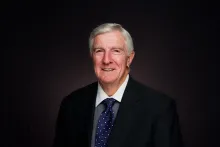
Before his retirement in 2021, Dr. Donald Ward pastored churches in Texas and Louisiana, and taught at Ambassador Bible College in Cincinnati, Ohio. He has also served as chairman of the Council of Elders of the United Church of God. He holds a BS degree; a BA in theology; a MS degree; a doctor’s degree in education from East Texas State University; and has completed 18 hours of graduate theology from SMU.
