

Robin S Webber
Exactly what is hope? The Apostle Paul speaks of the "Big 3" in 1 Corinthians 13:13--Faith, Hope, and Love, but exactly what is hope? Do you hope you have hope? Has your hope diminished because of life's circumstances. Is hope a matter of the Spirit that is boxed in or does it grow under pressure and flow like a river to the future? How does understanding faith in God and experiencing His love and sharing His love with others actually create a living hope to honor the call from Above?
This transcript was generated by AI and may contain errors. It is provided to assist those who may not be able to listen to the message.
Well, we want to welcome everybody that's joining us today here in San Diego for services, as well as those that are on the webcast. We want to say hello to you, and also to those that may be hearing these messages that Mr. Miller and myself gave in our giving this afternoon. Certainly appreciate it, Mr. Miller's one, two, three approach of his takeaways.
And I think you'll find the the parallelism in his message to my message of, in a sense, now what do we do with it, and where do we go from here. I'd like to begin the message this afternoon by sharing a story, and it's not just a story that I pulled from a book, but it is most likely, do I dare say, it is your story and my story waiting for us to wade through as we experience life.
Many years ago, a little boy was given a priceless possession, his deceased grandfather's golden pocket watch. Oh my! Oh how that little boy treasured it. But one day while playing at the grandfather's ice plant factory, he lost the watch amidst the icy and the sawdust on the floor. He searched, he scratched, and he became frantic. But there was no watch. All hope was lost, something very special given to him by a loving grandfather.
Then, suddenly, he realized what to do. The moment came. Guess what that was? He stopped scurrying around, and he became very, very still. And once his heart stopped pounding, it was in the silence that he heard the watch ticking, and he found it. Quite a story. I would suggest that that's been your story from time to time, my story from time to time, because I just pinched myself.
I'm human. We're all in this together. And it will most likely be another story that will come our way as to what you will do at that moment. So what might we learn here? Our Heavenly Father has given each of us a priceless, hope-filled gift from above, and he has planted it in our hearts. Yet how easy it is for us to fumble this gift from above in the rush and the scurrying about of life, or with all the pressures that we deal with, that will—if you haven't had those pressures, may I say what an echo what Mr.
Miller shared in the first message—they will come. They will come. It's not a matter of if. And there's a reason with that factor that God is most astutely aware and watching what we will do with it. To look at this, and if we have lost this hope-filled gift, it's there to find.
There's two words, though, that I want to use. You know how I like little words to make a point that comes out of the Bible. It is there to rediscover and define. There's two words that are important there. Number one is if. How often have we come up against the if factor?
And it's like a cliff that we just say we can't climb. And also the but. And but. Not merely listening for a TikTok, but listening for the voice of God by His Spirit and by the words that are in Scripture to resonate in our hearts like an echo until we are able to respond to it.
Join me if you would in Psalm 46 and verse 10. In Psalm 46, I know I often turn to this verse with you. I'll make no apology because I'm just preaching to myself and I hope somebody else is listening today. In Psalm 46 verse 10, this is the exclamation point, the scriptural exclamation point to the story of the boy that lost Granddad's watch and to our story. Be still. Be still and know that I am God and I will be exalted among the nations and I will be exalted in all of the earth.
Heart be still. Heart be still. As we are in the search for purpose, for meaning, and for mooring, mooring, to stand upon the foundation that is going to see us through to the future. With that said, today's message is simply entitled this, growing in hope, growing in hope beyond the moment.
Maybe you've had a moment this past year. Maybe you haven't had the big moment yet. It will come. It's not a matter of if. Because God is very interested in what you will do with the ifs and the buts that I've just established with you. Growing in hope beyond the moment. To begin with, let's turn over to 1 Corinthians 13.
And take a look at here. Normally, I say 1 Corinthians 13.
We think of that commonly called the love chapter. But I want to direct your attention in particular, then, towards the end of it. When I was a child, I spoke as a child. I understood as a child. I thought as a child. But when I became a man, and we can also add in this day and age, and or a woman, I put away childish things. But now we see in a mirror dimly, but then face to face.
The Scripture is telling us about a growing and a maturing experience, much like the man that reads the poem at age 20, but then reads it again at age 80.
He looks at it differently. He experiences it differently. He's gone down the path of life, and something has come to him. Now I know in part, but then I shall know just as I also am known. Now notice this. And now abide faith, comma, hope, comma, love, comma. These three, but the greatest of these is love.
Well, Robin, I thought you're going to be talking about hope, but it seems as if the greatest of these is love. How does that all come together? Well, that's why we're having this message to understand a few things about that. When we look at these, what we call the big three, faith, hope, and love. Let's break it down a moment and understand where this is going. Two of these are the direct fruits of God's Spirit, which is seeded in us and is planted in the soil of our hearts, faith and love. But we now then recognize that when we combine faith and love, there's a byproduct in all of this. It's called hope. It's a little bit like this. I'll be the PowerPoint for a second. As you know, I don't do PowerPoint, I am it. It's normally if we see faith and love as being the fruits of the Spirit. The Spirit is planted in our human soil miraculously. They are planted, and then they are expected then to develop the fruit of the Spirit.
We often say that one plus one equals two, bottom line math. But when we have faith plus love, one plus one, it comes out three. And that product is hope. I want you to think about it that way. To have hope, you must have absolute faith in our Father and the Christ. And number two, to understand a love that will never cease, that will always be direct to us, that there is that even that hope, that rest and eternity towards us, that we will respond in the same likeness of the relationship that He has offered us. Let's understand what hope in God means. Hope in God is a projection. It is an extension. It is an extension out of understanding God's love, mirroring that love in our own life, expressing that love back towards God and towards others, and faith in that God. And we're going to be talking about that. And to recognize hope is a picture. When we say that hope, in that sense, is a projection of faith and love. It's a projection. It is an extension of the imagination. It is the picture. When I say imagination, we're not imagining like fairy tales. It's a picture. It's an image that we hold beyond the moment. Even when sometimes our moments are challenging in our own human psyche, or our own human health, or our own human relationships in marriage, or with children, or wherever those relationships are needed, it moves beyond that. And we see that, and we hold on to that, even when maybe we're sinking some, but we're still reaching out and reaching ahead for the hope that God wants us to have. That is what hope does. The opposite of hope, if you'd like to jot this down, if we're really wanting to learn today and to share a thought, the opposite of hope, but it also can be in that same trail of thought, is despair. There is hope, and there is despair. And despair also readily embraces the ills it foresees. We see ahead with God's eyes. For the joy that was what? Set before him. Jesus endured the cross.
There was an image. There was something that was real. It was not ethereal. It was not misty. It was real. Even though it was not in his hand at that moment, he had faith in his father, and he had love so much for us, faith and love, that he bore that cross, and he moved beyond that and knew the hope that he and his father had imagined and pictured and programmed even before the foundation of the earth. So we take a look at this, and we need to understand that with that, despair also readily embraces the ills it foresees. Different than hope.
It looks to a future, but completely different through completely different eyes, and we need to recognize and allow me to insert here, hope is an energy and arouses the mind to explore every possibility to combat and overcome and replace despair. Let's think about that for a moment. Hope is the antidote to despair. We have all at one time or another despair. We've all at times felt like our back is up against the wall. We've all been with Moses at the Red Sea and said, oh yeah, sure, tell me another one. The water's going to open up, and we're going to go across on dry land. Moses, by the way, Pharaoh's only now a mile behind us. We've all had despair. If there's ever something you will take, this is the microcosm statement I'd like you to take out of this message. Hope is the antidote to despair. You can either dwell on despair and or you can dwell on hope. And where does hope come from? It comes from the combination of believing in faith towards God, understanding that love, and recognizing, as Mr. Miller mentioned, he will never leave us nor forsake us in whatever we're going through. Let's talk about a person that could have been in utter despair forever and came out of it. Would you like to meet him? Join me if you would in the book of Job. In the book of Job, all 42 chapters, but we're going to start in the beginning here. Let's go to Job 120. We know that Job was a faithful man. He was a righteous man, and God loved Job, but we recognize that Satan asked for him, saying, oh, you're just kind of protecting him. Let me have him for a while, and let's see how faithful he will remain to you, and let's see if he will cut off the lifeline of your love. Notice what it says in Job 1. We know that he lost all of his property, lost all his livestock, all of his children were slain. I mean, if anybody, anybody could ever be in despair, having, quote-unquote, done everything right, and then have his legs knocked out underneath him. Notice what it says in Job 1 and verse 20. Then Job arose. Now, I want you to picture, may we? Think of yourself walking alongside Job. You are his buddy for the moment as we're going through these scriptures. Then Job arose, tore his robe, shaved his head, and he fell to the ground, and worshiped. And he said, Naked I came from my mother's womb, and naked shall I return there. The Lord gave, and the Lord has taken away. Blessed be the name of the Lord. And in all of this, Job did not sin nor charge God with any wrongdoing. Are you there yet? Am I there yet?
Could we do that? As he uttered these words, he worshiped God, and he blessed his name. Am I saying you're a bad person if you don't do this immediately? No, I'm not saying this. This takes a depth that sometimes many of us have not been challenged with yet. Some have, understand.
But there was nothing that was going to break his relationship with the sovereign, loving God. He worshiped. He had hope. He blessed the name of the Lord, the giver of hope. Let's look at another verse here for a second. Join me if you would in chapter two, in verse nine.
Chapter two, verse nine. This is about Mrs. Job. Then Mrs. Job said to him, Do you still hold fast to your integrity?
Curse God and die. I can just hear and be like, and die. Because we're already the living dead. Our kids are gone. Our property is gone. Where is God when we need him? I mean, this is real. I mean, the Bible's about reality of the human landscape, the human heartscape. Do you still hold fast to your integrity? Curse God and die. But he said to her, notice, you speak as one of the foolish women speak. Shall we indeed accept good from God, and shall we not accept adversity? And in all of this, again, Job did not sin.
Job spans 42 chapters. From the beginning is the faithful servant of God that the adversary wanted to knock the spiritual knees out from under him.
To the very end in chapter 42, where it says, now I've heard of you by the hearing of the word, but now my eye sees you. I have a question. 42 chapters is a lot of life. What ties the book of Job—and you've maybe never thought about this before—but what ties the book of Job together? If you would join me in Job 19. In Job 19. And as we go to Job 19, I'm going to share a thought with you here. Once I spot—yeah, there it is. And she'll be like, when I was a little boy, long ago and far away, whenever my mother would be wrapping presents—and you know, women are much better at wrapping presents than men are, have you noticed, ladies? And then she would tie the bow. She would always ask me to come over, and I was like nine, ten, eleven. And she said, now you put your finger down here nice and tight, and I'll tie the bow. What creates the nice and tight of the bow that's found in the book of Job? It's right here that we look in Job 19. Notice what it says here. For I know that my Redeemer lives. I know. This was beyond knowledge. You know, there's such a thing as knowledge, which is a two-syllable word. This comes down to another four-letter word, like hope. Talking about four-letter words today here in church.
Hope and a know. For I know that my Redeemer lives, and he shall stand at last on the earth. And after my skin is destroyed, this I know. It's buried in his spiritual DNA. It's deep in his heart that in my flesh I shall see God, in whom I shall see for myself, my eyes shall be sold, and not another. Oh, how my heart yearns within me! This is the first proclamation in Scripture, and maybe you've never thought of it being in the book of Job. We all know the song, I Know That My Redeemer Lived, which is a glorious piece of music, both melody and words. This is where it comes from. It's buried in the Old Testament. It's buried in the story about adversity. It, though, gives us light as to how we handle despair, how we handle life, and how we come to take into our lives one of the big three. Faith, hope, hope, and love. Let's take a look now at a few things here. Oh, let's go over to Micah 7. Micah 7. Join me if you would, please, towards the end of the New Testament. In Micah 7, let's see how this works. Let's break it down. We're going to do a lot of breakdowns here. Micah 7, verse 7, it says, therefore, I will look to the Lord, I will wait for the God of my salvation, and my God will hear me.
There's other translations that go this way, but as for me, I watch in hope for the Lord.
It becomes personal. Not other people. Are you with me? You, me, individually. Not a pastor, not even your wife, not even your husband. This becomes deeply personal. But as for me, I watch and hope for the Lord. So we have to take ownership. Number one, we have to be alert. We have to be aware, and we have to recognize that as we exercise faith and we understand the love of God, that hope will come out of that. For none other than the Lord. It says, too, I will wait for God, my Savior. It may not come overnight. It may not be the next day. It may not be the next month. But I will wait for God, my Savior, my God. Now it's personal. My God will hear me. My words up to heaven are not offered in vain. He will answer at the right time and in the right way, and he will never be late. And people that are in faith and in the community of Christ never spell late. D-E-A-T-H. Death is not late for God. We see that in Jesus Christ. We see those in the people that he raised from the dead. God reaches beyond, just as we need to reach beyond the moment of despair and recognize we are in partnership with him. Let's understand something about hope. It is not just simply a pool. I want you to think about it this way. It's not just a pool of water, whether a pool in one's backyard or a natural pool out in the wilderness after there's been a rain. It's not a pool. It is not designed to go stagnant. And that's the word you might put down. Maybe our hope at times has gone stagnant. I would rather liken hope as to a river that flows on the currents of faith and love. Hope is not a pool. Hope is not just simply stationary. Hope doesn't come all at once. Just like that man that read the poem at 20, but now it's different when he's 80. God, think this through, wants hope to develop and expand and almost go over the rims of our existence towards others, that we can share hope with others by the hope that we have. Hope is something that is constantly growing. It doesn't happen all at once. God doesn't say, okay, send down a quarter of hope. That's it for this lifetime. And how does hope come? Hope comes from the pressures of life, the challenges of life. There's a creative force that we need to appreciate and to understand. Join me if you would in Ephesians 2 and verse 8. Ephesians 2 and verse 8.
Notice what it says here. For by grace, you, as doctors, has everyone been used to say, for those that remember the dock, watch your name. In other words, we fill it in. For by grace, you have been saved through faith. There's faith, number one of the biggies. And that not of yourselves. Notice it is the gift of God, not of works, lest anyone should boast. Now notice this, verse 10. For we are His workmanship created in Christ Jesus, the second creation, the first creation comes at a physical birth, the second creation comes at baptism, the third creation comes at the resurrection. For we are His workmanship created in Christ Jesus for good works, which God prepared beforehand, that we should walk in them.
Have you ever heard that terminology? You're a piece of work. Probably not always said positively, perhaps truthfully at different times in each and every one of our lives, if you're with me.
Susan's never told me that in 52 years. Comma, too much. We're all a piece of work. But what's more important is that we are God's work. And that work does not come easily to the human framework. He molds, He shapes, He creates.
The creation comes by His Spirit in us. He gives us the Spirit. The Spirit comes into us. The Spirit of the Father, the Spirit of the Son. But the fruit is up to us to develop, to grow. The fruit will come by how we are seated. But that seeding comes by the water. It comes by the water of the Word, doesn't it? It comes by yielding ourselves to God. It comes to recognize the honesty of Jesus Christ, that He said that it would never be easy, but it would be worth it. He said that if you're going to follow Me, you have to be willing to bear across. Luke 14, 26 through 27. I didn't make this up. It's inspired. It's divine. Which leaves us with thought that before we bear a crown, we're going to have to bear across. That is a great spiritual equation of Scripture, as a first fruit in God's hands, as to what you and I will do with that. With all of this said, perhaps we've gotten stuck in our challenges for a while. Maybe we've just backed out, backed down, just allowed despair to just put a stranglehold on us. And not only that, but sometimes people come along and they pop. They pop our bubble of hope. I'd like to think that I have a bubble of hope that keeps on growing and expanding, but sometimes people just come and knock the legs out underneath you. How does that work? Join me if you would in Mark 5. In Mark 5, the Gospel thereof. In Mark 5, and let's pick up the thought if we could in verse 21. In Mark 5, 21. But let me give you a little bit of the story.
It's kind of a showstealer in this, if I can make it. It wasn't purposefully. But remember, Jesus is coming into Capernaum here. He's been on the other side of the lake. He's coming in. And a crowd gathers because, oh, the rabbi has come, many believing that he is Messiah. They've heard of his words. They've seen or heard about the miracles. And the leader of the synagogue there in Capernaum comes. His name is Gerius. And he's got a really tough situation. His daughter is dying. His daughter is dying. And he comes to Jesus of Nazareth and says, please come to my house. I need you. My daughter needs you. She's dying. But also, sometimes God is working two things at once. And then we realize what happens as the crowd is going up to the household. I've given sermons on this. The lady comes along. Remember the lady who's kind of weaving through the crowd, you know, coming in, you know, but she knows where she's going. She's making curves, but actually straight lining for Jesus. And she's going to touch us him. We know the story, right? And then he stops and takes her aside. Takes her aside. Stay with me on this. And that takes up time, doesn't it? You know, it's like if you call for the doctor, you want him to come immediately. You don't want him to go to another house call, right? Here's Jesus. He's stepping aside to deal with this lady who has this tremendous faith, who just by the touch of the tassel that's on his garment is going to be healed. But that takes time. Have you ever noticed sometimes in emergencies, time is precious and perhaps, Jerry says, hope and faith was being challenged. Okay, come on, come on, come on. Got to go. My daughter needs you. Now, with that background, let's look at what happens here in Mark 5 verse 21. Now, when Jesus had crossed over again by boat, I mentioned that part of me. Let's go. Let's go to verse 35, break into it later on. Okay. 35. While he was still speaking, some came from the ruler of the synagogue's house who said, your daughter is dead. Why trouble the teacher any further? Could I ask you a question? Just with that statement, have you ever had a word come at you and it just breaks your knees down? Takes the air out of you, breaks your hope? Hope? As soon as Jesus heard the word that was spoken, he said to the ruler of the synagogue, do not be afraid. Only, only, notice, believe. Faith. Faith. And faith that Messiah is representative of a loving God.
Do not be afraid. Sounds like point number three, Skip, of your message. And he permitted no one to follow him except Peter, James, and John, the brother of James. Then he came to the house of the ruler of the synagogue and saw a tumult and those who wept and wailed loudly, professional mourners. That was very part and parcel of those times. Then notice what happens. When he came in, he said to them, why make this commotion and weep? The child is not dead, but sleeping. And notice then, oh, did that hush down the crowd? Are you ready for this? And they ridiculed him. But when he had put them all outside, he said in Hebrew or Aramaic, I wasn't there. I'm not that old. He said, Scoot, get out of here. I'm about my father's business. Notice what it says here. And they ridiculed him. And then it says that where it goes here, the child is not dead. And they ridiculed him. But when he put them all outside, wow, this is kind of like one of those times in the temple where he overturned the tables. He overturned the people. He said, you're trespassing. Something holy is about to happen here. And then they entered where the child was lying. Then he took the child by the hand and he said, Telitha, Telitha, which is translated, little girl, I say unto you arise. And immediately the girl arose and walked, for she was 12 years of age and they were overcome with great amazement.
Never underestimate the human capacity to try to destroy the hope that is within us.
Sometimes on purpose, sometimes accidentally. And when that happens, you just have to ask yourself, who are you listening to? And who do you believe in? And do you have hope beyond the moment?
And what will your if be? And what will your but be? Be in answering?
Perhaps, again, people have popped your bubble. You've gone your own way. You've been out there for a while. Even those that are listening will be listening to this in the months to come. And sometimes we wander, just like the prodigal son, because of something that's happened in our life, something that didn't figure out. Join me, if you would, in the book of Jeremiah 29.
Jeremiah 29. Famous scripture, but let's read it together. Jeremiah 29, verse 10. And this is, again, God had to, in a sense, deal with Judah.
Had to let tough things happen to those people because of their lack of relationship. Lack of relationship in what? Are you with me? In faith towards God, and not appreciating God's love or understanding God's love. And so they decided to do everything in their own hands as a nation. And even with that, even as they are in captivity, God tells them something here in Jeremiah 29 and in verse 10.
Pardon me. For thus says the Lord, after 70 years are completed at Babylon, I will visit you and perform my good word toward you and cause you to return to this place. Now think not being in the Middle East, but God speaking to us today. Perhaps you've wandered. Perhaps you've gone out on your own. Perhaps God is funny. He said, okay, if that's the way that you're going to go, you're going to experience it. You thought my way was difficult. You don't even know what you're talking about. And so you're out there and you've cut off your lifeline to God. But God has not cut off his attention and his love towards you. He says, for thus says the Lord, after all of this, for I know, verse 11, the thoughts that I think towards you says the Lord, thoughts of peace and not of evil, to give you a future and what? And a skip? A little bit louder.
That's right. Thanks, skip. I knew I could count you. I had every hope that you would do that. Thank you. So then and a hope, then you will call upon me and go and pray to me and I will listen to you and you will seek me and find me. And when you search, so there's a search that goes on. And when you search for me, notice what it says with all of your heart, I will be found by you, says the Lord, and I will bring you back from your captivity. And I will gather you from all the nations and from all the places where I have driven you, says the Lord, and I will bring to you this place from which I cause you to be carried away a captive. What God is basically saying, even in the depths of our despair, home is open. The relationship is there. I want you. My arms are open.
No matter what you have done, and you can have hope. You need to have faith. You need to have love. You need to understand my love, speaking of God, and we can come back together. Maybe some of those that are here listening today or those that are listening on this in the months, years to head, if you're out there, the door is open. The door is open. And that door is Jesus Christ, who is the door to the Father. He is always open. 25 hours in a 24-hour day. Always. Don't be in despair. Take the invitation. Understand that at times God is talking to nations, and sometimes those are parallel with Him talking to us as individuals. Maybe you've just been out in the wilderness too long, and it's time to come home to God. He's open. Join me if you would now in Romans 5. In Romans 5, a few thoughts on hope.
And picking up the thought if we could in verse 1. Therefore, having been justified by faith, we have peace with God through our Lord Jesus Christ, justified by faith that we believe, through whom also we have access by faith, one of the big three, into this grace, into this favor, into this gift in which we stand and rejoice, notice, in hope. We rejoice in hope. To think of the word rejoice, the word rejoice, I would basically call it this if you want to jot it down, rejoice is joy on steroids. And joy is not necessarily happiness. It's not when everything is going okay. That's human. And it's good to be happy about it. I like being happy too. But happy things happen. But joy depicts imagining, projecting, letting that hope begin to flow. Joy is when there's a smile on your heart, even when things aren't going right on the outside. So we take a look at this and we continue on this where it says then in verse two, through whom also we have access by faith. I mentioned that. Let's go to verse three. And not only that, but we also glory and tribulations, knowing that tribulation produces perseverance and perseverance, character and character. Okay, boom, dot, hope. Hope does not come overnight. Hope does not come overnight. But just like the Bible talks about joy, joy comes in the morning. Joy comes in the morning.
But we go to go through the darkness, but we're not alone. Now notice what it says. Now hope does not disappoint because notice the love of God has been poured out in our hearts by the Holy Spirit, which was given to us. The pouring. Notice the God's Holy Spirit is active. It is moving.
If you are in despair, you know what happens when your soup or your porridge gets too thick on the on the stove? What do you do? You get a spoon and you stir it. Otherwise it's going to become a brick. And if we don't stir it and get the fork of God's Spirit into despair, it's going to settle. Pretty soon you won't be able to get the fork out.
It's just kind of that simple. It's that profound. It's that miraculous.
Join me if you would then in 1 Peter 3. We see that hope is forged. 1 Peter 3.
In 1 Peter 3, in picking up the thought in 1 Peter 1. Oh, yeah, excuse me just a second. Let me take a look where I'm here. 1 Peter 1, verse 3. Yeah, 1 Peter 1, verse 3. Notice what it says. Peter, blessed be the God and the Father of our Lord Jesus Christ, who according to his abundant mercy has begotten us again. Notice, to a living hope through the resurrection of Jesus Christ from the dead. Words have meaning. Adjectives have meaning. Verbs have meaning. What do the adjectives, what do the verbs tell us as far as the action or the outcomes that God wants, or how to obtain that? Notice what it says. Who according to his abundant mercy has birthed us again to a living hope. If you have a Bible and if you're daring enough, you may just want to underline living. Do you have a living hope? Do you have a living hope? Question. You know, preaching is not just teaching, but it's also meddling with people. If I don't meddle, I'm not doing my responsibility to go down deep. Do you have a living hope beyond the moment of maybe what you're facing but recognizing that God is working with us through the resurrection, the living hope? Because it's before us. The hope was for Messiah, and he was put to death, and yet after three days and three nights, he rose. It always goes back to resurrection. And perhaps some of us need to, in that sense, be spiritually resurrected back to living hope.
For to an inheritance incorruptible and undefiled that does not fade away, reserved in heaven for you, who are kept by the power of God through faith for salvation ready to be revealed in the last time. And in this you greatly rejoice, though, now for a little while. If need be, you have been grieved by various trials, that the genuineness of your faith, being much more precious than that of gold that perishes, though it be tested by fire, may be found to praise and honor and glory at the revelation of Jesus Christ, whom, now notice, notice alert, whom having not seen you love, having not seen you love, though now you do not see him yet believing, you rejoice with joy inexpressible and full of glory, receiving the end of your faith, the salvation of your souls.
And of this salvation the prophets have inquired and searched carefully who prophesied of the grace that would come to you, searching what or what manner of time the Spirit of Christ who was in them was indicating when he had testified beforehand the sufferings of Christ and the glories that would follow. To them it was revealed, not to themselves but to us, that they were ministering the things which now have been reported to you through those who have preached the gospel in you by the Holy Spirit, sent from heaven things which angels desire to look into. Now at crescendos in verse 13, therefore gird up the loins of your mind. Tighten them up! It's like my shoes with all these shoelaces. You know when you're, you know, if you don't tighten up your shoelaces, you know what you're going to do? You're going to trip. God is telling us to tighten up, notice what it says, the loins of your mind to be sober and rest your, notice, rest your hope upon the grace that is to be brought to you at the revelation of Jesus Christ.
To rest your hope, to lay it down and know that it's there.
What will God do then? Let's go to Romans 12.9. In Romans 12 verse 9.
In Revelation 12 and verse 9 through 12, let love be without hypocrisy. Don't be an actor, a hypocrite. Abhoor what is evil and cling to what is good. Be kindly affectionate to one another with brother love in honor giving preference to one another. Not lagging in diligence, fervent in spirit, serving the Lord. Notice what it says, rejoicing in hope, patient in tribulation, constantly steadfast in prayer. Did you notice what it said? Rejoicing in hope.
Remember what rejoicing is? Joy on steroids. Joy does not come by what we think life is going to meet out with us in. But coming up with the surprises, like dropping grandpa's dear gift into a bunch of straw and a bunch of ice. And we go to pieces.
Remember that old song out of the early 60s? What was her name? Country singer. I go to pieces. Pardon? Yeah, Patsy Cline. I will not start singing a country song, okay? But, you know, I go to pieces. We know, women, you've watched men go to pieces. Men have this problem. They go to pieces when they can't find their keys or they can't find their wallet. The wallet's even worse than the keys. Like this. You know, I've been known around the world to use that famous phrase, blessed are the flexible. I did not invent it. I've just echoed it. But blessed are the flexible, for they shall not be bent out of shape. Why do I give that when I've coordinated feast sites over the years? Because if anybody can be bent out of shape quickly, it's moi! So I'm just preaching to myself up there, because so much can happen. You have the feast all planned out, and then this begins to happen, and this begins to happen. Notice that. You know, one thing I'm going to skip a little bit. I'll send you out the rest of my notes. But that one thing I want to mention, how does hope work? Would you join me in 1st Thessalonians 4?
In 1st Thessalonians 4, it's about the resurrection. Notice what Paul says to the people in Thessalonikum, But I do not want you, for certain to be ignorant brethren, concerning those who have fallen asleep, lest you sorrow as others who have what? No, hope. When a loved one has died, grandparent, parent, a mate, a child, it does not mean that we will not go through the natural stages that God has put us into when a loved one is missing, and we're not going to see them. We all have to go through those stages of grieving.
And some of us are still going through that.
But to recognize that we have hope. Hope is what makes the difference. Hope is that we are going to see them again. Hope is based upon that we have faith towards God. The last night of Jesus' human life, as he was praying to the Father in John 17, he says, Father, I thank you for these that believe that you sent me. Again, a few verses down, he says, Father, I thank you for those that believe that you have sent me. Again, he goes a third time, same phrase. It bolstered him. It encouraged him, especially with what he is about to face that next through that night and the next day. Faith is paramount. And understanding the love of God is paramount to be able to understand Hebrews 11. Join me if you would in Hebrews 11. In verse 1, Now faith is the substance of things hoped for, the evidence of things not seen. As we conclude this afternoon, brethren, I'd like to share something with you. I try to humbly practice what I preach. I've shared this with you before.
It's a phrase that I have on my desk underneath the glass. I have two or three that I share with you every so often. But I would like to encourage you to hear this out. It's beautiful. It's the 1939 New Year's broadcast by King George VI. So meaningful as you recognize where the world was going into 1939 with the encroachment of World War II right around the corner. And the storm clouds were gathering. Europe was falling left and right, slowly and surely. And the king got up, and he borrowed a phrase, one that a lady had written around 1910. But I'm going to send this out to all of you. But let's think about it. It's called the hand of God. Are you ready for this?
I said to a man who stood at the gate of the year, give me a light that I may tread safely into the unknown. And he said, go out into the darkness and put your hand into the hand of God. And that shall be better to you than a light, and safer than a known way. In other words, put your hand in the hand of God, not just the hand that made light, but put the hand into the creator of all. So I went forth. Here comes the if and the but. So I went forth in finding the hand of God trod gladly into the night. In other words, he knew that he was not alone. And he led me towards the hills and the breaking of day in the lone East. So heart, be still. God knows. His will is best. The stretch of years which winds ahead so dim to our imperfect vision is clear to God. You see, he's doing a work in us, isn't he? And he will never leave us nor forsake us, will he? Our fears are premature, and in him all time, half full provision. What is your name? Where are you at in life right now? Are you in despair? Or are you looking to God in faith? Do you understand his love?
And are you ready to see that divine combination spring in you and fill you with the hope that comes from above?
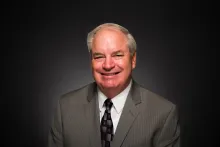
Robin Webber was born in Chicago, Illinois, in 1951, but has lived most of his life in California. He has been a part of the Church of God community since 1963. He attended Ambassador College in Pasadena from 1969-1973. He majored in theology and history.
Mr. Webber's interest remains in the study of history, socio-economics and literature. Over the years, he has offered his services to museums as a docent to share his enthusiasm and passions regarding these areas of expertise.
When time permits, he loves to go mountain biking on nearby ranch land and meet his wife as she hikes toward him.
