
Robin S Webber
Jesus mentioned several times in Scripture to faithful followers "to enter into the joy of the Lord". What does that encompass? Hebrews 12:2 states, "for the joy set before Him that He endured the cross". There can be many facets to this verse, and this message focuses on one facet --The Wedding Supper with His Bride--the saints. What did our Savior see that we too must see and hold onto as we face the challenges of life to not only be "guests", BUT the bride at this future incredible event?
Well, we want to welcome everybody today. And not only that, but what is said here often goes abroad, goes around the globe, as many of our pastors, when they're speaking, and they have that opportunity. A little bit different than Las Vegas, where I am the pastor of Las Vegas, where what is said there stays there. But here, this does go worldwide at times. And I am really looking forward to bringing this message to each and every one of you today. Jesus spoke two back-to-back seamless parables in Matthew 25. And it was dealing with preparation for a moment of truth yet to come. And you might say the bottom line was simply this, are you ready? Because I am coming, ready or not. And it speaks to those who would understand the value of their personal calling, and thus prepare accordingly. And with utter certainty, knowing that there is going to be a future account, an encountering of what they've done, that their master instructed them. And were they prepared for it? A lot of this message today is going to be dealing with the subject of spiritual preparation. Towards something that is incredible to announce to you today. And maybe you've not heard, but there's a date that has been set for a marriage.
A date that is set for a marriage. And that's what we're going to be talking about today. And that is ultimately your marriage to Jesus Christ, when He returns to this earth. And it's important to understand that. In Matthew 25, you have two seamless parables. The first one is one that will probably be familiar to us. So I'm not going to necessarily turn to it, but it's the story of the ten virgins that are on the pathway of waiting for the bride and the groom to come. But they didn't quite come when they thought that they were going to come. Have you ever met Christians like that that have got their clock all set and the Master hasn't returned yet? And they're not prepared, and their lamps go out. And then that seamlessly falls into the next parable, which talks about the aspect of a Master that goes to a far land and comes back. And He had given them something special, His servants, to produce and to develop, to increase, to grow in. And yet when He came back, He found them at all different levels. And it's very interesting when you go to Matthew 25, especially the second parable, but you've got to realize that there's a seamlessness with them. And it's really about taking the bottom line comes, taking God at His word now and preparing because He is coming back. And there's a beautiful phrase that just echoes and it leaps out of Matthew 25.
You find it in Matthew 25, 21, and 23.
And it is simply this, to enter, to enter into the joy of the Lord. And that's what we're going to be discussing today, as to how we are invited to enter into that joy of the Lord. And it's mentioned twice. You know, sometimes if God says something once, that should be enough. But here He mentions it twice in rapid repetition, and that is the invitation that He gives to all of us. Now, when we talk about enter into the joy of our Lord, like any biblical topic, there are various facets to consider regarding this jewel of thought. And I like to call it a jewel of thought, to enter into the joy of the Lord. But today I'd like to just enter through one particular facet of this blessing, of entering into the joy of the Lord and explore its depth, because there is a lot of Grand Canyon size depth to share with you this afternoon. To share its depth and meaning, so as to encourage you, to inform you, hopefully to inspire you. And then the transformation takes off as we prepare even more effectively for what is coming, that we, you and me, we might enter into that joy of the Lord. And so we're going to explore its depth and meaning to encourage us moving forward. When you look at the aspect, when it says, enter into the joy of the Lord, I cannot help but allow all of us to turn over to Hebrews 12 and verse 1.
In Hebrews 12 and verse 1.
Let's pick up the thought in verse 1. Therefore, we also, since we are surrounded by so great a cloud of witness, let us lay aside every weight, and the sin which so easily ensnares us. And let us run with endurance, and let us run with endurance the race that is set before us. Now notice verse 2.
Looking unto Jesus, the author and the finisher of our faith. Faith. Faith.
Who for the joy that was set before him endured the cross, despising the shame, and has sat down at the right hand of the throne of God. Now, when we think about this for a moment, you think of crucifixion. You don't usually think of the word joy.
And yet there's something that at least speaks to me. I hear it. I see it. And I try to understand what was going through Jesus' eyes and his mind and in his heart when he was nailed to that piece of wood above the ground. People mocking him. People saying vile things about him.
And he saw beyond that. He saw beyond the moment. He saw even though his eyes were getting crusty with the blood that was going down his forehead from the crown of thorns. And this was that 33 and a half years of life and that three and a half years of ministry was all the preparation for this next step. And I'm going to suggest something to you. I believe that he saw you and he saw me. And he saw the rest of the family of God that was going to come along. And beyond this pain, beyond this moment of sorrow, beyond this moment of the death of the man that had entered into the joy of salvation, that he himself saw beyond that pain. Saw beyond that pain. Saw beyond what had happened all night long.
Dealt with the unbelief of the population that he had come because it says that Jesus went to the Jews first and his own people did not in general accept him. And yet there was a vision and he saw something. And we're going to talk about just one thing that he saw today, which leads me to my SPS. And that is, in the truest sense, God reveals this future of entering the joy with a wedding. With a wedding. And I want to share who is going to be in that wedding. Are you with me? Number one, there is going to be Christ, the risen Jesus Christ. He is the groom. Number two, this is important. Number two, you are the bride.
You're not the guest. It's not about showing up.
You're the bride. It's a composite bride, obviously, because we're talking about a group whole. Which should make us all think about this for a moment. We're not guest. What we're going to be describing here for a few minutes today is not, oh, we're in the cheap seats. You know, we're up. You ever been in a sports arena and you're up? Who are those players down on the floor? I mean, you have to get binoculars out. No, we are the bride. That is incredible just to think about for a moment. And to recognize, then, that our Heavenly Father is going to be there. So today, what we're going to be doing is we're going to be going through the wedding of the bride of Christ and the wedding feast, the wedding supper that follows to appreciate then what it means to enter into the wedding of Christ. And that is what it means to enter into the joy of the Lord. If you're taking notes, by the way, I'm going to send you out my notes later. I'd rather he's something that clicks with you. Click. Okay. If not, I'm going to send out my notes to you tomorrow because I want you more to get the big picture rather than me call up just notes. And that is understanding what the comes down and that you are not merely a guest, but you're the bride and that you are now engaged in espoused and betrothed. Choose your word to the Lord of life and that that is all going to come together one day in the future. So the title of my message is simply this, the joy of the wedding feast, the joy of the wedding feast. And that's what we're going to be dealing with here for a moment. Before going any further, then let's talk about weddings here below.
Weddings here below, and most of us have been married at one time or another, weddings here below are wonderful and they are beautiful. But you know, and I know, that they take a lot of preparation, especially on the lady's side.
But the grooms are just as involved in a very particular way on their own side. And to recognize takes a lot of preparation. And normally then, in being a pastor, having been in front of the audience with a lot of weddings and watching the groom and the bride and the groom takes his place, and then the bride, you know, finally walks in and go, oh, there's the bride.
What's everybody do? They take their eyes off the guy and they all turn around and there's the bride, all dressed in white and ready to move. And there's a beauty to it. There's a beauty to it. There's a certain still that occurs. And it's a beautiful thing when you're up there in this mix and you're watching it. And then they say the I do's. And then the kiss. And then for the moment, everybody can relax. Now it's going to be joy time. It's going to be party time. There's going to be feast. There's going to be a banquet. There's going to be a reception.
There's going to be this or that. And all of a sudden a new life has begun. A life has been birthed. Something that was not a union of man and woman coming together. And that's the kind of joy that is depicted by the wedding supper and by the feast that is going to occur and to recognize that that's going to happen. I'd like you to join me in Revelation 21 now with that said. In Revelation 21, let's pick up the thought here.
In Revelation 21 and picking up the thought in verse one. Now I saw a new heaven and a new earth for the first heaven and the first earth had passed away. And also notice, very important, there was no more sea. Now to understand again, you've heard me say this before. You're my regular audience, but when it comes to dealing with apocalyptic literature and prophetic literature, when it says no more sea, that's not talking about the Atlantic Ocean.
Sorry to disappoint you, it's not talking about the Pacific Ocean or the Red Sea or some body of physical water. This is apocalyptic and saying there are no, there are going to be no more barriers between humanity. There's no more Mediterranean Sea separating Europe from Africa, from Asia. There's going to be no more Pacific Ocean separating the Occidental from the Orient. There's going to be no more Gulfs out there.
In the world, in the ages of old, the water and the oceans were looked with somewhat dread for boating. This is before navigation was at its full. And to go out in the ocean, that's where Leviathan was, or that's where sea monsters were, or that's where ships went down.
So a lot of people of antiquity were basically what we would call coast huggers. They hugged along the coast. They didn't want to get too far out because the seas were a scary spot. And seas also separated people from other people. And so this, from the very beginning, back 6,000 years, created the others. The foreigner. The barbarian. Barbarian was a term that the Greeks used, the Romans adopted later on, which meant the other.
People that were other than Hellenistic, or Hellenistic bent. And so there's going to be no more seas. Can you imagine, you think of the world that we're living in right now and the news that is coming at us, whether it's in our Western Hemisphere, whether it's over in the Eurasian landmass between Russia and the Ukraine, dealing with Gaza and Israel and this and that.
There's going to be none of that anymore. No more seas. There's going to be a union. And it says, then I, John, saw the holy city, New Jerusalem, coming down out of heaven from God, prepared notice as a bride adorned for her husband.
The body of Christ here is given the synonym of bride. And notice what it says, the bride is adorned. And we always think of all the weddings that we've seen, the adornment. Not only the bride, we'll talk about the groom too, but something very beautiful and very special. Then I, John, saw that. I read that. Now notice this. And I heard a loud voice from heaven saying, behold, the tabernacle and or the dwelling of God is with men, and he will dwell with them, and they shall be his people, and God himself shall be their God.
So we take a look at this. What we're really noticing here is a grand entrance. We think of a wedding that the bridal promenading in, coming down the aisle. This is God coming from eternity into a new realm that he is making for the body of Christ. You talk about a grand entrance. The father, the son, the citizens of the new Jerusalem. And God uses this typology of a wedding, a cosmic procession towards an ultimate spiritual consummation of that union tied together in holiness, a combination that then enters eternity once and forever. And we notice too that as any father would do, as any father would do, parents, we've had three children, we've gone through three weddings with our kids, and to recognize that parents love to shower gifts upon their children. Something special that maybe nobody else can come up with or do or know about. Have you ever thought of the gifts that our father is going to give to the body, to the bride, when he comes back? How about this for a gift? And it says this, and God will wipe away every tear from their eyes, and there shall be no more death. For those of us that have experienced near death, or the death of those that we love and have loved and now separate it, no more death. No more tears, no more death. There's more gifts at this wedding, and there shall be no more pain for the former things that passed away. And then he who sat on the throne said, Behold, I make all things new. And he said to me, Write, for these words are true and faithful.
God is not going—God is our father—is not going down to a pawn shop to give us some gifts.
He's giving a gift that mankind, of and by himself, will never develop on his own, because it's appointed unto all men once to die. So we take a look at this. Now, you see this procession coming down, the heavenly Jerusalem landing for the wedding, and you know, you just kind of think, you know, about the British. You know how the British are with pomp and circumstance, and they can really do the parades and the ceremonies and Westminster Abbey and all of that.
You ain't seen nothing yet, as we say, and you want to be there. And I'm going to share something with you. When it says, For the joy that was set before him, Jesus not only being man, son of man, but son of God, I think he saw it.
I think he visualized it. And he not only saw the Father, and he not only saw himself, he saw you. He saw me. Sometimes we want to take ourselves out of the picture.
And God sees us in that picture. He's called us to succeed with his spirit, cauterized, if need be, to stay on the journey, can you walk towards that kingdom?
Can you imagine the size of the wedding party? Much less the audience watching and marveling. The citizens of the New Jerusalem, synonymous with the first fruit saints of God, are going to enter into a deep and forever-lasting relationship. You know, as we often do in a marriage ceremony, we often say, Until death do you part. That's not going to be in this ceremony. It's going to be life eternal for the body of Christ, not till death do you part. As we, with new bodies, it gives us new equipment, because we don't have the equipment to experience God fully. And he's going to give us—we just don't have it right now. We have enough for the job that's here right now, waiting and growing and preparing as the bride. But beyond imagination, what that is going to be like. The Apostle Paul speaks of this relationship over in, if you'll join me, in 2 Corinthians 11.
And let's pick up the thought if we could in verse 2. If I can get there.
See where we are here. Okay. Notice what it says here in verse 2. For I am jealous—this is Paul speaking. For I am jealous for you with godly jealousy. Now notice what it says here. For I have betrothed you to one husband. Now notice what it says that I might present you as a chaste virgin to Christ. So we notice what is being spoken here. The word betrothed, which is in some of the translations, is sometimes also I have espoused you and or I have promised you to one husband. In a sense, well, Jesus Christ is the groom. It's as if Paul is in a part of the party. It's like I was a guy that was there with your first date with Christ. I've been on this all along, and I told you you want to keep on dating him. And so there is a bond there. There was, I've shown this all to you. You do not want to miss this. And to simply put in modern terms, as baptized Christians, we are engaged to the very Lord of the universe. Imagine that. All, whether married or non-married—are you with me? We have married people, married people listening. We have single folks that are here. We think of some of us that are here that are widowers or widows. I've got news for you. We are all engaged. We are all betrothed. Sometimes maybe that has not been fully explained when we have baptism, but that's a part of the beauty and the gift of God that he's asking you by accepting what Christ has done for us and what the Father allowed Christ to do for us, that they plan from the very beginning of time that you might be in the family of God. These are very real human terms, physical terms, to allow us. You know, sometimes, you know, we were probably a little nervous just when we were getting baptized. That was probably just enough to recognize the baptism is the beginning of the engagement. You have, as you go down that water and you come up anew and you have hands laid on your head, you are being betrothed. You are being espoused. You are being engaged to Jesus Christ, the Lord of the universe. But imagine the size of the wedding party. Imagine the size of the wedding party. You know, when you go to the book of Revelation and it talks about the New Jerusalem, this cube which is like 1500 miles by 1500 miles. What that is really talking about, again, apocalyptically speaking, is this talking about there's room for everybody. Remember how Jesus said, I'm going ahead to prepare a place for you? That cube represents two things. Immense, expanse, and the cube itself in antiquity represented holiness. So when Jesus said, I am going to prepare a place for you, and some translations say, I am going to prepare a home for you. It's a home. The New Jerusalem is not going to be a house. A house is merely a structure. What Jesus is talking about is a home with him and with his father, and it is worth everything that comes our way. It's worth every disappointment. I'm talking to myself. I'm not just preaching at you. Of every disappointment that comes, to have that vision, that you are going to the bride of Christ, and that you are, are you with me? Saving yourself, as the bride did. Saving yourself. Not wandering off. Not engaged with somebody else. Supposed to only be engaged to one person at a time, okay? Not going back and forth, that you've made a promise as he was loyal to us, as he was on the cross, as the father was loyal to us, as he allowed that to happen, and he took upon himself what he prevented Abraham from doing by slaying his son as the sacrifice. We're all in this together, to be loyal one to another.
The book of Revelation not only speaks of the bride, but describes the marriage itself, and something very special that comes with it, a blessing. Notice how the invitation is set out, and what it says. And I'm quoting from Revelation 19, 6 through 9. Listen to this. And I heard, as it were, the voice of a great multitude, as the sound of many waters, and on the sound many thunders, saying, Alleluia, for the Lord God omnipotent reigns. Let us be glad and rejoice, and give him glory, for the marriage of the Lamb has come, and his wife, notice, has made herself ready. Going back to Matthew 25, the virgins were not ready. They got lazy. They made the plans for themselves, and were not attuned that God was going to come when he was going to come, and no man knows the day or the hour. And they ran out of oil. And the gentlemen that were on the ranch of the farm and were given a pound and did nothing with it thought, Well, my Lord Delaeth is coming. He's not coming right now. And he came. And they were called cold, some good, some not so good. But let's continue with this. Let us be glad and rejoice, and give him glory, for the marriage of the Lamb has come, and his wife has made herself ready. And to her it was granted to be a raid and fine linen, clean and bright, for the clean linen is the righteousness act of the saints. Then he said unto me, Write, blessed. Here's one of the Beatitudes, one of the seven Beatitudes of Revelation. Blessed are those who are called to the marriage supper of the Lamb. And he said to me, These are the true sayings to God. This is incredible. This is wonderful. What was just spoken to all of us. What I just read to you, if you're hearing it and it's sinking in our hearts, is a blessing. Do you want to be blessed today? Just read the word. This is a blessing. That word to grab a hold of. There is something yet to come. But notice the bride is preparing yourself. So very important. Let's talk about weddings for a moment. Weddings. Weddings and the accompanying festivals are always special that we have in this age. But back in the world of old, this was before Disneyland. This was before Disney World.
For the younger generation, there was Disneyland before Disney World. This is before 24-hour entertainment, just pushing a button and amusing yourself, or watching a movie, or seeing some celebration taking place on the other side of the earth. Be it a coronation, or be it an inauguration, or be it the Rose Parade. Life is tough. Life is hard. People did not live to eat. They ate to live. Totally different. But the one thing that changed everything was when there was a wedding. The wedding was everything. It consumed not only the bride and the groom, but it consumed the whole village or the whole city. Everybody, you know how little small towns all know one another's business? Everybody got involved, and it was a celebration. And did you recognize? Did you know that sometimes a wedding would go for—I don't think we could have afforded it with three daughters—but sometimes the wedding went for seven days. Seven days. And it went so long that sometimes they ran out of the goodies like wine. Think of Cana.
Thinking of Jesus. Thinking of Mary coming to him and saying, excuse me, you won't believe this, but weddings just started and we're running out of wine.
And that was Jesus' first miracle about a wedding. And to make sure that the guests would all be satisfied. And he didn't go down and just buy gallow wine. They said, normally you serve your best wine at the beginning. But now this wine is better than anything from the beginning. He saved the best for last. Maybe that's where that expression came from. But it's very interesting. The very first miracle that he had was about a wedding. Coincidence? I don't think so. And to recognize that, let's talk about weddings of old. I'd like to read from Ralph Gower, from his book, The New Manners and Customs of the Bible Times, pages 66 through 69, under the headings of the wedding and the wedding feast. It grants us a glimpse at some of the biblical revelations that I've been discussing with you. So allow me to extract just a few of the thoughts from Mr. Gower's book. The wedding involved dressing up. The bride was literally adorned like a queen. And you can find that in Revelation 21, verse 2, as we saw that she was dressed up and came down the way that she did. She was bathed, and her hair was braided, with many, many precious stones, as the family possessed and or could borrow. Now, I've got verses to back this up, and I'm going to send it to you. And if anybody is listening to this, whether you're in Malaysia or Europe, wherever you are, you just write me and I'll send you all of my notes, or we'd all be here for five hours. So to recognize, so the woman was bathed. We said, what's that? I hope so. Well, you got to remember, back then, people didn't bathe that much. Are you with me? Hello? Do you know why weddings began to be in June?
Because there was no more winter, and that was getting warm, and that was the time to do it. But you notice cleanliness. You notice hygiene. This is talking about more than just physical hygiene. This is talking about yours and my spiritual hygiene, as you move that forward. The dressing up for the wedding was so important, it was designed to be unforgettable. That's a verse I'd like to turn to for a second. Jeremiah 2. In Jeremiah 2, come with me, please. In Jeremiah 2, and it's picking it up in verse 31.
Notice what it says here. Verse 31. O generation, see the word of the Lord. Have I been a wilderness to Israel or a land of darkness? Why do my people say, we are lords, we will come no more to you? Now, notice verse 22. Think about this. And, ladies, you think about this because in one sense it's speaking to you as ladies. At the same time, it is speaking to all of us because we are the bride of Christ. Notice what it says. It's like God has been pushed out. It says, can a virgin forget her ornaments or a bride her attire? Yes, my people have forgotten me days without number. See, Israel was created to be in a type of bride. And later on, here we have Jeremiah speaking to the house of Judah, a part of that Israel. And God had given them ornamentation. He had dressed them up with His grace, with His love, with His law. I could ask you a question right now, ladies, and you remember being married. Do you remember picking out your dress? Do you remember figuring out what you were going to wear for your wedding? And yet He says, my people, my people, they did this, and I gave them everything. It's like in Ezekiel 16, and you'll know the famous story about Jerusalem, where God said, I took you. You were on the side of a road, and I took you, and I bathed you, and I cleaned you up.
I put all of this on you, and you gave me up for the Egyptians, and for the Phoenicians, and for the Assyrians, and for all of their idolatry. You could have been everything. I gave you everything. And you see, Jerusalem and Judah forgot their ornamentation, forgot that wedding dress, forgot where they were before they got married. And I'm sharing this with you so that we will not forget the God, the Father, who has given us His Son. And that even as things come hard between us, I want you, after this day, to always remember, no matter what comes your way, to enter into the joy of the Lord.
And joy does not always rhyme with happiness. Happiness comes from external goodies coming our way, and oh, isn't that fun? Joy is deeper. Joy is richer. Joy is fuller. Joy is profound. And for the joy that was set before Him, He endured the cross. Now, you and I may never be on the altar of Golgotha. We may never carry a cross beam through the streets of Jerusalem, but can I make a comment? Have you ever felt like you're bearing a cross?
And why won't God take it away?
But this is a part of the preparation for the wedding.
I've often said that when you look at Jesus' words, Jesus said that if any man's going to follow me, he's going to have to carry his cross. Not the cross of Jesus. That is solely what he did on that stake. But we carry a cross. Why? Here's the deal. And that is simply this, that before we bear a crown, before we bear that wedding crown on that glorious day when God the Father comes down, before we wear a crown, we bear a cross. And that's a part of the preparation for the wedding party. For as Jesus said, he said, this is the way, walk you in it. And if any man's going to follow me, just so you know, I'm pointing, there's the future. If you're going to follow me, you're going to bear a cross.
And then to follow him and have that joy in our mind, this one facet of entering into the joy of the Lord. This is not manufactured joy coming from China or Japan. Think this through for a moment. To enter into the joy of the Lord, this is not something that's manufactured down here in some factory in LA or in San Diego or down in National City by the harbor. This comes from God himself. For sake of time, I'm going to cut through all of this to look at some things and to recognize a few things. I'm going to bring God the Father into this right now. And simply this, God lifts our sights to a time when all his preparations and longings come together with those who truly seek him at the threshold of eternity. Threshold of eternity. There's going to be a new heavens and a new earth. I remember in Susan I were married in 1973. And we moved in for some of our younger people. You're going to laugh at this, but we had got an apartment down in South Pasadena, which is really a cute little town if you know South Pasadena. And we had to pay all the staggering sum of $125 a month for rent. And we had this little abode. And that's where you start. That's where you start in America. You start this, do this, and do this, God willing. It's harder for our young people to start today with the prices. So I didn't want to dig it in too much. It's just like with everything that's happened over all these years. And God's given us a start. He's chosen our home. And our home ultimately is up above. And it's coming back down here, special ordered, not by you or me, but by God. And it's going to be His gift. But with that, I want to share something with you. In Ezekiel 34 and in verse 8, it says that God describing Himself—this is called a self-description. This was not bad press. Somebody after him, he said this, I am a jealous God. Jealousy never happens between a man and a woman, does it? Or this or that. But God, the Father says, I am a jealous God.
It does not please me when I see you going after others. When, as we read in Jeremiah 2, when I have given you everything, and it's like it never existed. And not only is God jealous, because He doesn't want—and I'm going to use my language carefully—He doesn't want to pimp like our adversary and Satan leading us towards other lovers.
When we are married down here below, it is a replication of our marriage to heaven, and what is being in heaven. That when we give ourselves to God, we are to—right now, while we're still down here, is to act as virgins. That includes us men. We belong to God.
We belong to God. And we have got to hold that when we are swayed by something that looks good, something that looks beautiful, just like the tree of good and evil. And how did that work out for Adam and for Eve? Paul himself says that—and again, as a minister of Jesus Christ—he says, I'm jealous, lest you go after somebody else.
Another point I'd like to share with you about our groom.
Our lover from above, if I can put it that way, he sacrificed every part of himself.
He sacrificed every part of himself.
Everything. And I would hope that I say this as a man speaking amongst men and women, that one thing about men—and ladies, thank you for your patience with us at times— but to recognize that a man is created to protect his family, to protect his wife, to protect his children, grandchildren—great-grandchildren now for Susie and I.
There is something that God put in us that nobody crosses a line when it comes to protecting our family. It's just innate. It is God-given. And we were called to be protectors. God the Father and Jesus Christ are our protectors. And that's very important to understand. And to recognize that the one thing then, if we understand this about God, is to love him. I'd like to ask you this weekend—just turn to 1 John 4. Look around, verses 13-14. It says that God loved us first. God loved us first. But the love affair does not stop there. The love that God gave us, we are to return in hand. We do what we do. We observe the Sabbath. We do this. We do that. We try to treat our fellow man and woman with respect and humility and love. Why? Because he first loved us. And as we love others, that is a demonstration of our love affair with God. It's all right. Can I make a comment? I'm going to shock you. I know those words sometimes. Okay. God has called us to have a love affair with him. Because he first loved us when we were in the dark. And sometimes when we've crawled into the darkness even more after we've been baptized. After the walk that we start.
You've heard me say this story before about the little boy, and he asks his mommy. He says, mommy, why are you getting baptized if you're going to sin?
Good question. Mother said, go away, find your own. I am your mother. Okay. So she had to answer that question. And she said, dear, before I was baptized, I was running towards sin. After baptism, I will be running away from sin, but I will still stumble.
And when we stumble, our groom, the one who loves us from above, the one who gave his life for us is there to pick us up. Put us on our feet. Get our heart straightened out with a little cauterization. Put the parts together. Now go, go meet the day. And remember, wherever you are, I will be with you. You will never be alone.
You know, it's kind of interesting that you think of God the Father and Jesus Christ up in heaven and to recognize that, you know, it says that they know the sparrow that falls from the tree.
They've got eyes. They've got eyes. We often talk about, when it comes to romance, when it comes to romance, the beginning of a relationship, there's eyes. And you spot somebody. I know none of you have ever done that in your life.
Susan, I told the story how we met last week in Redlands, but I'll save it because this is going out. But that when you have eyes for somebody, just think, take it upstairs and to recognize that God had an eye on you. There was a selection. There was an election. There was a calling. And there is a continued supervision that you might be there and prepare you and to do that.
Let's go to John 14, 1-4. John 14, 1-4. This is on the last night of his life. John 14, 1-4. It says, Let not your heart be troubled. You believe in God, believe also in me, and in my father's house are many mansions. We're not talking about Beverly Hills. This is talking about what I discussed about the heavenly Jerusalem with you. There is no limit. It is saying there is going to be room for all that come to worship God and give themselves to God. If it were not so, I would have told you, I go to prepare a place for you. And if I go and prepare a place for you, I will come again and receive you to myself that where I am that you may be also. So Jesus, as in a sense the groom, goes forward, goes out over the hill, actually up into the heavens, up actually up to his father's throne. But it's so much like the man. The man takes the lead, takes and goes out, finds the spot, comes back for his woman, his lady, his love, and then they go together. And in the same sense, there's an old term that we use sometimes about fetching the bride. When you go to Revelation 21, that's the big fetching. And that's no fetch, okay? That's the big fetching. That Christ comes and takes his bride, and there is a cosmic spiritual consummation to that point that never ends. Until life into eternity, death will be away. I have about two more pages of notes, but I think you've got the point today.
What's my point? Friends, sometimes we all, by different personalities or types, will think of this or that. Or when it says to enter into the joy of the Lord, we think of this given aspect. And maybe we've never explored or understand the multidimensionalism of what it means to enter into the joy of the Lord.
So when we do this, let's remember how loved we are. And it says that, in the scripture, it says that from the very beginning of time that the one that was God and the one that is the word planned this out. And we go to Genesis and it said, let us make man in our image and after our likeness.
And so he did. Male and female, he made them. That's the first birth. And then we come to this experience of, remember Nicodemus talking to Jesus? Can a man be born again? Jesus said, sure, let me tell you about it. And that is the second birth. As we, Jesus and his spirit and the spirit of the Father engage us and we come into this relationship, there's a third birth. And that is what it's talked about in Revelation 21. When there is this birth of this union leading up to this, that is so incredible that you and I are going to be the bride of Christ. And his Father is going to be watching you and me. And you know, the same one that knows us by name. You know how it is. You go to a wedding sometime and there's all sorts of people you've never met and you don't know their names. You're in a crowd. God knows each and every one of our names. And we're all going to be a part of that wedding.
Pray about it. See it. Envision it. Hold that picture in your mind.
You are the only one that can take yourself out of that picture. How can I say that? Because God so loved the world that he gave his only begotten son, that whosoever believeth on him should not perish but have life forevermore. Well, I've done this, I've done that, but it goes on to say, but I did not sin him to condemn the world but to save the world. That's how much God loves us. You that are the bride of Christ. Keep on walking towards the ultimate heavenly altar to be married once and forever to the Lord Jesus Christ and prepare to receive the gifts of his father.
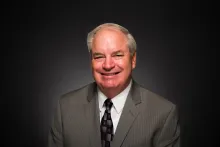
Robin Webber was born in Chicago, Illinois, in 1951, but has lived most of his life in California. He has been a part of the Church of God community since 1963. He attended Ambassador College in Pasadena from 1969-1973. He majored in theology and history.
Mr. Webber's interest remains in the study of history, socio-economics and literature. Over the years, he has offered his services to museums as a docent to share his enthusiasm and passions regarding these areas of expertise.
When time permits, he loves to go mountain biking on nearby ranch land and meet his wife as she hikes toward him.
